

Individuare qualcosa chiamato Alrosticsa Application su un computer Windows non è un innocuo file residuo; è un segnale che un Cavallo di Troia è probabilmente entrato nel tuo sistema, il che significa che dovresti assolutamente prendere misure per eliminarlo.
Ciò che devi sapere su minacce di questo tipo è che di solito ottengono privilegi di amministratore nel sistema, il che dà loro accesso illimitato e la capacità di eseguire ogni genere di processi malevoli.
Come Altrusica, Altruistics e altri Trojan trattati in precedenza sul nostro sito, Alrosticsa Application può agire come porta d’ingresso per altro malware, rilasciando un componente loader che “chiama casa” e scarica payload aggiuntivi – ladri di informazioni, ransomware o rubacriptovalute – a seconda di ciò che l’operatore vuole quel giorno.

Un uso comunissimo dei Trojan oggi è prosciugare le risorse del sistema e utilizzarle per il crypto-mining. Se hai notato Alrosticsa Application perché i suoi processi stanno consumando tutta la RAM e la CPU, allora probabilmente è proprio questo ciò che sta facendo in questo momento.
In ogni caso, rimuoverlo è fortemente consigliato, ma se provi a farlo manualmente, aspettati trucchi di persistenza come voci del Registro fasulle, file di supporto sparsi e attività pianificate che riportano in vita il malware dopo un’eliminazione “riuscita”.
È comunque possibile gestire la cosa manualmente, e la guida qui sotto spiegherà i passaggi esatti, ma è molto più sicuro e rapido sbarazzarsi di Alrosticsa Application con l’aiuto di uno strumento di rimozione professionale come SpyHunter 5, che è il nostro metodo consigliato.
Guida alla rimozione della minaccia Alrosticsa Application
Inizia con le opzioni di disinstallazione integrate in Windows prima di passare a controlli più approfonditi. Questo primo passaggio è rapido e a basso impatto e, se Alrosticsa Application è registrata come una normale app installata, rimuoverla da qui può eliminare il pacchetto principale e ridurre i residui che dovrai rintracciare in seguito.
Remove the suspicious Alrosticsa app quickly using Apps & Features
- 1.1Start in the installed-apps list in case Alrosticsa Application shows up as a regular program: open the Start Menu, choose Settings, then go to the page where Windows manages installed apps.
- 1.2In Settings, select Apps. Review the installed list and filter by name, size, or install date so recent additions are easier to spot.
- 1.3Change sorting to Installation date to bring the newest entries to the top. This view is useful when an unwanted program arrived recently.
- 1.4If an entry looks unfamiliar, click it, choose Uninstall, and follow the prompts. Let the uninstaller finish without interruption so it can remove related components.
- 1.5Next, go to C:\Users\YourUsername\AppData\Local\Programs. Check for leftover folders or binaries the uninstaller may have left behind and note anything that does not match software you recognize.
- 1.6If leftovers remain, delete the folder manually. Restart Windows to release file locks and confirm nothing tries to launch automatically at logon.
Dopo il riavvio, verifica che la voce sia scomparsa. Se vedi ancora sintomi o file residui, è comune con minacce persistenti, quindi continua con i controlli qui sotto per individuare componenti nascosti e rimuovere i punti di rilancio.
RIEPILOGO:
| Nome | Alrosticsa Application |
| Tipo | Trojan |
| Strumento di rilevamento | Per rimuovere Alrosticsa Application da soli, potreste dover toccare I file del sistema e I registri. Se doveste farlo, dovrete essere estremamente attenti perché potreste danneggiare il vostro sistema. Se volete evitare il rischio, raccomandiamo di scaricare SpyHunter, un tool professionale per la rimozione dei malware.
|
Come rimuovere i componenti rimanenti di Alrosticsa Application
Controllare l’attività in tempo reale mostra percorsi dei file, processi padre e trigger in un unico posto. Finché Alrosticsa Application è ancora attiva, Windows può rivelare da dove è stata avviata e cosa sta utilizzando, riducendo le supposizioni e aiutandoti a eliminare i file corretti prima di iniziare a rimuovere i punti di persistenza.
1. Preparation steps before manual cleanup of Alrosticsa
- 1.1
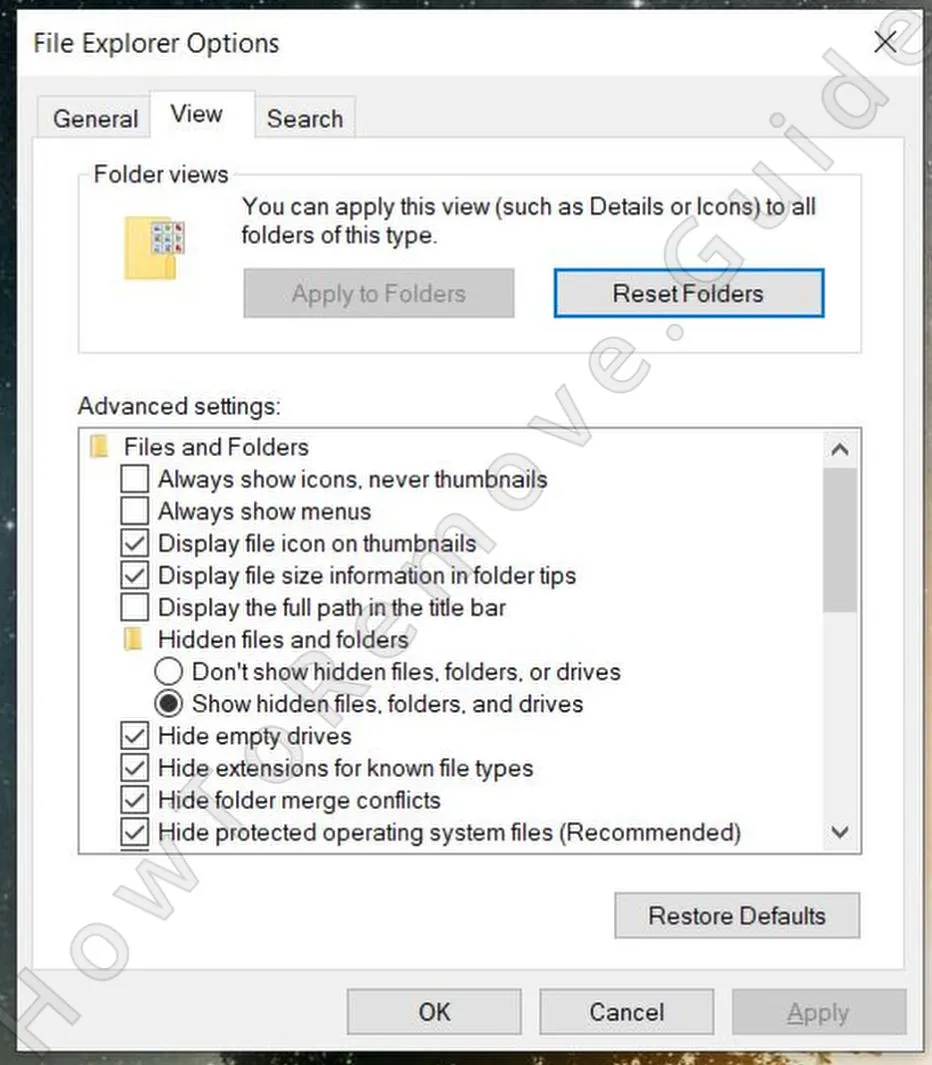 Reveal hidden items so components linked to Alrosticsa Application are easier to notice. Search for Folder Options from the Start Menu, open it, go to the View tab, and enable Show hidden files, folders, and drives. Hidden locations are commonly used for storage.
 - 1.2If Windows reports files are in use, install LockHunter to remove locked items. It adds a context-menu option, shows what is holding a file open, and helps delete stubborn executables or DLLs.
Se preferisci evitare utility di terze parti, la maggior parte del lavoro può comunque essere fatta manualmente. Per i file che Windows insiste siano “in uso”, lo strumento può aiutare a rilasciare il blocco così le eliminazioni vanno a buon fine e non rimani bloccato a riavviare ripetutamente.
LockHunter è gratuito, non richiede registrazione e di solito si installa in un paio di minuti.
Interrompi i processi sospetti di Alrosticsa Application in Gestione attività
Terminare un singolo processo raramente risolve la persistenza perché helper correlati possono riavviarlo tramite voci di avvio o trigger pianificati. I passaggi sotto mostrano come individuare l’eseguibile in esecuzione dietro Alrosticsa Application, rimuovere prima i suoi file e poi terminare il processo così ha meno possibilità di rilanciarsi immediatamente.
2. Stop Alrosticsa suspicious processes and remove their files
- 2.1Open Task Manager to inspect what Alrosticsa Application is doing in real time: press Ctrl + Shift + Esc and review the process list along with current resource usage.
- 2.2If the simplified view appears, click More details. The expanded list shows background processes, publishers, and startup impact, which makes suspicious items easier to evaluate.
- 2.3
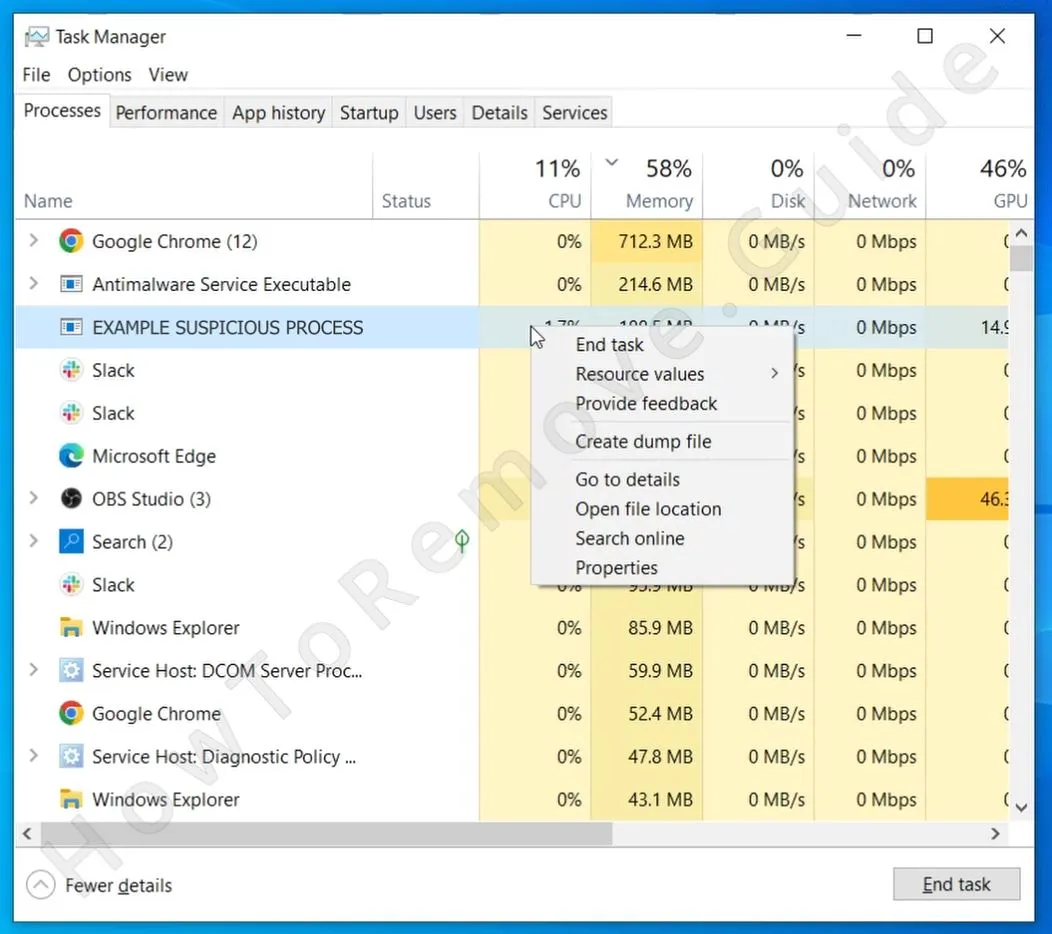 Sort by CPU or Memory and look for unfamiliar names or unusually high usage. Malicious processes often avoid clear product names or recognizable vendors.
 - 2.4Right-click a suspicious item and choose Open file location. The folder path and the file details can help you decide whether the process is legitimate.
- 2.5Try deleting the process folder first. If Windows blocks removal, open LockHunter, select What’s locking this file?, release the lock, and delete the file and its folder through the tool.
- 2.6Return to Task Manager and select End task on that same process. Ending it after removing the executable reduces immediate restarts and keeps the system stable for the next steps.
Rimuovi i file indesiderati di Alrosticsa Application collegati all’infezione
Molte infezioni si basano su avvii all’accesso e file di supporto sparsi archiviati in comuni cartelle utente e di programma. Controllando queste posizioni, rimuovi launcher e file di supporto che possono reinstallare o riattivare Alrosticsa Application e riduci anche la possibilità che uno stub di aggiornamento nascosto rilasci di nuovo lo stesso payload in seguito.
3. Remove Alrosticsa startup items and folders associated with the infection
- 3.1Begin with relaunch folders where Alrosticsa Application may plant shortcuts or executables: C:\ProgramData\Microsoft\Windows\Start Menu\Programs\Startup and C:\Users\YourUsername\AppData\Roaming\Microsoft\Windows\Start Menu\Programs\Startup. Remove unknown shortcuts or files.
- 3.2Inside each Startup folder, keep desktop.ini and delete other suspicious items. If deletion is blocked, use LockHunter to unlock and remove them safely.
- 3.3Check main application folders next – C:\Program Files and C:\Program Files (x86). Delete newly created, empty, or oddly named directories that do not match software you installed intentionally.
- 3.4Review user-level paths too: C:\Users\YourUsername\AppData\Local\, C:\Users\YourUsername\AppData\Local\Programs, and C:\Users\YourUsername\AppData\Roaming\Microsoft\Windows\Start Menu\Programs. These locations often hold launchers, updater stubs, or scripts.
- 3.5
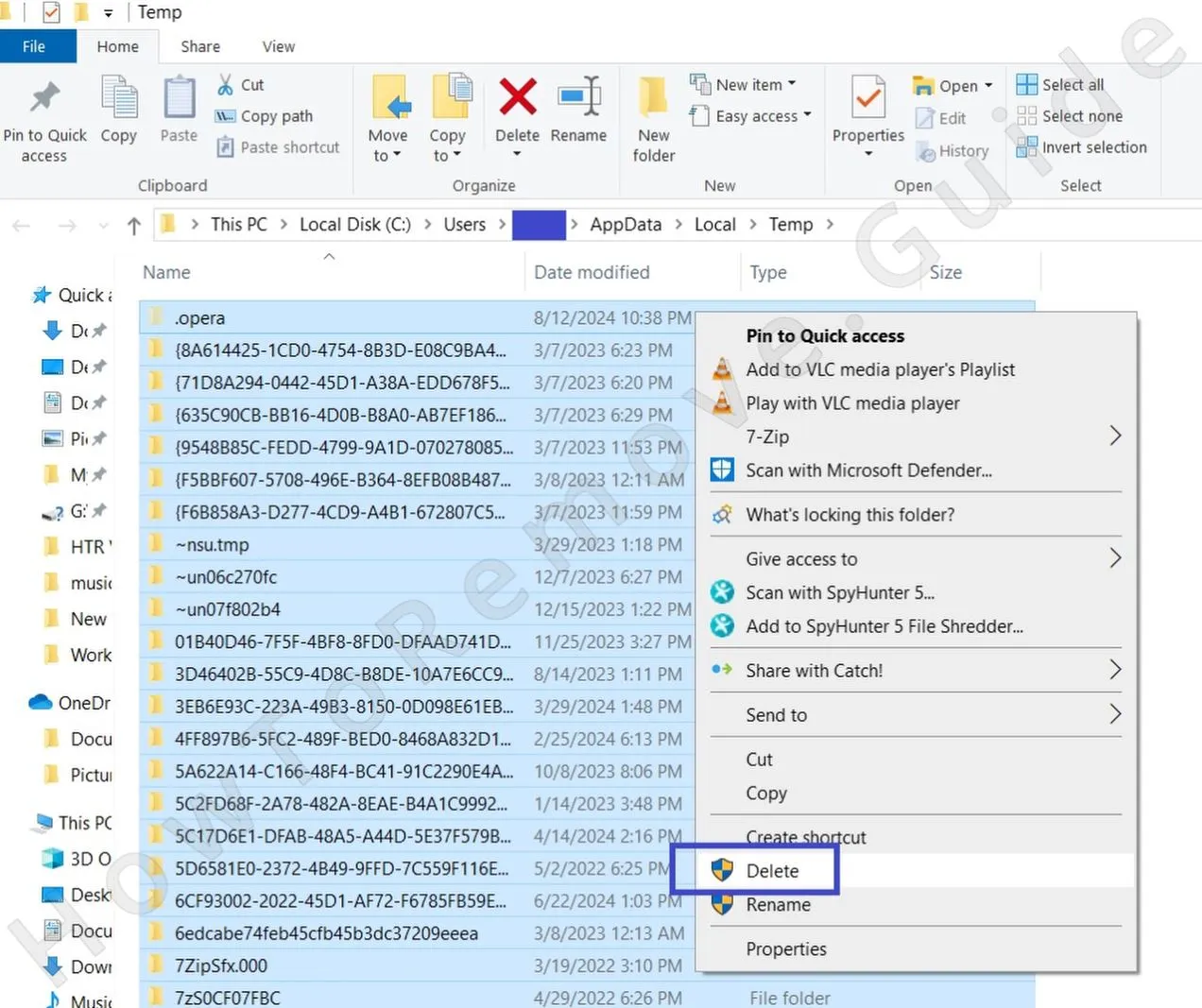 Clear temporary storage: open C:\Users\YourUsername\AppData\Local\Temp, press Ctrl + A to select everything, delete the contents, and then empty the Recycle Bin.
Rimuovi le attività pianificate di Alrosticsa Application usate per il rilancio
Le voci pianificate possono riportare silenziosamente una minaccia anche dopo che hai rimosso i file. Se un’attività punta a un eseguibile in cartelle dello spazio utente, può ripristinare o riattivare Alrosticsa Application all’accesso, a intervalli o quando il sistema è inattivo. Rimuovere l’attività ed eliminare il file a cui fa riferimento impedisce reinfezioni ripetute dopo i riavvii.
4. Remove Alrosticsa scheduled tasks that bring the threat back
- 4.1
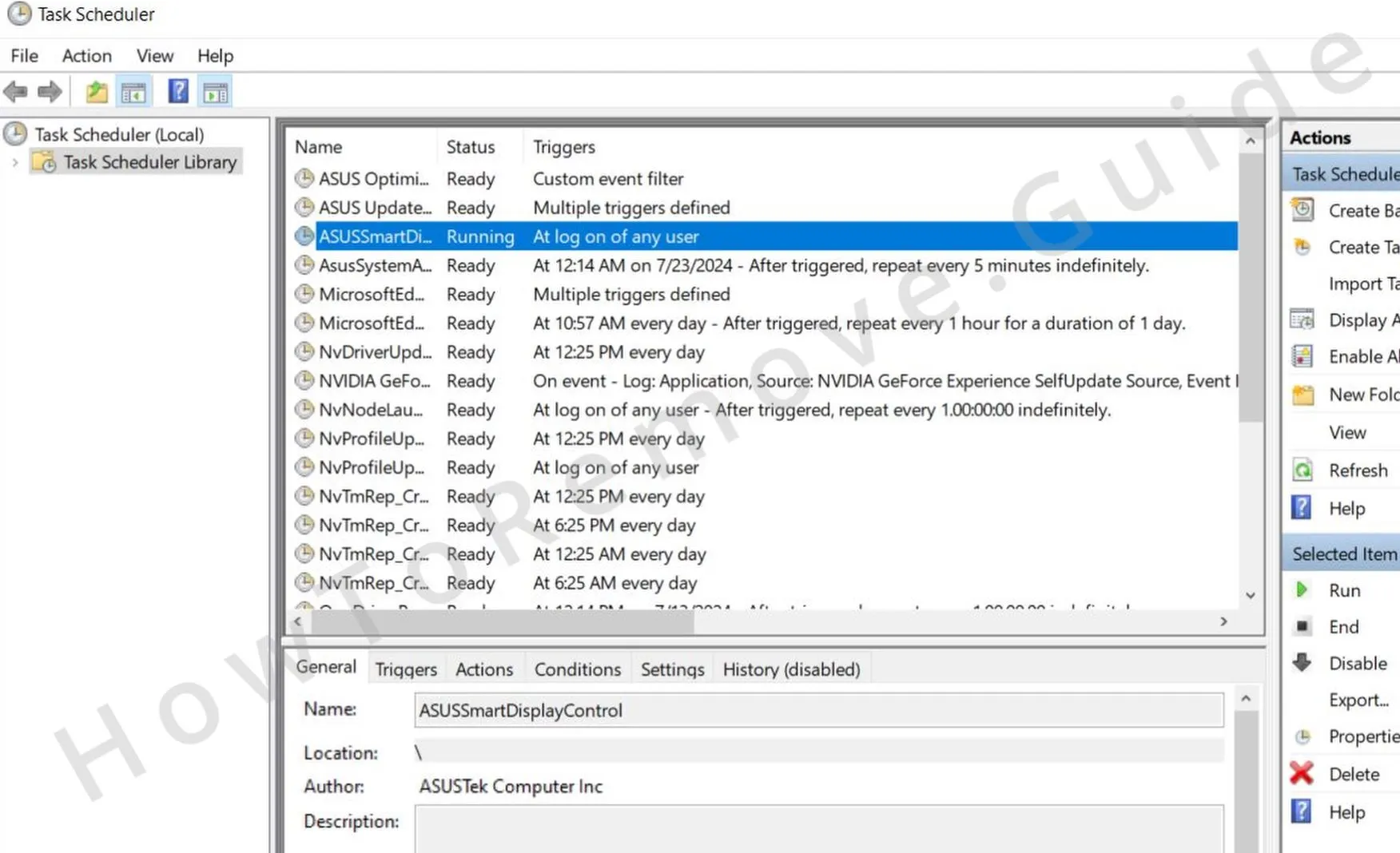 Open Task Scheduler to look for triggers that can restart Alrosticsa Application. Search from the Start Menu, launch it, and expand the Task Scheduler Library to review tasks across user and system folders.
 - 4.2Double-click a task and open Properties. Use the Actions tab to see the exact command, file path, and any arguments being executed.
- 4.3Focus on tasks that run from user directories such as AppData or Roaming, especially when the task name is generic or unfamiliar. Unexpected locations for known vendors deserve extra scrutiny.
- 4.4If a task is clearly unwanted, copy the full path shown in Actions and delete the task in Task Scheduler to stop it from running automatically.
- 4.5Go to the copied path and delete the referenced executable or script. Removing both the task and its payload reduces the chance of it returning after a reboot.
- 4.6Repeat the review for every folder under Task Scheduler Library, including installer-created subfolders. Persistence often hides behind ordinary-sounding names.
Rimuovi le voci residue di Alrosticsa Application tramite il Registro di Windows
Anche dopo la pulizia visibile, la persistenza può rimanere tramite posizioni del Registro per avvio automatico e criteri. Rimuovi solo le voci che puoi collegare chiaramente a software indesiderato ed evita di eliminare intere chiavi a meno che tu non sappia che non sono usate da Windows o da programmi legittimi. Di solito basta cancellare valori specifici per impedire a Alrosticsa Application di rilanciarsi tramite hook di avvio nascosti.
5. Clean Alrosticsa remaining entries with Registry Editor
- 5.1Open Registry Editor to find autostart entries that can keep Alrosticsa Application active: press Win + R, type regedit, and press Enter.
- 5.2Press Ctrl + F and search for the exact app name you removed earlier. This often reveals orphaned keys such as services, shell extensions, or updater entries.
- 5.3When you find a match, select the key in the left pane and delete it. Continue with F3 until no more results appear across the Registry.
- 5.4Repeat the search and removal process for any other suspicious program names you identified during the earlier steps. Clearing these traces reduces the chance that helper components restore files.
- 5.5Run one more search for the exact threat name. Deleting a lingering value or path reference can stop files from being recreated at startup.
- 5.6Manually review these common autostart and policy locations:
HKEY_CURRENT_USER\Software\Microsoft\Windows\CurrentVersion\Run
HKEY_CURRENT_USER\Software\Microsoft\Windows\CurrentVersion\RunOnce
HKEY_CURRENT_USER\Software\Microsoft\Windows\CurrentVersion\Policies\Explorer\Run
HKEY_LOCAL_MACHINE\Software\Microsoft\Windows\CurrentVersion\Run
HKEY_LOCAL_MACHINE\Software\Microsoft\Windows\CurrentVersion\RunOnce
HKEY_LOCAL_MACHINE\Software\Microsoft\Windows\CurrentVersion\Policies\Explorer\Run
HKEY_LOCAL_MACHINE\Software\Microsoft\Windows\CurrentVersion\RunServices
HKEY_LOCAL_MACHINE\Software\Microsoft\Windows\CurrentVersion\RunServicesOnce
HKEY_LOCAL_MACHINE\Software\Microsoft\Windows\CurrentVersion\RunOnce\Setup
HKEY_LOCAL_MACHINE\SYSTEM\CurrentControlSet\Services - 5.7In each location, check the right pane for values that point to unknown executables or suspicious directories. Delete the specific value rather than the entire key to avoid breaking legitimate components.
Riavvia Windows per completare la pulizia. Dopo l’avvio, verifica che l’avvio automatico sia normale, controlla che pop-up o rilanci siano spariti e assicurati che app e browser si comportino normalmente. Se i sintomi persistono, usa uno scanner offline per cercare una persistenza più profonda, riparare impostazioni alterate e confermare che non rimangano attività pianificate.
