

Fake Robux sites like 53k.my always try to get your attention with bright colors, chunky buttons, and Roblox avatars grinning from ear to ear, but that’s just bait. Scammers know their audience skews young, and they design every pixel of 53k.my to feel safe, friendly, but also “official.”
Kids come across it when a fake influencer account shares it or when the scammer posts it in a Discord group. This makes the young victims of the scam think it’s endorsed by Roblox, so they trust it without second thought.
The language on such scam sites is always simple – “click here,” “claim now,” “just verify” – and this approachability is what makes it dangerous because kids and inexperienced users are quick to trust it. But behind this cartoonish surface hides a blatant scam designed to steal data, push malware, or redirect to ad farms.
Many victims are too young to notice that the HTTPS padlock doesn’t mean security or that no real site gives away currency for nothing. 53k.my isn’t a game but a textbook example of an online scam. Therefore, anyone who comes across it or other similar scam sites like Der.bio or Sunbux.click should report it and warn their children, friends, and relatives to keep away from such fake platforms.
Scams of 53k.my‘s type are known to steal personal data and passwords. Install SpyHunter Pro to scan for risks, remove any dangerous trackers, and enable real-time protection.

Try Free For 7 Days*
Buy now15% OFF if you buy straight without trial.
 OFFER
OFFERHow 53k.my Promises Free Robux and Tricks Roblox Players
Here is the verdict. 53k.my bills itself as a helper that can “route” free currency to a profile after a few easy clicks, yet the promise is a setup. The centerpiece pitch is simple: pick a huge payout and press a big, shiny button. The psychology is deliberate because oversized numbers hijack attention and crowd out skepticism while the trap gets built. It imitates familiar branding to look safe, uses a “username, not password” prompt to feel harmless, and stages a quick path to a prize.
Underneath the polish sits the money engine. The “human checks” are not checks at all but paid tasks – surveys, installs, and trial sign-ups – that generate cost-per-action commissions for the operators. Each completed step pays the scammers, not the player. More steps mean more commissions, so the wall loops or multiplies, which is why many victims report “one more verification” that never ends.
The traffic funnel adds another layer. Low-quality SEO, hijacked or throwaway sites, and rehosted PDF links seed the web so the lure feels “found” instead of pushed. Short links and off-domain hops keep people clicking while obscuring the landing spot. The longer the maze runs, the more data and device access gets exposed; some campaigns even try to plant shady add-ons or downloads to grab tokens or other information.
Pull back and the constraint is absolute. No outside site can credit Robux to an account, and no part of the path makes password reuse safe. The model extracts value from time, clicks, installs, and data. The player gets nothing except exposure.
What to Do After Falling for the 53k.my Robux Scam
Start with containment, then clean up, then pursue money. You secure identity anchors first – especially the email account that controls password resets – because that account unlocks everything else. Some losses routed through trials or prepaid codes are slow to recover, and “fund recovery” offers often hide a second scam. Work in a steady sequence, keep notes and screenshots, and treat reporting as the closing step. Stability beats speed.
Rotate credentials on your Roblox account and your primary email now. Set strong, unique passphrases, enable 2FA wherever available, and store recovery codes safely offline.
Invalidate lingering access. Use “log out of other sessions” or “log out of other devices” where supported, then sign in only on a known-clean device to close the door on leaked tokens.
Purge anything you did not mean to install. Remove unfamiliar extensions or apps added during “verification,” run a reputable malware scan, and restart so persistence mechanisms cannot reload.
Review connected-app permissions on services you used. Check Google, Apple, Microsoft, and Discord, and revoke anything you do not recognize to cut off silent access.
Read recent sign-in logs on critical accounts. Reset passwords and add extra verification checks if you see locations or devices you do not recognize.
Audit finances with a clear head. Cancel trial enrollments you accepted, call your card issuer to dispute unauthorized charges and to block recurring billing, and contact a gift card or prepaid issuer with the number and receipt to freeze remaining value when possible.
Ignore paid “recovery services.” Pitches that promise to retrieve Robux or funds for a fee often become a second loss.
Finish by reporting. Submit evidence to Roblox and to consumer or cybercrime bodies in your region, including domains, timestamps, and screenshots, so enforcement teams can correlate operator clusters and remove related domains.
Spot the Warning Signs of the 53k.my Scam Early
A one-minute pause is often enough to see the seams. Recycled art, contradictory claims, clumsy policies, and a flow that keeps adding hoops reveal a disposable operation built for churn.
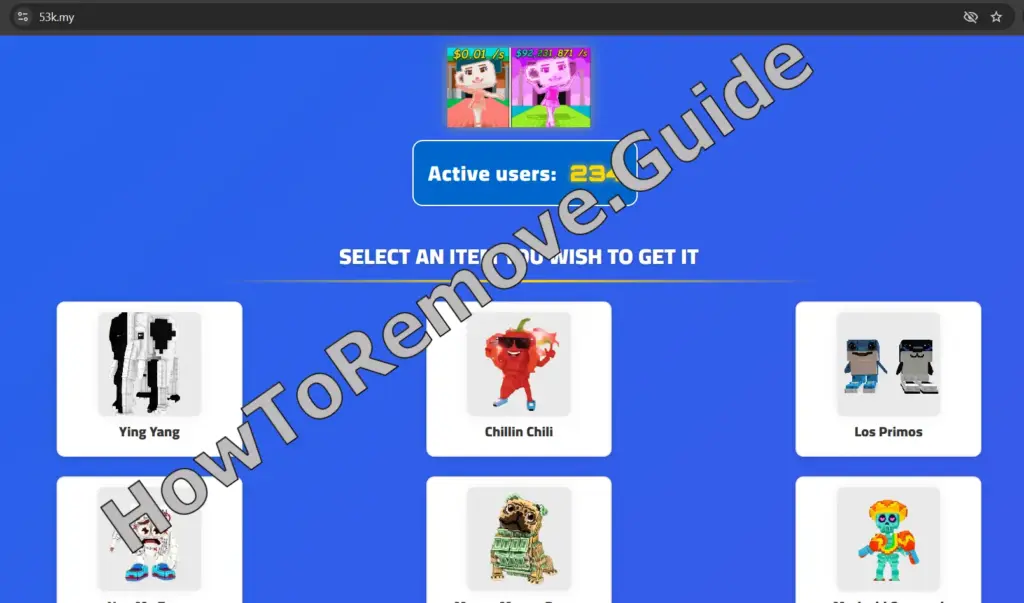
First marker: cartoonishly large reward sliders and prefilled five-figure “packages.” These dominate attention to suppress detail checks.
Second tell: a “verification” wall that pays the site – surveys, app installs, trials – and keeps resetting or inventing new steps. Endless hoops are the revenue engine.
Third clue: disposable domains with sloppy, copy-pasted policy pages and no verifiable business details. A burner identity avoids accountability.
Fourth sign: link-hopping through shorteners, multiple redirects, and off-domain jumps. This blinds quick inspection and hides the true destination.
Fifth flag: odd downloads or extension prompts presented as “verification helpers.” These can siphon tokens or other data after you close the page.
Avoid 53k.my and Protect Your Roblox Account
Prevention costs less than cleanup, and a few steady habits remove most exposure. Treat the red flags as early alarms and keep your browsing deliberate rather than rushed.
Stick to legitimate currency channels: platform purchases, Premium stipends, and developer revenue routes. Anything that claims off-platform “crediting” should be treated as untrusted until proven otherwise.
Refuse the off-site “human-check” routine. Those tasks are commission rails for scammers, not security measures, and the loop exists to keep you grinding.
Cut down redirection risk by using an ad or tracker blocker and a privacy-focused DNS service. Fewer malvertising hops mean fewer poisoned landings.
Turn on family safety controls for younger players. Set an account PIN, limit contact options, and keep privacy profiles strict so random messages cannot escalate.
Build a one-minute pause into your routine. When giant numbers or timers pop up, count to sixty, check the domain, and then decide.
Avoid complex link chains by typing known addresses, by treating shortened links from comments or DMs as untrusted, and by skipping off-domain hops.
Keep permissions lean by pruning connected apps on major accounts and by revoking anything you do not recognize, which shrinks the surface area for abuse.
Use a password manager to generate unique credentials across accounts, to store them safely, and to end the password-reuse domino effect.
