

Special-msg.com most often appears as an unexpected link in a text message on social media like Facebook or Instagram. When you open it, it typically displays a festive, Christmas-card-style page with bright lettering, holiday pictures, looping GIFs, and sometimes buttons you might be tempted to tap, with ads tucked down the page.
That “it’s just a card” premise is what makes this browser-hijacker stick, and it’s also why some people panic and even reset their phone after opening it. This post will explain what you’re dealing with and how to get it off your radar safely.
Special-msg.com may expose your browser to redirects, ads, and persistent unwanted components. Install SpyHunter Pro to scan for risks, remove related threats, and enable real-time protection.
 OFFER
OFFER*Source of claim SH can remove it. Trial w/Credit card; image is for illustration; full terms.
Is Special-msg.com a Virus?
It’s better described as a suspicious link-and-landing-page browser hijacker scheme than a classic infection. In other words: the “thing” is primarily a web page people get nudged into opening, built to rack up impressions and monetize views (sometimes roughly $0.25 per 1,000 opens).
So, is it a virus? From the behavior reported so far, it doesn’t match the usual virus pattern (installing itself, persisting on the device, and spreading by modifying files). The real compromise here usually requires extra steps – like downloading something, opening it, and granting install and follow-on permissions.
The catch is that what a given domain serves can change quickly. That’s why it’s not advisable to touch anything presented to you by these messages, as the chances of it being a gateway for malware or a redirect to a phishing page are considerable.
How dangerous is Special-msg.com?
Special-msg.com is similar to other hijackers we’ve covered before such as Hell1-kitty.cc and Newtab.art and it’s dangerous in the same way. This means that it’s not likely to cause any direct harm but the stuff it can reroute you to can certainly be linked to various security risks.
And if you’ve been getting these messages a lot recently and/or if you’ve noticed any strange pop-ups or changes to your browser you didn’t approve, it’s likely that this hijacker has taken over your browsing program.
In such cases, you need to take action to remove the hijacker, or else you may get exposed to all sorts of threats, not to mention the sheer annoyance factor that comes with such hijackers.
We can offer you two great ways to restore your browser and get rid of the Special-msg.com hijacker. The first is a detailed guide best suited for users who already have some troubleshooting experience.
The second solution is the professional anti-malware tool SpyHunter 5 that can safely and securely clean your browser and system in just a couple of minutes.
Step-by-Step Guide to Removing Special-msg.com
Go through the actions in the same sequence, and keep a small note of what you disable or remove so you can undo a change if something legitimate stops working. This careful process targets Special-msg.com, reduces repeat pop-ups, and prevents settings from being quietly rewritten while you stabilize Chrome, Edge, Firefox, and similar browsers.
Quick checks to roll back browser settings
- 1.1Open your browser’s Settings and start undoing changes pushed by Special-msg.com.
In Chrome, use the ⋮ menu; in Firefox, open the ≡ menu for comparable controls.
Open Extensions or Add-ons, scan entries, and mark anything unfamiliar for removal. - 1.2Check each add-on’s name, icon, requested permissions, and full description.
Be wary of generic wording or mismatched details – use Remove when something doesn’t belong.
If unsure, search the exact “extension name” to verify the publisher and current reports. - 1.3Open Privacy and security, then Site permissions.
Review which sites can use your microphone, camera, location, and notifications.
Disable anything you don’t remember allowing and keep a short allow-list for features you actually need. - 1.4Within Site permissions, remove entries you never meant to approve.
This helps cut repeat prompts, intrusive alerts, and startup redirects.
When done, restart the browser so changes apply and you can confirm the behavior stops.
If the redirects and pop-ups stop after this pass, the trigger was likely removed. If they return, a policy may be restoring the same settings at startup. Continue with the sections below to clear what’s enforcing the changes without relying on broad browser resets.
OVERVIEW:
| Threat | Special-msg.com |
| Category | Browser hijacker |
| Detection tool |
Some threats reinstall themselves if you don’t delete their core files. We recommend downloading SpyHunter to remove harmful programs for you. This may save you hours and ensure you don’t harm your system by deleting the wrong files. |
Manually Remove the Special-msg.com Browser Hijacker
When you see “Managed by your organization,” browser startup policies are locking options that you normally control, so a simple reset often won’t remove the cause. The tasks below help you locate and delete entries that let Special-msg.com reapply settings. Work carefully, confirm each edit, and keep backups so you can revert changes after restarting Windows.
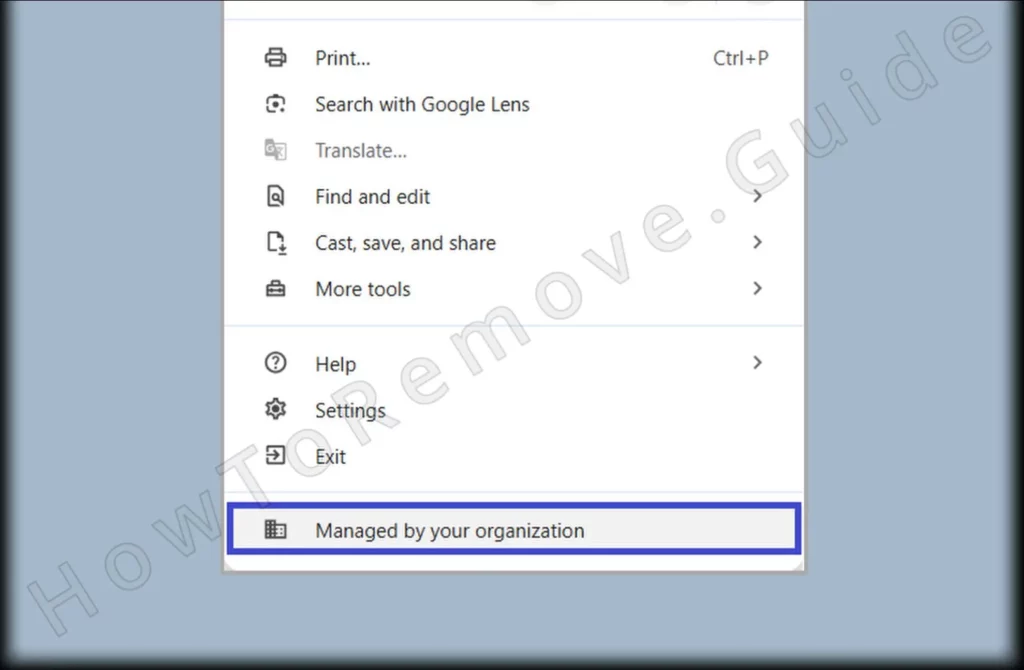
1. Check which browser policies are applied
- 1.1
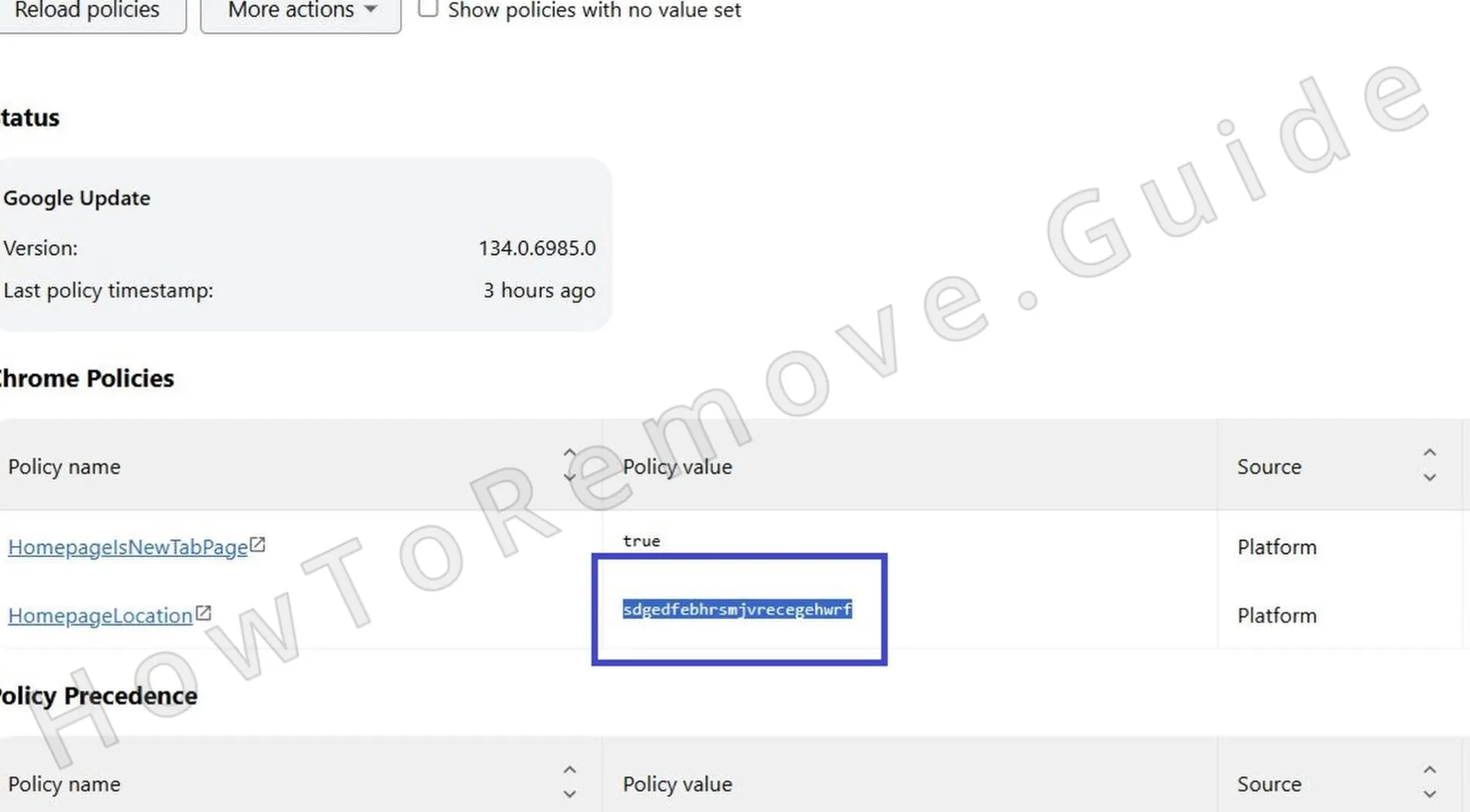 Open the browser policy page to view rules that may have been added by Special-msg.com.
In Chrome: chrome://policy
In Edge: edge://policy
Let the list load, review unfamiliar entries, and use Reload policies to refresh or export the results. - 1.2Review each policy for unusual identifiers or random-looking values.
Write down suspicious items so you can match them to folders or extension IDs later.
Save the exact policy Name and Value; these often correspond to storage paths or keys you will delete. - 1.3Open the browser’s Extensions page and turn on Developer mode.
This view exposes extension IDs and install paths that help with cleanup.
Copy each suspicious ID into a text file so you can match it to folders on disk. - 1.4If Extensions won’t open or is blocked, switch to File Explorer.
Working directly in profile folders lets you continue even when the browser UI is restricted.
Enable View > Show > Hidden items so AppData is visible. - 1.5
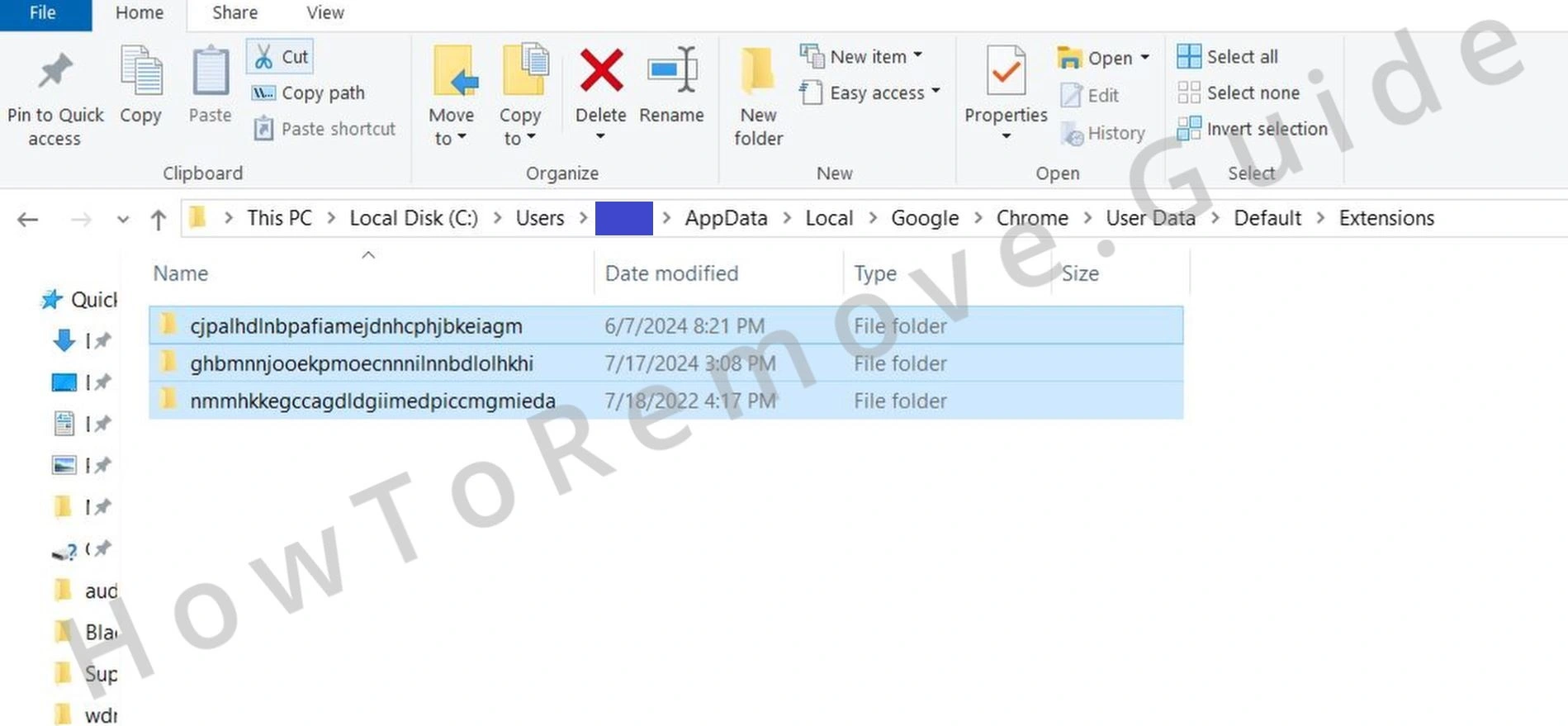 Use File Explorer to open:
C:\Users[Your Username]\AppData\Local\Google\Chrome\User Data\Default\Extensions
Each subfolder name is an extension ID. Match IDs to your notes, avoid removing folders you recognize as legitimate, and make a quick desktop backup before deletion. - 1.6
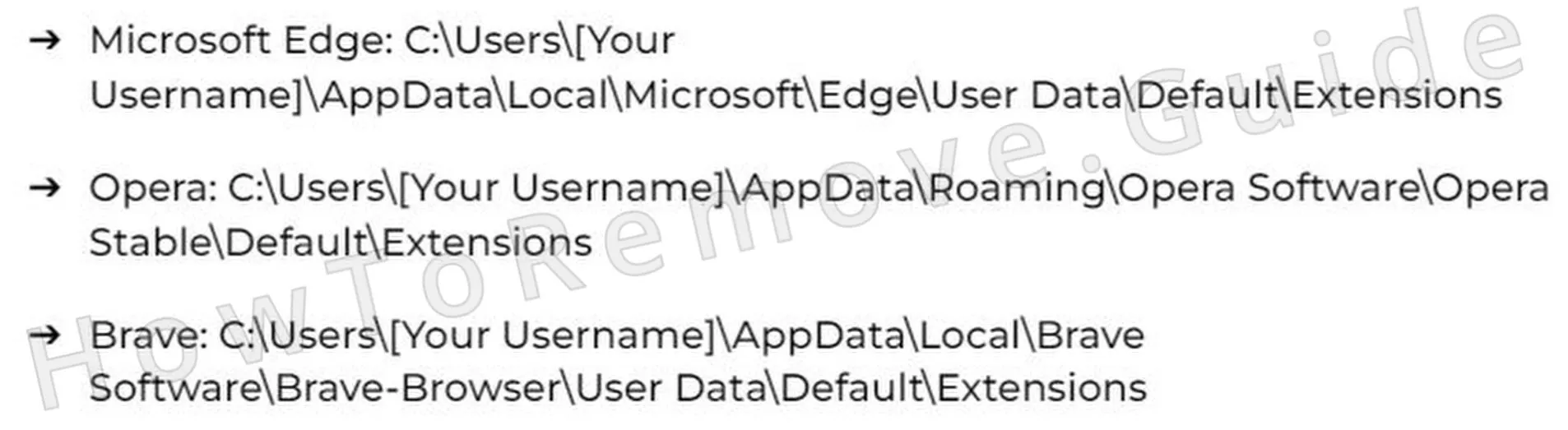 For other Chromium-based browsers (such as Brave and Opera), extensions live under a similar AppData structure.
Confirm the extension ID and location before deleting any folder tied to an unwanted add-on. - 1.7After removing the suspect folder, go back to Extensions with Developer mode still enabled.
Confirm the extension no longer appears; if it does, repeat cleanup and look for leftovers that restore it.
Click Update in Developer mode to refresh the list and catch silent reinstalls.
Remove Special-msg.com Policies from Windows
Some browser controls are stored in the Windows Registry, and careless edits there can cause system instability. Make changes only when a key clearly relates to Special-msg.com, and avoid deleting unrelated entries just because they look unfamiliar. This focuses on removing policy hooks that persist across resets while keeping changes reversible.
2. Remove policy keys in the Registry
- 2.1Press Win + R, type regedit, and press Enter to open Registry Editor and start tracing policy keys associated with Special-msg.com.
Before making changes, open File > Export to create a backup.
Select All under Export range and save it to Documents or another easy location. - 2.2Use Ctrl + F or Edit > Find to search for saved policy names or extension IDs.
Click Find Next and delete only exact matches clearly linked to the forced changes.
Press F3 until nothing related remains under HKCU and HKLM. - 2.3
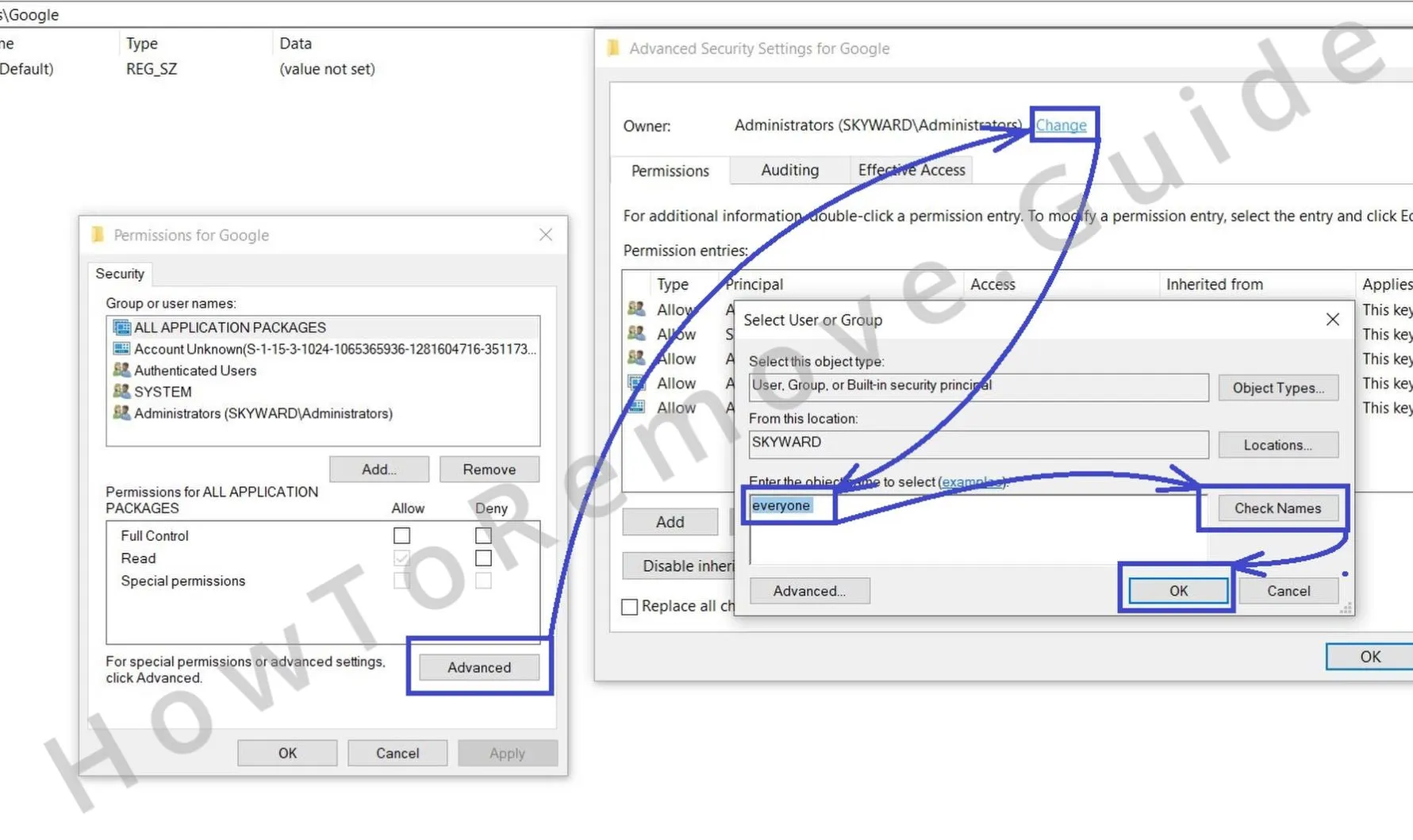 If a key won’t delete, right-click it, choose Permissions, then Advanced.
In Owner, click Change, type Everyone, select Check Names, and confirm with OK.
Give Full Control to Administrators and Users so the key and its subkeys can be removed. - 2.4
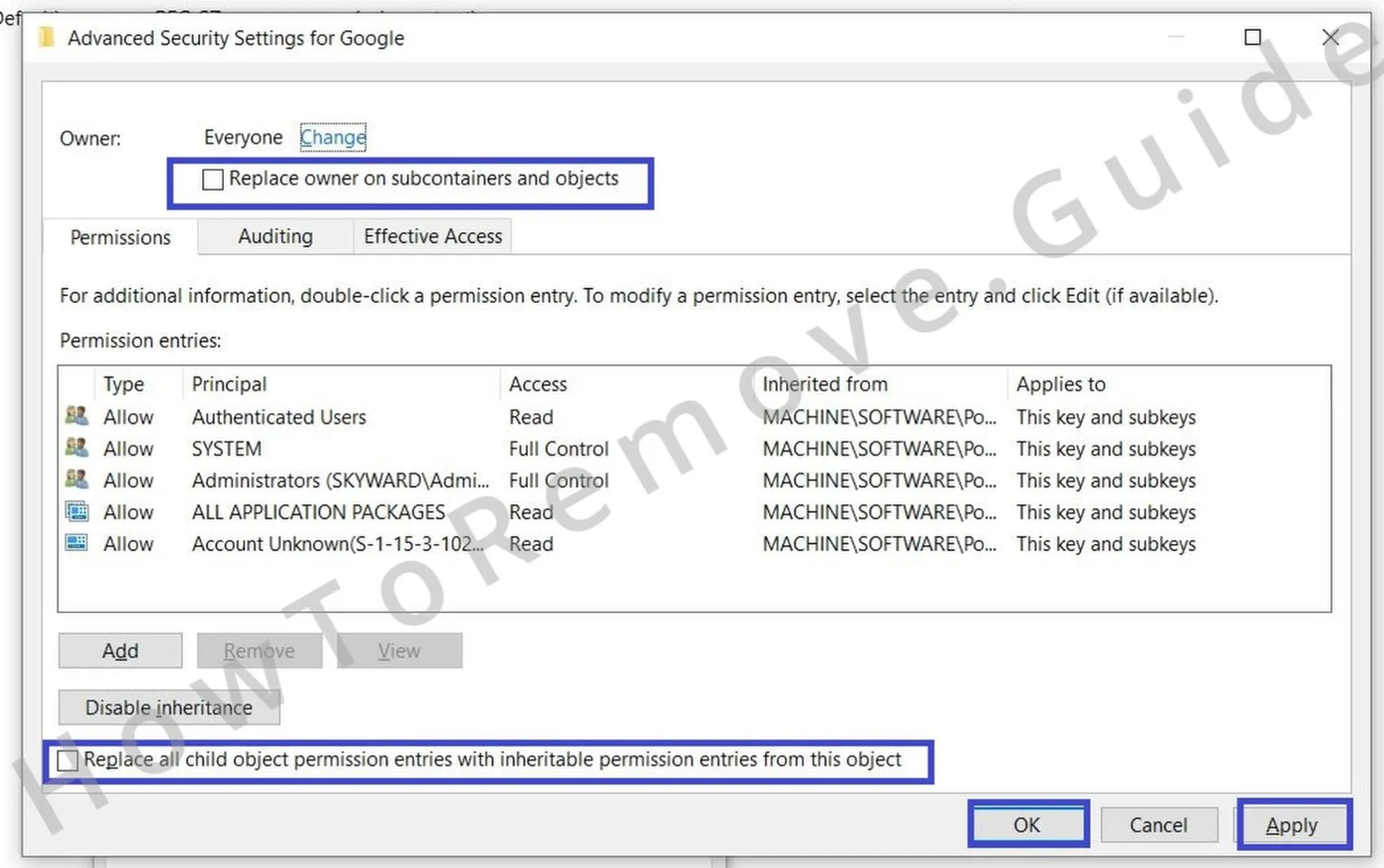 After you change ownership, enable Replace owner on subcontainers and objects and Replace all child object permission entries.
Select Apply, then OK, Reboot, and check whether the Managed by your organization banner is still present.
If it’s gone, open regedit again and repeat searches to confirm nothing related has returned.
Services, scheduled tasks, and local policy files can quietly restore browser settings even after you remove the obvious pieces. Concentrate on items clearly connected to Special-msg.com so you avoid broad resets that can disrupt other software. Use the targeted checks below, confirm what you change, and restart Windows to verify the managed banner and forced options do not return.
Other Options to Clear Special-msg.com-Enforced Policies
Sometimes a leftover service or scheduled task restores the unwanted policies after cleanup. Use targeted tools and policy consoles to remove remaining traces linked to Special-msg.com without making broad system changes. Follow these steps if the “Managed by your organization” banner or forced settings return after a restart.
3. More ways to remove Special-msg.com policy enforcement
- 3.1
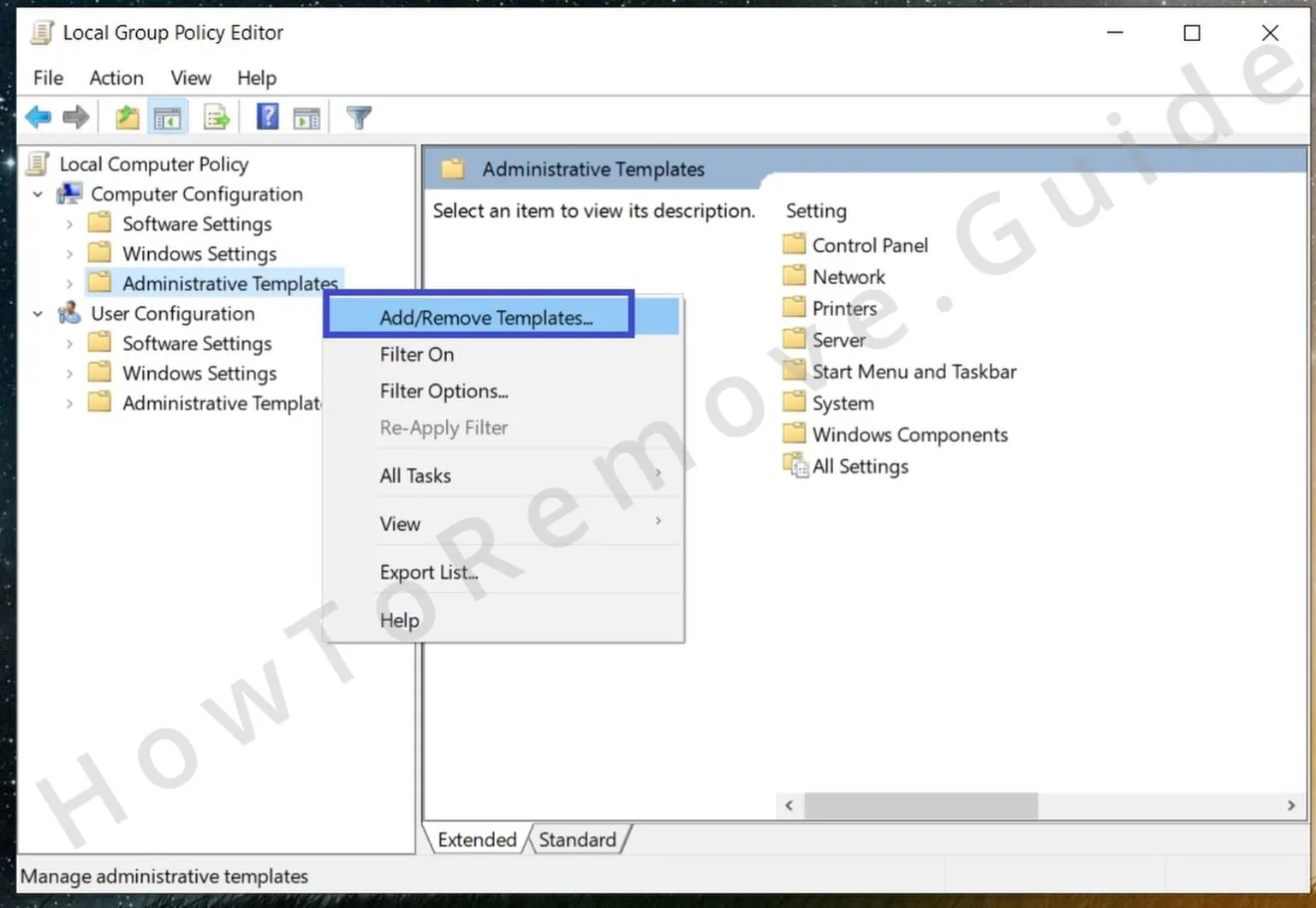 Open Local Group Policy Editor (Win + S → Edit Group Policy) and inspect entries that Special-msg.com may have configured.
Expand Administrative Templates under both Computer Configuration and User Configuration to review machine and user scopes. - 3.2
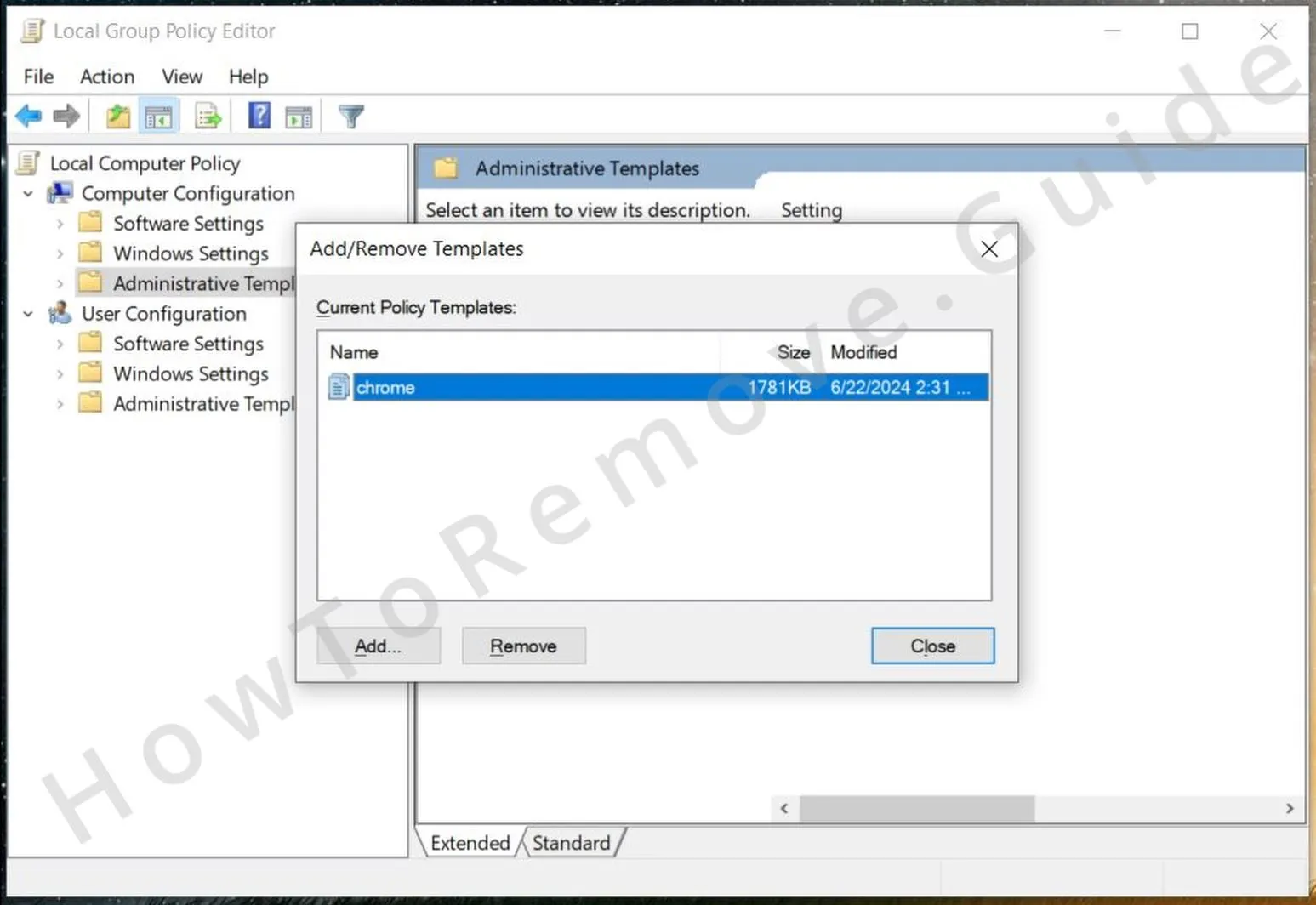 Right-click Administrative Templates → Add/Remove Templates.
Remove templates you never installed, then open Windows Components → Microsoft Edge or Google Chrome and set suspicious rules to Not Configured. - 3.3On Chrome, a tool such as Chrome Policy Remover can reveal stubborn policy folders.
Download it from a trusted source, Run as administrator, then open chrome://policy → Reload policies to confirm the list is clear. - 3.4Open Task Scheduler → Task Scheduler Library and remove tasks that launch unknown scripts, CMD/PowerShell, or policy loaders at logon.
In Services, check for newly added entries from unknown publishers and disable or remove those that clearly tie back to the forced changes.
Remove Special-msg.com from Chrome, Edge, and Other Browsers
Profiles, sync, and cached data can reapply altered preferences after you sign in again or reopen the browser. To keep Special-msg.com from resurfacing, double-check defaults, permissions, and search providers, then remove stored data that keeps unwanted rules alive between sessions. The steps below help your choices stick across restarts.
4. Remove remaining Special-msg.com changes from your browsers
- 4.1Open Extensions/Add-ons again and remove anything tied to Special-msg.com or that clearly doesn’t belong.
Use built-in pages such as chrome://extensions so custom themes can’t hide entries. - 4.2
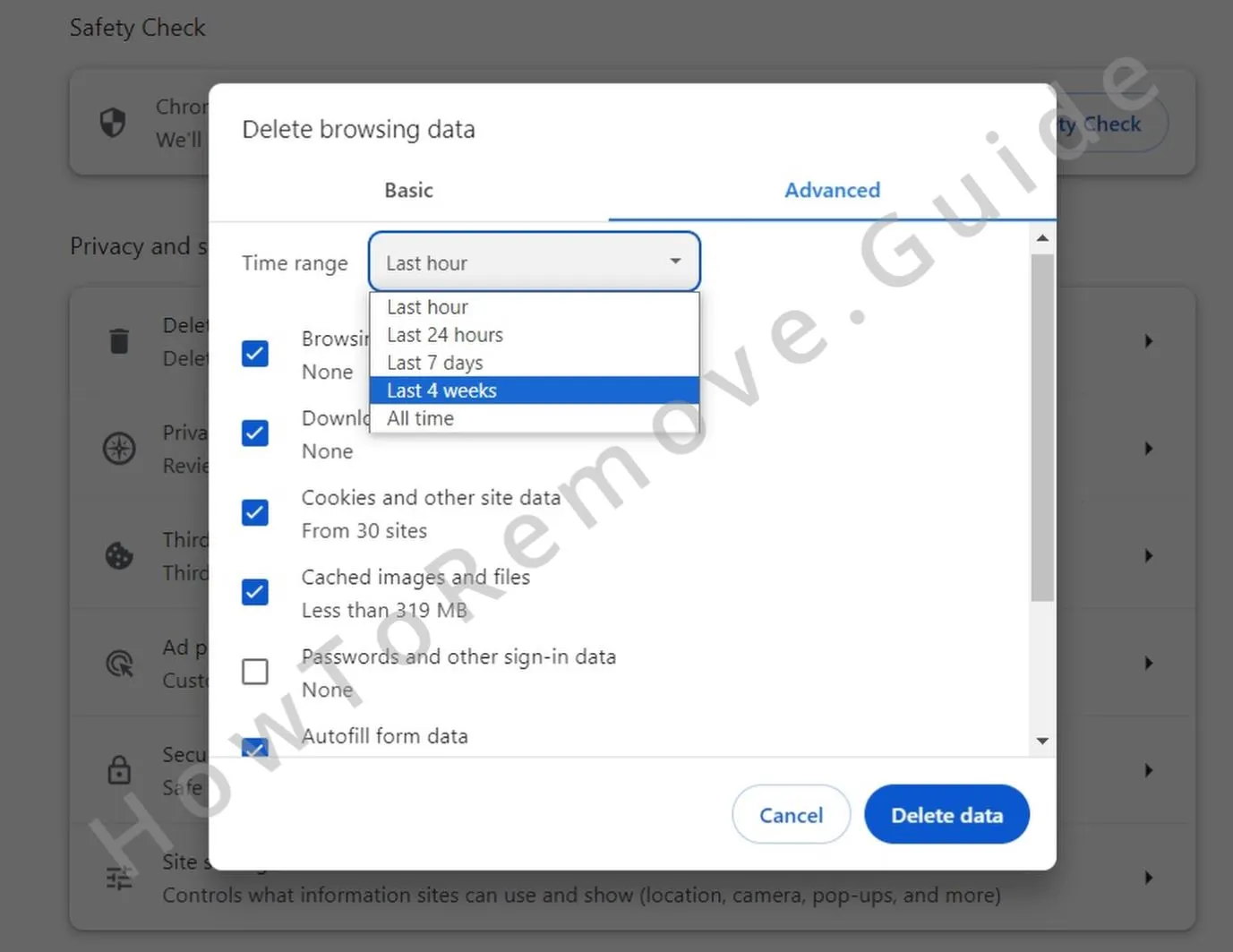 Open Clear browsing data and set Time range to All time.
Remove cache, cookies, hosted app data, and site settings; keep Saved passwords if needed.
Repeat for each profile; if the issue returns quickly, turn on Clear data on exit temporarily. - 4.3
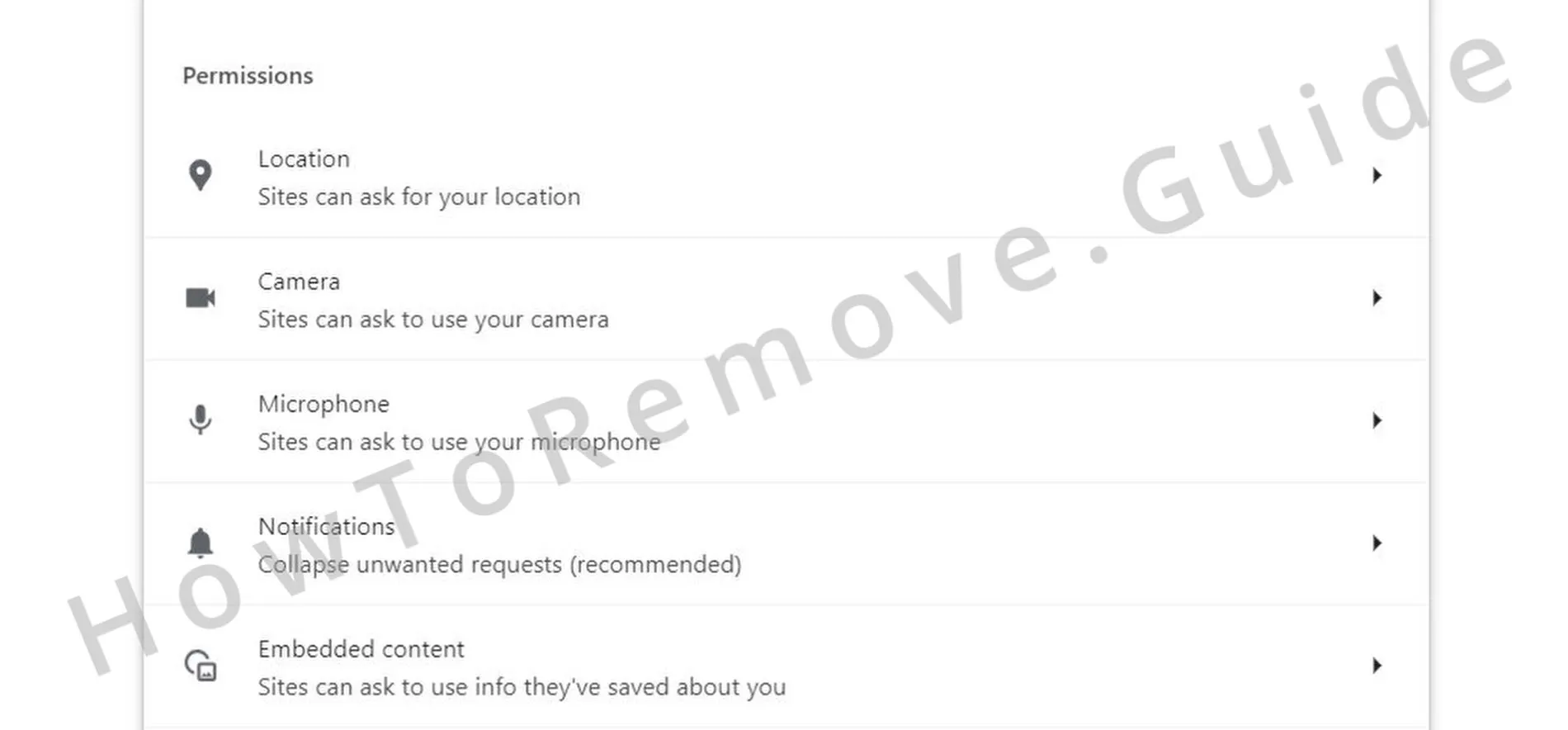 Open Privacy and Security > Site settings.
Remove or block unknown entries for notifications, camera, microphone, and location.
Use View permissions and data stored across sites to bulk-remove noisy domains. - 4.4
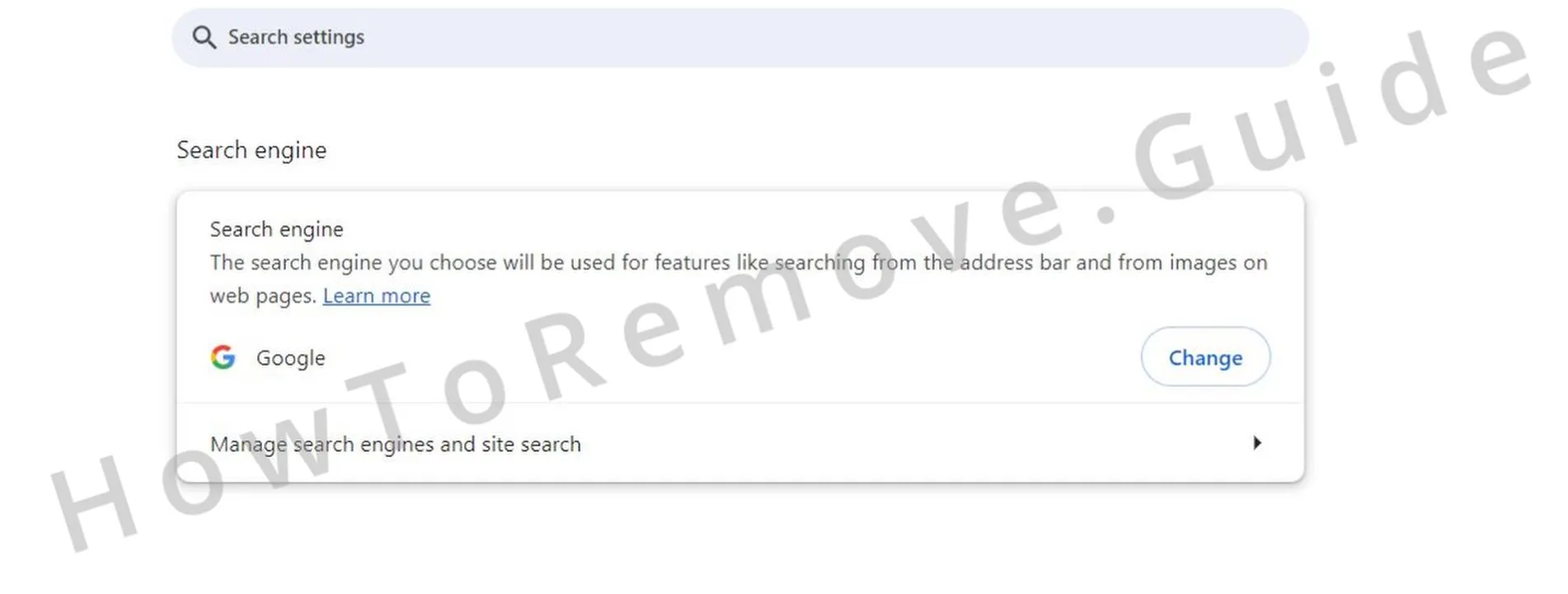 Open Search engine → Manage search engines and site search, remove untrusted providers and restore a known one (e.g., Google, Bing, DuckDuckGo).
Delete custom site-search rules inserted by hijackers. - 4.5Open On startup and Appearance.
Remove unfamiliar URLs used for startup, homepage, or new tab.
Switch back to the browser’s Default theme.

Leave a Reply