

If your PC has been acting up lately and you’ve spotted a suspicious file or process called PupkinStealer.exe, it’s likely that your system has been compromised by a Trojan. These deceptive programs are often appearing as legitimate software to trick you into thinking the problems and modifications come from somewhere else. For example, PupkinStealer can disguise itself as Microsoft Windows files, while using only the exe you see. This way it can slip past your defenses through bundled downloads, meaning you might not even realize it’s there until it starts causing trouble.
Once inside, PupkinStealer can drain your computer’s resources, collect sensitive information, or set the stage for more malicious attacks.
We tested that SpyHunter successfully removes PupkinStealer* and we recommend using it. It will block PupkinStealer from reinstalling itself and it will make sure your device is clean from any malware.
 Try Free For 7 Days*
Buy now15% OFF if you buy straight without trial.
 OFFER
OFFER
PupkinStealer Removal Guide
About spotting a scam? Here’s the deal. Some programs seem legit but feel off. PupkinStealer is a sneaky Trojan miner hiding in plain sight, hoping you ignore it. Now, sure, sometimes a few simple steps get rid of it. But if that doesn’t work, don’t worry – there are deeper, more advanced ways to take it down.
Quick Steps to Remove PupkinStealer
- 1.1Begin by locating your Downloads folder, which is accessible through This PC, then clicking on Downloads. Once inside, carefully sift through the contents, looking for files with unfamiliar names, unexpected downloads, or anything that appears out of place. Pay special attention to any files that you do not recall downloading. If a file seems suspicious or unnecessary, do not hesitate – delete it immediately to prevent any potential risk.
- 1.2Next, navigate to your system’s Settings, open Apps, and organize the list by selecting the Sort by option and choosing Installation date. This method helps reveal recently added software that might be linked to the malware. If PupkinStealer appears within the list, click Uninstall, then follow the on-screen prompts carefully to ensure that the program is removed completely. Confirm each step to prevent residual files from being left behind.
- 1.3Examine the installed applications further to identify any additional software that was installed around the same time as PupkinStealer, or any programs that have suspicious names. Certain malware variants install alongside other unwanted programs. If you find questionable applications, remove them as well by selecting Uninstall for each, ensuring that no related threats are left behind.
- 1.4Now, locate the software’s installation directory. By default, malware like PupkinStealer often installs itself in:
*C:\Users\UserName\AppData\Local\Programs*
However, in some cases, it may be found in other locations, such as the Program Files directories. Manually check additional areas where software installations are commonly stored, particularly if you cannot locate it in the default path.
- 1.5Once you have found the malware’s main directory, proceed to delete it entirely, along with any remaining files contained within that folder. If deletion is restricted, ensure that all associated processes have been terminated before attempting again. Removing these files is crucial, as leaving behind any remnants could allow PupkinStealer to regenerate or reactivate.
If the threat does not reappear after these steps, you have successfully removed it. If it persists, proceed with the more advanced removal techniques outlined below.
SUMMARY:
Before You Begin: Something to Keep in Mind
Let’s be real – removing malware manually can be a nightmare. It’s complicated, eats up time, and if you’re not tech-savvy, it’s overwhelming. That’s where security tools come in. PupkinStealer can be detected and removed automatically with software like SpyHunter 5. But if you prefer the hands-on route, stick with us – we’ll guide you through every step.
How to Fully Get Rid of PupkinStealer
Some malware doesn’t just sit there waiting to be deleted – it fights back. PupkinStealer is one of those. It spreads little pieces of itself everywhere, making sure a single cleanup won’t do the job. If you don’t go after every last bit, it’ll just reappear. The right tools and a solid strategy are the only way to wipe it out for good.
1. Preparing for the PupkinStealer Removal
- 1.1
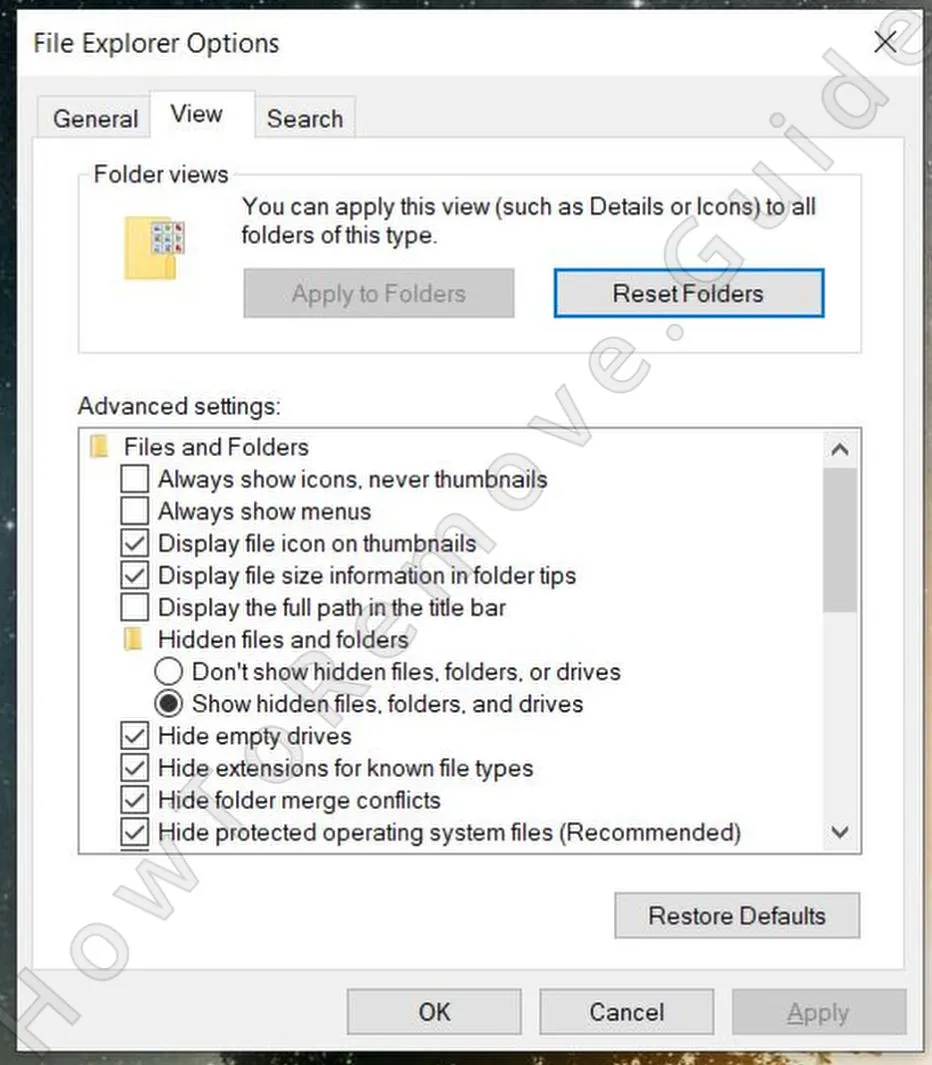 To improve your chances of finding hidden malware-related files, enable Show hidden files and folders in Folder Options. Malware frequently conceals itself in areas that are not visible by default. To adjust this setting, open File Explorer, click on View, then select Options, and navigate to the View tab. Locate and enable Show hidden files, folders, and drives, then apply the changes. With this enabled, previously invisible files will now be accessible, making detection and deletion of the malware easier.
 - 1.2Download and install LockHunter, a utility designed to remove files that are locked by the system. Some malware, including PupkinStealer, prevents deletion by marking its files as in use. LockHunter bypasses these restrictions, allowing you to delete stubborn components. The tool is lightweight, free to use, does not contain advertisements, and requires no registration. Once installed, you can right-click on locked files and use LockHunter to identify and force-remove them.
We understand if you don’t want to use third-party software and we generally try to keep our guides entirely “hands-on”. However, in this case, you may need this app to eliminate some malware files which is an essential part of the removal process.
But don’t worry, LockHunter won’t ask for money, doesn’t have ads, and doesn’t even require a registration. You can download and install it in about two minutes.
Remove PupkinStealer Processes From the Task Manager
Here’s a fun trick malware loves – running in the background while you try to delete it. That’s how PupkinStealer keeps causing problems, throwing error messages at you and stopping removal attempts. The solution? You’ve got to track down its processes and kill them at the source. If it’s not running, it can’t fight back.
2. How to Delete PupkinStealer Processes in the Task Manager
- 2.1Launch Task Manager by pressing Ctrl + Shift + Esc on your keyboard. This opens a detailed overview of all currently running processes on your system, allowing you to identify and terminate any that may be related to PupkinStealer.
- 2.2If Task Manager initially opens in a minimalistic mode, click More Details to expand the interface. This will provide a full list of active processes, giving you greater visibility into background applications.
- 2.3
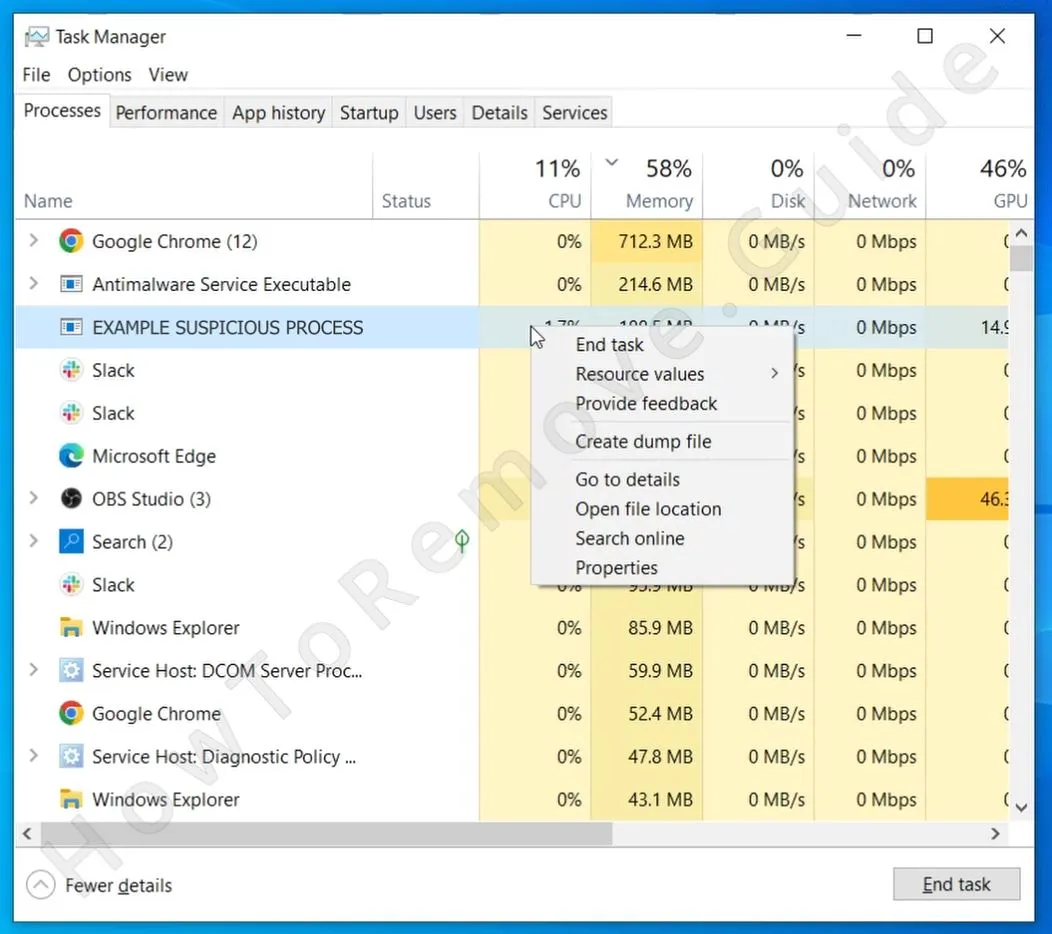 Carefully analyze the processes running on your system. Look for anything consuming an unusually high amount of CPU or memory. Malware often disguises itself under different names, so check for any unfamiliar processes. Specifically, be on the lookout for items labeled PupkinStealerApplication.exe, or any recently added processes that seem out of place.
Note: Don’t expect to find a rogue process named “PupkinStealer“. Most forms of malware will hide their processes under innocent-looking names.
- 2.4If you identify a suspicious process, right-click on it and select Open File Location. This will take you directly to the associated files. However, before making any changes in the file directory, go back to Task Manager and immediately select End Task to terminate the process.
- 2.5Once the process is terminated, delete all files found in its File Location directory. If your system prevents deletion, use LockHunter. Right-click the folder, select What’s locking this folder?, and then choose the option to force-delete any files that refuse to be removed.
- 2.6After deleting the files, revisit Task Manager and make note of any other suspicious processes that were terminated. This helps ensure that no overlooked malware-related processes remain running.
Delete PupkinStealer Virus Files
Even if you shut down PupkinStealer, that doesn’t mean you’re safe. Pieces of it could still be hiding in different folders, waiting to bring it back to life. If you don’t clear every last file, it’ll just reinstall itself. That’s why a full cleanup is crucial – get rid of everything, or you’ll be dealing with it again later.
3. How to Get Rid of PupkinStealer Files
- 3.1Navigate to the system’s Startup folders, which are commonly located at:
– C:\ProgramData\Microsoft\Windows\Start Menu\Programs\Startup
– C:\Users\YourUsername\AppData\Roaming\Microsoft\Windows\Start Menu\Programs\Startup - 3.2Examine these directories thoroughly. Remove any files that look unusual, have odd names, or appear unexpectedly. Be cautious when deleting, as these folders also contain essential system files.
- 3.3Check additional locations where malicious files may be hiding:
– C:\Program Files\
– C:\Program Files (x86)\Even though these folders typically house legitimate software, they can also store malware-related components.
-
3.4Further inspect:
–
C:\Users\%user%\AppData\Local\
–C:\Users\%user%\AppData\Local\Programs\
–C:\Users\%user%\AppData\Roaming\Microsoft\Windows\Start Menu\Programs\ - 3.5
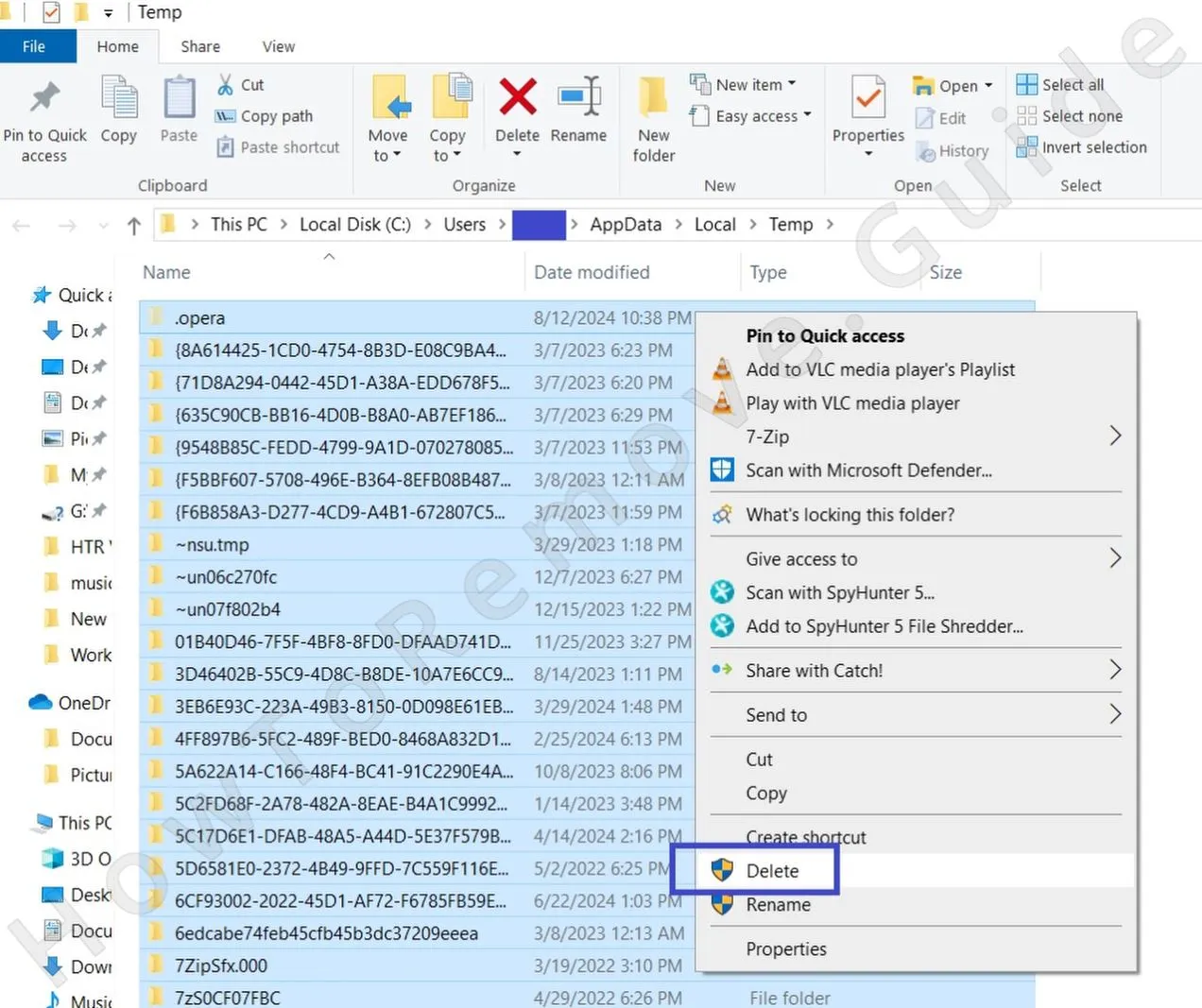 Clear the system’s temporary files by navigating to the %TEMP% directory. This can be done by pressing Windows + R, typing %TEMP%, and pressing Enter. Sort files by Date Modified, then delete all created around the time of the infection.
Get Rid of PupkinStealer Scheduled Tasks
Malware doesn’t just sit quietly and hope you forget about it – it sets up ways to restart itself. PupkinStealer does this by sneaking into Task Scheduler, making sure it runs again after a reboot. The fix? Go in, find any sketchy scheduled tasks, and delete them. Oh, and don’t forget to remove the linked files too.
4. Eliminate PupkinStealer Scheduled Tasks
- 4.1
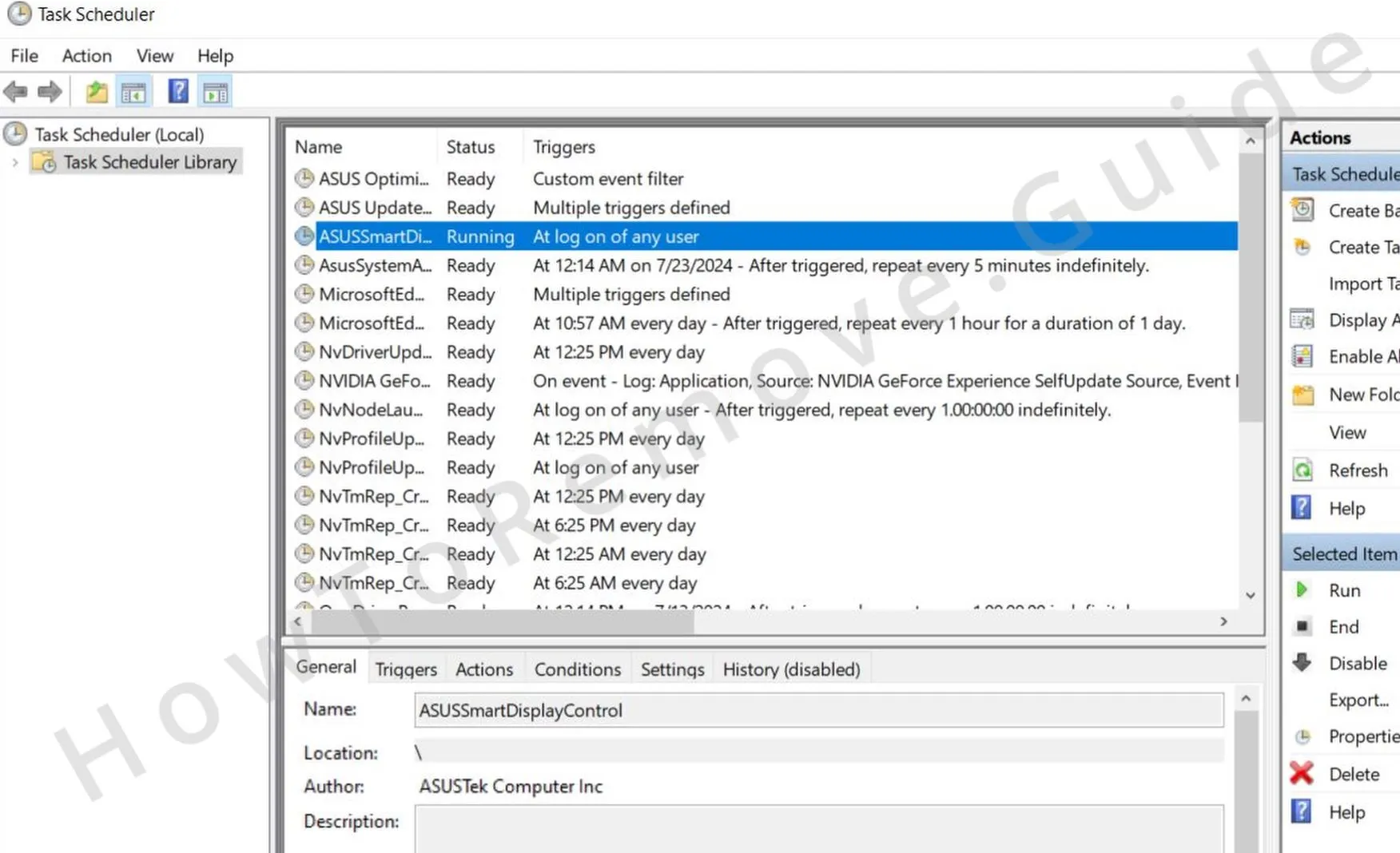 Open Task Scheduler by pressing Windows + S, typing Task Scheduler, and selecting the first result. Once inside, browse through the list of active scheduled tasks, paying close attention to tasks that are set to execute unknown or suspicious files. If you find an unfamiliar entry linked to PupkinStealer, remove both the task and the corresponding file associated with it.
 - 4.2To verify what a scheduled task does, double-click it and navigate to the Actions tab. This section will show the specific executable file or command the task is running. If you see a file path leading to an unrecognized location or an unfamiliar program, make a note of the file before deleting the task.
- 4.3If a task appears suspicious and is linked to a program or file that you don’t recognize, remove it by right-clicking the task and selecting Delete. Repeat this process for all questionable tasks, ensuring that no malicious tasks remain active.
- 4.4After deleting any unwanted scheduled tasks, locate the associated files by following their directory paths. Navigate to those locations using File Explorer and permanently delete the files to prevent the malware from using them to re-establish itself in your system.
Uninstall the PupkinStealer Malware App Through the Windows Registry
If you really want to make sure PupkinStealer is gone, you have to go into the Windows Registry. This is where things get tricky – mess up here, and you could break your system. That’s why you need to be extra careful. Delete only the malware-related entries, and leave everything else alone. One wrong move, and it’s trouble.
5. Remove PupkinStealer Through the Registry
- 5.1Press Windows + R, type regedit, and press Enter to open the Registry Editor. To ensure proper access, right-click the Registry Editor application and select Run as Administrator before proceeding.
- 5.2Inside the Registry Editor, click on Edit, then select Find. Type PupkinStealer into the search bar and press Enter to locate related registry entries. Some malware disguises itself under different names, so if you previously noted suspicious process names from Task Manager, search for those as well.
- 5.3For each result that appears, carefully verify whether it is related to PupkinStealer. If confirmed, right-click the entry and select Delete. After removing an entry, press F3 to search for additional occurrences until no more related entries remain.
- 5.4Manually check the following registry locations for suspicious entries related to PupkinStealer:
HKEY_CURRENT_USER\Software\Microsoft\Windows\CurrentVersion\Run
HKEY_CURRENT_USER\Software\Microsoft\Windows\CurrentVersion\RunOnce
HKEY_LOCAL_MACHINE\Software\Microsoft\Windows\CurrentVersion\Run
HKEY_LOCAL_MACHINE\Software\Microsoft\Windows\CurrentVersion\RunOnce
HKEY_LOCAL_MACHINE\Software\Microsoft\Windows\CurrentVersion\Policies\Explorer\Run
HKEY_CURRENT_USER\Software\Microsoft\Windows\CurrentVersion\Policies\Explorer\Run
HKEY_LOCAL_MACHINE\Software\Microsoft\Windows\CurrentVersion\RunServices
HKEY_LOCAL_MACHINE\Software\Microsoft\Windows\CurrentVersion\RunServicesOnce
HKEY_LOCAL_MACHINE\Software\Microsoft\Windows\CurrentVersion\RunOnce\Setup
HKEY_LOCAL_MACHINE\SYSTEM\CurrentControlSet\services - 5.5Carefully inspect each folder and review the registry keys on the right-hand side. If you see any entries that match PupkinStealer or a related process name, delete them. If unsure, research unknown entries before deleting them.
- 5.6In each of the listed registry locations, scan for anomalies that might be tied to PupkinStealer. Pay particular attention to entries that reference executables or paths leading to suspicious folders. Once identified, delete the problematic entries while ensuring that you do not remove critical system files.
By carefully following these steps, you can fully remove PupkinStealer and restore your system’s security. Since malware threats evolve continuously, it is essential to remain vigilant by regularly checking for unwanted applications, monitoring system processes, and keeping security tools up to date. If you frequently encounter similar infections, consider tightening your security settings, using a reliable antivirus solution, and avoiding suspicious downloads to prevent future infections.
