

If your browser has displayed a large red warning about the Jiffy Reader extension for Chrome, which you have been using for months, and you are wondering what exactly the problem is, you have come to the right place. This extension is supposed to help you read faster, right? Turns out it was actually malware. Apparently, the original dev, someone named @ansh, sold it to someone else – no name given. After that, things went downhill. The dev account got phished, and whoever took over updated the extension with code that started stealing data from HTTP headers and DOM content.
Some think Jiffy Reader malware even swiped cookies and session tokens. And get this – it quietly gained admin access, ran shady processes that looked normal, and maybe even mined crypto using people’s CPU and memory. Jiffy Reader was pulled from the Chrome Web Store, but folks are still digging through archived versions in ansh/jiffyreader.com#342. Worst part? You have to uninstall it yourself. Otherwise, the threat like this and Watchdog just stays hidden.
We tested that SpyHunter successfully removes Jiffy Reader* and we recommend using it. It will block Jiffy Reader from reinstalling itself and it will make sure your device is clean from any malware.
 Try Free For 7 Days*
Buy now15% OFF if you buy straight without trial.
 OFFER
OFFERJiffy Reader Removal Guide
Look, before you dive into anything technical or go full registry-hunting, just try uninstalling it. Seriously, it takes like five minutes, tops. Most people skip it, and yeah, it usually doesn’t work – but when it does, that’s it, you’re done. No scripts, no weird folders. You might just be lucky with Jiffy Reader.
Quick Steps to Remove Jiffy Reader
- 1.1Click on the Start Menu, then go to Settings (represented by a gear icon). This panel opens your system configuration center, where you can access and manage operating system-level preferences, hardware settings, and installed applications.
- 1.2Inside Settings, locate and open the Apps section. This interface displays a full catalog of installed software on your machine, organized by size, name, or installation date for convenient browsing and filtering of apps.
- 1.3To make suspicious apps stand out more clearly, adjust the sorting to Installation Date. This reorders the list by the most recently added programs, making it easier to notice newly installed threats like Jiffy Reader or similar unknown software.
- 1.4Look carefully through the app list for Jiffy Reader or any other unfamiliar entries, like Jiffy Reader . When you find one, select it and click Uninstall, then follow any confirmation prompts to ensure that the removal process goes through completely.
- 1.5After removing the program, open File Explorer and go to C:\Users\YourUsername\AppData\Local\Programs. Check this folder thoroughly for leftovers from Jiffy Reader, as its files may not always be deleted during a standard uninstall.
- 1.6If a folder related to Jiffy Reader is found, delete it manually by right-clicking and selecting Delete. Then, restart your computer to finalize changes and check if any suspicious behaviors still persist on your system afterward.
Now restart your PC to see if the rogue app is gone from it. In many cases, it will still be there, but this is perfectly normal. It just means you’ll have to resort to the more advanced steps we’ve prepared next.
SUMMARY:
How to Fully Get Rid of Jiffy Reader
Now here’s the part that catches people off guard – Jiffy Reader could already be running while you’re reading this. Not joking. But oddly enough, that’s actually useful. Because every single process it touches? Leaves behind a trail. And if you can follow that trail, you’ve got a shot at stopping it mid-move.
1. Preparing for the Jiffy Reader Removal
- 1.1
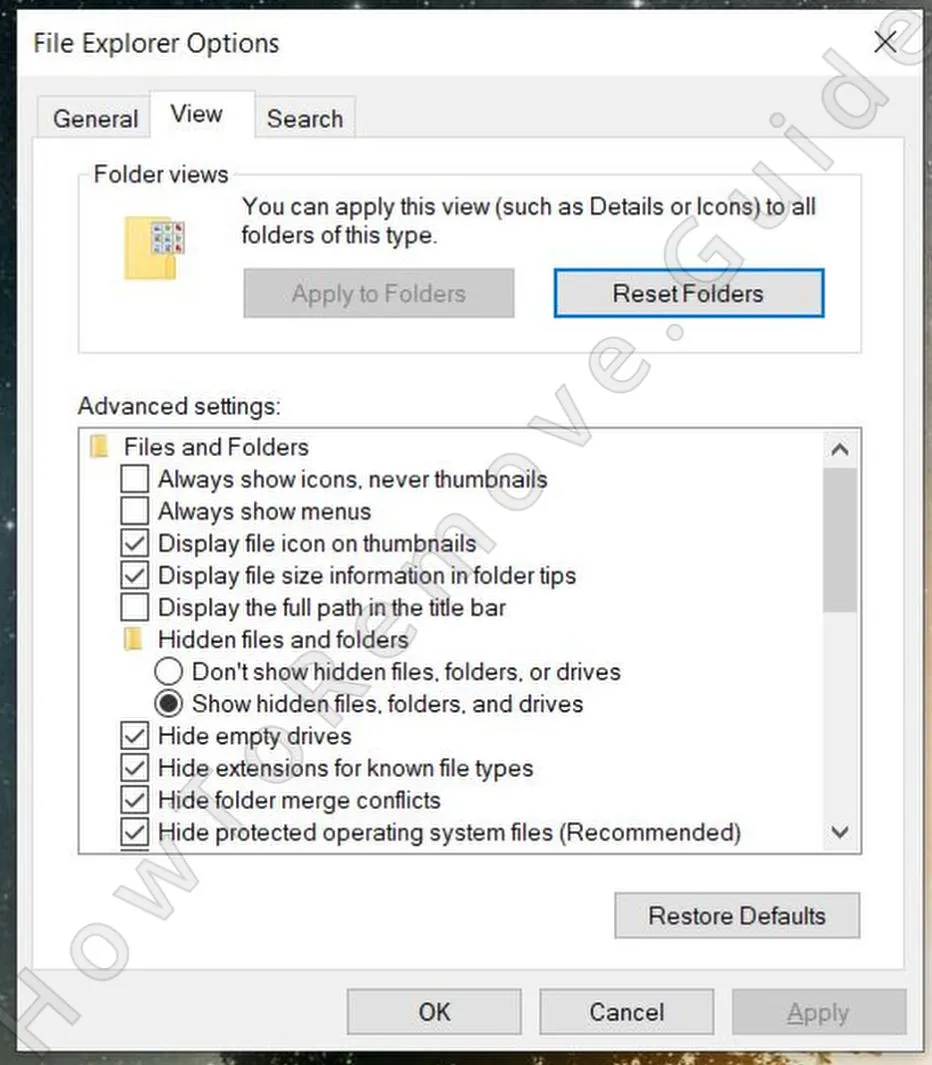 Search for Folder Options in the Start Menu, then select it from the results. Go to the View tab and enable Show hidden files, folders, and drives. Click Apply. This step ensures you can see hidden items, which is crucial since Jiffy Reader often hides its files from plain view.
 - 1.2Download and install LockHunter, a free utility specifically made to unlock and delete files that Windows refuses to remove. Although many users prefer to avoid third-party software, LockHunter is trusted and lightweight – it’s often essential for deleting malware-laced files that are locked by the system.
If you’re hesitant to install outside tools, that’s understandable – we generally encourage manual-only steps. However, in this instance, this program might be your best chance to fully clean infected files tied to Jiffy Reader.
Good news: LockHunter is free, ad-free, doesn’t require registration, and takes just a couple of minutes to install and launch.
Remove Jiffy Reader Processes From the Task Manager
Okay, so even after you delete what looks like the malware, you’re not actually safe. Jiffy Reader doesn’t sit in one place – it breaks itself up, hides all over your system, tucks into folders you don’t usually look at. If you don’t dig it all out, it’ll just come back like nothing happened.
2. How to Delete Jiffy Reader Processes in the Task Manager
- 2.1Press Ctrl + Shift + Esc at the same time to open the Task Manager. This tool shows all the running tasks, including ones that might be suspicious or malicious.
- 2.2If Task Manager starts in its simplified mode, click More Details at the bottom to expand it. This will reveal deeper system insights such as currently running apps, background processes, and overall system resource usage.
- 2.3
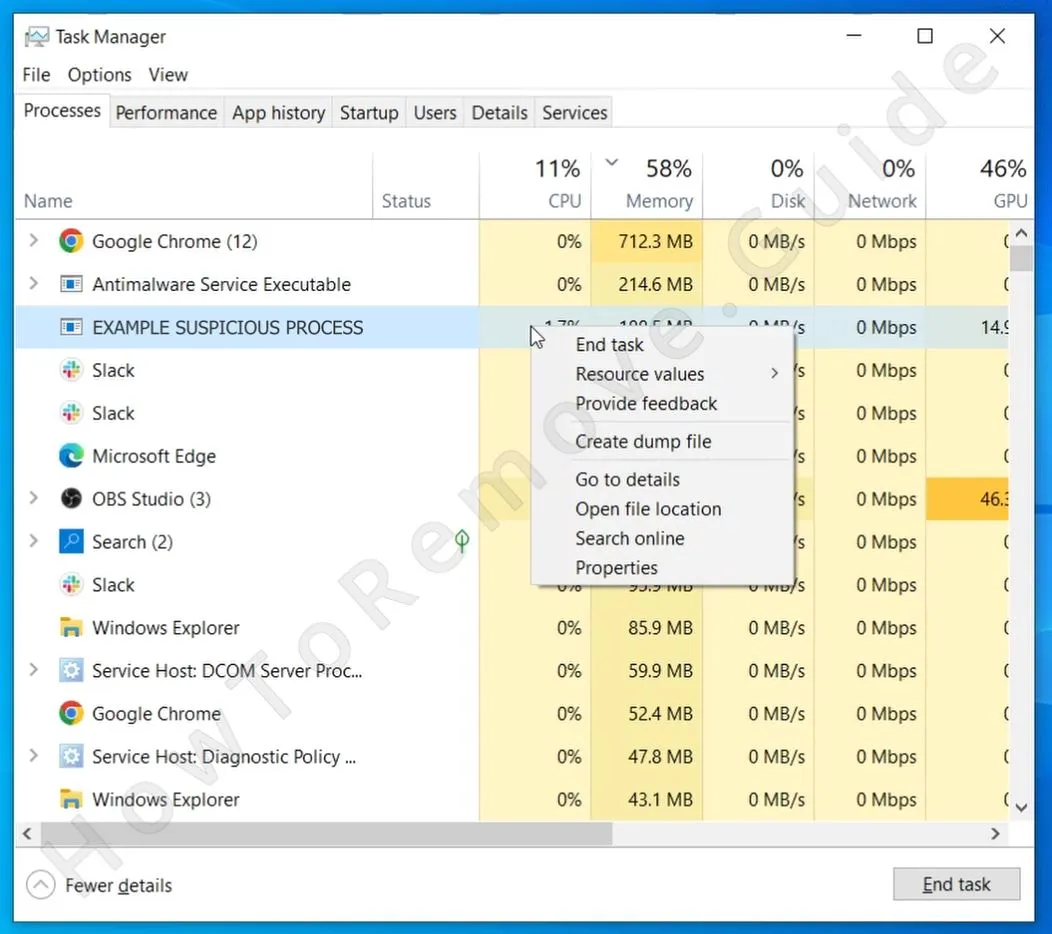 Click the CPU or Memory column header to sort processes by resource usage. High-resource processes are more likely to be suspicious and possibly linked to Jiffy Reader.
Note: Don’t expect to find a rogue process named “Jiffy Reader“. Most forms of malware will hide their processes under innocent-looking names.
- 2.4For every process that seems strange or unknown, right-click it and choose Open file location. This action will take you to the folder where the file is stored, so you can further inspect it for connections to Jiffy Reader.
- 2.5Try to delete the entire folder where the suspicious executable is located. If you get a message saying it’s in use or blocked, right-click the folder and select What’s locking this file? using LockHunter to unlock and safely delete it.
- 2.6After successfully removing the file or folder, go back to Task Manager, highlight the same process, and click End Task. This makes sure it’s no longer running in memory.
Delete Jiffy Reader Virus Files
Nobody really checks this – but you absolutely should. Task Scheduler. Yeah, I know, boring, hidden away, easy to ignore. But that’s exactly where Jiffy Reader sets its trap. It sneakily schedules itself to restart later. You think it’s gone? It’s not. It’s just waiting to pop back up after your next reboot.
3. How to Get Rid of Jiffy Reader Files
- 3.1Launch File Explorer and visit the following two directories one by one:
C:\ProgramData\Microsoft\Windows\Start Menu\Programs\Startup
C:\Users\YourUsername\AppData\Roaming\Microsoft\Windows\Start Menu\Programs\Startup
Look inside both folders for any shortcuts or executable scripts that could have been placed there by Jiffy Reader to run when Windows starts. - 3.2Delete every item in those folders except for desktop.ini, which is a normal system file. If Windows refuses to delete any of the other entries, use LockHunter to unlock and remove them forcefully.
- 3.3Go to your C:\ drive and open both Program Files and Program Files (x86) directories. Browse through them for any new or oddly named folders – anything unfamiliar could be connected to Jiffy Reader. Delete any suspicious folders entirely.
- 3.4Continue your inspection by checking these directories:
C:\Users\YourUsername\AppData\Local\Programs
C:\Users\YourUsername\AppData\Roaming\Microsoft\Windows\Start Menu\Programs
Remove anything that seems connected to Jiffy Reader or looks suspicious and unrelated to known, trusted apps. - 3.5
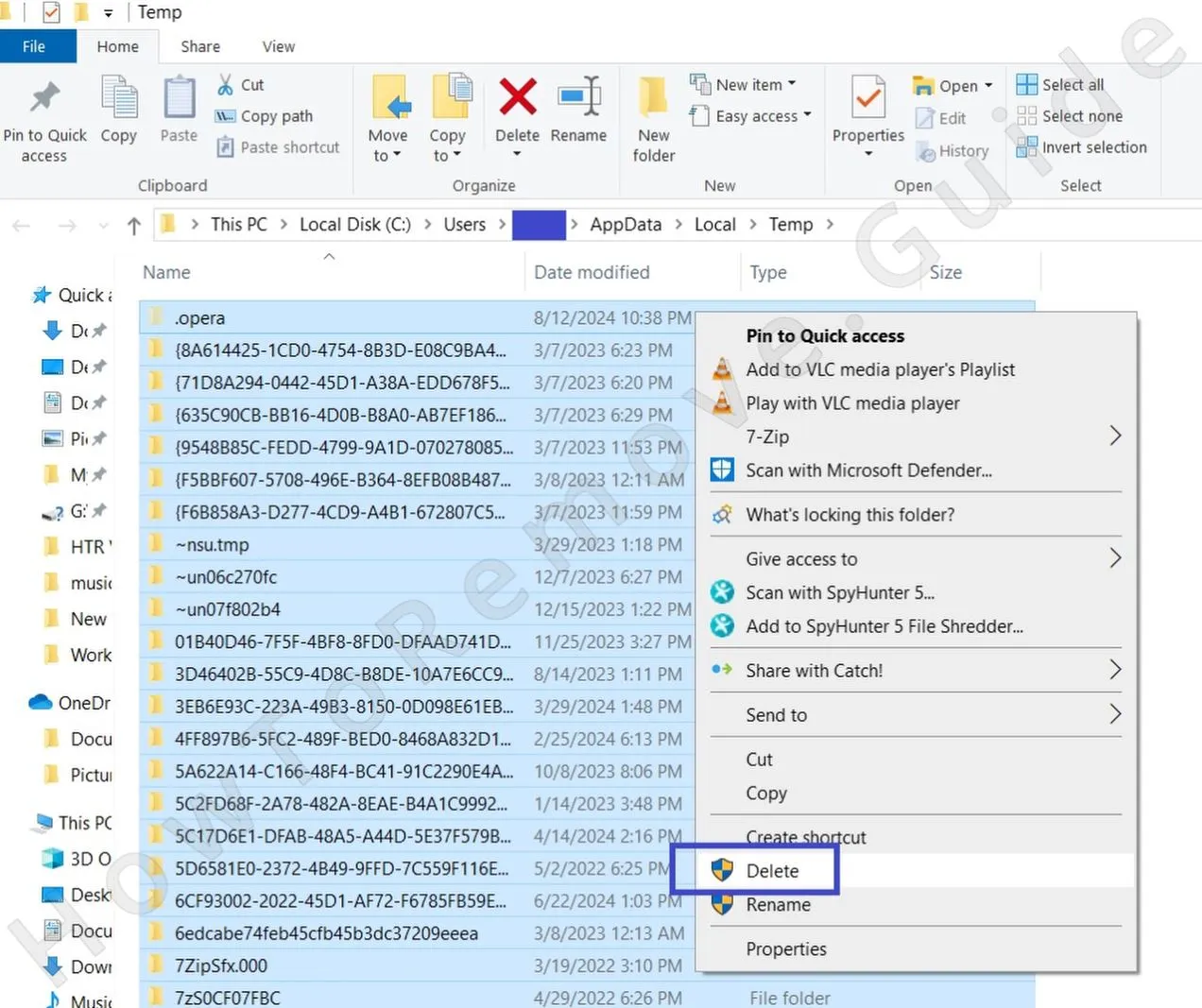 Open the Temp directory by navigating to:
C:\Users\YourUsername\AppData\Local\Temp
Select everything inside by pressing Ctrl + A, then press Delete. Temporary files often contain components that malware relies on to operate or reinstall itself.
Get Rid of Jiffy Reader Scheduled Tasks
This is where things get messy – Jiffy Reader loves to bury itself in Task Scheduler, deep where almost no one ever looks. It’s confusing, it’s intimidating, and if you don’t know what you’re doing, you could make things worse. Just go slow, only remove sketchy entries, and whatever you do, don’t delete whole folders.
4. Eliminate Jiffy Reader Scheduled Tasks
- 4.1
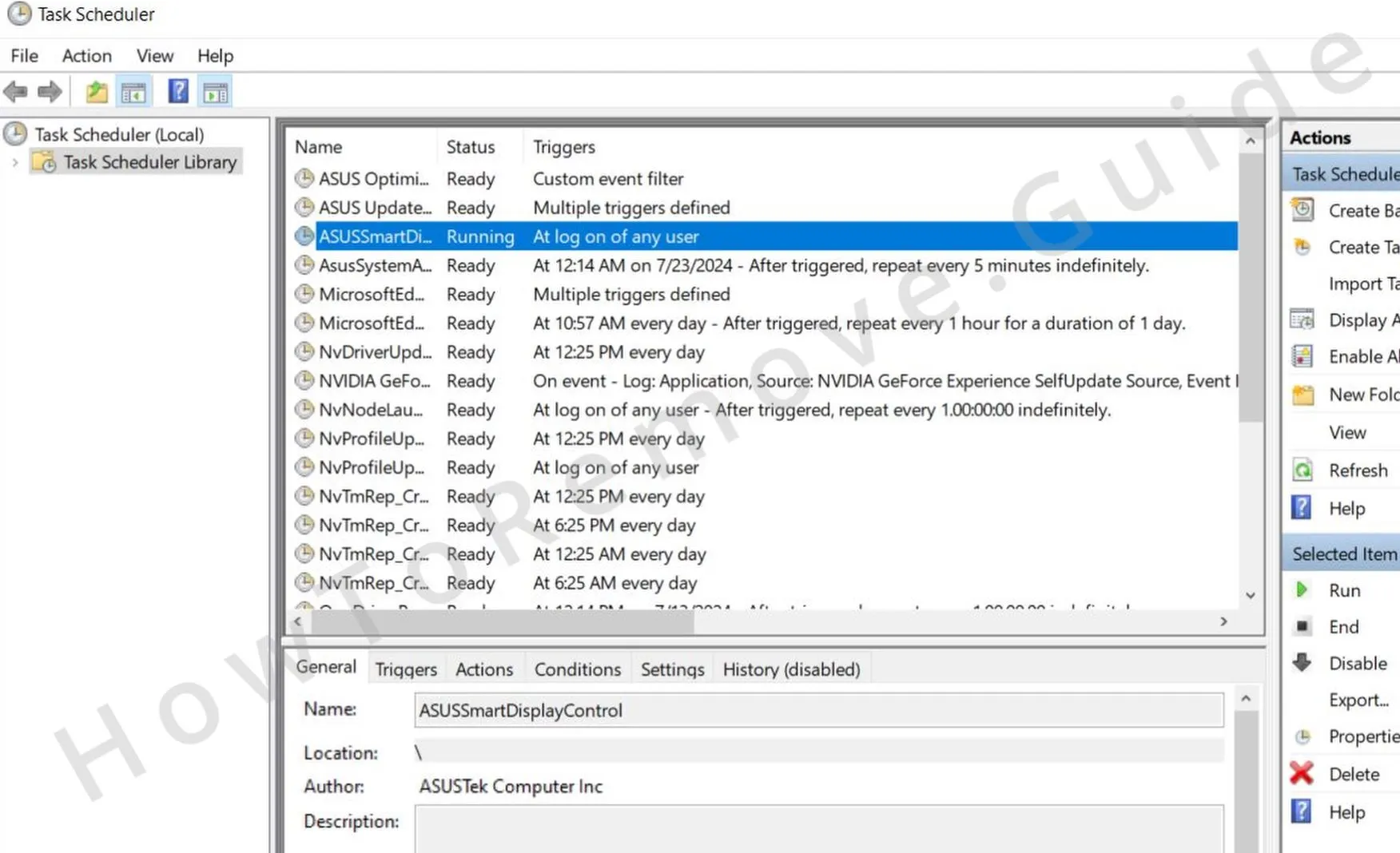 Open the Start Menu, type Task Scheduler, and hit Enter. Once inside, expand the Task Scheduler Library on the left to access all the scheduled jobs created by Windows or third-party software.
 - 4.2Double-click each task listed to open its details window. Navigate to the Actions tab to see which file or command the task is programmed to run, and under what conditions.
- 4.3Look closely at each task, especially those running scripts or files located in AppData or Roaming folders. Entries that aren’t tied to familiar applications may be part of Jiffy Reader or another infection.
- 4.4When you find a suspicious task, write down the full file path shown under the Actions tab. Then delete the task using the right-click menu to prevent it from executing again.
- 4.5Go to the file path you wrote down using File Explorer. Find the associated file or script and delete it completely from your system.
- 4.6Repeat this task review process until all unfamiliar or shady scheduled jobs are investigated and safely removed. Be careful not to delete valid system tasks – stick only to those clearly tied to Jiffy Reader or similar malware.
Uninstall the Jiffy Reader Malware App Through the Windows Registry
Try uninstalling it first. Seriously. I know, I know – it usually doesn’t work, right? But hear me out. Sometimes it does, and if it does, you’re done right there. Jiffy Reader is gone, no scripts, no registry editing. Most people overlook this step, and it’s a mistake. It’s easy, quick, and surprisingly effective.
5. Remove Jiffy Reader Through the Registry
- 5.1Press Win + R to open the Run dialog. Type regedit and press Enter to launch the Registry Editor – this is where Windows stores hidden configurations and startup settings, including those used by persistent malware.
- 5.2Once inside the Registry Editor, press Ctrl + F to bring up the search tool. Type in the name of the app you previously tried to remove – such as Jiffy Reader – and begin the search for any related keys or folders.
- 5.3If a relevant registry entry is found, click the folder on the left-hand side, then right-click and select Delete. Press F3 to continue searching for additional entries tied to Jiffy Reader throughout the registry.
- 5.4Repeat the search process using other app names you’ve already removed, as well as the names of any strange processes you previously terminated via Task Manager. This ensures you catch any additional leftover registry references.
- 5.5Do a direct search for Jiffy Reader across the registry. Although it’s possible that nothing will come up, some malware authors hide entries in obscure locations, so it’s worth checking.
- 5.6Manually visit the following registry paths, as these often contain settings that allow apps to launch during system startup or tie into system services:
HKCU\Software\Microsoft\Windows\CurrentVersion\Run
HKCU\Software\Microsoft\Windows\CurrentVersion\RunOnce
HKLM\Software\Microsoft\Windows\CurrentVersion\Run
HKLM\Software\Microsoft\Windows\CurrentVersion\RunOnce
HKLM\Software\Microsoft\Windows\CurrentVersion\Policies\Explorer\Run
HKCU\Software\Microsoft\Windows\CurrentVersion\Policies\Explorer\Run
HKEY_LOCAL_MACHINE\Software\Microsoft\Windows\CurrentVersion\RunServices
HKEY_LOCAL_MACHINE\Software\Microsoft\Windows\CurrentVersion\RunServicesOnce
HKEY_LOCAL_MACHINE\Software\Microsoft\Windows\CurrentVersion\RunOnce\Setup
HKEY_LOCAL_MACHINE\SYSTEM\CurrentControlSet\servicesIn each of these locations, look at the values listed on the right. If you see an entry that includes Jiffy Reader or another suspicious file path, delete that specific value – but do not delete the entire registry folder unless you’re completely sure of what it contains.
After removing every known or questionable entry, restart your PC. Pay attention to how it behaves after reboot. If everything is running clean and no symptoms return, your system is likely free of Jiffy Reader.
