

If you were recently redirected to Gobenex through a flashy crypto ad, let’s get to the point. Gobenex is not a real trading platform, even though it goes out of its way to look like one.
Gobenex copies the layout of real crypto exchanges, then injects it with just enough made-up trading metrics to fool casual visitors. The scam works like this: you’re asked to deposit a “minimum trade” amount – usually in Bitcoin or Ethereum – and then told the deposit must be verified. That verification never comes, because the platform was built purely to siphon money. If you’ve already made a deposit, the chances of recovery are essentially zero.
Scams of Gobenex‘s type are known to steal personal data and passwords. Install SpyHunter Pro to scan for risks, remove any dangerous trackers, and enable real-time protection.

Try Free For 7 Days*
Buy now15% OFF if you buy straight without trial.
 OFFER
OFFERWhat is the Gobenex Scam?
The Gobenex.com scam is a fake cryptocurrency trading site built purely to steal users’ Bitcoin. It offers no real functionality, security, or customer support. It is not registered with any regulatory authority and is not a legitimate exchange. Instead, it’s part of a broader scam operation targeting unsuspecting users via viral platforms like YouTube, TikTok, and Facebook. The scammers behind Gobenex continuously shift domains to stay ahead of blacklists and takedowns.
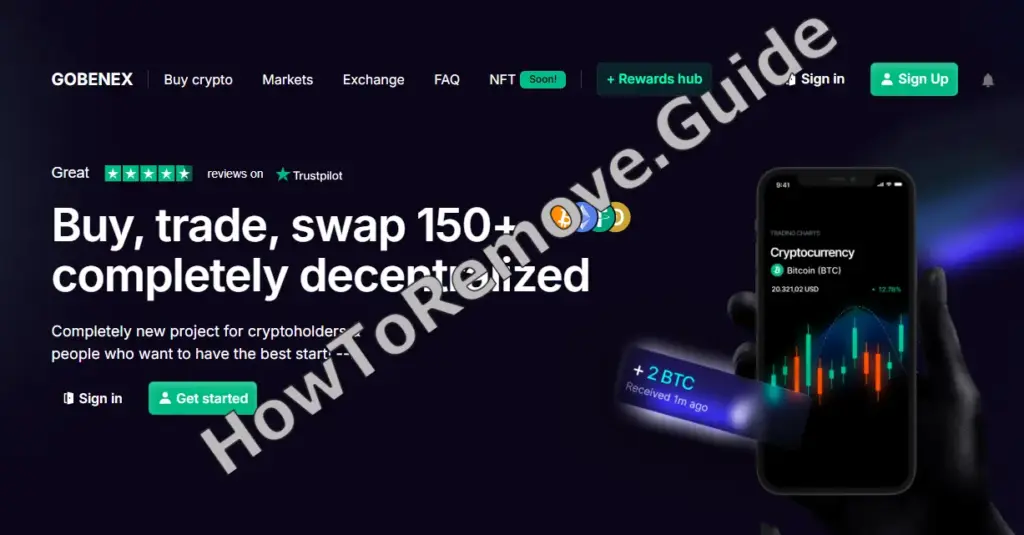
At the heart of the scam is deception. Victims are first exposed to Gobenex through deepfake videos featuring fake endorsements from celebrities like Elon Musk, Cristiano Ronaldo, and others. These videos claim the stars are giving away crypto or backing a new revolutionary platform. Users are then directed to the Gobenex website, where they’re prompted to register an account. During this process, they’re encouraged to enter a promo code – such as “CR7” or “Tiktok11” – which instantly credits their account with a fake Bitcoin balance. This phantom balance is never actually real. It is a fabricated figure displayed only to entice and convince users to invest.
The scam deepens when the victim tries to withdraw the displayed funds. At that point, the site informs them they must first deposit a “minimum amount” – usually 0.005 BTC – to activate the withdrawal function. Once this payment is sent, the site either throws an error, goes offline, or becomes unresponsive. The deposited crypto goes directly into the scammers’ wallets. At no point is there any legitimate trading, storing, or withdrawing taking place. The site never had access to real funds – just the ability to trick users into sending them.
The Gobenex scam has no unique structure – it relies on cloned sites with identical visuals and scripts. When one version of Gobenex is flagged or shut down, another emerges under a different domain name with the same design, the same promo tricks, and the same theft mechanism. This continuous cycle makes the scam resilient and scalable. Despite its unoriginal structure, it continues to ensnare victims by preying on trust, urgency, and crypto enthusiasm.
What to Do if You’ve been scammed by Gobenex?
Getting scammed by Gobenex or Blybit can be financially and emotionally devastating. Once you realize you’ve fallen victim, your first instinct may be to try recovering the funds – but that could open the door to even more scams. The scammers behind Gobenex are experts at exploiting hope. Instead of seeking fast fixes, focus first on securing everything else. Scams like Gobenex often mean more than just one lost transaction – they can lead to wider breaches, especially if the victim interacted with the site using a compromised wallet, shared sensitive information, or reused passwords. Act quickly but thoughtfully.
Immediate damage control
If you’ve been scammed by Gobenex, begin by locking down all your digital assets. The top priority is securing your wallet(s), email, and any linked financial accounts. It’s important to accept that any Bitcoin sent is likely unrecoverable. Attempting to chase the money through “recovery services” or unverified helpers could lead to more losses. Many of those claiming to help victims are scammers themselves. While recovery efforts may be possible in some situations, they should only come after you’ve locked down your assets and reviewed all account security. Restoration can be explored later, but prevention of further damage must come first.
Damage control checklist
- Revoke permissions from any wallets connected to suspicious sites using trusted permission-review tools.
- Transfer remaining assets to a newly generated wallet; do not continue using the one that interacted with Gobenex.
- Change all passwords associated with crypto platforms, especially if the same credentials were reused elsewhere.
- Enable two-factor authentication (2FA) on every account connected to crypto, banking, or email.
- Monitor for phishing attempts, especially fake support emails asking you to “recover your losses.”
- Keep full documentation of what happened: transaction hashes, screenshots, website URLs, and contact records.
- Report the scam to relevant authorities and platforms: national cybercrime units, blockchain explorers, or crypto exchanges.
- Warn others in online communities and forums where the scam may be circulating to prevent new victims.
What Are the Usual Gobenex Red Flags?
Crypto scams like Gobenex have glaring red flags that can be easy to miss in the heat of the moment. These scams cast a wide net with low-effort setups, hoping for quick victims. Recognizing their patterns can make a critical difference. Attention to small inconsistencies and staying emotionally neutral are essential. Scammers want panic or excitement – both impair judgment.
The most prominent red flag in Gobenex is the use of celebrity endorsements via deepfake videos. These AI-manipulated clips falsely show public figures promoting Gobenex. If a promotion feels out of place or unusually slick, treat it with suspicion.
Another red flag is the fake Bitcoin balance shown after registration. Gobenex shows a false balance after users enter a promo code. This is meant to trigger excitement and push the user to act impulsively – usually by attempting to “unlock” the fake balance with a deposit.
Gobenex and similar scams often prompt urgency by setting withdrawal or offer deadlines. Messages that say “only available today” or “limited supply remaining” are engineered to short-circuit critical thinking. Real financial platforms do not rely on time pressure to prove legitimacy.
Unsolicited messages or viral posts that drive traffic to Gobenex’s website are another warning sign. If you’re being funneled toward a new platform without asking, especially through TikTok or YouTube clips, proceed cautiously. Promoted links are rarely vetted or verified.
Lastly, generic websites with vague branding, no legal pages, and no identifiable company info are standard in clone scams. If you can’t trace a platform’s ownership, licenses, or regulatory status, it’s best to walk away. Gobenex fits this model exactly.
Tips to Stay Protected From Crypto Scams Like Gobenex
Avoiding crypto scams like Gobenex is much easier than recovering funds once you’ve been caught. With the right habits and awareness, you can avoid most scams completely. Recognize the red flags discussed above. Understand the patterns these scams follow. Apply the tips below to stay safe online and reduce your exposure to digital threats.
- Never trust unsolicited offers, especially those that involve free Bitcoin, NFT drops, or exclusive promotions tied to celebrities.
- Avoid clicking on promotional links in social media posts, DMs, or emails. Access sites only through verified, bookmarked URLs.
- Use separate wallets for different types of activity. Never expose your main wallet to untrusted platforms.
- Always verify platform legitimacy before signing up. Check crypto databases and search “[platform name] + scam” first.
- Ignore fake urgency. Timers, countdowns, or “act now” messages are psychological tricks – not real deadlines.
- Revoke wallet permissions regularly. If you’ve interacted with new sites, check and remove token approvals afterward.
- Don’t enter promo codes that promise crypto rewards – this is a baiting mechanism with no real value behind it.
- Stay current on new scam trends. Scams evolve constantly, so frequent self-education is key to long-term safety.
- Avoid customer support impersonators, especially those asking for screen shares, seed phrases, or deposits.
- Report and share scams you’ve seen. Public awareness slows down scam success and helps the community stay alert.
Crypto scammers like those behind Gobenex thrive on user ignorance and fast decision-making. With caution, most attempts can be spotted and avoided entirely.
