

Killmalware.click is designed to freak you out into thinking your system’s in danger so you’ll download some shady app with a renewal subscription you never had, or wander onto a scam page hungry for your details. I’ve seen hijackers like this a dozen times, and they all play the same game: pretend to be your digital bodyguard while quietly taking over your browser. Once it’s in, Killmalware.click spams you with ads, floods your tabs with redirects, and even locks down parts of your settings so you can’t easily kick it out. The solution’s simple but not instant – you need to carefully clean your browser and system to shut Killmalware.click down.
We tested that SpyHunter successfully removes Killmalware.click* and we recommend using it. It will block Killmalware.click from reinstalling itself and it will make sure your device is clean from any malware.
 Try Free For 7 Days*
Buy now15% OFF if you buy straight without trial.
 OFFER
OFFERKillmalware.click Removal Steps Explained Clearly
Listen, removing a hijacker like Killmalware.click doesn’t need to become some giant project. Start small. The simple fixes usually work first. Jumping right into complicated stuff? That just makes you stressed for no reason. Keep it chill, keep it basic. Complicated solutions aren’t always better. Simplicity here saves you from mistakes and headaches later.
Quick Steps to Remove Killmalware.click
- 1.1Launch your preferred browser and open the Settings menu. In Chrome, click the three dots stacked vertically at the top-right corner. In Firefox, it’s three horizontal bars in the same place. Inside Settings, locate the Extensions or Add-ons section. This area lists everything currently installed in your browser. Look through the entries carefully, paying attention to anything you don’t recognize or that seems tied to odd activity like redirects, random pop-ups, or changed behavior.
- 1.2Examine each extension one by one. Read its title, description, and the permissions it asks for. Hijackers like Killmalware.click often disguise themselves with ordinary-looking names or icons to blend in. If something feels off, remove it immediately by clicking Remove. When you’re not sure about an item, run a quick search online to confirm whether other users have flagged it as suspicious. Catching a bad extension early prevents bigger problems down the line.
- 1.3Head over to the Privacy and Security section of your browser settings, then find Site Permissions (or the closest equivalent). Here you’ll see websites that have been allowed to access features like notifications, camera, microphone, or your location. While legitimate sites sometimes need these, malicious ones exploit them to monitor or flood you with ads. Review every site listed, especially ones with names you don’t recognize or that don’t match your browsing patterns.
- 1.4If you spot any websites that you didn’t deliberately approve, open their permission settings and immediately revoke access. Doing this blocks them from misusing browser features or quietly spying on activity. Some sites sneakily activate permissions without clear consent. Once permissions are cleaned up, close the browser completely and restart it so your changes stick. If Killmalware.click is still showing up afterward, it’s time to move into deeper removal steps.
Often, this quick fix is enough to restore order. But if Killmalware.click is still hanging around, it’s time to dig deeper.
SUMMARY:
| Name | Killmalware.click |
| Type | Browser Hijacker |
| Detection Tool |
Some threats reinstall themselves if you don’t delete their core files. We recommend downloading SpyHunter to remove harmful programs for you. This may save you hours and ensure you don’t harm your system by deleting the wrong files. |
If you have a Mac virus, please use our How to remove Ads on Mac guide.
If you have an iPhone virus, please use our iPhone Virus Removal guide.
Ways to Fully Get Rid of Killmalware.click Virus
Here’s the thing – if you ever see that “Managed by your organization” notice in your browser, that’s not normal. That’s the hijacker talking. Killmalware.click isn’t just annoying, it actually rewires your settings underneath the surface. Getting rid of it means digging deeper than casual fixes. You can’t ignore it and hope it disappears.
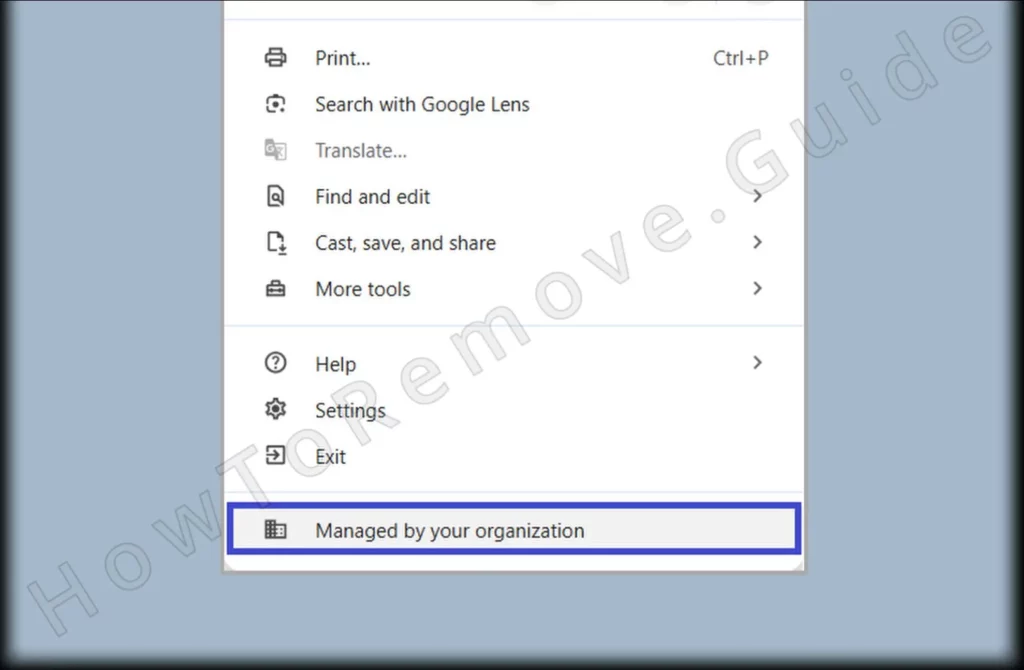
1. Identify the Killmalware.click Policies
-
1.1
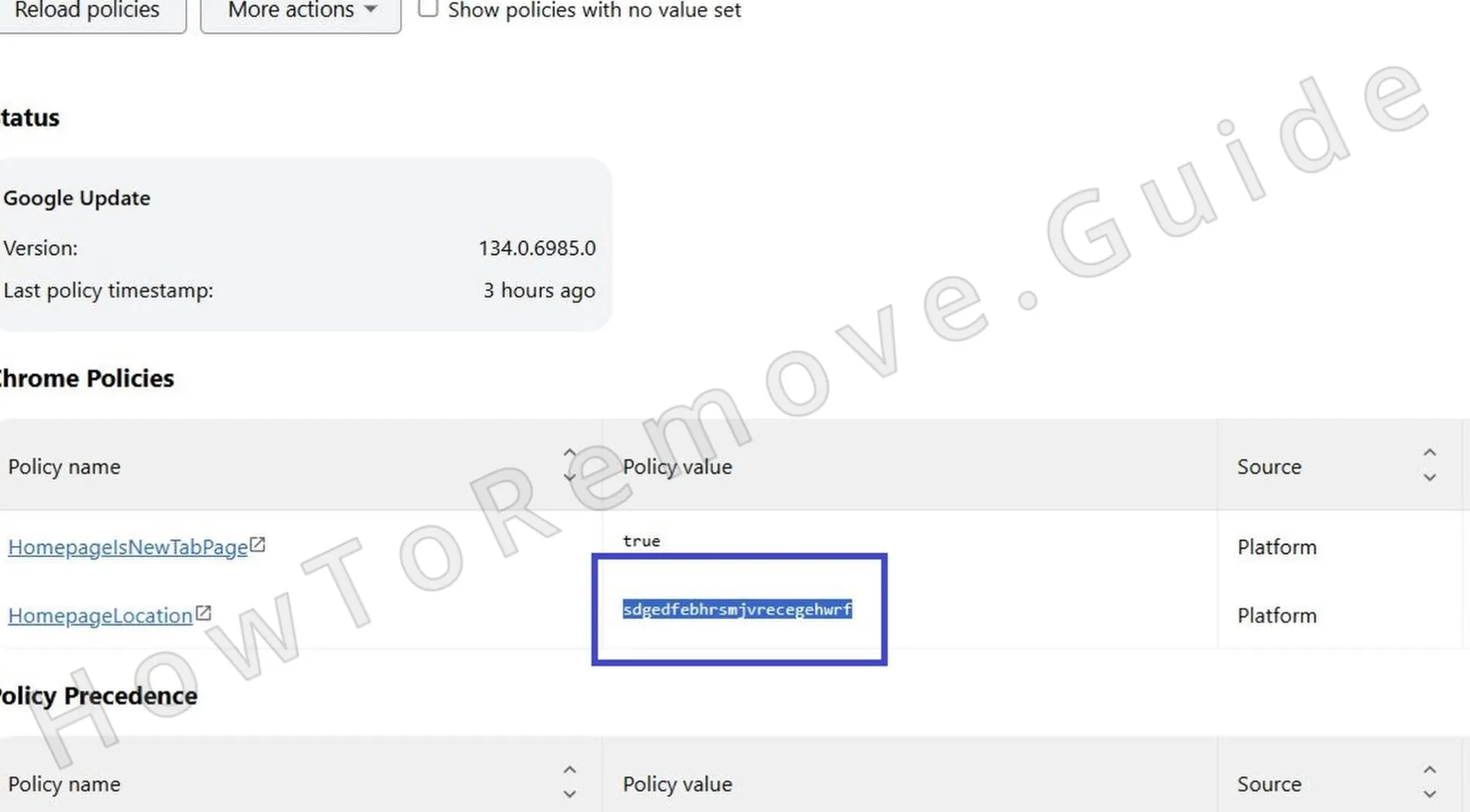 To view all policies active in your browser, type one of the following addresses in the bar and press Enter:
Chrome:chrome://policy
Edge:edge://policy
This opens a page showing every enforced policy. Examine them carefully. Strange names, long strings, or anything you don’t recall can signal hijacker activity. - 1.2On the policy page, pay special attention to the Policy Name and Policy Value. Hijackers like Killmalware.click typically hide under long, random text rather than obvious labels. Record or screenshot any entries that stand out. You’ll need these details when removing the policies manually.
- 1.3Return to the Extensions menu and activate Developer Mode (toggle in the upper-right). Developer Mode exposes technical details, including unique IDs assigned to each extension. Write down IDs tied to anything suspicious or unfamiliar. These IDs help you find the exact folders linked to bad extensions later.4
- 1.4If the hijacker prevents access to Extensions, switch to Windows File Explorer instead. This bypasses browser restrictions and lets you directly see where extension data is stored on your system.
-
1.5
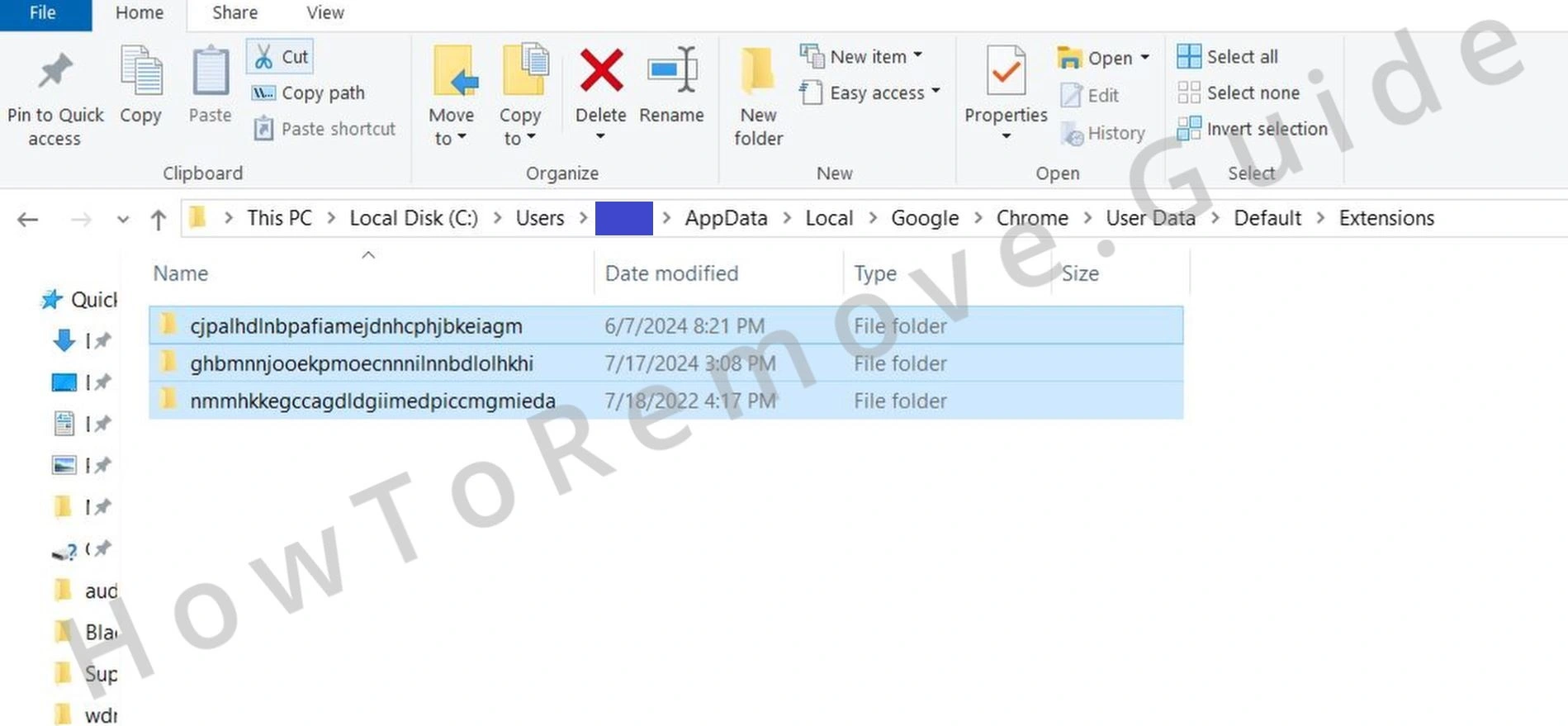 In File Explorer, go to:
C:\Users\[Your Username]\AppData\Local\Google\Chrome\User Data\Default\Extensions
Replace[Your Username]with your Windows account. Inside, you’ll see multiple folders named with alphanumeric IDs. Compare these with the suspicious IDs you wrote earlier to identify which folders belong to hijacker extensions. - 1.6Open each flagged folder and delete all files inside permanently. Doing so wipes both the extension and its support data, ensuring nothing lingers to reinstall itself after a restart.
- 1.7
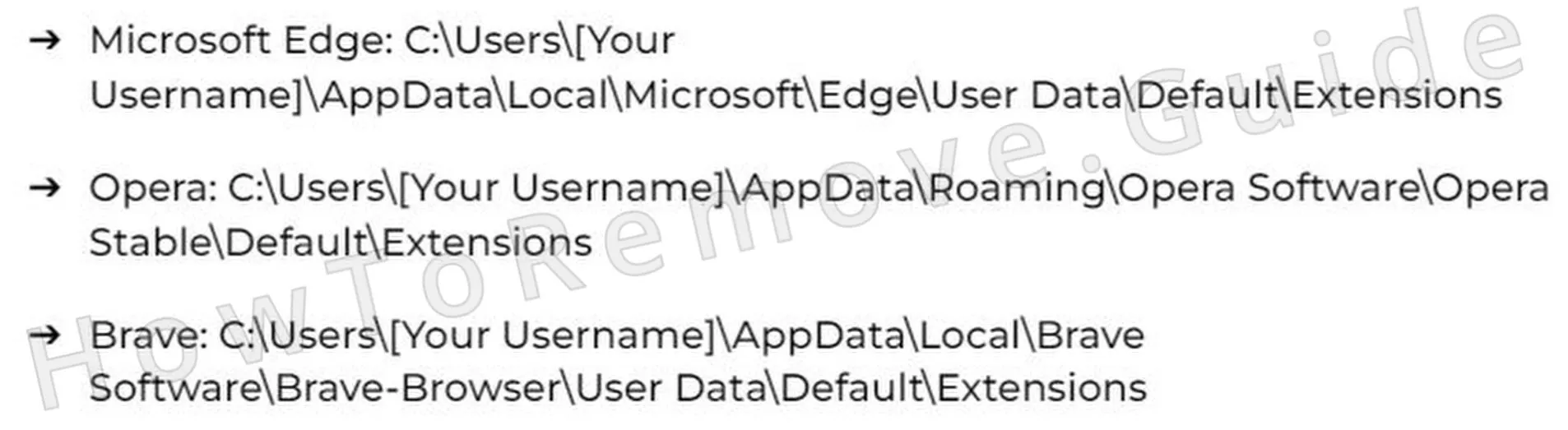 For Chromium-based browsers and Edge, the Extensions directory is located in a similar place. Delete folders that match suspicious IDs here as well. Removing across all browsers is important if you use more than one regularly.
When finished, go back to the Extensions list, re-enable Developer Mode, and check again. Repeat the cleanup if anything shady still shows up.
Remove Killmalware.click Browser Policies That Block Settings
So this part is risky – Killmalware.click hides inside the Windows Registry. And if you don’t know what you’re doing, don’t touch it. Seriously, one wrong change here and your system can crash hard. The registry isn’t forgiving. Unless you’re confident, leave this job to a proper removal tool. That way nothing breaks permanently.
2. How to Delete Killmalware.click Policies Through the Registry
- 2.1Press Win + R, type regedit, and hit Enter. Confirm with Yes when asked by User Account Control. The Registry Editor is powerful but risky – any wrong move can break system functions, so proceed carefully.
- 2.2Inside the Registry Editor, use Ctrl + F or go to Edit > Find, then enter the suspicious extension ID or policy value you noted earlier. Click Find Next to locate entries. Delete them by right-clicking and selecting Delete. Use F3 to continue searching until all matches are cleared. Even a single leftover entry can allow Killmalware.click to come back.
- 2.3
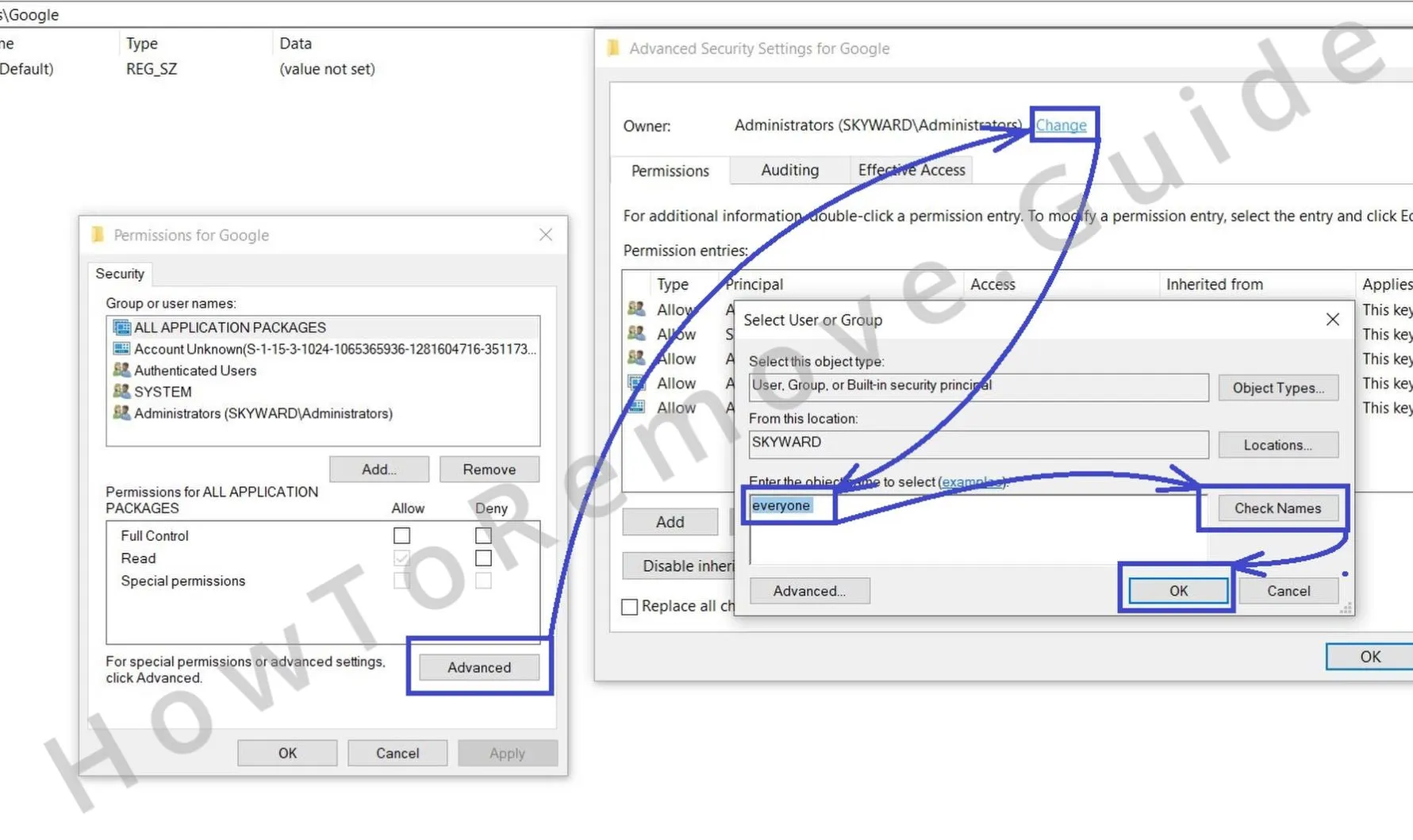 Sometimes registry keys can’t be deleted due to restricted permissions. In that case, right-click the key, select Permissions, then hit Advanced. Change the Owner field to Everyone, confirm with Check Names, and press OK. This grants you control to delete stubborn items linked to the hijacker.
 - 2.4
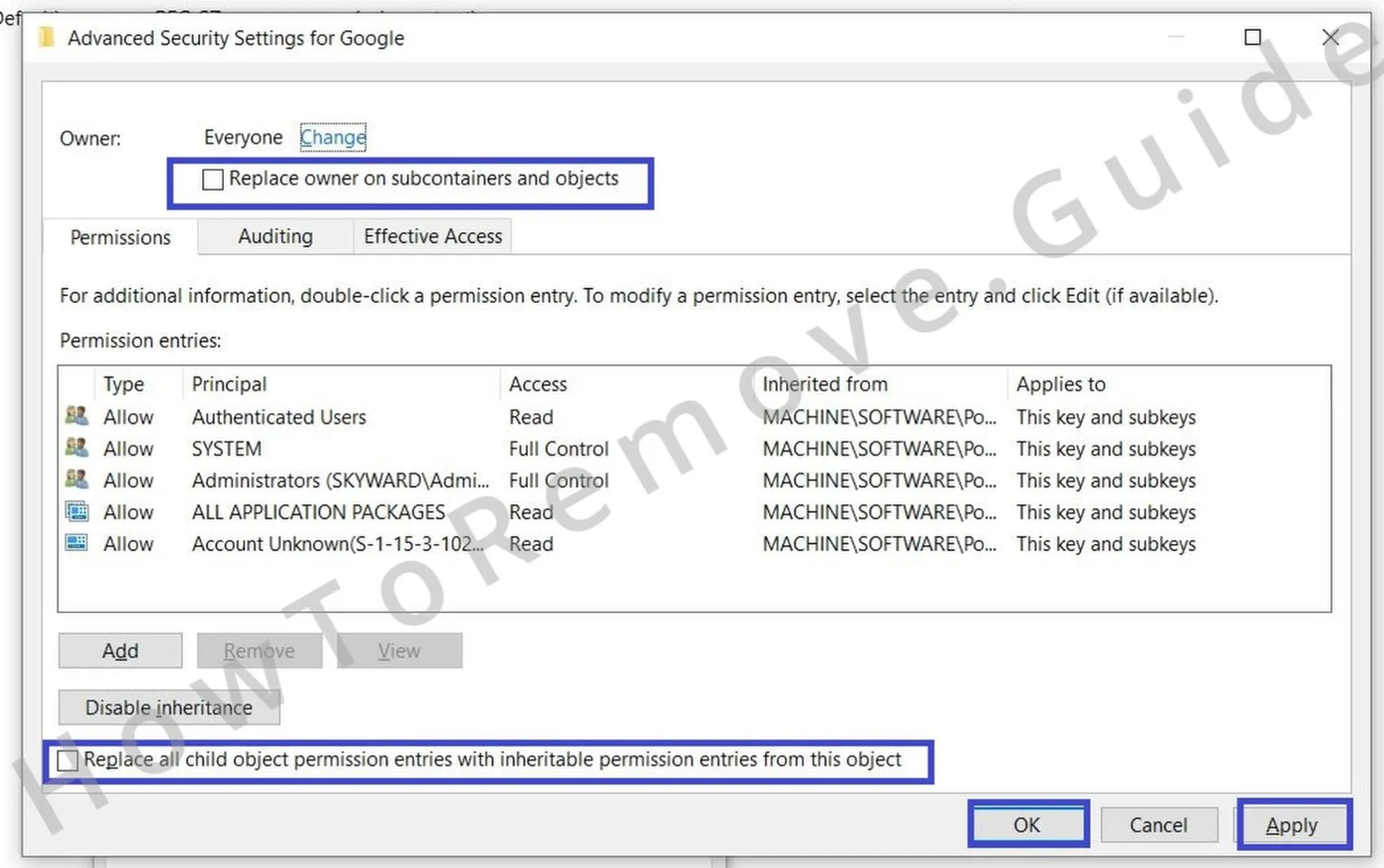 Still in Advanced Permissions, tick the boxes for:
– Replace owner on subcontainers and objects
– Replace all child object permission entries with inheritable permission entries from this object.
Apply the changes and confirm. Now you can delete the problematic entries. Once finished, restart your computer to finalize the edits. If the “Managed by your organization” tag persists, move on to other tools.
This gives you the access needed to delete the rogue key.
Other Ways to Wipe out Killmalware.click Policies
Now even if you think you cleaned everything, sometimes the “Managed by your organization” tag sticks around. That’s just how Killmalware.click works. It’s stubborn. You have to stay calm and keep chipping away. If you rush or give up too soon, it wins. Patience and persistence are the only way to clear it.
3. Other Ways to Get Rid of Killmalware.click Policies
- 3.1
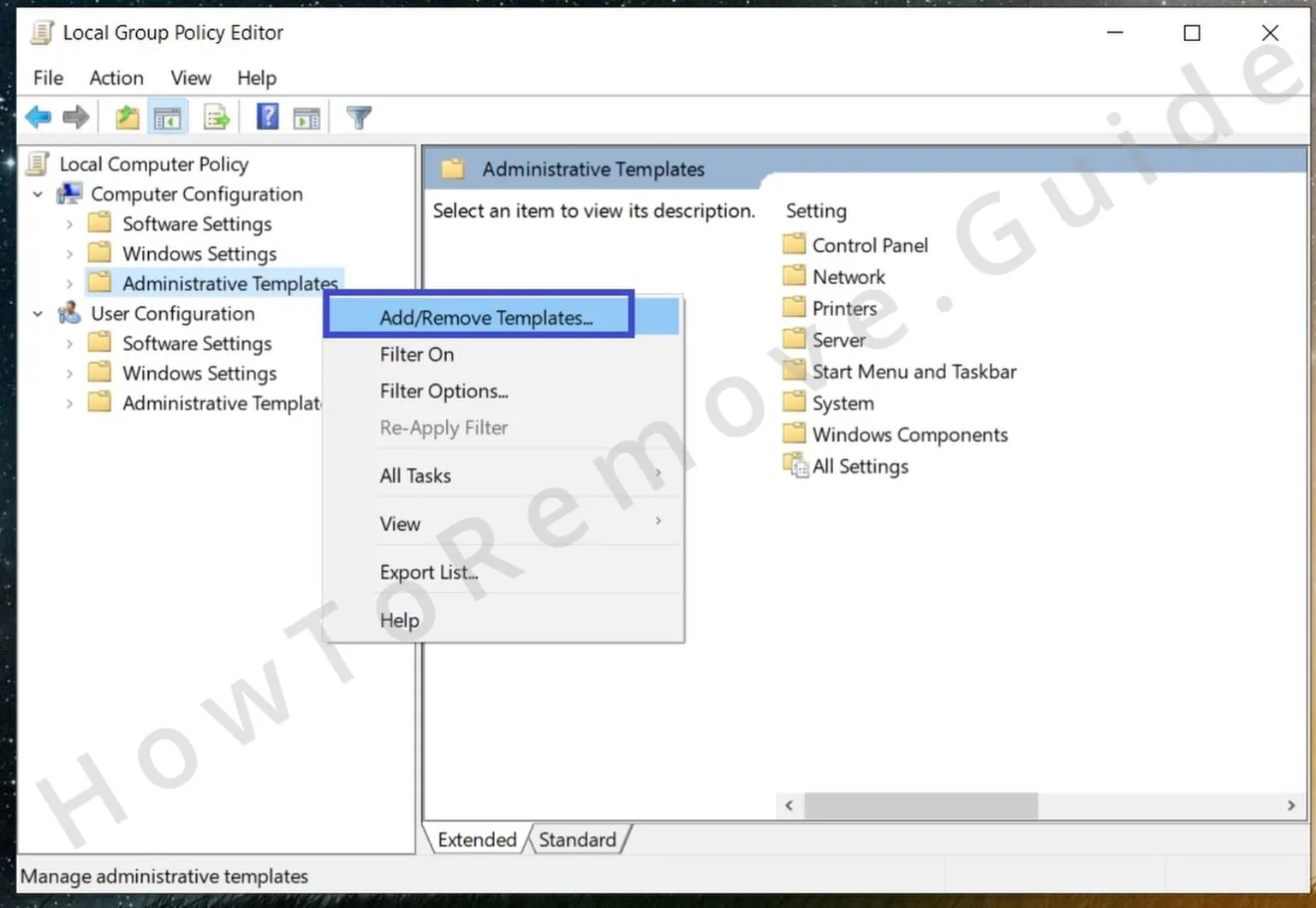 Press Win + S, type Edit Group Policy, and launch the Local Group Policy Editor. Expand the Administrative Templates section. Hijackers like Killmalware.click sometimes create custom policies here to override browser settings.
 - 3.2
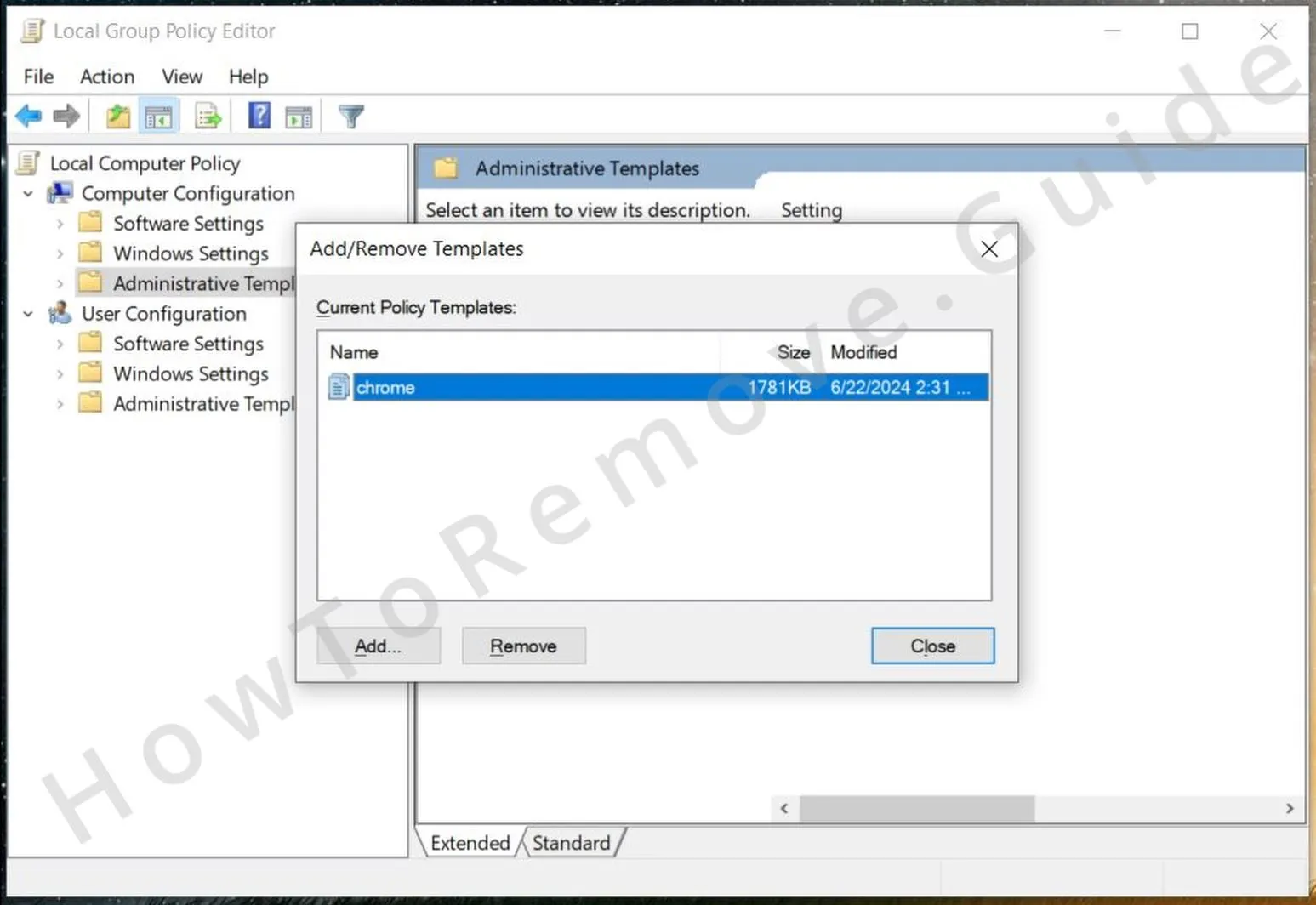 Right-click Administrative Templates and pick Add/Remove Templates. A list will appear. Remove any unfamiliar or suspicious templates that you didn’t install. Be cautious with system defaults – only remove what clearly doesn’t belong.
 - 3.3If you’re a Chrome user, download a Chrome Policy Remover utility. These tools scan for hijacker-created policies and wipe them out. Make sure you only download from a reputable source. Run the file as administrator to give it proper access.
- 3.4Windows may warn you about running third-party tools from unrecognized developers. If the utility is safe, select More Info → Run Anyway. Let the scan run and complete, then restart your PC. Recheck your browser afterward. If Killmalware.click still lingers, repeat the earlier cleanup steps.
How to Uninstall Killmalware.click From All Browsers
Don’t get fooled just because your browser looks normal. That doesn’t mean Killmalware.click is gone. If even one trace is left, it can sneak back in. That’s how these hijackers survive. Most people don’t double-check everything, and that’s the trap. Go through every setting like you’re paranoid. That extra effort keeps it from returning.
4. How to Remove Killmalware.click From Your Browser
- 4.1Reopen your browser’s Extensions or Add-ons list for a final inspection. Carefully review every extension installed and uninstall anything you don’t absolutely trust or remember adding. Even subtle hijacker plugins can reinstall themselves later.
- 4.2
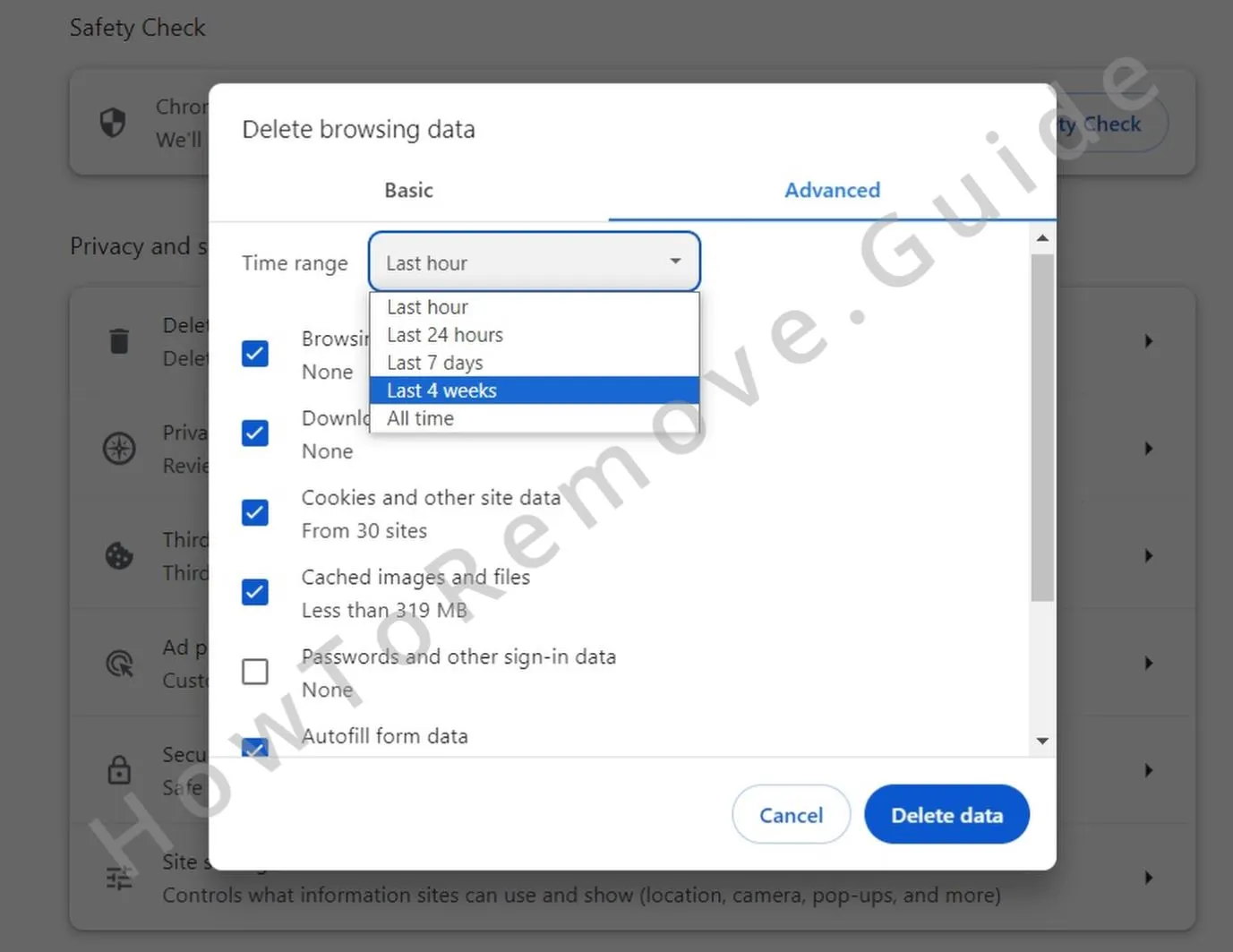 Open the Clear Browsing Data panel. Choose All Time as the range, then clear everything except saved passwords (unless you want those removed too). Click Clear Data. This erases cookies, cache, and lingering files that could let Killmalware.click keep running.
 - 4.3
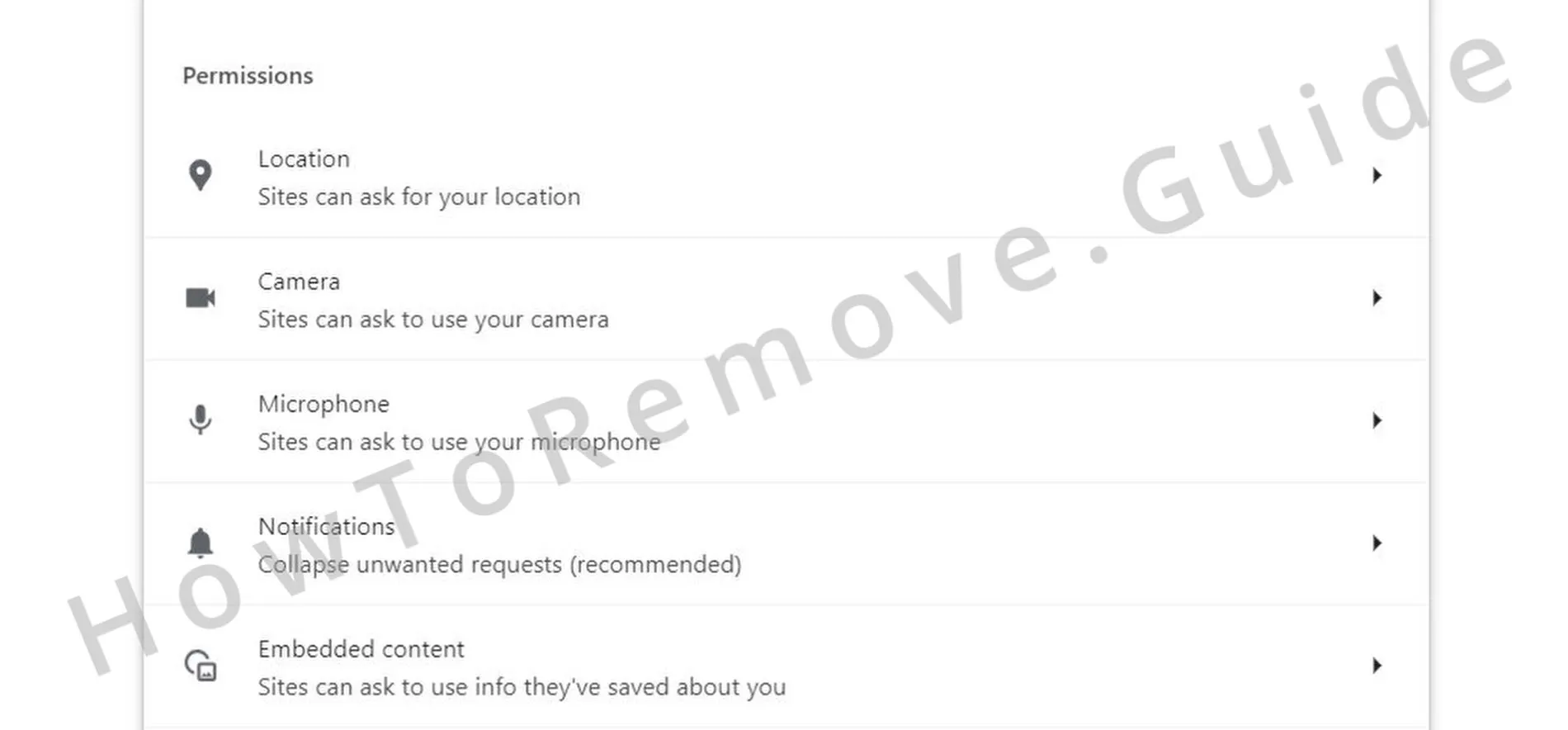 Navigate back to Privacy and Security → Site Settings. Go through permissions like notifications, microphone, location, and camera. Revoke or block any site that looks odd or irrelevant. Malicious domains exploit these to spy or push ads.
 - 4.4
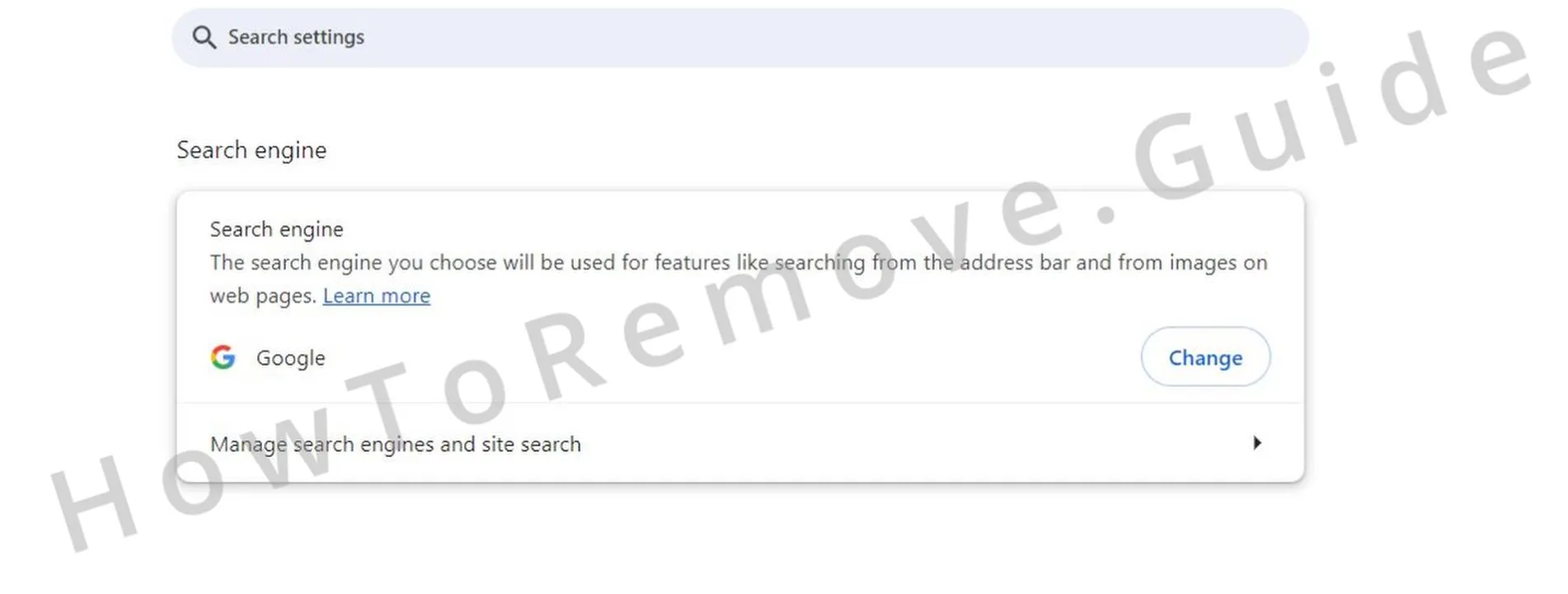 Open Search Engine settings, then Manage Search Engines. Look through the list for hijacker entries such as Killmalware.click or other unknown providers. Remove them, then set a trusted option like Google, Bing, or DuckDuckGo as your default.
 - 4.5Finally, check On Startup and Appearance settings. If Killmalware.click or another strange address is set as your homepage or startup page, remove it and replace it with a safe, trusted site. This ensures the hijacker can’t reload itself when the browser starts.
