

If you found a crypto casino site called Palowex.com and you’re now tempted to sign up and go for a few spins using the free bonus it offers you, you should stop right now and read the rest of this post before doing anything else.
First thing to know is that Palowex is not, in fact, a real crypto casino but just a fraudulent site built to trick you into sending it crypto you’ll never get back. Its main hook is the big “free” bonus that you can quickly turn into a hefty credit balance since the games on this site always seem super generous.
Obviously, that’s the whole point with Palowex and other sites like it, including Gadewin.gd and Nexwin.gl. You sign up, play for a while, and your balance climbs, but then you try to withdraw, and that’s where everything shifts.
Scams like Palowex.com are known to steal personal data and passwords. Install SpyHunter Pro to scan for risks, remove dangerous trackers, and enable real-time protection.
 OFFER
OFFER*Source of claim SH can remove it. Trial w/Credit card; image is for illustration; full terms.
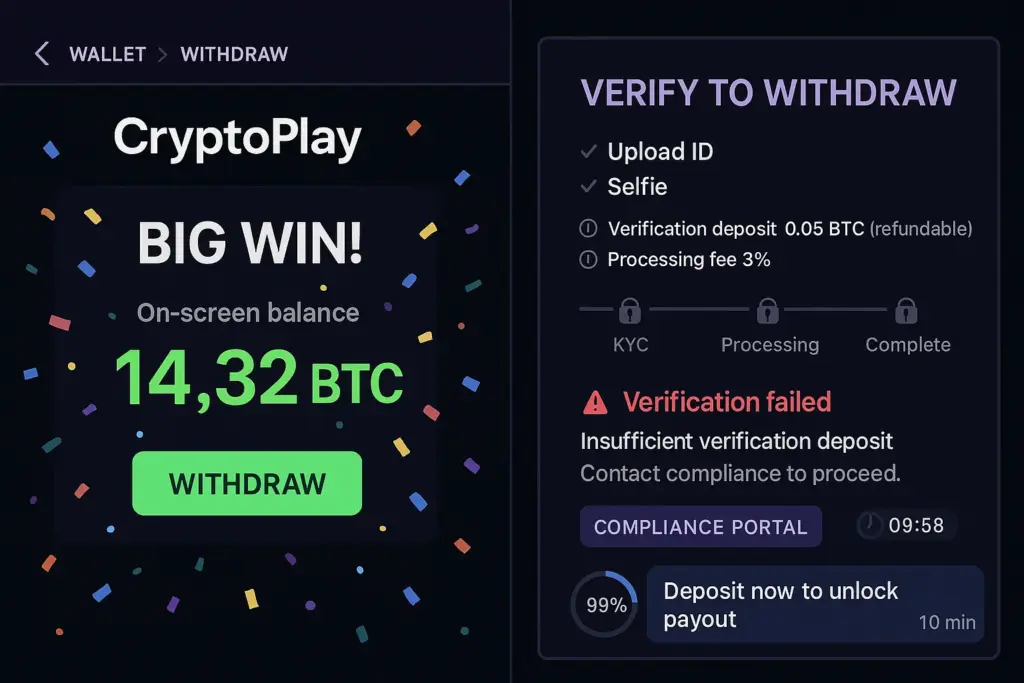
You want to claim your winnings, but you must first enter your banking or crypto wallet details and “deposit” some of your own money as a sort of “verification”. Of course, that’s the gist of the entire scam, and if you do send the deposit, the money will vanish in the hands of the scammers, and you won’t get anything in return.
But the real problem with these sites is that they can grant the scammers direct access to your other digital assets. Therefore, if you’ve already fallen for the bait, it’s crucial that you take the necessary steps to secure your accounts. More details on exactly what to do can be found below.
IMPORTANT! READ BEFORE PROCEEDING!
If you’ve interacted with Palowex in any way, treat it as a live security incident, not a customer-support problem. Cut contact, assume accounts may be exposed, and prioritize containment over “one last step” promises. These five emergency moves should happen immediately:
- Cut contact and do not send another “fee,” “deposit,” or “verification” payment.
- Move remaining funds to a brand-new wallet with a fresh seed phrase and no reused credentials.
- Change passwords and enable 2FA on email, exchanges, and any account tied to your identity; log out other sessions.
- Revoke wallet approvals and disconnect sessions if you connected a wallet to anything associated with Palowex.
- Capture evidence (TXIDs, deposit addresses, URLs, chats, screenshots, timestamps) before pages vanish or rebrand.
How We Know Palowex is a Scam
First, the warning signs below aren’t “maybe” indicators; together they describe a very specific fraud template that shows up across countless fake crypto-casino clones. Once you’ve seen this pattern a couple of times, the site starts to read like a script.
Surprise withdrawal charges
Another giveaway appears at withdrawal time, when the site suddenly invents a payment gate – processing charges, collateral, membership tiers, or “verification deposits” – before you can access “your” balance.
Counterfeit licensing
Instead of presenting a verifiable operator identity, Palowex typically leans on vague branding, thin legal pages, and licensing claims that don’t match a regulator’s public registry.
Inflated early “wins”
Soon after, the games deliver unusually friendly results – big wins early, streaks that seem “too clean,” and balances that grow fast enough to create emotional attachment.
Crypto-only rails
Finally, the payment rails are arranged for irreversibility: crypto-only funding, no consumer protections, and a structure that makes the money flow outward far easier than back.
Synthetic social proof
Meanwhile, the on-site “activity” can look oddly manufactured: chat messages that feel scripted, reviews that sound interchangeable, and player counters that never behave like real traffic.
Fresh, privacy-masked domains
Add the fact that these sites are often churned out as near-clones under fresh domains; checking domain age and ownership via public lookups like who.is helps reveal that disposable infrastructure.


How the Palowex Scam Deception Funnel Works
Understanding how this scheme moves people from curiosity to payment is one of the best defenses, because the “game” is mostly psychology and interface design, not gambling. Once you recognize the rhythm, the next “requirement” stops feeling surprising.
The sequence is engineered: lure with bonuses, inflate on-screen balances, block withdrawals with fees and KYC, then stall and rebrand while “recovery” Palowex.coms circle.
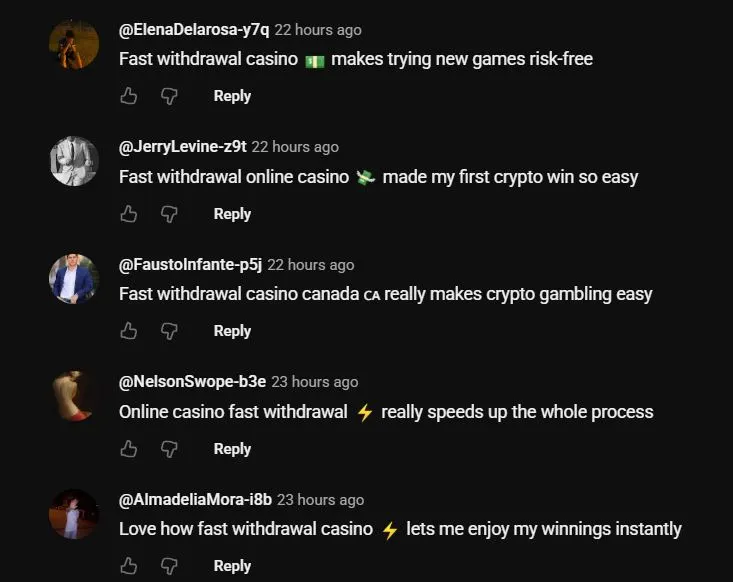
Promo hooks and influencer codes
A common entry point begins off-site, where short-form clips, promo-code posts, or “exclusive bonus” messages nudge you toward a slick landing page meant to feel familiar and legitimate.
Casino skin and bonus theater
Next comes the frictionless signup that awards an instant balance boost, making it feel like you already have money inside the system before you’ve risked much of your own.

Inflated balances, then the gate
Soon after, the games deliver unusually friendly results – big wins early and fast-growing balances – until you try to withdraw, when the experience flips into a wall of “verification” requirements.
Fee-gates and KYC harvest
When you attempt to cash out, you’re told to complete a “special step” first – often KYC uploads plus a crypto transfer framed as a temporary requirement – after which the goalposts move again.

Stalling, rebrands, and “recovery” bait
Eventually, the loop ends the same way: endless delays, partial lockouts, or silence, followed by a domain change – and then a second-wave “recovery” offer aimed at people already burned.
Staying safe from crypto casino scams like Palowex
Avoiding these scams is mostly about slowing down, verifying the operator, and refusing any workflow that turns a withdrawal into a paywall. The habits below harden your defenses and keep one impulsive click from turning into a costly incident.
Verify license status in official registers
Inspect whether the operator identity is verifiable outside the site, including licensing that matches a regulator’s official registry rather than a badge graphic.
Check domain age and history
Look up domain history and registration patterns, because a brand-new domain with hidden ownership paired with massive marketing spend is often a disposable fraud asset.
Reject withdrawal fees and “unlock” deposits
Ask whether the site ever requires you to pay extra money to access your own funds; if the answer is yes, you’re looking at a engineered paywall, not a withdrawal process.
Prefer venues with recourse
Prefer operators with verifiable licensing and clear dispute processes; crypto-only fronts are built to maximize irreversibility when something goes wrong.
Limit wallet exposure
Keep gambling funds isolated from your main holdings by using a separate wallet with a strict limit, so one impulsive moment can’t drain your long-term stash.
Validate “provably fair” claims
Be skeptical of trust badges and confident claims; what matters is whether key details are independently verifiable outside the site, not how polished the interface looks.
Document and report rapidly
Documenting the event is your future self’s lifeline: capture the deposit address, TXIDs, chats, emails, and the wording of each “requirement,” then report to any exchanges you used and your local cybercrime channel.
Build a deliberate slow-down reflex
Train your brain to spot urgency, “VIP” status, fear of missing out, and the seductive feeling of “being up,” because those are the levers the interface is pulling.
Useful Resources for Scam Reporting and Prevention (By Country)
Reporting is worth doing because individual cases often go nowhere alone, but clustered reports are how patterns become actionable – especially when multiple victims point to the same wallets and infrastructure. Keep your evidence bundle tight and submit it promptly through the channels that apply to your country.
Click here to report the scam in your country
| Country / Agency | URL | Category / Use-case | Phone/Email |
| Australia – Crime Stoppers | https://www.crimestoppers.com.au | Anonymous tips about crime | 1800 333 000 |
| Australia – National Anti-Scam Center (Scamwatch) | https://www.scamwatch.gov.au/report-a-scam | General scams; phishing; texts/emails | |
| Australia – Police Assistance Line (non-emergency) | https://www.police.gov.au | Local police report | 131 444 |
| Australia – ReportCyber (ACSC) | https://www.cyber.gov.au/report | Cybercrime (hacks, fraud, extortion) | |
| Canada – Canadian Anti-Fraud Center (CAFC) | https://www.antifraudcentre-centreantifraude.ca/report-signalez-eng.htm | General scams incl. phone/text/email | |
| France – DGCCRF (SignalConso) | https://signal.conso.gouv.fr | Consumer scams/deceptive practices | |
| France – PHAROS – Internet-Signalement | https://www.internet-signalement.gouv.fr | Online content & cybercrime reports | |
| Germany – Bundeskriminalamt / Local Police | https://www.polizei.de/Polizei/DE/Home/home_node.html | Report online fraud | |
| Germany – Weißer Ring – Victim Support | https://weisser-ring.de | Victim support | 116 006 |
| India – DoT Helpline (Sanchar Saathi) | https://sancharsaathi.gov.in | Fraudulent telecom/SIM related | 155260 |
| India – National Consumer Helpline | https://consumerhelpline.gov.in | Consumer scams | 1800-11-4000 / 1915 |
| India – National Cyber Crime Reporting Portal | https://cybercrime.gov.in | Cybercrime incl. online fraud | 1930 |
| Japan – Consumer Affairs Agency (CAA) | https://www.caa.go.jp/policies/policy/consumer_policy/caution/cybercrime/ | Consumer scams | |
| Japan – National Police Agency – Cybercrime | https://www.npa.go.jp/bureau/cyber/ | Cybercrime reporting | |
| Mexico – Guardia Nacional (National Guard) | https://www.gob.mx/gn | Cybercrime reporting | |
| Mexico – Instituto Federal de Telecomunicaciones (IFT) | https://www.ift.org.mx | Telecom/online services scams | |
| Mexico – PROFECO | https://www.gob.mx/profeco | Consumer fraud & ecommerce | |
| Netherlands – AFM – Report investment fraud | https://www.afm.nl/en/consumenten/themas/beleggen/misleiding-misbruik | Investment/crypto | |
| Netherlands – Fraudehelpdesk | https://www.fraudehelpdesk.nl/melden | General scams (incl. phishing/SMS) | 088-7867372 |
| Netherlands – Politie – Meldpunt Internetoplichting | https://www.politie.nl/themas/internetoplichting.html | Online shopping fraud | |
| New Zealand – CERT NZ | https://www.cert.govt.nz/individuals/report-an-issue/ | Phishing, identity scams | |
| New Zealand – Department of Internal Affairs – Spam | https://www.dia.govt.nz/Spam-Contact-Us | Email/SMS spam | [email protected] |
| New Zealand – IDCARE | https://www.idcare.org | Victim support (identity compromise) | 0800 121 068 |
| New Zealand – Netsafe – Report | https://www.netsafe.org.nz/report/ | Online harms & scams | |
| New Zealand – New Zealand Police (non-emergency) | https://www.police.govt.nz/use-105 | Report fraud/online crime | 105 |
| Nigeria – Economic & Financial Crimes Commission (EFCC) | https://www.efcc.gov.ng | Financial scams incl. crypto/investment | [email protected] |
| Nigeria – Nigeria Police Special Fraud Unit (SFU) | https://www.specialfraudunit.org.ng | Serious fraud | Voice/SMS: 0708 227 6895; WhatsApp: 0812 760 9914 |
| Poland – CERT Polska (CERT.PL) | https://cert.pl/en/report/ | Cyber incidents & phishing | |
| Poland – Dyzurnet.pl | https://dyzurnet.pl | Illegal online content (esp. child protection) | |
| Poland – Polish Police (Policja) | https://www.policja.pl | Report scams to police | |
| Singapore – Anti-Scam Centre / Anti-Scam Helpline | https://www.scamalert.sg | General scams; texts; calls | 1800-722-6688 |
| Singapore – Monetary Authority of Singapore (MAS) | https://www.mas.gov.sg/investor-alert-list | Investment/crypto checks | |
| Singapore – Singapore Police Force | https://www.police.gov.sg/iwitness | Police report (cybercrime) | |
| South Africa – Cybersecurity Hub (CSIRT) | https://www.cybersecurityhub.gov.za | Cyber incidents incl. scams | |
| South Africa – South African Fraud Prevention Service (SAFPS) | https://www.safps.org.za | Identity fraud support | 011-867-2234 |
| South Africa – South African Police Service (SAPS) | https://www.saps.gov.za | Police report (cybercrime unit) | |
| South Korea – Korea Communications Commission (KCC) | https://www.kcc.go.kr | Telecom-related fraud | |
| South Korea – Korea Internet & Security Agency (KISA) | https://www.kisa.or.kr | Phishing, online harms | |
| South Korea – Korean National Police Agency – Cyber Bureau | https://ecrm.cyber.go.kr | Cybercrime reporting | |
| Spain – INCIBE – Oficina de Seguridad del Internauta (OSI) | https://www.osi.es/es/reporte | Cybersecurity & online fraud | |
| Spain – Policía Nacional / Guardia Civil | https://www.policia.es | Report scams to police | |
| Sweden – Crime Victim Authority (Brottsoffermyndigheten) | https://www.brottsoffermyndigheten.se | Victim support & compensation | 090–70 82 00 |
| Sweden – Polisen (Swedish Police) | https://polisen.se | Report fraud/cybercrime | 114 14 (non-emergency); 112 (emergency) |
| Sweden – Swedish Consumer Agency (Konsumentverket) | https://www.konsumentverket.se | Unfair business practices | |
| United Arab Emirates – Abu Dhabi Police – Aman Service | https://www.adpolice.gov.ae | Cybercrime tips/reporting | SMS 2828; 800 2626 |
| United Arab Emirates – Dubai Police – eCrime | https://www.dubaipolice.gov.ae | Cybercrime reporting | 04 606 1600 |
| United Arab Emirates – Ministry of Interior – Cyber Crime Dept. | https://www.moi.gov.ae | Cybercrime incl. online scams | |
| United Arab Emirates – Telecommunications Regulatory Authority (TRA) / TDRA | https://www.tra.gov.ae | Telecom-related scams/phishing | |
| United Kingdom – Action Fraud (NFIB) | https://www.actionfraud.police.uk | General scams & cybercrime (non-emergency) | 0300 123 2040 |
| United Kingdom – Citizens Advice Consumer Service | https://www.citizensadvice.org.uk/consumer/get-more-help/if-you-need-more-help-about-a-consumer-issue/ | Consumer problems & scam guidance | 0808 223 1133 |
| United Kingdom – Financial Conduct Authority (FCA) | https://www.fca.org.uk/consumers/report-scam-us | Investment/crypto & financial services | |
| United Kingdom – National Cyber Security Centre (NCSC) | https://www.ncsc.gov.uk/collection/phishing-scams | Phishing emails & suspicious websites | |
| United Kingdom – Stop Scams UK ‘159’ | https://stopscamsuk.org.uk/159 | Banking APP fraud (direct to your bank) | 159 |
| United States – AARP Fraud Watch Network Helpline | https://www.aarp.org/money/scams-fraud/ | Victim support | 833-372-8311 |
| United States – Better Business Bureau – Scam Tracker | https://www.bbb.org/scamtracker | Business/marketplace scams | |
| United States – FBI Internet Crime Complaint Center (IC3) | https://www.ic3.gov | Internet crime incl. investment/crypto | |
| United States – Federal Trade Commission – ReportFraud | https://reportfraud.ftc.gov | General scams, phishing, texts/emails | 1-877-382-4357 |
| United States – National Center for Disaster Fraud | https://www.justice.gov/disaster-fraud | Disaster-related scams | (866) 720-5721 |
| United States – SEC Tips & Complaints | https://www.sec.gov/tcr | Investment & securities/crypto-asset offerings |
The most important takeaway is simple: the displayed balance is not proof of funds, and paying to “unlock” a withdrawal is the whole trap. Contain exposure quickly, keep your documentation organized, and build a repeatable verification habit before you trust any new crypto casino.
