

OneBUpdate is not a normal Windows component. It is usually connected to OneBrowser, a potentially unwanted program that may arrive through bundled installs and then place an updater or service on the system to help it remain active after a basic cleanup.
In the cases I reviewed, files tied to this activity often show up under AppData or inside a OneBrowser update folder, using names such as OneBUpdater.exe or OBUpdateService.exe. That matters because these components may rebuild missing files and return after a restart.
We tested that SpyHunter successfully removes OneBUpdate* and we recommend using it. It will block OneBUpdate from reinstalling itself and it will make sure your device is clean from any malware.
 Try Free For 7 Days*
Buy now15% OFF if you buy straight without trial.
 OFFER
OFFERMany people first notice the issue when Chrome starts behaving oddly, browser sessions reopen on their own, or security tools detect suspicious command-line activity involving the updater. Removing one file is not always enough, since the persistence mechanism can restore the unwanted program.
For that reason, OneBUpdate should not be dismissed as a harmless leftover. It can increase exposure to ads, redirects, and other unwanted changes while making cleanup more difficult. If the manual removal steps feel too technical, SpyHunter 5 can remove unwanted programs and viruses.
OneBUpdate Removal Guide
This tutorial begins with a shorter cleanup sequence that targets the most obvious traces first. Try those steps before moving on, because they sometimes remove enough of OneBUpdate to stop the immediate problems. If the threat is still active after that, continue with the full guide further below.
Quick Steps to Remove OneBUpdate
- 1.1First, open your Downloads folder (This PC > Downloads), sort the files by date, and check whether OneBUpdate arrived as a recent suspicious download. If you spot anything clearly unfamiliar, delete it before you continue.
- 1.2Next, open the Start Menu, go to Settings, and then open Apps.
- 1.3On that page, sort the installed programs by installation date and look for anything suspicious, unfamiliar, or unwanted.
- 1.4If you find a suspicious app, select it and begin the uninstall process. Read each prompt carefully so that nothing related to the program is left behind on the PC.
- 1.5Then check the installation directory. A common location is C:\UserNames\UserName\AppData\Local\Programs\, but the folder may also be elsewhere.
- 1.6If you locate the malware folder, delete it together with any leftover files still stored inside it.
Now restart the computer and see whether the rogue app is gone. In many cases it will still remain, and that is normal. It simply means the infection has additional components, so you should continue with the more advanced removal steps below.
SUMMARY:
How to Fully Get Rid of OneBUpdate
The full guide starts with two preparation steps that make the rest of the removal possible. First, you need Windows to show hidden items, because OneBUpdate may place files in locations that are not normally visible. Second, install a tool that can force-delete files when malicious processes keep them locked.
1. Prepare for OneBUpdate Removal
- 1.1
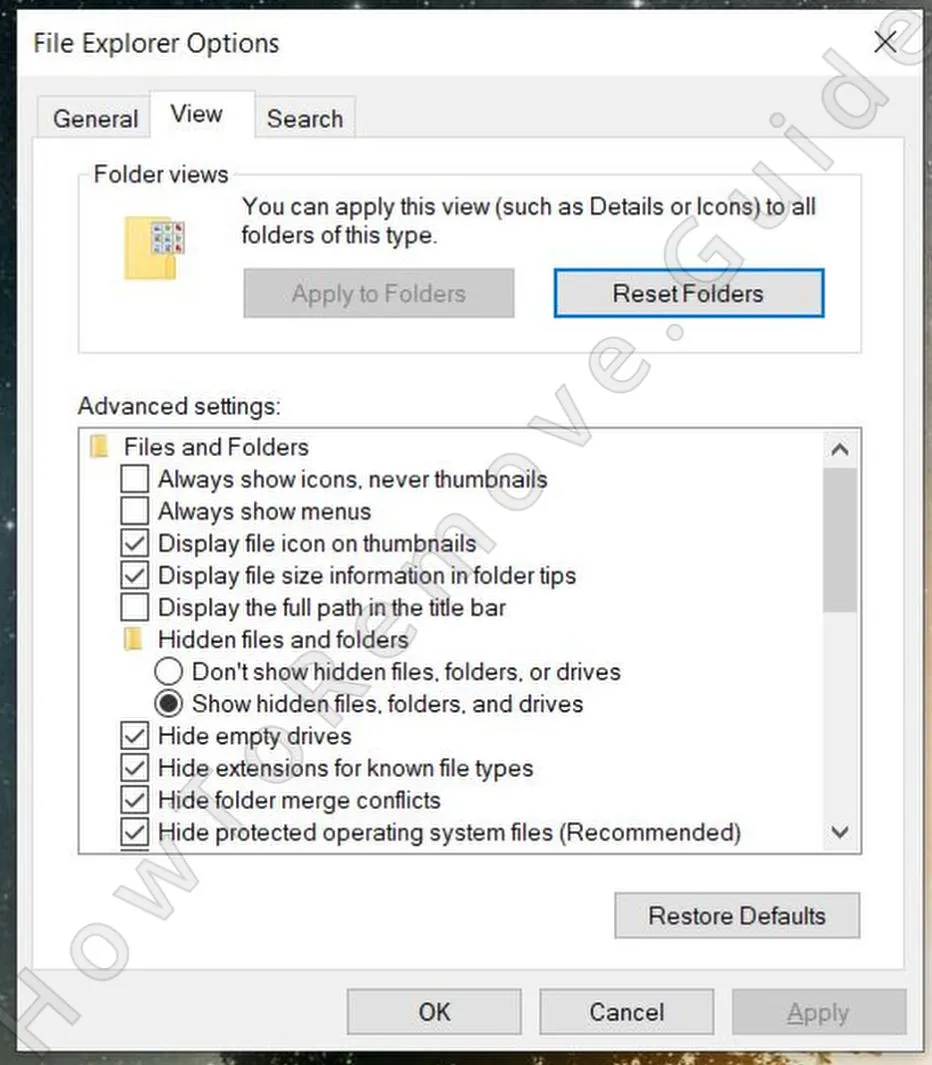 Before you continue with OneBUpdate removal, make hidden files and folders visible.
Search for Folder Options in the Start Menu, open the View tab, enable “Show hidden files and folders“, then click Apply and OK. - 1.2Next, download and install the free utility LockHunter. You may need it to remove files that stay locked by malicious processes.
We understand that many users prefer not to install extra tools, and we also try to keep our guides as manual as possible. In this case, however, this utility may be necessary because some malware files stay locked while the malicious process is still active.
LockHunter does not ask for payment, it has no ads, and it does not require registration. You can install it quickly and then use it only for the blocked files that cannot be removed in the normal way.
Remove OneBUpdate Processes From the Task Manager
The next step is to inspect Task Manager for suspicious processes linked to OneBUpdate. Do not rely only on the process name, because it can differ from one infection to another and may look completely harmless. Use the file location, resource usage, and your own judgment to decide what appears abnormal.
2. Delete OneBUpdate Processes in Task Manager
- 2.1To start looking for OneBUpdate processes, open the Task Manager by pressing Ctrl + Shift + Esc.
- 2.2If it opens in a simplified view, click More Details to expand it and display all running processes.
- 2.3
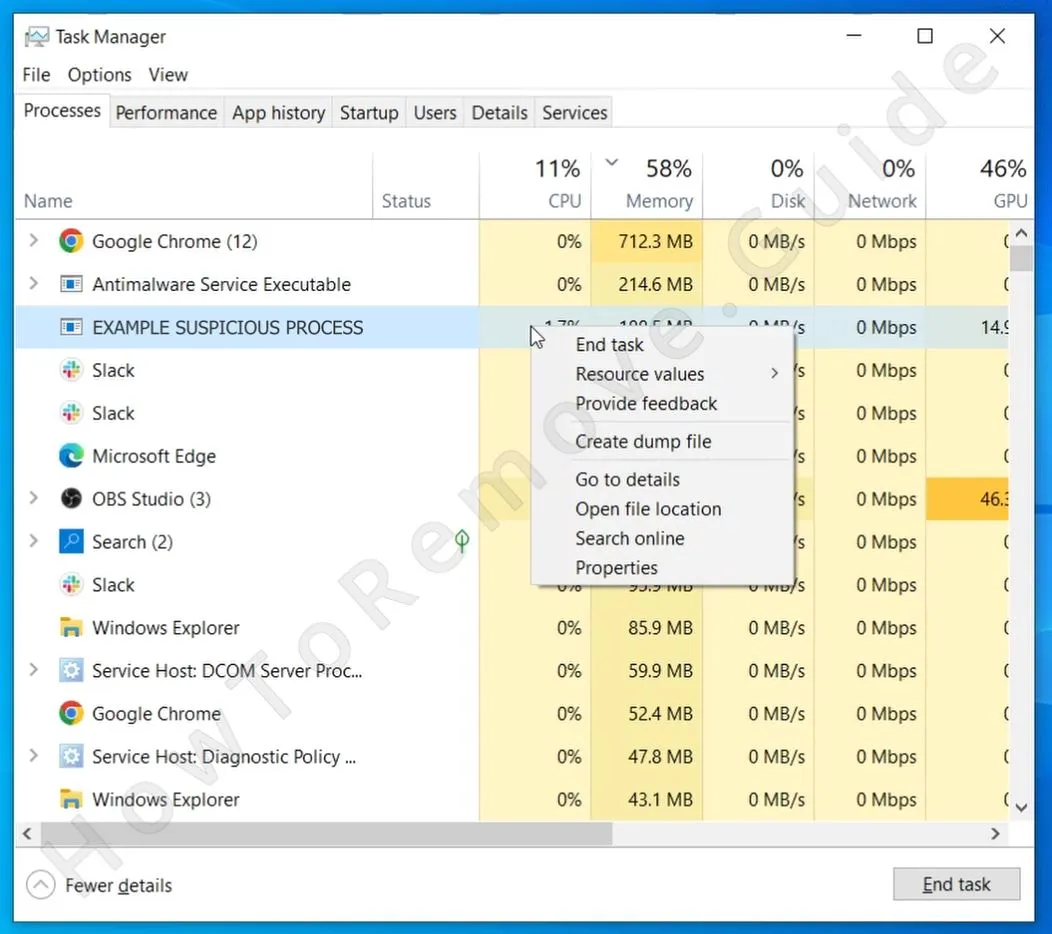 Sort the process list by Memory or CPU usage. Then look for entries that consume unusually high resources without belonging to programs you recognize as legitimate.
Trojans usually do not show an obvious name, so the suspicious entry may appear harmless at first glance.
- 2.4For each doubtful process, right-click it and select Open file location. This will take you to the folder where the files used by that process are stored.
- 2.5You must delete that entire folder, but Windows may block the action because some files are still in use. If that happens, use LockHunter: right-click the folder, choose “What’s locking this folder?” from the context menu, and click Delete in the next window.
- 2.6After the files are removed, return to Task Manager, write down the suspicious process name because you may need it later, then select it and click End Task to stop it.
Delete OneBUpdate Virus Files
This stage focuses on hunting down remaining OneBUpdate files across several Windows locations. Trojan components and helper files can be scattered in multiple folders, so this part needs patience and attention. Do not stop after checking one directory – be thorough, because even a small leftover file may help the infection return.
3. Delete Remaining OneBUpdate Files
- 3.1Begin by checking the Startup folders at:
C:\ProgramData\Microsoft\Windows\Start Menu\Programs\Startup
C:\Users\*Your Username*\AppData\Roaming\Microsoft\Windows\Start Menu\Programs\Startup - 3.2Search these locations for suspicious files. If you are not sure what belongs there, remove everything except desktop.ini, which is a normal system file.
- 3.3Then inspect Program Files and Program Files (x86) on the C: drive. Malware sometimes creates folders there, so remove anything tied to OneBUpdate or anything else that looks out of place or unfamiliar.
- 3.4You must also check these three locations:
C:\Users\%user%\AppData\Local\
C:\Users\%user%\AppData\Local\Programs\
C:\Users\%user%\AppData\Roaming\Microsoft\Windows\Start Menu\Programs\
If you notice anything suspicious in them, delete it. If a folder name means nothing to you and looks out of place, it is safer to remove it than to leave a possible malware component behind. - 3.5
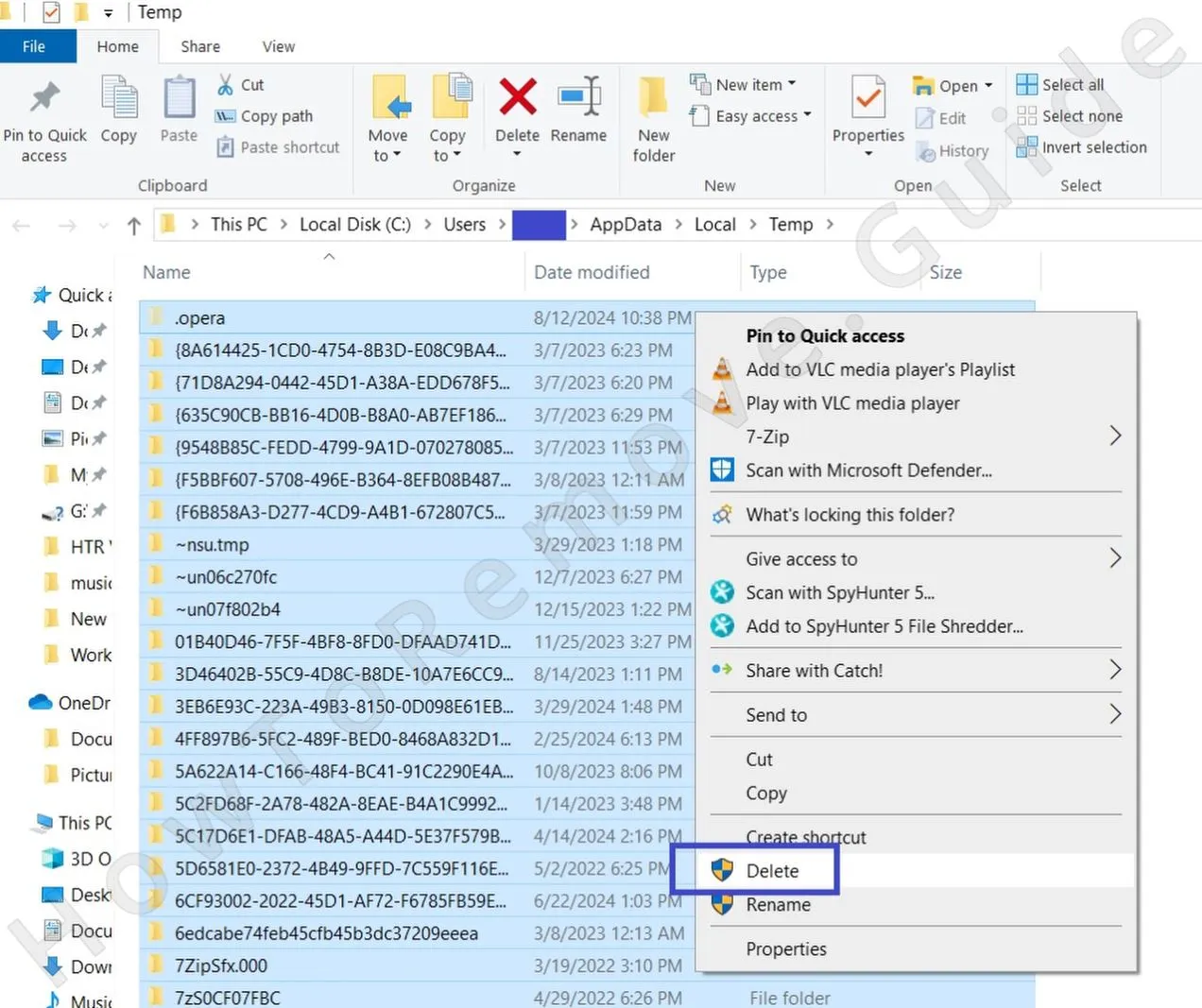 Finally, clear the Temp folder at C:\Users\YourUsername\AppData\Local\Temp.
It contains only temporary files, so you can safely press Ctrl + A and then Delete to remove all of its contents.
Get Rid of OneBUpdate Scheduled Tasks
This step matters because many users remove the visible malware files but forget to check for scheduled tasks created by OneBUpdate. Such tasks can relaunch or reinstall the infection even after its main files are gone. Cleaning the Task Scheduler closes one of the easiest ways for the malware to come back.
4. Remove OneBUpdate Scheduled Tasks
- 4.1
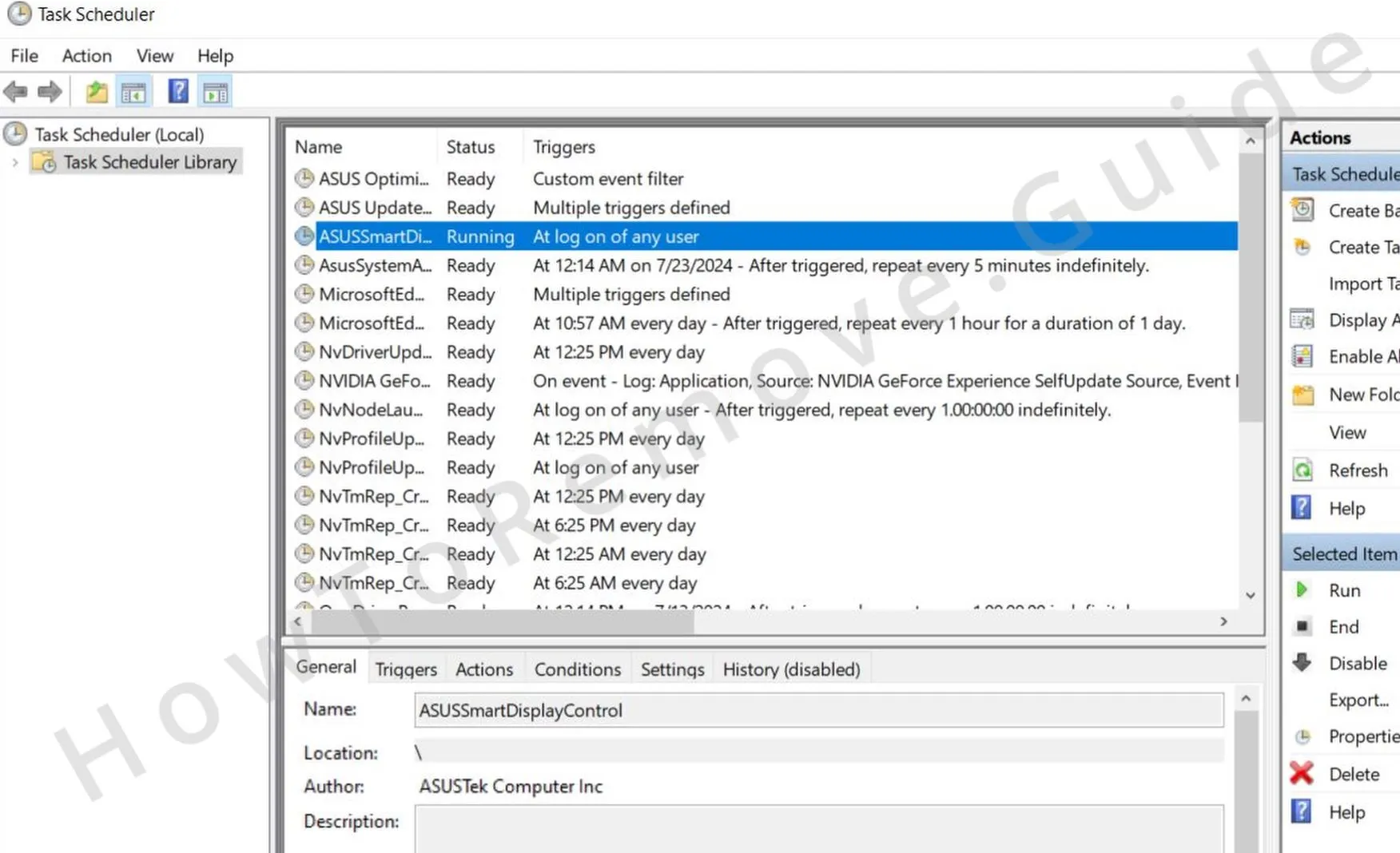 Open Task Scheduler from the Start Menu search bar. Then review the entries in the Task Scheduler Library one by one to look for anything tied to OneBUpdate.
 - 4.2Open each task and check its Actions tab to see what it launches. Pay close attention to tasks that run unfamiliar executables or scripts, especially from AppData or Roaming directories.
- 4.3If you find a task that runs something suspicious, note its file path, then right-click the task and choose Delete.
- 4.4After deleting the task, go to the file path you saved and remove the file that task was set to run.
Uninstall the OneBUpdate Malware App Through the Windows Registry
The Registry step is important because malware often leaves startup entries and service references there even after its files are deleted. At the same time, it requires care – removing the wrong registry item can affect Windows or legitimate software. If you are unsure, SpyHunter 5 is a safer alternative for this part of the cleanup.
5. Remove OneBUpdate Through the Registry
- 5.1Open the Registry Editor by typing “regedit” in the Start Menu and pressing Enter to begin searching for OneBUpdate traces.
- 5.2Then select Edit > Find and search for the exact name of the program you tried to uninstall during the quick steps at the beginning of the guide.
- 5.3Click Find Next. If a result appears, select the registry key in the left panel that contains it and delete that key. Repeat the search after each deletion until no more results remain for that name.
- 5.4After that, search for the names of any other suspicious programs you removed earlier. Also search for the process names you wrote down from Task Manager.
- 5.5When those searches are finished, manually go to these registry keys:
HKCU\Software\Microsoft\Windows\CurrentVersion\Run
HKCU\Software\Microsoft\Windows\CurrentVersion\RunOnce
HKLM\Software\Microsoft\Windows\CurrentVersion\Run
HKLM\Software\Microsoft\Windows\CurrentVersion\RunOnce
HKLM\Software\Microsoft\Windows\CurrentVersion\Policies\Explorer\Run
HKCU\Software\Microsoft\Windows\CurrentVersion\Policies\Explorer\Run
HKEY_LOCAL_MACHINE\Software\Microsoft\Windows\CurrentVersion\RunServices
HKEY_LOCAL_MACHINE\Software\Microsoft\Windows\CurrentVersion\RunServicesOnce
HKEY_LOCAL_MACHINE\Software\Microsoft\Windows\CurrentVersion\RunOnce\Setup
HKEY_LOCAL_MACHINE\SYSTEM\CurrentControlSet\services - 5.6Select each key and inspect the values shown in the right panel. Delete only values that clearly reference OneBUpdate or other unknown malicious entries, and leave the keys themselves intact.
