

Did you land on Kk-ke.top and see a website talking about tasks, merchants, commissions, and withdrawals? Maybe it looked like some simple online earning platform where you complete virtual orders, help merchants improve rankings, and then cash out. Okay, pause right there, because that combination is exactly where your alarm bells should start ringing.
The site is not just asking you to read information. It is trying to make the whole thing feel active and profitable. It shows fixed task release times. It talks about getting more tasks if you finish quickly. It displays withdrawal amounts in KES, with masked account numbers, as if lots of people are already being paid. To the untrained eye, that can look convincing. But when you slow down and actually look at the details, the picture gets much uglier.
Kk-ke.top has been described as suspicious, unsafe, and not something you should treat as a legitimate service unless you can independently verify it through trusted sources. So if someone sends you this link, or you find it through a post, message, or search result, do not sign in, do not pay, and do not download anything.
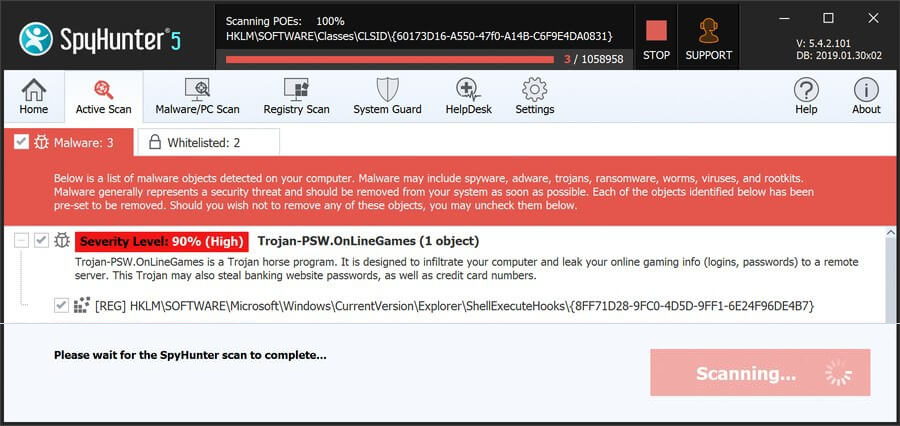
Scams like Kk-ke.top are known to steal personal data and passwords. Install SpyHunter Pro to scan for risks, remove dangerous trackers, and enable real-time protection.
 OFFER
OFFER*Source of claim SH can remove it. Trial w/Credit card; image is for illustration; full terms.
Understanding the Kk-ke.top Scam
The basic story Kk-ke.top appears to tell is simple. Merchants need help. You complete tasks. You get commission. Then you withdraw. That is the neat little four-step path the site wants you to believe in: merchants’ needs, your tasks, get commission, withdrawal.

Now, on the surface, that sounds organized. Similar to Robi9.com and Rambuzz.com, It gives the scam a kind of business costume. It makes you think there is a real system behind the page, with merchants, orders, rankings, and money moving around. But remember, a scam does not need to be complicated to be effective. It only needs to look just real enough for you to take the next step.
And here is where the details start to matter. The domain kk-ke.top was reported as only eight days old, while the site also claims a website running time of 1965 days, 2 hours, 52 minutes, and 55 seconds. That is a huge mismatch. If a site is trying to look old and established while the domain itself is brand new, do not brush that off. That is not a tiny detail. That is the kind of inconsistency that tells you to back away.
The ownership information is also not publicly available, and the site has been associated with weak trust signals, including unverifiable ownership data, support pages without workable contacts, reused-looking template content, and redirects or scripts that do not match what the site appears to be doing.
How Kk-ke.top Pressures Users
The platform message says tasks are released at fixed times every day: 09:00 to 09:30, 11:00 to 11:30, 13:00 to 13:30, 15:00 to 15:30, and 17:00 to 17:30. If your current tasks are done when the next release happens, the system supposedly gives you new ones. If they are not done, you miss that round.
Now notice the psychology here. This is not just scheduling. This is pressure. The site is training you to hurry. It is telling you that if you finish fast, you get more tasks and earn more.
That is a classic danger sign in online earning scams. They do not always threaten you. Sometimes they lure you forward with opportunity. They make you feel like hesitation is costing you money. And once you start thinking that way, you are much less likely to stop and ask the obvious question: why should I trust this site at all?
What Makes Kk-ke.top Suspicious
First, the name itself is odd. The source material specifically points to possible typosquatting, which means an unusual domain may be used to confuse people or catch users who mistype something else.
Second, the site leans heavily on fake-looking social proof. The withdrawal section shows masked identifiers like account numbers and KES amounts, all dated 05-20. Some listed amounts are small, like KES 2,109.00. Others are much larger, such as KES 93,030.00, KES 120,787.00, KES 127,925.00, and even KES 270,144.00.
Okay, stop here. A withdrawal feed is not proof of withdrawals. It is just text on a page unless you can verify it independently. A long list of supposed payouts makes the platform feel alive, successful, and safe. But there may be nothing real behind those numbers.
Third, the actual task description is vague. “Complete virtual orders to improve rankings” sounds businesslike, but what does it really mean? Who are the merchants? What are the orders? Why would this require you? How are commissions calculated? Where is the real support? If a platform wants your time, data, money, or login details, vague answers are not good enough.
Possible Risks Connected to Kk-ke.top
The site has been described as likely connected to phishing, spam, data harvesting, or malware risk.
If it asks you to log in, the risk is credential theft. If it asks for personal details, the risk is data harvesting. If it asks for payment information, the risk is financial loss. And if it asks you to download anything, the risk may include adware or spyware.
There is also the quieter risk: tracking. The warning material mentions collection of details like IP address, location, and device information for targeted spamming. So even browsing a suspicious page is not something to treat casually.
What to Do If You Interacted With Kk-ke.top
If you only opened the site, close it and do not return. Clear your recent browser cache, cookies, and history connected to that visit.
If you entered a password, change it immediately. And if you reused that same password anywhere else, change it there too. One stolen password can become several stolen accounts.
If you entered bank or card details, contact your bank or card provider right away and explain that the information may have been submitted to a suspicious website.
If you downloaded anything, run a full security scan with a trusted tool such as Malwarebytes or your operating system’s built-in security software. You can also check suspicious URLs with VirusTotal before opening them, but only submit the link, not private information.
Useful Resources for Scam Reporting and Prevention (By Country)
Click here to report the scam in your country
| Country / Agency | URL | Category / Use-case | Phone/Email |
| Australia – Crime Stoppers | https://www.crimestoppers.com.au | Anonymous crime tips | 1800 333 000 |
| Australia – National Anti-Scam Center (Scamwatch) | https://www.scamwatch.gov.au/report-a-scam | General scams; phishing; texts/emails | |
| Australia – Police Assistance Line (non-emergency) | https://www.police.gov.au | Local police report | 131 444 |
| Australia – ReportCyber (ACSC) | https://www.cyber.gov.au/report | Cybercrime (hacks, fraud, extortion) | |
| Canada – Canadian Anti-Fraud Center (CAFC) | https://www.antifraudcentre-centreantifraude.ca/report-signalez-eng.htm | General scams including phone/text/email | |
| France – DGCCRF (SignalConso) | https://signal.conso.gouv.fr | Consumer scams/deceptive practices | |
| France – PHAROS – Internet-Signalement | https://www.internet-signalement.gouv.fr | Online content & cybercrime reports | |
| Germany – Bundeskriminalamt / Local Police | https://www.polizei.de/Polizei/DE/Home/home_node.html | Report online fraud | |
| Germany – Weißer Ring – Victim Support | https://weisser-ring.de | Victim support | 116 006 |
| India – DoT Helpline (Sanchar Saathi) | https://sancharsaathi.gov.in | Fraudulent telecom/SIM related | 155260 |
| India – National Consumer Helpline | https://consumerhelpline.gov.in | Consumer scams | 1800-11-4000 / 1915 |
| India – National Cyber Crime Reporting Portal | https://cybercrime.gov.in | Cybercrime including online fraud | 1930 |
| Japan – Consumer Affairs Agency (CAA) | https://www.caa.go.jp/policies/policy/consumer_policy/caution/cybercrime/ | Consumer scams | |
| Japan – National Police Agency – Cybercrime | https://www.npa.go.jp/bureau/cyber/ | Cybercrime reporting | |
| Mexico – Guardia Nacional (National Guard) | https://www.gob.mx/gn | Cybercrime reporting | |
| Mexico – Instituto Federal de Telecomunicaciones (IFT) | https://www.ift.org.mx | Telecom/online services scams | |
| Mexico – PROFECO | https://www.gob.mx/profeco | Consumer fraud & ecommerce | |
| Netherlands – AFM – Report investment fraud | https://www.afm.nl/en/consumenten/themas/beleggen/misleiding-misbruik | Investment/crypto | |
| Netherlands – Fraudehelpdesk | https://www.fraudehelpdesk.nl/melden | General scams (including phishing/SMS) | 088-7867372 |
| Netherlands – Politie – Meldpunt Internetoplichting | https://www.politie.nl/themas/internetoplichting.html | Online shopping fraud | |
| New Zealand – CERT NZ | https://www.cert.govt.nz/individuals/report-an-issue/ | Phishing, identity scams | |
| New Zealand – Department of Internal Affairs – Spam | https://www.dia.govt.nz/Spam-Contact-Us | Email/SMS spam | [email protected] |
| New Zealand – IDCARE | https://www.idcare.org | Victim support (identity compromise) | 0800 121 068 |
| New Zealand – Netsafe – Report | https://www.netsafe.org.nz/report/ | Online harms & scams | |
| New Zealand – New Zealand Police (non-emergency) | https://www.police.govt.nz/use-105 | Report fraud/online crime | 105 |
| Nigeria – Economic & Financial Crimes Commission (EFCC) | https://www.efcc.gov.ng | Financial scams including crypto/investment | [email protected] |
| Nigeria – Nigeria Police Special Fraud Unit (SFU) | https://www.specialfraudunit.org.ng | Serious fraud | Voice/SMS: 0708 227 6895; WhatsApp: 0812 760 9914 |
| Poland – CERT Polska (CERT.PL) | https://cert.pl/en/report/ | Cyber incidents & phishing | |
| Poland – Dyzurnet.pl | https://dyzurnet.pl | Illegal online content (especially child protection) | |
| Poland – Polish Police (Policja) | https://www.policja.pl | Report scams to police | |
| Singapore – Anti-Scam Centre / Anti-Scam Helpline | https://www.scamalert.sg | General scams; texts; calls | 1800-722-6688 |
| Singapore – Monetary Authority of Singapore (MAS) | https://www.mas.gov.sg/investor-alert-list | Investment/crypto checks | |
| Singapore – Singapore Police Force | https://www.police.gov.sg/iwitness | Police report (cybercrime) | |
| South Africa – Cybersecurity Hub (CSIRT) | https://www.cybersecurityhub.gov.za | Cyber incidents including scams | |
| South Africa – South African Fraud Prevention Service (SAFPS) | https://www.safps.org.za | Identity fraud support | 011-867-2234 |
| South Africa – South African Police Service (SAPS) | https://www.saps.gov.za | Police report (cybercrime unit) | |
| South Korea – Korea Communications Commission (KCC) | https://www.kcc.go.kr | Telecom-related fraud | |
| South Korea – Korea Internet & Security Agency (KISA) | https://www.kisa.or.kr | Phishing, online harms | |
| South Korea – Korean National Police Agency – Cyber Bureau | https://ecrm.cyber.go.kr | Cybercrime reporting | |
| Spain – INCIBE – Oficina de Seguridad del Internauta (OSI) | https://www.osi.es/es/reporte | Cybersecurity & online fraud | |
| Spain – Policía Nacional / Guardia Civil | https://www.policia.es | Report scams to police | |
| Sweden – Crime Victim Authority (Brottsoffermyndigheten) | https://www.brottsoffermyndigheten.se | Victim support & compensation | 090–70 82 00 |
| Sweden – Polisen (Swedish Police) | https://polisen.se | Report fraud/cybercrime | 114 14 (non-emergency); 112 (emergency) |
| Sweden – Swedish Consumer Agency (Konsumentverket) | https://www.konsumentverket.se | Unfair business practices | |
| United Arab Emirates – Abu Dhabi Police – Aman Service | https://www.adpolice.gov.ae | Cybercrime tips/reporting | SMS 2828; 800 2626 |
| United Arab Emirates – Dubai Police – eCrime | https://www.dubaipolice.gov.ae | Cybercrime reporting | 04 606 1600 |
| United Arab Emirates – Ministry of Interior – Cyber Crime Dept. | https://www.moi.gov.ae | Cybercrime including online scams | |
| United Arab Emirates – Telecommunications Regulatory Authority (TRA) / TDRA | https://www.tra.gov.ae | Telecom-related scams/phishing | |
| United Kingdom – Action Fraud (NFIB) | https://www.actionfraud.police.uk | General scams & cybercrime (non-emergency) | 0300 123 2040 |
| United Kingdom – Citizens Advice Consumer Service | https://www.citizensadvice.org.uk/consumer/get-more-help/if-you-need-more-help-about-a-consumer-issue/ | Consumer problems & scam guidance | 0808 223 1133 |
| United Kingdom – Financial Conduct Authority (FCA) | https://www.fca.org.uk/consumers/report-scam-us | Investment/crypto & financial services | |
| United Kingdom – National Cyber Security Centre (NCSC) | https://www.ncsc.gov.uk/collection/phishing-scams | Phishing emails & suspicious websites | |
| United Kingdom – Stop Scams UK ‘159’ | https://stopscamsuk.org.uk/159 | Banking APP fraud (direct to your bank) | 159 |
| United States – AARP Fraud Watch Network Helpline | https://www.aarp.org/money/scams-fraud/ | Victim support | 833-372-8311 |
| United States – Better Business Bureau – Scam Tracker | https://www.bbb.org/scamtracker | Business/marketplace scams | |
| United States – FBI Internet Crime Complaint Center (IC3) | https://www.ic3.gov | Internet crime including investment/crypto | |
| United States – Federal Trade Commission – ReportFraud | https://reportfraud.ftc.gov | General scams, phishing, texts/emails | 1-877-382-4357 |
| United States – National Center for Disaster Fraud | https://www.justice.gov/disaster-fraud | Disaster-related scams | (866) 720-5721 |
| United States – SEC Tips & Complaints | https://www.sec.gov/tcr | Investment & securities/crypto-asset offerings |
How to Recognize Similar Task Scams
Watch for the pattern. Easy tasks. Vague merchants. Fast commissions. Withdrawal screens. Fixed time windows. Big numbers. Missing support. New domains pretending to be established. That is the recipe.
And remember this: if a site needs you to move quickly before you can think clearly, that is the red flag. Real opportunities can survive basic verification. Scams depend on momentum.
Final Thoughts
Kk-ke.top uses the language of online earning to make itself look useful: tasks, merchants, virtual orders, commissions, rankings, and withdrawals. But the details do not support trust. A brand-new domain, hidden ownership, questionable site claims, weak support signals, and a suspicious payout display all point in the same direction.
So do not treat Kk-ke.top as a safe platform. Do not sign in. Do not pay. Do not download files. And if you already interacted with it, secure your accounts and device now.
