

The whole purpose of sites like Asoxplay.com is to separate visitors from their crypto by tricking them into depositing their coins in hopes of turning a profit. This is a typical example of a scam crypto casino that uses AI-made promotional clips, influencer-style posts, and time-limited offers to pull in as many people as possible and get them to invest without thinking.
The site may display a bonus balance or an account total that feels instantly valuable once you sign up, even though there’s no actual value behind the displayed numbers.
For a while, it may seem like your balance is steadily growing and you are winning real money from this site, but the truth is that, once you try to cash out, you are met with radio silence – uncooperative or non-existent support lines stall the withdrawal until you realize that you aren’t getting anything out of this site. Any crypto that you have already deposited is gone too, and you are left with the realization that you’ve been scammed.
If you’ve encountered Asoxplay or a similar site like Bazowin781 or Besowin, and especially if you’ve already deposited anything on them or shared any personal details, it’s crucial to learn how to protect yourself. The following lines will give you a brief crash course on the most important details you need to know about this type of scam.
Scams of Asoxplay.com‘s type are known to steal personal data and passwords. Install SpyHunter Pro to scan for risks, remove any dangerous trackers, and enable real-time protection.

Try Free For 7 Days*
Buy now15% OFF if you buy straight without trial.
 OFFER
OFFERIMPORTANT! READ BEFORE PROCEEDING!
If you already interacted with Asoxplay – stop sending money, stop sharing documents, and lock things down now. Preserve every screenshot and transaction record, treat any connected wallet or account as exposed, and ignore anyone promising a paid recovery. The priority is containing spillover into your email, exchange logins, and remaining holdings.
- Move remaining assets to a fresh, clean wallet and revoke any suspicious token approvals linked to the scam touchpoint.
- Change passwords and enable app-based 2FA on email, exchanges, and chat accounts; review active sessions and delete unused API keys.
- Preserve evidence: screenshots, URLs, videos or ads, wallet addresses, TXIDs, and chat logs – keep everything for official reports.
- Notify the sending platform (your exchange or service) with TXIDs and the destination address so they can flag or freeze if possible.
- Report promptly to your national cybercrime unit (e.g., IC3 in the US, Action Fraud in the UK) and to the platform where you saw the promotion.
How We Know Asoxplay is a Scam
Several warning signs line up here, and together they point in one direction. Rather than one minor issue, Asoxplay shows the same pattern seen on repeat across copy-paste crypto fraud pages: fabricated balances, made-up withdrawal barriers, weak corporate traces, and marketing built to rush trust.
Gift-balance illusion
A code or sign-up step that instantly unlocks a valuable balance is a classic bait device. If no blockchain record, funding source, or transparent promotion terms exist, the number is only there to influence your next decision.
Pay-first withdrawals
No credible venue makes you send extra crypto before releasing funds already shown as yours. Labels such as activation, wallet check, tax, or liquidity release all serve the same purpose: extracting one more payment.
Manufactured authority
Videos, testimonials, and celebrity clips are easy to fake and cheap to distribute. When endorsement claims appear only inside ads or reposted clips, that borrowed credibility should be treated as a threat signal, not reassurance.
Missing payout proof
Functional services can point to verifiable transfers, withdrawal logs, or support records that hold up under scrutiny. When answers stay vague and no traceable payout evidence appears, the advertised balance is likely fictional.
Paper-thin compliance claims
Many of these sites decorate themselves with badges, seals, and license language that sounds official but leads nowhere. A real operator can be checked through public company records, regulator databases, and consistent contact information.
Disposable domains
Complaints often arrive just before the site vanishes or starts redirecting. That short life span, followed by a near-identical replacement under another address, is typical of a scam kit being reused until it burns out.

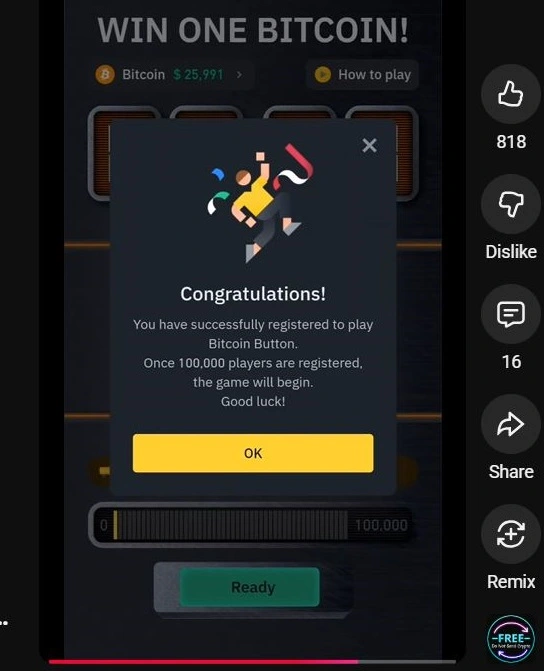
How the Asoxplay Scam Deception Funnel Works
Seeing the sequence clearly makes the persuasion much weaker. Asoxplay does not rely on sophisticated technology so much as staged credibility and carefully timed pressure, moving a visitor from curiosity to hope, from hope to payment, and from payment to one excuse after another.
Most victims encounter a very similar chain: a polished lure, an easy account setup, a reassuring dashboard, an apparent win or bonus, then a withdrawal request that turns into a toll booth. Each step is designed to make the next request feel smaller than the amount seemingly waiting on-screen.
Promo hooks and influencer codes
It usually opens outside the site itself. Social posts, comment sections, private messages, or short videos hint that a special code, insider deal, or fast-track offer is available only for a limited window, pushing people to click before they verify anything.
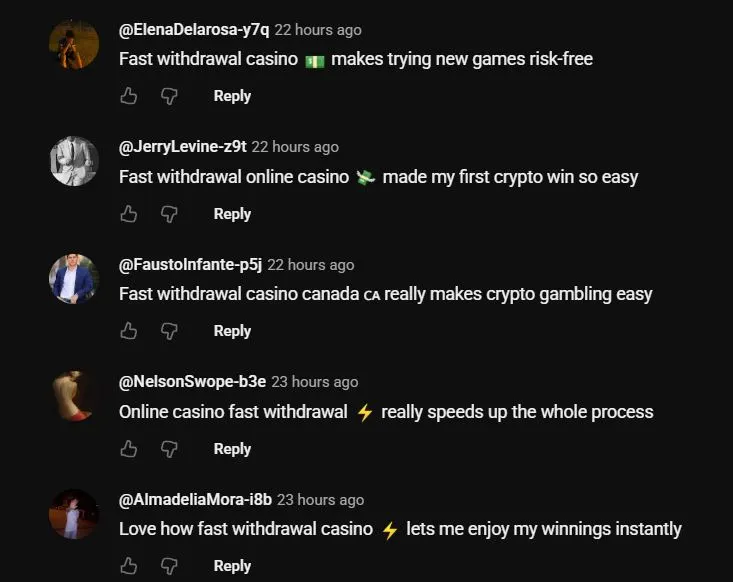
Casino skin and bonus theater
Once the page loads, the design aims to lower suspicion immediately. Familiar layouts, animated counters, game panels, or trading widgets create the impression of a live service, even though the visual polish says nothing about whether real operations exist behind the screen.

Inflated balances, then the gate
Next comes the emotional hook: a bonus credit, a boosted starting total, or a few easy wins shown in the account area. That apparent success is meant to create ownership feelings so that a smaller deposit seems reasonable compared with the bigger amount you believe is already there.
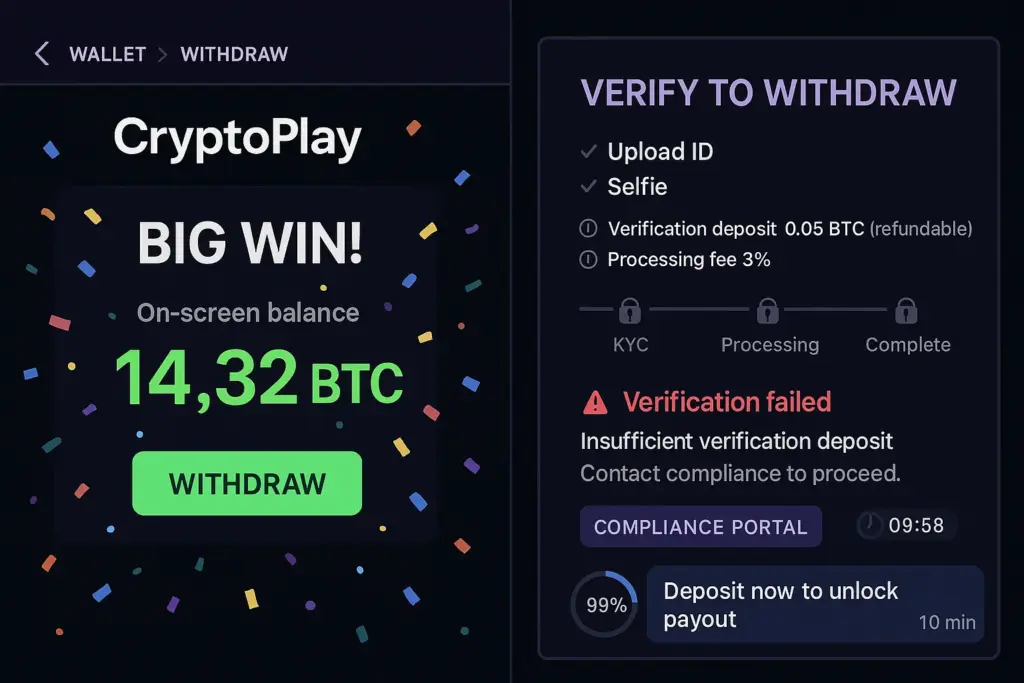
Fee-gates and KYC harvest
When you try to cash out, the story changes. Suddenly there is a verification payment, an anti-money-laundering review, a tax hold, a VIP upgrade, or a wallet synchronization issue, and every new obstacle requires either more crypto or more sensitive documents.

Stalling, rebrands, and “recovery” bait
After repeated delays, support starts looping through scripts, slowing responses, or blaming system congestion. Then the domain can vanish, customer channels go quiet, and a second wave begins when supposed recovery helpers contact victims with yet another fee-based promise.
Staying safe from crypto scams like Asoxplay
Protecting yourself against operations like Asoxplay comes down to a few repeatable checks. The goal is not to spot every scammer instantly; it is to interrupt the manipulation early enough that no wallet connection, document upload, or transfer ever reaches their side.
Never pay to withdraw
Pause the moment a platform asks for money in order to release money. Transparent services disclose charges upfront and process them through normal account mechanics; surprise withdrawal tolls are among the most reliable signs that the dashboard is only acting.
Verify endorsements at the source
Before trusting a famous face or a glowing testimonial, look for confirmation on the person’s verified channels or on the company’s official announcements. A clip that exists only in ads, reposts, or stitched videos should not be treated as proof.
Navigate with your own bookmarks
Instead of arriving through ads, search results, or unsolicited chats, open sensitive crypto services from your own saved links. That single habit strips away a huge share of lookalike pages, typo domains, and promoted scam funnels.
Check regulator registers & warnings
Whenever a site claims registration, licensing, or legal presence, verify those statements directly with the stated regulator or corporate registry. Fraud pages often depend on the fact that most people never check whether those claims resolve anywhere real.
Segregate risk with burner wallets
Use a separate low-value wallet when testing any unfamiliar service, and keep primary holdings isolated on hardware or other offline storage. Segmentation limits the blast radius if a connected site is dishonest or a wallet approval turns out to be dangerous.
Harden accounts with 2FA & hygiene
Email security matters here just as much as wallet security. Strong unique passwords, authenticator-based sign-in protection, session reviews, and API-key cleanup reduce the chance that one scam interaction expands into account takeovers elsewhere.
Revoke approvals & migrate
If you connected a wallet, audit its permissions and move what remains to a fresh address you control. Unlimited approvals and reused addresses can leave doors open long after the original website has stopped responding.
Protect identity & slow down
Personal documents handed to a fake compliance portal can be abused later for impersonation or follow-on fraud. Watch for suspicious contact attempts, monitor financial accounts, and slow every urgent request down long enough to verify it independently.
Where to report Asoxplay-style crypto casino scams (by country)
One useful final step is reporting. Save the domain, wallet addresses, chat logs, screenshots, and transaction IDs, notify the exchange or service that sent the funds, and file a complaint with the relevant cybercrime or fraud authority in your area. Most importantly, do not pay private recovery operators who ask for an advance fee.
Click here to report the scam in your country
| Country / Agency | URL | Category / Use-case | Phone/Email |
| Australia – Crime Stoppers | https://www.crimestoppers.com.au | Anonymous tips about crime | 1800 333 000 |
| Australia – National Anti-Scam Center (Scamwatch) | https://www.scamwatch.gov.au/report-a-scam | General scams; phishing; texts/emails | |
| Australia – Police Assistance Line (non-emergency) | https://www.police.gov.au | Local police report | 131 444 |
| Australia – ReportCyber (ACSC) | https://www.cyber.gov.au/report | Cybercrime (hacks, fraud, extortion) | |
| Canada – Canadian Anti-Fraud Center (CAFC) | https://www.antifraudcentre-centreantifraude.ca/report-signalez-eng.htm | General scams incl. phone/text/email | |
| France – DGCCRF (SignalConso) | https://signal.conso.gouv.fr | Consumer scams/deceptive practices | |
| France – PHAROS – Internet-Signalement | https://www.internet-signalement.gouv.fr | Online content & cybercrime reports | |
| Germany – Bundeskriminalamt / Local Police | https://www.polizei.de/Polizei/DE/Home/home_node.html | Report online fraud | |
| Germany – Weißer Ring – Victim Support | https://weisser-ring.de | Victim support | 116 006 |
| India – DoT Helpline (Sanchar Saathi) | https://sancharsaathi.gov.in | Fraudulent telecom/SIM related | 155260 |
| India – National Consumer Helpline | https://consumerhelpline.gov.in | Consumer scams | 1800-11-4000 / 1915 |
| India – National Cyber Crime Reporting Portal | https://cybercrime.gov.in | Cybercrime incl. online fraud | 1930 |
| Japan – Consumer Affairs Agency (CAA) | https://www.caa.go.jp/policies/policy/consumer_policy/caution/cybercrime/ | Consumer scams | |
| Japan – National Police Agency – Cybercrime | https://www.npa.go.jp/bureau/cyber/ | Cybercrime reporting | |
| Mexico – Guardia Nacional (National Guard) | https://www.gob.mx/gn | Cybercrime reporting | |
| Mexico – Instituto Federal de Telecomunicaciones (IFT) | https://www.ift.org.mx | Telecom/online services scams | |
| Mexico – PROFECO | https://www.gob.mx/profeco | Consumer fraud & ecommerce | |
| Netherlands – AFM – Report investment fraud | https://www.afm.nl/en/consumenten/themas/beleggen/misleiding-misbruik | Investment/crypto | |
| Netherlands – Fraudehelpdesk | https://www.fraudehelpdesk.nl/melden | General scams (incl. phishing/SMS) | 088-7867372 |
| Netherlands – Politie – Meldpunt Internetoplichting | https://www.politie.nl/themas/internetoplichting.html | Online shopping fraud | |
| New Zealand – CERT NZ | https://www.cert.govt.nz/individuals/report-an-issue/ | Phishing, identity scams | |
| New Zealand – Department of Internal Affairs – Spam | https://www.dia.govt.nz/Spam-Contact-Us | Email/SMS spam | [email protected] |
| New Zealand – IDCARE | https://www.idcare.org | Victim support (identity compromise) | 0800 121 068 |
| New Zealand – Netsafe – Report | https://www.netsafe.org.nz/report/ | Online harms & scams | |
| New Zealand – New Zealand Police (non-emergency) | https://www.police.govt.nz/use-105 | Report fraud/online crime | 105 |
| Nigeria – Economic & Financial Crimes Commission (EFCC) | https://www.efcc.gov.ng | Financial scams incl. crypto/investment | [email protected] |
| Nigeria – Nigeria Police Special Fraud Unit (SFU) | https://www.specialfraudunit.org.ng | Serious fraud | Voice/SMS: 0708 227 6895; WhatsApp: 0812 760 9914 |
| Poland – CERT Polska (CERT.PL) | https://cert.pl/en/report/ | Cyber incidents & phishing | |
| Poland – Dyzurnet.pl | https://dyzurnet.pl | Illegal online content (esp. child protection) | |
| Poland – Polish Police (Policja) | https://www.policja.pl | Report scams to police | |
| Singapore – Anti-Scam Centre / Anti-Scam Helpline | https://www.scamalert.sg | General scams; texts; calls | 1800-722-6688 |
| Singapore – Monetary Authority of Singapore (MAS) | https://www.mas.gov.sg/investor-alert-list | Investment/crypto checks | |
| Singapore – Singapore Police Force | https://www.police.gov.sg/iwitness | Police report (cybercrime) | |
| South Africa – Cybersecurity Hub (CSIRT) | https://www.cybersecurityhub.gov.za | Cyber incidents incl. scams | |
| South Africa – South African Fraud Prevention Service (SAFPS) | https://www.safps.org.za | Identity fraud support | 011-867-2234 |
| South Africa – South African Police Service (SAPS) | https://www.saps.gov.za | Police report (cybercrime unit) | |
| South Korea – Korea Communications Commission (KCC) | https://www.kcc.go.kr | Telecom-related fraud | |
| South Korea – Korea Internet & Security Agency (KISA) | https://www.kisa.or.kr | Phishing, online harms | |
| South Korea – Korean National Police Agency – Cyber Bureau | https://ecrm.cyber.go.kr | Cybercrime reporting | |
| Spain – INCIBE – Oficina de Seguridad del Internauta (OSI) | https://www.osi.es/es/reporte | Cybersecurity & online fraud | |
| Spain – Policía Nacional / Guardia Civil | https://www.policia.es | Report scams to police | |
| Sweden – Crime Victim Authority (Brottsoffermyndigheten) | https://www.brottsoffermyndigheten.se | Victim support & compensation | 090–70 82 00 |
| Sweden – Polisen (Swedish Police) | https://polisen.se | Report fraud/cybercrime | 114 14 (non-emergency); 112 (emergency) |
| Sweden – Swedish Consumer Agency (Konsumentverket) | https://www.konsumentverket.se | Unfair business practices | |
| United Arab Emirates – Abu Dhabi Police – Aman Service | https://www.adpolice.gov.ae | Cybercrime tips/reporting | SMS 2828; 800 2626 |
| United Arab Emirates – Dubai Police – eCrime | https://www.dubaipolice.gov.ae | Cybercrime reporting | 04 606 1600 |
| United Arab Emirates – Ministry of Interior – Cyber Crime Dept. | https://www.moi.gov.ae | Cybercrime incl. online scams | |
| United Arab Emirates – Telecommunications Regulatory Authority (TRA) / TDRA | https://www.tra.gov.ae | Telecom-related scams/phishing | |
| United Kingdom – Action Fraud (NFIB) | https://www.actionfraud.police.uk | General scams & cybercrime (non-emergency) | 0300 123 2040 |
| United Kingdom – Citizens Advice Consumer Service | https://www.citizensadvice.org.uk/consumer/get-more-help/if-you-need-more-help-about-a-consumer-issue/ | Consumer problems & scam guidance | 0808 223 1133 |
| United Kingdom – Financial Conduct Authority (FCA) | https://www.fca.org.uk/consumers/report-scam-us | Investment/crypto & financial services | |
| United Kingdom – National Cyber Security Centre (NCSC) | https://www.ncsc.gov.uk/collection/phishing-scams | Phishing emails & suspicious websites | |
| United Kingdom – Stop Scams UK ‘159’ | https://stopscamsuk.org.uk/159 | Banking APP fraud (direct to your bank) | 159 |
| United States – AARP Fraud Watch Network Helpline | https://www.aarp.org/money/scams-fraud/ | Victim support | 833-372-8311 |
| United States – Better Business Bureau – Scam Tracker | https://www.bbb.org/scamtracker | Business/marketplace scams | |
| United States – FBI Internet Crime Complaint Center (IC3) | https://www.ic3.gov | Internet crime incl. investment/crypto | |
| United States – Federal Trade Commission – ReportFraud | https://reportfraud.ftc.gov | General scams, phishing, texts/emails | 1-877-382-4357 |
| United States – National Center for Disaster Fraud | https://www.justice.gov/disaster-fraud | Disaster-related scams | (866) 720-5721 |
| United States – SEC Tips & Complaints | https://www.sec.gov/tcr | Investment & securities/crypto-asset offerings |
