

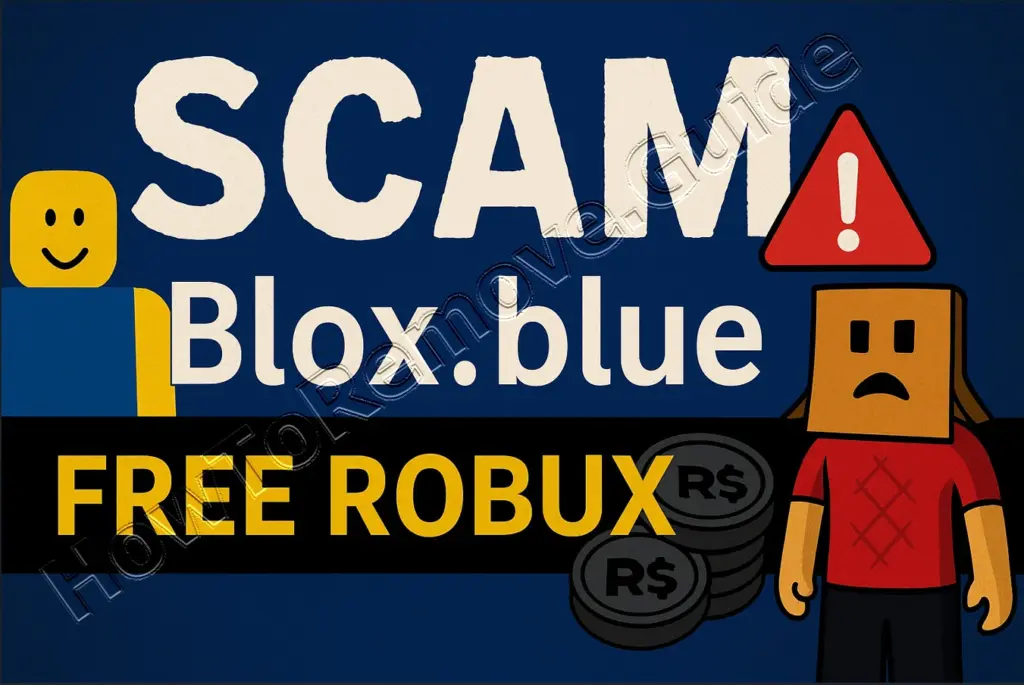
Blox.blue looks harmless at first glance; a friendly page splashed with Roblox avatars and the irresistible promise of free Robux. But don’t be too quick to interact with it because it’s a total scam and this page explains how we know this.
Scammers running sites like Blox.blue know how to weaponize excitement. They lean on the same emotional hooks that make clickbait so effective: urgency, reward, belonging.
“Claim now before it’s gone!” they say, pushing players into a rush of dopamine-fueled trust. Once you start typing your username, password, and maybe even email, you’ve already stepped into the trap.
Make no mistake, Blox.blue doesn’t give Robux; it just siphons your data, sells your clicks, and sometimes tricks you into installing malware on your PC. It’s the same con dressed in bright colors as Blox.promo and Bloxdrop before it. These scams work not because people are stupid, but because they’re hopeful. And that hope is exactly what Blox.blue exploits, turning curiosity into currency for criminals. Guard your hope; it’s worth more than Robux.
To stay safe, I strongly recommend reading the rest of this post.
Scams of Blox.blue‘s type are known to steal personal data and passwords. Install SpyHunter Pro to scan for risks, remove any dangerous trackers, and enable real-time protection.

Try Free For 7 Days*
Buy now15% OFF if you buy straight without trial.
 OFFER
OFFERWhat is the Blox.blue Scam?
The verdict is simple: Blox.blue pretends to be a helper that routes free Robux, then converts that promise into paid tasks for itself. From the first screen, it mirrors a brand you recognize and invites you to type a username so it “knows where to send” the reward. That prompt looks harmless and builds credibility because it avoids a password request, which lowers your guard. Traffic flows in through search-poisoned links and rehosted PDFs on compromised or throwaway sites. The funnel is staged to feel “discovered,” not advertised.
Strip away the costume and the process is direct. You select an enormous payout, press a large button, and collide with “human verification.” The items on that wall – surveys, free trials, and app installs – are not security gates; they are paid tasks tied to cost-per-action networks that generate commissions whether you “qualify” or not. Pressure tactics supply momentum. Countdown clocks push speed, “only a few codes left” simulates scarcity, and fake activity bars imitate demand. Small asks become bigger asks as the page nudges more actions.
The core limitation never changes. Third-party sites cannot transfer Robux into a player’s account, even if a page pretends to “detect” an avatar after a name is typed. When the domain’s reputation sours, the campaign often respawns under a new label with the same template, the same timers, and the same vanishing act when complaints pile up.
What to Do if You’ve been scammed by Blox.blue?
Start with stabilization so new damage stops. You secure core accounts, clean devices, and remove stray permissions before chasing refunds. Money routed through shady trials or prepaid codes may be hard to recover, and “fund recovery” pitches risk a second loss. Work in order so each step reduces the chance of further harm. Keep your email account locked down because it controls most resets.
Start with your Roblox login. Change the password to a unique passphrase, enable two-factor authentication, and store backup codes offline.
Invalidate any stolen sessions. Use “log out of all other sessions” in account security pages, then repeat this on other important services as you rotate credentials.
Reinforce your email. Review recent sign-ins, enable two-factor authentication, and use a password manager to prevent reuse across sites.
Check your browser for rogue extensions added during “verification.” Remove anything you do not recognize, restart the browser, and recheck.
Run a reputable anti-malware scan, then bring your operating system and browsers fully up to date. Patching closes common exploit paths and reduces persistence.
If you used Discord during the funnel, prune connected apps, reset the password, enable two-factor, and treat token-stealer warnings as serious. Assume session compromise and re-authenticate cleanly.
Document any surprise charges and contact your card issuer to dispute them and to block future billing from the same merchants. For prepaid or gift cards, contact the issuer immediately with numbers and receipts.
File reports with consumer or cybercrime channels and with the platform where you saw the lure. Save logs and screenshots so investigators can link domains used by the same operators.
What Are the Usual Blox.blue Red Flags?
Use these tells to slow the moment and check the page. This template hides weak spots behind urgency, but a brief pause makes them stand out.
First tell: showy numbers and theatrical widgets. Giant payout sliders, fake “recent winners,” and tickers claiming hundreds of simultaneous claimants exist to monopolize attention. They are props, not proof.
Second signal: lookalike links and shorteners that hide the destination. Domains with swapped letters or odd TLDs, plus multiple hops through shorteners, exist to defeat a quick URL check.
Third marker: credential prompts on off-brand pages. Any page not hosted on the real Roblox domain that asks for logins or claims it can “link” your profile deserves an immediate exit.
Fourth clue: “verification” walls that monetize your actions. Surveys, installs, and trial sign-ups pay the operator, and the loop continues even when every task is completed.
Fifth indicator: policy pages that fail basic checks. Copy-pasted privacy text, missing company details, no address, and throwaway support emails point to a disposable operation.
Tips to Stay Protected From robux Scams sites Like Blox.blue
Prevention costs less than cleanup. A few steady habits block most lures and give you time to think.
Trust only official channels for Robux acquisition: platform purchase, legitimate Premium stipends, and developer revenue pathways.
Decline “verification” tasks on outside sites. Surveys, installs, and trial offers fund the operator regardless of your outcome, and each step increases your exposure.
Deploy DNS filtering and an ad or tracker blocker on devices used for gaming communities. This reduces malvertising redirects and the odds of landing on spoofed pages.
Create unique passwords with a manager and enable two-factor authentication wherever possible. The manager removes the incentive to reuse credentials.
Partition the browsing setup for younger players with a dedicated profile that locks extensions and blocks installations without supervision.
Make domain verification a reflex. Check the address bar, open site information, and treat unfamiliar top-level domains or misspelled hosts as stop signs.
Apply least-privilege rules on family computers. Avoid daily admin accounts, and keep auto-updates on for the operating system and browsers.
Avoid sideloaded mobile packages. If an offer tells you to install an APK or a configuration profile, treat it as a risk, not a prize.
