

In the creator economy, brand emails can be real opportunities or elaborate mirages. The thing is… scams now imitate normal partnership language so well that “sounds professional” is no longer a safety signal. I focus on patterns: who pays whom, what’s documented, and what happens after agreement.
Boldier is marketed as a shop for customized jewelry and sentimental gifts, which makes outreach feel safe and personal. However, many accounts describe experiences that stall after checkout or after a “collab” is accepted, leaving people with charges but no clear outcome.
Scams of Boldier‘s type are known to steal personal data and passwords. Install SpyHunter Pro to scan for risks, remove any dangerous trackers, and enable real-time protection.

Try Free For 7 Days*
Buy now15% OFF if you buy straight without trial.
 OFFER
OFFERCreators are especially exposed because the pitch targets pride and urgency: compliments, promised cash, and a quick “honest review” request. When you’re flattered and busy, the boring verification steps are the first to get skipped.
This guide explains what people mean by the “Boldier scam,” why the risk keeps showing up, and how to respond in a way that protects your wallet and your audience without spiraling into paranoia.
What is Boldier Scam?
When people say “Boldier scam,” they’re usually pointing to a repeating pattern: a deal that looks like a standard collaboration or online purchase, followed by cost-shifting and uncertainty. The label is shorthand for an experience where the buyer or creator, similar to can’t reliably reach closure.
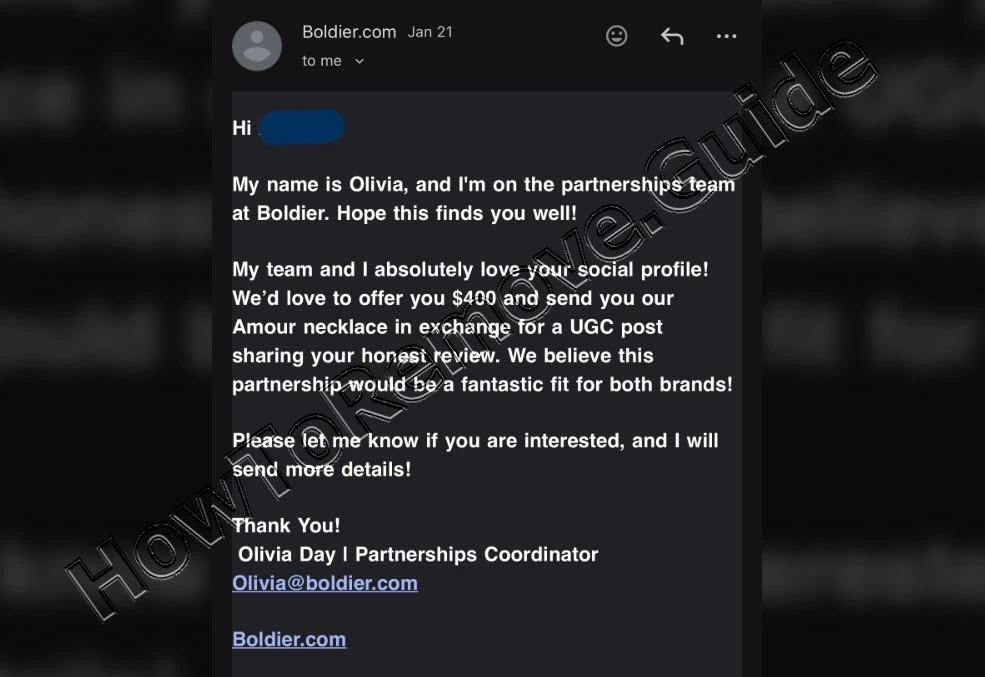
In practice, the stories cluster into two lanes. One lane is creators offered paid UGC plus a product, then nudged into paying a small logistics fee. The other lane, is shoppers ordering jewelry and waiting far beyond normal fulfillment timelines with little actionable support.
Is Boldier a Scam?
I mean… “scam” is a legal conclusion, and I’m not a court. What I can do is evaluate risk using evidence people commonly report: non-delivery claims, incentives that push you to pay first, and communications that thin out once money changes hands.
A functioning merchant can mess up, yet it usually provides tracking, clear escalation paths, and transparent timelines. When the dominant pattern is “money left my account and the conversation evaporated,” the safest assumption is that the arrangement is high-risk for both creators and customers.
How the Boldier Scam Tricks You
You see… the initial message is engineered to feel ordinary: a “partnership coordinator” voice, a specific payment number, and a product name that sounds like a real catalog item. Using a personal sign-off helps the email read like a human, not a blast.
Then comes the checkout sleight of hand. A code removes the item price, but a remaining fee is framed as unavoidable shipping or handling. After that payment, the timeline can stretch indefinitely, replies may slow, and you’re left chasing updates without leverage.
The thing is… the trap doesn’t rely on huge amounts; it relies on lots of small, plausible transactions. Some people only see progress after starting a bank dispute, which suggests the system responds to external pressure more reliably than it responds to normal customer messages.
Recognizing Warning Signs of the Boldier Scam
Spotting this kind of offer is less about “gut feeling” and more about checking for accountability gaps. If the pitch is unusually generous, but the paperwork is vague and the process routes you into paying something upfront, that’s the same cost-shift pattern that makes these deals risky.
- A “free item” arrangement that still requires a card charge, with the fee described as minor or unavoidable, and no way to verify shipment beyond promises, timestamps, or vague “processing” updates in email threads.
- A rate that seems disconnected from your audience size or typical brand budgets, paired with language that pushes speed over clarity, avoids specifics, and discourages slow, written negotiation about deadlines, usage rights, and deliverables.
- A storefront that feels thin: limited products, minimal independent feedback, or a review footprint that looks curated, leaving you unable to triangulate real buyer experiences across separate platforms, forums, or third-party seller profiles.
- A support channel that won’t answer concrete questions like “When will it ship?” “What carrier?” or “What happens if it doesn’t arrive?” while still urging you to complete payment and assuring you it will be “sorted soon.”
- Location signals that don’t line up, such as unexpected currency, confusing regional policies, or instructions that make returns and disputes feel harder than they should be for routine ecommerce, especially when you ask for clear jurisdiction details.
When several of these signals stack up, treat the offer as unverified until it clears your checks. It’s fine to be polite, but don’t be flexible with your payment security, because flexibility is what the pattern feeds on.
How to Handle This Offer When You See It
Start by slowing the tempo and turning everything into written, checkable facts. Save the email, screenshot the offer, and locate the brand’s public contact page. Compare domains, addresses, and policies; inconsistencies matter more than friendly language.
You see… a legitimate partner can send products without you paying to receive them. Ask for a prepaid label or a shipment confirmation that includes carrier and tracking before any content work begins; if they refuse or dodge, decline and move on.
If you already paid, act quickly and document everything. Pull your receipt, your order page, and your message history, then call your bank to request a dispute or chargeback process. Follow up by email summarizing dates, amounts, and unanswered questions.
Conclusion
The most effective scams don’t look dramatic; they look like ordinary admin with a flattering subject line. The Boldier pattern many people describe, as outlined earlier, blends tempting creator pay, small fees, and an aftertaste of silence or extreme delay.
The practical defense is boring and powerful: verify identity, keep money flowing toward you, and choose payment methods with dispute protections. When a brand can’t answer direct questions in writing, treat that as your clearest signal to walk away.
