

If you encountered a platform called Cointig that offers enticing crypto bonuses or that promotes itself through flashy videos and celebrity endorsements, be warned – it’s not an actual financial opportunity but a sophisticated scam.
Cointig is not a trading platform, nor does it have any real blockchain functionality. Instead, it relies heavily on social engineering: fake balances, promo codes, deepfake testimonials, and urgent-sounding offers crafted to push users into making a quick deposit or paying a hefty transfer fee.
Once you send any funds, they vanish – there is no actual service behind the scenes. These scams thrive in the short attention-span economy, targeting users on platforms like TikTok and Instagram, where the site is shared widely and looks convincing at a glance.
The scammers behind Cointig don’t stop once exposed and instead they just switch domains and reuse the same design under a different name, like Sagcoin or Gerocas. This is part of what makes clone scams like Cointig so persistent and effective. There’s minimal effort put into making them, yet they quickly gain maximum reach, and the scammers behind them usually face zero consequences.
Scams of Cointig‘s type are known to steal personal data and passwords. Install SpyHunter Pro to scan for risks, remove any dangerous trackers, and enable real-time protection.

Try Free For 7 Days*
Buy now15% OFF if you buy straight without trial.
 OFFER
OFFERWhat is the Cointig Scam?
Cointig is a fraudulent online platform pretending to be a cryptocurrency exchange. It is not licensed, regulated, or capable of processing real trades. The goal of Cointig is to trick users into depositing real Bitcoin under the illusion that they are activating access to a “gifted” crypto balance. It is a complete fabrication designed to steal.
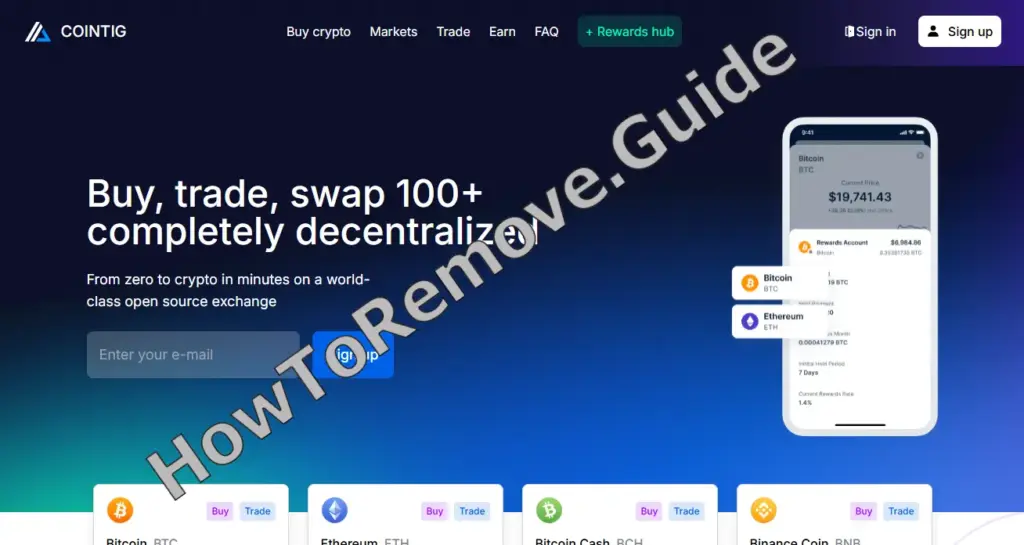
The user journey begins when a potential victim views a video or post on social media. These often feature deepfakes of celebrities like Elon Musk, Cristiano Ronaldo, or Bill Gates falsely endorsing the Cointig platform. These figures are shown praising a crypto opportunity and encouraging viewers to sign up using a promo code.
Once the viewer visits the Cointig site, they’re prompted to register and apply a promotional code such as “CR7” or “Tiktok11.” After this, a fabricated account balance appears, typically showing 0.31 BTC. This number is meaningless – it is only UI-generated, meant to create excitement and perceived trust.
When users try to withdraw the supposed crypto, they are prompted to “unlock” their funds by depositing a small amount – typically 0.005 BTC. The moment the deposit is sent, the site either locks up, throws an error, or becomes unreachable. No withdrawals are processed. The deposit is gone, sent directly to the scammers’ wallets.
This scam thrives on emotional manipulation and fake credibility. The site is deliberately basic in function, yet visually polished, designed to appeal to less-experienced users. As soon as complaints increase, or the domain is flagged, the scammers abandon it and relaunch the exact same site under a different URL. This domain rotation strategy ensures the Cointig scam stays one step ahead of enforcement.
What to Do if You’ve been scammed by Cointig?
If you’ve fallen victim to Cointig, your first step must be damage control. The urgency is not in recovering lost funds but in protecting the rest of your digital assets. Cryptocurrency transactions are irreversible. If your crypto was sent to Cointig, chances are high that it is already unrecoverable. Chasing recovery immediately, or trusting “recovery experts,” can expose you to even more scams. Focus first on stopping further damage.
Take a breath. Scammers use urgency and panic to push people deeper into traps. What’s lost is lost – for now. Your priority must shift to limiting further exposure. Once you’ve locked down your systems and digital wallets, you can consider reporting the incident and warning others.
Damage Control Tips:
- Revoke access permissions from any wallet that interacted with Cointig using a token management interface.
- Move remaining funds to a new wallet, especially if any suspicious activity has occurred or if the same wallet interacted with suspicious websites.
- Change passwords for your crypto-related accounts, especially exchanges, wallets, and email.
- Enable 2FA (two-factor authentication) on every platform related to your crypto holdings or online financial presence.
- Avoid recovery scams – anyone offering to retrieve lost funds is almost certainly another scammer.
- Report the scam to the platform where you saw it (YouTube, TikTok, Facebook) and also to national cybercrime units.
- Document everything – screenshots, wallet addresses, and transactions. This will help during reporting and can prevent others from falling for Cointig.
Avoiding further losses is more realistic than retrieving what’s already gone. Immediate cleanup and caution are your strongest defense against repeat targeting.
What Are the Usual Cointig Red Flags?
Crypto scams like Cointig display glaring warning signs, though they often escape notice in the excitement of potential profits. These scams are wide-net, low-effort operations. Scammers use polished appearances but sloppy execution. Staying calm and analytical while inspecting offers is the best countermeasure. Reacting emotionally opens the door to being manipulated.
The first major red flag is the use of deepfake celebrity endorsements. These videos feature realistic-looking but entirely fake endorsements from global figures. Scammers hope people will skip verification out of excitement.
The next indicator is a sudden gift of cryptocurrency just for signing up. Real crypto platforms never give away funds unconditionally or without documentation. A fake balance appearing out of nowhere is a manipulation tool.
Another warning sign is the “promo code activation” funnel. The site prompts users to enter special codes to unlock bonuses. These actions are designed to create perceived progress and commitment from the user.
A critical red flag is any request for deposits before allowing withdrawals. Legitimate platforms never require payments to release already-displayed balances. This “activation fee” logic is a psychological trap used by Cointig.
Finally, Cointig-type sites almost always lack official documentation, support contact information, or licensing verification. If the site cannot be found in crypto directories or regulator databases, treat it as suspect.
Tips to Stay Protected From Crypto Scams Like Cointig
Avoiding scams like Cointig is easier than recovering from them. With a clear understanding of the tactics used and the red flags to look for, users can dramatically reduce their chances of being exploited. Most crypto scams are predictable. By applying the strategies below, you gain significant protection.
- Bookmark known legitimate websites. Always visit crypto services through saved links, not search engine results or social media promotions.
- Use a separate “burner” wallet for interacting with any new or unknown platform. Never connect your primary wallet to unfamiliar websites.
- Do not trust unsolicited messages. Whether it’s an influencer, a giveaway, or a support account – verify before interacting. Ignore DMs with links.
- Never download files or apps shared through email, Discord, or social channels. These are often used to install malicious software.
- Revoke smart contract approvals after completing any transaction involving new platforms. Don’t leave permissions open longer than necessary.
- Don’t act on urgency. Scam messaging thrives on pushing you to make fast decisions. If a message says “limited-time offer,” it’s likely a scam.
- Monitor social platforms critically. Scams like Cointig use short-form video platforms heavily – always fact-check before acting.
- Avoid pop-up ads or promoted tweets suggesting giveaways or investment opportunities. These are among the most common phishing vectors.
If you follow these precautions and apply them consistently, your risk of being caught by a scam like Cointig drops dramatically.
Even with sophisticated scam tactics like those used in Cointig, awareness and discipline are often enough to keep your assets safe. The best defense is a mindset of skepticism and proactive protection. No legitimate platform will ever promise instant wealth or demand deposits to release fake balances. Stay informed, stay cautious – and stay in control.
