

Did you recently get a random Instagram DM from someone you’ve never met saying they’re rich, seriously ill, and have left you a giant crypto inheritance on a site called Kuj.cc? Maybe the message even came with a little login and password plus a link where you’re supposed to “claim” millions in stablecoins. At first glance, for a moment, it feels like you’ve lucked into the world’s strangest windfall. Time out here: this is not good fortune. This is the first move in a structured crypto scam built around Kuj.cc, Zdo.cc and a whole cluster of look-alike domains.
Scams of Kuj.cc‘s type are known to steal personal data and passwords. Install SpyHunter Pro to scan for risks, remove any dangerous trackers, and enable real-time protection.

Try Free For 7 Days*
Buy now15% OFF if you buy straight without trial.
 OFFER
OFFERUnderstanding the Kuj.cc Crypto Inheritance Scam
The pattern usually starts the same way. You get an unsolicited DM. The sender spins a dramatic story about being exceptionally wealthy, expecting to pass away soon, and somehow confusing you with someone they used to be close with “back in the days.” Out of guilt or gratitude, they now want to leave you a massive inheritance that’s allegedly already sitting in a crypto account. All you need to do, they say, is log in and withdraw it.
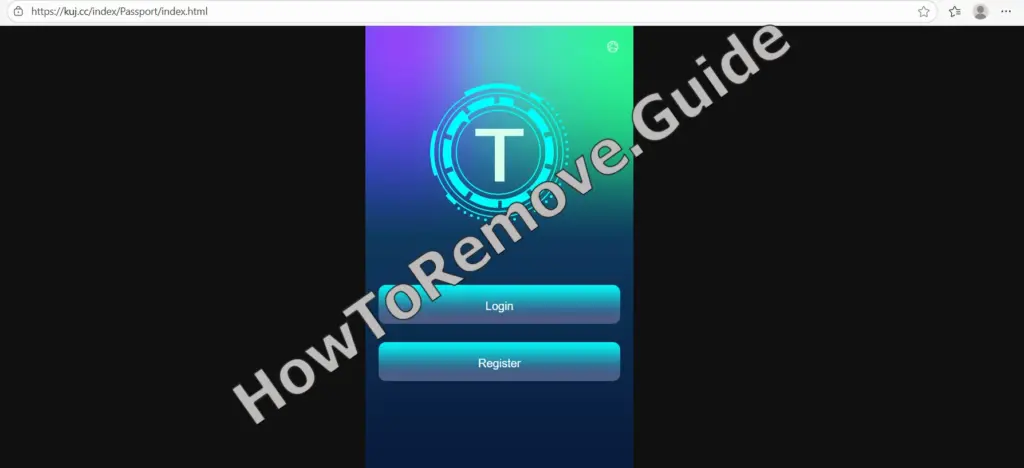
Along with this story come ready-made login credentials and a link to Kuj.cc or one of its clones. You follow the link, sign in, and instead of any real onboarding or checks, the site immediately shows you a huge stablecoin balance. The numbers are often north of a million dollars, and in many cases they sit around seven million USDT, labeled as yours. That’s not an accident. The entire point is to get you staring at a seven-figure balance so that every request that follows feels like a small price to pay for unlocking it.
Now watch what happens when you try to withdraw the money. Suddenly there’s a problem. A transaction password is “missing,” or “not set,” or “temporarily locked.” You’re nudged to contact support, and a friendly “website tech support” message appears, ready to guide you through fixing the issue. This is where the scam shifts from bait to extraction.
The proposed fix is simple enough: you must create a new account and buy a VIP tier so that this account can accept unlimited transfers from the gifted one. Of course, the VIP tier has to be paid with your own money because you still can’t touch the inheritance. The cost usually starts around fifty dollars and can climb into the thousands. If you pay, you’ll often be told that more is needed: extra “verification fees,” “transfer charges,” or “unlock costs,” often between five hundred and five thousand dollars. In some versions, support even asks for your private keys so they can “help process” the withdrawal.
From your side of the screen, it feels like you’re jumping through annoying but necessary hoops to access money that’s already yours. From theirs, it’s just a series of nicely labeled payment funnels. Once they think they’ve pulled enough from you, the supposed withdrawal never appears. You’re told it’s pending or delayed, but the reality is that no real investing or transferring is happening. Eventually the replies stop, the site may go offline, and the same playbook reappears on a fresh domain for the next wave of victims.
Warning Signs and Technical Red Flags
Let’s slow down and look at the warning signs hiding in plain sight. That first DM promising you millions from someone you don’t know? That alone is a giant red flag. Add in credentials someone else generated for you, on a platform you’ve never heard of, showing a huge balance without any verification or history you can confirm, and you’re deep into scam territory. Real platforms don’t magically drop millions into accounts controlled by random strangers.
Then there’s the behavior of the site itself. Any demand for payment before you can withdraw supposedly existing funds is a classic indicator that something isn’t right. VIP upgrades, special transfer fees, “activation” charges – if they all flow one way, from your wallet outwards, you’re not gaining money, you’re losing it. Requests for private keys or recovery phrases take it from suspicious to absolutely unacceptable. No legitimate exchange or wallet ever needs those secrets to send your funds.
The technical footprint around this site doesn’t help its case either. The domain was created only a few months ago, making it a young domain. It’s registered through a company that hides the owner behind privacy protection, and independent security checks slap it with labels like Scam – Risk, Crypto Scam – High Risk, Gambling Doorway – Risk, Young Domain, and Blacklisted. As of mid-November it carries a very low trust score. On top of that, it’s just one of more than sixty domains with nearly identical design and fake balances. That isn’t what a trustworthy platform looks like. That’s a rotating facade.
What to Do If You Were Caught by Kuj.cc
So what if you already sent money through Kuj.cc or one of its clones? At that point, the situation is serious, but there are still moves you should make. Crypto transfers between hot wallets can’t simply be reversed, and the people on the other side have zero interest in returning anything. However, if your deposits came from a centralized exchange, contact that exchange’s support as soon as you realize what happened. Explain that you were defrauded, provide transaction IDs, and ask them to flag the destination addresses in their system.
Next, involve real authorities. File a report with your local police or cybercrime unit. If you’re in the United States, you can also submit a complaint to the Internet Crime Complaint Center, outlining the Instagram inheritance pitch, the login details, and the fake multi-million-dollar balance you were shown. None of this guarantees recovery, but it creates a record and can contribute to broader investigations if the scammers are ever identified.
In parallel, lock down your security. Change passwords on any accounts tied to your crypto activity, turn on two-factor authentication wherever it’s available, and run a malware scan on any device you used to access the site. Keep a close eye on your bank and crypto accounts for unusual activity, and report suspicious transactions immediately. One more thing worth stressing: avoid online “crypto recovery” services you stumble across while you’re searching for help. In this corner of the internet, those offers are overwhelmingly just more scammers stacking a second fraud on top of the first.
The ideal outcome, of course, is that the scam never gets past your inbox. If a message like this lands in your DMs, don’t reply, don’t click, and definitely don’t log in using credentials someone else hands you. Treat the promise of a stranger’s inheritance as a warning light, not as free money. Screenshot the conversation and the website, warn your friends or followers so fewer people fall for the same script, and then disengage.
Bottom Line
When you zoom out, the structure here is almost boringly consistent: a newly registered domain, a slick but shallow website, a fabricated balance that makes you feel suddenly rich, and a sequence of “fees” and “VIP” purchases that all go one way. If you remember that pattern and keep your accounts hardened with strong passwords, two-factor authentication, and regular checks for odd behavior, you become a much harder target. The inheritance they dangle in front of you is an illusion. The money you stand to lose if you believe it is very real.
