

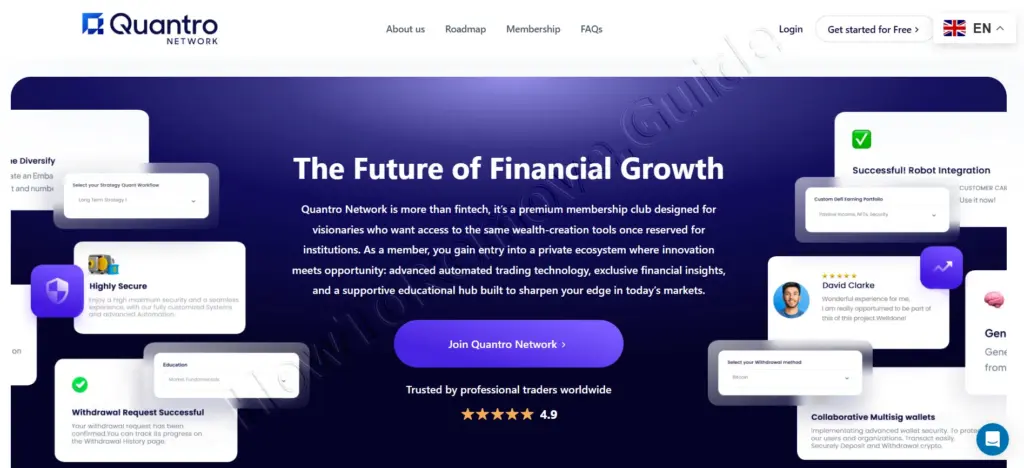
So here is the thing with Quantro Network: it is being dressed up as a crypto membership platform with dashboards, automated trading, and “AI” tools, which sounds impressive at first, but the real red flag is the promise of easy income with almost no effort.
Now pause on those daily return claims, because when you see numbers like 1% to 1.8% daily, that should make you skeptical. Real investing does not pay out like a vending machine, especially in crypto, where prices can jump or crash fast.
Scams of Quantro Network‘s type are known to steal personal data and passwords. Install SpyHunter Pro to scan for risks, remove any dangerous trackers, and enable real-time protection.

Try Free For 7 Days*
Buy now15% OFF if you buy straight without trial.
 OFFER
OFFERAnother thing that worries me is the lack of clear leadership, thin licensing proof, and growing talk about withdrawals getting delayed or blocked. That is usually where these setups show what they are, because once your money is stuck, your options become limited.
What makes Quantro Network and other scams like Dsj913.com or SelfTrade.ai harder to kill is that there is not much to kill. Once one domain gets exposed, the same operation can be back almost immediately under a new address with the same basic script.
IMPORTANT! READ BEFORE PROCEEDING!
If you did anything more than look around on Quantro Network, assume immediate cleanup is justified. Deposits, wallet approvals, ID uploads, chat logins, and downloads can all turn a simple scam encounter into a wider security problem. Take action now if the site received funds, documents, credentials, or device-level access from you.
Because scam funnels like Quantro Network sometimes come bundled with harmful files or deceptive prompts, we strongly recommend starting with SpyHunter 5 on the device you used so you can rule out malware before handling the rest of the account and wallet response.
Fastest Removal Option: Use SpyHunter 5
- 1.1Click here to download and install the anti-malware tool on your PC.
- 1.2
 Start SpyHunter 5, click the Buy button and choose between starting your 7-days free trial or directly purchasing the tool.
If you choose to buy SpyHunter 5 now, you can use our discount code, “HTRG15“, for 15% off.
- 1.3
 Once you activate SpyHunter, click Start Scan Now, select the Full Scan option, and let the tool do its job.
 - 1.4
 Once the scan completes (it could take a while, so have patience), you’ll see all malware and other undesirables listed.
Click Next to review the detections and then click Next again to delete all rogue items.
After the scan, it is still strongly recommended that you work through the extra protections below. A stolen deposit is only one part of the picture; lingering wallet approvals, reused passwords, active sessions, and copied identity documents can create later damage if they are ignored.
- Move remaining assets to a fresh, clean wallet and revoke any suspicious token approvals linked to the scam touchpoint.
- Change passwords and enable app-based 2FA on email, exchanges, and chat accounts; review active sessions and delete unused API keys.
- Preserve evidence: screenshots, URLs, videos or ads, wallet addresses, TXIDs, and chat logs – keep everything for official reports.
- Notify the sending platform (your exchange or service) with TXIDs and the destination address so they can flag or freeze if possible.
- Report promptly to your national cybercrime unit (e.g., IC3 in the US, Action Fraud in the UK) and to the platform where you saw the promotion.
How We Know Quantro Network is a Scam
The evidence that Quantro Network is fraudulent comes from the way its red flags line up. The site uses the same mechanics repeatedly seen on fake crypto operations that generate confidence quickly, demand payment before proof, and disappear once resistance grows.
Reward display without substance
A generous balance appearing right after registration is not a sign of legitimacy. It is a persuasion tool. On scam pages like Quantro Network, the dashboard is engineered to make you feel richer before you have verified where that supposed value came from or whether it exists at all.
Withdrawal blocked until you fund it
Real platforms do not force customers to top up an account just to release a withdrawal. Whenever Quantro Network asks for a deposit first, the site is exposing the fraud model plainly: the barrier exists to capture more money, not to protect you.
Social proof you cannot verify
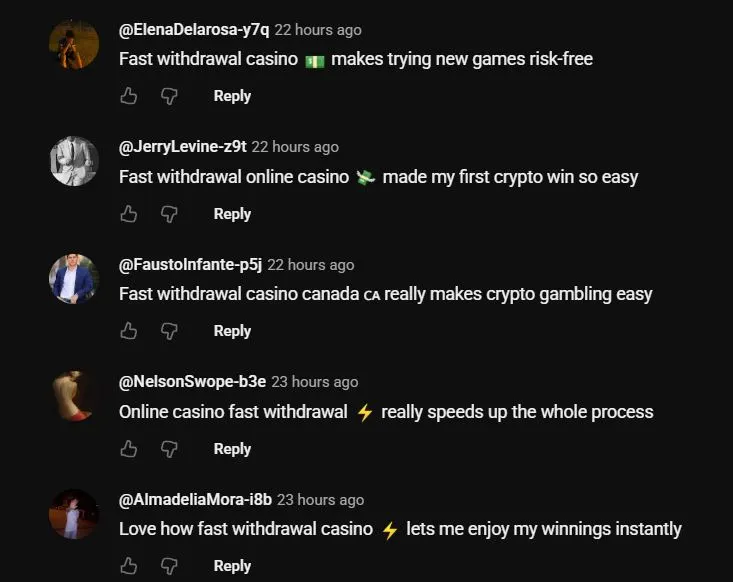
Many victims are swayed by videos, reviews, and endorsements that appear independent but are not. Deepfakes, purchased comments, and copied branding let scammers borrow credibility on demand, which is why every trust signal on Quantro Network needs outside confirmation.
Support that avoids hard evidence
Once a legitimate withdrawal is pending, verifiable details should exist. If support cannot show coherent records, keeps deflecting requests for transaction evidence, or replaces proof with reassurance, the claimed payout is probably fiction.
Official-sounding claims, empty backing
A fake platform can talk endlessly about compliance while offering little that can be checked. If operator details, licenses, or registrations fail independent verification, then the legal language is functioning as camouflage rather than accountability.
Burned domains and recycled pages
Repeated domain changes fit the business model of a disposable scam site. The name shifts, but the structure, offer, and pressure tactics stay recognizable, which strongly suggests a repeat operator rather than a genuine service undergoing routine rebranding.
How the Quantro Network Scam Deception Funnel Works
Knowing the structure helps because Quantro Network is built as a sequence, not a one-time trick. Each step prepares the next one by changing how the target thinks, narrowing attention from “is this real?” to “what do I need to do to get my money out?”
The pattern usually starts with a public lure, then a very easy sign-up, then visible account value, then a withdrawal attempt, and finally a series of artificial barriers. By that point, the scam is counting on momentum and sunk cost to do the rest.
Promo hooks and influencer codes
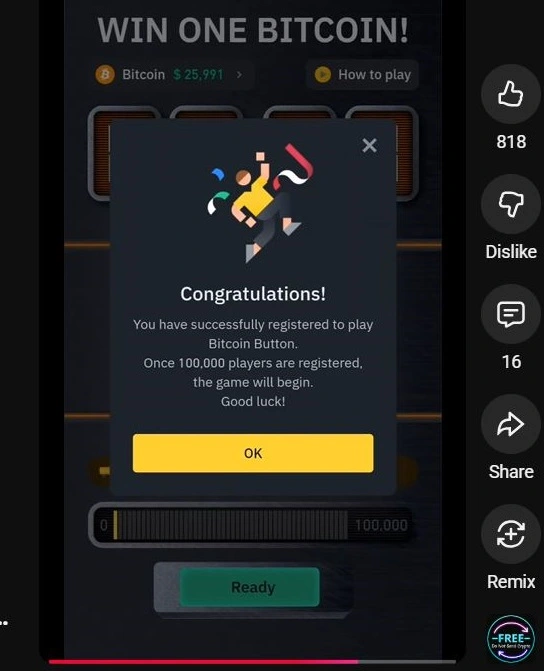
The first phase is acquisition. Quantro Network reaches people through ads, messages, comments, or short videos that frame the opportunity as simple and almost reserved for insiders, encouraging quick action before there is time for independent checking.
Casino skin and bonus theater
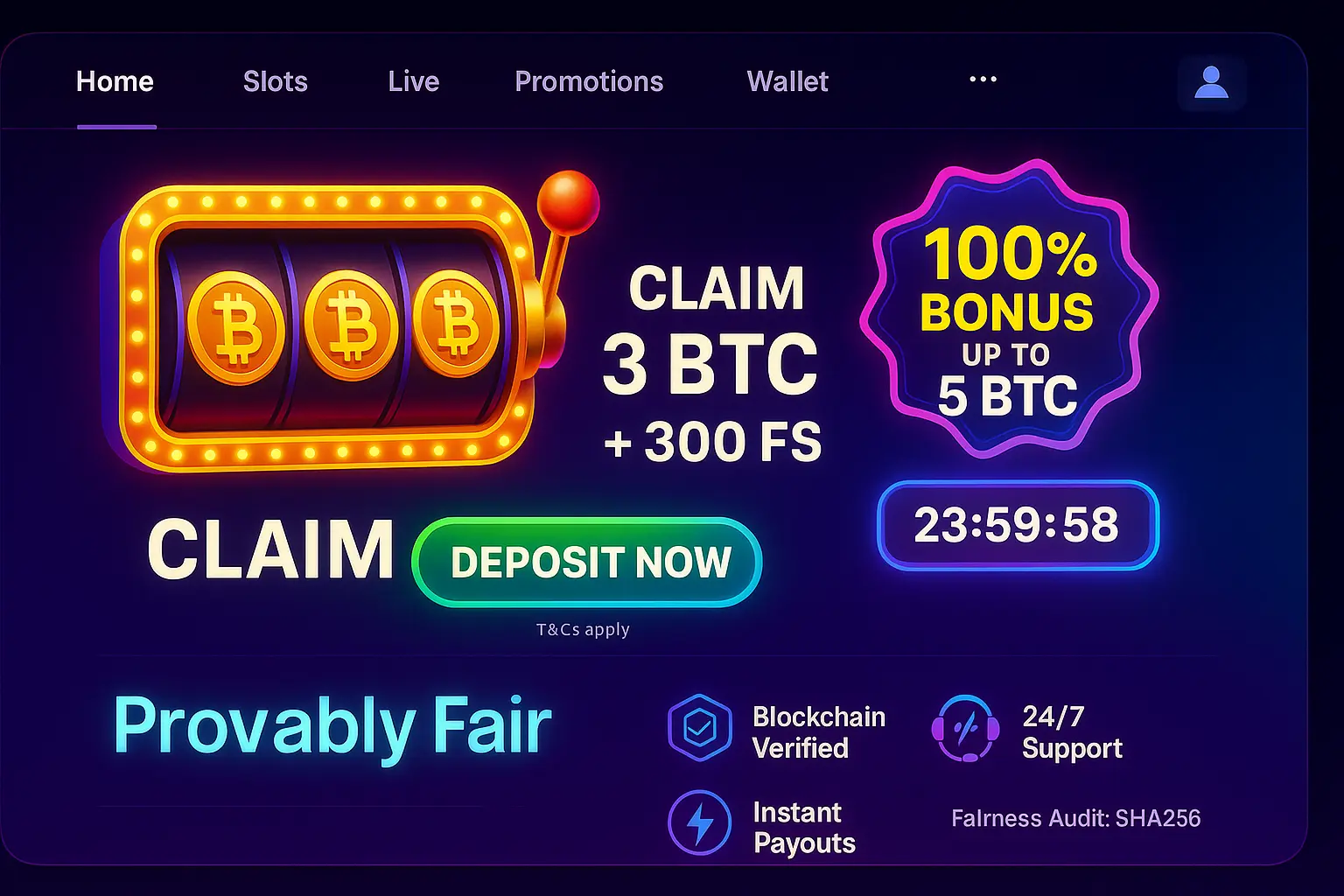
The second phase is credibility theater. The landing page borrows the look of real services and surrounds the user with familiar crypto visuals so that the site feels established even though the operator, custody model, and legal footing remain unclear.
Inflated balances, then the gate
The third phase is attachment. By showing a balance, a bonus, or instant gains, Quantro Network pushes the user into thinking like someone who already owns funds on the platform, which makes later withdrawal barriers feel like obstacles to overcome rather than warnings to heed.
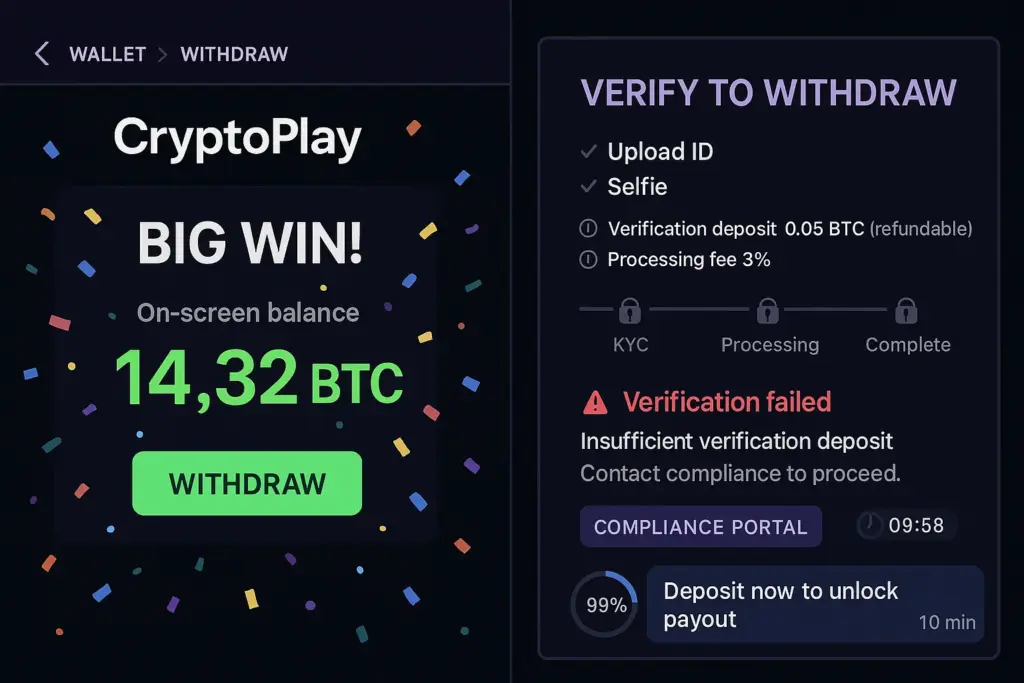
Fee-gates and KYC harvest
The fourth phase is extraction. This is where the site introduces verification costs, tax claims, manual review fees, account tiers, or document requests, each one positioned as the last step needed before a release that never arrives.

Stalling, rebrands, and “recovery” bait
The final phase is attrition. Responses slow down, empathy becomes scripted, fresh excuses appear, and the victim is encouraged to stay patient. Then the page vanishes, reappears elsewhere, or hands the victim off to a fake recovery pitch.
Staying safe from crypto scams like Quantro Network
Protection begins with refusing to move at the scammer’s pace. Slow decisions, separate wallets, and outside verification remove much of the psychological leverage that gives Quantro Network-style pages their edge.
Never pay to withdraw
The simplest rule is also one of the most reliable: never send funds to free funds. Any service that requires a prepayment for access to your own balance is presenting the core red flag of an advance-fee scam, regardless of what label it uses.
Verify endorsements at the source
Always trace endorsements back to the official account or website that supposedly made them. That extra step matters because high-quality fake videos and voice clones can make a false promotion look authentic at first glance.
Navigate with your own bookmarks
Build the habit of navigating with your own bookmarks. It reduces exposure to sponsored results, typo domains, copied landing pages, and unsolicited links that are designed to place a scam page between you and the service you meant to reach.
Check regulator registers & warnings
Claims of licensing or supervision should be verified externally every time. Regulators publish records and warnings for exactly this reason, and checking them is far more valuable than trusting a seal or legal paragraph on the page.
Segregate risk with burner wallets
Keep your main holdings isolated from anything experimental. A small, low-value wallet for unknown interactions and a separate long-term storage setup can dramatically reduce the damage caused by one deceptive prompt or bad connection.
Harden accounts with 2FA & hygiene
If you engaged with Quantro Network, harden your accounts immediately. Change passwords, enable app-based two-factor authentication, inspect active sessions, and remove old API keys or integrations that could give a third party continued access.
Revoke approvals & migrate
Review wallet permissions with the same urgency. Token approvals and connected-session authorizations can remain active after the website is gone, so revoke anything unnecessary and consider moving remaining assets to a new wallet if exposure was significant.
Protect identity & slow down
Stolen identity material can keep causing trouble after the crypto part is over. If Quantro Network collected documents from you, monitor for follow-on misuse, watch linked accounts, and use fraud alerts or freezes that are available in your region.
Where to report Quantro Network-style crypto scams (by country)
Do not skip documentation just because the outcome is frustrating. Preserve screenshots, chat logs, wallet addresses, transaction hashes, pages, and files, then report the incident through the relevant platforms and official authorities so the evidence is still usable after the site disappears.
Click here to report the scam in your country
| Country / Agency | URL | Category / Use-case | Phone/Email |
| Australia – Crime Stoppers | https://www.crimestoppers.com.au | Anonymous tips about crime | 1800 333 000 |
| Australia – National Anti-Scam Center (Scamwatch) | https://www.scamwatch.gov.au/report-a-scam | General scams; phishing; texts/emails | |
| Australia – Police Assistance Line (non-emergency) | https://www.police.gov.au | Local police report | 131 444 |
| Australia – ReportCyber (ACSC) | https://www.cyber.gov.au/report | Cybercrime (hacks, fraud, extortion) | |
| Canada – Canadian Anti-Fraud Center (CAFC) | https://www.antifraudcentre-centreantifraude.ca/report-signalez-eng.htm | General scams incl. phone/text/email | |
| France – DGCCRF (SignalConso) | https://signal.conso.gouv.fr | Consumer scams/deceptive practices | |
| France – PHAROS – Internet-Signalement | https://www.internet-signalement.gouv.fr | Online content & cybercrime reports | |
| Germany – Bundeskriminalamt / Local Police | https://www.polizei.de/Polizei/DE/Home/home_node.html | Report online fraud | |
| Germany – Weißer Ring – Victim Support | https://weisser-ring.de | Victim support | 116 006 |
| India – DoT Helpline (Sanchar Saathi) | https://sancharsaathi.gov.in | Fraudulent telecom/SIM related | 155260 |
| India – National Consumer Helpline | https://consumerhelpline.gov.in | Consumer scams | 1800-11-4000 / 1915 |
| India – National Cyber Crime Reporting Portal | https://cybercrime.gov.in | Cybercrime incl. online fraud | 1930 |
| Japan – Consumer Affairs Agency (CAA) | https://www.caa.go.jp/policies/policy/consumer_policy/caution/cybercrime/ | Consumer scams | |
| Japan – National Police Agency – Cybercrime | https://www.npa.go.jp/bureau/cyber/ | Cybercrime reporting | |
| Mexico – Guardia Nacional (National Guard) | https://www.gob.mx/gn | Cybercrime reporting | |
| Mexico – Instituto Federal de Telecomunicaciones (IFT) | https://www.ift.org.mx | Telecom/online services scams | |
| Mexico – PROFECO | https://www.gob.mx/profeco | Consumer fraud & ecommerce | |
| Netherlands – AFM – Report investment fraud | https://www.afm.nl/en/consumenten/themas/beleggen/misleiding-misbruik | Investment/crypto | |
| Netherlands – Fraudehelpdesk | https://www.fraudehelpdesk.nl/melden | General scams (incl. phishing/SMS) | 088-7867372 |
| Netherlands – Politie – Meldpunt Internetoplichting | https://www.politie.nl/themas/internetoplichting.html | Online shopping fraud | |
| New Zealand – CERT NZ | https://www.cert.govt.nz/individuals/report-an-issue/ | Phishing, identity scams | |
| New Zealand – Department of Internal Affairs – Spam | https://www.dia.govt.nz/Spam-Contact-Us | Email/SMS spam | [email protected] |
| New Zealand – IDCARE | https://www.idcare.org | Victim support (identity compromise) | 0800 121 068 |
| New Zealand – Netsafe – Report | https://www.netsafe.org.nz/report/ | Online harms & scams | |
| New Zealand – New Zealand Police (non-emergency) | https://www.police.govt.nz/use-105 | Report fraud/online crime | 105 |
| Nigeria – Economic & Financial Crimes Commission (EFCC) | https://www.efcc.gov.ng | Financial scams incl. crypto/investment | [email protected] |
| Nigeria – Nigeria Police Special Fraud Unit (SFU) | https://www.specialfraudunit.org.ng | Serious fraud | Voice/SMS: 0708 227 6895; WhatsApp: 0812 760 9914 |
| Poland – CERT Polska (CERT.PL) | https://cert.pl/en/report/ | Cyber incidents & phishing | |
| Poland – Dyzurnet.pl | https://dyzurnet.pl | Illegal online content (esp. child protection) | |
| Poland – Polish Police (Policja) | https://www.policja.pl | Report scams to police | |
| Singapore – Anti-Scam Centre / Anti-Scam Helpline | https://www.scamalert.sg | General scams; texts; calls | 1800-722-6688 |
| Singapore – Monetary Authority of Singapore (MAS) | https://www.mas.gov.sg/investor-alert-list | Investment/crypto checks | |
| Singapore – Singapore Police Force | https://www.police.gov.sg/iwitness | Police report (cybercrime) | |
| South Africa – Cybersecurity Hub (CSIRT) | https://www.cybersecurityhub.gov.za | Cyber incidents incl. scams | |
| South Africa – South African Fraud Prevention Service (SAFPS) | https://www.safps.org.za | Identity fraud support | 011-867-2234 |
| South Africa – South African Police Service (SAPS) | https://www.saps.gov.za | Police report (cybercrime unit) | |
| South Korea – Korea Communications Commission (KCC) | https://www.kcc.go.kr | Telecom-related fraud | |
| South Korea – Korea Internet & Security Agency (KISA) | https://www.kisa.or.kr | Phishing, online harms | |
| South Korea – Korean National Police Agency – Cyber Bureau | https://ecrm.cyber.go.kr | Cybercrime reporting | |
| Spain – INCIBE – Oficina de Seguridad del Internauta (OSI) | https://www.osi.es/es/reporte | Cybersecurity & online fraud | |
| Spain – Policía Nacional / Guardia Civil | https://www.policia.es | Report scams to police | |
| Sweden – Crime Victim Authority (Brottsoffermyndigheten) | https://www.brottsoffermyndigheten.se | Victim support & compensation | 090–70 82 00 |
| Sweden – Polisen (Swedish Police) | https://polisen.se | Report fraud/cybercrime | 114 14 (non-emergency); 112 (emergency) |
| Sweden – Swedish Consumer Agency (Konsumentverket) | https://www.konsumentverket.se | Unfair business practices | |
| United Arab Emirates – Abu Dhabi Police – Aman Service | https://www.adpolice.gov.ae | Cybercrime tips/reporting | SMS 2828; 800 2626 |
| United Arab Emirates – Dubai Police – eCrime | https://www.dubaipolice.gov.ae | Cybercrime reporting | 04 606 1600 |
| United Arab Emirates – Ministry of Interior – Cyber Crime Dept. | https://www.moi.gov.ae | Cybercrime incl. online scams | |
| United Arab Emirates – Telecommunications Regulatory Authority (TRA) / TDRA | https://www.tra.gov.ae | Telecom-related scams/phishing | |
| United Kingdom – Action Fraud (NFIB) | https://www.actionfraud.police.uk | General scams & cybercrime (non-emergency) | 0300 123 2040 |
| United Kingdom – Citizens Advice Consumer Service | https://www.citizensadvice.org.uk/consumer/get-more-help/if-you-need-more-help-about-a-consumer-issue/ | Consumer problems & scam guidance | 0808 223 1133 |
| United Kingdom – Financial Conduct Authority (FCA) | https://www.fca.org.uk/consumers/report-scam-us | Investment/crypto & financial services | |
| United Kingdom – National Cyber Security Centre (NCSC) | https://www.ncsc.gov.uk/collection/phishing-scams | Phishing emails & suspicious websites | |
| United Kingdom – Stop Scams UK ‘159’ | https://stopscamsuk.org.uk/159 | Banking APP fraud (direct to your bank) | 159 |
| United States – AARP Fraud Watch Network Helpline | https://www.aarp.org/money/scams-fraud/ | Victim support | 833-372-8311 |
| United States – Better Business Bureau – Scam Tracker | https://www.bbb.org/scamtracker | Business/marketplace scams | |
| United States – FBI Internet Crime Complaint Center (IC3) | https://www.ic3.gov | Internet crime incl. investment/crypto | |
| United States – Federal Trade Commission – ReportFraud | https://reportfraud.ftc.gov | General scams, phishing, texts/emails | 1-877-382-4357 |
| United States – National Center for Disaster Fraud | https://www.justice.gov/disaster-fraud | Disaster-related scams | (866) 720-5721 |
| United States – SEC Tips & Complaints | https://www.sec.gov/tcr | Investment & securities/crypto-asset offerings |
