

Behavior:Win32/Interhta.Int is a Windows Defender behavior flag: it judges suspicious actions instead of matching a known signature. That’s why it can appear during harmless activity – yet it can also signal a real intruder abusing built-in tools. You’ll usually see it logged in Protection History as a “blocked” event.
Many alerts point at mshta.exe, a legitimate Windows component that runs script-based “HTML applications.” Attackers like it because it can run code without installing a new app, often after risky downloads, shady attachments, or documents that request macro enabling. Users may notice slowdowns, pop-up tabs similar to Holiday-forever.cc, System-monitor.cc, Fileless-market.cc and Indeanapolice.cc, or unfamiliar files.
We tested that SpyHunter successfully removes Behavior:Win32/Interhta.Int* and we recommend using it. It will block Behavior:Win32/Interhta.Int from reinstalling itself and it will make sure your device is clean from any malware.
 Try Free For 7 Days*
Buy now15% OFF if you buy straight without trial.
 OFFER
OFFERIf it returns whenever you go online, assume something in the background is repeatedly trying to invoke mshta. Note the timestamp in Protection History, then check Task Scheduler and Startup Apps for recently added items. Run a full scan, then an offline scan with SpyHunter 5, before browsing.
Behavior:Win32/Interhta.Int Removal Guide
Begin with Windows’ built-in uninstall options before you dig into system locations. Removing Behavior:Win32/Interhta.Int from Apps & Features is fast, low risk, and can clear the main installed entry if one exists. Even when leftovers remain, this first pass reduces clutter so later checks are easier to verify and less likely to miss something.
Remove the Behavior:Win32/Interhta.Int app via Apps & Features
- 1.1Start in Windows app management if Behavior:Win32/Interhta.Int shows up there: open the Start Menu, select Settings, then go to the section where installed apps and system preferences are controlled.
- 1.2In Settings, open Apps. This view lists installed items and lets you filter or search by name, size, and install date to narrow down recent additions.
- 1.3Change sorting to Installation date so the newest entries appear first. That makes unexpected installs stand out faster and helps you review what changed recently.
- 1.4Select any suspicious program, click Uninstall, and complete the prompts. Let the uninstaller finish fully so it can remove any linked components it knows about.
- 1.5Next, open C:\Users\YourUsername\AppData\Local\Programs. Check for leftover folders or binaries that were not removed and note anything that clearly does not belong.
- 1.6If you find a leftover folder tied to the unwanted app, delete it manually. Restart Windows afterward to release locked files and confirm nothing attempts to load again during startup.
After the restart, confirm the uninstall entry is gone. If anything still tries to return, that behavior is typical of persistent threats; continue with the checks below to locate hidden files and remove restart points that survive a basic uninstall.
SUMMARY:
| Threat name | Behavior:Win32/Interhta.Int |
| Category | Trojan |
| Detection tool |
Some threats reinstall themselves if you don’t delete their core files. We recommend downloading SpyHunter to remove harmful programs for you. This may save you hours and ensure you don’t harm your system by deleting the wrong files. |
How to Remove Behavior:Win32/Interhta.Int Leftovers and Startup Hooks
Looking at active processes gives you real file paths, parent processes, and clues about what triggers re-launches. When Behavior:Win32/Interhta.Int is running, you can identify where its files sit on disk and which startup mechanisms keep it alive, instead of guessing. That context makes it easier to remove persistence cleanly and confirm nothing important was missed.
1. Prep steps before cleanup Behavior:Win32/Interhta.Int
- 1.1
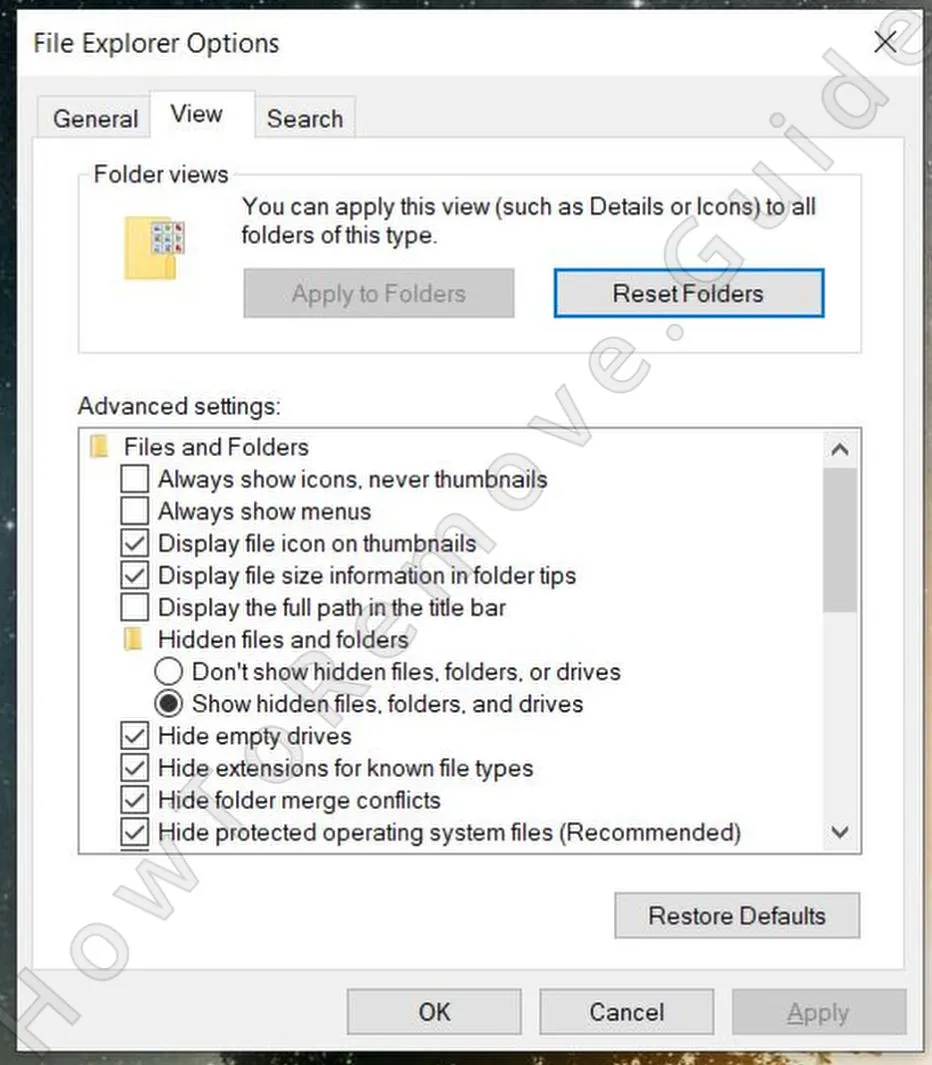 Show hidden items so you can spot leftover files associated with Behavior:Win32/Interhta.Int. Search for Folder Options from the Start Menu, open it, go to the View tab, and enable Show hidden files, folders, and drives. This often reveals folders that would otherwise stay out of sight.
 - 1.2Files that are locked can derail cleanup, so install LockHunter to handle items Windows reports as in use. It adds a right-click option, shows what is holding the file, and can remove stubborn executables or DLLs when normal deletion fails.
If you would rather avoid extra utilities, most steps can still be done by hand. However, when Windows insists a file is “in use,” the tool can help release the lock so you can delete the item without getting stuck in repeated restarts.
LockHunter is free, does not require registration, and is generally installed in a minute or two on most systems.
Stop Behavior:Win32/Interhta.Int Processes in Task Manager
Ending a single executable is rarely enough, because persistent threats can register startup items, scheduled triggers, and helper components that relaunch after you close them. Use the process list to trace where Behavior:Win32/Interhta.Int is running from, delete the related files, and only then terminate the process, which reduces the chance of an immediate respawn.
2. Stop Behavior:Win32/Interhta.Int processes and remove their files
- 2.1To review what Behavior:Win32/Interhta.Int is doing in real time, press Ctrl + Shift + Esc to open Task Manager and look through the running processes and their resource use.
- 2.2If you see the simplified interface, click More details. The expanded view shows background processes, publishers, and other clues that help you judge whether an entry is legitimate.
- 2.3
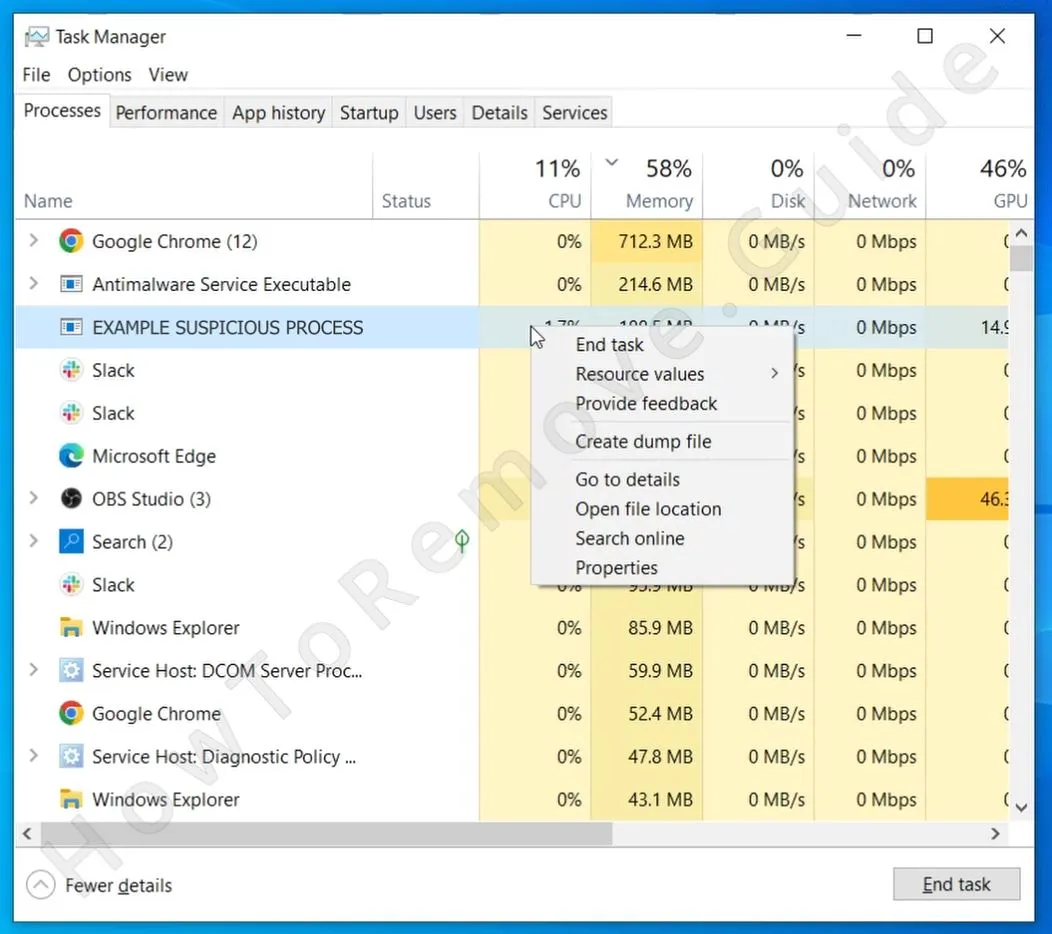 Sort by CPU or Memory and focus on unfamiliar names or usage that stays high for no good reason. Malicious processes often avoid clear branding and rely on generic-looking entries.
 - 2.4Right-click a suspicious process and choose Open file location. The folder path and any publisher details can quickly show whether the file belongs to software you recognize.
- 2.5Attempt to delete the folder that contains the executable. If Windows refuses, open LockHunter, select What’s locking this file?, unlock it, and remove the file and its folder using the utility.
- 2.6Go back to Task Manager and use End task on the same entry. Ending it after the binary is removed helps prevent instant re-launch and keeps the system stable for the next steps.
Delete Remaining Behavior:Win32/Interhta.Int Files
Many infections rely on login startups and small helper files scattered across common system and user folders, not just one main executable. Working through these locations helps remove the launch points and support pieces that can rebuild components tied to Behavior:Win32/Interhta.Int. Move carefully and delete only items you cannot link to software you intentionally installed.
3. Clean startup and program folders linked to Behavior:Win32/Interhta.Int
- 3.1Start with auto-launch locations that can revive Behavior:Win32/Interhta.Int: C:\ProgramData\Microsoft\Windows\Start Menu\Programs\Startup and C:\Users\YourUsername\AppData\Roaming\Microsoft\Windows\Start Menu\Programs\Startup. Remove unfamiliar shortcuts or executables.
- 3.2In each Startup folder, keep desktop.ini and delete other suspicious items. If Windows blocks deletion, use LockHunter to unlock and remove them safely.
- 3.3Check primary install directories next – C:\Program Files and C:\Program Files (x86). Remove newly created, empty, or oddly named folders that do not match software you recognize.
- 3.4Review common user-level paths too: C:\Users\YourUsername\AppData\Local\, C:\Users\YourUsername\AppData\Local\Programs, and C:\Users\YourUsername\AppData\Roaming\Microsoft\Windows\Start Menu\Programs. These folders often hold launchers, updater stubs, or scripts.
- 3.5
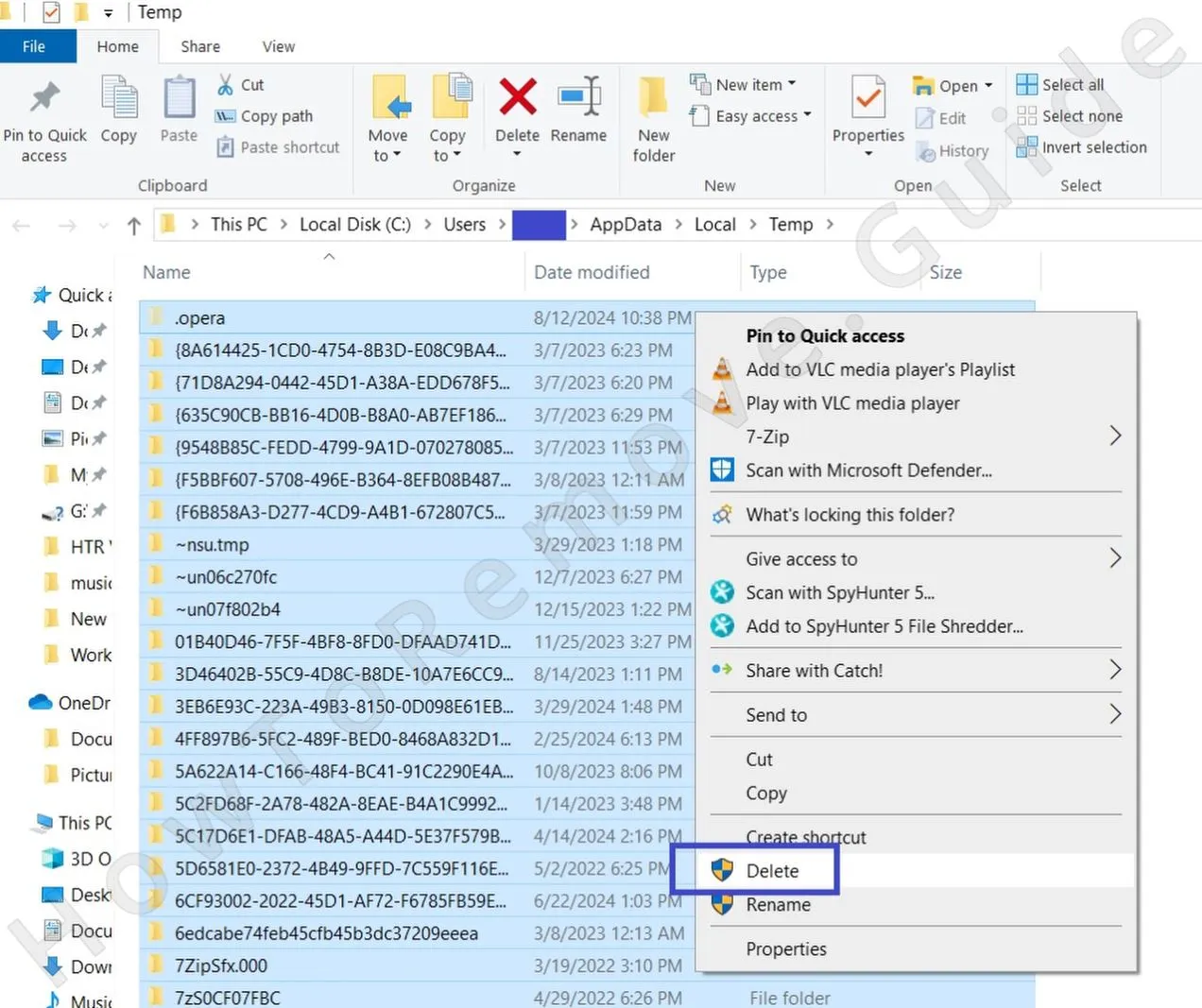 Clear temporary files: open C:\Users\YourUsername\AppData\Local\Temp, press Ctrl + A to select all, delete the contents, and empty the Recycle Bin.
Remove Behavior:Win32/Interhta.Int Scheduled Tasks
Scheduled tasks are a common way for malware to restore itself after you remove files, because they can run on a timer, at logon, or after system events. Checking these entries helps you see what executable is launched and from where, which is essential when Behavior:Win32/Interhta.Int keeps returning after reboots or sign-ins.
4. Disable scheduled tasks that relaunch Behavior:Win32/Interhta.Int
- 4.1
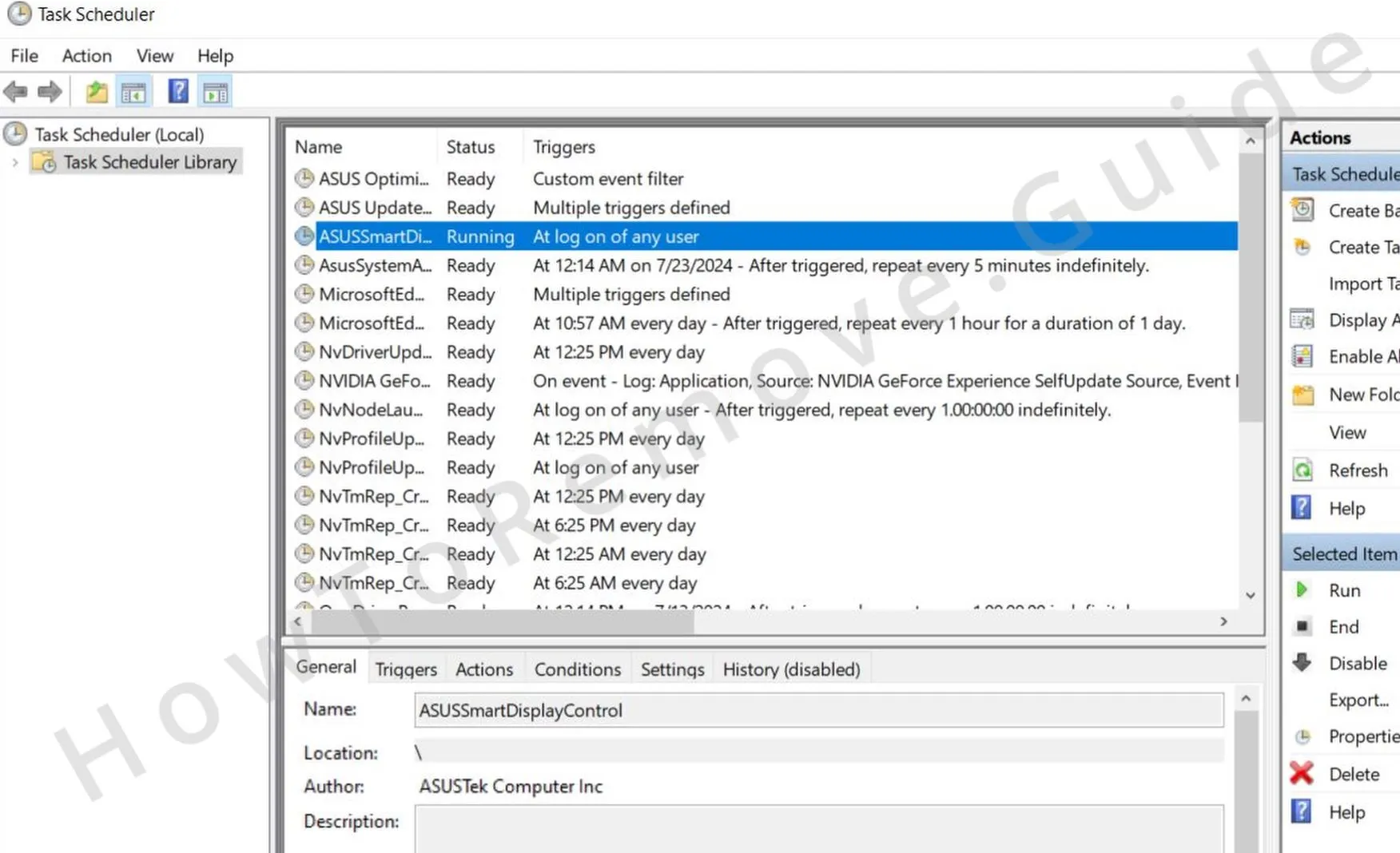 Open Task Scheduler to find triggers that can bring back Behavior:Win32/Interhta.Int. Search from the Start Menu, launch it, and expand the Task Scheduler Library to review tasks for your account and system folders.
 - 4.2Double-click a task to open Properties. Use Actions to view the command or file that runs and any parameters attached to it.
- 4.3Pay close attention to tasks that reference user directories like AppData or Roaming, especially when the task name is unfamiliar. Legitimate vendors rarely run core updates from odd paths.
- 4.4If a task clearly does not belong, copy the full path shown under Actions, then delete the task in Task Scheduler to stop it from running again.
- 4.5Navigate to the copied path and delete the referenced executable or script. Removing both the task and its payload prevents it from restoring itself after a reboot.
- 4.6Repeat this review for every folder under the Task Scheduler Library, including installer-created subfolders. Persistence is often hidden behind generic names.
Remove Behavior:Win32/Interhta.Int Leftover Registry Entries
Even after obvious files are removed, Registry entries can keep a threat starting through Run keys, services, or policy-based hooks. When Behavior:Win32/Interhta.Int is involved, be strict about deleting only items you can connect to the unwanted files or the suspicious tasks you just reviewed. Focus on specific values rather than deleting large keys to reduce risk.
5. Remove Behavior:Win32/Interhta.Int remnants with Registry Editor
- 5.1Open Registry Editor to review autostart data that can keep Behavior:Win32/Interhta.Int present: press Win + R, type regedit, and press Enter.
- 5.2Press Ctrl + F and search for the exact app name you removed earlier. This often reveals orphaned keys such as services, helpers, or shell-related entries.
- 5.3When you find a match, select the key in the left pane and delete it. Continue with F3 until no further entries remain across the Registry.
- 5.4Repeat the search-and-remove cycle for any other suspicious programs you identified during cleanup. Clearing their traces can block helper components from restoring files.
- 5.5Run one final search for the exact threat name. Removing a lingering value or path reference can stop components from being recreated after startup.
- 5.6Inspect these common autostart and policy paths:
HKEY_CURRENT_USER\Software\Microsoft\Windows\CurrentVersion\Run
HKEY_CURRENT_USER\Software\Microsoft\Windows\CurrentVersion\RunOnce
HKEY_CURRENT_USER\Software\Microsoft\Windows\CurrentVersion\Policies\Explorer\Run
HKEY_LOCAL_MACHINE\Software\Microsoft\Windows\CurrentVersion\Run
HKEY_LOCAL_MACHINE\Software\Microsoft\Windows\CurrentVersion\RunOnce
HKEY_LOCAL_MACHINE\Software\Microsoft\Windows\CurrentVersion\Policies\Explorer\Run
HKEY_LOCAL_MACHINE\Software\Microsoft\Windows\CurrentVersion\RunServices
HKEY_LOCAL_MACHINE\Software\Microsoft\Windows\CurrentVersion\RunServicesOnce
HKEY_LOCAL_MACHINE\Software\Microsoft\Windows\CurrentVersion\RunOnce\Setup
HKEY_LOCAL_MACHINE\SYSTEM\CurrentControlSet\Services - 5.7In each location, review the right pane for values pointing to unknown executables or suspicious directories. Delete the specific value only, rather than removing entire keys, to avoid damaging legitimate components.
Finish by restarting Windows. Confirm the system boots normally, and check that there are no relaunches, unexpected spikes, or recurring entries in Task Manager. If problems continue, run an offline scanner to look for hidden components and re-check that no scheduled tasks remain.
