

What makes it especially problematic is that Windows Defender often detects it – sometimes late – and then fails to remove it completely. Other antivirus tools might not flag it at all, leaving users unsure whether they’re dealing with malware or a false positive. That’s why I recommend using SpyHunter 5, which has demonstrated consistent success in fully removing Kepavll and its components.
We tested that SpyHunter successfully removes Kepavll* and we recommend using it. It will block Kepavll from reinstalling itself and it will make sure your device is clean from any malware.
 Try Free For 7 Days*
Buy now15% OFF if you buy straight without trial.
 OFFER
OFFERHow to Remove Trojan:win32/kepavll!rfn
From my direct experience in malware remediation, I can tell you that removing Trojan:Win32/Kepavll!rfn, as well as similar threats like PDFast and Ginapc Quor Utils, isn’t always straightforward – especially when done manually. But I strongly advise beginning with the simplest measures first. Sometimes you can stop this threat before it digs in too deeply. Follow these quick steps carefully before diving into the full manual procedure.
Quick Steps to Remove Kepavll trojan
- 1.1Begin with a sweep through your Downloads directory. Open This PC, navigate to Downloads, and scan for any unfamiliar files – especially those with strange names, unexpected formats, or installers you don’t recall acquiring. If anything looks suspicious or out of place, remove it immediately. You want to minimize the risk of launching a dormant payload accidentally.
- 1.2Go to your installed apps list by opening the Start Menu, selecting Settings, then clicking on Apps.
Sort the list by installation date so newer additions show up at the top. If you spot Kepavll in the list, uninstall it right away and follow each step carefully.
If the uninstaller prompts for admin approval, double-check its legitimacy before proceeding.
- 1.3While you’re reviewing your software, pay attention to other programs that appeared around the same time as Kepavll.
Malware often comes bundled with unrelated or shady-looking software. Look for names that are vague, made up of numbers, or signed by unknown publishers.
If anything doesn’t check out, either look it up or remove it on the spot.
- 1.4Next, dig into the location where Kepavll’s support files are often stashed. Most commonly, that’s:
C:\Users\YourName\AppData\Local\Programs
That said, Kepavll doesn’t always stick to one location. It can replicate or relocate to directories like AppData, Program Files, or your Temp folder. It’s important to check each of these for any leftover malicious content.
- 1.5If you locate a folder tied to Kepavll, delete it entirely – including every file inside. In some cases, a Trojan like this leaves behind hidden executables or config files that can reinitialize it even after deletion. Don’t just remove the main .exe – scrub the entire directory.
How to Fully Get Rid of the Kepavll Trojan
1. Preparing for the Kepavll!rfn Removal
- 1.1
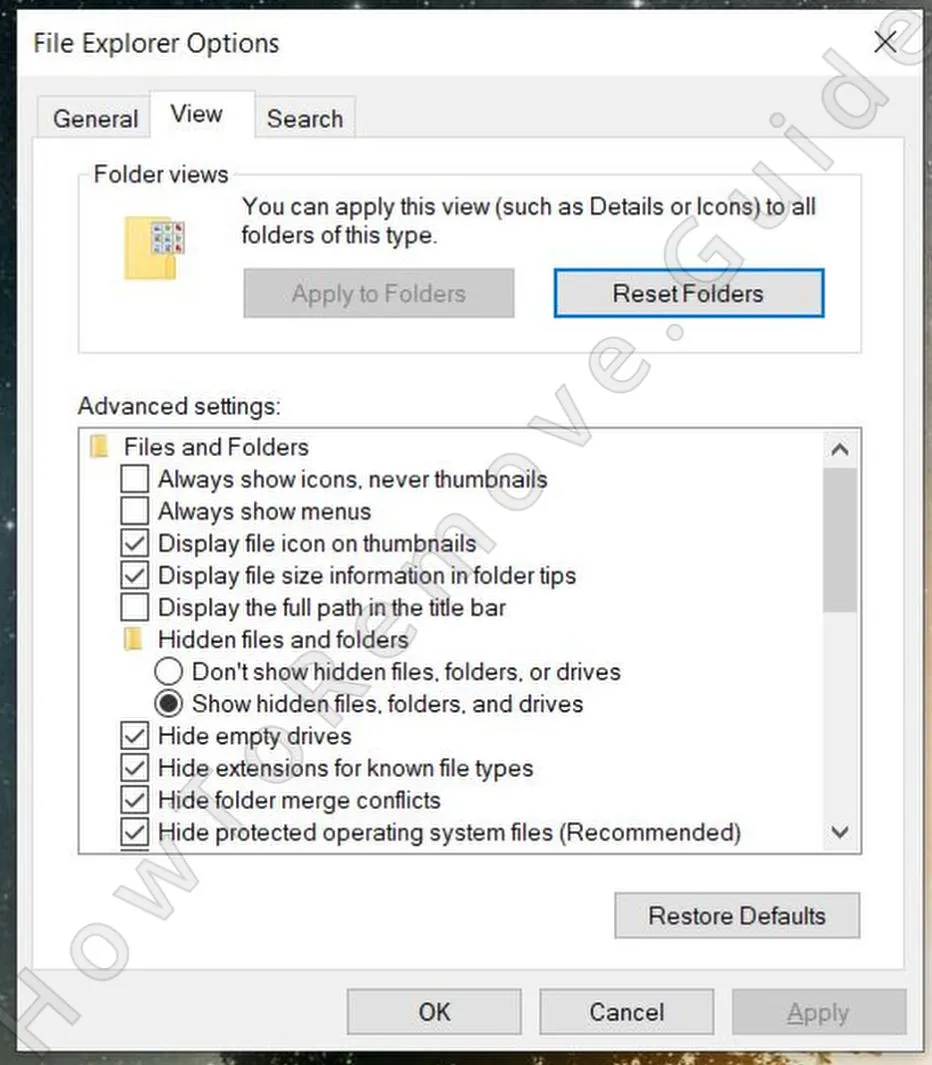 Start by changing your system settings to display hidden files. These are exactly the places malware likes to burrow into. Open Folder Options, switch to the View tab, and make sure Show hidden files, folders, and drives is checked. If you skip this step, you’ll miss some of the Trojan’s stealth files – and that’s a mistake you can’t afford.
 - 1.2Kepavll may be locking its critical files to block deletion. If you run into this, I recommend downloading and installing LockHunter – a lightweight, no-nonsense utility that can reveal what’s keeping a file locked and force-delete it.
This tool is free, ad-free, and doesn’t require sign-up. If you’d rather avoid third-party tools, you’ll need to adjust file permissions manually – but I’ll be blunt: that’s a slower and riskier road. I’ve used LockHunter in dozens of real-world malware cleanups, and it does the job reliably.
Remove Win32/kepavll!rfn Processes From the Task Manager
2. How to Delete Kepavll Processes in the Task Manager
- 2.1Press Ctrl + Shift + Esc to launch Task Manager directly. This tool gives you a live view of what’s running on your system – and if Kepavll is currently active, it’ll be listed here.
- 2.2If Task Manager opens in its compact form, click More details at the bottom. This will expose the full list of background processes, which is exactly what you need to dig through.
- 2.3
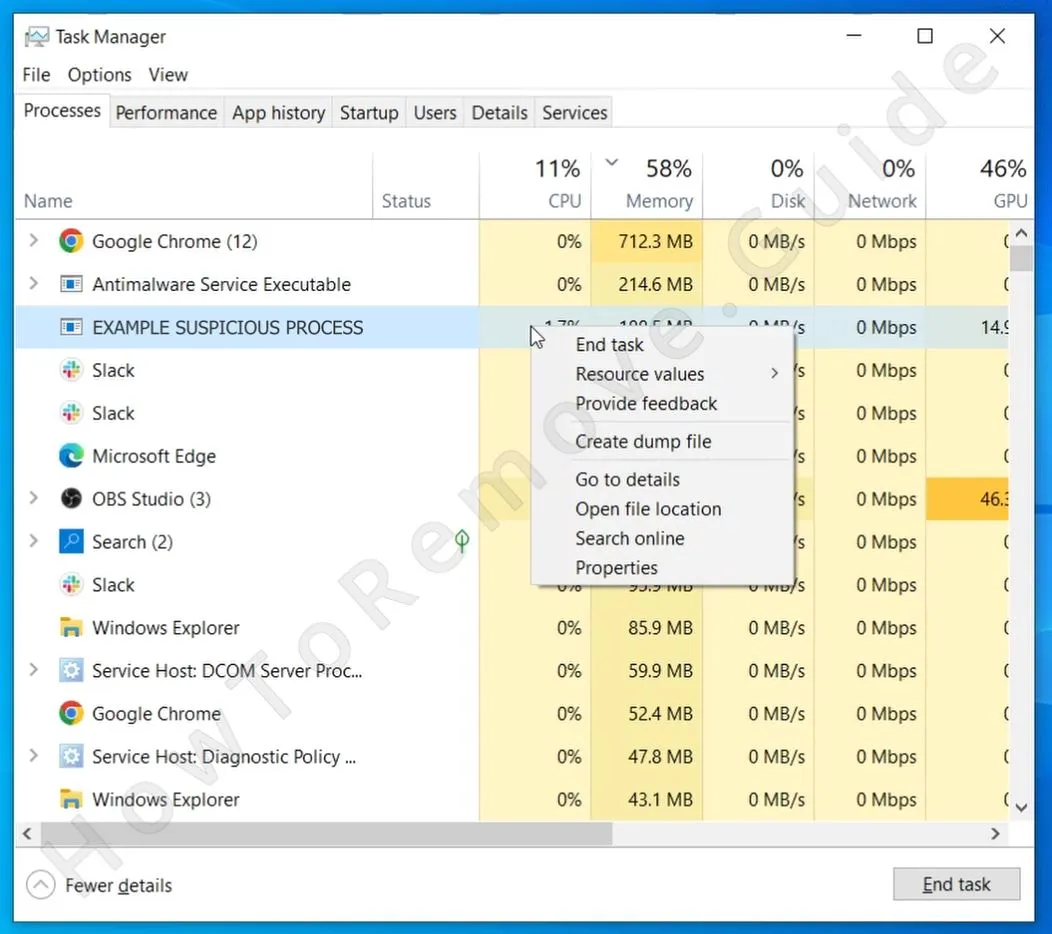 Now, scan through the list for anything hogging resources – CPU, memory, or disk. Trojans like Kepavll often run in disguise, under misleading names. Be especially cautious of processes you don’t recognize.
A common offender might be something like KepavllApplication.exe – if you spot anything like that, it’s likely your target.
- 2.4Once you’ve found something suspicious, right-click it and select Open file location. This tells you where the malware lives on your drive. Don’t delete the file yet. First, return to Task Manager, right-click the same process again, and choose End Task. You must terminate it before attempting to remove its files, or you’ll get blocked.
- 2.5With the process shut down, go back to the folder you just opened. Delete every file related to the process immediately. If Windows gives you grief and refuses to let you delete it, use LockHunter to force the removal. Just right-click the folder, choose What’s locking this folder?, and hit Delete.
- 2.6Once the files are deleted, go back to Task Manager one more time and verify the process isn’t still running. If you see the same name appear again, end it again – and take note. That may mean Kepavll is respawning, and you’ll need to dig deeper.
Delete Kepavll Rfn Virus Files
3. How to Get Rid of Kepavll Files
- 3.1Start by reviewing both system-wide and user-specific Startup directories. These are commonly used by malware to relaunch after reboot. Navigate to the following paths:
– C:\ProgramData\Microsoft\Windows\Start Menu\Programs\Startup
– C:\Users\YourUsername\AppData\Roaming\Microsoft\Windows\Start Menu\Programs\Startup
Look for any unknown shortcuts or executable files – especially anything related to Kepavll or software you didn’t install intentionally. Delete anything suspicious. Just don’t touch desktop.ini – that one’s a legitimate Windows file. - 3.2Still in those folders, eliminate any entries tied to questionable software or files you couldn’t confirm. If you spot anything strange that points back to Kepavll, remove it without hesitation. Again, desktop.ini is the only thing you should leave alone.
- 3.3Now check the standard program directories:
– C:\Program Files
– C:\Program Files (x86)
Scan for any folders that clearly relate to Kepavll or anything you didn’t knowingly install. If you find one, delete the entire folder – not just individual files. - 3.4Go deeper by checking these directories:
– C:\Users%YourUserName%\AppData\Local
– C:\Users%YourUserName%\AppData\Local\Programs
– C:\Users%YourUserName%\AppData\Roaming\Microsoft\Windows\Start Menu\Programs
These folders are common dumping grounds for Trojans. Look at file creation dates – anything created around the time Kepavll showed up should be treated as highly suspicious. Erase anything tied to it. - 3.5
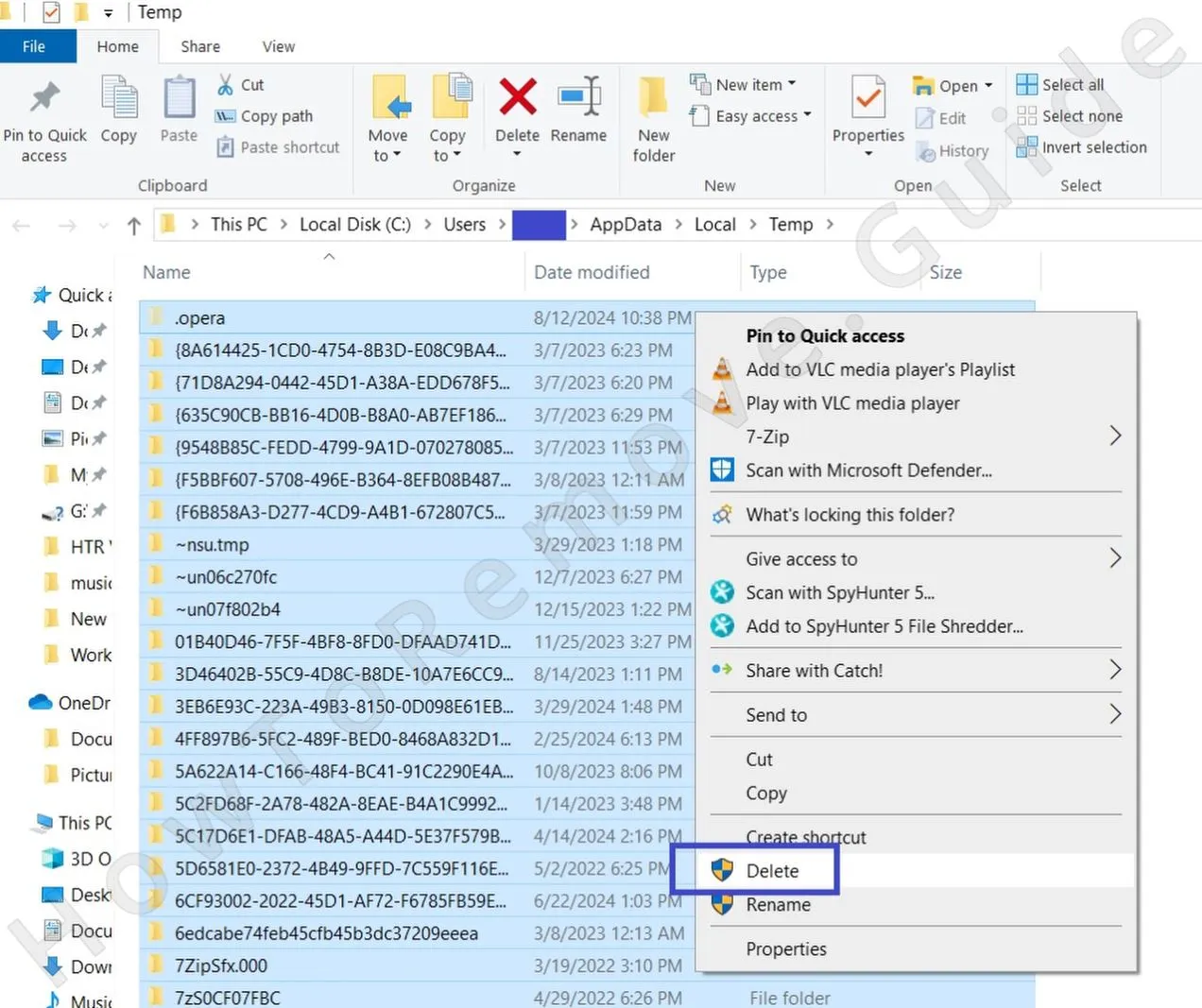 Finally, open your temporary files folder. Press Win + R, type %TEMP%, and hit Enter. This is where malware often hides execution components.
Press Ctrl + A to select everything, then hit Delete to flush the entire folder. It’s safe – this directory only contains temporary data.
Remove of Kepavll Scheduled Tasks
4. Eliminate Kepavll Scheduled Tasks
- 4.1
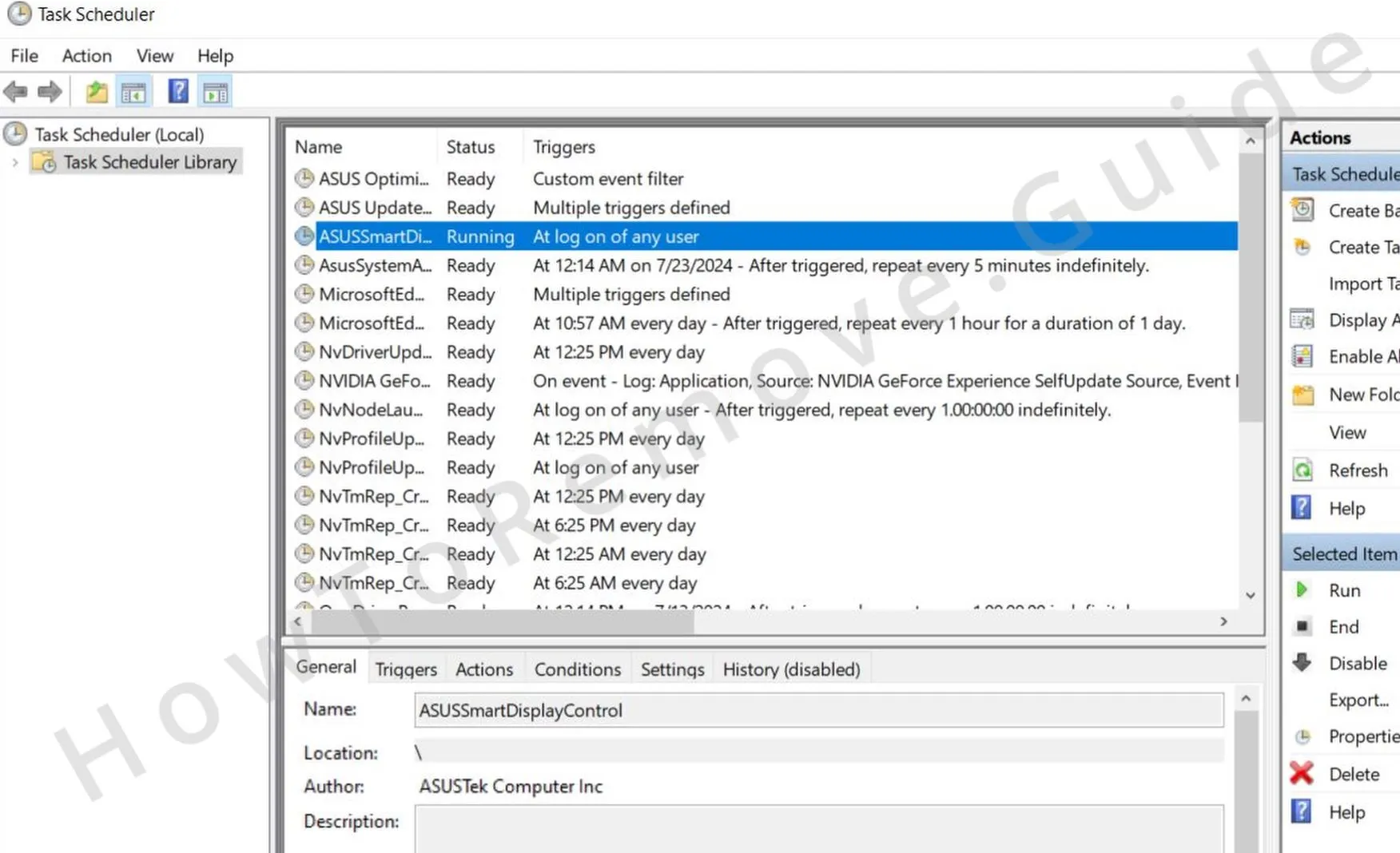 Click Start, type Task Scheduler, and open the utility. This is where Windows manages timed or automated tasks – and where Kepavll might have set itself up to relaunch on startup.
 - 4.2In the Task Scheduler Library, go through every listed task. Select each one and open the Actions tab to see exactly what it’s set to run. If any task launches a file tied to Kepavll, or an unknown executable from a suspicious path, you’ve likely found part of the infection.
Take note of those file paths – you’ll need them again in a moment. - 4.3Right-click on any task associated with Kepavll or unknown software and choose Delete.
This prevents the malware from activating during future reboots. Don’t hesitate here – if it looks even remotely suspicious and you didn’t create it, it doesn’t belong.
- 4.4Now that you’ve deleted the scheduled task, go to the location of the executable it was set to run. Navigate to the full file path and delete that file immediately. This ensures the trigger point is destroyed along with the task.
Delete the Kepavll Malware Through the Windows Registry
5. Remove Kepavll Through the Registry
- 5.1Press Win + R, type regedit, and hit Enter. This will launch the Registry Editor, which lets you view and modify deep-level system configurations – exactly where Kepavll might have embedded itself.
- 5.2Once inside, click Edit in the top menu, then select Find. Type Kepavll into the search box and click Find Next. If the malware left any trace in the registry, this search will take you straight to it.
- 5.3If the search finds a registry entry linked to Kepavll, look in the left panel to find its parent key. Right-click the key and choose Delete – but only if you’re absolutely sure it’s related to the Trojan. Repeat the Find Next process until you’ve cleaned out every mention.
Stay alert here – some malware hides in similarly named keys. Make sure what you’re deleting really is part of the infection. - 5.4Next, use Find again – this time, search for names of any bundled or suspicious programs you removed earlier (you may have spotted them during your App removal steps). Many Trojans duplicate their entries using alternate names, and you’ll want to flush those out too.
- 5.5Now it’s time to go straight into the most abused registry paths. Navigate to each of these manually by expanding the folders on the left:
HKCU\Software\Microsoft\Windows\CurrentVersion\Run
HKCU\Software\Microsoft\Windows\CurrentVersion\RunOnce
HKLM\Software\Microsoft\Windows\CurrentVersion\Run
HKLM\Software\Microsoft\Windows\CurrentVersion\RunOnce
HKLM\Software\Microsoft\Windows\CurrentVersion\Policies\Explorer\Run
HKCU\Software\Microsoft\Windows\CurrentVersion\Policies\Explorer\Run
HKEY_LOCAL_MACHINE\Software\Microsoft\Windows\CurrentVersion\RunServices
HKEY_LOCAL_MACHINE\Software\Microsoft\Windows\CurrentVersion\RunServicesOnce
HKEY_LOCAL_MACHINE\Software\Microsoft\Windows\CurrentVersion\RunOnce\Setup
HKEY_LOCAL_MACHINE\SYSTEM\CurrentControlSet\Services - 5.6Inside each of these registry keys, look at the right panel for any values that point to Kepavll or suspicious-looking executables.
If anything looks wrong – a strange name, an odd path, or a direct match to what you’ve seen before – right-click and choose Delete. Do not delete the entire folder; just remove the bad values.
What Kind of Malware Is Trojan Win32 Kepavll rfn?
How Did I Get the Win32/kepavll!rfn Malware?
The most common way users end up with Trojan:Win32/Kepavll!rfn is by downloading and executing cracked software– particularly pirated versions of programs like FL Studio, Microsoft Office, Adobe Creative Cloud, or modding tools from shady websites.
These cracks often come bundled with hidden payloads, and even if the installer looks clean, one embedded DLL or script is enough to trigger infection.
Another source is mod packs downloaded from unofficial mirrors, or even trusted platforms like NexusMods when file integrity is compromised or outdated. Users also report detections after installing remote management software, especially when sourced from unverified links or used in environments with relaxed security policies.
Beyond the obvious, Kepavll can likely spread through malicious ISO files, torrent seeders, and shared Google Drive downloads– especially those that bypass browser virus checks.
In theory, it could also hide in key generators, game trainers, or even PDF exploit kits embedded in phishing emails. Any executable from an untrustworthy origin is a possible delivery method.
How to Avoid the Kepavll Malware in the Future
If you’re still pulling cracked software, pirated apps, or sketchy cheat tools off shady websites in 2025, then you’re exposing your system to exactly the kind of threat Kepavll was built to exploit.
This malware doesn’t sneak in by accident – it comes bundled with files that were never safe to begin with. When Windows Defender flags them, it’s not being overly cautious; it’s reacting to code that was tampered with, obfuscated, or outright malicious.
Every cracked program means someone else altered the original code, and you have no idea what they added – spyware, backdoors, credential loggers… you name it. This isn’t speculation. It’s standard operating procedure for threat actors. So rule number one: stop using pirated software.
Now for a couple of less obvious browser-level defenses:
- Turn off automatic downloads. Go to your browser’s Settings > Downloads and enable the prompt that asks where to save each file. This gives you a critical moment to stop suspicious files from slipping in silently.
- Activate advanced browser protections. In Chrome, navigate to Privacy and Security > Security and turn on Enhanced protection and Always use secure connections. These layers warn you about malicious pages before they can even load.
- Use a quality ad-blocker. Not just for blocking noise – a strong ad-blocker will filter out dangerous redirects, fake download buttons, and malicious ad scripts that deliver payloads like Kepavll without your knowledge.
The takeaway? Think before you click. Every download, every link, every site you land on could be a trap. If it looks too good to be true or comes from an unknown source, assume it’s hostile until proven otherwise. That mindset will save you more than any software ever could.
