

NodeCordRAT is not the kind of threat I judge by the program wrapped around it. It can arrive inside a normal-looking download, the sort of installer or free tool you had no clear reason to distrust. The visible download may look harmless while the piece named NodeCordRAT works like a Trojan Horse in the background.
That is why the infection can feel unfair. You may not remember approving anything dangerous, because a bundled setup can hide the extra component in options people skim past. Once it is there, NodeCordRAT can start working without asking, with enough system changes and rogue Registry entries to make cleanup harder. Some files can sit elsewhere, which is how a quick cleanup misses the piece that keeps it alive.
We tested that SpyHunter successfully removes NodeCordRAT* and we recommend using it. It will block NodeCordRAT from reinstalling itself and it will make sure your device is clean from any malware.
 Try Free For 7 Days*
Buy now15% OFF if you buy straight without trial.
 OFFER
OFFERAfter that, the machine can start acting off. Slowdowns or scam notifications are often what you notice first, but the foothold can turn into a more serious security problem. NodeCordRAT and other similar threats like Codex malware or Beyond The Dark Malware can expose data or make the computer useful for someone else’s cryptomining. Once that foothold exists, another infection becomes easier too. I would get NodeCordRAT off the machine rather than wait for clearer proof. The steps below are for removing it by hand without making the cleanup riskier.
NodeCordRAT Removal Guide
Start with the quick cleanup because it checks the easiest places where NodeCordRAT may show up – recent downloads, newly installed apps, and obvious leftover folders. This shorter pass is worth trying before the full guide, since a simple removal can sometimes stop the visible problem without deeper Windows cleanup.
Quick Manual Removal for NodeCordRAT – Try This First
- 1.1First, go to your downloads folder (This PC > Downloads), sort the items there by date, and see if any suspicious files have been downloaded recently. Found anything fishy? Delete it before continuing.
- 1.2Next, go to the Start Menu, navigate to Settings (the gear icon), and then to Apps.
- 1.3You’ll see all installed programs listed on that page – sort them by installation date and look for NodeCordRAT or anything else that looks suspicious, unfamiliar, or unwanted.
- 1.4If you find NodeCordRAT or another sketchy app, select it and start the uninstallation process. Be careful when following the uninstallation prompts so that you don’t let anything linked to the program remain on your PC.
-
1.5Afterward, look for the installation directory. You’ll often find it at
C:\UserNames\UserName\AppData\Local\Programs\, but it might also be elsewhere. - 1.6If you find the malware folder, remove it together with any leftover files that might still be in it.
Restart the computer after finishing the quick pass, then watch whether the unwanted app or related symptoms return. A comeback after reboot usually means that a hidden startup item, scheduled task, or background process is still present and the detailed steps below should be followed.
SUMMARY:
How to Fully Get Rid of NodeCordRAT
The full guide begins with SpyHunter 5, since it can scan for NodeCordRAT and related traces before you work through more sensitive Windows areas manually. This step is optional, but strongly recommended, and it may clear the infection completely so the later registry, task, and file checks are not needed.
Fastest Removal Option: Use SpyHunter 5
- 1.1Click here to download and install the anti-malware tool on your PC.
- 1.2
 Start SpyHunter 5, click the Buy button and choose between starting your 7-days free trial or directly purchasing the tool.
If you choose to buy SpyHunter 5 now, you can use our discount code, “HTRG15“, for 15% off.
- 1.3
 Once you activate SpyHunter, click Start Scan Now, select the Full Scan option, and let the tool do its job.
 - 1.4
 Once the scan completes (it could take a while, so have patience), you’ll see all malware and other undesirables listed.
Click Next to review the detections and then click Next again to delete all rogue items.
Preparatory Steps for Removing NodeCordRAT
Before removing NodeCordRAT by hand, prepare Windows so hidden items are visible and locked malware files can be deleted when necessary. These two actions make the rest of the guide smoother, because Trojans often hide folders and may keep files in use through a running process.
1. Preparing for the NodeCordRAT Removal
- 1.1
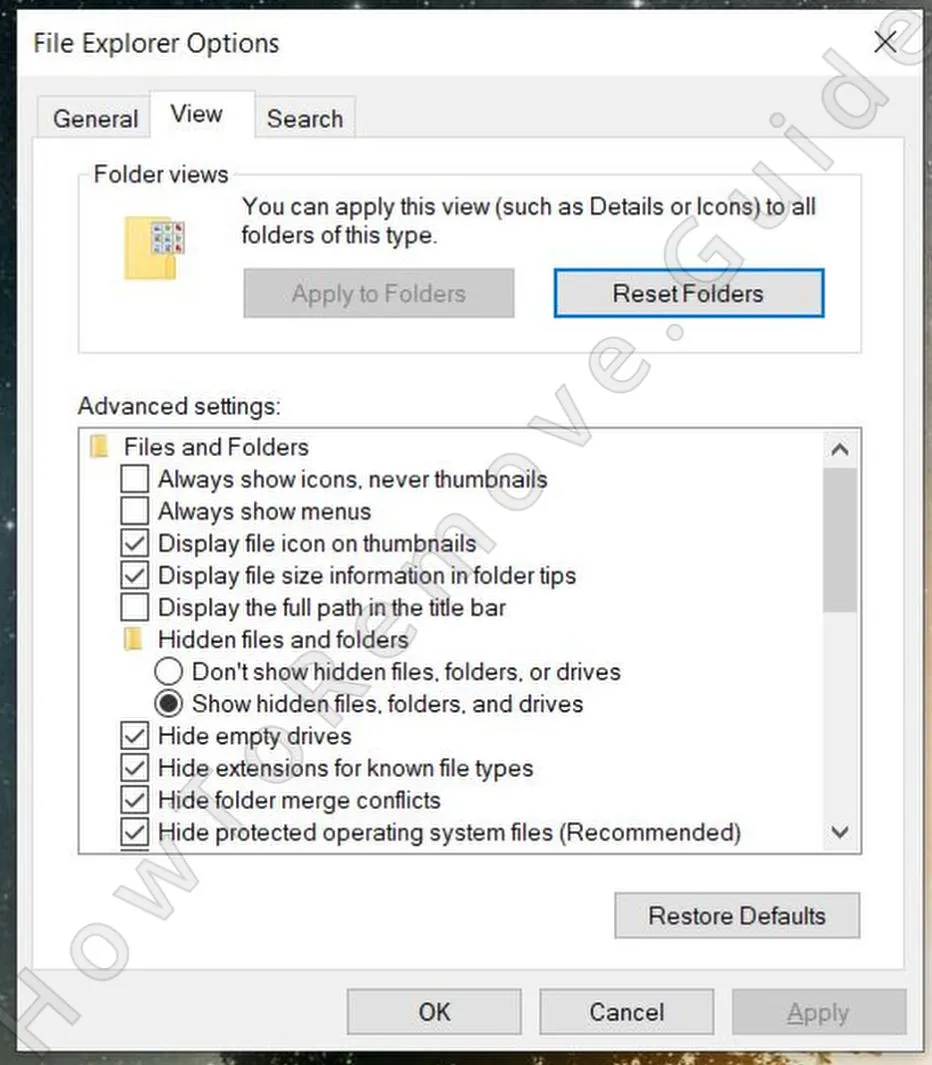 The first preparatory step you must perform is to enable the visibility of hidden files and folders.
Do this by searching for Folder Options in the Start Menu and selecting the View tab. Then activate “Show hidden files and folders” and save the change by clicking Apply and then OK. - 1.2Next, you’ll need to download and install a free utility called LockHunter It’s crucial because it lets you delete files locked by malicious processes.
It is reasonable to prefer a fully manual cleanup, especially when you do not want extra utilities on the system. For this guide, however, LockHunter is useful because Windows may block deletion when a suspicious file is still being used by a process.
LockHunter can be installed quickly, is free to use, and does not require an account. Keep it for the specific locked folders identified during the cleanup rather than using it broadly across unrelated system locations.
Remove NodeCordRAT Processes From the Task Manager
Task Manager is the next place to check because NodeCordRAT may keep an active process running under a random or ordinary-looking name. The label can differ from one infection to another, so compare resource use, file location, and recent activity instead of relying on a single expected process name.
2. How to Delete NodeCordRAT Processes in the Task Manager
-
2.1This is done through the Task Manager which you can open by pressing
Ctrl + Shift + Esc. - 2.2If it shows a simplified view, click More Details to expand it and see all running processes.
- 2.3
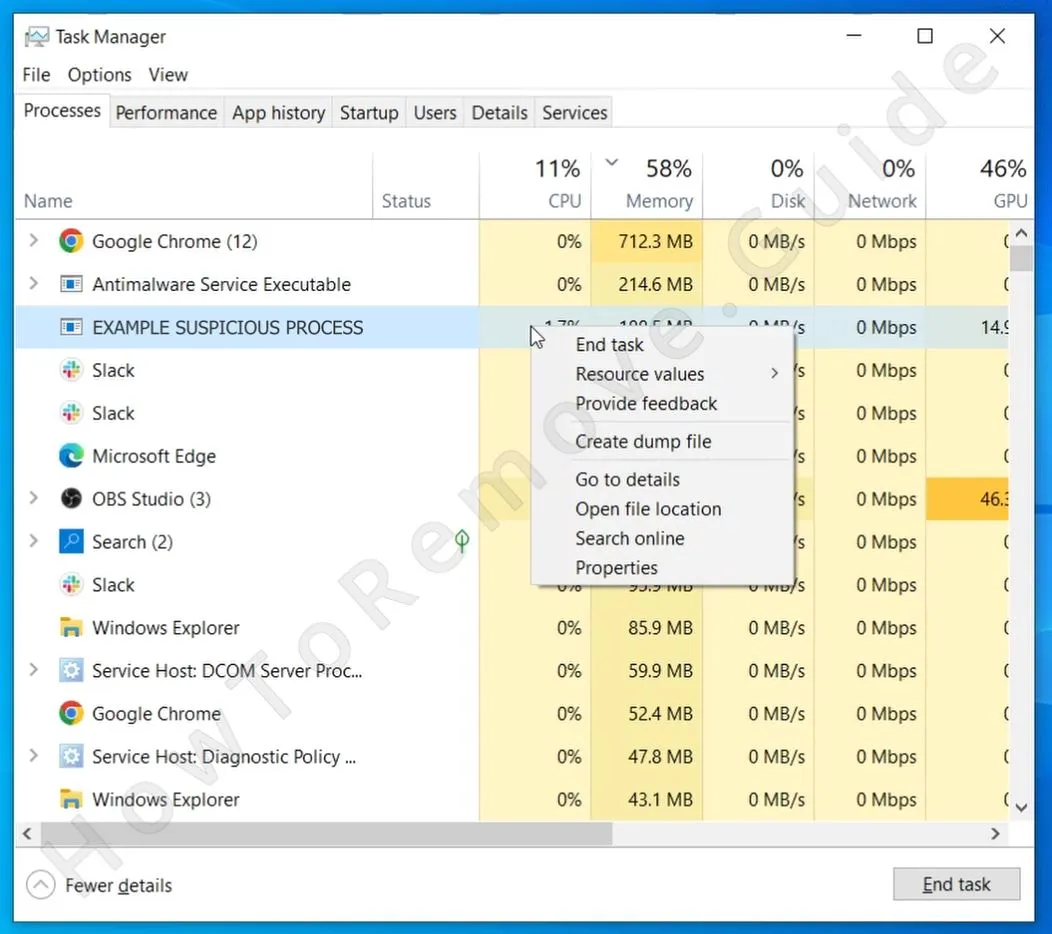 Sort the list of processes by how much Memory or CPU they are using. Then look out for any that are using unusually large amounts of either resource type and yet don’t seem related to any legitimate programs that you have on your PC.
Note: Don’t expect to find a rogue process named “NodeCordRAT“. Most forms of malware will hide their processes under innocent-looking names.
- 2.4For each dubious process, right-click it and select Open file location. This will lead you to a folder where the data used by this process is stored.
- 2.5You must delete that entire folder, but you’ll likely get an error when you attempt to do that because some of the files there are in use by the malware. The workaround is to use LockHunter: right-click the folder, select “What’s locking this folder?” from the context menu, and click Delete in the next window.
- 2.6After removing the files, go back to Task Manager, write down the name of the rogue process (you’ll need it later), then click it, and click the End Task button to quit it.
Delete NodeCordRAT Virus Files
Remaining files can keep NodeCordRAT active even after its main app entry is removed, so this part of the guide focuses on several folders where helper components may be stored. Check each location carefully, including Startup, AppData, Program Files, and Temp, because one overlooked file can restart the problem.
3. How to Get Rid of NodeCordRAT Files
-
3.1Start by examining the Startup folders at:
C:\ProgramData\Microsoft\Windows\Start Menu\Programs\StartupC:\Users\*Your Username*\AppData\Roaming\Microsoft\Windows\Start Menu\Programs\Startup -
3.2Search them for suspicious files, but if you aren’t what files are rogue, just delete everything in those folders except for the
desktop.inifile, which is a standard system file. -
3.3Next, inspect the
Program FilesandProgram Files (x86)in yourC:drive. Some malware apps will create folders there, so look for anything that looks linked to NodeCordRAT or that is otherwise unrecognized or out-of-place folders. Delete anything suspicious you may find. -
3.4Three other locations you must check are:
C:\Users\%user%\AppData\Local\C:\Users\%user%\AppData\Local\Programs\C:\Users\%user%\AppData\Roaming\Microsoft\Windows\Start Menu\Programs\
Again, if you notice anything fishy in them, it must be deleted. And if there’s a folder you aren’t sure about, it’s probably best to get rid of it. At worst, it will be something harmless linked to a legitimate program in your system. However, if you didn’t recognize its name right away, chances are it’s something you either don’t need or something that’s outright unwanted (like NodeCordRAT). -
3.5
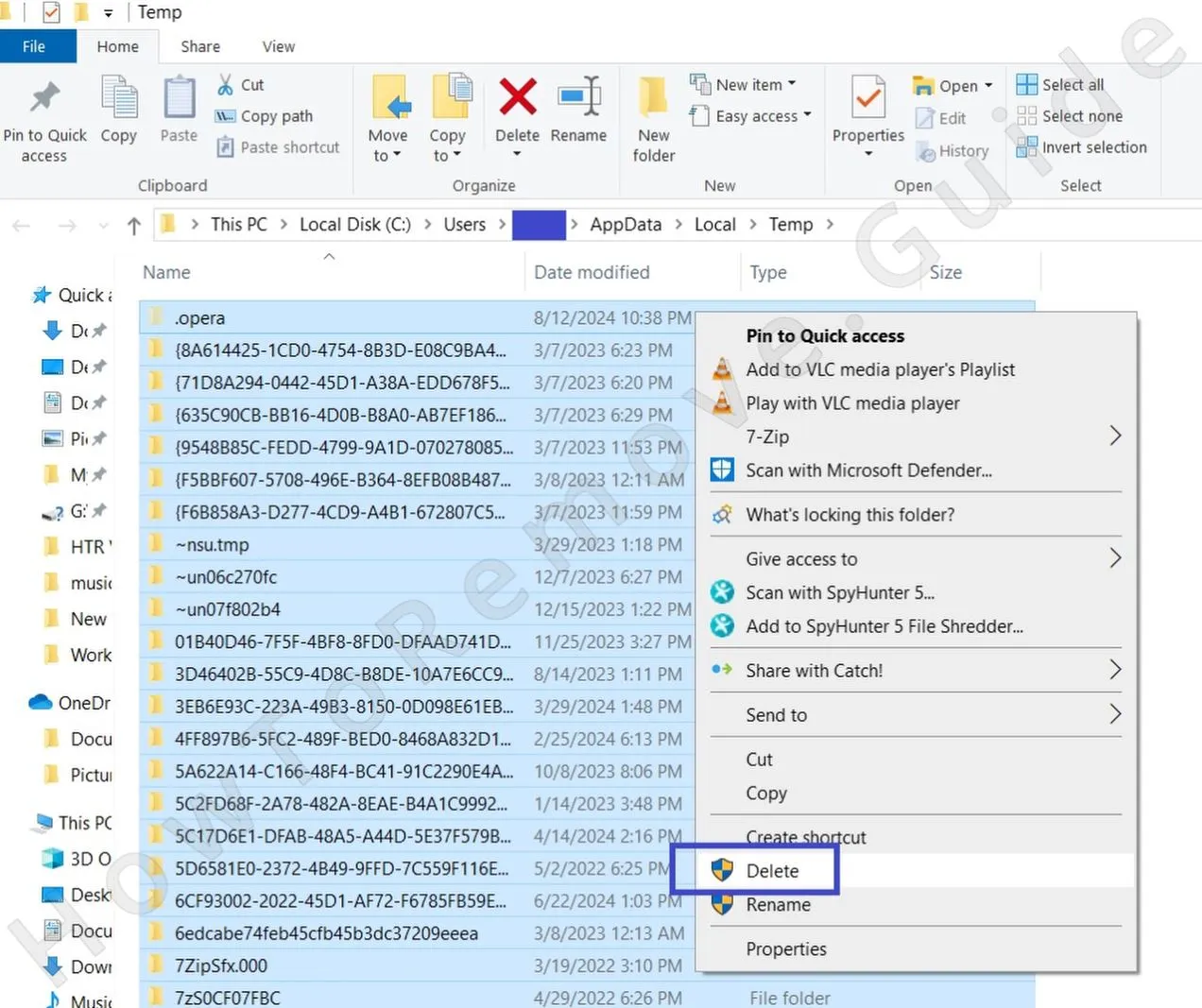 Finally, remember to clear the Temp folder. It’s located at
C:\Users\YourUsername\AppData\Local\Temp.
It stores only temporary files, which are all okay to delete. So, to save yourself some time spent looking for malware files, just Ctrl + A to select everything, and then press Delete from your keyboard to delete all of the folder’s contents.
Get Rid of NodeCordRAT Scheduled Tasks
Scheduled tasks are easy to miss, but NodeCordRAT can use them to relaunch itself, run a hidden file at startup, or restore components after deletion. Review this section carefully, because removing the task and the file it points to can prevent the infection from coming back.
4. Eliminate NodeCordRAT Scheduled Tasks
- 4.1
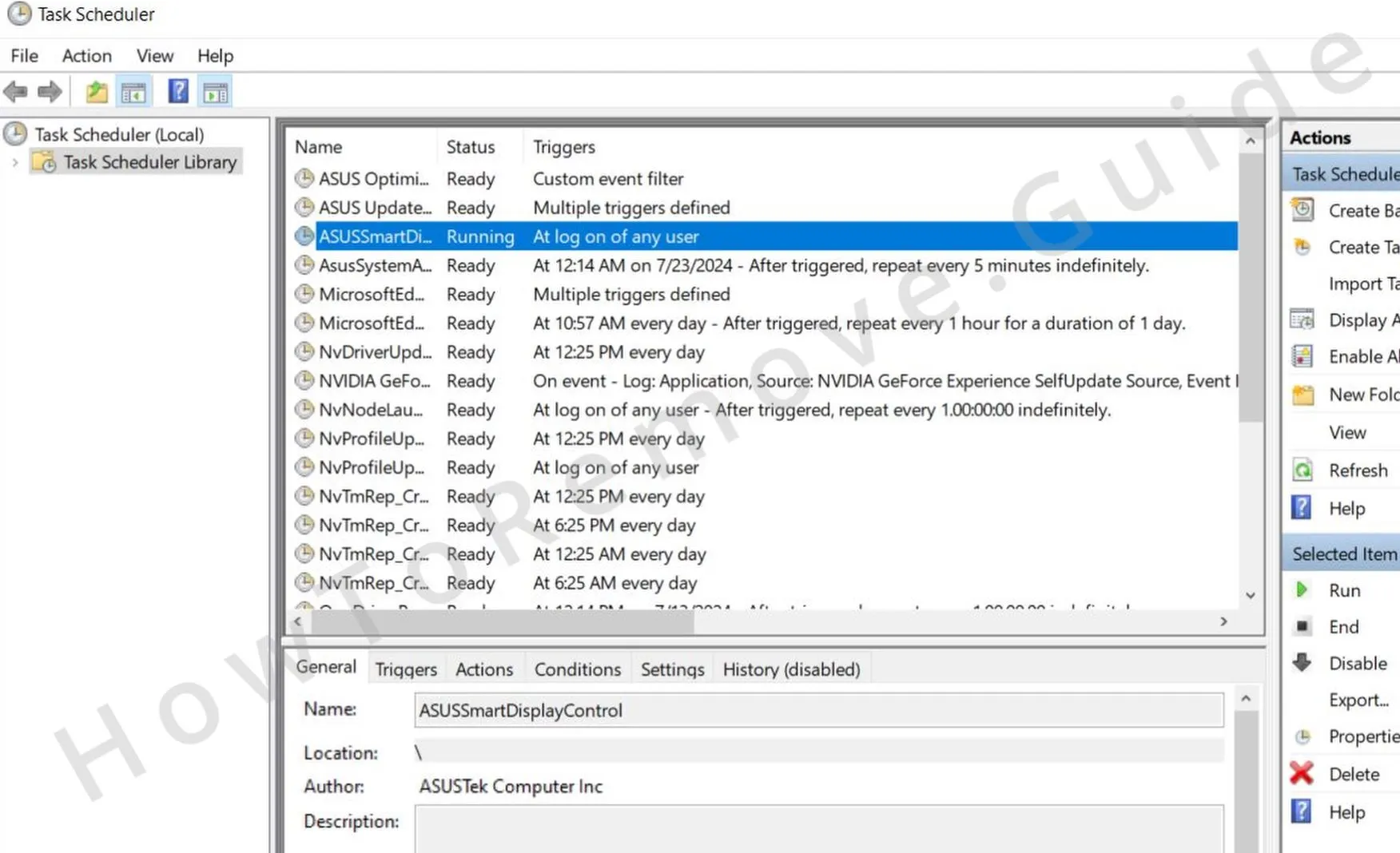 Open the Task Scheduler by searching for it in the Start Menu search bar. Then, one by one, review the scheduled tasks in the Task Scheduler Library.
 -
4.2For each task, double-click it and open the Actions tab, where you can learn what it is that the task is set to perform. Look for tasks that run unfamiliar executables, scripts, or anything located in the
AppDataorRoamingdirectories. - 4.3If you come across a task that executes anything suspicious, write down its file path, then right-click the task, and select Delete.
- 4.4After that, go to the file path you saved and delete the file that the task was set to run.
Uninstall the NodeCordRAT Malware App Through the Windows Registry
Registry entries may be the reason NodeCordRAT keeps loading after the visible files are gone, but this area should be handled carefully because deleting the wrong value can disrupt legitimate software. Use the manual steps only if you are comfortable checking entries; SpyHunter 5 is the safer automated option.
5. Remove NodeCordRAT Through the Registry
- 5.1Type “regedit” in the Start Menu and hit Enter to go to the Registry Editor.
- 5.2Then click Edit > Find to open the search box and then type the exact name of whatever program you tried to uninstall during the quick steps at the start of the guide.
- 5.3Click Find Next and if a result comes up, click the registry key (folder) in the left panel that contains it and delete that key. Perform another search after each deleted key until there are no more results for that search query.
- 5.4Next, search for the name of any other programs you attempted to delete. Also search for the names of processes you ended in the Task Manager earlier in the guide.
-
5.5After you’ve deleted all relevant entries, manually navigate to these registry keys:
HKCU\Software\Microsoft\Windows\CurrentVersion\RunHKCU\Software\Microsoft\Windows\CurrentVersion\RunOnceHKLM\Software\Microsoft\Windows\CurrentVersion\RunHKLM\Software\Microsoft\Windows\CurrentVersion\RunOnceHKLM\Software\Microsoft\Windows\CurrentVersion\Policies\Explorer\RunHKCU\Software\Microsoft\Windows\CurrentVersion\Policies\Explorer\RunHKEY_LOCAL_MACHINE\Software\Microsoft\Windows\CurrentVersion\RunServicesHKEY_LOCAL_MACHINE\Software\Microsoft\Windows\CurrentVersion\RunServicesOnceHKEY_LOCAL_MACHINE\Software\Microsoft\Windows\CurrentVersion\RunOnce\SetupHKEY_LOCAL_MACHINE\SYSTEM\CurrentControlSet\services - 5.6Select each of these keys to reveal their contents in the right panel. Then look for values referencing NodeCordRAT or any unknown applications. Delete only the specific values linked to the malware and leave the keys that contain them intact.
