

Search.homesearchtab.com is a browser hijacker that tweaks your browser settings, sneaks in tracking scripts, and quietly monitors what you click, search, and shop for. While doing that, it also spams you with ads, redirects, and might even go as far as to display fake malware warnings in attempts to trick you into downloading some questionable “security app”.
It’s all about targeted ads, shady analytics, and the promotion of low-quality apps (at best) or actual malware (at worst).
Over time, hijackers like Search.homesearchtab.com, Web Bear Search (WebBearSearch), or Searchcalm.com push sponsored pages and redirect you toward affiliate links that pay out per visit. It might not be stealing your files, but it’s definitely stealing your autonomy. You’ll want to clear it out before your browser becomes a billboard.
Start by reviewing your extensions, wiping unnecessary permissions, and resetting your default search provider. But if you’ve already tried this and it didn’t work, you’ll need to dig deeper.
The exact steps you ned to perform are explained below, but you also have the option to use SpyHunter 5 – a trusted removal tool – which can take care of everything for you.
We tested that SpyHunter successfully removes Search.homesearchtab.com* and we recommend using it. It will block Search.homesearchtab.com from reinstalling itself and it will make sure your device is clean from any malware.
 Try Free For 7 Days*
Buy now15% OFF if you buy straight without trial.
 OFFER
OFFERSearch.homesearchtab.com Removal Tutorial
Work in small, confirmed steps. Start with the easiest checks, verify outcomes, and only move forward if symptoms remain. Keep notes on what you change and why. This steady, evidence-based process removes Search.homesearchtab.com efficiently while minimizing mistakes and stopping the same issues from slipping back in later.
Quick Steps to Remove Search.homesearchtab.com
- 1.1Open your browser’s Settings to start clearing Search.homesearchtab.com.
In Chrome, open the ⋮ menu (top-right); in Firefox, use the ≡ menu.
Go to Extensions or Add-ons, scan each item for anything you don’t recognize, and jot short notes so you can track changes. - 1.2Evaluate each extension in detail: check its name, icon, requested permissions, and full description.
Copycats may use near-identical names or logos, so choose Remove when something looks inconsistent.
Uncertain? Search the exact “extension name” to review reports or warnings. Prefer official vendor pages when verifying. - 1.3Open Privacy and Security, then Site Permissions.
Review sites allowed to use your microphone, camera, location, or notifications.
Revoke access for any domain you don’t remember approving, keeping a list so you can restore legitimate entries if required. - 1.4Remove any site entries that ended up with privileges you didn’t intend inside Site Permissions.
This cuts off recurring prompts, alerts, and redirects.
When done, restart the browser to apply changes fully, then recheck permissions to confirm nothing reverted.
If the symptoms stop here, you’re finished. If issues continue, remnants likely sit outside the browser. Continue in sequence so you can find and remove the remaining components of this hijack without unnecessary changes.
SUMMARY:
| Name | Search.homesearchtab.com |
| Type | Browser Hijacker |
| Detection Tool |
Some threats reinstall themselves if you don’t delete their core files. We recommend downloading SpyHunter to remove harmful programs for you. This may save you hours and ensure you don’t harm your system by deleting the wrong files. |
How to Remove the Search.homesearchtab.com Virus
“Managed by your organization” means startup rules are enforced through policy. Regular settings won’t override them. Use the steps below to locate and remove those controls so Search.homesearchtab.com can’t return. Move carefully, confirm each change, and keep notes so you can retrace anything that resurfaces after a reboot.
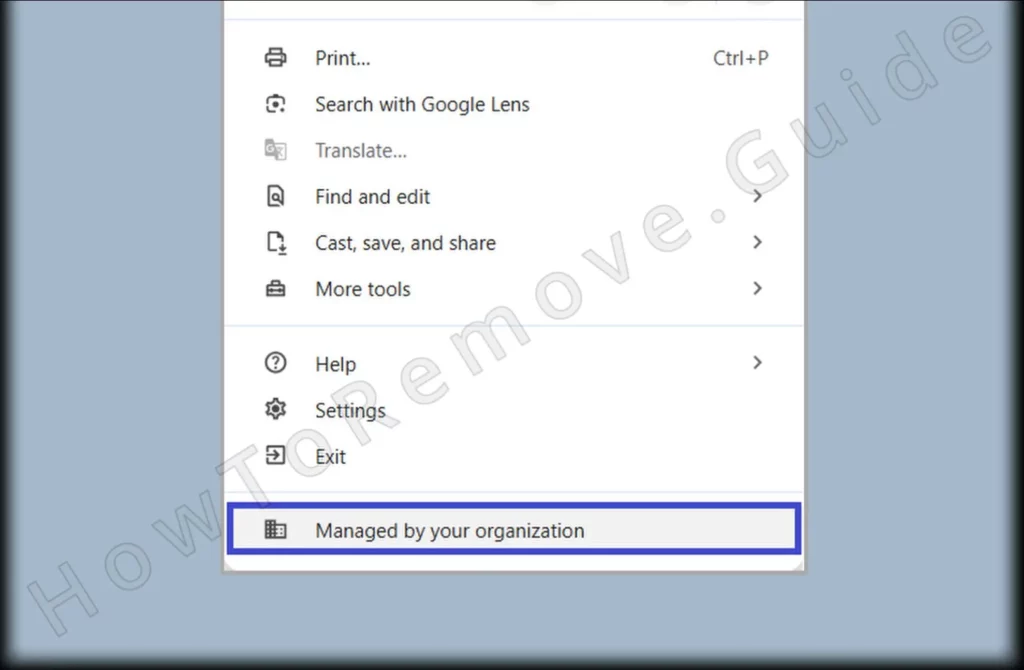
1. Identify the Search.homesearchtab.com Policies
- 1.1
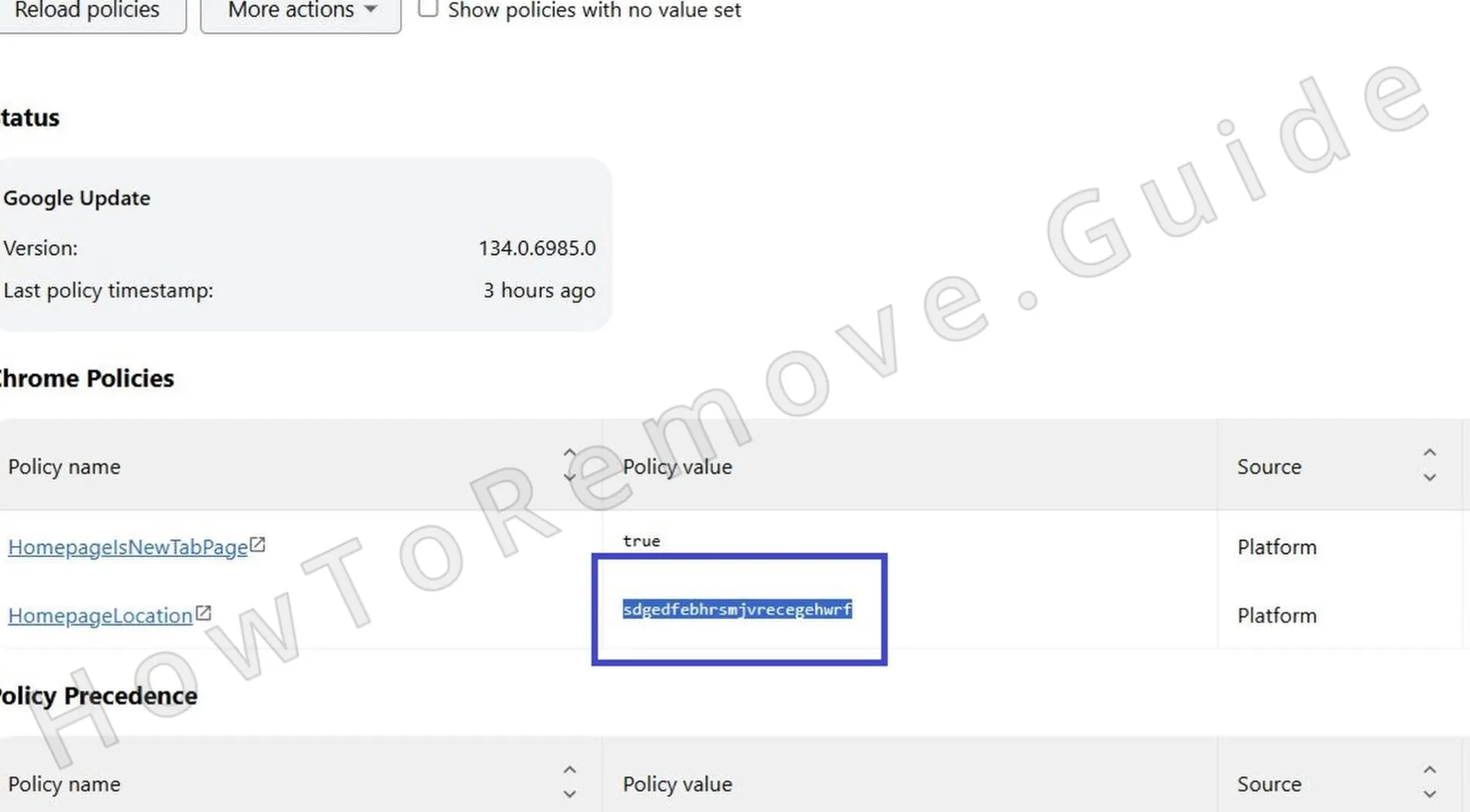 Open the browser policy page to identify entries tied to Search.homesearchtab.com.
In Chrome: chrome://policy
In Edge: edge://policy
Let the list populate, then scan for anything unusual. Use Reload policies (if shown) to refresh or export for comparison. - 1.2Review each entry carefully and watch for odd identifiers or random-looking strings.
Write down every suspicious item so you can match files and folders later.
Record the exact policy Name and Value fields; these reliably point to storage paths during cleanup. - 1.3Open your browser’s Extensions page and enable Developer mode via the top-right toggle.
This reveals extension IDs and install paths that help with manual removal.
Copy each suspicious ID into a text file so you can cross-reference directories without relying on memory. - 1.4If the Extensions page is blocked or broken, open File Explorer instead.
You can inspect browser files directly and bypass interface restrictions.
Turn on View > Show > Hidden items so profile folders under AppData are visible. - 1.5
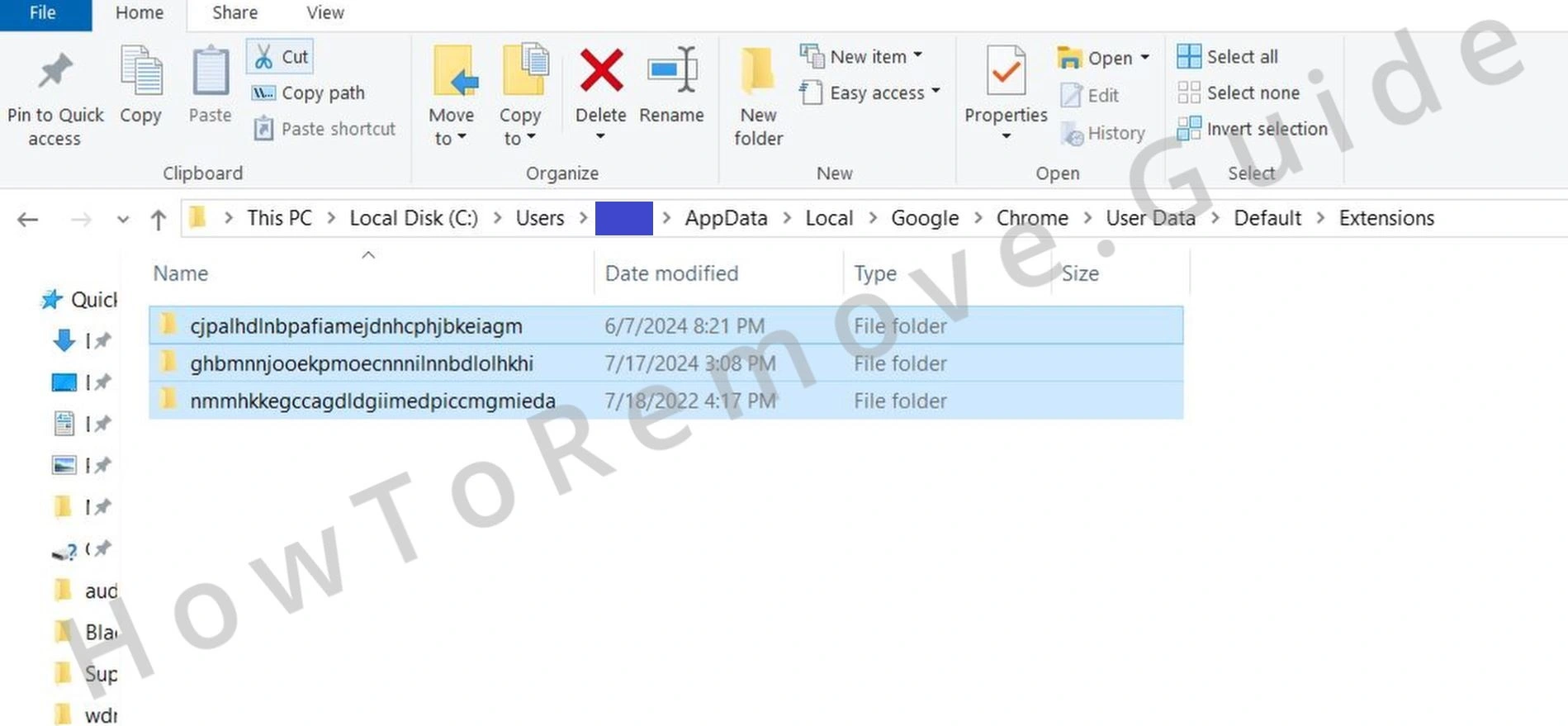 Use File Explorer to open:
C:\Users[Your Username]\AppData\Local\Google\Chrome\User Data\Default\Extensions
Each folder name is an extension ID. Compare IDs with your notes to locate the unwanted add-on. Avoid deleting legitimate folders. Consider a temporary desktop backup before permanent removal. - 1.6
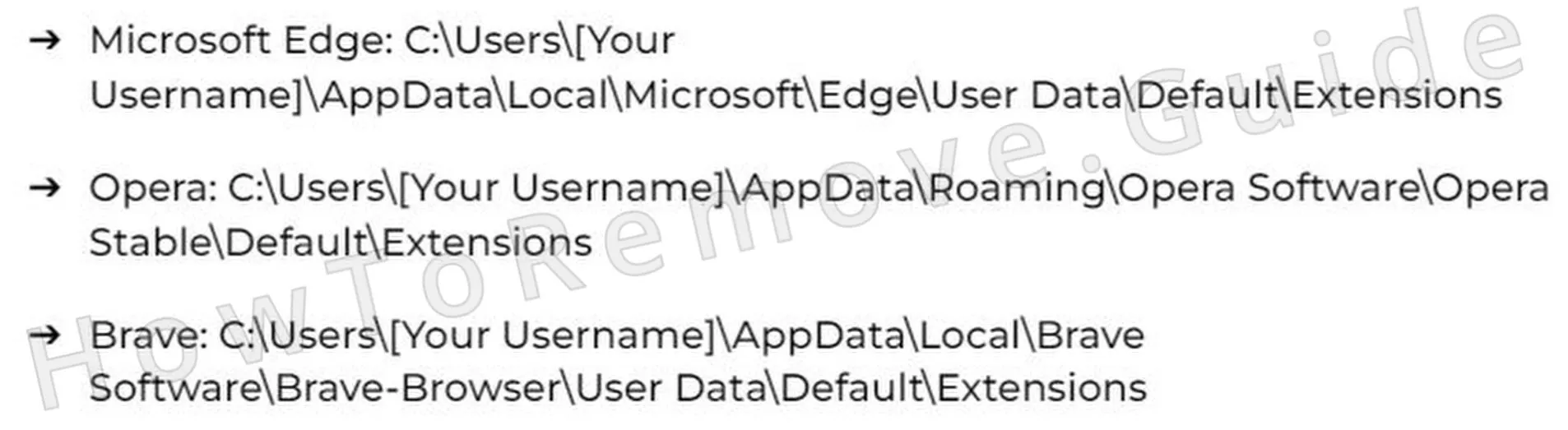 Using another Chromium-based browser like Brave or Opera? Its extensions use a similar path in AppData.
Confirm the extension ID and location match before deleting any folder linked to the unwanted add-on.
Check the browser’s About page to ensure it is fully closed so files can be removed. - 1.7After deleting the suspicious folder, return to Extensions with Developer mode on.
Confirm the item is gone. If it persists, remove it again and make sure no leftover files can re-enable it.
Click Update in Developer mode to refresh and expose stealth reinstalls immediately.
Get Rid of Search.homesearchtab.com Policies
Policy data can be stored in the Windows Registry. Editing the registry carelessly can harm stability. Use targeted actions that focus on policy items associated with Search.homesearchtab.com, and avoid broad edits unless you’re experienced. This preserves system health while removing enforcement that survives routine browser resets.
2. How to Delete Search.homesearchtab.com Policies Through the Registry
- 2.1Press Win + R, enter regedit, and press Enter to open Registry Editor and remove Search.homesearchtab.com policy traces.
Before changing anything, open File > Export to create a backup you can restore later.
Select All under Export range and save it to Documents for quick recovery. - 2.2Use Ctrl + F or Edit > Find to search for the policy names or extension IDs you recorded.
Choose Find Next and remove exact matches in all relevant areas.
Press F3 repeatedly until no further results remain across HKCU and HKLM hives. - 2.3
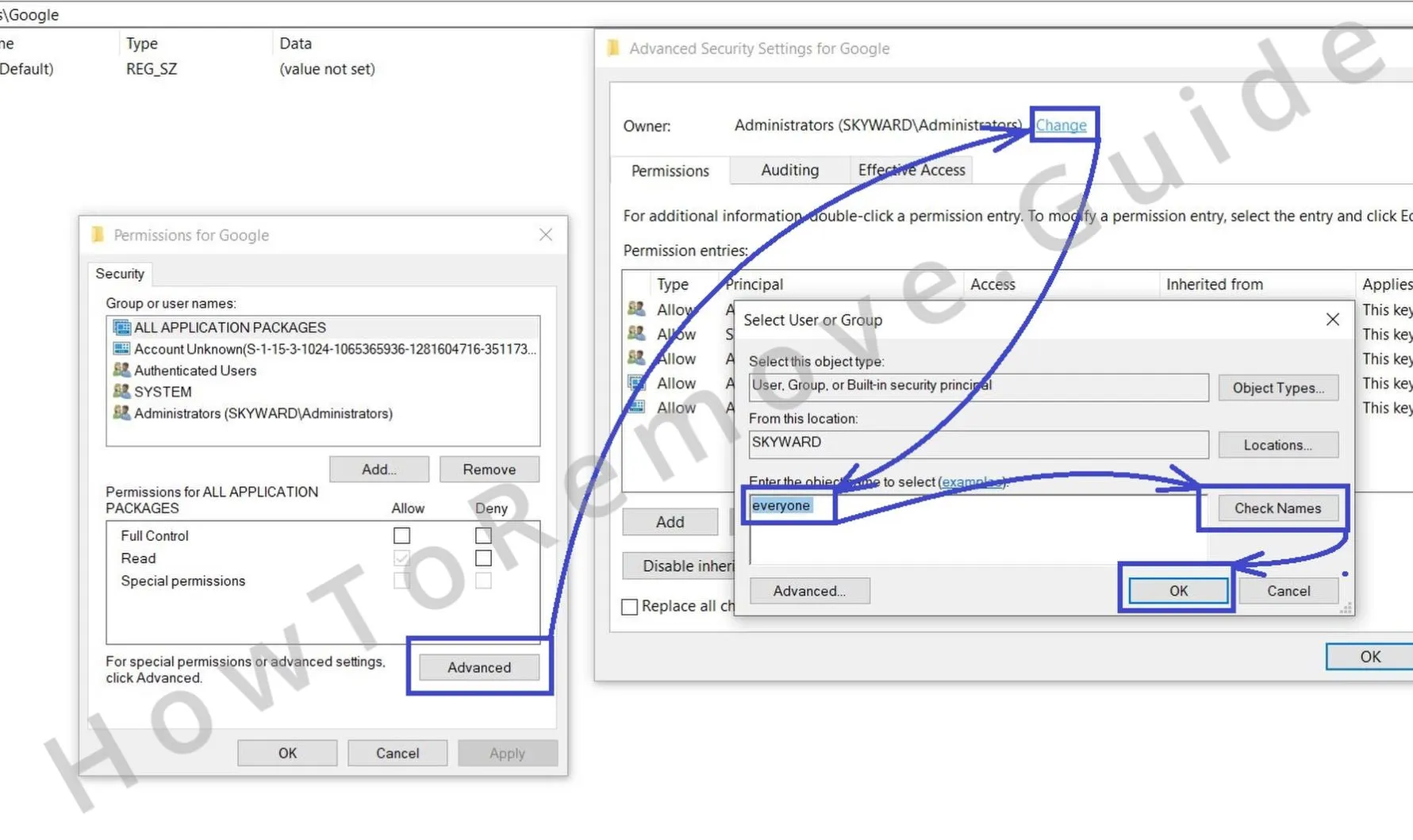 If a key refuses to delete, right-click it, choose Permissions, then Advanced.
Under Owner, select Change, type Everyone, click Check Names, and confirm with OK.
Grant Full Control to Administrators and Users so the key and its subkeys can be removed. - 2.4
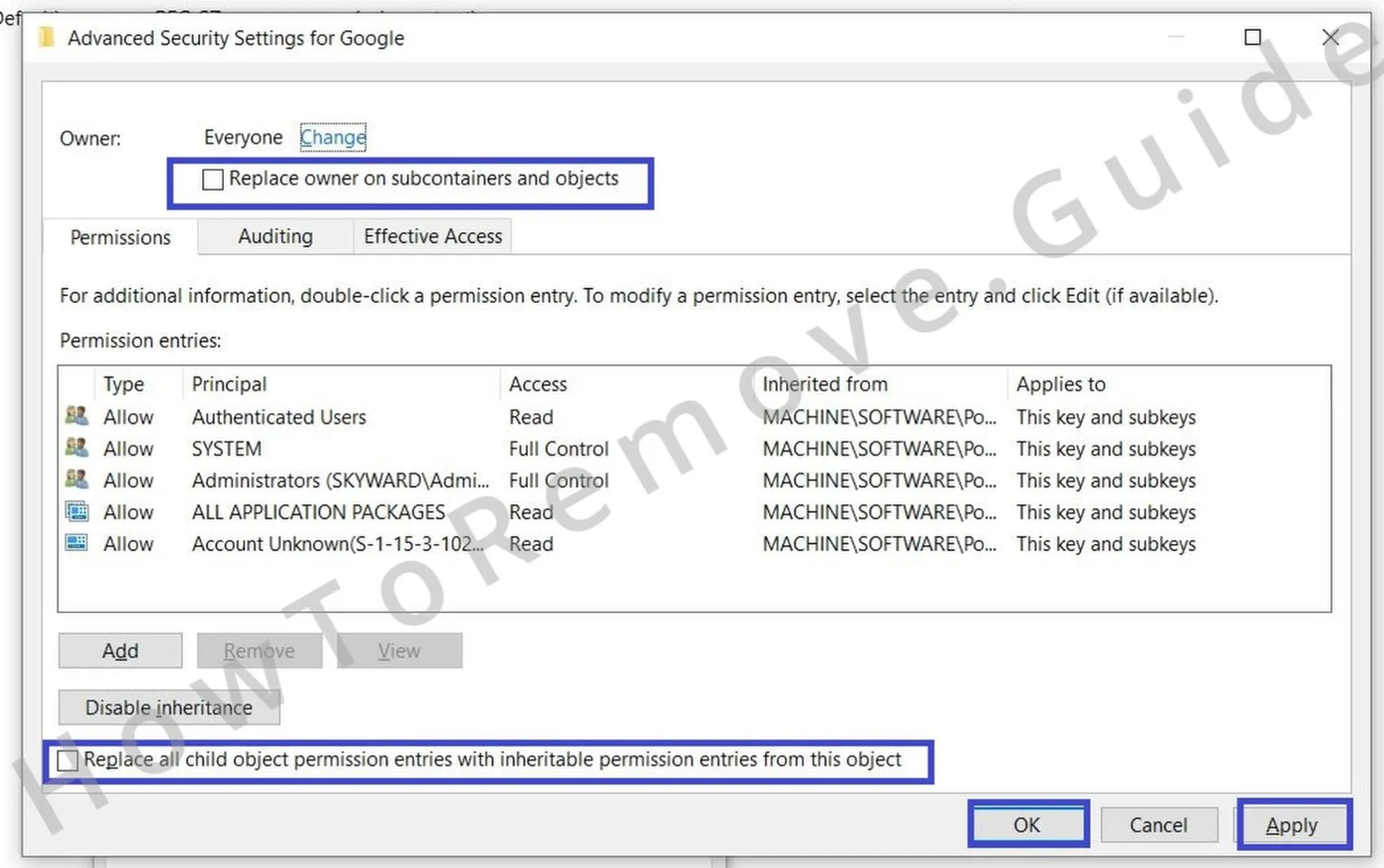 After taking ownership, enable Replace owner on subcontainers and objects and Replace all child object permission entries.
Click Apply, then OK. Reboot and check your browser to confirm the “Managed by your organization” banner is gone.
When confirmed, reopen regedit and repeat searches to ensure no policy values reappeared.
Alternative Tools to Delete Search.homesearchtab.com Policies
Manual edits can miss leftovers that still enforce rules. Use focused utilities and policy consoles to remove components tied to Search.homesearchtab.com without broad system changes. Run these when enforced settings persist so stragglers stop reconfiguring the browser after restarts or sign-ins.
3. Additional Methods to Remove Search.homesearchtab.com Policies
- 3.1
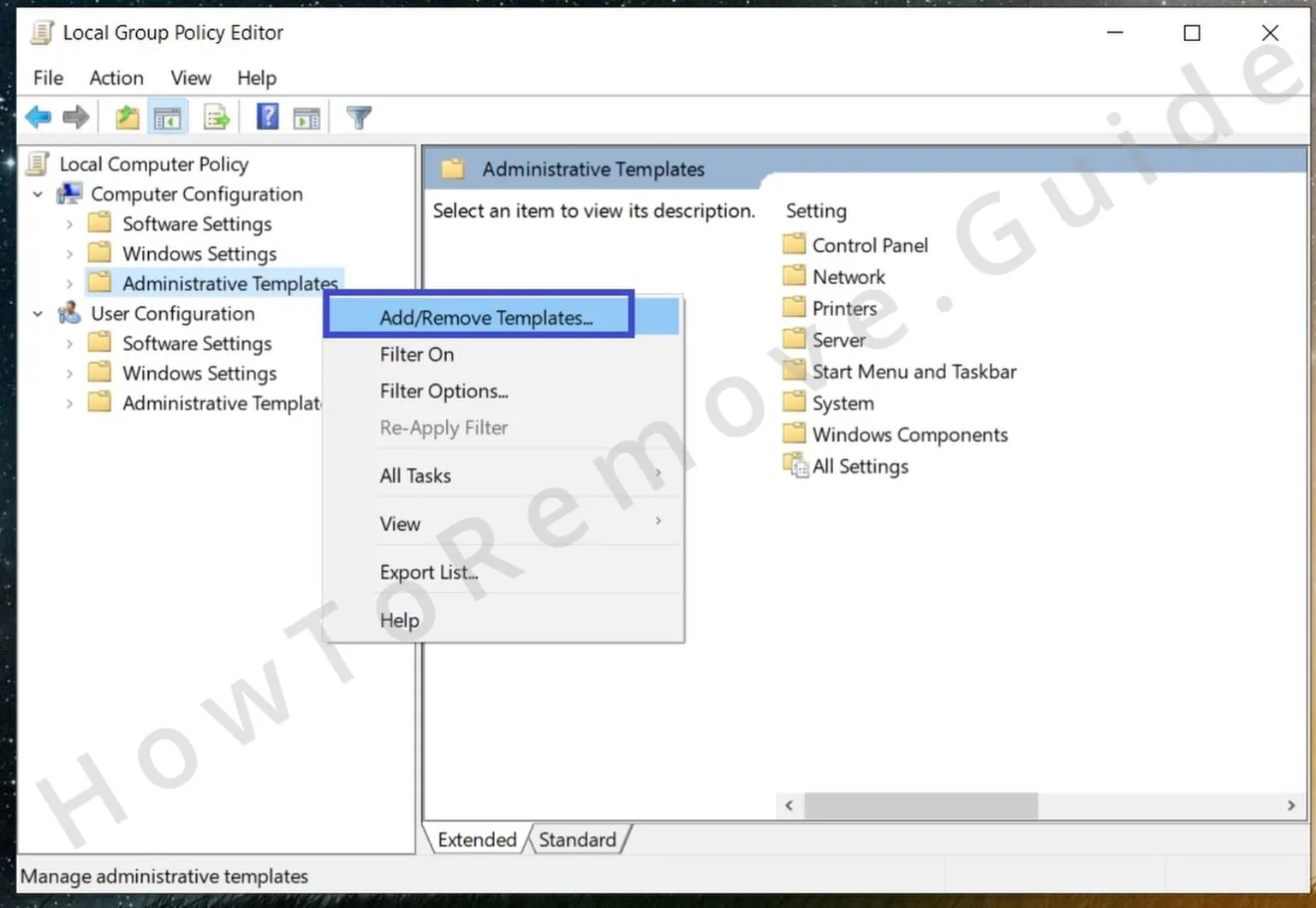 Open Group Policy Editor with Win + S, search Edit Group Policy, and launch it to find policies tied to Search.homesearchtab.com.
In the left pane, browse to Administrative Templates where system-wide settings may be changed.
Expand both Computer Configuration and User Configuration to check machine and user scopes. - 3.2
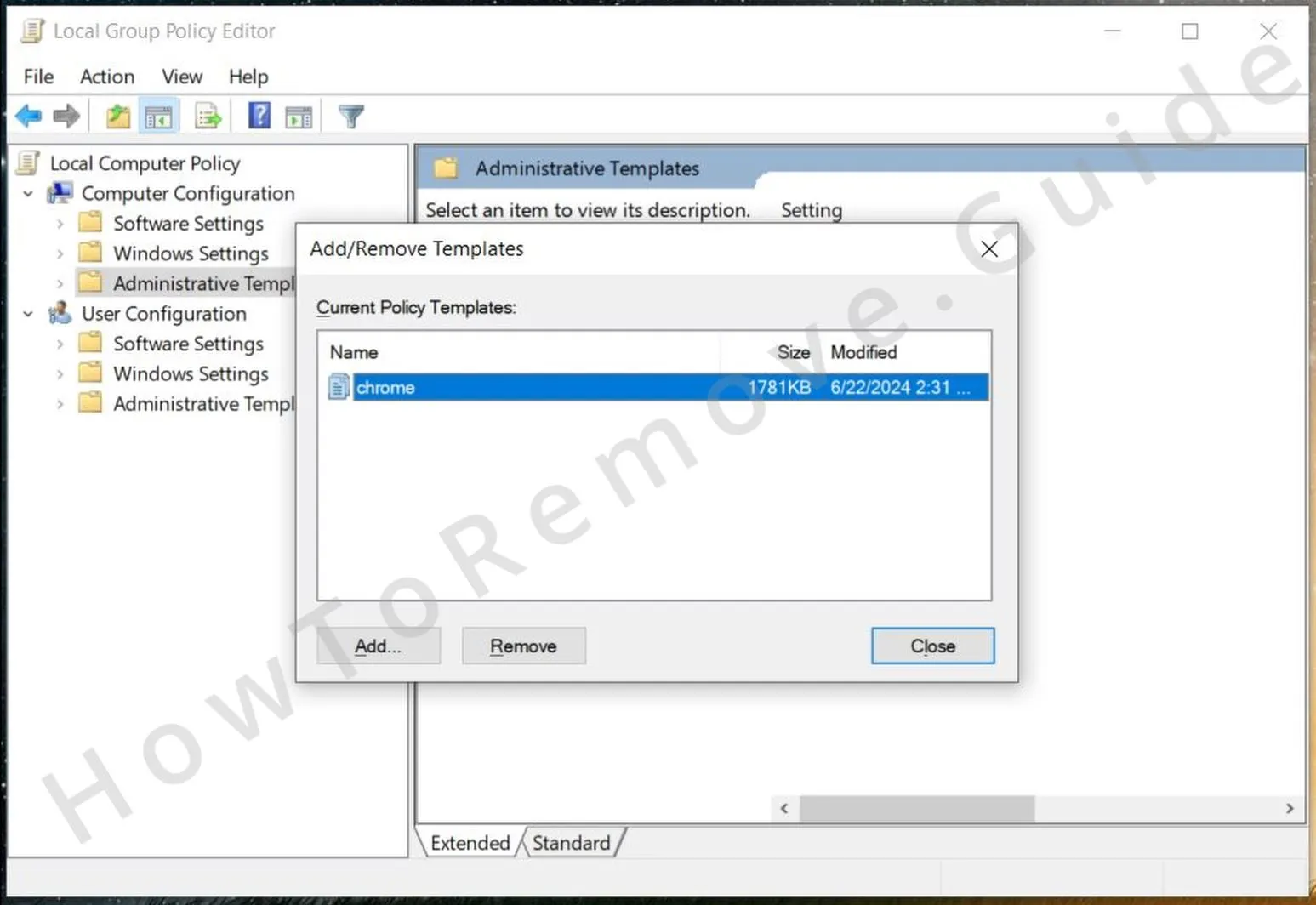 Right-click Administrative Templates and choose Add/Remove Templates.
Remove templates you did not add to undo unwanted restrictions on browser or system behavior.
Then review Policy states under Windows Components for Microsoft Edge or Google Chrome and set undesired entries to Not Configured. - 3.3For Chrome, the standalone Chrome Policy Remover can detect and clear hidden policy files.
Download from a trusted source, then right-click the executable and choose Run as administrator so it has sufficient access to clean completely.
Afterward, open chrome://policy and click Reload policies to confirm results. - 3.4If your antivirus or Windows Defender flags the tool, select More info and Run anyway only when you trust the source.
When it completes, restart the computer and recheck Group Policy Editor and Registry Editor to ensure all traces are gone.
Also inspect Task Scheduler under Task Scheduler Library for jobs that could restore policies automatically.
Uninstall Search.homesearchtab.com From Chrome, Edge, and Other Browsers
Even after things look clean, remnants can persist through sync or cached settings. Confirm each change survives restarts and profile synchronization so Search.homesearchtab.com does not return. Revisit key areas in order and verify that defaults, permissions, and extensions remain stable over time.
4. How to Remove Search.homesearchtab.com From Your Browser
- 4.1Open your browser’s Extensions or Add-ons page and rescan for items linked to Search.homesearchtab.com.
If a suspicious extension reappears or any new ones look off, Remove them, since sync or background scripts can reinstall components.
Open chrome://extensions (or your browser’s equivalent) directly to bypass theme pages that may hide entries. - 4.2
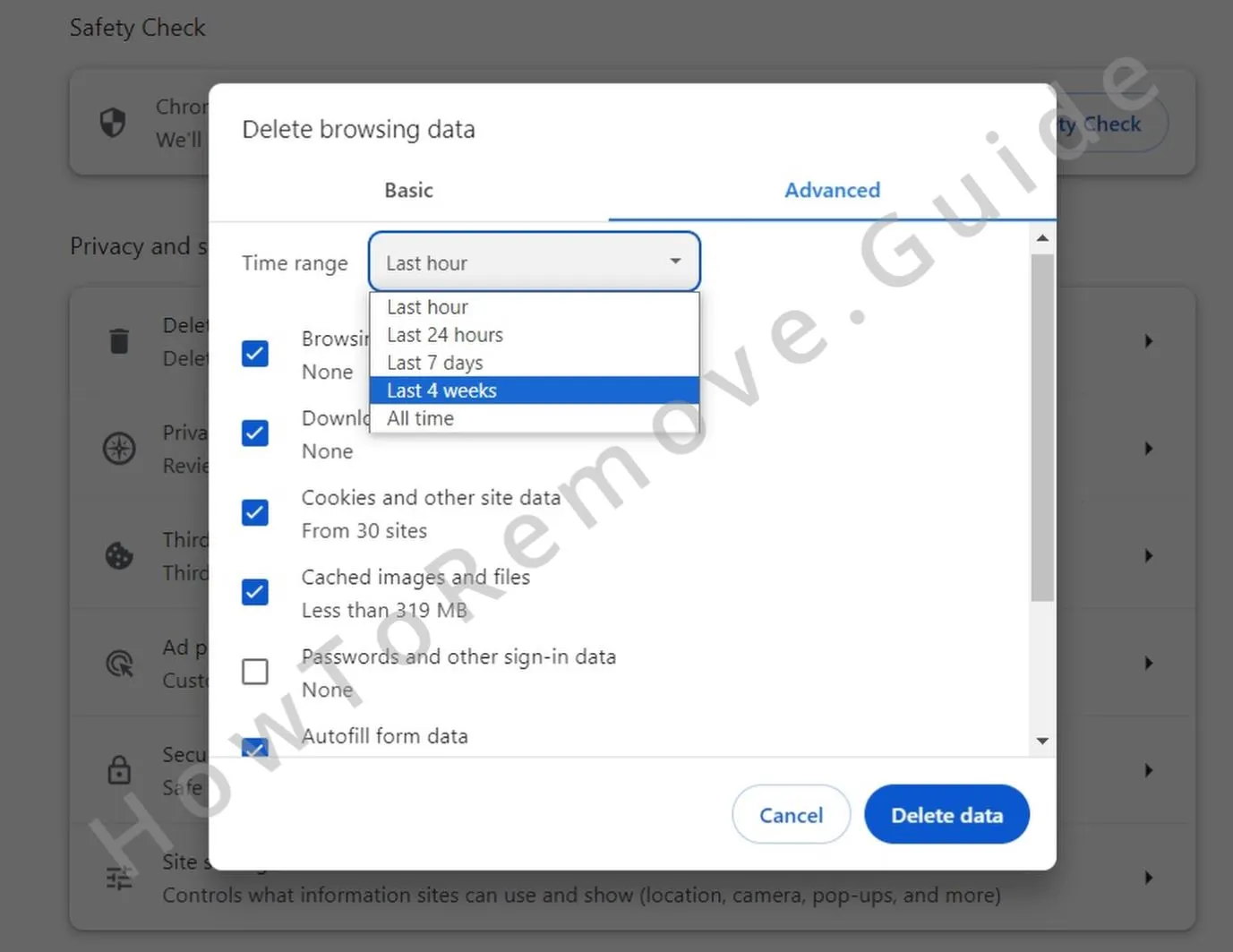 Open Clear browsing data from Settings. Set Time range to All time and select everything except Saved passwords.
Choose Clear data to remove cookies, cache, and fragments used for pop-ups or redirects.
Repeat for all profiles and, if useful, enable Clear data on exit to blunt quick reinfection attempts. - 4.3
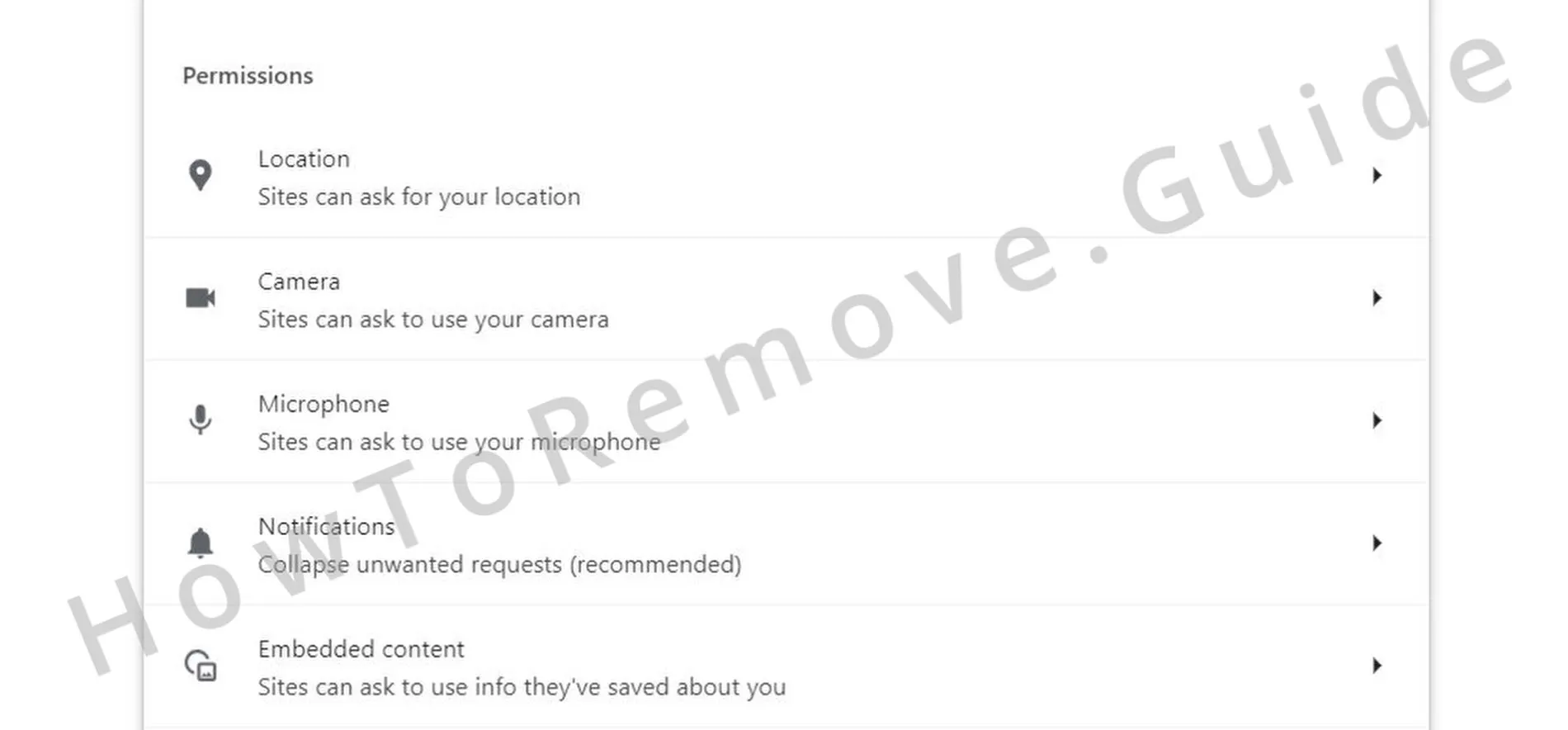 Go to Privacy and Security > Site settings.
Review permissions for camera, microphone, and notifications. Delete or Block any site you didn’t approve.
Open View permissions and data stored across sites to bulk remove problematic origins efficiently. - 4.4
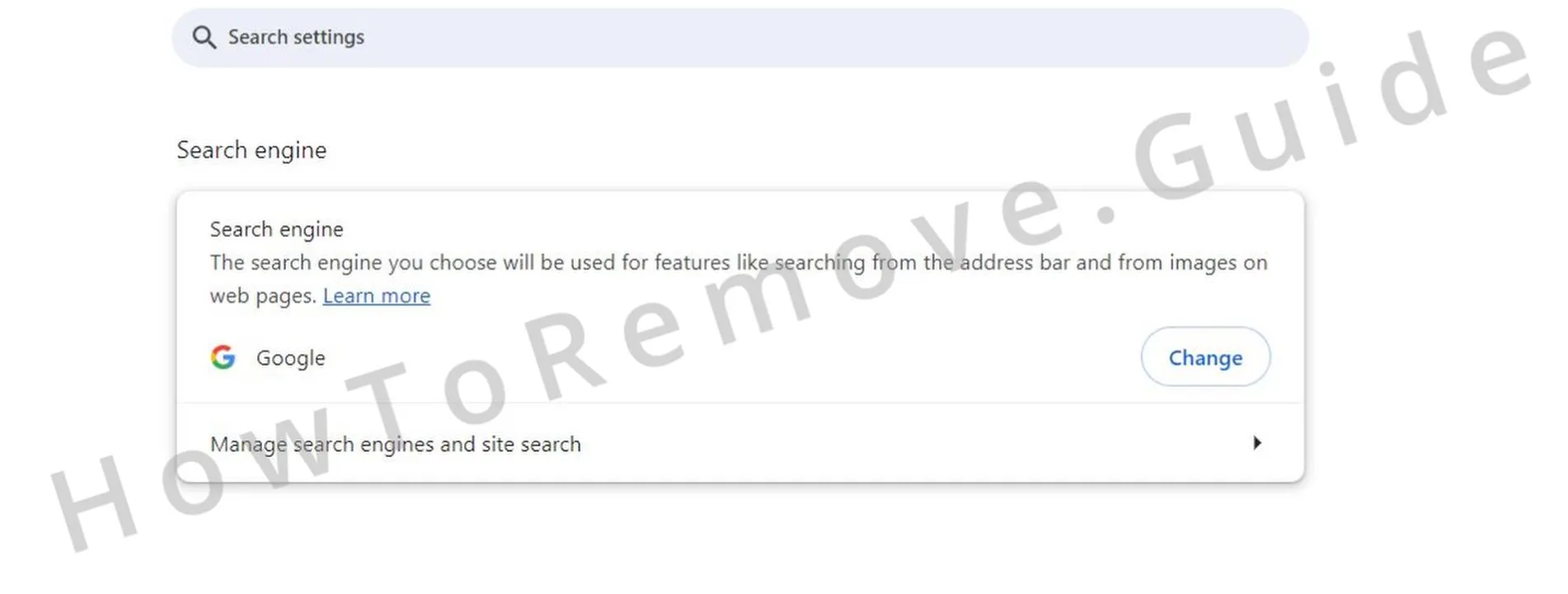 Open Search engine settings and choose Manage search engines.
Remove unknown entries and ensure the default is a provider such as Google, Bing, or DuckDuckGo.
Also check On-device search shortcuts or Site search sections where hijackers add persistent custom entries. - 4.5Review on Startup and Appearance.
Remove unfamiliar URLs set for your homepage or new tab page so reappearance via custom pages is blocked.
Disable unwanted themes and restore the Default theme to rule out theme-based scripts persisting between sessions.
Want to harden things further? Turn on 2FA for accounts, keep browser and extension auto-update enabled, and export bookmarks periodically before trying a full Reset settings if symptoms recur.
