

If your homepage suddenly changed to Searcherone.com without warning, then yeah – you’re dealing with malware, because Searcherone, like Searcherbright and Leaksdaily, is exactly that. This thing’s a textbook browser hijacker. I’ve seen it get in through fake “Allow” buttons, bundled software, even shady browser extensions pretending to be something useful. It tends to lock down your settings using what’s called a managed by your organization policy, so you can’t change anything back. You’ll probably also notice fake McAfee or Norton alerts warning about nonexistent infections – that’s bait. Clicking those is what gets people into more trouble. And no, deleting your history or resetting your homepage won’t fix this. You’ve got to do a deeper cleanup, and depending on how Searcherone got in, that can take some work. But I’ve laid out the steps for you below. Don’t skip them.
We tested that SpyHunter successfully removes Searcherone.com* and we recommend using it. It will block Searcherone.com from reinstalling itself and it will make sure your device is clean from any malware.
 Try Free For 7 Days*
Buy now15% OFF if you buy straight without trial.
 OFFER
OFFERSearcherone Removal Tutorial
So here’s the deal – weird stuff starts happening in your browser, and the first instinct is to panic. Don’t. That’s exactly what Searcherone counts on. Just keep it simple, start with the basics, and don’t rush. If you speed through or skip steps, you’re basically handing it control. Slow down, follow through, and stay sharp.
Quick Steps to Remove Searcherone
- 1.1Launch the browser you use most frequently and navigate to the Settings menu.
In Chrome, select the three vertical dots in the top-right corner of the interface.
In Firefox, click the icon with three horizontal lines located in the same area.
Once inside Settings, go to the Extensions or Add-ons section, usually accessible from the sidebar or a category like Tools. Examine each extension listed thoroughly, as malware often disguises itself using names similar to real tools. - 1.2Individually inspect each extension or add-on by reviewing its name, visual icon, permission list, and description.
Malicious extensions often imitate trusted programs with only subtle alterations in naming or branding.
If an item looks suspicious or unfamiliar, click Remove without hesitation.
If you are uncertain about an extension, search for its exact name in quotes using a search engine. Doing so can reveal discussions or warning reports from other users who encountered it. - 1.3Go back into your browser’s Settings and locate Privacy and Security. From there, navigate to Site Permissions, which may be located under Advanced settings.
This area lists which websites have been granted access to your microphone, camera, location, or notification permissions.
Thoroughly review this list and revoke privileges for any sites you don’t explicitly remember authorizing, especially if they look generic or spammy. - 1.4If you identify any unfamiliar sites with elevated privileges, immediately click to Remove their access rights.
Doing this helps prevent invasive pop-ups, sneaky redirections, or behind-the-scenes changes to your browser preferences.
After updating permissions, completely shut down and reopen your browser to confirm the new settings are now active and taking effect.
If Searcherone is still present after completing these steps, it likely means the infection has installed itself deeper in your system. Follow the next sections carefully to remove its core components.
Often, this quick fix is enough to restore order. But if Searcherone is still hanging around, it’s time to dig deeper.
SUMMARY:
| Name | Searcherone.com |
| Type | Browser Hijacker |
| Detection Tool |
We tested that SpyHunter successfully removes Searcherone.com* and we recommend downloading it. Manual removal may take hours, it can harm your system if you re not careful, and Searcherone.com may reinstall itself at the end if you don't delete its core files. |
How to Remove the Searcherone Virus
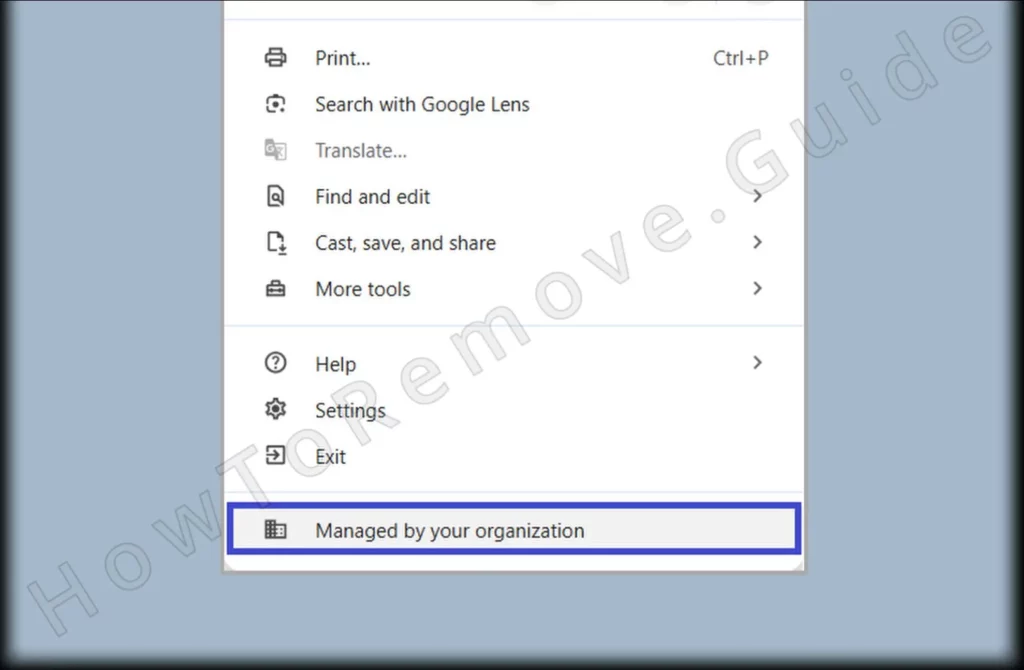
Alright, if your browser suddenly says “Managed by your organization” and you didn’t do anything to trigger that – red flag. Big one. That’s Searcherone getting in with admin-level control. And no, your usual tools won’t touch this. Ignore it and it gets worse. You’ve got to bring in serious tools and lock in. This one’s real.
1. Identify the Searcherone Policies
- 1.1
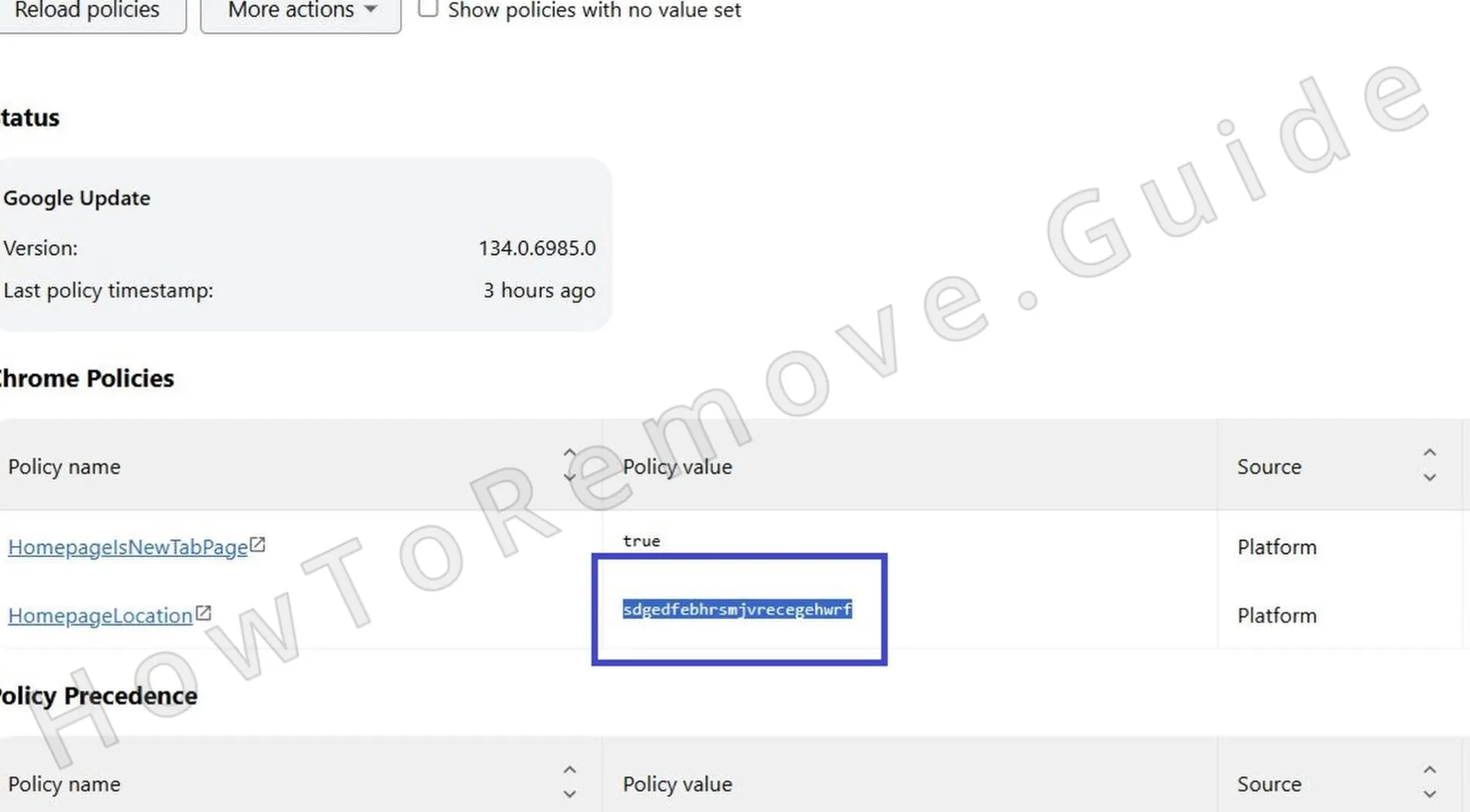 If you encounter the “Managed by your organization” notification, a foreign policy has likely been injected.
In Chrome, type chrome://policy in the address bar and press Enter.
In Edge, enter edge://policy instead.
Wait for the page to display active policies. Review each entry carefully, looking for ones that don’t seem familiar or have confusing names. Take note of anything unusual. - 1.2Carefully go over each policy listed. You’re specifically looking for vague or oddly named settings.
Searcherone often uses misleading entries that seem harmless to blend into legitimate configurations.
Take screenshots or write down suspicious entries—you will need this data to remove related files in later steps. - 1.3Open your browser’s Extensions page and activate Developer Mode using the toggle located in the upper-right corner.
This mode unlocks more technical information such as extension IDs and installation paths. These details are crucial for manually identifying the source of malicious content later on. - 1.4If for any reason the Extensions page won’t open—especially if Searcherone is interfering—bypass your browser entirely.
Use File Explorer to access system folders directly, which allows you to locate and delete harmful data without relying on the browser’s interface. - 1.5
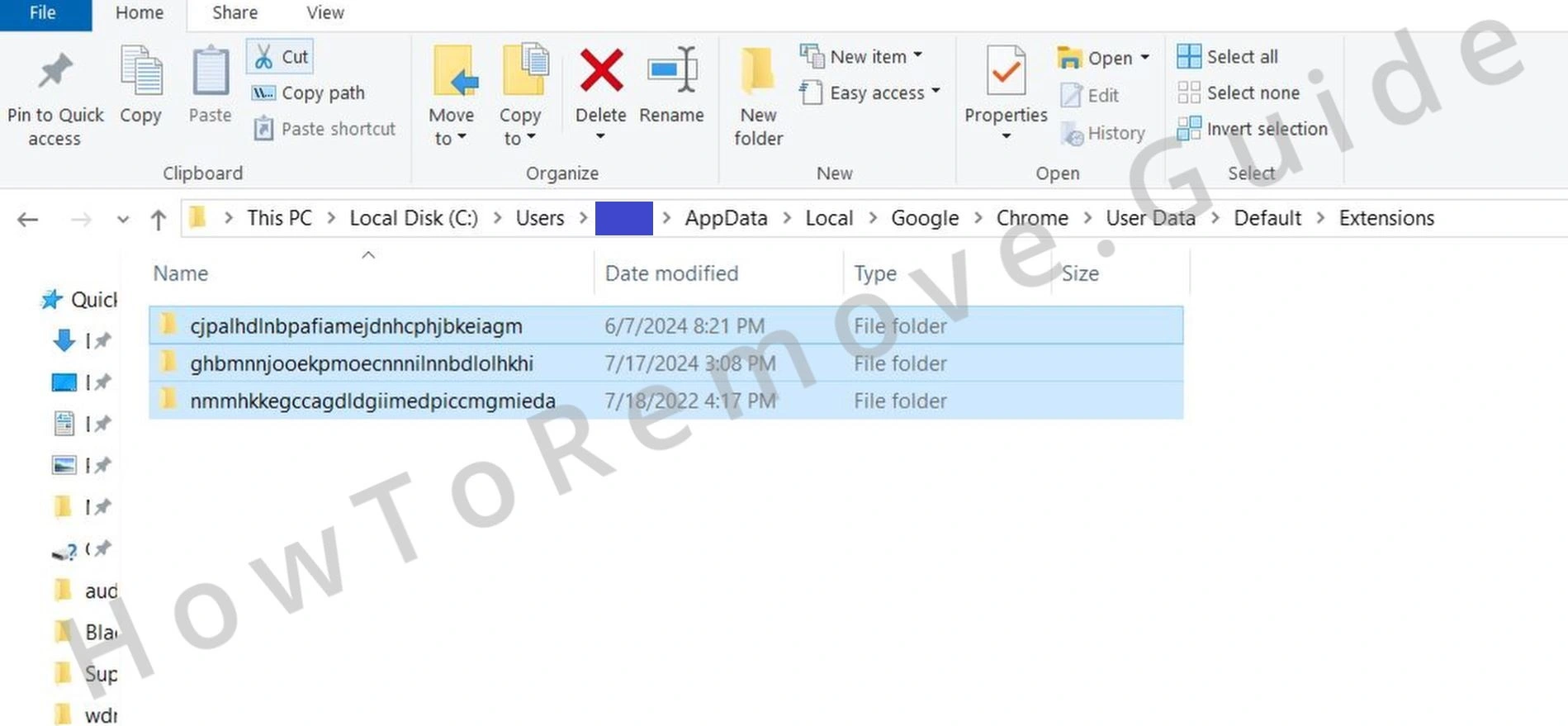 In File Explorer, navigate to the following directory:
C:\Users[Your Username]\AppData\Local\Google\Chrome\User Data\Default\Extensions
Here, every folder represents an installed extension and is named using a unique string.
Compare these folder names to the extension IDs you documented earlier. Once you’re confident you’ve identified Searcherone’s folder, delete it. Take caution not to remove legitimate extensions. - 1.6
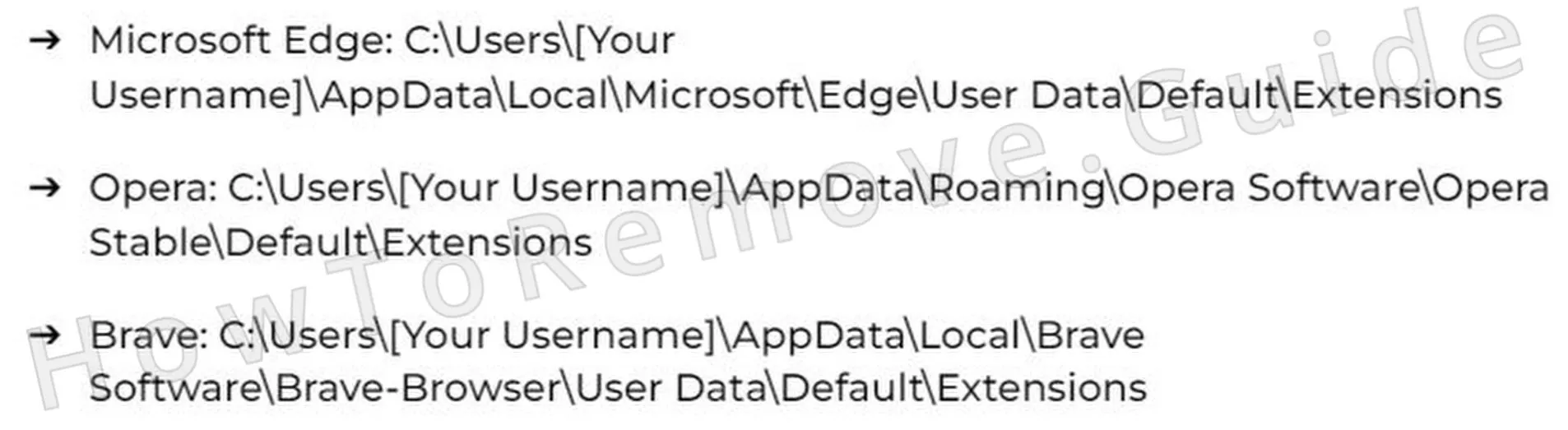 If you’re using another Chromium-based browser like Brave or Opera, the extension storage location will be nearly identical.
Navigate to the appropriate AppData folder for that browser and repeat your search. Locate and delete the folder linked to Searcherone with the same caution you used for Chrome. - 1.7After manually deleting the malicious extension’s folder, go back to your browser’s Extensions menu with Developer Mode still enabled.
Make sure the problematic add-on is no longer present. If it’s still listed, remove it manually again, then check your system for any residual files or settings that may be causing a reinstallation.
We tested that SpyHunter successfully removes Searcherone.com* and we recommend using it. It will block Searcherone.com from reinstalling itself and it will make sure your device is clean from any malware.
Try Free For 7 Days*
Buy now15% OFF if you buy straight without trial.
Get Rid of Searcherone Policies
When Searcherone gets into your system registry – that’s bad news. Like, real damage kind of bad. One careless click and boom, you’re staring at a bricked machine. Don’t try to wing it. Don’t guess. Use something legit that actually knows what it’s doing. Random deleting? Forget it. That’s how people nuke their own setups fast.
2. How to Delete Searcherone Policies Through the Registry
- 2.1Press Win + R, type regedit, and hit Enter to open the Registry Editor.
Before doing anything, go to File > Export to save a full backup of your registry.
This provides a recovery point, letting you restore the registry to its original state if any errors occur during removal. - 2.2Press Ctrl + F or use Edit > Find, then type the extension ID or policy name linked to Searcherone.
Click Find Next, and if a matching entry appears, delete it carefully.
Repeat the search multiple times to ensure every single reference to Searcherone has been removed completely from the system. - 2.3
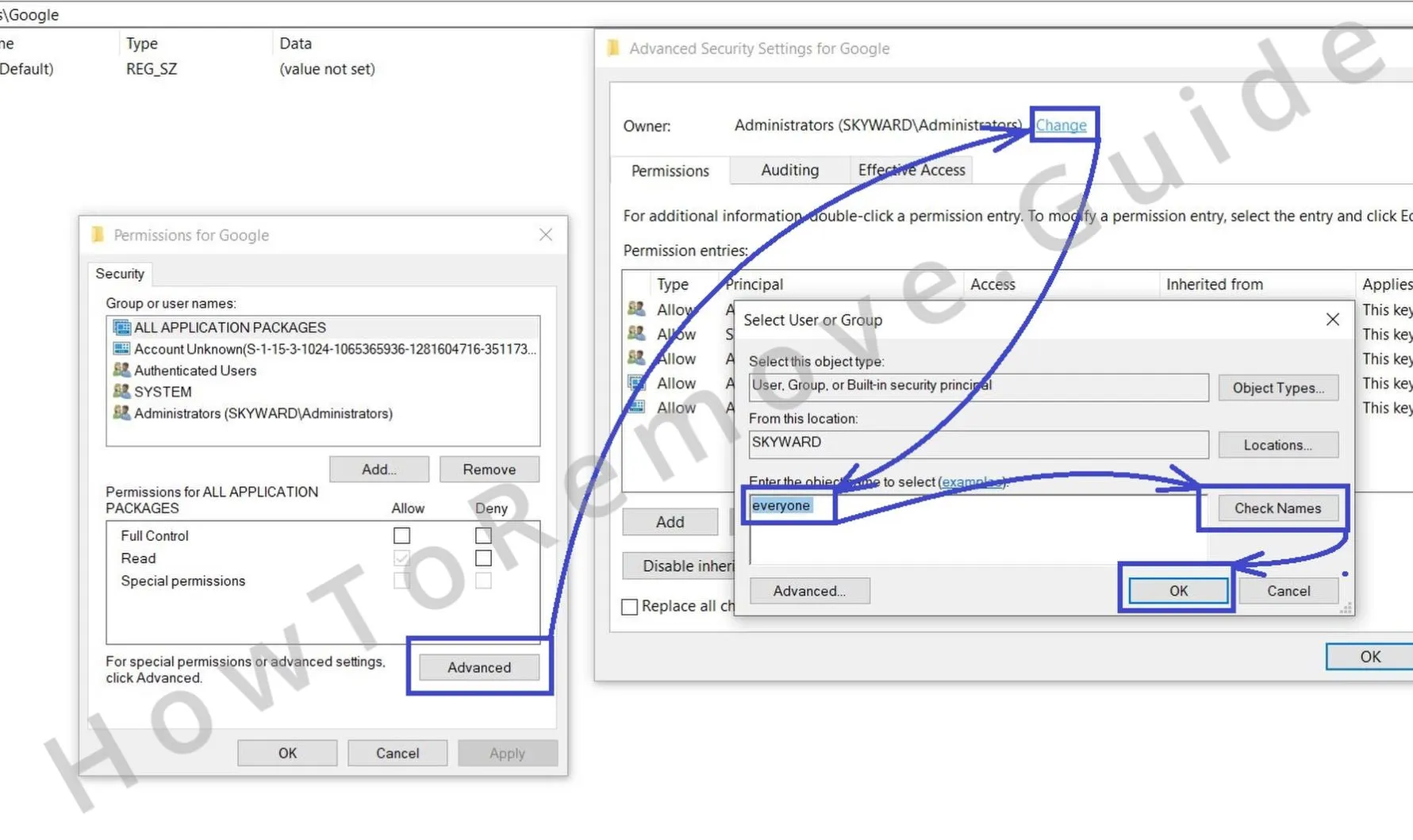 If you are denied access when trying to delete a key, right-click the entry and choose Permissions, then click Advanced.
Under Owner, click Change. Type Everyone, hit Check Names, then press OK.
This change gives you the rights needed to edit or remove that specific registry key. - 2.4
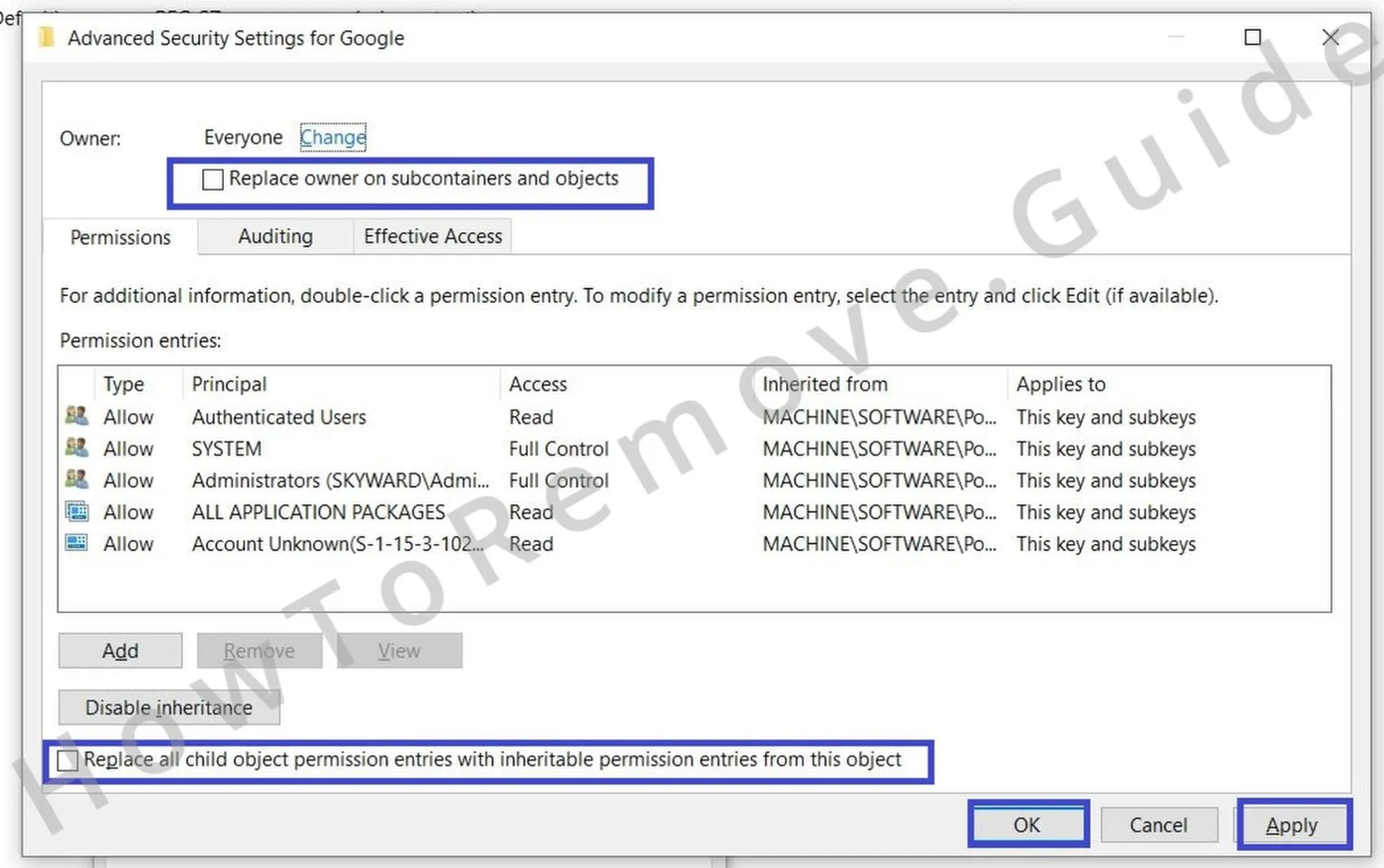 Within the Advanced Security Settings window, check the boxes for:
Replace owner on subcontainers and objects
Replace all child object permission entries with inheritable permission entries from this object
Click Apply, then OK.
After removing the infected registry entry, restart your computer and confirm that the “Managed by your organization” message has disappeared from your browser.
This gives you the access needed to delete the rogue key.
Alternative Tools to Delete Searcherone Policies
You followed every step, and somehow Searcherone is still there? Yeah, that’s not a bug – it’s built like that. It wants you to give up early, miss a detail, or just get lazy. And every time you slip up, it stays. This one’s not fast – it’s a war of patience. Go slow, check everything twice, maybe three times.
3. Other Ways to Get Rid of Searcherone Policies
- 3.1
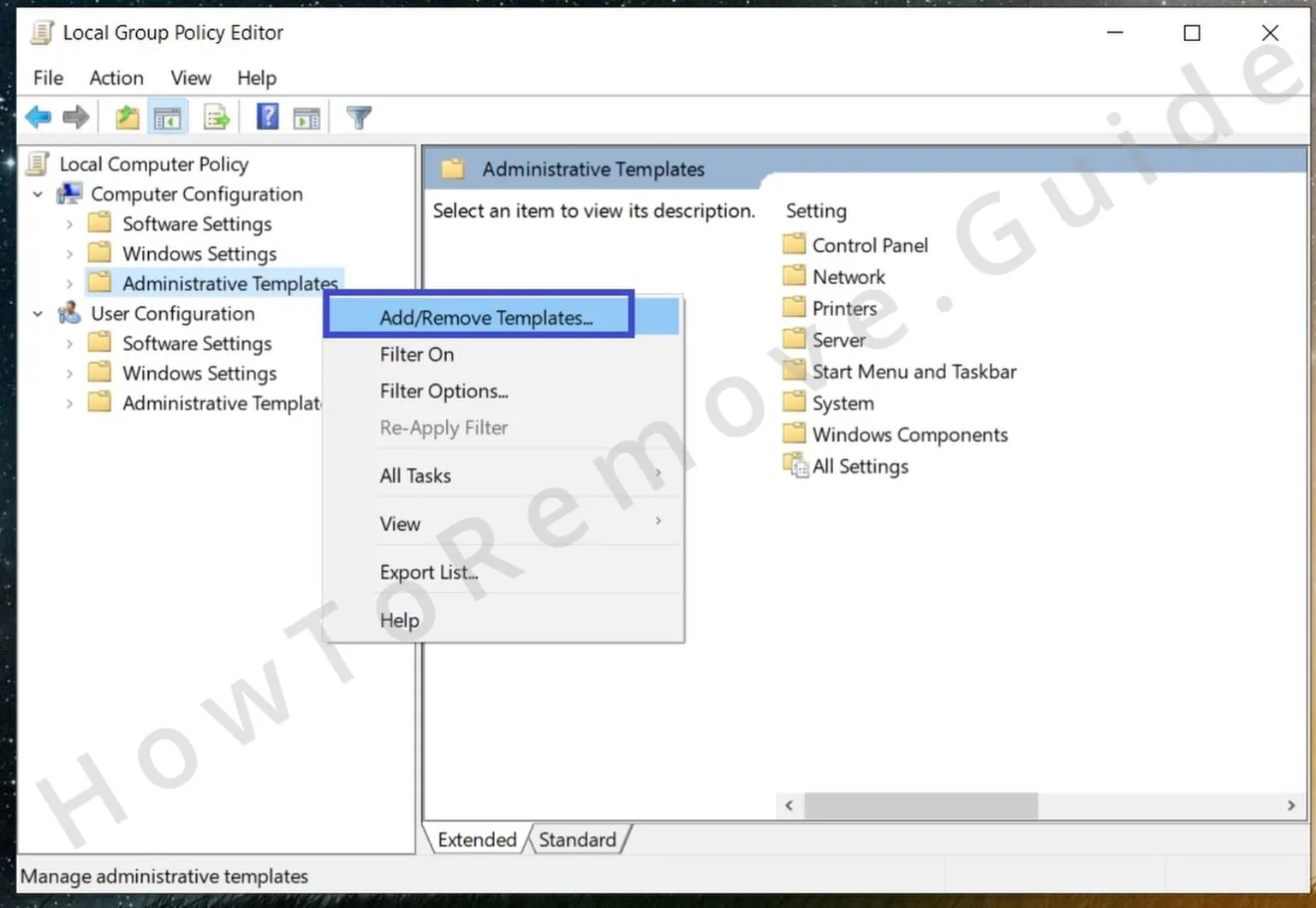 To begin, launch the Group Policy Editor by pressing Win + S, typing Edit Group Policy, and hitting Enter.
In the left-hand navigation panel, expand Administrative Templates—this is where many system-level settings, including those tampered with by Searcherone, are configured. - 3.2
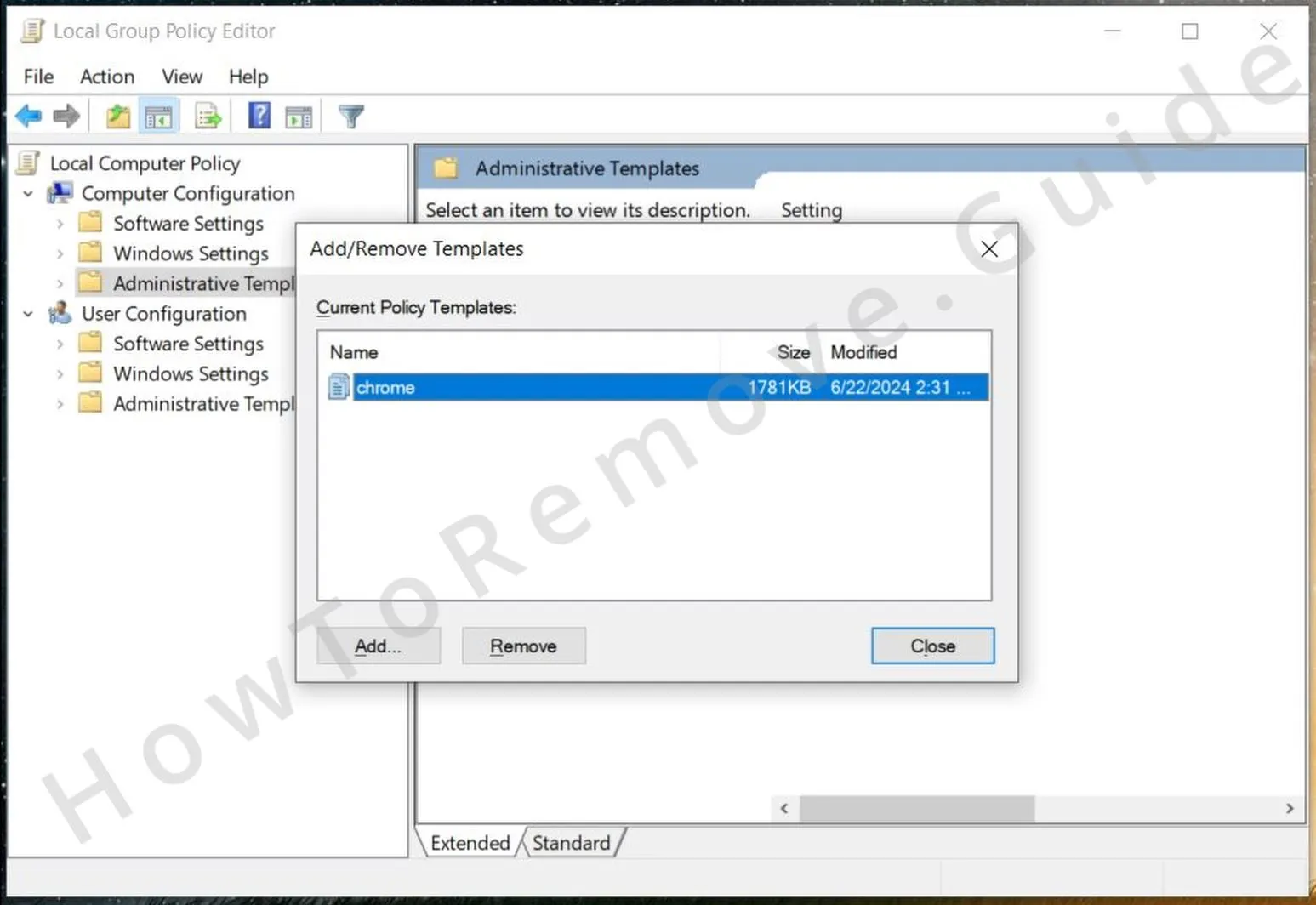 Right-click on Administrative Templates and select Add/Remove Templates from the dropdown menu.
Check for any configuration templates that you don’t recall installing yourself. If you find one, remove it, as it might be helping Searcherone.com enforce unwanted policy rules on your system. - 3.3If you are a Chrome user, you can try downloading a Chrome Policy Remover – a specialized tool for identifying and clearing hidden policies.
Only download this from a known and secure source. After installing, right-click on the application and choose Run as administrator to ensure it scans thoroughly with elevated permissions. - 3.4If your antivirus flags the tool during launch, click More Info, then select Run Anyway – but only if you fully trust the file’s source.
After running the scan, restart your computer. Recheck both the Registry Editor and Group Policy Editor to confirm that no traces of Searcherone remain and policy settings are clean.
Uninstall Searcherone From Chrome, Edge, and Other Browsers
People mess up right here all the time. They think they’re done, relax, and that’s it – game over. Searcherone only needs one shady setting or hidden folder and it’s back like it never left. That’s the trap. You’ve got to go back, double-check, triple-check even. Something looks weird? Fix it. Because if you let up, it wins.
4. How to Remove Searcherone From Your Browser
- 4.1Open your browser again and go to the Extensions or Add-ons menu.
If the malicious or unfamiliar add-ons have returned – or if any new ones look suspicious – immediately click Remove to delete them.
Searcherone may be using sync or hidden background processes to reinstall itself without you noticing. - 4.2
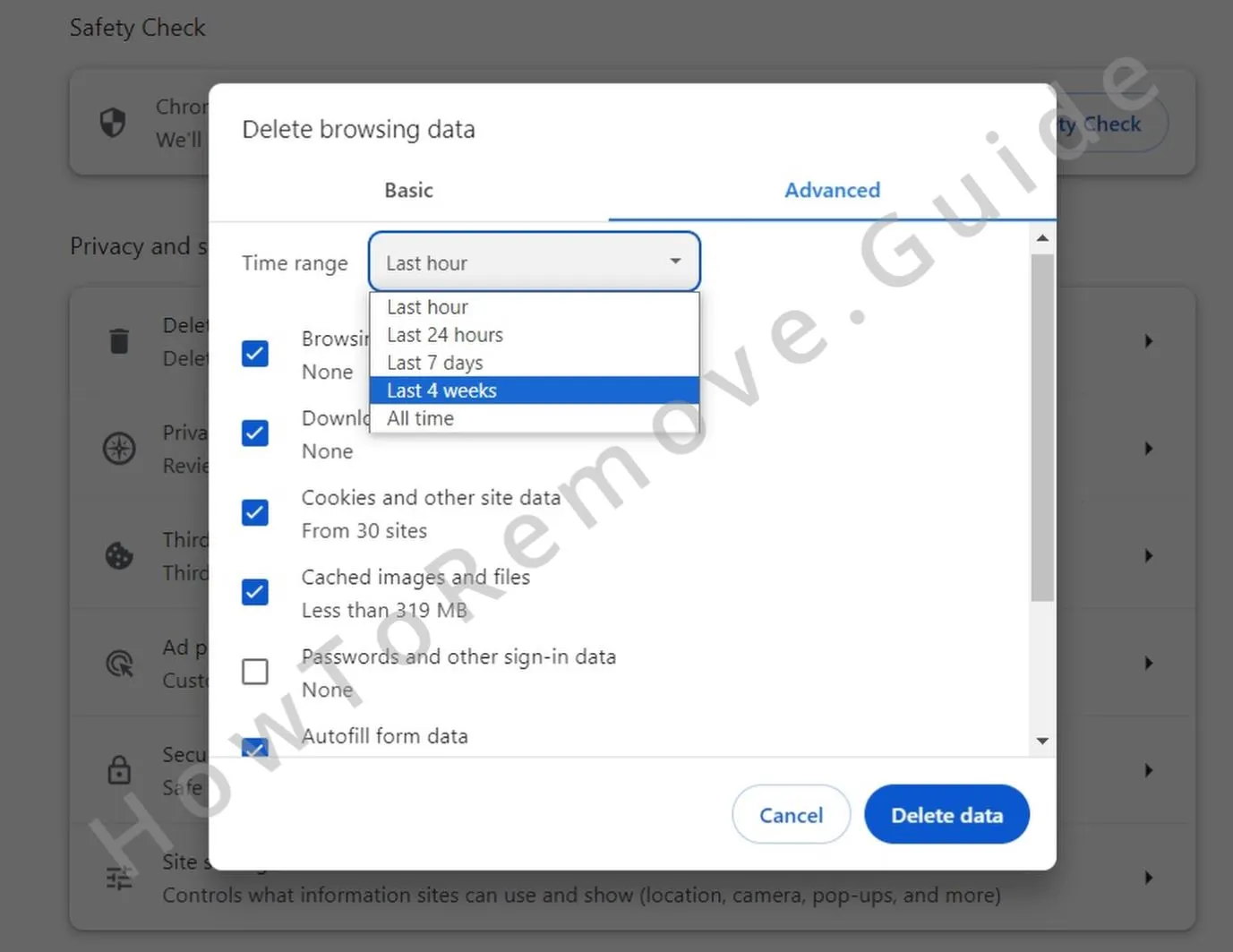 Access the browser’s Clear Browsing Data menu, which is typically found in Privacy and Security settings.
Set the time range to All Time, then select all categories except Saved Passwords.
Press Clear Data to delete cookies, cached files, and other traces that could assist in reactivating Searcherone. - 4.3
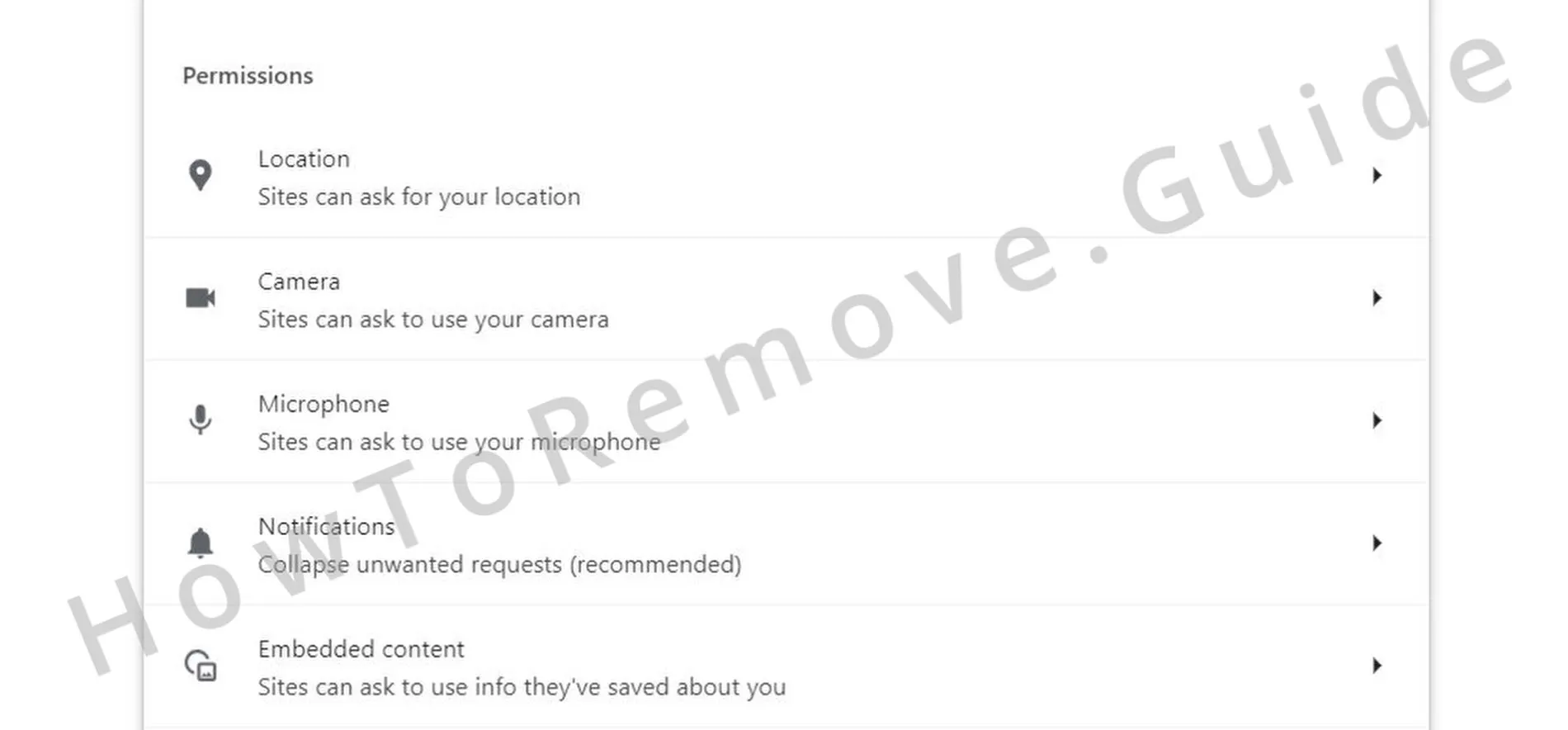 Within the Privacy and Security section, click on Site Settings.
Review each permission type carefully – especially those related to the microphone, camera, and notifications.
Remove access for any site you don’t recognize or explicitly remember approving, as these can be used to serve pop-ups or reintroduce malware behavior. - 4.4
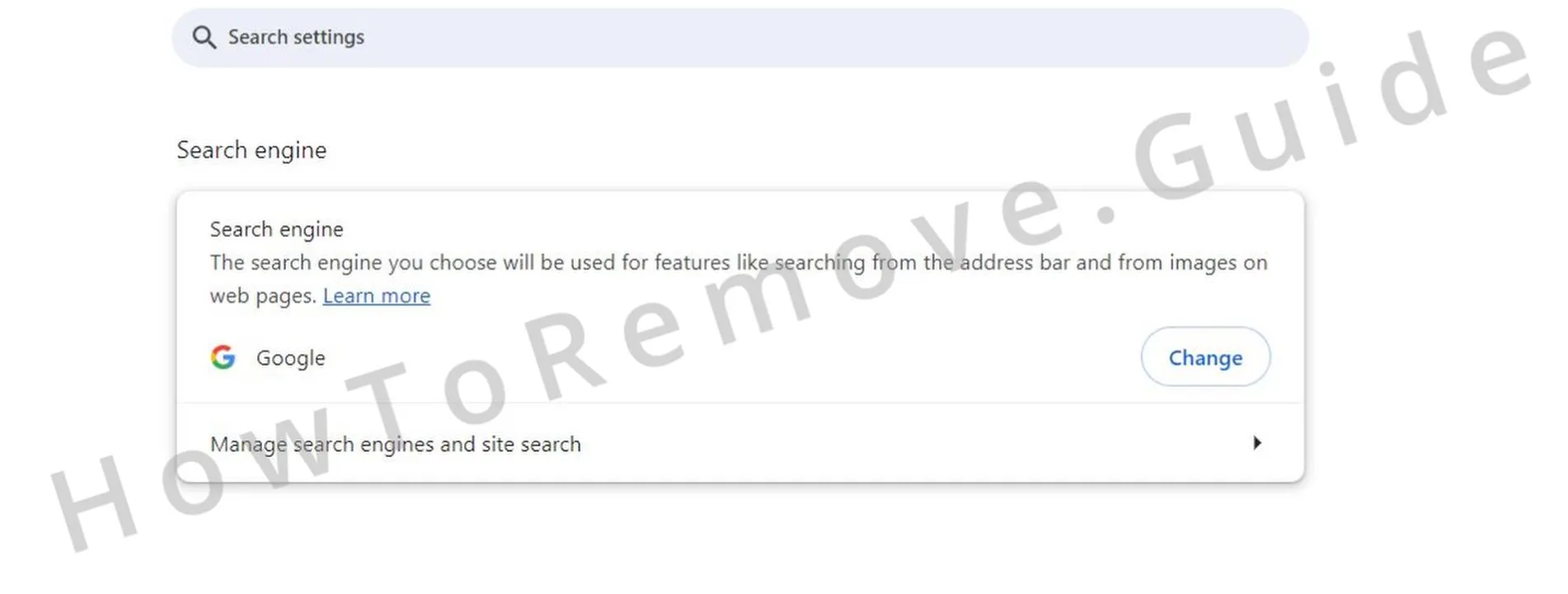 Navigate to Search Engine settings, then open Manage Search Engines.
Delete anything that wasn’t manually added by you or seems questionable.
Finally, set a trustworthy provider like Google, Bing, or DuckDuckGo as your new default engine. - 4.5Go to the On Startup and Appearance settings inside your browser’s menu.
Check if your homepage or new tab page has been hijacked by an unknown site.
If it has, replace it with a familiar and safe address to stop Searcherone from loading at launch.
