

Time out – if Chrome flags an extension, pay attention. Maybe SuperCopy has been sitting on your machine for years, “mostly disabled,” no pop-ups, no redirects, and today Chrome has flagged it as malware. That’s the key. The investigation revealed an archived privacy policy that led to a fake Chrome Web Store clone called “crxfun,” as well as a fake developer email. When documents point to a fake store and the contact appears to be fictitious, assume there are problems.
So what now? Remove SuperCopy immediately. Then change account passwords you used while it was installed. Run antivirus – the check matters. Don’t argue with the dashboard; trust the flag.
Here’s your radar: Chrome calling an extension malware; privacy pages that redirect to “crxfun”; developer details that read like placeholders. Forgotten add-ons are still installed software. If you can’t verify the origin or the policy, you don’t need it. Block. Uninstall. Move on.
We tested that SpyHunter successfully removes SuperCopy* and we recommend using it. It will block SuperCopy from reinstalling itself and it will make sure your device is clean from any malware.
 Try Free For 7 Days*
Buy now15% OFF if you buy straight without trial.
 OFFER
OFFERSuperCopy Removal Tutorial
About removing SuperCopy – this can go one of two ways: quick and painless or long and frustrating. Some people get rid of it in minutes, while others struggle for weeks. The best approach? Start simple. If the easy fixes don’t work, brace yourself for a deep cleanup. SuperCopy, similar to CrossPilot and PDF Editor, won’t leave without a fight.
Quick Steps to Remove SuperCopy
- 1.1Click on the Start Menu, type “Apps & Features” in the search bar, and press Enter. This will bring up a complete list of programs installed on your computer, allowing you to identify any unwanted software. Since malware sometimes restricts uninstallation permissions, ensure you have administrative rights before proceeding. This step is crucial for maintaining full control over the removal process and preventing system restrictions from interfering.
- 1.2To quickly identify potential threats, sort the program list by installation date. Malicious programs often appear as recent installations, making them easier to spot when arranged chronologically. Focus on entries that were added around the same time you first noticed unusual system behavior. This method helps narrow down your search, speeding up the process of identifying and removing malware-related programs.
- 1.3Carefully analyze the list of installed programs, looking for any applications with unfamiliar names, generic icons, or publishers you don’t recognize. Some malware disguises itself with official-sounding names to avoid detection, so trust your instincts if something seems out of place. If a program name appears suspicious, research it online before proceeding with removal. This extra step ensures you don’t overlook hidden threats.
- 1.4If a program appears suspicious, select it and click Uninstall. Follow the on-screen instructions carefully, as some malware attempts to trick users with misleading prompts. If the system requests a restart after uninstallation, comply immediately, as this helps terminate any lingering malware processes. Restarting ensures that no residual components remain active in your system’s background.
- 1.5After uninstalling, manually search for leftover files. Navigate to C:\Program Files and C:\Program Files (x86) and look for any remaining folders related to the removed program. If you find any, delete them manually to ensure no hidden malware components remain. Restart your system once more and check if SuperCopy is still active. If suspicious activity continues, don’t worry – there are additional steps to fully eradicate it. Carefully observe for lingering malware symptoms like pop-ups or unauthorized system changes.
Lastly, restart the PC, use it for a while, and see if you notice any traces of the SuperCopy malware. If the rogue app continues to bother you, try the more advanced steps shown next.
SUMMARY:
Important! Read Before Continuing
SuperCopy is persistent malware that does not go away with basic removal attempts. Some of the following steps involve advanced troubleshooting, requiring caution to avoid system damage. If you are not confident in manually removing malware, using specialized software tools can make the process safer and more efficient. Proceed carefully, as incorrect actions can lead to unintended system issues.
How to Remove the SuperCopy Virus
So, the easy fixes didn’t work? Welcome to manual removal. First up – unhide system files. Then, get admin rights so you can delete locked ones. SuperCopy hides deep, protecting itself at all costs. If you skip these steps, you’re just wasting time. Get it right from the start, or SuperCopy isn’t going anywhere.
1. SuperCopy Removal Preparatory Steps
- 1.1
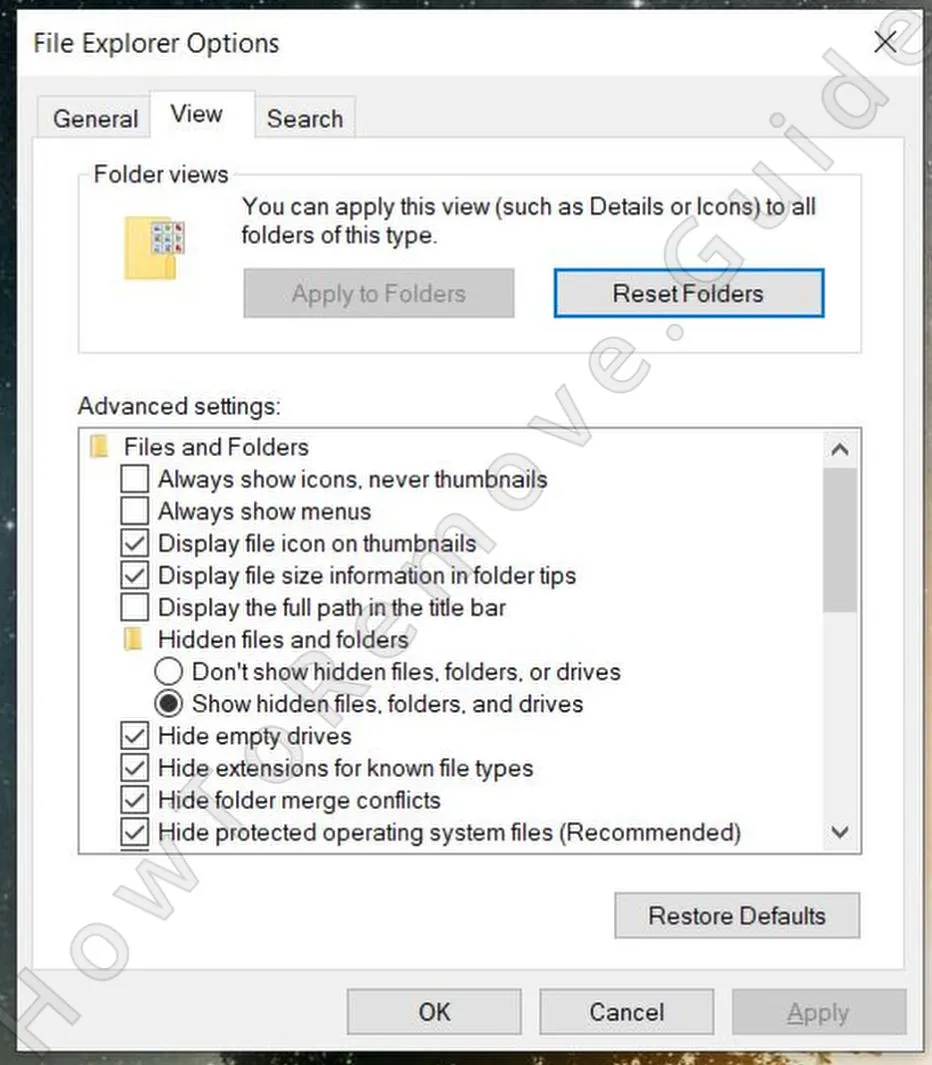 To reveal hidden system files, open File Explorer, click on the View tab, and select Options (labeled as Folder Options in older Windows versions). In the newly opened window, switch to the View tab again and check “Show hidden files, folders, and drives.” Click Apply and then OK to confirm the changes. This setting is essential for exposing malware files that are otherwise hidden from view, ensuring they can be located and removed.
 - 1.2Some malware files are locked, preventing manual deletion. To bypass these restrictions, install LockHunter, a free utility designed to identify and forcibly delete locked files. Download and install it in advance, as it will be needed for later steps. Many users avoid third-party tools, but LockHunter provides valuable insights by showing which processes are preventing deletion, making malware removal much easier.
I know that some users prefer not to install any third-party apps when troubleshooting, but in this case, LockHunter is non-negotiable. Besides, as I mentioned, it’s totally free.
Delete the SuperCopy Virus Files
SuperCopy isn’t just sitting there, waiting to be deleted. It spreads its files across critical system locations, ensuring it sticks around. If you don’t track them all down and remove them, the adware will just pop back up like nothing happened. Be thorough. Miss one, and you’re right back where you started.
2. How to Delete SuperCopy Files
- 2.1Open File Explorer and navigate to the following directories:
– C:\Users\YourUsername\AppData\Roaming
– C:\ProgramData\Microsoft\Windows\Start Menu\Programs\Startup
– C:\Users\YourUsername\AppData\Roaming\Microsoft\Windows\Start Menu\Programs\Startup
Examine the contents of these folders closely. Look for files with randomized names, strange icons, or anything unfamiliar. If you find anything suspicious, delete it immediately to prevent the malware from executing upon startup. Using File Explorer’s search bar can help locate specific files more quickly. - 2.2
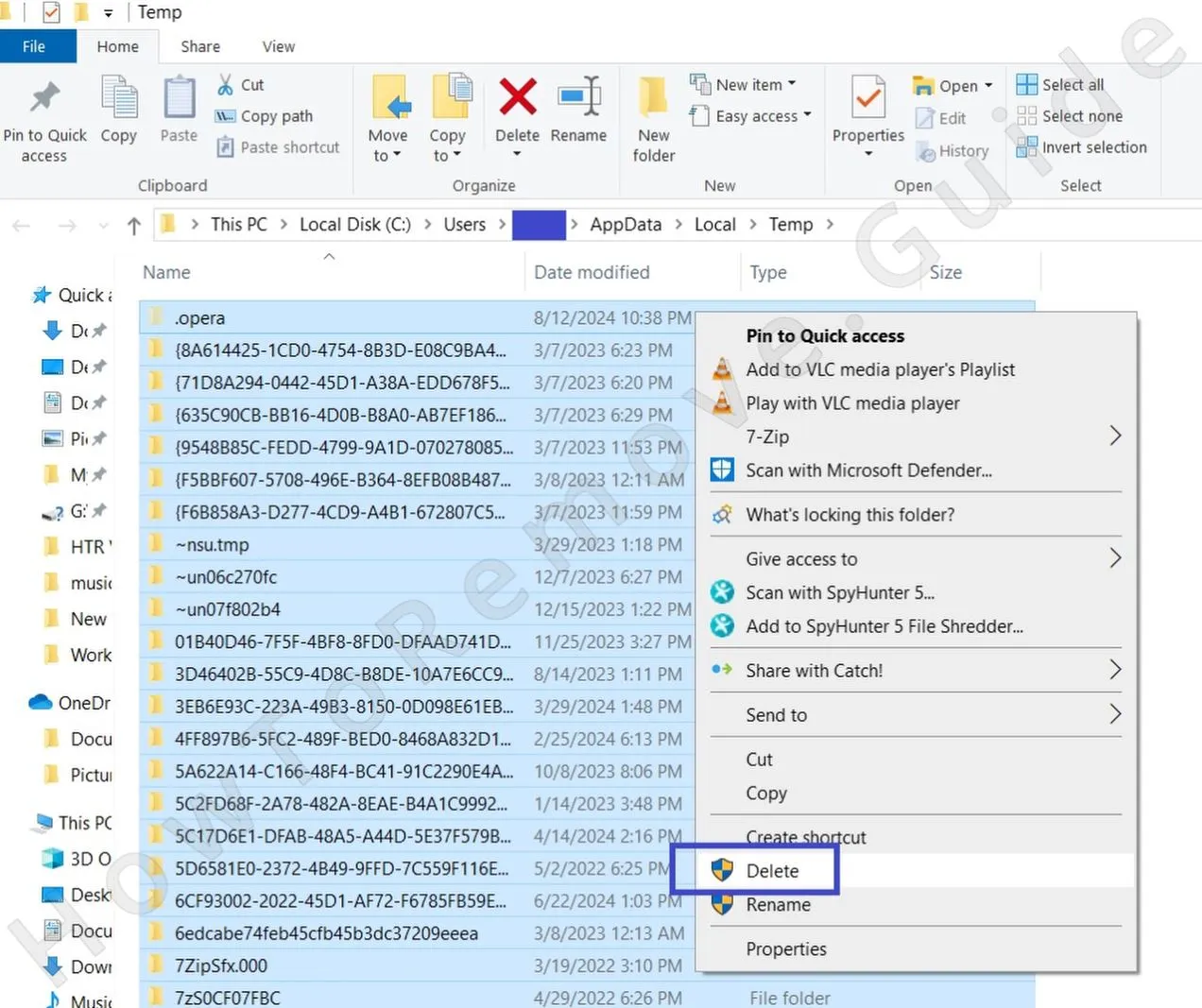 Malware often hides in temporary system files, so you need to clear the Temp folder:
– Open C:\Users\YourUsername\AppData\Local\Temp
– Press Ctrl + A to highlight all files
– Press Delete to remove them
Deleting temporary files is completely safe, as they are meant to be automatically discarded. Besides eliminating potential malware remnants, clearing this folder can also improve system performance by freeing up storage space. - 2.3Now, browse to C:\Program Files and C:\Program Files (x86) to check for any remaining suspicious program folders. While most entries in these directories are legitimate, malware often installs itself here under deceptive names. If something looks unusual, research the file online before deleting it to avoid removing essential system files.
- 2.4If a file resists deletion, right-click it and select “What’s locking it?” from the context menu. A window will appear showing the processes currently using the file. Click Delete within LockHunter to remove it forcefully. This tool ensures that locked malware files are completely eliminated, preventing them from regenerating.
Remove SuperCopy Malware Tasks From the Task Scheduler
Most people forget to check Task Scheduler when removing malware, and SuperCopy takes full advantage of that. It creates scheduled tasks that quietly bring it back, even after you think it’s gone. If you don’t review and delete these tasks, the adware will return – no warning, no input needed. Just like that.
3. How to Remove SuperCopy Entries From the Task Scheduler
- 3.1
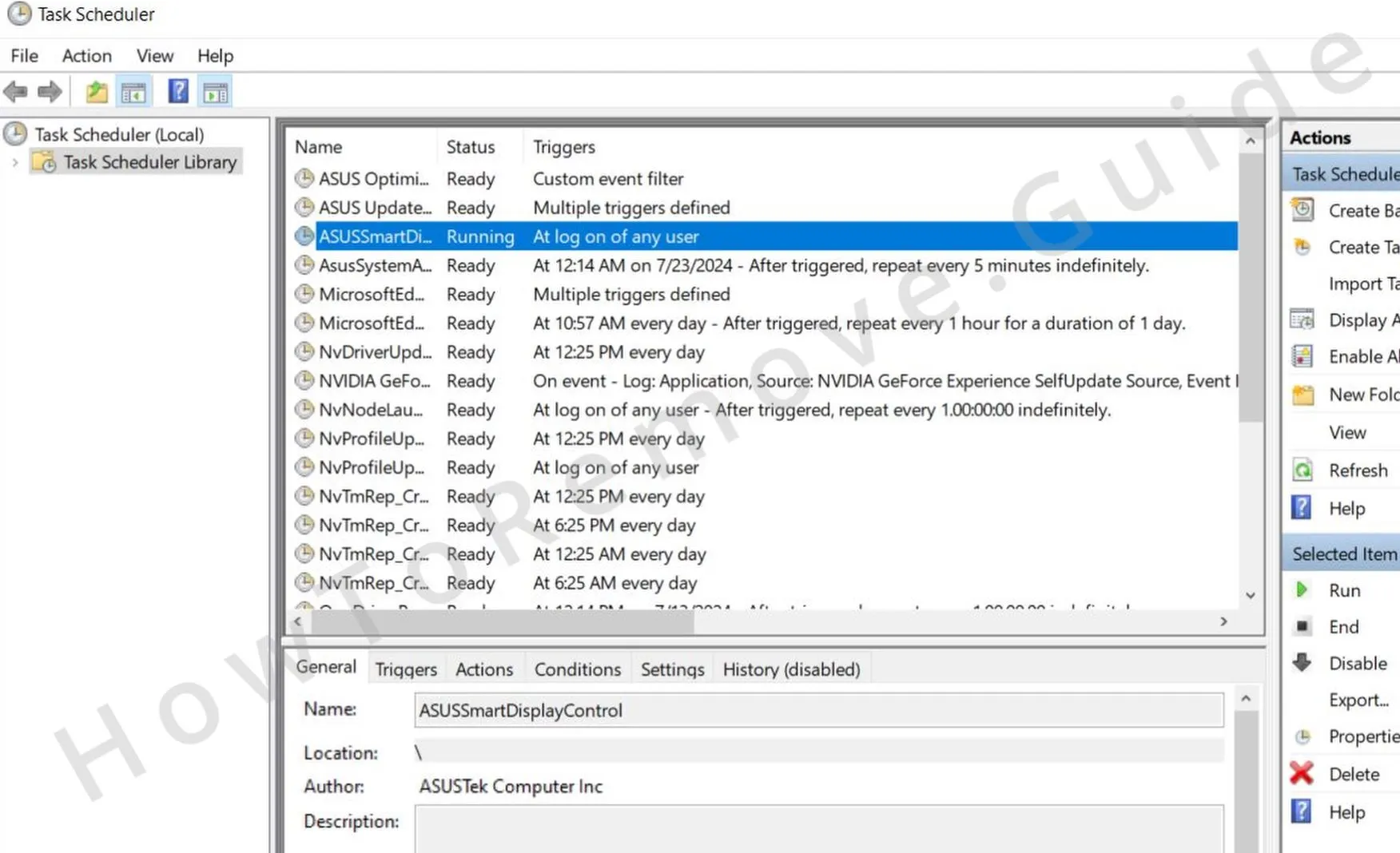 Press Start, type Task Scheduler, and open it. Navigate to Task Scheduler Library, which displays all scheduled tasks. Malware often creates hidden scheduled tasks that allow it to reappear even after removal. Look for anything that was added around the time you noticed SuperCopy on your system.
 - 3.2Click on each task and inspect the Actions tab. If any task runs a suspicious .exe file or script, take note of the file’s location. Right-click the task and choose Delete to remove it. Be particularly cautious of tasks set to run at startup or at irregular intervals, as these may be linked to malware.
- 3.3Go to the file location noted earlier and delete the corresponding executable file. If it is locked or refuses to delete, use LockHunter to force its removal. This step ensures that SuperCopy cannot restart itself or re-establish control over your system.
Get Rid of SuperCopy Through the System Registry
SuperCopy doesn’t just mess with files – it digs deep into the Windows Registry to make sure it stays put. If you don’t delete every trace, it’ll reinstall itself. But be careful – one wrong move in the registry, and you could break your system. If you’re unsure, get help. Don’t let SuperCopy lock itself in for good.
4. How to Remove SuperCopy Items From the Registry
- 4.1To access the Registry Editor, press Start, type regedit, and select Run as Administrator from the search results. Running it with administrative privileges ensures that you can make necessary changes without restrictions. The Windows Registry controls many aspects of system behavior, so proceed carefully to avoid unintentional damage.
- 4.2Press Ctrl + F, type SuperCopy, and click Find Next to search for any malware-related entries. If you locate an entry linked to SuperCopy, right-click it and choose Delete. Repeat this process until no more related entries are found. Be cautious while deleting—removing unrelated registry keys could negatively impact system stability.
- 4.3
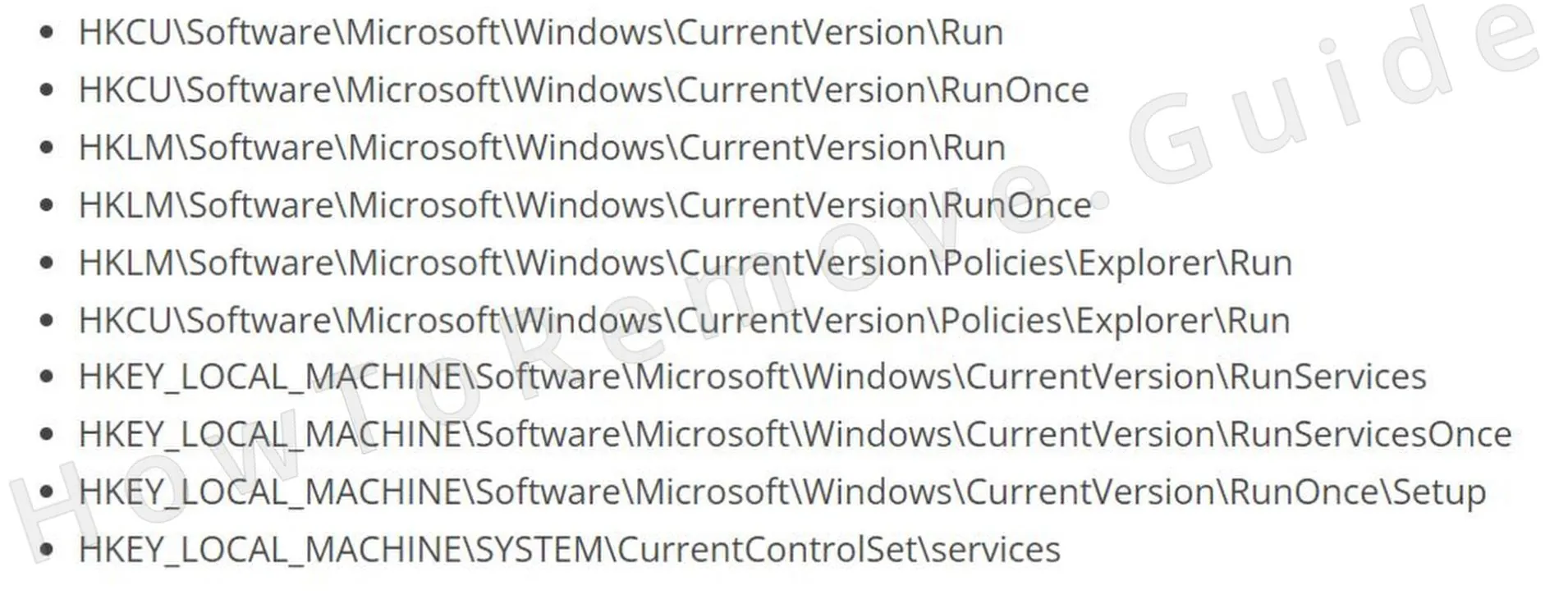 Manually inspect the following registry locations for any SuperCopy-related entries.
These locations often contain startup configurations and background processes that malware manipulates. If you find any entries referencing SuperCopy, remove them carefully to prevent the malware from launching automatically. - 4.4If an SuperCopy-related folder appears in the registry, delete only the values in the right panel – do not delete entire registry keys from the left panel unless you are absolutely sure they are malicious. Deleting critical system keys could cause errors or instability. This step ensures a precise and safe removal of all malware-related entries.
Remove SuperCopy Browser Policies
See “Managed by your organization” in your browser settings? That’s SuperCopy taking control. It locks down your homepage, search engine, and settings, stopping you from making changes. The only fix? Manually remove the browser policies it set up. Until you do, SuperCopy is in charge – not you. Time to take back control.
5. How to Remove Rogue SuperCopy Policies
- 5.1
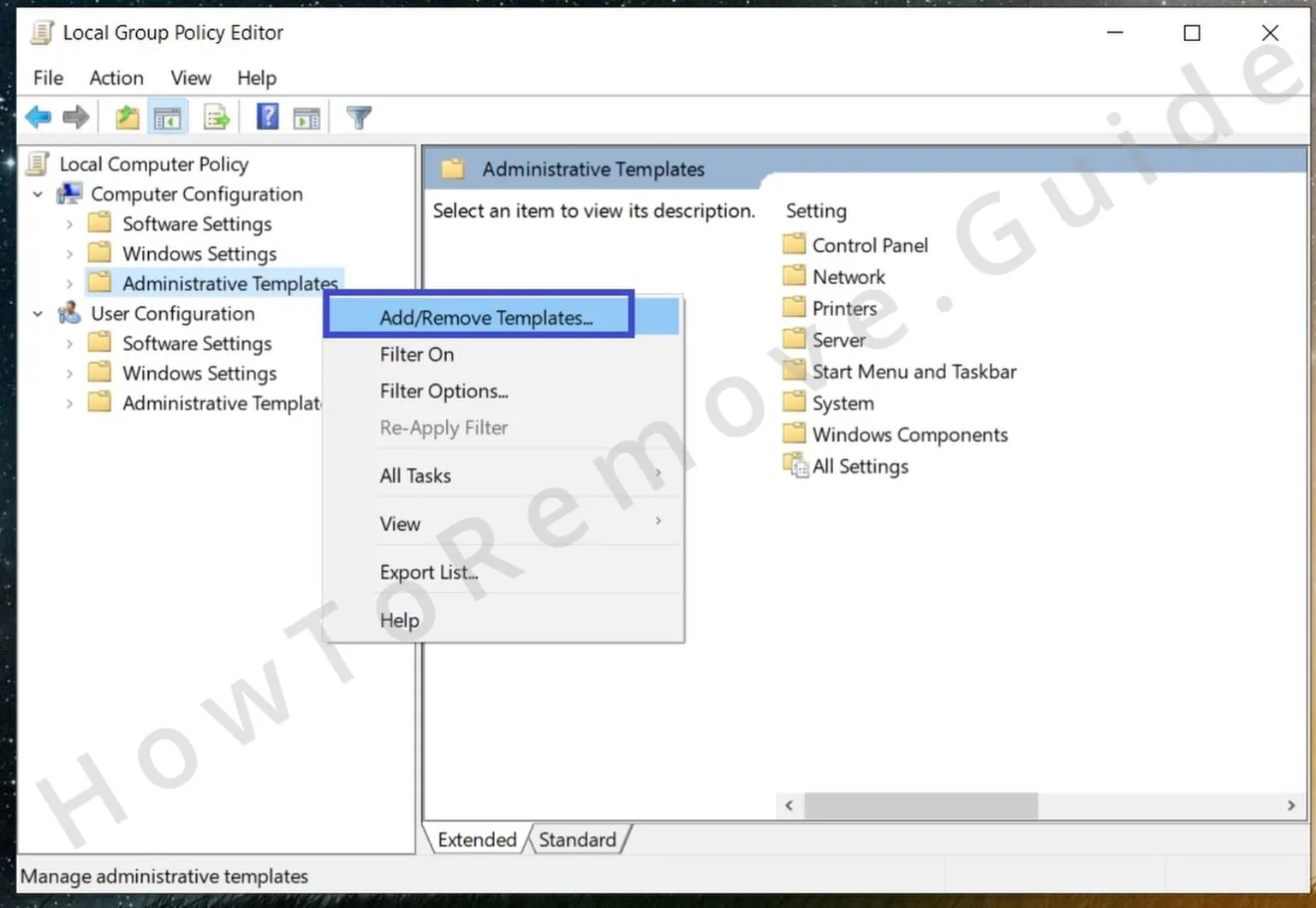 Press Start, type Edit Group Policy, and open it. Navigate to:
– Computer Configuration > Administrative Templates
Malware often modifies Group Policy settings to prevent users from changing their homepage, search engine, or privacy settings. Removing these policies will restore your ability to control your browser’s behavior.
- 5.2
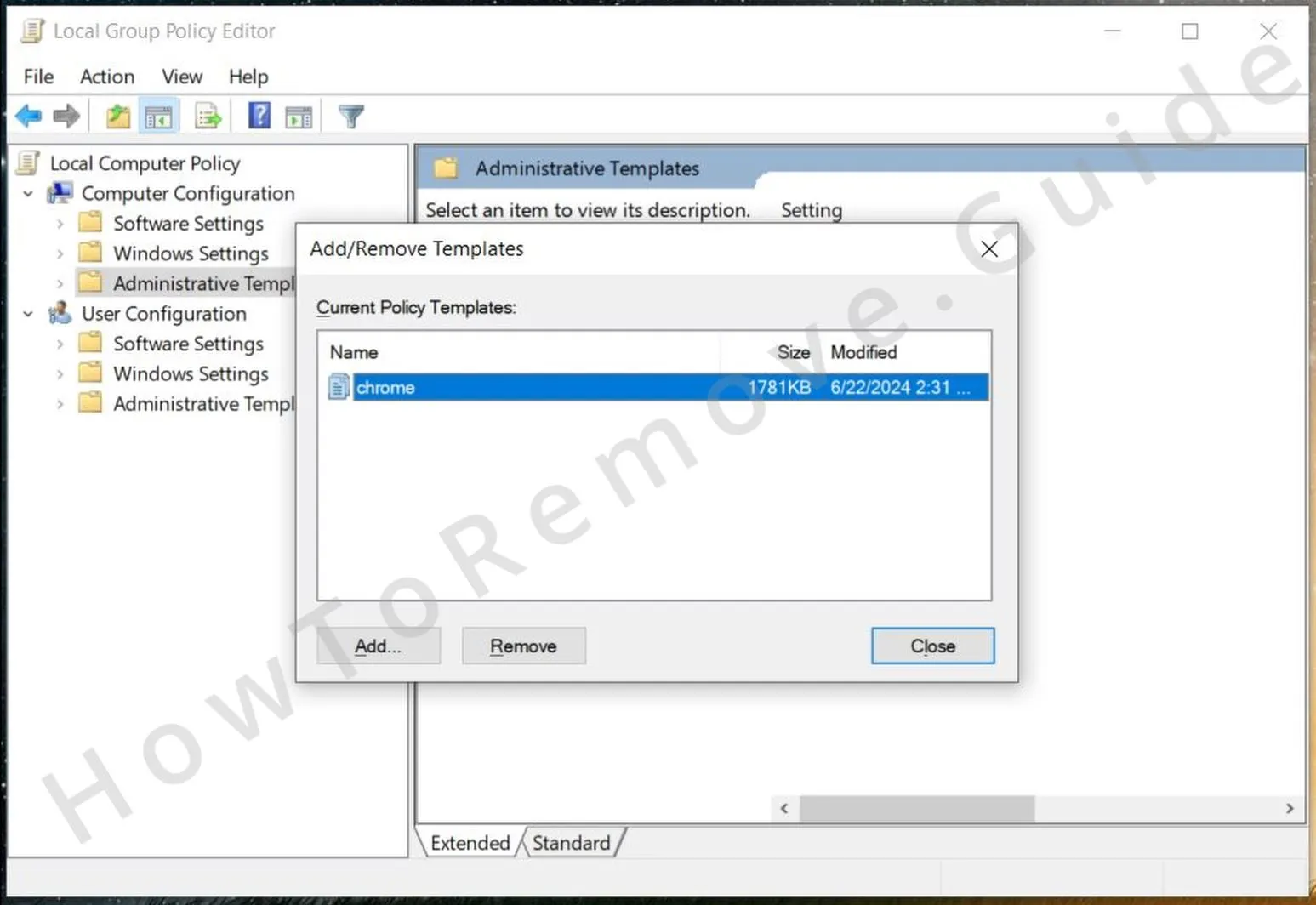 Right-click Administrative Templates, select Add/Remove, and review the listed policies. If you notice any unknown or suspicious policies, remove them. Ideally, this list should only contain policies that you or your organization intentionally added. Any unexpected entries could indicate malware tampering.
 - 5.3For Chrome users, download the Chrome Policy Remover tool and run it with Administrator privileges. This tool resets Chrome’s policies and removes any unauthorized changes made by malware. It’s a quick and effective way to restore browser settings to their original state.
- 5.4If Windows displays a security warning when attempting to run the Policy Remover tool, click More Info > Run Anyway to proceed. The tool is safe and specifically designed to help remove stubborn browser policies that malware imposes. Ignoring this step could allow SuperCopy to continue controlling browser settings.
Uninstall SuperCopy From Your Browser
Deleting SuperCopy’s policies isn’t enough – it’s already been messing with your browser settings. If you don’t reset everything, it still has influence. Go through every option, clear bad permissions, and undo the damage. If you skip this step, SuperCopy might just slip back in. Finish the job properly, or expect a comeback.
6. How to Remove SuperCopy From Your Browser
- 6.1Malware often installs browser extensions to persist even after being removed from the system. Open your browser’s Extensions page and carefully examine the installed add-ons. Remove any unfamiliar, suspicious, or unverified extensions, especially those with no reviews or low ratings. This ensures that no hidden browser-based malware remains.
- 6.2
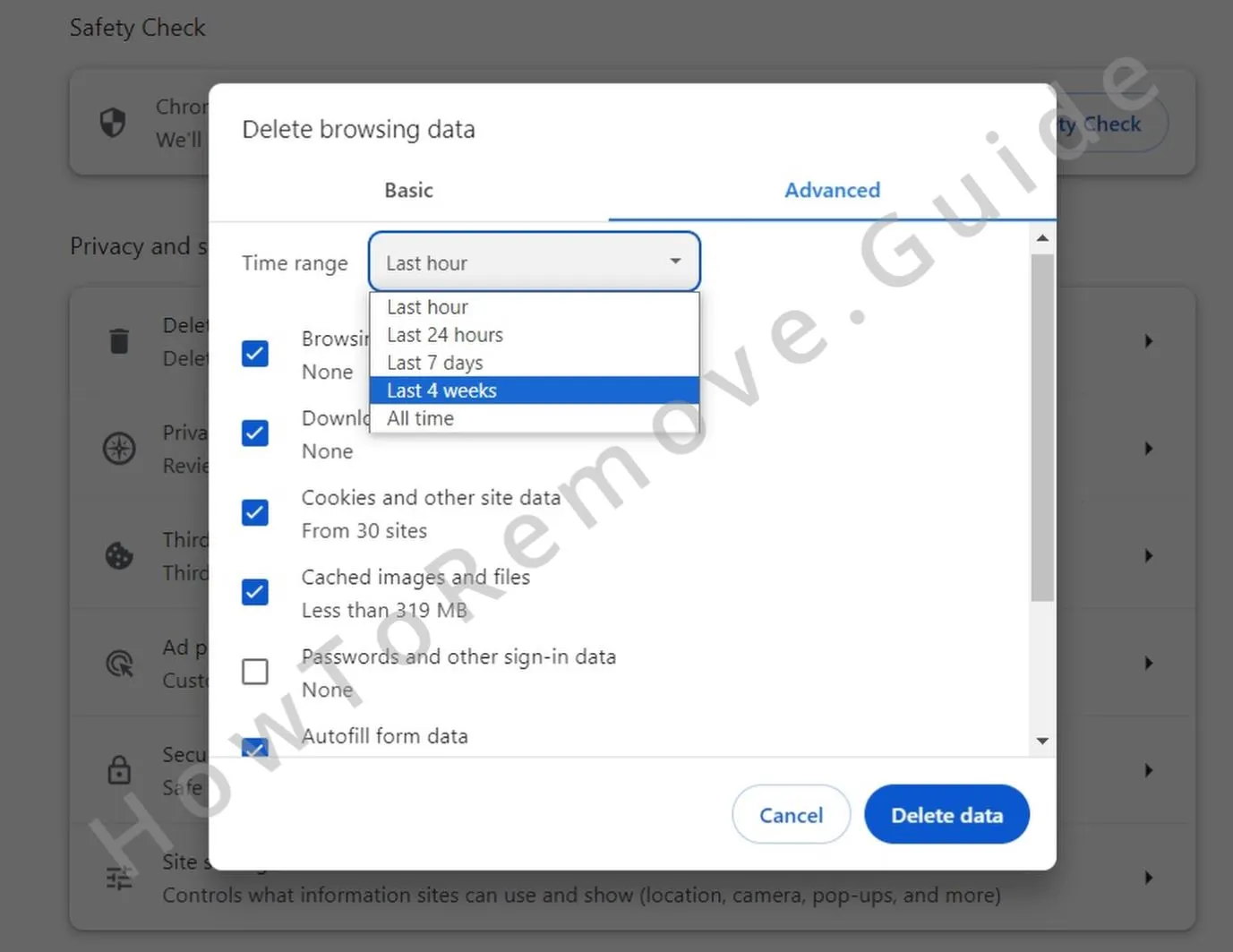 Clear your browser’s cached data to remove any stored malicious scripts:
– Navigate to your browser’s Privacy and Security settings.
– Select Clear Browsing Data and choose All Time as the time range.
– Ensure that Cookies and Cached Files are selected, but leave Saved Passwords unchecked to avoid losing login credentials.
– Click Clear Data to complete the process.
This step helps eliminate any scripts that could reload malware settings upon browser startup. - 6.3
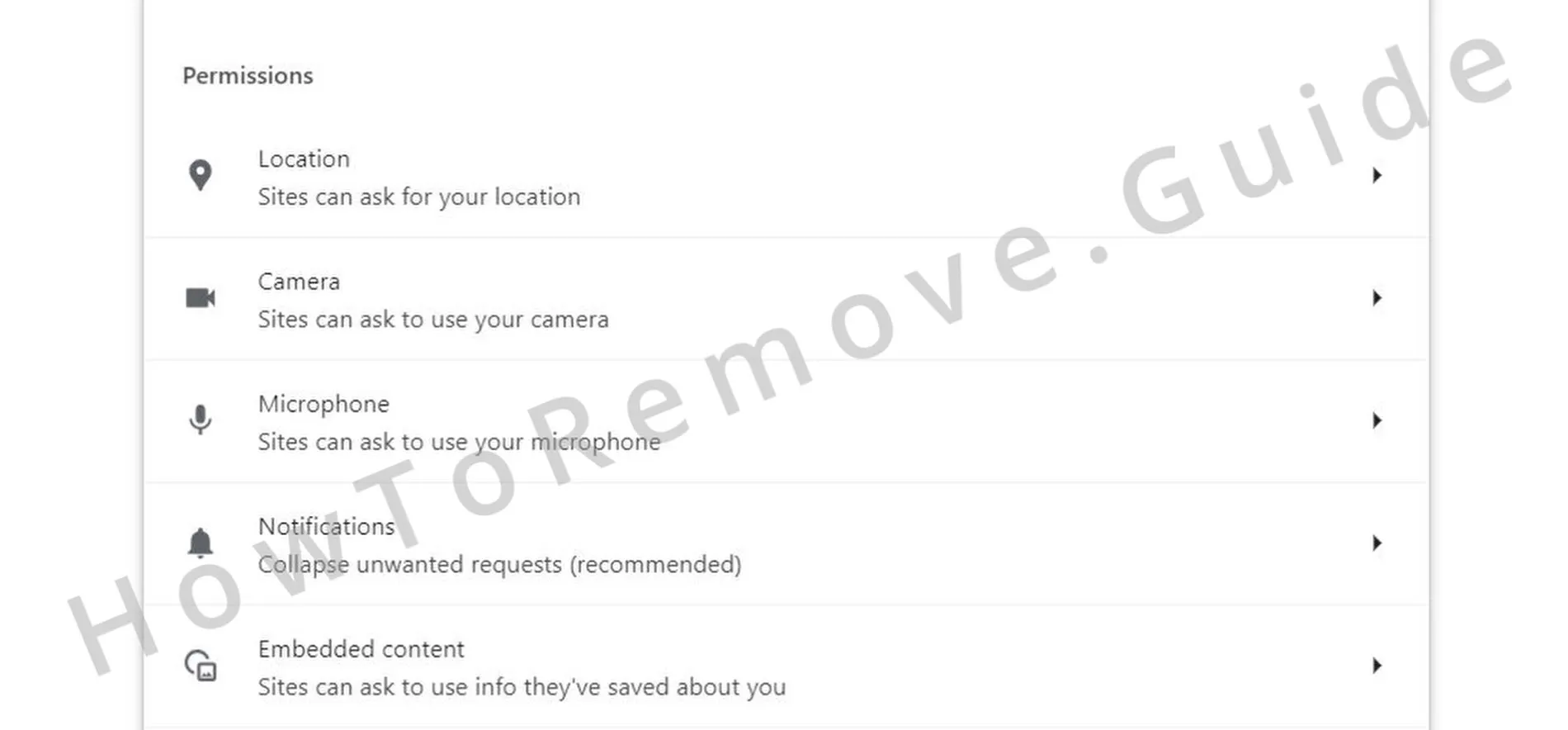 Malware sometimes modifies Site Permissions to give malicious websites extended control over your browser. Check your browser’s Site Settings and revoke access for any untrusted or unknown sites. Pay special attention to permissions for notifications, microphone, camera, and clipboard access. Removing unnecessary permissions prevents websites from manipulating your browsing experience.
 - 6.4
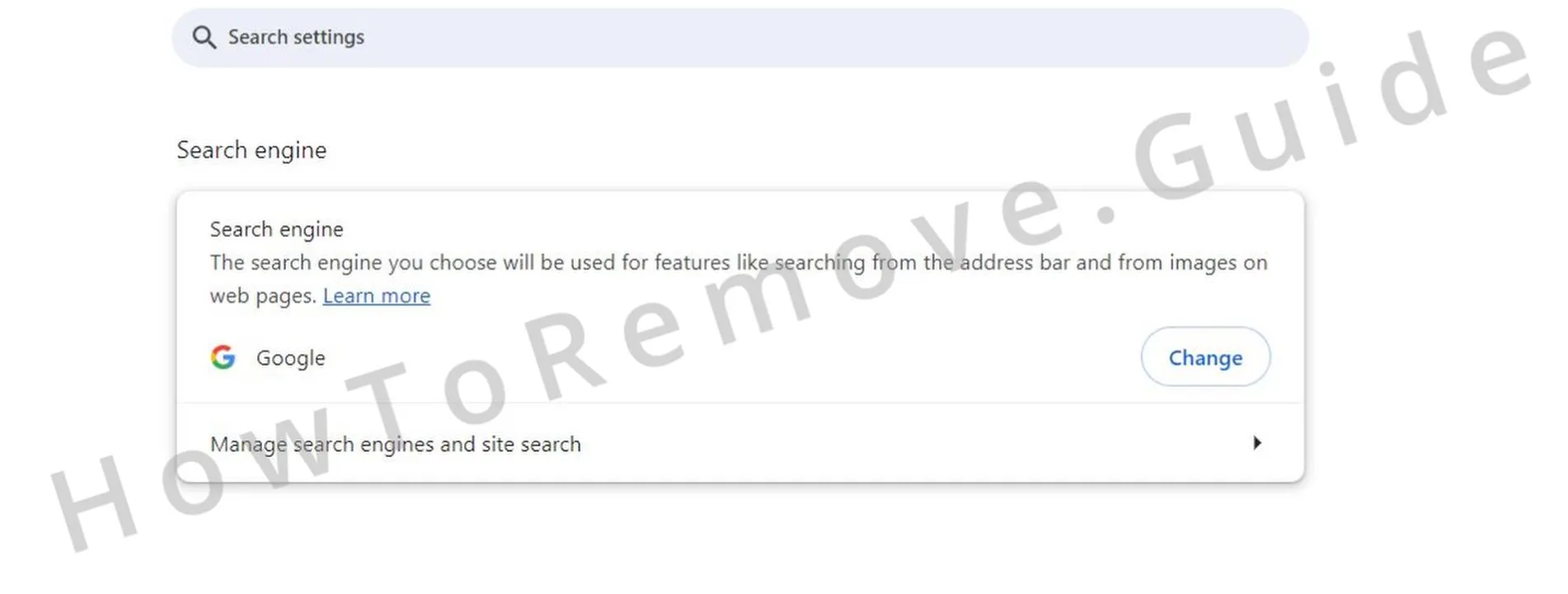 Go to your browser’s Search Engine Settings and ensure that a trusted search provider is set as default. If you see unknown search engines listed, remove them immediately. Malware often replaces search engines with ones that redirect queries through ad-infested or malicious sites. This step prevents search hijacking and restores safe browsing.
 - 6.5Check your browser’s On Startup and Appearance settings. If any unfamiliar URLs are set to open automatically when you launch the browser, remove them. Malware frequently alters these settings to force users onto unwanted pages that generate revenue for attackers or distribute more malware. Ensuring a clean startup page prevents recurring infections.
Once all these steps are completed, restart your computer and monitor your system for any signs of lingering malware activity. Look for:
- Unexpected pop-ups or ads appearing in your browser.
- Slow system performance or unresponsive applications.
- Changes in browser settings that revert after being corrected.
- Suspicious network activity, such as unusual data usage.
If any of these symptoms persist, additional security measures may be necessary, such as scanning with an advanced malware removal tool or restoring your system to a previous clean state.
