

If your computer has been acting weird lately – think sluggish apps, random pop-ups, maybe even processes you don’t recognize, and then you’ve spotted the name UpdateRetreiver.exe or something similar on some process or an unknown app, then you likely have a Trojan on your PC.
From what I’ve seen on multiple security forums and from my own research, UpdateRetreiver.exe is a Trojan Horse infection disguised as something that initially looks harmless. These types of threats usually piggyback on free apps, game mods, or bundled installers and sneak into your system without raising suspicion.
But once has firmly entrenched itself within your system, the trouble starts: the Trojan can quietly drain resources for cryptomining, plant new malware, or scrape sensitive data from your files and browsers. Even worse, it buries itself deeper by adding Registry entries, scattering helper files, and setting tasks that make its removal that much more difficult.
Not to worry, though. The guide I’ve prepared for you below will show you exactly how to delete this malware. And for an even quicker and safer route, you can use SpyHunter 5, which will take care of everything in just a couple of clicks.
We tested that SpyHunter successfully removes UpdateRetreiver.exe* and we recommend using it. It will block UpdateRetreiver.exe from reinstalling itself and it will make sure your device is clean from any malware.
 Try Free For 7 Days*
Buy now15% OFF if you buy straight without trial.
 OFFER
OFFERTrojan UpdateRetreiver.exe Removal Guide
Start with the simplest corrective action to set a reliable baseline. Use Windows’ standard uninstall path to try removing UpdateRetreiver.exe before heavier fixes. This route is quick, low-risk, and often strips obvious components. Even if traces remain, it cuts noise and makes any later investigation more direct.
Quick steps to remove the threat
- 1.1Begin with supported controls. Open the Start menu, launch Settings, and get ready to manage installed apps, including UpdateRetreiver.exe. Using Settings records changes properly and prevents messy, partial deletions.
- 1.2Move into discovery. In Settings, choose Apps to list installed programs. On busy or slower systems, allow a moment for the list to populate.
- 1.3Speed recognition with time context. Sort by Installation date so new entries appear first. Aligning symptom onset with install times highlights likely culprits.
- 1.4Evaluate what you don’t recognize. Select a suspect entry, click Uninstall, and confirm prompts. If User Account Control appears, approve it so services and scheduled items deregister cleanly.
- 1.5Confirm there are no leftovers. Open File Explorer and browse to C:\Users\YourUsername\AppData\Local\Programs. Look for folders matching what you removed or created near the problem’s start.
- 1.6If remnants remain, right-click the folder, choose Delete, empty the Recycle Bin, and reboot to release file locks and refresh startup state.
If symptoms persist in the browser or at startup, continue with the thorough cleanup workflow below.
SUMMARY:
| Name | UpdateRetreiver.exe |
| Type | Trojan |
| Detection Tool |
Some threats reinstall themselves if you don’t delete their core files. We recommend downloading SpyHunter to remove harmful programs for you. This may save you hours and ensure you don’t harm your system by deleting the wrong files. |
Thorough UpdateRetreiver.exe Cleanup Steps
Some components keep running after you remove the main program and reveal themselves by locking files or restoring entries. That behavior helps you trace UpdateRetreiver.exe across persistence points methodically. Work in order, record any paths you see, and avoid deleting items you cannot confirm.
1. Preparing for the UpdateRetreiver.exe Removal
- 1.1
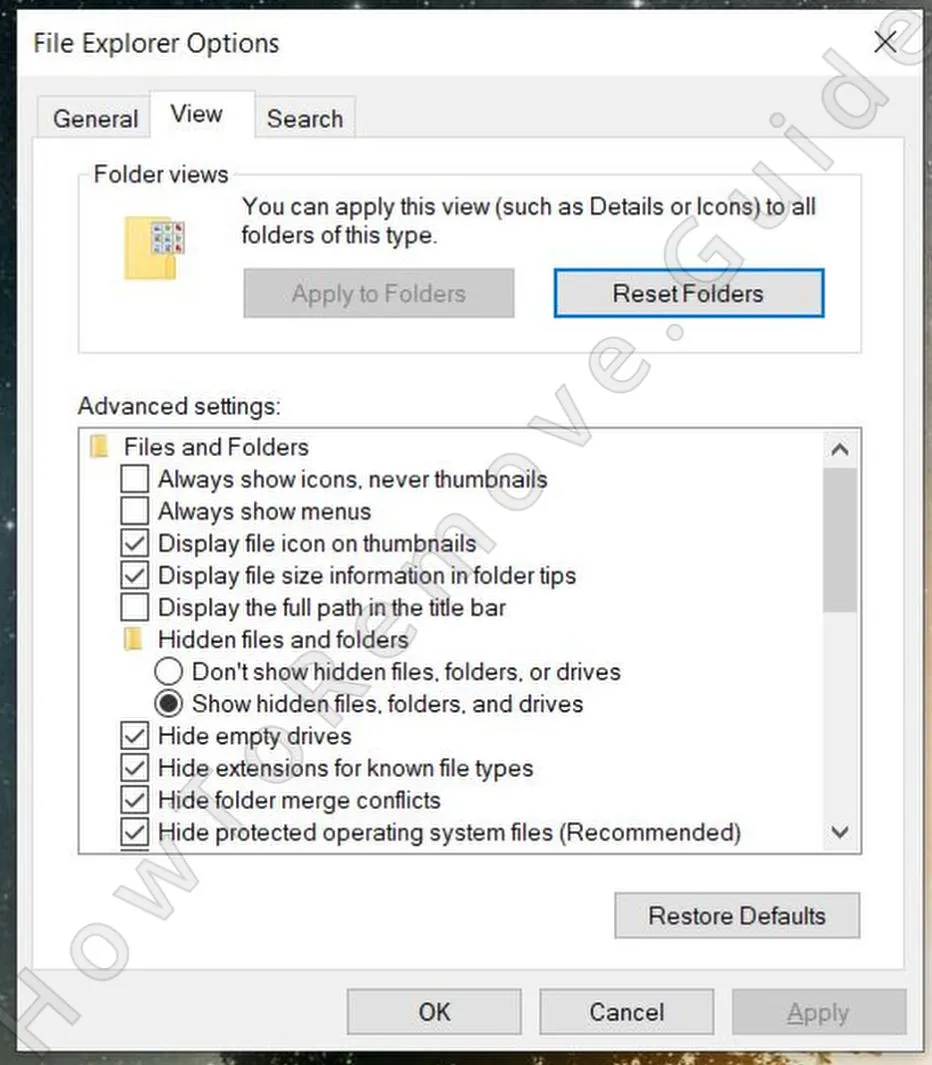 Visibility first, action second. Open the Start menu, search Folder Options, switch to the View tab, enable Show hidden files, folders, and drives, and click Apply so any concealed data related to UpdateRetreiver.exe is shown in AppData and other user areas.
 - 1.2Stubborn files are expected, so equip yourself now. Download and install LockHunter, a utility that identifies processes locking a file and can remove blocked items safely. Keep it available for later steps that involve active or protected executables.
We get it if you prefer a strictly hands-on approach and avoid extra tools. In this case, this small utility helps remove locked files that standard methods can’t.
LockHunter is free, ad-free, and requires no registration. Installation typically takes under two minutes.
Stop Suspicious UpdateRetreiver.exe Processes in Task Manager
Active processes can block deletions or recreate files after you sign in. Addressing what runs in memory prevents rollbacks. Move carefully, verify publishers where possible, and act on evidence to avoid closing critical Windows components.
2. End suspicious UpdateRetreiver.exe processes in Task Manager
- 2.1Start by asking what could belong to UpdateRetreiver.exe. Press Ctrl+Shift+Esc to open Task Manager and inspect both apps and background services with their resource usage.
- 2.2If the view is condensed, click More details. The full interface adds Processes, Performance, Startup apps, and Details for quick pivots between summaries and per-process specifics.
- 2.3
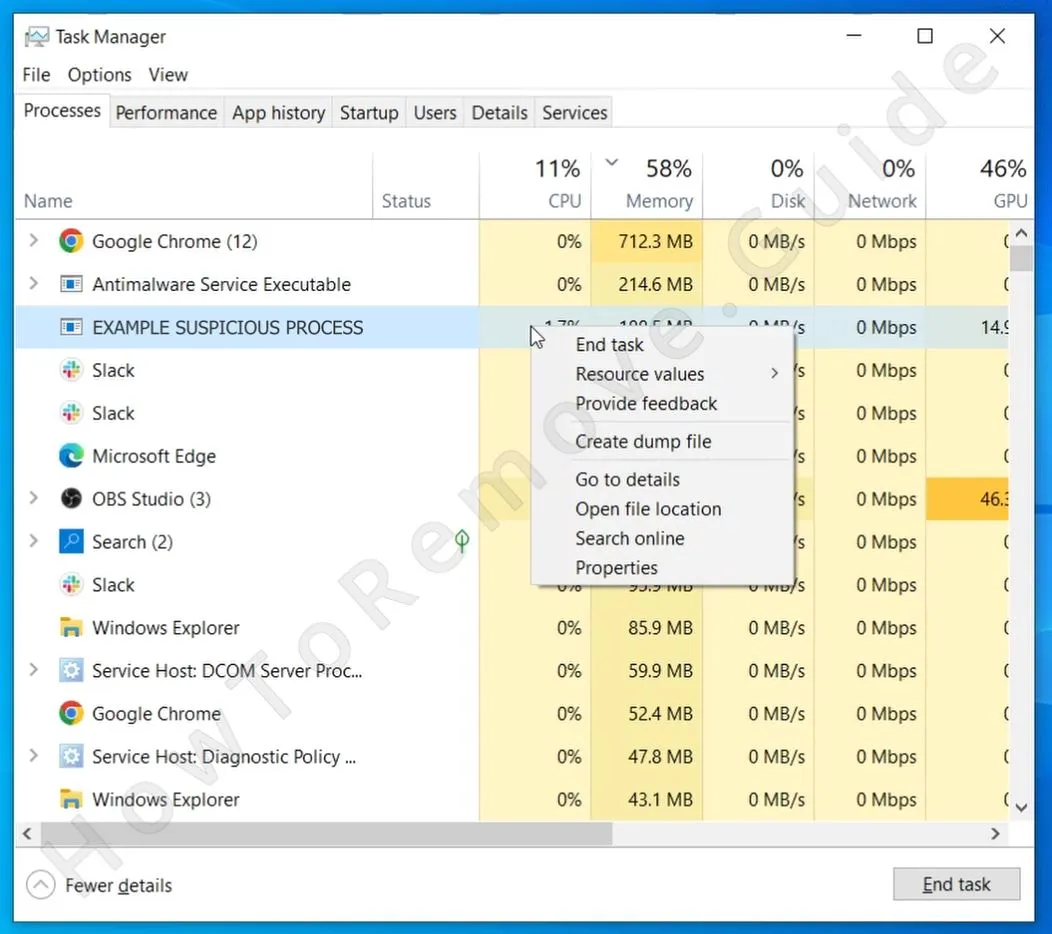 Use a cause→effect lens. Unusual CPU or Memory spikes warrant a look. Click column headers to sort and surface anomalies.
Note: You typically won’t see a process literally named “UpdateRetreiver.exe“. Malware often hides behind ordinary-looking names.
- 2.4Context matters. Right-click a suspicious entry and choose Open file location. Executables under user paths like AppData or in randomly named folders are riskier than signed binaries in C:\Program Files.
- 2.5Attempt to remove the entire containing folder from that window. If Windows blocks deletion, run LockHunter and select What’s locking this file? to release the handle, then delete the folder to clear sidecar DLLs and loaders together.
- 2.6Return to Task Manager, select the same entry, and click End task. Stopping it prevents an immediate relaunch while you remove related files. If it respawns, note the name; a scheduled task or service is likely relighting it.
Delete Suspicious UpdateRetreiver.exe Files and Shortcuts
Startup folders and common install paths often contain shortcuts, scripts, or renamed binaries that relaunch the program. Clearing these locations cuts easy persistence and steadies Windows while you handle deeper hooks linked to UpdateRetreiver.exe. Work carefully and remove only items you can verify as unrelated to normal software.
3. Remove UpdateRetreiver.exe leftover files and shortcuts
- 3.1Start at logon triggers. Open File Explorer and check C:\ProgramData\Microsoft\Windows\Start Menu\Programs\Startup and C:\Users\YourUsername\AppData\Roaming\Microsoft\Windows\Start Menu\Programs\Startup. Remove suspicious shortcuts or batch files that point back to components tied to UpdateRetreiver.exe.
- 3.2Reduce noise by clearing both Startup folders except desktop.ini. That file manages folder view and should stay. If Windows says an item is in use, use LockHunter to unlock and delete it cleanly.
- 3.3Review main install paths. Browse C:\Program Files and C:\Program Files (x86), sort by Date modified, and evaluate unfamiliar vendor folders. Remove directories that clearly do not belong to known software.
- 3.4Check user-space storage. Inspect C:\Users\YourUsername\AppData\Local\Programs and C:\Users\YourUsername\AppData\Roaming\Microsoft\Windows\Start Menu\Programs. Items created near the time problems began or living in oddly named folders deserve attention.
- 3.5
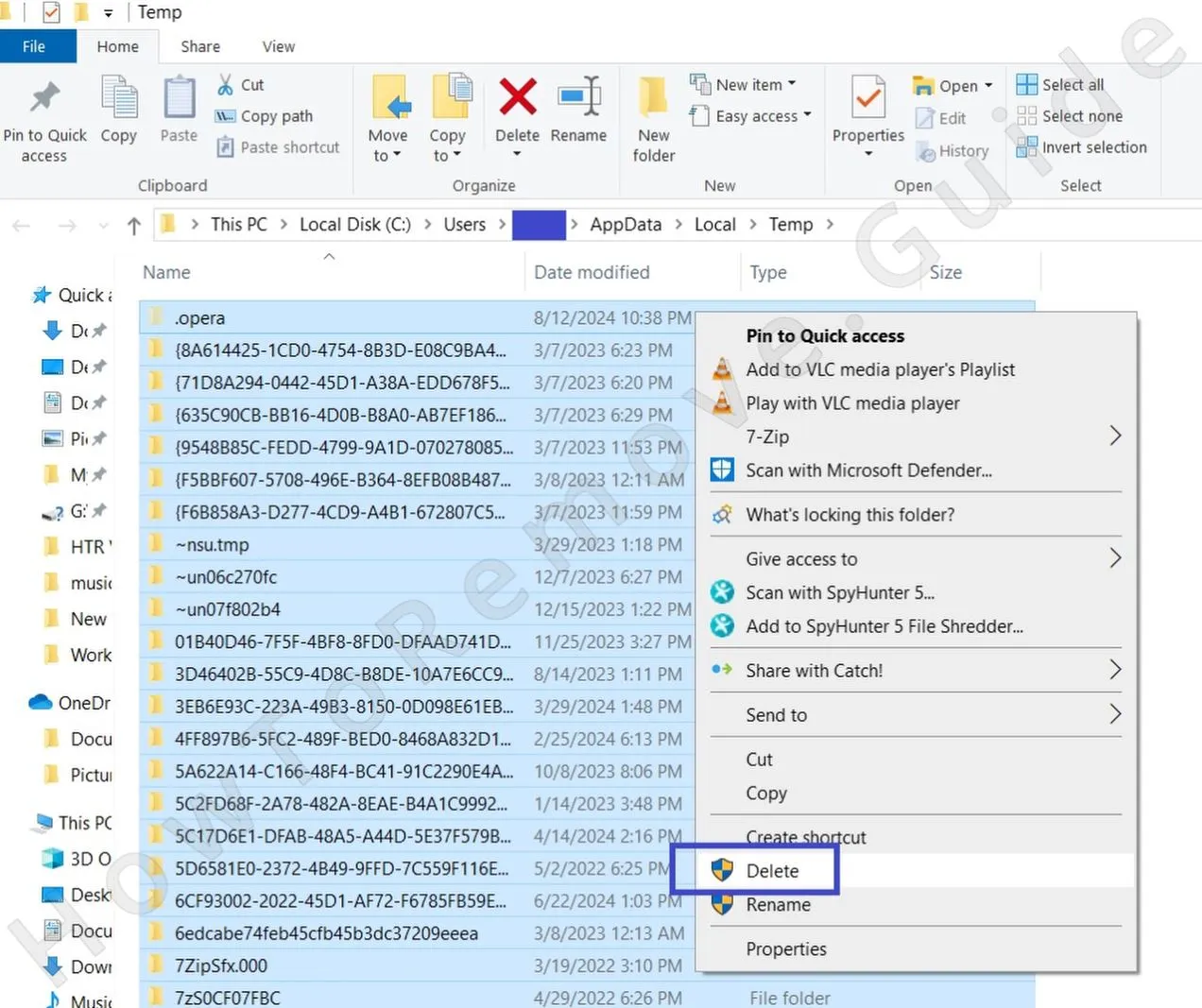 Finish by flushing temporary debris. Open C:\Users\YourUsername\AppData\Local\Temp, press Ctrl+A to select all, then press Delete. Clearing temp files disrupts droppers, cached installers, and scripts that might rerun at sign-in.
Clean Up UpdateRetreiver.exe Scheduled Tasks
Automated jobs are a common persistence method. They can run at boot, at sign-in, or on timers. Inspect actions and paths closely and remove only tasks you can confidently link to UpdateRetreiver.exe to avoid disabling legitimate maintenance jobs.
4. Clean up UpdateRetreiver.exe scheduled tasks
- 4.1
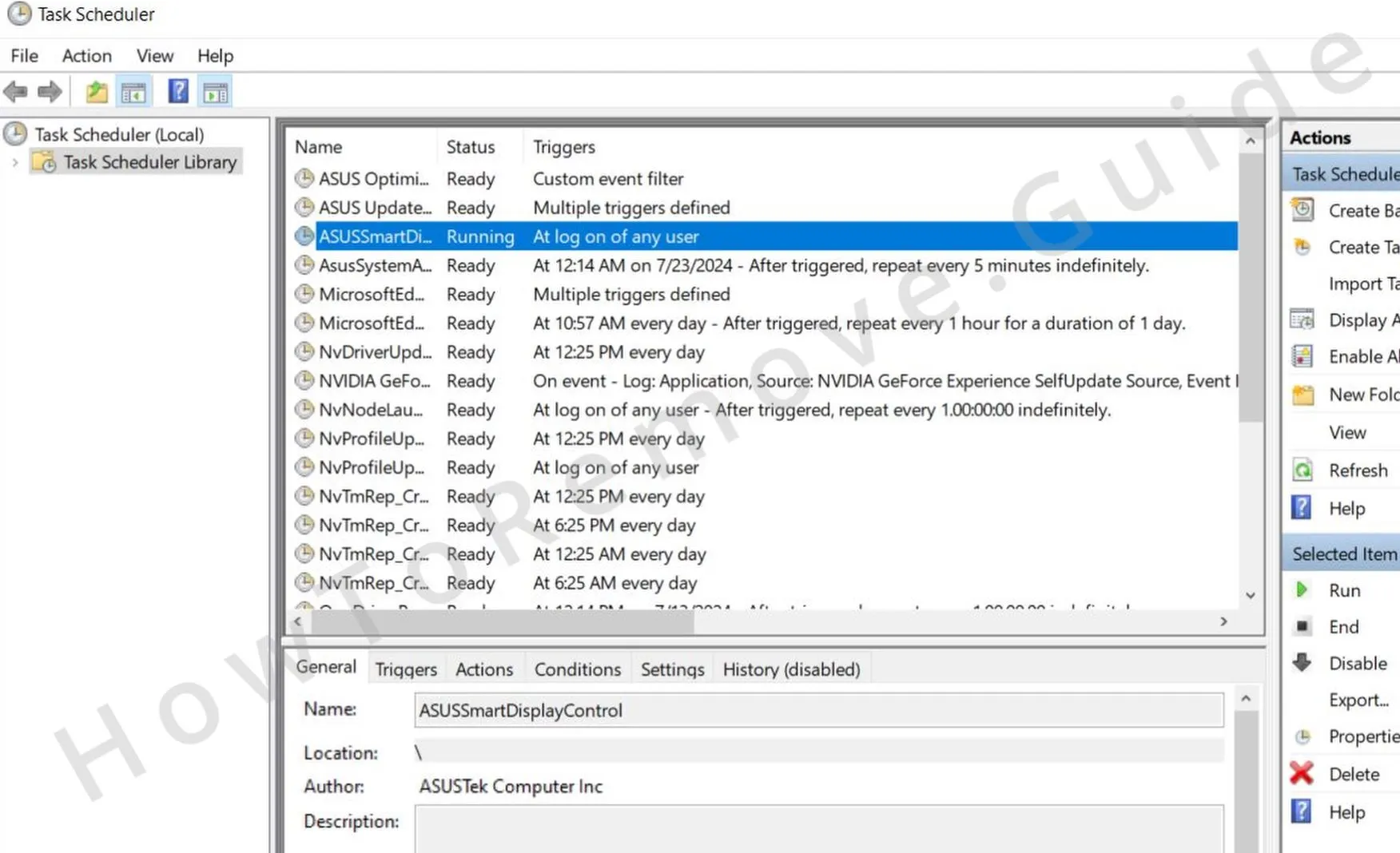 Start with the catalog. Open the Start menu, type Task Scheduler, press Enter, and expand Task Scheduler Library to review jobs that could relaunch UpdateRetreiver.exe on a schedule or event.
 - 4.2Open tasks one by one. In each task’s properties, check the Actions tab for the Program/script and arguments, and review Triggers and Conditions to understand when and how it runs.
- 4.3Prioritize entries that execute from AppData, Roaming, or temp paths. Well-maintained software rarely stores core executables there. Unsigned scripts or very new files in these locations are high-risk.
- 4.4When a suspect appears, copy the full path shown under Program/script so you can remove the payload later. Then delete the task from Task Scheduler Library and confirm.
- 4.5Use File Explorer to open the recorded path and delete the referenced executable or script. If the file is locked, unlock it with LockHunter and remove its parent folder.
- 4.6Repeat the review until no unfamiliar tasks remain that point to questionable folders. A single overlooked trigger can restore components after the next boot or sign-in.
Remove UpdateRetreiver.exe Entries via the Registry
Registry data can outlive basic uninstallers. Work precisely: confirm what a value references before deleting it. The sequence below helps you uncover autoruns, services, and policy keys that may keep UpdateRetreiver.exe active even after files are removed.
5. Clean residual UpdateRetreiver.exe entries in Registry Editor
- 5.1Open the correct console. Press Win+R, type regedit, and press Enter to launch Registry Editor so you can search for entries tied to UpdateRetreiver.exe and loaders that persist after file cleanup.
- 5.2Search thoroughly. Press Ctrl+F and query the original program name exactly as it appeared. The search walks keys, values, and data; allow it to finish on large hives.
- 5.3When a match appears, select its parent key in the left pane. After confirming it truly relates to the unwanted program, right-click and choose Delete. Press F3 to move to the next match until none remain.
- 5.4Broaden the sweep. Repeat searches for other suspicious names you removed and any process names you noted in Task Manager. Threats often scatter identifiers.
- 5.5Run a final pass for the exact target name to catch obscure or obfuscated entries. A single lingering Run value can silently restore components at next logon.
- 5.6Manually inspect common autorun and service paths, removing only entries that clearly reference the binaries you identified: HKCU\Software\Microsoft\Windows\CurrentVersion\Run, HKCU\Software\Microsoft\Windows\CurrentVersion\RunOnce, HKCU\Software\Microsoft\Windows\CurrentVersion\Policies\Explorer\Run, HKLM\Software\Microsoft\Windows\CurrentVersion\Run, HKLM\Software\Microsoft\Windows\CurrentVersion\RunOnce, HKLM\Software\Microsoft\Windows\CurrentVersion\Policies\Explorer\Run, HKEY_LOCAL_MACHINE\Software\Microsoft\Windows\CurrentVersion\RunServices, HKEY_LOCAL_MACHINE\Software\Microsoft\Windows\CurrentVersion\RunServicesOnce, HKEY_LOCAL_MACHINE\Software\Microsoft\Windows\CurrentVersion\RunOnce\Setup, HKEY_LOCAL_MACHINE\SYSTEM\CurrentControlSet\services. Avoid removing entire keys unless you know their purpose.
After finishing the registry pass, restart the computer. Keep an eye out for redirects, background relaunches, or resource spikes over several sign-ins. If symptoms do not return, the persistence chain is likely broken and the system should remain stable.
