

Anything named XWorm that you may have noticed in your system (a process, a file, an app) is a major red flag. My research shows that reports on security forums all point to XWorm being a full-blown Trojan Horse, a sneaky type of malware similar to threats like Sorvepotel and Trojan:Win32/Egairtigado!rfn , that disguises as legitimate software to enter users’ systems.
You might have picked it up while installing a bundled program that may have looked completely safe but secretly carried the Trojan payload. The issue is that XWorm RAT can perform all sorts of harmful tasks in your system – it can modify system settings, plant rogue Registry entries, scatter helper files, and even schedule tasks to bring itself back after you’ve tried to delete it.
On the surface, you may only notice sluggish performance or weird pop-ups, which indicate that there’s something unusual and possibly harmful going on under the hood. These symptoms could be the result of XWorm draining resources, harvesting data, or opening the door for even nastier infections.
Leaving it unchecked isn’t an option, so that’s why I’ll show you how to remove it in the next steps.
We tested that SpyHunter successfully removes XWorm* and we recommend using it. It will block XWorm from reinstalling itself and it will make sure your device is clean from any malware.
 Try Free For 7 Days*
Buy now15% OFF if you buy straight without trial.
 OFFER
OFFERXWorm Removal Guide
Before jumping into deeper fixes, start with a standard uninstall of XWorm using Windows’ built-in tools. This step is quick and safe, and it sometimes removes the threat outright. If it fails, you’ve only spent a moment and haven’t changed anything important. Completing it first also simplifies later cleanup by reducing leftover files and services.
Quick Steps to Remove XWorm
- 1.1Because the goal is removing XWorm, begin by opening the Start Menu, then choose Settings (gear icon). This takes you to Windows’ central control panel for applications and core preferences, where uninstall options live.
- 1.2Next, enter the Apps section inside Settings. There you can review all installed programs on your PC and filter them by name, size, or install date to surface recent changes quickly.
- 1.3To spotlight newcomers, set the sort to Installation date. Items installed recently appear at the top, improving the odds you’ll notice unfamiliar entries that don’t belong.
- 1.4See an app you don’t recall adding? Select it and click Uninstall. Follow the on-screen instructions to finish removal, allowing the uninstaller to clean associated components as it goes.
- 1.5When the removal completes, browse to C:\Users\YourUsername\AppData\Local\Programs. Inspect this folder for leftovers tied to the prior installation, including directories and helper executables that may have been skipped.
- 1.6If you find a folder that matches the removed app, delete it by hand. After clearing it, restart Windows to release locked handles and prevent any lingering components from starting again automatically.
Restart your computer and check whether the problematic app no longer launches. If traces remain after the reboot, that’s common and not a failure. Proceed through the next sections, which target persistence, scheduled runs, and hidden storage locations.
SUMMARY:
How to Fully Get Rid of XWorm
Malicious software often runs while you’re investigating it, which can help you identify where it lives. If XWorm is active, its files and triggers are present in memory and on disk, making them easier to trace. Carefully working through the following checks gives you a clear path to neutralize the threat and stop reappearance
1. Preparing for the XWorm Removal
- 1.1
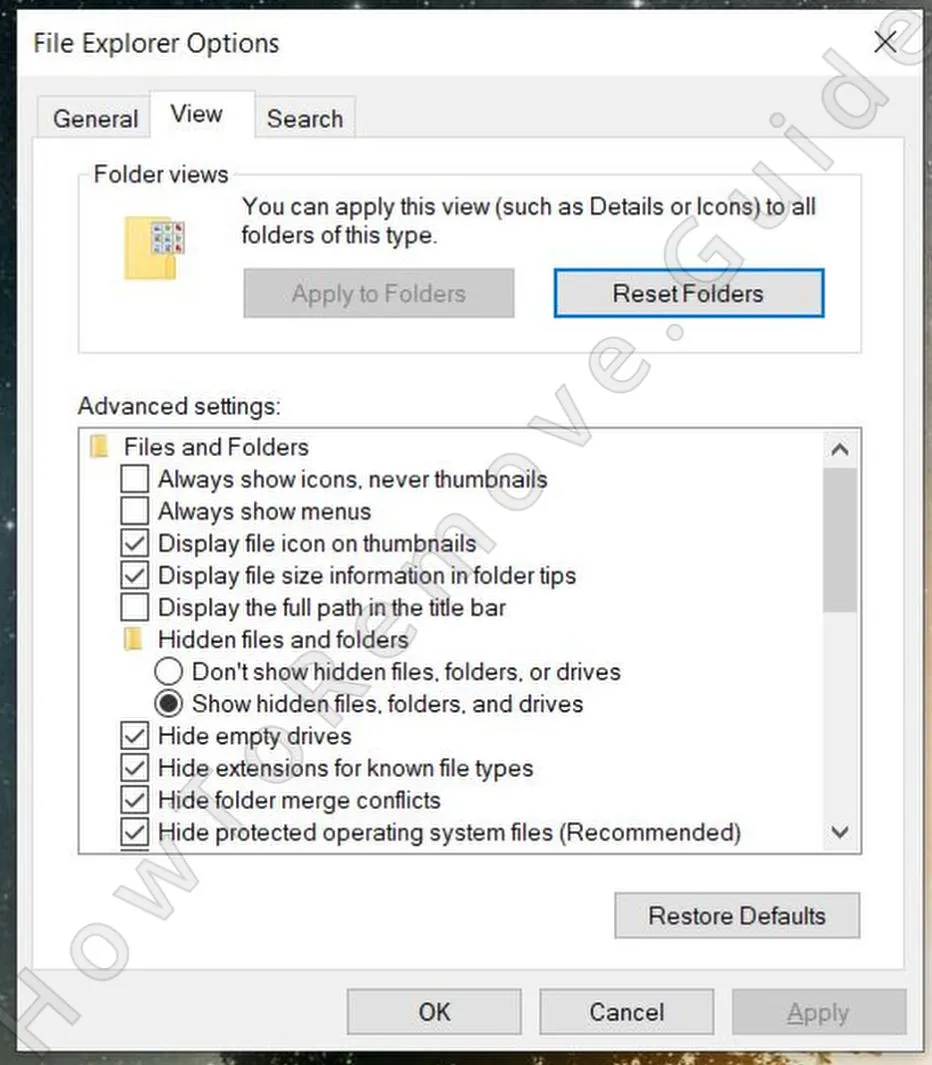 Hidden items are relevant when chasing XWorm remnants, so search for Folder Options from the Start Menu, open it, switch to the View tab, and enable Show hidden files, folders, and drives. Revealing hidden content exposes common stash points used by unwanted programs.
 - 1.2Stubborn files don’t always delete normally, so install LockHunter to remove items Windows flags as in use. Although this guide remains hands-on, this utility is exceptionally helpful with locked executables and DLLs. It’s lightweight, ad-free, and doesn’t require registration; the setup takes only a couple of minutes.
We understand if you don’t want to use third-party software and we generally try to keep our guides entirely “hands-on”. However, in this case, you may need this app to eliminate some malware files which is an essential part of the removal process.
But don’t worry, LockHunter won’t ask for money, doesn’t have ads, and doesn’t even require a registration. You can download and install it in about two minutes.
Remove XWorm Processes From the Task Manager
Terminating a visible process isn’t the finish line. XWorm typically leaves behind directories, startup entries, and helpers designed to relaunch it. If you stop at ending the process, it may respawn after a reboot or user logon. The next steps help you find, verify, and remove the active executables before cleaning their traces.
2. How to Delete XWorm Processes in the Task Manager
- 2.1Start with visibility: press Ctrl + Shift + Esc to open Task Manager and observe running processes and their resource use. This view is essential for finding the executable that launched XWorm.
- 2.2Is the compact interface showing? Click More details in the lower-left to expand into the full view. The extended list exposes background processes, services, and startup impact, which improves identification.
- 2.3
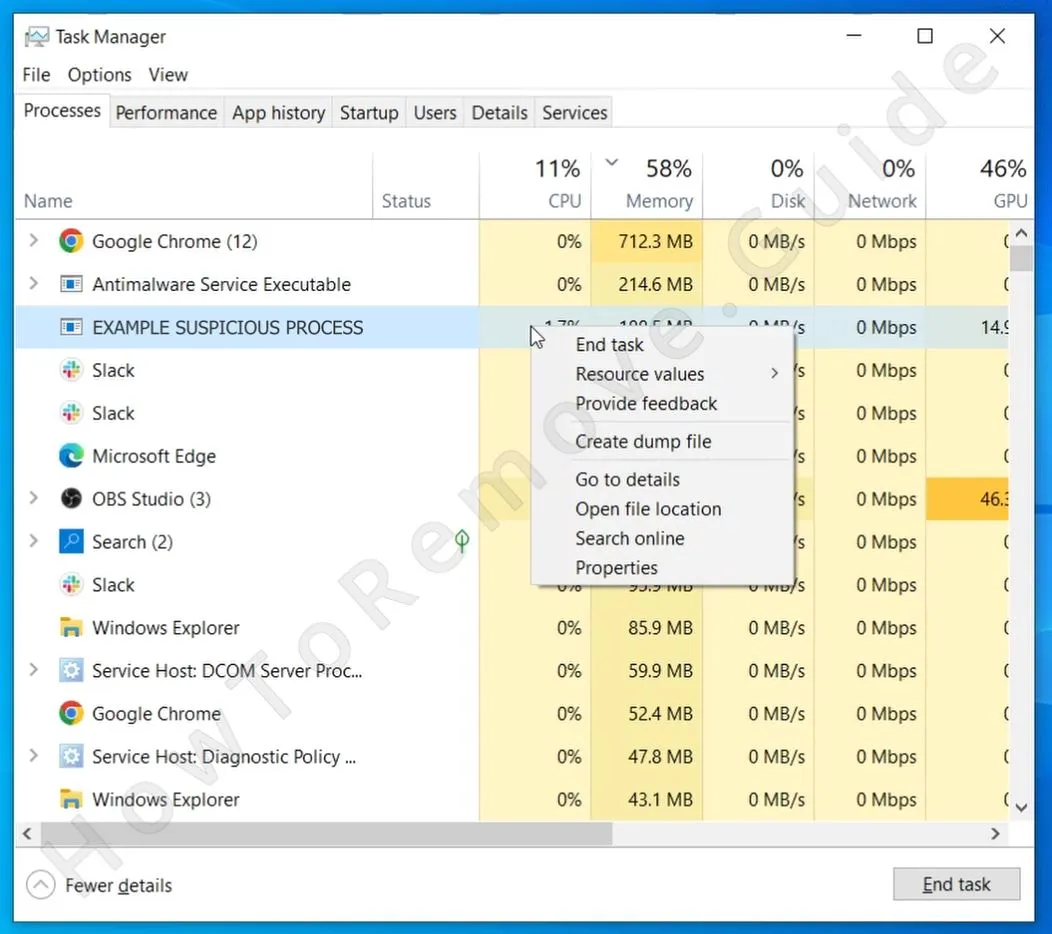 Now sort by CPU or Memory to bring heavy hitters to the top. Strange names or processes consuming unusual resources deserve scrutiny. Will one be labeled exactly like the threat? Almost never, so expect camouflage and mismatched publisher details.
 - 2.4When something looks off, right-click it and pick Open file location. Jumping to its folder shows the actual executable path and whether it sits in a suspicious directory that legitimate software rarely uses
- 2.5Attempt to delete the enclosing folder outright. If the system reports the file is locked, invoke LockHunter, choose What’s locking this file?, and proceed to remove the locking handle and delete the file through the tool.
- 2.6Return to Task Manager and End task on the same process. Stopping it after deleting the file prevents immediate relaunch and frees the way for deeper cleanup.
Delete XWorm Virus Files
Persistence often comes from things that launch at logon, and many users overlook them. XWorm may arrange a comeback through startup entries, auxiliary directories, and temporary files that reload components later. Clearing these locations breaks simple relaunch routines and limits the foothold left behind.
3. How to Get Rid of XWorm Files
- 3.1Check the Windows Startup folders, as that’s a common relaunch vector for XWorm: C:\ProgramData\Microsoft\Windows\Start Menu\Programs\Startup and C:\Users\YourUsername\AppData\Roaming\Microsoft\Windows\Start Menu\Programs\Startup. Remove any unfamiliar shortcuts or executables you didn’t place there.
- 3.2Within each Startup folder, leave desktop.ini alone and delete every other file that shouldn’t run at logon. If deletion is blocked due to use, rely on LockHunter to purge locked items safely.
-
3.3Next, inspect the
Program FilesandProgram Files (x86)in yourC:drive. Some Audit application directories next: open C:\Program Files and C:\Program Files (x86). Hunt for newly created or oddly named folders and remove anything clearly unrelated to trusted software you recognize and use. - 3.4Extend the review to user-level storage: C:\Users\YourUsername\AppData\Local\, C:\Users\YourUsername\AppData\Local\Programs, and C:\Users\YourUsername\AppData\Roaming\Microsoft\Windows\Start Menu\Programs. These locations commonly harbor auxiliary launchers, update stubs, or scripts.
- 3.5
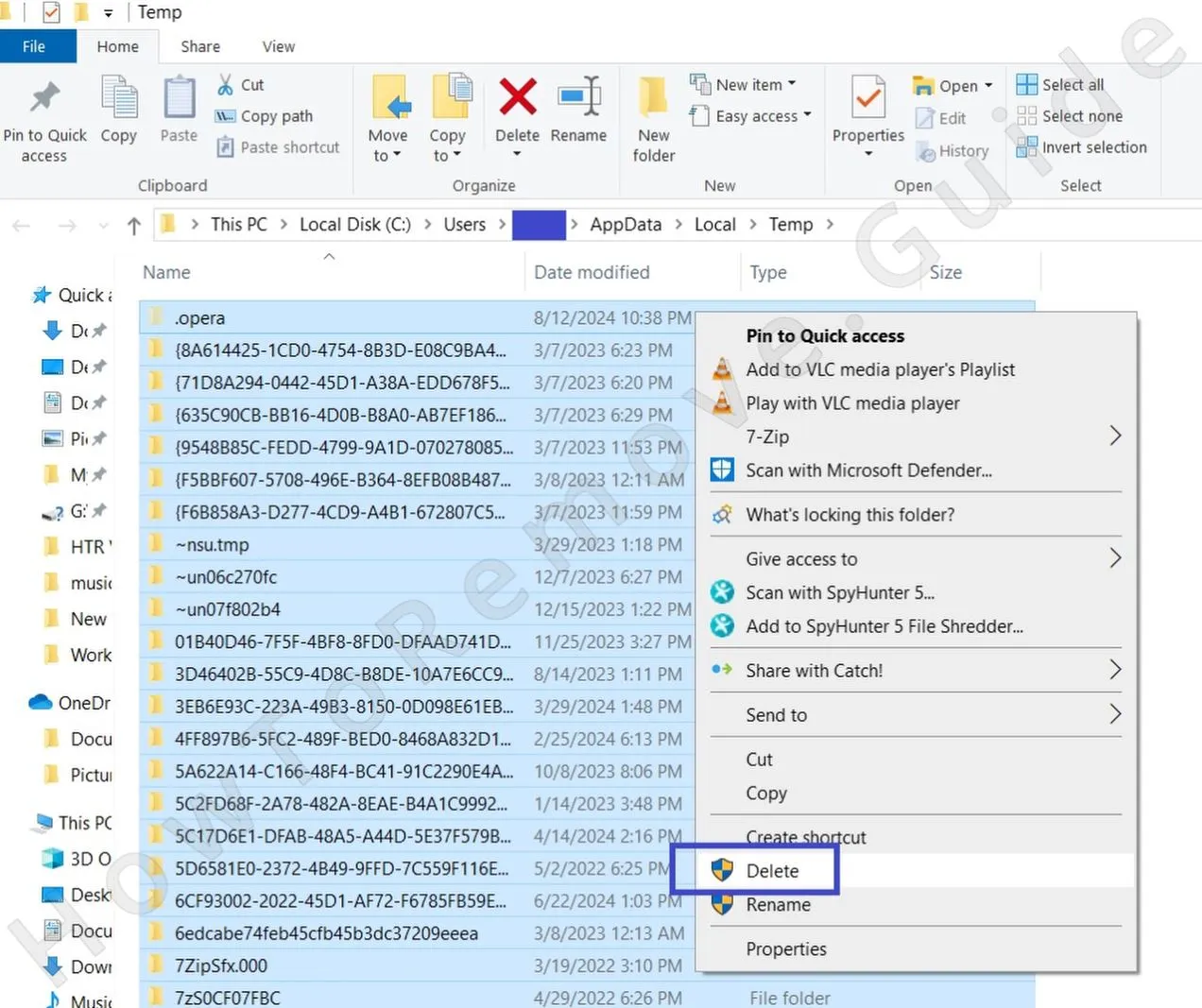 Finish by emptying transient storage. Visit C:\Users\YourUsername\AppData\Local\Temp, press Ctrl + A to select all, and delete the contents. Then clear the Recycle Bin so nothing pending restoration lingers on disk
Get Rid of XWorm Scheduled Tasks
Digging into the Registry can be risky, but it’s where many autostart instructions live. XWorm may rely on obscure keys most users never view. Careful, deliberate inspection is key here – you’re aiming to remove only entries tied to the unwanted activity, not legitimate system policies or services.
4. Eliminate XWorm Scheduled Tasks
- 4.1
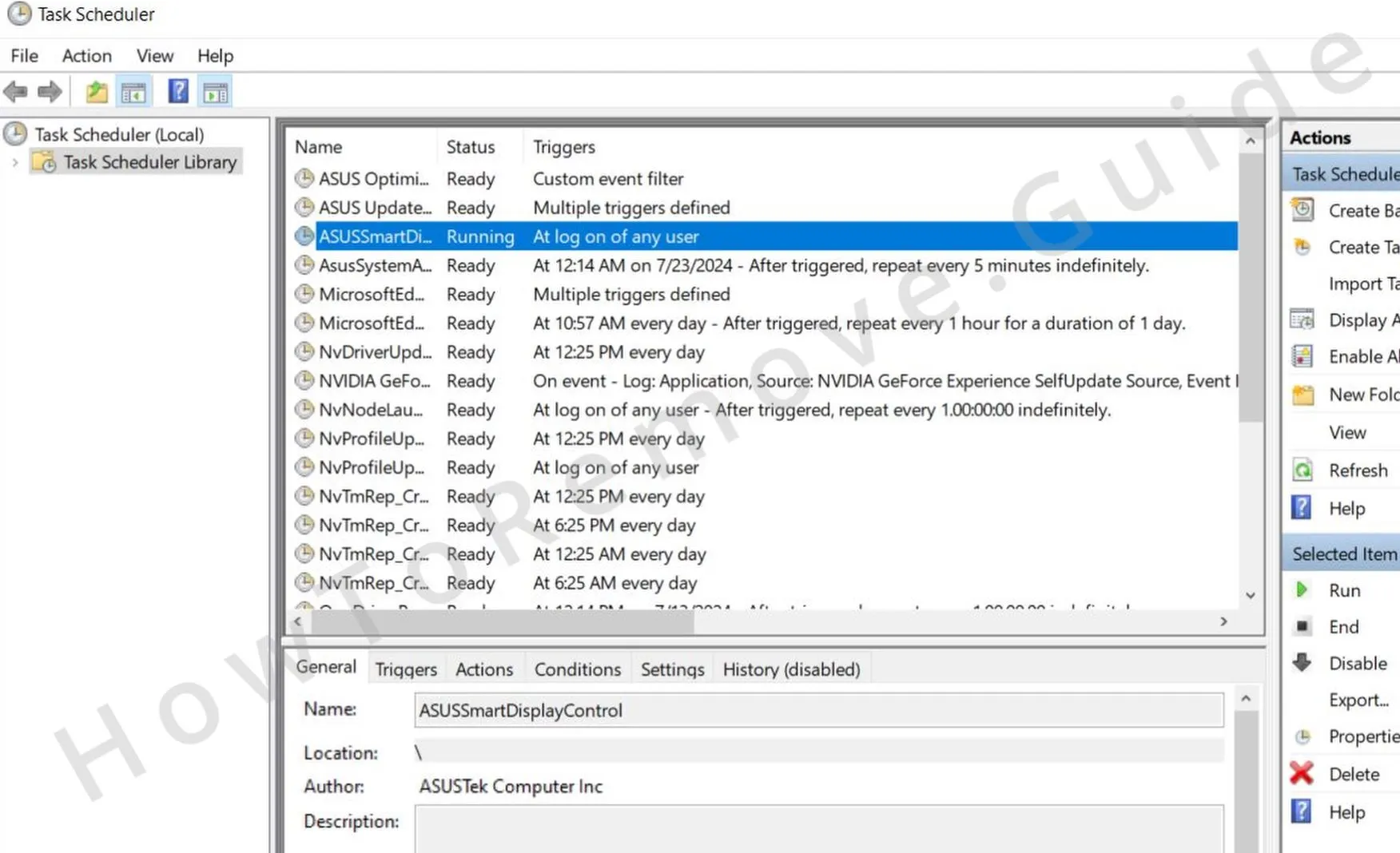 Automation often betrays persistence, so type Task Scheduler into the Start Menu search and open it. Expand the Task Scheduler Library to browse through defined jobs and folders that trigger actions on a schedule or at logon.
 - 4.2Open tasks one at a time by double-clicking and inspect Properties. The Actions tab reveals what command or file will run, along with arguments that indicate the target program.
- 4.3Give extra attention to actions pointing at AppData or Roaming directories, or to scripts residing in user profiles. Do they correspond to software you knowingly installed and trust? If not, treat them as suspect.
- 4.4For anything dubious, select the Actions entry, copy the full path it references, and then delete the task from Task Scheduler. Removing the job prevents automatic execution on triggers.
- 4.5Navigate to the file path you copied and delete the referenced executable, script, or command file. Clearing both the task and its payload closes the relaunch loop effectively.
- 4.6Repeat this inspection for every folder under the Task Scheduler Library, including subfolders added by installers. Persistence often uses bland names, so thoroughness matters.
Uninstall the XWorm Malware App Through the Windows Registry
Trying a standard uninstall first is still worthwhile because some registry entries get removed automatically during that process. If it didn’t complete, manual checks help finish the job. Work patiently, make targeted deletions, and avoid broad removals that could destabilize Windows or legitimate applications.
5. Remove XWorm Through the Registry
- 5.1Launch the editor that controls system configuration data: press Win + R, type regedit, and press Enter to open Registry Editor. It provides direct access to the keys that influence startup and application behavior.
- 5.2Use Ctrl + F and search for the name of the application you uninstalled earlier. This often reveals orphaned keys left behind by imperfect uninstallers.
- 5.3When you find a match, select the folder (key) in the left pane and delete it. Continue with F3 to find the next occurrence until no results remain for that name.
- 5.4Repeat the same search process for any other suspicious applications you removed while reviewing processes and startup items. Removing their traces prevents chained relaunchers.
- 5.5Run one targeted search for XWorm as well. It may return nothing, but skipping this check risks leaving behind a small trigger that re-creates files on reboot.
- 5.6Manually inspect these common autostart and policy paths for stray entries:
HKEY_CURRENT_USER\Software\Microsoft\Windows\CurrentVersion\Run
HKEY_CURRENT_USER\Software\Microsoft\Windows\CurrentVersion\RunOnce
HKEY_CURRENT_USER\Software\Microsoft\Windows\CurrentVersion\Policies\Explorer\Run
HKEY_LOCAL_MACHINE\Software\Microsoft\Windows\CurrentVersion\Run
HKEY_LOCAL_MACHINE\Software\Microsoft\Windows\CurrentVersion\RunOnce
HKEY_LOCAL_MACHINE\Software\Microsoft\Windows\CurrentVersion\Policies\Explorer\Run
HKEY_LOCAL_MACHINE\Software\Microsoft\Windows\CurrentVersion\RunServices
HKEY_LOCAL_MACHINE\Software\Microsoft\Windows\CurrentVersion\RunServicesOnce
HKEY_LOCAL_MACHINE\Software\Microsoft\Windows\CurrentVersion\RunOnce\Setup
HKEY_LOCAL_MACHINE\SYSTEM\CurrentControlSet\Services - 5.7Inside each path, check the right pane for values that reference unknown executables or strange locations. Delete only the suspicious value entries – not the entire key – to avoid harming the system or blocking legitimate services.
After you’ve finished the registry cleanup, restart Windows. Confirm that startup is normal and that the unwanted behaviors no longer occur. If anything unusual persists, consider scanning with a reputable security suite to verify that no hidden components remain and to repair altered system settings.
