

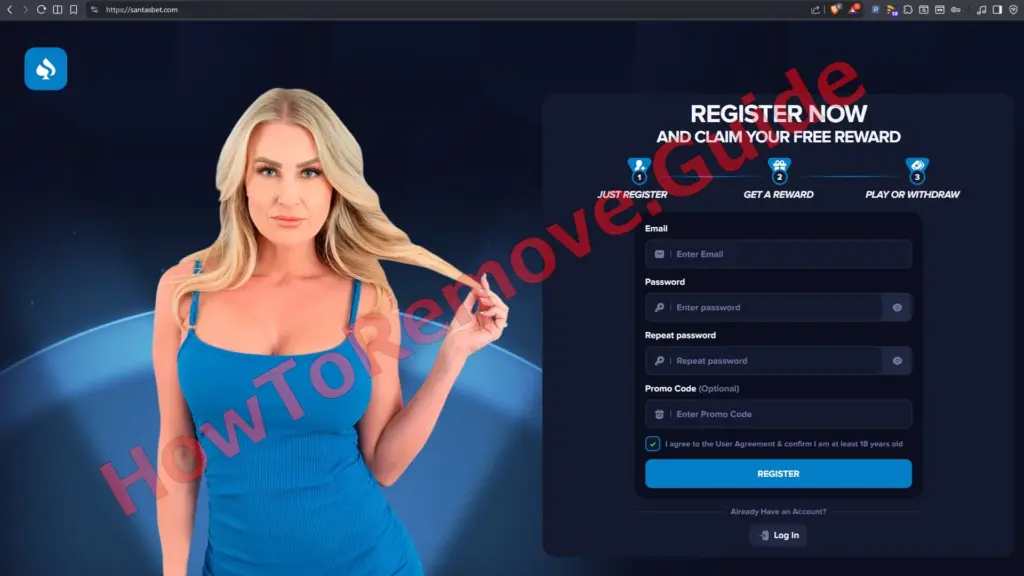
Today’s latest online scam is a site called Santasbet that fits the well-known (and, honestly, pretty tired) pattern of rigged “crypto casinos” that mimic legitimate platforms, dangle oversized signup credits, and then choke you on withdrawals.
You sign up, you start playing away your hefty starter bonus, and, lo and behold, big early “wins”. Your on-screen balance goes up, and you inevitably start thinking to yourself that maybe, just maybe, this could be your lucky day.
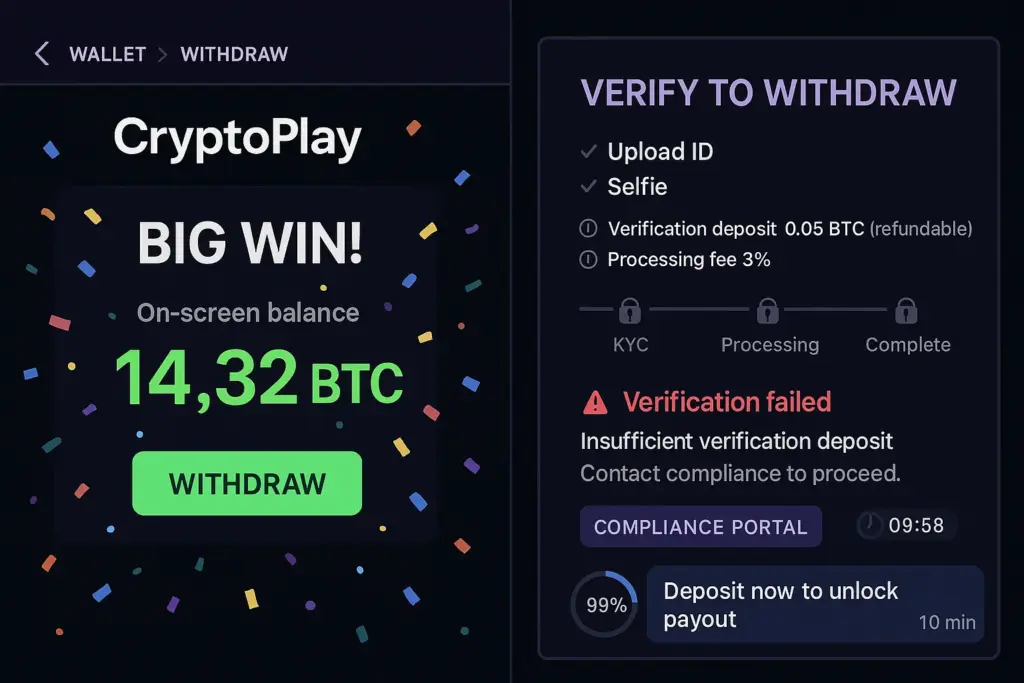
Of course, the number you see is just UI, not money you can actually receive. But, by this point, many users are already too deep under the scam’s spell that, when cash-out time arrives, and they are asked to deposit some of their actual money to withdraw their winnings, they gladly comply with the request… and get scammed.
Yes, it’s all about the deposit, and yes, many people fall for it. Maybe you’ve fallen too, in which case, I get it – even the most basic type of scam can work if it manages to manipulate your emotions
In any case, the key to staying protected is being well-informed. Scams like Santasbet are everywhere – Veyro and Cenatsino are two other near-identical variants from a couple of days ago, and more will absolutely appear as time goes by. You just need to be able to recognize them and avoid them.
There isn’t a good way to entirely ensure that you never get exposed to such scams, but you can definitely do a lot to protect yourself. The first step is getting informed and familiarized with the patterns, tricks, and correct ways to react to scams like Santasbet. The following article will help you with that, so I strongly recommend you read everything
Scams of Santasbet.com‘s type are known to steal personal data and passwords. Install SpyHunter Pro to scan for risks, remove any dangerous trackers, and enable real-time protection.

Try Free For 7 Days*
Buy now15% OFF if you buy straight without trial.
 OFFER
OFFERIMPORTANT! READ BEFORE PROCEEDING!
If you have already interacted with Santasbet, act now to contain risk. Think security first and refunds later. Cut the contact, lock down your accounts, move funds to clean wallets, and capture evidence. Here are five emergency steps we strongly recommend you take right now:
- Stop all payments and cut off contact; refuse any “unlock,” “tax,” or “processing” requests.
- Change passwords and enable 2FA on email, exchanges, and wallets; end other active sessions.
- Move remaining crypto into brand-new wallets with fresh seed phrases; revoke stale token approvals.
- If you uploaded ID, place credit/fraud alerts where available and monitor for identity-theft signals.
- Document everything – URLs, addresses, TxIDs, chats, screenshots – and report to your exchange and local cybercrime unit.
How We Know Santasbet.com is a Scam
To begin, the mechanics – not the marketing – give the game away. The pattern matches payout-blocking funnels: counterfeit authority on the surface, fee gates and identity harvesting at cash-out.
Surprise withdrawal charges
Any operator that requires new deposits or “processing” payments to release your own balance is following the classic pay-to-withdraw scam script.
Counterfeit licensing
Licensing and “provably fair” badges that don’t validate against official registries or verifiable RNG proofs are theater, not oversight.
Inflated early “wins”
Early gameplay runs “hot” so balances balloon; those numbers are cosmetic and evaporate the moment a fee request appears.
Crypto-only rails
Excluding fiat and chargebacks removes meaningful recourse by design and keeps victims locked into irreversible transfers.
Synthetic social proof
Pop-ups of “recent withdrawals,” influencer blurbs, and bot chats simulate trust while avoiding independent, third-party verification.
Fresh, privacy-masked domains
Short domain age, redacted WHOIS, and copy-paste clones reveal industrial churn – the logo changes, the template stays.

How the Santasbet Scam Deception Funnel Works
Understanding the funnel isn’t about paranoia; it’s about recognizing choreography. These steps repeat across the ecosystem, with only the brand name swapped.
The sequence is engineered: lure with bonuses and celebrity imagery, inflate on-screen balances, block withdrawals with fees and staged “KYC,” then stall and rebrand while “recovery” outfits circle for a second bite.
Promo hooks and influencer codes
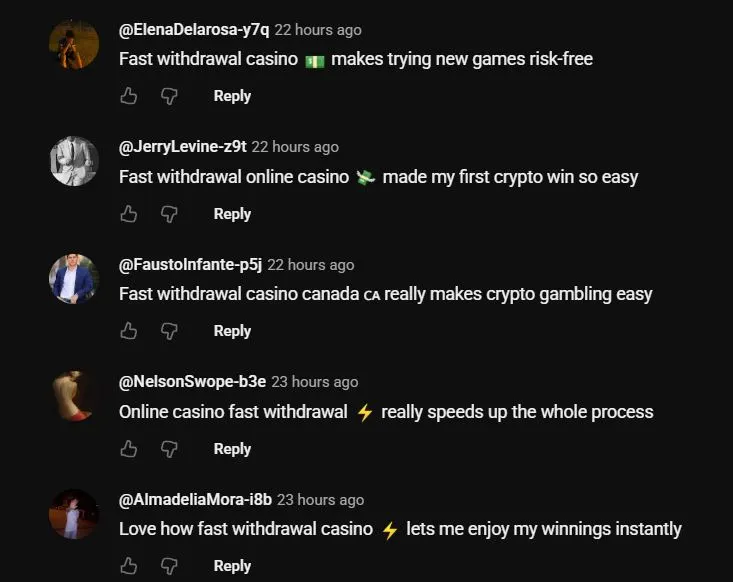
Ads, coupon codes, and influencer mentions promise oversized “free crypto,” while botted comments fabricate wins to lower skepticism and spark impulsive clicks.
Casino skin and bonus theater
The landing page mimics a legitimate operator, flaunts giant signup bonuses, and waves “provably fair” claims to create instant credibility without offering verifiable proofs.

Inflated balances, then the gate
The first sessions “pay” well on-screen to justify an initial deposit; attempt to cash out and a surprise KYC review and a “verification” or “processing” payment appears.
Fee-gates and KYC harvest
Each “almost unlocked” step invents a pretext – VIP tiers, AML buffers, taxes – siphoning more crypto while harvesting identity documents that can be abused later.

Stalling, rebrands, and “recovery” bait
Support scripts empathy while adding hurdles; once extraction peaks, the operator ghosts, pivots to a new domain, and “recovery agents” approach to sell the encore scam.
Staying safe from crypto casino scams like Santasbet
Prevention is both less dramatic and vastly more effective than attempting retrieval after the fact. The habits below harden your defenses and give you a repeatable way to separate real operators from paste-on fronts.
Verify license status in official registers
Check regulator registries by company name and claimed operator; if it’s absent or mismatched, treat the platform as unlicensed.
Check domain age and history
Use WHOIS and archives to spot privacy-masked, newborn domains and clusters of clones sharing text, layouts, or T&C fragments.
Reject withdrawal fees and “unlock” deposits
Never pay to withdraw your own balance – demands for “processing,” “tax,” or “verification” money are classic advance-fee tactics.
Prefer venues with recourse
Favor operators with named companies, verifiable licensing, and fiat rails; crypto-only fronts maximize irreversibility and minimize your leverage.
Limit wallet exposure
Keep funds in wallets you control, split holdings, use fresh deposit addresses, and routinely revoke token approvals you no longer need.
Validate “provably fair” claims
If you can’t independently verify each bet via public seeds and hashes, treat the claim as marketing, not math, and step away.
Document and report rapidly
Keep TXIDs, chats, and screenshots; file with your national cybercrime unit and any exchanges touched – timeliness increases options.
Build a deliberate slow-down reflex
Discipline beats dopamine: pause before depositing, verify licensing and domain history, and only then decide.
Useful Resources for Scam Reporting and Prevention (By Country)
Even when money is unlikely to come back, reporting limits further harm and feeds larger investigations. Use the directory below to submit complaints and link your documentation to ongoing cases.
Click here to report the scam in your country
| Country / Agency | URL | Category / Use-case | Phone/Email |
| Australia – Crime Stoppers | https://www.crimestoppers.com.au | Anonymous tips about crime | 1800 333 000 |
| Australia – National Anti-Scam Center (Scamwatch) | https://www.scamwatch.gov.au/report-a-scam | General scams; phishing; texts/emails | |
| Australia – Police Assistance Line (non-emergency) | https://www.police.gov.au | Local police report | 131 444 |
| Australia – ReportCyber (ACSC) | https://www.cyber.gov.au/report | Cybercrime (hacks, fraud, extortion) | |
| Canada – Canadian Anti-Fraud Center (CAFC) | https://www.antifraudcentre-centreantifraude.ca/report-signalez-eng.htm | General scams incl. phone/text/email | |
| France – DGCCRF (SignalConso) | https://signal.conso.gouv.fr | Consumer scams/deceptive practices | |
| France – PHAROS – Internet-Signalement | https://www.internet-signalement.gouv.fr | Online content & cybercrime reports | |
| Germany – Bundeskriminalamt / Local Police | https://www.polizei.de/Polizei/DE/Home/home_node.html | Report online fraud | |
| Germany – Weißer Ring – Victim Support | https://weisser-ring.de | Victim support | 116 006 |
| India – DoT Helpline (Sanchar Saathi) | https://sancharsaathi.gov.in | Fraudulent telecom/SIM related | 155260 |
| India – National Consumer Helpline | https://consumerhelpline.gov.in | Consumer scams | 1800-11-4000 / 1915 |
| India – National Cyber Crime Reporting Portal | https://cybercrime.gov.in | Cybercrime incl. online fraud | 1930 |
| Japan – Consumer Affairs Agency (CAA) | https://www.caa.go.jp/policies/policy/consumer_policy/caution/cybercrime/ | Consumer scams | |
| Japan – National Police Agency – Cybercrime | https://www.npa.go.jp/bureau/cyber/ | Cybercrime reporting | |
| Mexico – Guardia Nacional (National Guard) | https://www.gob.mx/gn | Cybercrime reporting | |
| Mexico – Instituto Federal de Telecomunicaciones (IFT) | https://www.ift.org.mx | Telecom/online services scams | |
| Mexico – PROFECO | https://www.gob.mx/profeco | Consumer fraud & ecommerce | |
| Netherlands – AFM – Report investment fraud | https://www.afm.nl/en/consumenten/themas/beleggen/misleiding-misbruik | Investment/crypto | |
| Netherlands – Fraudehelpdesk | https://www.fraudehelpdesk.nl/melden | General scams (incl. phishing/SMS) | 088-7867372 |
| Netherlands – Politie – Meldpunt Internetoplichting | https://www.politie.nl/themas/internetoplichting.html | Online shopping fraud | |
| New Zealand – CERT NZ | https://www.cert.govt.nz/individuals/report-an-issue/ | Phishing, identity scams | |
| New Zealand – Department of Internal Affairs – Spam | https://www.dia.govt.nz/Spam-Contact-Us | Email/SMS spam | [email protected] |
| New Zealand – IDCARE | https://www.idcare.org | Victim support (identity compromise) | 0800 121 068 |
| New Zealand – Netsafe – Report | https://www.netsafe.org.nz/report/ | Online harms & scams | |
| New Zealand – New Zealand Police (non-emergency) | https://www.police.govt.nz/use-105 | Report fraud/online crime | 105 |
| Nigeria – Economic & Financial Crimes Commission (EFCC) | https://www.efcc.gov.ng | Financial scams incl. crypto/investment | [email protected] |
| Nigeria – Nigeria Police Special Fraud Unit (SFU) | https://www.specialfraudunit.org.ng | Serious fraud | Voice/SMS: 0708 227 6895; WhatsApp: 0812 760 9914 |
| Poland – CERT Polska (CERT.PL) | https://cert.pl/en/report/ | Cyber incidents & phishing | |
| Poland – Dyzurnet.pl | https://dyzurnet.pl | Illegal online content (esp. child protection) | |
| Poland – Polish Police (Policja) | https://www.policja.pl | Report scams to police | |
| Singapore – Anti-Scam Centre / Anti-Scam Helpline | https://www.scamalert.sg | General scams; texts; calls | 1800-722-6688 |
| Singapore – Monetary Authority of Singapore (MAS) | https://www.mas.gov.sg/investor-alert-list | Investment/crypto checks | |
| Singapore – Singapore Police Force | https://www.police.gov.sg/iwitness | Police report (cybercrime) | |
| South Africa – Cybersecurity Hub (CSIRT) | https://www.cybersecurityhub.gov.za | Cyber incidents incl. scams | |
| South Africa – South African Fraud Prevention Service (SAFPS) | https://www.safps.org.za | Identity fraud support | 011-867-2234 |
| South Africa – South African Police Service (SAPS) | https://www.saps.gov.za | Police report (cybercrime unit) | |
| South Korea – Korea Communications Commission (KCC) | https://www.kcc.go.kr | Telecom-related fraud | |
| South Korea – Korea Internet & Security Agency (KISA) | https://www.kisa.or.kr | Phishing, online harms | |
| South Korea – Korean National Police Agency – Cyber Bureau | https://ecrm.cyber.go.kr | Cybercrime reporting | |
| Spain – INCIBE – Oficina de Seguridad del Internauta (OSI) | https://www.osi.es/es/reporte | Cybersecurity & online fraud | |
| Spain – Policía Nacional / Guardia Civil | https://www.policia.es | Report scams to police | |
| Sweden – Crime Victim Authority (Brottsoffermyndigheten) | https://www.brottsoffermyndigheten.se | Victim support & compensation | 090–70 82 00 |
| Sweden – Polisen (Swedish Police) | https://polisen.se | Report fraud/cybercrime | 114 14 (non-emergency); 112 (emergency) |
| Sweden – Swedish Consumer Agency (Konsumentverket) | https://www.konsumentverket.se | Unfair business practices | |
| United Arab Emirates – Abu Dhabi Police – Aman Service | https://www.adpolice.gov.ae | Cybercrime tips/reporting | SMS 2828; 800 2626 |
| United Arab Emirates – Dubai Police – eCrime | https://www.dubaipolice.gov.ae | Cybercrime reporting | 04 606 1600 |
| United Arab Emirates – Ministry of Interior – Cyber Crime Dept. | https://www.moi.gov.ae | Cybercrime incl. online scams | |
| United Arab Emirates – Telecommunications Regulatory Authority (TRA) / TDRA | https://www.tra.gov.ae | Telecom-related scams/phishing | |
| United Kingdom – Action Fraud (NFIB) | https://www.actionfraud.police.uk | General scams & cybercrime (non-emergency) | 0300 123 2040 |
| United Kingdom – Citizens Advice Consumer Service | https://www.citizensadvice.org.uk/consumer/get-more-help/if-you-need-more-help-about-a-consumer-issue/ | Consumer problems & scam guidance | 0808 223 1133 |
| United Kingdom – Financial Conduct Authority (FCA) | https://www.fca.org.uk/consumers/report-scam-us | Investment/crypto & financial services | |
| United Kingdom – National Cyber Security Centre (NCSC) | https://www.ncsc.gov.uk/collection/phishing-scams | Phishing emails & suspicious websites | |
| United Kingdom – Stop Scams UK ‘159’ | https://stopscamsuk.org.uk/159 | Banking APP fraud (direct to your bank) | 159 |
| United States – AARP Fraud Watch Network Helpline | https://www.aarp.org/money/scams-fraud/ | Victim support | 833-372-8311 |
| United States – Better Business Bureau – Scam Tracker | https://www.bbb.org/scamtracker | Business/marketplace scams | |
| United States – FBI Internet Crime Complaint Center (IC3) | https://www.ic3.gov | Internet crime incl. investment/crypto | |
| United States – Federal Trade Commission – ReportFraud | https://reportfraud.ftc.gov | General scams, phishing, texts/emails | 1-877-382-4357 |
| United States – National Center for Disaster Fraud | https://www.justice.gov/disaster-fraud | Disaster-related scams | (866) 720-5721 |
| United States – SEC Tips & Complaints | https://www.sec.gov/tcr | Investment & securities/crypto-asset offerings |
That’s the full picture: understand the pattern, contain exposure fast, and run verifiable checks before any deposit or document upload.
