

Ugonex is being promoted through a fake celebrity-style casino offer that tries to look urgent, exclusive, and easy to profit from. The message claims, “I’m excited to announce the launch of my very own crypto casino,” then pushes users toward ugonex.com with the promo code “TESLA” and a promised “$5,000 bonus.”
The biggest warning sign is the pressure tactic. Phrases like “withdraw the bonus instantly” and “This post will be deleted one hour after publication” are designed to stop people from thinking, checking the site, or questioning why a famous person would give away money through an unknown casino.
Scams of Ugonex.com‘s type are known to steal personal data and passwords. Install SpyHunter Pro to scan for risks, remove any dangerous trackers, and enable real-time protection.

Try Free For 7 Days*
Buy now15% OFF if you buy straight without trial.
 OFFER
OFFERThis type of scheme, similar to Vazowin and Zaewex, can lead to more than lost deposits. Users may be pushed to create accounts, share personal details, connect crypto wallets, or download suspicious files. Some reports also describe stolen Instagram and Discord accounts after exposure to related suspicious download chains.
IMPORTANT! READ BEFORE PROCEEDING!
Anyone who has interacted financially with Ugonex should pause all further contact, preserve records, and assume related accounts may be exposed, especially if identity files or wallet permissions were involved.
Before checking sensitive accounts again, close the site, isolate the browser session, and use SpyHunter 5 or another trusted anti-malware tool to look for unwanted software or risky downloads.
Fastest Removal Option: Use SpyHunter 5
- 1.1Click here to download and install the anti-malware tool on your PC.
- 1.2
 Start SpyHunter 5, click the Buy button and choose between starting your 7-days free trial or directly purchasing the tool.
If you choose to buy SpyHunter 5 now, you can use our discount code, “HTRG15“, for 15% off.
- 1.3
 Once you activate SpyHunter, click Start Scan Now, select the Full Scan option, and let the tool do its job.
 - 1.4
 Once the scan completes (it could take a while, so have patience), you’ll see all malware and other undesirables listed.
Click Next to review the detections and then click Next again to delete all rogue items.
Then prioritize these containment steps before thinking about recovery:
- Reset passwords and enable 2FA on your email, crypto exchanges, and wallets; terminate other active sessions.
- Notify any exchanges and services touched by the funds; provide TxIDs and ask that accounts/addresses be flagged per policy.
- Migrate assets to fresh wallets with new seed phrases and revoke any existing token approvals on connected chains.
- If you uploaded ID documents, place credit/fraud alerts where available and monitor for identity-theft signals.
- Assemble an evidence bundle – wallet addresses, TxIDs, site URLs, chats, and screenshots – and file reports with police/IC3 and any involved platforms.
How We Know Ugonex is a Scam
The evidence points to a familiar advance-fee model hidden inside casino visuals. Ugonex encourages deposits through excitement, then changes the conversation when a user wants to withdraw. Real platforms do not need surprise unlock fees, unverifiable regulators, or anonymous domain churn to pay customers.
The cashout path creates new charges
A withdrawal page that suddenly requires a tax deposit, account activation, anti-fraud fee, or network clearance payment is not behaving like a payout system. It is turning the user’s own displayed funds into bait.
The business identity is cloudy
Legitimate gambling operators normally provide traceable company details, regulator entries, and consistent terms. Scam pages often offer polished wording without a verifiable entity behind it.
The balance is used to lower skepticism
Rapid gains can make the user feel that the opportunity has already proven itself. In reality, an on-screen figure means nothing until funds can be withdrawn to a wallet the user controls.
Payment design favors the operator
Crypto-only deposits give the site speed and finality while removing chargebacks and bank disputes from the victim’s toolkit. That choice is especially suspicious when paired with anonymous ownership.
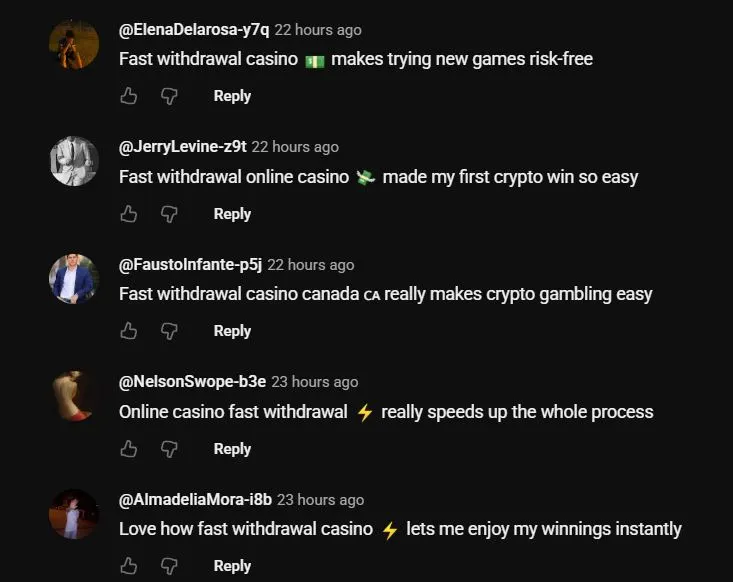
Reviews and activity feel too perfect
Overly enthusiastic comments, repeated phrasing, fake recent-winner notices, and promotion codes from unknown influencers can create the illusion of popularity. None of that substitutes for independent confirmation.
The domain looks built to be abandoned
If a site has a short history, hidden registrant data, copied templates, or no archived reputation, caution is warranted. Tools such as who.is can show whether the domain has a stable footprint or just a fresh registration.
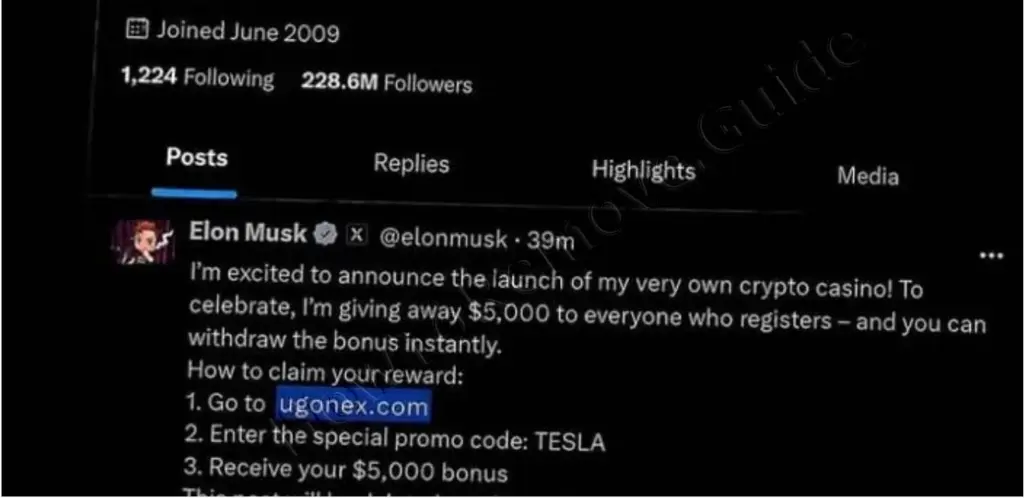

How the Ugonex Scam Deception Funnel Works
The funnel is effective because each step feels small in the moment. A user is not usually asked for everything at once; instead, the scam layers trust, excitement, urgency, and embarrassment until another payment feels easier than walking away.
Most victims encounter a promotion first, then a credible-looking casino, then a profitable dashboard, then a blocked withdrawal, and finally a support script that keeps asking for more.
Social proof opens the door
The first contact often arrives through a comment, ad, referral message, or influencer-style clip. It suggests the offer is popular and temporary, encouraging action before verification.
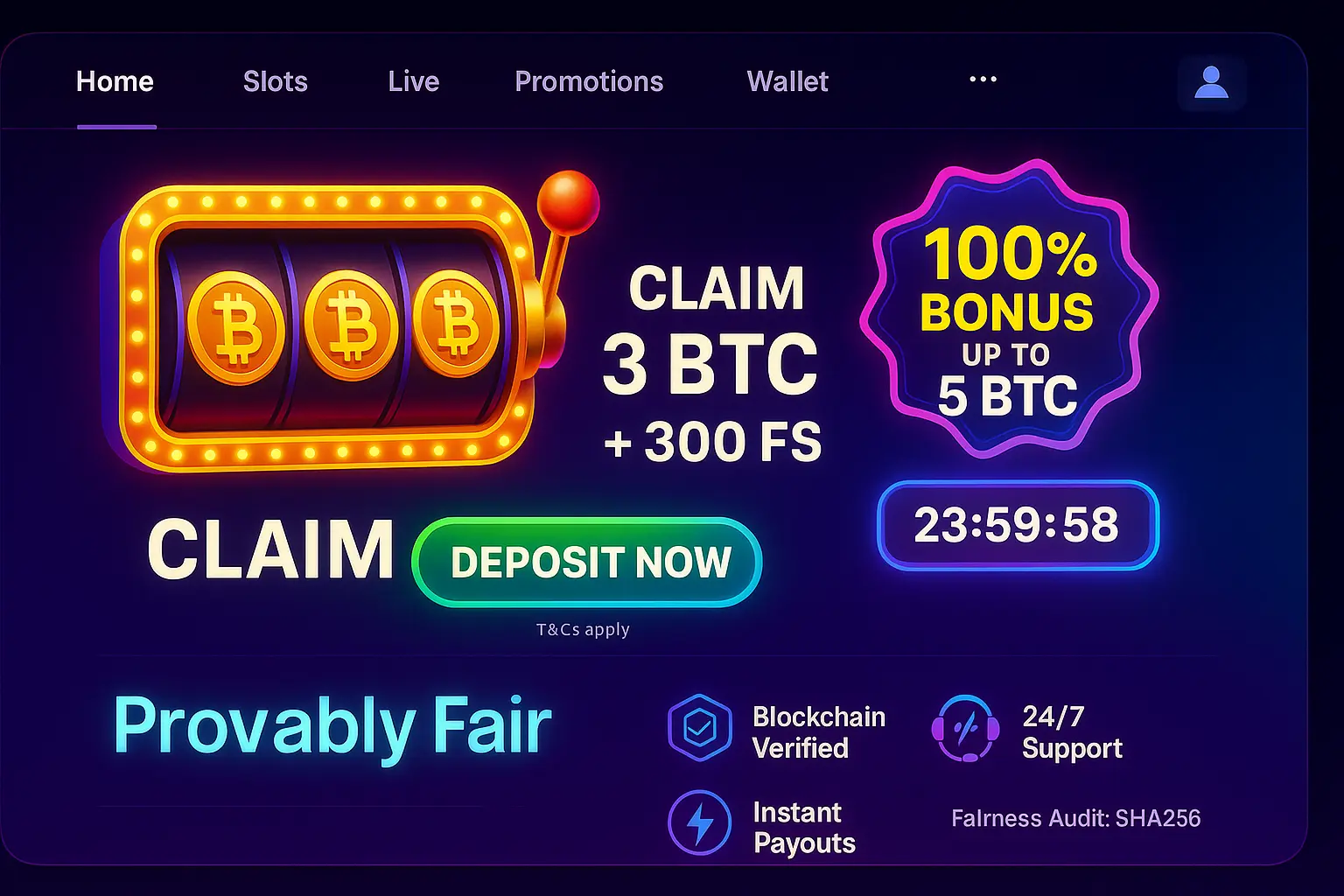
Visual polish creates misplaced trust
The site may include game categories, balance widgets, support bubbles, VIP tiers, and fairness statements. Those elements are inexpensive to copy, but they can make the platform feel operational and established.
Fake progress keeps the user engaged
Early spins, bonuses, or account credits may appear to produce impressive returns. The goal is to make the user imagine a real payout and become reluctant to abandon the displayed amount.
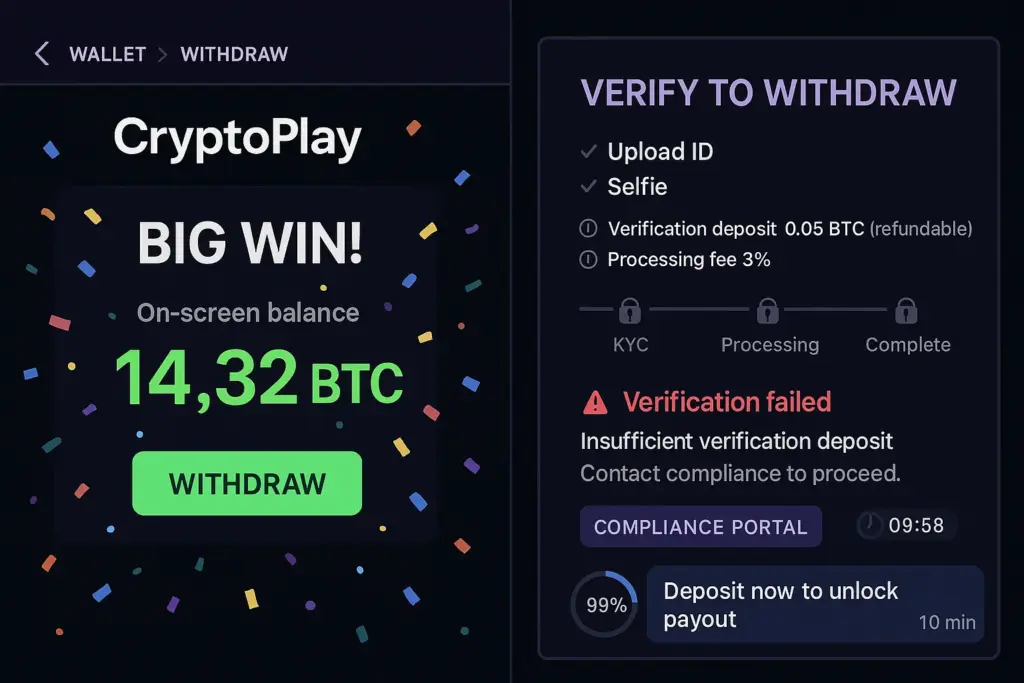
The withdrawal gate changes the stakes
When the user requests cashout, the platform introduces a new obstacle: KYC, tax, VIP upgrade, collateral deposit, wallet verification, or AML review. Each explanation sounds official while extracting value.

The exit stage adds another risk
After payments stop, the site may stall, shut down, or redirect users elsewhere. Follow-up recovery messages can then exploit the victim’s frustration by charging another fee for impossible assistance.
Staying safe from crypto casino scams like Ugonex
The safest habit is to verify before you deposit, not after a balance appears. Use the following checks to separate a genuine service from a page that merely imitates one, and keep your wallet exposure limited until the operator has been proven outside its own marketing.
Start with regulator records
Visit the regulator’s site yourself and search the listed license, company, and domain. Screenshots of badges on the casino page are easy to fake and should not be trusted alone.
Investigate the domain before registering
A newly created domain with hidden ownership, no archived history, and a clone-like layout is a major warning. Longstanding businesses usually leave a broader trace than one promotional page.
Never pay to release funds
A demand for an unlock deposit, tax prepayment, account level fee, or compliance payment should end the session. Paying rarely removes the barrier; it teaches the scam that you can be pressured again.
Favor services with dispute options
Platforms that use accountable payment routes, publish legal contacts, and provide written complaint procedures offer more recourse than anonymous crypto-only sites.
Use wallet compartmentalization
Keep primary holdings away from experimental sites. A separate low-value wallet reduces the damage if a platform abuses permissions or convinces you to send funds.
Question fairness labels
Marketing phrases such as fair, certified, or provable need supporting data. Without independently checkable hashes, seeds, audit records, or transparent rules, the label is just a trust cue.
Record details immediately
Capture the domain, referral source, wallet addresses, transaction IDs, chat logs, email headers, and screenshots before the site changes. Scam pages can disappear quickly.
Treat urgency as evidence
Limited-time bonuses and warnings that a payout will expire are designed to rush decisions. Slow verification is a security control, not hesitation.
Useful Resources for Scam Reporting and Prevention (By Country)
If damage has already occurred, focus on containment and documentation. Report with transaction hashes and screenshots, alert any involved exchanges, and be extremely cautious of private recovery agents who request payment first.
Use the country reporting guide below
| Country / Agency | URL | Category / Use-case | Phone/Email |
| Australia – Crime Stoppers | https://www.crimestoppers.com.au | Anonymous tips about crime | 1800 333 000 |
| Australia – National Anti-Scam Center (Scamwatch) | https://www.scamwatch.gov.au/report-a-scam | General scams; phishing; texts/emails | |
| Australia – Police Assistance Line (non-emergency) | https://www.police.gov.au | Local police report | 131 444 |
| Australia – ReportCyber (ACSC) | https://www.cyber.gov.au/report | Cybercrime (hacks, fraud, extortion) | |
| Canada – Canadian Anti-Fraud Center (CAFC) | https://www.antifraudcentre-centreantifraude.ca/report-signalez-eng.htm | General scams incl. phone/text/email | |
| France – DGCCRF (SignalConso) | https://signal.conso.gouv.fr | Consumer scams/deceptive practices | |
| France – PHAROS – Internet-Signalement | https://www.internet-signalement.gouv.fr | Online content & cybercrime reports | |
| Germany – Bundeskriminalamt / Local Police | https://www.polizei.de/Polizei/DE/Home/home_node.html | Report online fraud | |
| Germany – Weißer Ring – Victim Support | https://weisser-ring.de | Victim support | 116 006 |
| India – DoT Helpline (Sanchar Saathi) | https://sancharsaathi.gov.in | Fraudulent telecom/SIM related | 155260 |
| India – National Consumer Helpline | https://consumerhelpline.gov.in | Consumer scams | 1800-11-4000 / 1915 |
| India – National Cyber Crime Reporting Portal | https://cybercrime.gov.in | Cybercrime incl. online fraud | 1930 |
| Japan – Consumer Affairs Agency (CAA) | https://www.caa.go.jp/policies/policy/consumer_policy/caution/cybercrime/ | Consumer scams | |
| Japan – National Police Agency – Cybercrime | https://www.npa.go.jp/bureau/cyber/ | Cybercrime reporting | |
| Mexico – Guardia Nacional (National Guard) | https://www.gob.mx/gn | Cybercrime reporting | |
| Mexico – Instituto Federal de Telecomunicaciones (IFT) | https://www.ift.org.mx | Telecom/online services scams | |
| Mexico – PROFECO | https://www.gob.mx/profeco | Consumer fraud & ecommerce | |
| Netherlands – AFM – Report investment fraud | https://www.afm.nl/en/consumenten/themas/beleggen/misleiding-misbruik | Investment/crypto | |
| Netherlands – Fraudehelpdesk | https://www.fraudehelpdesk.nl/melden | General scams (incl. phishing/SMS) | 088-7867372 |
| Netherlands – Politie – Meldpunt Internetoplichting | https://www.politie.nl/themas/internetoplichting.html | Online shopping fraud | |
| New Zealand – CERT NZ | https://www.cert.govt.nz/individuals/report-an-issue/ | Phishing, identity scams | |
| New Zealand – Department of Internal Affairs – Spam | https://www.dia.govt.nz/Spam-Contact-Us | Email/SMS spam | [email protected] |
| New Zealand – IDCARE | https://www.idcare.org | Victim support (identity compromise) | 0800 121 068 |
| New Zealand – Netsafe – Report | https://www.netsafe.org.nz/report/ | Online harms & scams | |
| New Zealand – New Zealand Police (non-emergency) | https://www.police.govt.nz/use-105 | Report fraud/online crime | 105 |
| Nigeria – Economic & Financial Crimes Commission (EFCC) | https://www.efcc.gov.ng | Financial scams incl. crypto/investment | [email protected] |
| Nigeria – Nigeria Police Special Fraud Unit (SFU) | https://www.specialfraudunit.org.ng | Serious fraud | Voice/SMS: 0708 227 6895; WhatsApp: 0812 760 9914 |
| Poland – CERT Polska (CERT.PL) | https://cert.pl/en/report/ | Cyber incidents & phishing | |
| Poland – Dyzurnet.pl | https://dyzurnet.pl | Illegal online content (esp. child protection) | |
| Poland – Polish Police (Policja) | https://www.policja.pl | Report scams to police | |
| Singapore – Anti-Scam Centre / Anti-Scam Helpline | https://www.scamalert.sg | General scams; texts; calls | 1800-722-6688 |
| Singapore – Monetary Authority of Singapore (MAS) | https://www.mas.gov.sg/investor-alert-list | Investment/crypto checks | |
| Singapore – Singapore Police Force | https://www.police.gov.sg/iwitness | Police report (cybercrime) | |
| South Africa – Cybersecurity Hub (CSIRT) | https://www.cybersecurityhub.gov.za | Cyber incidents incl. scams | |
| South Africa – South African Fraud Prevention Service (SAFPS) | https://www.safps.org.za | Identity fraud support | 011-867-2234 |
| South Africa – South African Police Service (SAPS) | https://www.saps.gov.za | Police report (cybercrime unit) | |
| South Korea – Korea Communications Commission (KCC) | https://www.kcc.go.kr | Telecom-related fraud | |
| South Korea – Korea Internet & Security Agency (KISA) | https://www.kisa.or.kr | Phishing, online harms | |
| South Korea – Korean National Police Agency – Cyber Bureau | https://ecrm.cyber.go.kr | Cybercrime reporting | |
| Spain – INCIBE – Oficina de Seguridad del Internauta (OSI) | https://www.osi.es/es/reporte | Cybersecurity & online fraud | |
| Spain – Policía Nacional / Guardia Civil | https://www.policia.es | Report scams to police | |
| Sweden – Crime Victim Authority (Brottsoffermyndigheten) | https://www.brottsoffermyndigheten.se | Victim support & compensation | 090–70 82 00 |
| Sweden – Polisen (Swedish Police) | https://polisen.se | Report fraud/cybercrime | 114 14 (non-emergency); 112 (emergency) |
| Sweden – Swedish Consumer Agency (Konsumentverket) | https://www.konsumentverket.se | Unfair business practices | |
| United Arab Emirates – Abu Dhabi Police – Aman Service | https://www.adpolice.gov.ae | Cybercrime tips/reporting | SMS 2828; 800 2626 |
| United Arab Emirates – Dubai Police – eCrime | https://www.dubaipolice.gov.ae | Cybercrime reporting | 04 606 1600 |
| United Arab Emirates – Ministry of Interior – Cyber Crime Dept. | https://www.moi.gov.ae | Cybercrime incl. online scams | |
| United Arab Emirates – Telecommunications Regulatory Authority (TRA) / TDRA | https://www.tra.gov.ae | Telecom-related scams/phishing | |
| United Kingdom – Action Fraud (NFIB) | https://www.actionfraud.police.uk | General scams & cybercrime (non-emergency) | 0300 123 2040 |
| United Kingdom – Citizens Advice Consumer Service | https://www.citizensadvice.org.uk/consumer/get-more-help/if-you-need-more-help-about-a-consumer-issue/ | Consumer problems & scam guidance | 0808 223 1133 |
| United Kingdom – Financial Conduct Authority (FCA) | https://www.fca.org.uk/consumers/report-scam-us | Investment/crypto & financial services | |
| United Kingdom – National Cyber Security Centre (NCSC) | https://www.ncsc.gov.uk/collection/phishing-scams | Phishing emails & suspicious websites | |
| United Kingdom – Stop Scams UK ‘159’ | https://stopscamsuk.org.uk/159 | Banking APP fraud (direct to your bank) | 159 |
| United States – AARP Fraud Watch Network Helpline | https://www.aarp.org/money/scams-fraud/ | Victim support | 833-372-8311 |
| United States – Better Business Bureau – Scam Tracker | https://www.bbb.org/scamtracker | Business/marketplace scams | |
| United States – FBI Internet Crime Complaint Center (IC3) | https://www.ic3.gov | Internet crime incl. investment/crypto | |
| United States – Federal Trade Commission – ReportFraud | https://reportfraud.ftc.gov | General scams, phishing, texts/emails | 1-877-382-4357 |
| United States – National Center for Disaster Fraud | https://www.justice.gov/disaster-fraud | Disaster-related scams | (866) 720-5721 |
| United States – SEC Tips & Complaints | https://www.sec.gov/tcr | Investment & securities/crypto-asset offerings |
Ugonex should be treated as a withdrawal-obstruction scam unless proven otherwise by independent records, real payouts, and accountable ownership. Do not send another fee, do not upload more documents, lock down affected accounts, and keep your evidence organized for banks, exchanges, and cybercrime reporting channels.
