

Vilemex.com is not an “emerging crypto casino” or “your one-way ticket to financial freedom”. Instead, it’s just a disposable clone in a bigger scam assembly line. This week, the scam’s name is Vilemex.com; next week, the same template reappears under a fresh domain, with identical games, bonus banners, promises, and “recent winners” tickers.
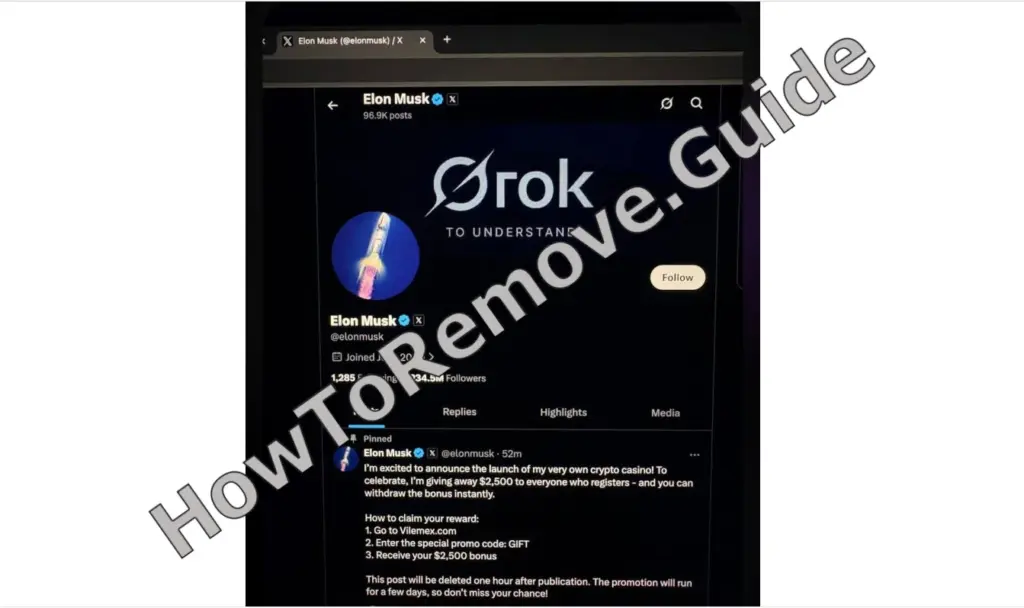
Traffic to these scams is driven by TikTok clips, X posts, and AI-made accounts pushing promo codes and screenshots of impossible payouts. The site’s playbook is always the same: they give you a huge signup bonus, let you spin until your balance inevitably climbs, then they block withdrawal attempts behind a required “verification” deposit or “activation” transfer.
Scams of Vilemex.com‘s type are known to steal personal data and passwords. Install SpyHunter Pro to scan for risks, remove any dangerous trackers, and enable real-time protection.

Try Free For 7 Days*
Buy now15% OFF if you buy straight without trial.
 OFFER
OFFERIf you’ve already gotten to this point in the scam, that’s your last chance to stop. If you proceed with the deposit transfer, that money will be lost, and, what’s worse, the scammers may also gain access to your personal data, banking details, and crypto wallet.
Handle any contact with Vilemex.com, Nonspace.top, or Geobet.cc like an ongoing security incident. You priority should always be to first stop the bleeding, then lock down accounts, and preserve evidence. The notes below explain the pattern.
IMPORTANT! READ BEFORE PROCEEDING!
If you have already interacted with Vilemex.com, treat this like incident response, not customer support. Cut communication, refuse any new “unlock” requests, and focus on securing what’s left. Save everything you can, because evidence plus speed beats wishful thinking. Do these five containment steps immediately:
- Harden logins right now: rotate email/exchange passwords, enable strong 2FA, and sign out other sessions.
- Isolate risky devices: if you installed an “app” or extension, disconnect it from wallets and run a full security scan (reset if uncertain).
- Build an evidence folder: URLs, chats, screenshots, deposit addresses, and TxIDs in one place.
- Alert any services you used: contact exchanges/venues involved, share TxIDs, and ask what address-flagging options exist.
- Lock down your phone account: add a carrier PIN/SIM lock and review recovery settings to reduce takeover attempts.
How We Know Vilemex.com is a Scam
Strip away the animations and the story becomes familiar: confidence is manufactured while verification is avoided. The indicators below, taken together, match a withdrawal-hostage operation rather than a regulated gambling venue.
A balance that isn’t yours
The dashboard number is off-chain bookkeeping, not proof of segregated, withdrawable player funds.
KYC held until cash-out
Identity checks arrive late, when your urge to withdraw gives them maximum leverage over you.
Support routed to messengers
Serious issues get pushed toward Telegram/WhatsApp handles instead of accountable, auditable support paths.
“Provably fair” without proofs
There’s no reproducible seed/hash workflow you can verify yourself; it’s branding, not mathematics.
Activity that feels scripted
Withdrawal tickers and glowing testimonials can be fabricated in minutes and rarely match independent sources.
Pressure disguised as “VIP”
Scarcity timers, flattery, and exclusivity language push snap decisions – exactly when you should slow down.

How the Vilemex.com Scam Deception Funnel Works
First, the hook appears where attention is cheapest: sponsored posts, DMs, or AI-styled influencer clips that push a referral code and a fresh domain. Once you know this pattern, the next step becomes easier to predict.
Next comes the “free” balance and the hidden catch – an “activation” deposit – followed by a pivot into chat-driven pressure. When the flow stalls, the site may push screen-sharing “help,” wave threats about freezes, and eventually vanish into a new name.
Promo hooks and influencer codes
A “limited” referral code is dangled – often via bots or synthetic influencer content – so you click before you verify anything.
Casino skin and bonus theater
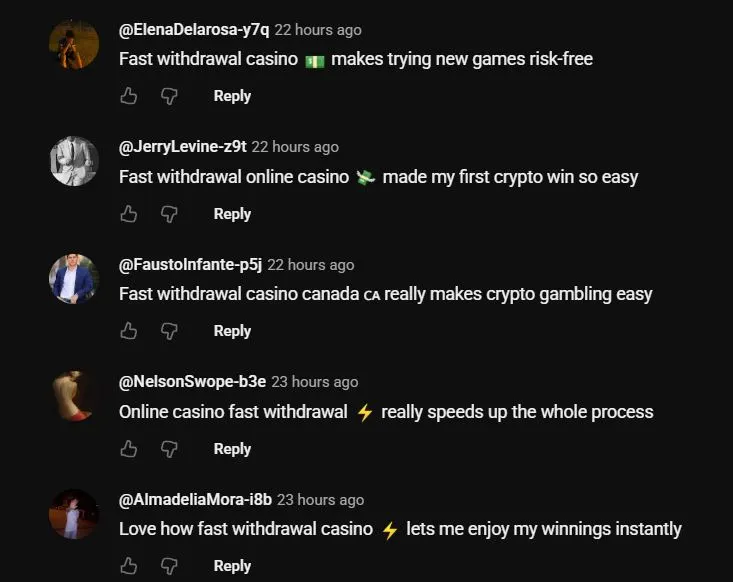
Polished visuals and oversized “bonus” claims are used to short-circuit skepticism and extract a first deposit quickly.

Inflated balances, then the gate
A rapidly rising “balance” can look like winnings, but it remains a private ledger entry until a real withdrawal occurs.
Fee-gates and KYC harvest
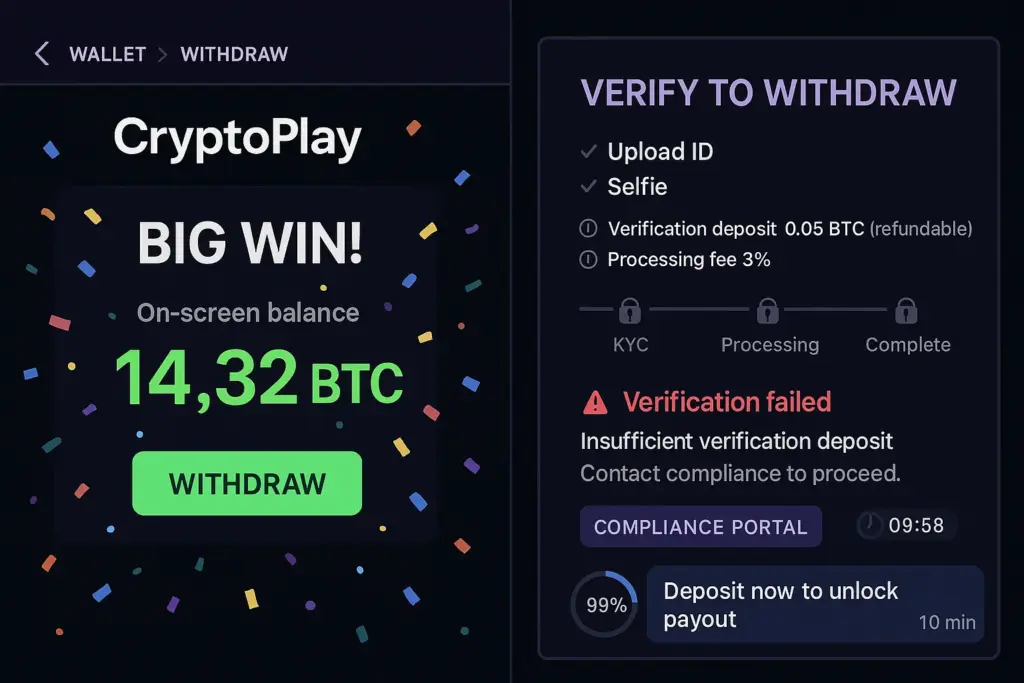
Withdrawals often trigger late-stage KYC and “helpful” troubleshooting that can escalate into requests for screen-sharing access.

Stalling, rebrands, and “recovery” bait
When resistance appears, delays and threats are used to keep you engaged; then the site goes quiet and reappears under a new name, followed by “recovery” pitches.
Staying safe from crypto casino scams like Vilemex.com
Practical safety is mostly boring: repeatable checks, small blast-radius habits, and a refusal to act under pressure. The items below harden your routine so a flashy clone can’t rush you into irreversible steps.
Verify license status in official registers
Check the regulator’s register using the operator’s company name and domain; on-page logos and badges prove nothing.
Check domain age and history
Use public WHOIS plus web archives to spot newborn, privacy-masked domains and recurring template rebrands.
Reject withdrawal fees and “unlock” deposits
If someone asks you to send money in order to withdraw money, assume the payout is fictional.
Prefer venues with recourse
Favor operators with verifiable corporate details and dispute paths; crypto-only fronts maximize irreversibility and ambiguity.
Limit wallet exposure
Use a separate low-balance “burner” wallet for new sites, and keep cold storage completely disconnected.
Validate “provably fair” claims
If you can’t reproduce outcomes with published seeds/hashes and clear instructions, treat the claim as pure marketing.
Document and report rapidly
Save TxIDs, addresses, chats, and screenshots, then notify exchanges quickly; speed can make a real difference.
Build a deliberate slow-down reflex
Pause before you act: type the domain manually, avoid ad links, cross-check third-party discussions, and walk away if urgency is being manufactured.
Useful Resources for Scam Reporting and Prevention (By Country)
Reporting isn’t instant rescue, but it creates breadcrumbs that exchanges, investigators, and support organizations can connect. Use blockchain explorers to copy TxIDs and destination addresses, then submit reports promptly through the country resources below and any services your funds touched.
Click here to report the scam in your country
| Country / Agency | URL | Category / Use-case | Phone/Email |
| Australia – Crime Stoppers | https://www.crimestoppers.com.au | Anonymous tips about crime | 1800 333 000 |
| Australia – National Anti-Scam Center (Scamwatch) | https://www.scamwatch.gov.au/report-a-scam | General scams; phishing; texts/emails | |
| Australia – Police Assistance Line (non-emergency) | https://www.police.gov.au | Local police report | 131 444 |
| Australia – ReportCyber (ACSC) | https://www.cyber.gov.au/report | Cybercrime (hacks, fraud, extortion) | |
| Canada – Canadian Anti-Fraud Center (CAFC) | https://www.antifraudcentre-centreantifraude.ca/report-signalez-eng.htm | General scams incl. phone/text/email | |
| France – DGCCRF (SignalConso) | https://signal.conso.gouv.fr | Consumer scams/deceptive practices | |
| France – PHAROS – Internet-Signalement | https://www.internet-signalement.gouv.fr | Online content & cybercrime reports | |
| Germany – Bundeskriminalamt / Local Police | https://www.polizei.de/Polizei/DE/Home/home_node.html | Report online fraud | |
| Germany – Weißer Ring – Victim Support | https://weisser-ring.de | Victim support | 116 006 |
| India – DoT Helpline (Sanchar Saathi) | https://sancharsaathi.gov.in | Fraudulent telecom/SIM related | 155260 |
| India – National Consumer Helpline | https://consumerhelpline.gov.in | Consumer scams | 1800-11-4000 / 1915 |
| India – National Cyber Crime Reporting Portal | https://cybercrime.gov.in | Cybercrime incl. online fraud | 1930 |
| Japan – Consumer Affairs Agency (CAA) | https://www.caa.go.jp/policies/policy/consumer_policy/caution/cybercrime/ | Consumer scams | |
| Japan – National Police Agency – Cybercrime | https://www.npa.go.jp/bureau/cyber/ | Cybercrime reporting | |
| Mexico – Guardia Nacional (National Guard) | https://www.gob.mx/gn | Cybercrime reporting | |
| Mexico – Instituto Federal de Telecomunicaciones (IFT) | https://www.ift.org.mx | Telecom/online services scams | |
| Mexico – PROFECO | https://www.gob.mx/profeco | Consumer fraud & ecommerce | |
| Netherlands – AFM – Report investment fraud | https://www.afm.nl/en/consumenten/themas/beleggen/misleiding-misbruik | Investment/crypto | |
| Netherlands – Fraudehelpdesk | https://www.fraudehelpdesk.nl/melden | General scams (incl. phishing/SMS) | 088-7867372 |
| Netherlands – Politie – Meldpunt Internetoplichting | https://www.politie.nl/themas/internetoplichting.html | Online shopping fraud | |
| New Zealand – CERT NZ | https://www.cert.govt.nz/individuals/report-an-issue/ | Phishing, identity scams | |
| New Zealand – Department of Internal Affairs – Spam | https://www.dia.govt.nz/Spam-Contact-Us | Email/SMS spam | [email protected] |
| New Zealand – IDCARE | https://www.idcare.org | Victim support (identity compromise) | 0800 121 068 |
| New Zealand – Netsafe – Report | https://www.netsafe.org.nz/report/ | Online harms & scams | |
| New Zealand – New Zealand Police (non-emergency) | https://www.police.govt.nz/use-105 | Report fraud/online crime | 105 |
| Nigeria – Economic & Financial Crimes Commission (EFCC) | https://www.efcc.gov.ng | Financial scams incl. crypto/investment | [email protected] |
| Nigeria – Nigeria Police Special Fraud Unit (SFU) | https://www.specialfraudunit.org.ng | Serious fraud | Voice/SMS: 0708 227 6895; WhatsApp: 0812 760 9914 |
| Poland – CERT Polska (CERT.PL) | https://cert.pl/en/report/ | Cyber incidents & phishing | |
| Poland – Dyzurnet.pl | https://dyzurnet.pl | Illegal online content (esp. child protection) | |
| Poland – Polish Police (Policja) | https://www.policja.pl | Report scams to police | |
| Singapore – Anti-Scam Centre / Anti-Scam Helpline | https://www.scamalert.sg | General scams; texts; calls | 1800-722-6688 |
| Singapore – Monetary Authority of Singapore (MAS) | https://www.mas.gov.sg/investor-alert-list | Investment/crypto checks | |
| Singapore – Singapore Police Force | https://www.police.gov.sg/iwitness | Police report (cybercrime) | |
| South Africa – Cybersecurity Hub (CSIRT) | https://www.cybersecurityhub.gov.za | Cyber incidents incl. scams | |
| South Africa – South African Fraud Prevention Service (SAFPS) | https://www.safps.org.za | Identity fraud support | 011-867-2234 |
| South Africa – South African Police Service (SAPS) | https://www.saps.gov.za | Police report (cybercrime unit) | |
| South Korea – Korea Communications Commission (KCC) | https://www.kcc.go.kr | Telecom-related fraud | |
| South Korea – Korea Internet & Security Agency (KISA) | https://www.kisa.or.kr | Phishing, online harms | |
| South Korea – Korean National Police Agency – Cyber Bureau | https://ecrm.cyber.go.kr | Cybercrime reporting | |
| Spain – INCIBE – Oficina de Seguridad del Internauta (OSI) | https://www.osi.es/es/reporte | Cybersecurity & online fraud | |
| Spain – Policía Nacional / Guardia Civil | https://www.policia.es | Report scams to police | |
| Sweden – Crime Victim Authority (Brottsoffermyndigheten) | https://www.brottsoffermyndigheten.se | Victim support & compensation | 090–70 82 00 |
| Sweden – Polisen (Swedish Police) | https://polisen.se | Report fraud/cybercrime | 114 14 (non-emergency); 112 (emergency) |
| Sweden – Swedish Consumer Agency (Konsumentverket) | https://www.konsumentverket.se | Unfair business practices | |
| United Arab Emirates – Abu Dhabi Police – Aman Service | https://www.adpolice.gov.ae | Cybercrime tips/reporting | SMS 2828; 800 2626 |
| United Arab Emirates – Dubai Police – eCrime | https://www.dubaipolice.gov.ae | Cybercrime reporting | 04 606 1600 |
| United Arab Emirates – Ministry of Interior – Cyber Crime Dept. | https://www.moi.gov.ae | Cybercrime incl. online scams | |
| United Arab Emirates – Telecommunications Regulatory Authority (TRA) / TDRA | https://www.tra.gov.ae | Telecom-related scams/phishing | |
| United Kingdom – Action Fraud (NFIB) | https://www.actionfraud.police.uk | General scams & cybercrime (non-emergency) | 0300 123 2040 |
| United Kingdom – Citizens Advice Consumer Service | https://www.citizensadvice.org.uk/consumer/get-more-help/if-you-need-more-help-about-a-consumer-issue/ | Consumer problems & scam guidance | 0808 223 1133 |
| United Kingdom – Financial Conduct Authority (FCA) | https://www.fca.org.uk/consumers/report-scam-us | Investment/crypto & financial services | |
| United Kingdom – National Cyber Security Centre (NCSC) | https://www.ncsc.gov.uk/collection/phishing-scams | Phishing emails & suspicious websites | |
| United Kingdom – Stop Scams UK ‘159’ | https://stopscamsuk.org.uk/159 | Banking APP fraud (direct to your bank) | 159 |
| United States – AARP Fraud Watch Network Helpline | https://www.aarp.org/money/scams-fraud/ | Victim support | 833-372-8311 |
| United States – Better Business Bureau – Scam Tracker | https://www.bbb.org/scamtracker | Business/marketplace scams | |
| United States – FBI Internet Crime Complaint Center (IC3) | https://www.ic3.gov | Internet crime incl. investment/crypto | |
| United States – Federal Trade Commission – ReportFraud | https://reportfraud.ftc.gov | General scams, phishing, texts/emails | 1-877-382-4357 |
| United States – National Center for Disaster Fraud | https://www.justice.gov/disaster-fraud | Disaster-related scams | (866) 720-5721 |
| United States – SEC Tips & Complaints | https://www.sec.gov/tcr | Investment & securities/crypto-asset offerings |
Bottom line: if the “money” only exists on the screen, the operator controls the story. Verify independently, keep your wallet exposure tiny, and treat any pay-to-withdraw demand as the tell that you’re in a trap.
