

So, about Yolostakes, let me just stop you here before you even think this is some golden ticket. It may look polished at first glance, maybe you even saw a flashy TikTok or a fake Elon Musk video hyping it as the “#1 decentralized casino”. But that’s just a blatant farce that disguises a run-of-the-mill scam.
The scammers behind Yolostakes, and other similar fake sites like Zerano and Goxwin, dangle free signup bonuses, sometimes thousands in crypto, just for registering. That’s how they bait you. You enter the site, you spin a few games, maybe you even “win”. But remember that those numbers on the screen aren’t real money. They’re just there to make you feel lucky and make you want more.
The trick kicks in when you try to withdraw your supposed winnings. The moment you do, they tell you that you need to make a deposit first, some so-called activation or transfer fee. And the moment you transfer the deposit, that money’s gone forever. You’ve been scammed.
Unless you have read this article and learned to recognize such fraudulent sites in order to stay safe from them.
Scams of Yolostakes.com‘s type are known to steal personal data and passwords. Install SpyHunter Pro to scan for risks, remove any dangerous trackers, and enable real-time protection.

Try Free For 7 Days*
Buy now15% OFF if you buy straight without trial.
 OFFER
OFFERHow the Yolostakes.com scheme operates
Yolostakes.com is a withdrawal-blocking con dressed as a casino. It copies the look of legitimate platforms with familiar games and chat panes that appear active. Terms sound plausible, but the one function that matters is missing: real payouts. The “house” never sends money. It paints fake profits on your dashboard to push a bigger deposit and a final “unlock” payment. When scrutiny builds, the operator switches to a fresh domain and restarts the hook.
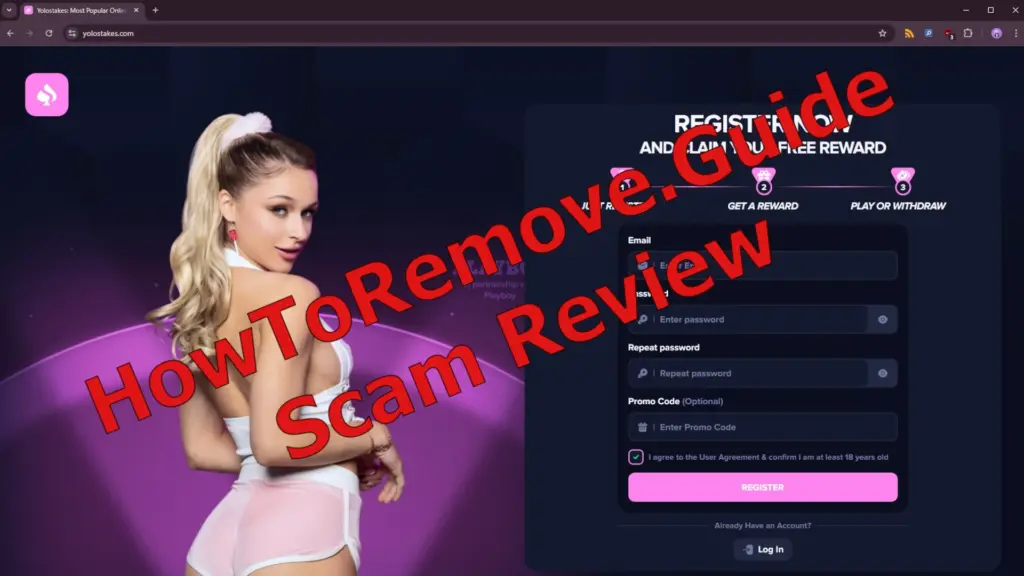
The funnel is simple. A promo code prompts a first deposit. Early results look lucky and the on-screen balance climbs just enough to feel like you found an edge. The moment you request a withdrawal, the script reverses. New gates appear in sequence, each demanding a payment labeled as routine “verification” or “compliance.” You are told to submit a “verification deposit,” then an “anti-fraud collateral,” then a “tax prepayment,” or a “VIP tier fee.” Every transfer shifts the target and none of it releases funds.
The site also leans on well-known psychological hooks. Variable rewards keep spins exciting. The house-money effect nudges you to “spend winnings.” Sunk-cost bias nudges one more payment. “VIP verification” and status language push fear of missing out. They seed chats with bots. They fill pages with recycled praise and stage influencer name-drops. Ownership details stay hidden. Domains rotate. Licensing badges fail to resolve in any official register.
If Yolostakes caught you: immediate actions
Your first job is to contain damage. Do not argue with site “support.” Assume anything you typed into Yolostakes is compromised. Crypto transfers are final. Treating a loss as recoverable on demand is how people get pushed into paying twice.
Lock down the accounts that matter. Change your email password. Change exchange and wallet passwords. Turn on app-based two-factor authentication. Revoke any API keys. Check device and account activity for unfamiliar sessions.
Move the coins you still control. Create clean wallets with brand-new seed phrases. Do not reuse seeds. Do not store seeds in screenshots or cloud notes. Treat any wallet you connected near Yolostakes as tainted.
If you uploaded identity documents, treat this as a data-exposure event. Place a credit freeze where available. Add a fraud alert if your jurisdiction offers it. Monitor statements and account notifications closely. Consider dark-web monitoring so you catch impersonation attempts early.
Collect and preserve evidence for reports. Save the URL and key subpages. Capture screenshots of balances and chats. Record deposit addresses and TXIDs. Note timestamps for each transfer and message. Keep emails and ticket numbers. Store the set off your main machine, preferably read-only.
Report through official channels without delay. Use your national cybercrime portal. Where applicable, file with IC3, Action Fraud, or econsumer.gov for cross-border coordination. Provide the evidence package so investigators can link addresses across cases.
Notify any exchanges your funds touched. Submit the wallet addresses and TXIDs you used. Exchanges can sometimes flag or freeze assets if those funds later pass through their platforms.
Expect the “phase-two” hustle and ignore it. Impostors will pose as regulators, lawyers, or recovery specialists and promise quick refunds for a fee or for remote access. Decline the request. Block the sender. Log the approach.
Map the flow on a blockchain explorer for your records. You are unlikely to pull funds back directly. A clear money trail still strengthens law-enforcement work and future exchange actions.
Tell-tale signs specific to Yolostakes
Expect shortcuts and you will see them. The template repeats across clones and the pattern is lazy once you look for it.
First, any demand to pay a “verification deposit,” an “anti-fraud collateral,” a “tax prepayment,” or a “VIP tier fee” to release winnings is a stop sign. Legitimate operators do not require fresh payments to send a balance that is already yours.
Second, licensing claims collapse as soon as you check. Badges and ID strings do not resolve in official registers. The company name in the footer fails to match the domain. The pictured “licensor” is an image rather than a link.
Third, payouts live only on the dashboard. When you request a withdrawal, the site stalls behind surprise KYC and vague “security reviews,” while regulated platforms verify identity before play begins.
Fourth, the money rails give it away. Deposits accept crypto only. Chargebacks are impossible by design. Fiat options are missing or nonfunctional. “Support” sits on Telegram or a web chat that repeats canned lines.
Finally, the social-proof theatre looks synthetic once you inspect it. Pop-ups announce “new winners” every few seconds. Influencer blurbs are implausible or stolen. Review sites that praise Yolostakes are brand-new or obviously seeded.
Staying safe from look-alike casino frauds like Yolostakes
Prevention costs less than triage. Build habits that make scams boring and you will avoid most traps.
Check licences in the public register for the named jurisdiction. A footer badge is not evidence. The operator name and the domain should appear with the licence number in the regulator’s database.
Check domain history before any deposit. Use WHOIS to see age and ownership. Compare captures in the Wayback Machine to spot sudden brand pivots. A fresh domain that shouts promises deserves a pass.
Run the URL through reputation scanners such as Google Safe Browsing and VirusTotal. These tools are not oracles, yet warnings plus other signals should tilt you toward “no.”
Avoid platforms that force crypto-only deposits or dangle extreme sign-up “bonuses.” Reputable businesses support regulated fiat methods and keep promotions within normal bounds.
Read withdrawal terms slowly. Phrases like “verification deposit,” “anti-fraud collateral,” “tax prepayment,” or “VIP tier fee required to withdraw” are neon alarms. Close the tab and move on.
Research outside the site’s bubble. Look for independent reporting and regulator warnings. Search for complaints that mention identical wording or cloned interfaces across different domains.
Harden your setup so a mistake does not cascade. Use a password manager. Turn on app-based 2FA. Add anti-phishing browser extensions. Keep separate wallets for testing and for savings. Never gamble with keys that protect real holdings.
Treat influencer codes and unsolicited DMs as advertising at best and misdirection at worst. Verify endorsements through sources you already trust or skip them entirely.
