

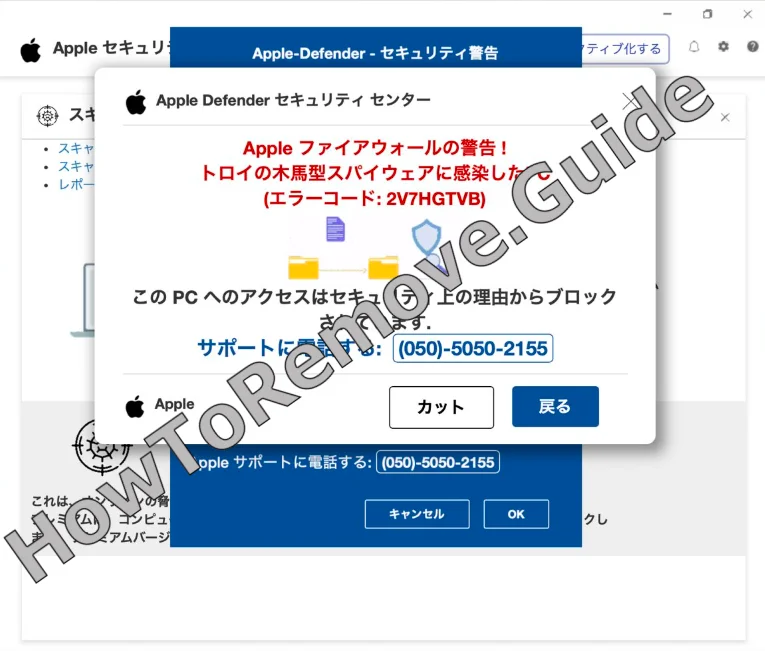
Recently, I encountered several reports about a very strange warning message that appears on Windows PCs out of the blue for no apparent reason. Users who got it all became worried about the state of their system, but after I did some digging into this issue, I reached the conclusion that this is actually a blatant scam!
Here’s what actually happens when this scam targets you: You’ll usually get a warning pop-up in the center of your screen that looks almost exactly like a legit Windows error message. It could say something like “Your computer has encountered a problem. Call Microsoft Support immediately at 050-5050-2155.” It looks official and serious and that’s how the scammers trap you.
Scams of 05050502155‘s type are known to steal personal data and passwords. Install SpyHunter Pro to scan for risks, remove any dangerous trackers, and enable real-time protection.

Try Free For 7 Days*
Buy now15% OFF if you buy straight without trial.
 OFFER
OFFERNow, if this has ever happened to you, here’s what you need to know. It’s not real. It’s not Microsoft. And if you call that number, you’re walking straight into a scam that’s tricked way too many people already. And here’s how it works.
How They Reel You In
Let’s slow down and take this from the top. Because once you understand how they bait you, you’re way less likely to take the hook next time.
First off, the screen freeze isn’t because of an actual system failure. That’s just part of the show. The scammers use scripts and fake pop-ups that are made to imitate Windows errors. The goal? Make you panic. And once you’re in that state of panic, they hit you with loud sounds and urgent warnings so your brain goes into survival mode instead of logic mode.
Now here’s the clever part: the screen tells you to call a “support center” – again, using names like Microsoft Support or Windows Help. The number they flash is usually something like 05050502155(050-5050-2155). Sounds official, right? But these numbers lead straight to the scammers.
If you call, you’ll get someone who sounds calm, helpful, and professional. They’ll walk you through a few steps – usually telling you to press Ctrl + Alt + Delete to open Task Manager. That’s where they earn your trust, because Task Manager is real, and now you’re thinking, “Maybe this is legit?” Spoiler: It’s not.
When the Ask Comes In
So you’re on the line, following their instructions, and then comes the pitch. The “technician” tells you your system is infected with a serious virus. Maybe even multiple viruses. And they say your data – photos, passwords, financial info – is all at risk unless you act right now.
Then the bomb drops: to fix the issue, you need to pay for their service. But – and here’s the part that should always raise red flags – they don’t ask for a credit card. They tell you to go to a convenience store and buy a 50,000 yen iTunes card. No joke. iTunes. In 2025.
They’ll even stay on the line while you go get it, acting like they’re walking you through a serious emergency. Once you buy it, they ask for the code on the back. And once you read it out loud, that money’s gone. No service. No virus removal. No refund.
And if you’re wondering why iTunes cards? It’s simple. They’re fast, anonymous, and easy to convert into cash or digital currency. For scammers, it’s basically digital gold.
Why People Fall For It
This kind of scam works because it preys on panic and confusion. Most people don’t know what a real system crash looks like. And when something unexpected happens – like a computer freeze with alarms blaring – it’s easy to lose your cool.
The scammers know this. They bank on it. They use psychological manipulation to get you into a high-stress state where you’ll do what they say just to make the problem go away. That’s why they mimic authority figures. When someone tells you they’re from “Microsoft Support,” or “Windows Technical Support” it automatically triggers trust – especially if you’re already feeling vulnerable.
And here’s the kicker: a lot of these fake support scams are scripted really well. They’ll have fake websites, fake certificates, fake addresses, even whitepapers to make themselves look like real tech companies. Unless you know what to look for, it can be incredibly convincing.
So What Are the Red Flags?
Let’s break down the biggest warning signs so you know exactly what to avoid:
- Pop-Ups with Phone Numbers – Legit companies like Microsoft don’t show support numbers in error pop-ups. Ever.
- Loud Alarms and Scary Messages – The goal is to scare you into action. Real error messages are quiet and straightforward, not dramatic and flashing.
- Pressure to Act Fast – Any time someone tells you that you must act right now or else, take a step back. Scammers use urgency to short-circuit your decision-making.
- Gift Cards as Payment – This one’s non-negotiable. No real tech company will ever ask for payment in gift cards.
- Broken English or Weird Grammar – A lot of these operations come from outside English-speaking countries, so their written communication can feel off.
If you see even one of these, treat it like a flashing neon sign: scam alert.
If It Happens To You
Okay, so what if it already happened? Maybe you called the number. Maybe you gave them the code. First off – breathe. You’re not the first, and sadly, you won’t be the last. But here’s what to do next:
- Cut Off Contact – Hang up immediately. Don’t take follow-up calls. Block the number.
- Don’t Send More Cards – Sometimes they’ll say the first one didn’t go through or that you owe more for unlocking your files. It’s a lie. Don’t send more.
- Run a Security Scan – Use real antivirus software to scan your computer. Some scammers try to get remote access to install malware. If you gave access, assume your system is compromised.
- Report It – File a report with your national fraud authority. It helps track these scammers and may aid in shutting down their operation.
- Warn Others – The more people know, the harder it becomes for these scams to work.
And if you’re still unsure what’s legit and what’s not? Call the real Microsoft Support. The one listed on their official website. Not whatever number shows up on a pop-up.
Final Thoughts
Here’s the thing. These scams aren’t going away anytime soon. As long as people use computers and get nervous when something unexpected happens, scammers will find new ways to exploit that fear.
But knowledge is power. Just by reading this, you’re already ahead of the curve. You now know what to look out for, what not to do, and how these scammers operate behind the curtain.
And maybe next time your screen freezes and flashes a scary message, you won’t panic. You’ll just roll your eyes, close the window, and get back to your day – because you’ll know the truth: it’s all fake. All of it.
They don’t have your files. They’re not from Microsoft. And your computer? It’s probably just fine.
