

Windows Defender’s “VulnerableDriver:WinNT/Winring0.G” alert can be startling, but it doesn’t automatically mean you’re infected. It flags a kernel-level (Ring 0) driver – WinRing0 – known to have security weaknesses (CVE-2020-14979). Code running at Ring 0 can read and modify almost anything on your PC, so a malicious implant there would be hard to stop. However, the same low-level access is used by legitimate hardware utilities. Popular monitoring and tuning tools – HWInfo64, MSI Afterburner, FanCtrl, OpenRGB, Razer Synapse, and others – may load this vulnerable driver and trigger the warning. Provenance matters: software from official sources or preinstalled by your OEM is more likely a benign vulnerability; downloads from untrusted third-party sites deserve real suspicion. Often, closing the parent app lets your antivirus quarantine the driver; removing it may disable dependent tools until they’re updated. This article unpacks how to judge your risk, and the smart, low-drama steps to take next or to make “second-opinion” scan with SpyHunter 5, then running a full scan and cleaning whatever it finds.
VulnerableDriver:WinNT/Winring0.G may expose your browser to redirects, ads, and persistent unwanted components. Install SpyHunter Pro to scan for risks, remove related threats, and enable real-time protection.
 OFFER
OFFER*Source of claim SH can remove it. Trial w/Credit card; image is for illustration; full terms.
VulnerableDriver:WinNT/Winring0.G Removal Guide
Start with the lowest-friction option to establish a clean baseline. Use Windows’ built-in uninstall workflow to try removing VulnerableDriver:WinNT/Winring0.G before diving into deeper cleanup. This approach is quick, safe, and often trims away obvious components. Even if it does not fully resolve the issue, it reduces noise and makes the remaining investigation easier to complete without confusion.
Quick Steps to Remove VulnerableDriver:WinNT/Winring0.G
- 1.1Think “supported path first,” then act: open the Start menu, launch Settings (gear icon), and prepare to manage installed applications, including VulnerableDriver:WinNT/Winring0.G. Using Settings keeps changes tracked by Windows and avoids partial removals caused by ad-hoc deletions.
- 1.2Now pivot to discovery. In Settings, select Apps to view the system’s installed programs. The panel can take a moment to populate, especially on systems with many entries or slower disks.
- 1.3Cause guides focus. Sort by Installation date so recent additions move to the top. Aligning symptoms with installation timestamps speeds recognition of items that arrived near the onset of browser redirects.
- 1.4Decision time: scan for names you do not recognize. Select a suspect entry, click Uninstall, and confirm prompts to complete removal. If User Account Control requests permission, allow it so services and scheduled components are deregistered cleanly.
- 1.5Deletions done, verify leftovers. Open File Explorer and navigate to C:\Users\YourUsername\AppData\Local\Programs. Look for folders matching the removed item or created around the problem’s start date, which may include updaters or helper modules.
- 1.6If remnants persist, right-click the offending folder and choose Delete, then empty the Recycle Bin. Reboot to release file locks and refresh startup state.
Should browser symptoms continue, proceed to the thorough cleanup below.
SUMMARY:
| Name | VulnerableDriver:WinNT/Winring0.G |
| Type | Trojan |
| Detection Tool |
Some threats reinstall themselves if you don’t delete their core files. We recommend downloading SpyHunter to remove harmful programs for you. This may save you hours and ensure you don’t harm your system by deleting the wrong files. |
How to Fully Get Rid of VulnerableDriver:WinNT/Winring0.G
Some components keep running after uninstallation and reveal their location by holding file locks or rewriting entries. That activity helps trace VulnerableDriver:WinNT/Winring0.G across persistence points without guesswork. Work in order, note file paths you encounter, and avoid removing items you cannot verify.
1. Preparing for the VulnerableDriver:WinNT/Winring0.G Removal
- 1.1
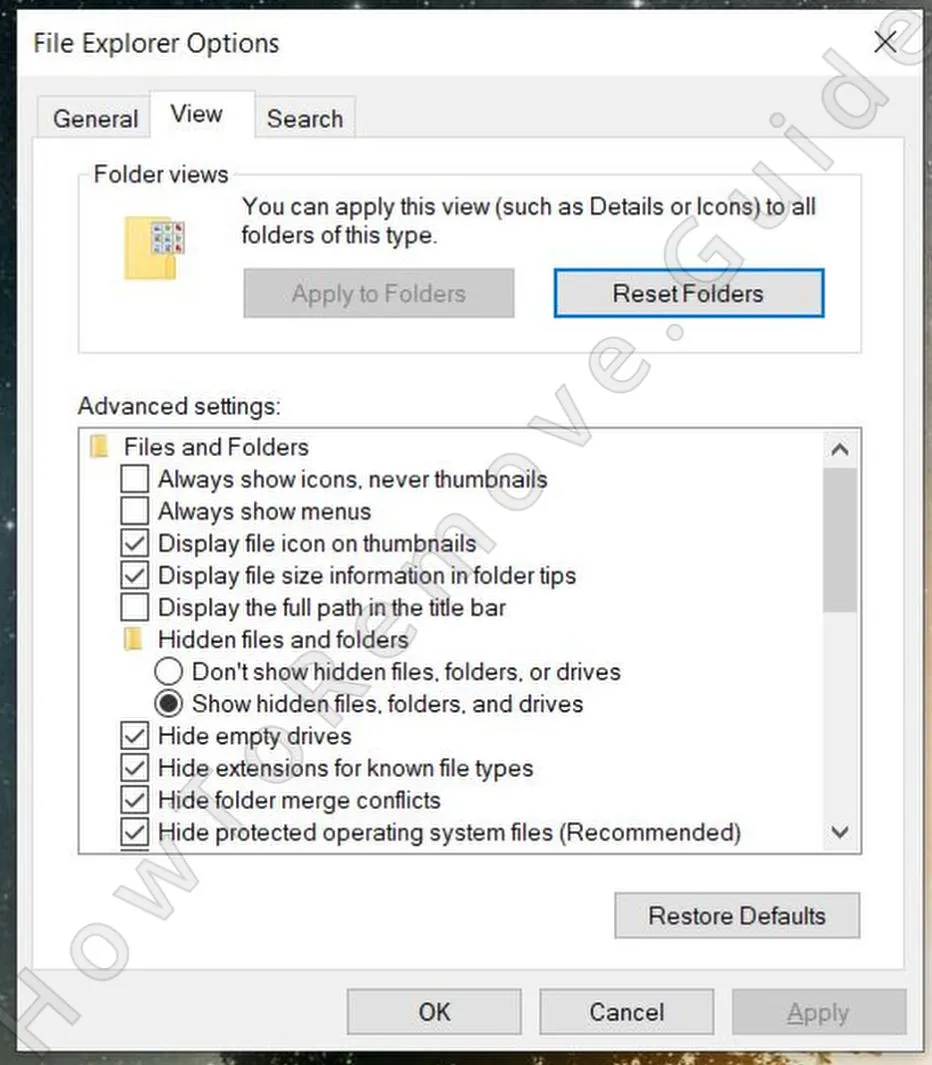 Visibility first, action second. Open the Start menu, search Folder Options, switch to the View tab, enable Show hidden files, folders, and drives, and click Apply so any concealed data related to VulnerableDriver:WinNT/Winring0.G is shown in AppData and other user areas.
 - 1.2Stubborn files are expected, so equip yourself now. Download and install LockHunter, a utility that identifies processes locking a file and can remove blocked items safely. Keep it available for later steps that involve active or protected executables.
We understand if you don’t want to use third-party software and we generally try to keep our guides entirely “hands-on”. However, in this case, you may need this app to eliminate some malware files which is an essential part of the removal process.
But don’t worry, LockHunter won’t ask for money, doesn’t have ads, and doesn’t even require a registration. You can download and install it in about two minutes.
Remove VulnerableDriver:WinNT/Winring0.G Processes From the Task Manager
Active processes can block deletions or re-create files during logon. Addressing what runs in memory prevents rollbacks. Move carefully, validate publishers when possible, and prefer evidence over hunches to avoid terminating critical Windows components that merely resemble the target.
2. How to Delete VulnerableDriver:WinNT/Winring0.G Processes in the Task Manager
- 2.1Question, then check: what is executing right now that could belong to VulnerableDriver:WinNT/Winring0.G? Press Ctrl+Shift+Esc to open Task Manager and review both foreground apps and background services with their resource usage.
- 2.2If the interface is condensed, expand it by clicking More details. The full view adds Processes, Performance, Startup apps, and Details, enabling quick pivots between summaries and per-process specifics.
- 2.3
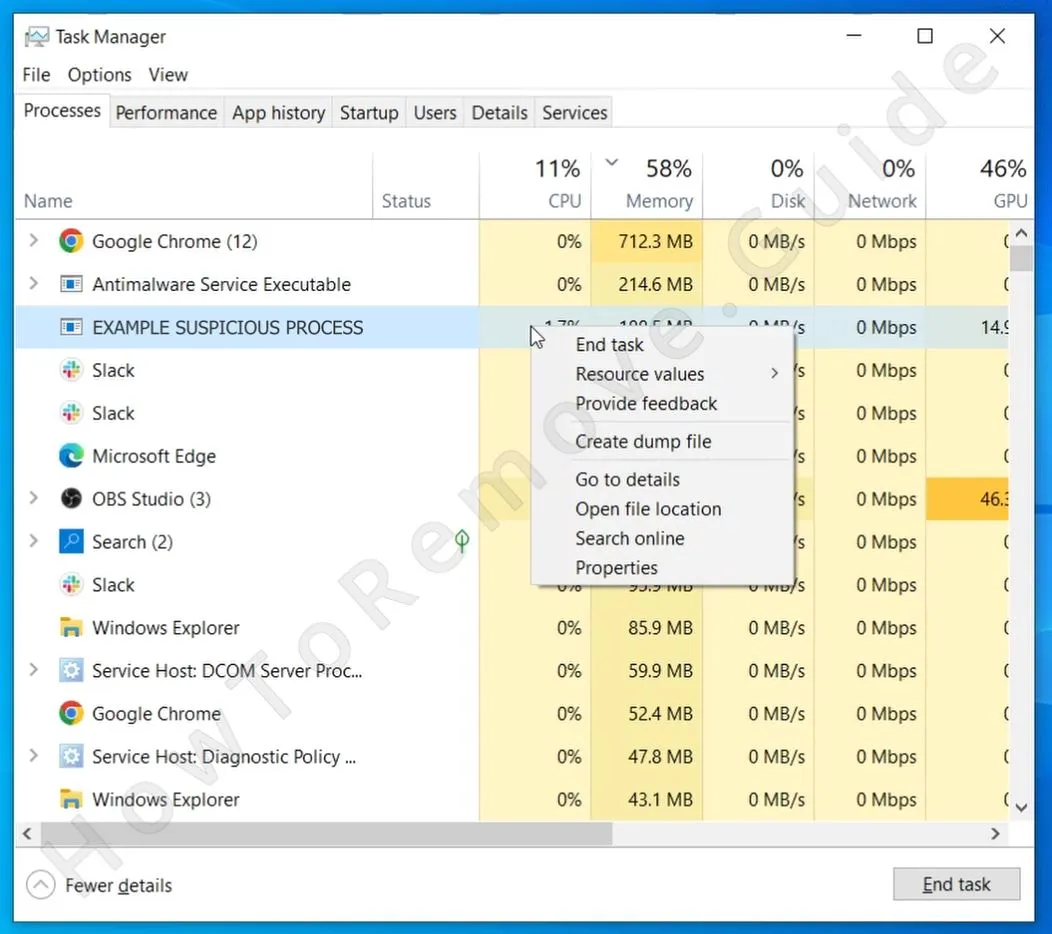 Use a cause→effect lens. Unusual CPU or Memory spikes suggest investigation. Click the column headers to sort and surface anomalies.
Note: Don’t expect to find a rogue process named “VulnerableDriver:WinNT/Winring0.G“. Most forms of malware will hide their processes under innocent-looking names.
- 2.4Context is location. Right-click a suspicious entry and choose Open file location. Executables living under user paths like AppData or randomly named directories are higher risk than signed binaries within C:\Program Files.
- 2.5Try removing the entire containing folder from the location window. If Windows blocks the action, run LockHunter and select What’s locking this file? to release the handle, then delete. Removing the parent directory clears sidecar DLLs and loaders together.
- 2.6Back in Task Manager, select the same entry and click End task. Halting the process prevents immediate relaunch while you clean related files. If it respawns quickly, note its name; a scheduled task or service is likely relighting it.
Delete VulnerableDriver:WinNT/Winring0.G Virus Files
Startup folders and common installation paths often harbor shortcuts, scripts, and renamed binaries that re-launch the unwanted program. Clearing these locations cuts off easy persistence and stabilizes the system while you address more advanced hooks.
3. How to Get Rid of VulnerableDriver:WinNT/Winring0.G Files
- 3.1Begin where logon triggers live. Open File Explorer and check these two locations one by one: C:\ProgramData\Microsoft\Windows\Start Menu\Programs\Startup and C:\Users\YourUsername\AppData\Roaming\Microsoft\Windows\Start Menu\Programs\Startup. Remove suspicious shortcuts or batch files that point back to components linked with VulnerableDriver:WinNT/Winring0.G.
- 3.2To reduce noise, clear both Startup folders entirely except desktop.ini. That file controls folder view and is safe to keep. If an item refuses deletion due to use, employ LockHunter to unlock and remove it without leaving fragments.
- 3.3Next, review primary install paths. Browse C:\Program Files and C:\Program Files (x86), sort by Date modified, and evaluate unfamiliar vendor names. Delete directories that clearly do not belong to legitimate software already installed on your system.
- 3.4Continue with user-space storage. Inspect C:\Users\YourUsername\AppData\Local\Programs and C:\Users\YourUsername\AppData\Roaming\Microsoft\Windows\Start Menu\Programs. Items created near the time of issues or living in oddly named folders deserve attention. Remove anything out of place after verification.
- 3.5
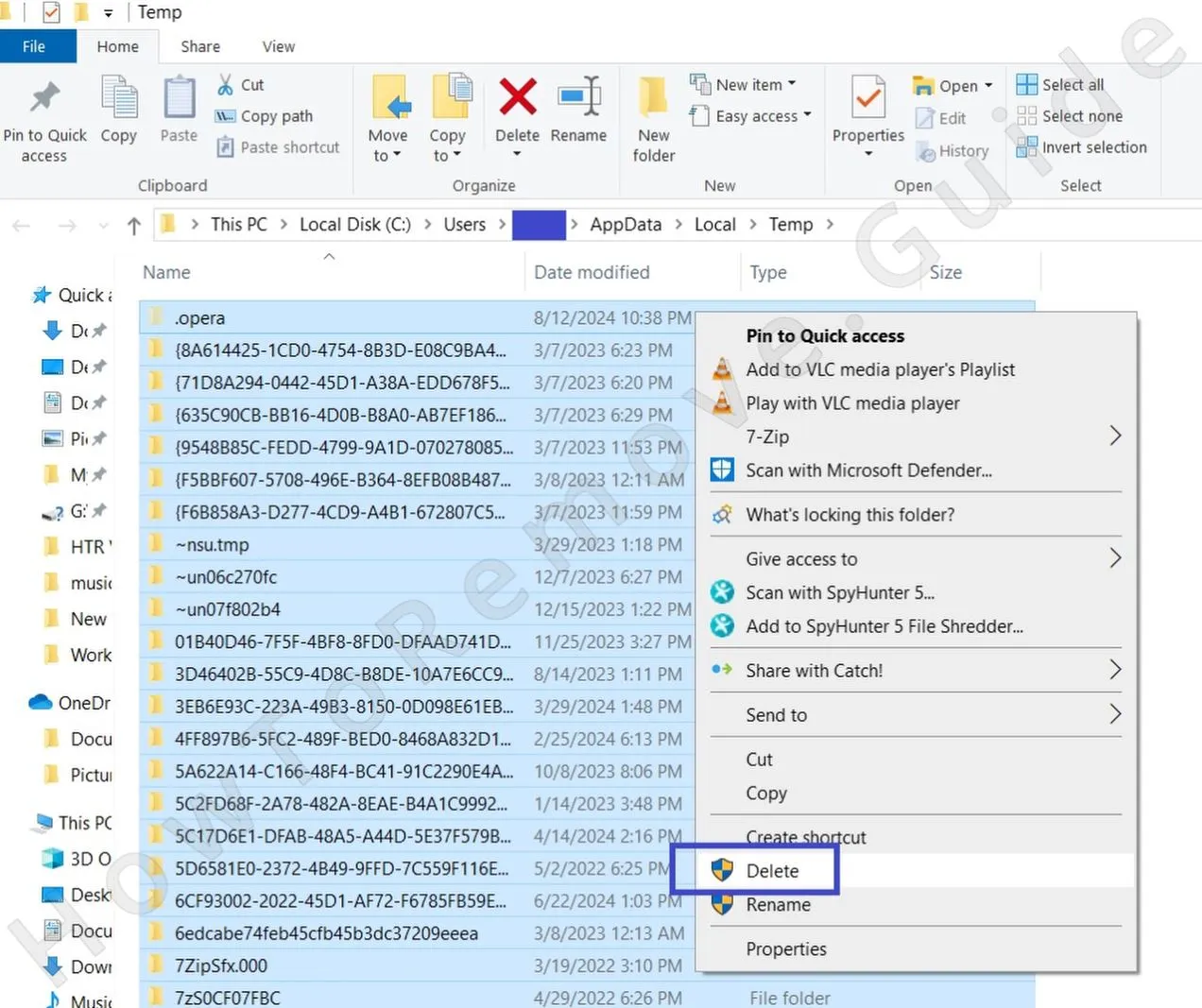 Finish by flushing temporary debris. Open C:\Users\YourUsername\AppData\Local\Temp, press Ctrl+A to select all, then hit Delete. Clearing temp files disrupts droppers, cached installers, and scripts that otherwise rerun at sign-in.
Get Rid of VulnerableDriver:WinNT/Winring0.G Scheduled Tasks
Automated jobs are a frequent persistence layer. They can launch at boot, at logon, or on timers. Careful inspection of actions and file paths is essential. Remove only tasks you can conclusively tie to the problem to avoid disabling normal maintenance work.
4. Eliminate VulnerableDriver:WinNT/Winring0.G Scheduled Tasks
- 4.1
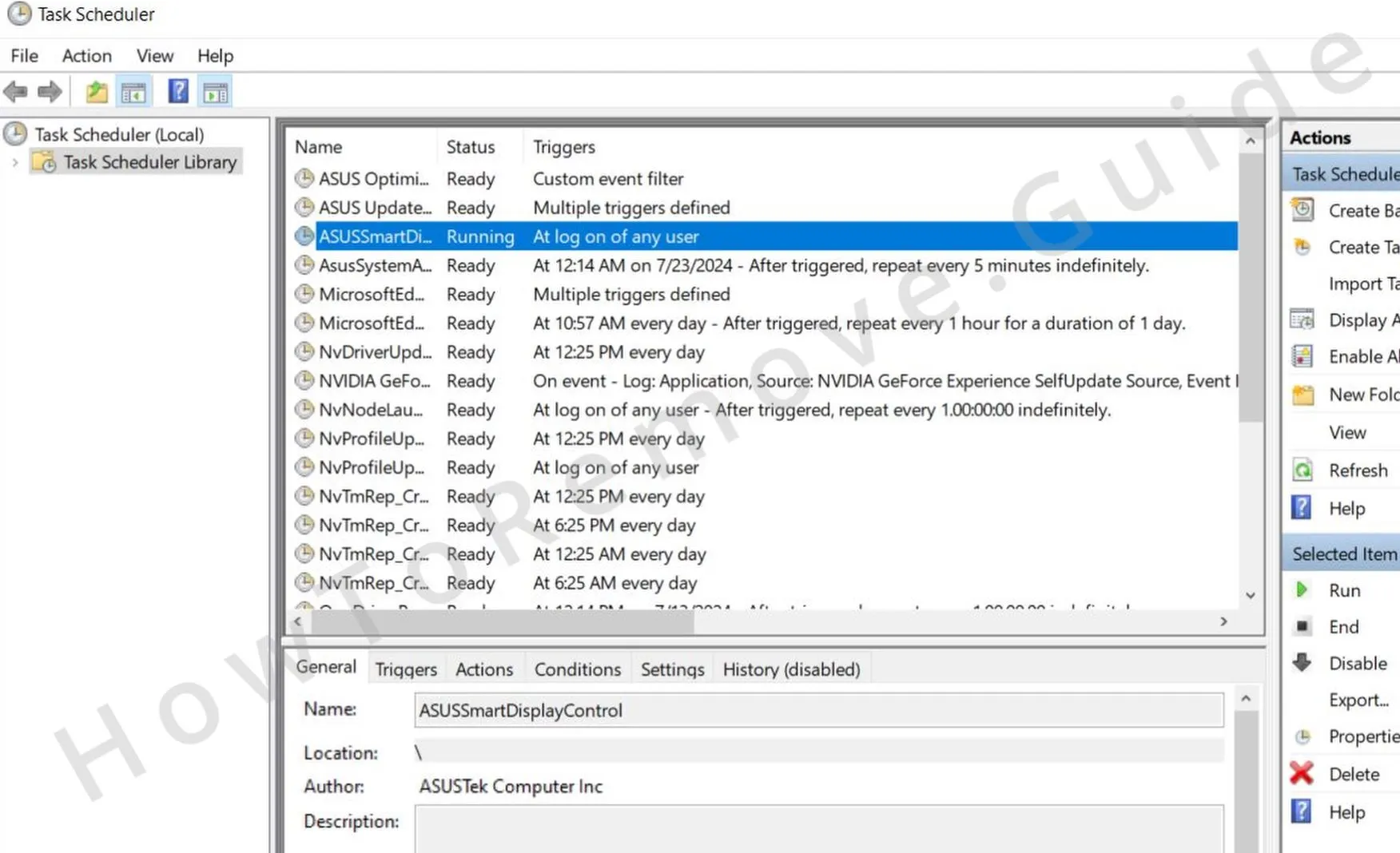 Start with the catalog. Open the Start menu, type Task Scheduler, press Enter, and expand Task Scheduler Library to review jobs that might relaunch VulnerableDriver:WinNT/Winring0.G on a schedule or event trigger.
 - 4.2Open tasks individually. In each task’s properties, view the Actions tab for the Program/script and arguments, and check Triggers and Conditions to understand when and how the action occurs. This context reduces false positives.
- 4.3Prioritize entries that execute from AppData, Roaming, or temp locations. Well-maintained software seldom stores core executables there. Unsigned scripts or recently created files in these paths are high-risk candidates for removal.
- 4.4When you find a suspect, capture the full path shown under Program/script so you can remove the payload afterward. Then delete the task from Task Scheduler Library and confirm the prompt to prevent future runs.
- 4.5Use File Explorer to visit the recorded path and delete the referenced executable or script. If the file is locked, unlock it with LockHunter and remove its parent folder to eliminate companion modules.
- 4.6Repeat the review until no unfamiliar tasks remain that point to questionable directories. Even a single overlooked trigger can restore components after the next boot or user sign-in.
Uninstall the VulnerableDriver:WinNT/Winring0.G Malware App Through the Windows Registry
Registry entries often persist after basic uninstallers complete. Editing the registry requires precision and restraint. Confirm what a value references before removing it. The following routine helps identify autoruns, services, and policy keys that may keep the unwanted software alive.
5. Remove VulnerableDriver:WinNT/Winring0.G Through the Registry
- 5.1Open the right tool deliberately. Press Win+R, type regedit, and press Enter to launch Registry Editor so you can search for entries tied to VulnerableDriver:WinNT/Winring0.G and related loaders that survive file deletions.
- 5.2Search comprehensively. Press Ctrl+F and query the original program name exactly as it appeared earlier. The search traverses keys, values, and data; allow it to complete even if it takes a while on large hives.
- 5.3When a match appears, select its parent key in the left pane. After verifying it genuinely relates to the unwanted program, right-click and choose Delete. Press F3 to continue finding subsequent matches until none remain.
- 5.4Broaden the sweep. Repeat searches for other suspicious program names you removed and for any process names noted in Task Manager. Threats often scatter identifiers to frustrate one-pass cleanup.
- 5.5Perform a final search for the explicit name you’re targeting to catch obscure or obfuscated entries. A single lingering Run value can reinstate components silently at the next logon.
- 5.6Manually inspect common autorun and service paths, removing only entries that clearly reference the unwanted binaries you identified: HKCU\Software\Microsoft\Windows\CurrentVersion\Run, HKCU\Software\Microsoft\Windows\CurrentVersion\RunOnce, HKCU\Software\Microsoft\Windows\CurrentVersion\Policies\Explorer\Run, HKLM\Software\Microsoft\Windows\CurrentVersion\Run, HKLM\Software\Microsoft\Windows\CurrentVersion\RunOnce, HKLM\Software\Microsoft\Windows\CurrentVersion\Policies\Explorer\Run, HKEY_LOCAL_MACHINE\Software\Microsoft\Windows\CurrentVersion\RunServices, HKEY_LOCAL_MACHINE\Software\Microsoft\Windows\CurrentVersion\RunServicesOnce, HKEY_LOCAL_MACHINE\Software\Microsoft\Windows\CurrentVersion\RunOnce\Setup, HKEY_LOCAL_MACHINE\SYSTEM\CurrentControlSet\services. Avoid deleting entire keys unless you are certain of their purpose.
After finishing the registry pass, restart the computer. Continue monitoring for redirects, background relaunches, or unusual resource spikes over several sign-ins. If symptoms do not return, the persistence chain is broken and the system is likely clear.
