

What is the Fan Control Trojan? In recent reports, Windows Defender has flagged FanControl.sys – the driver Fan Control uses via LibreHardwareMonitor – as Trojan:Win32/Vigorf.A. Community timelines note detections beginning around March 11, 2025 and still occurring by September 4, 2025. Developer threads suggest this is the familiar WinRing0/WinRing0x64 low-level hardware driver being flagged again, albeit under a new name (earlier detections were labeled “WinRing0”). When flagged, Fan Control may fail to load motherboard sensors at startup and show an error; a few users have also seen temporary fan-ramping glitches that cleared after restarting the app. Because the signature appears to target the same driver stack widely used by monitoring tools, many suspect a false positive, while warning that whitelisting is at your own risk until vendors resolve it. In short, Fan Control Trojan usually refers to Defender’s Vigorf.A classification of the WinRing0 driver – not confirmed malware. To be safe, run a reputable antivirus scan to check for a false positive and rule out real infection.
We tested that SpyHunter successfully removes Trojan:Win32/Vigorf.A* and we recommend using it. It will block Trojan:Win32/Vigorf.A from reinstalling itself and it will make sure your device is clean from any malware.
 Try Free For 7 Days*
Buy now15% OFF if you buy straight without trial.
 OFFER
OFFERFan Control Trojan Removal Guide Based on Current Detections
First things first: removing Fan Control Trojan the easy way can spare you a lot of digging. Try a standard uninstall before anything else. Many people skip this and jump straight into deeper cleanup, but a quick check can resolve the issue with minimal risk. It takes only a few minutes and establishes a baseline for the later steps if the problem persists.
Quick Steps to Remove Fan Control Trojan
- 1.1Why start anywhere else? Open the Start menu, launch Settings (gear icon), and prepare to manage apps that might include Fan Control Trojan. Settings centralizes system preferences and application controls, which makes it the most direct starting point for basic removal.
- 1.2Next, enter the Apps section. You’ll see installed programs listed here, and Windows lets you reorganize them by different attributes for faster triage. If the panel looks sparse, wait a moment while it loads all entries.
- 1.3For visibility, sort by Installation date. Recent additions rise to the top, making unusual entries easier to spot. Sorting by date also helps correlate the start of symptoms with new software you didn’t intend to install.
- 1.4Working from that list, scan for anything you don’t recognize, including names that resemble the original program you’re hunting. Select the suspicious entry, choose Uninstall, and confirm the prompts to complete removal. If prompted for administrator permission, allow it to proceed.
- 1.5With the app removed, open File Explorer and browse to C:\Users\YourUsername\AppData\Local\Programs. Look for leftover folders or files tied to the uninstalled item. Some uninstallers leave behind support components that can still auto-start or interfere with browsers.
- 1.6Found remnants? Right-click the related folder and choose Delete. Empty the Recycle Bin, then reboot the computer to apply changes. After restarting, check whether the unwanted behavior persists; if it does, continue with the deeper steps below.
After restarting, check whether the unwanted behavior persists; if it does, continue with the deeper steps below.
SUMMARY:
| Name | Fan Control Trojan |
| Type | Trojan |
| Detection Tool |
Some threats reinstall themselves if you don’t delete their core files. We recommend downloading SpyHunter to remove harmful programs for you. This may save you hours and ensure you don’t harm your system by deleting the wrong files. |
Fully Get Rid of Fan Control Trojan, Fan Control Virus
Sometimes an active process impedes removal tools or locks files. If Fan Control Trojan is running, that can actually help you track its footprint while it’s still producing activity, file locks, and scheduled tasks. The idea is to reveal every persistence hook before it goes quiet. Follow the steps in order and avoid deleting items you cannot identify.
1. Preparing for the Fan Control Trojan Removal
- 1.1
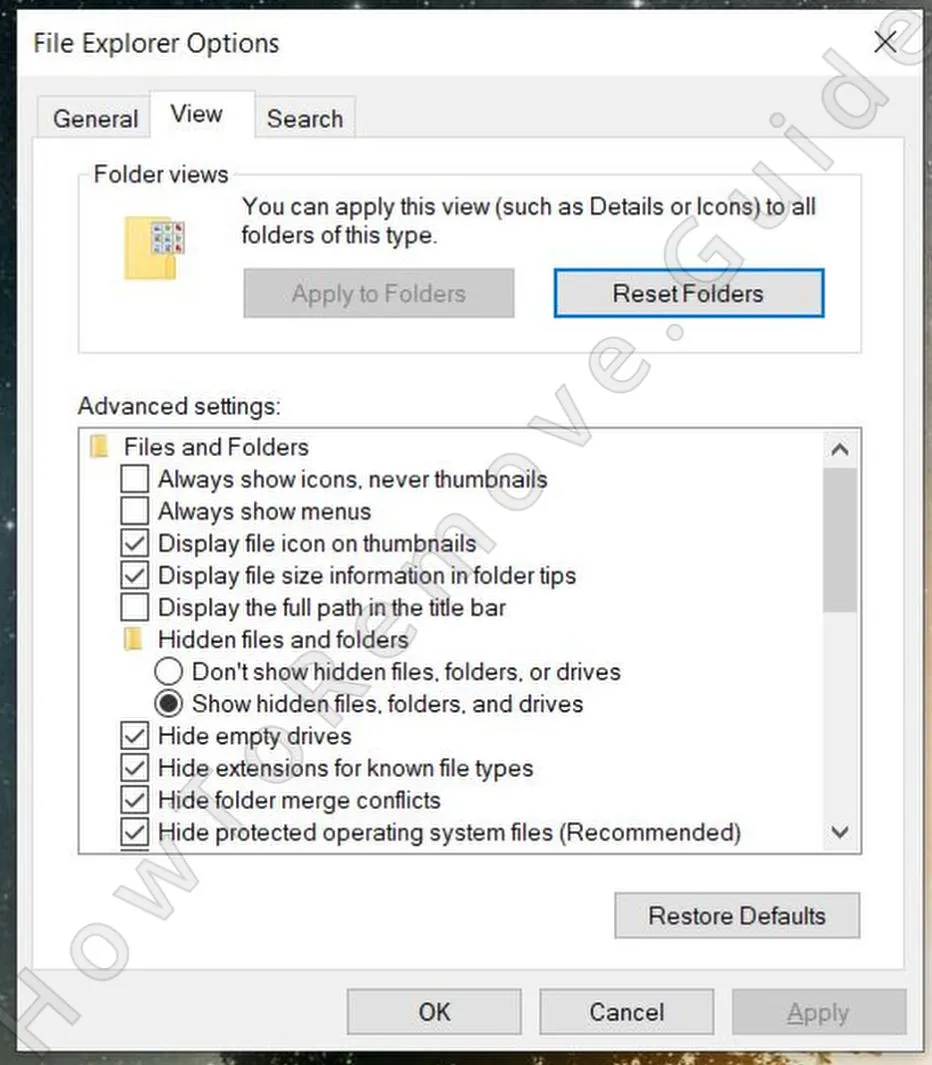 To ensure nothing hides out of sight, open the Start menu, search for Folder Options, and switch to the View tab. Enable Show hidden files, folders, and drives, then Apply. This reveals concealed data that Fan Control Trojan could use to persist, especially inside AppData.
 - 1.2Now install LockHunter. Windows sometimes refuses to delete files that are in use, and this lightweight utility identifies locks and can remove stubborn items safely. Keep it handy for later steps where a process or service blocks deletion.
We understand if you don’t want to use third-party software and we generally try to keep our guides entirely “hands-on”. However, in this case, you may need this app to eliminate some malware files which is an essential part of the removal process.
But don’t worry, LockHunter won’t ask for money, doesn’t have ads, and doesn’t even require a registration. You can download and install it in about two minutes.
End Fan Control Trojan Processes in Task Manager Without Guesswork
Malware often survives because a running component keeps replacing deleted files. If Fan Control Trojan has an active process, the Task Manager will expose it or its helper. Be methodical here: suspicious activity tends to cluster around unusual names, odd publishers, and high resource spikes.
2. How to Delete Fan Control Trojan Processes in the Task Manager
- 2.1Need a real-time snapshot? Press Ctrl+Shift+Esc to open Task Manager and review all running applications and background services. This environment allows you to investigate active components tied to Fan Control Trojan and see what consumes CPU or memory.
- 2.2If Task Manager shows a compact view, click More details in the lower-left corner. Expanded mode adds tabs such as Processes, Performance, Startup apps, and Details so you can dig deeper into what is executing.
- 2.3
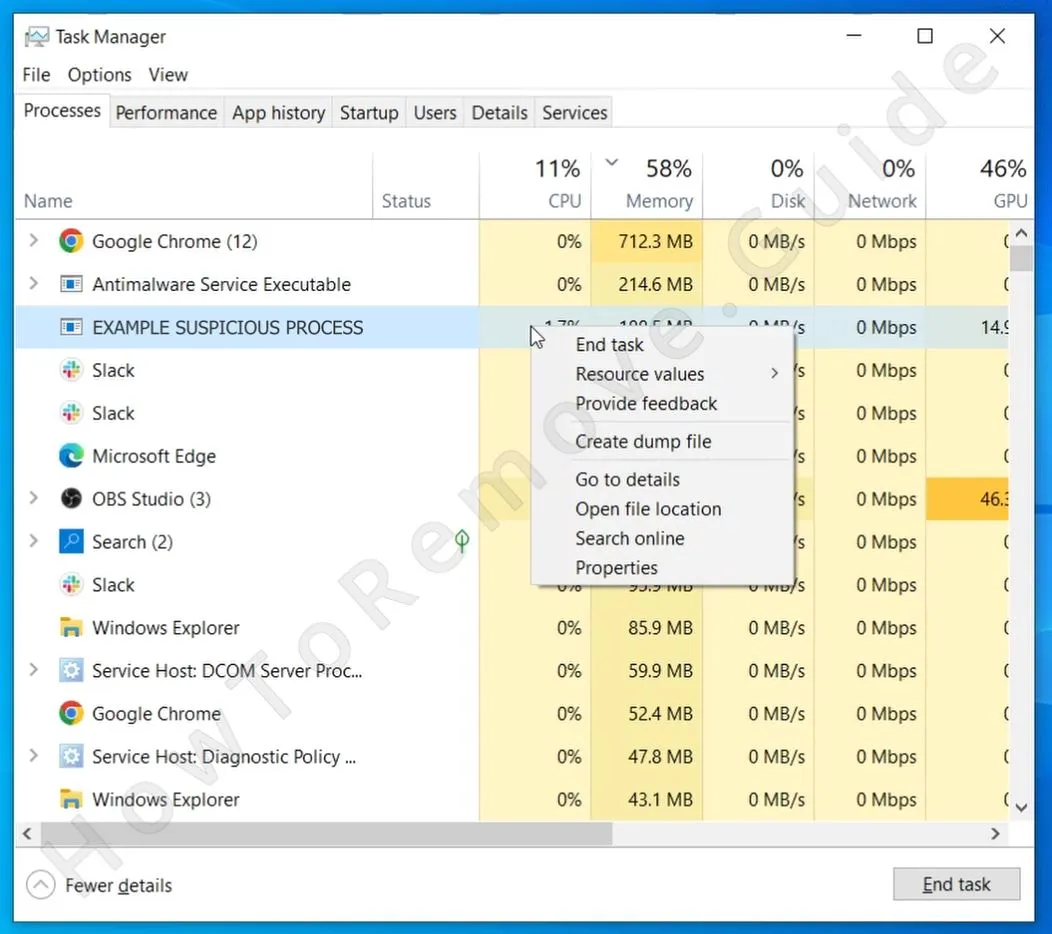 Curious which items to scrutinize first? Sort the Processes tab by CPU or Memory by clicking those column headers. Unusual spikes from apps you don’t recognize are worth investigating.
Note: Don’t expect to find a rogue process named “Fan Control Trojan“. Most forms of malware will hide their processes under innocent-looking names.
- 2.4When something looks off, right-click the process and choose Open file location. The containing folder provides strong hints: anything living under AppData or a random-named directory is suspect. Verify digital signatures in the file’s Properties when available.
- 2.5Attempt to delete the entire parent folder from the file location window. If Windows reports the item is in use, invoke LockHunter and select What’s locking this file? to free it. Removing the whole directory often clears loaders and sidecar DLLs together.
- 2.6Return to Task Manager, reselect the same process, and hit End task. Stopping it prevents relaunch during the cleanup window. If it reappears immediately, a scheduled task or service may be relighting it, which you’ll address in later sections.
Delete FanControl Virus files, Remove Fan Control Trojan Remnants
Persistence frequently relies on startup directories and temporary folders. Fan Control Trojan may plant shortcuts, scripts, or batch files to reinstate itself during boot or sign-in. Removing these footholds cuts off relaunch pathways that undo your previous work.
3. How to Get Rid of Fan Control Trojan Files
- 3.1Start with the Startup folders. In File Explorer, visit C:\ProgramData\Microsoft\Windows\Start Menu\Programs\Startup and C:\Users\YourUsername\AppData\Roaming\Microsoft\Windows\Start Menu\Programs\Startup. Remove suspicious shortcuts or scripts that point back to Fan Control Trojan’s components, and note any odd file names for later searches.
- 3.2Delete everything in those two Startup directories except desktop.ini. That file is a harmless system configuration item. If a file refuses to go quietly, use LockHunter to unlock and remove it without leaving fragments behind.
- 3.3Proceed to C:\Program Files and C:\Program Files (x86). Sort by Date modified and look for recently changed folders that don’t match your known software. Delete questionable directories after confirming they are not legitimate vendor products.
- 3.4Then check C:\Users\YourUsername\AppData\Local\Programs and C:\Users\YourUsername\AppData\Roaming\Microsoft\Windows\Start Menu\Programs. Anything out of place or recently created deserves attention. Remove directories or links that tie back to the unwanted app framework or its updaters.
- 3.5
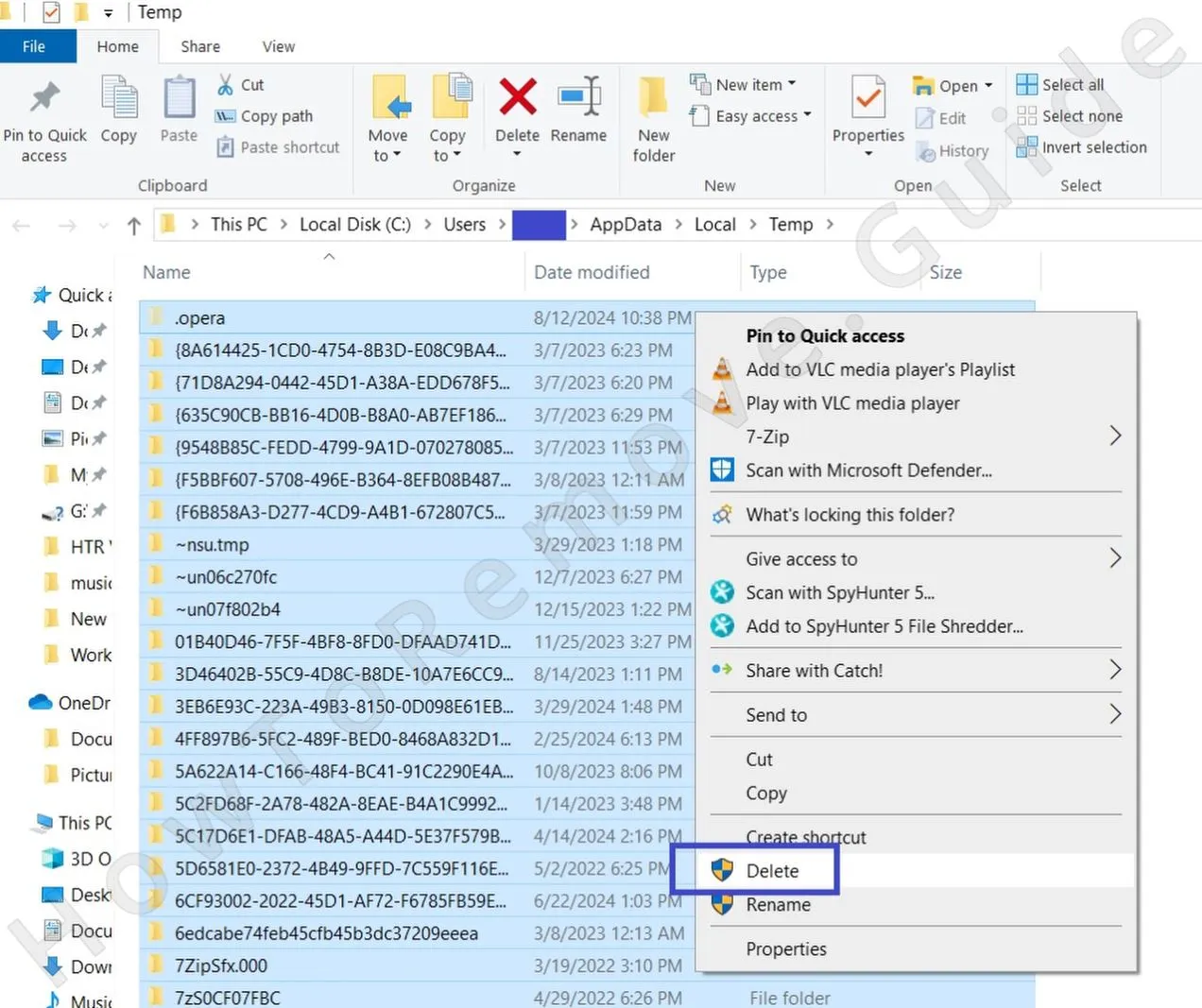 Finish this pass by cleaning temp data. Open C:\Users\YourUsername\AppData\Local\Temp, press Ctrl+A to select everything, and hit Delete. Clearing temp files disrupts dropped payloads and cached installers that might respawn components after restarts.
Clear Scheduled Tasks Created by Fan Control Trojan
Scheduled tasks are a favorite persistence trick because they’re easy to overlook. If Fan Control Trojan planted triggers here, it can relaunch daily, at logon, or on idle. Work carefully: investigate actions and paths before removal, and avoid touching tasks belonging to trusted software.
4. Eliminate Fan Control Trojan Scheduled Tasks
- 4.1
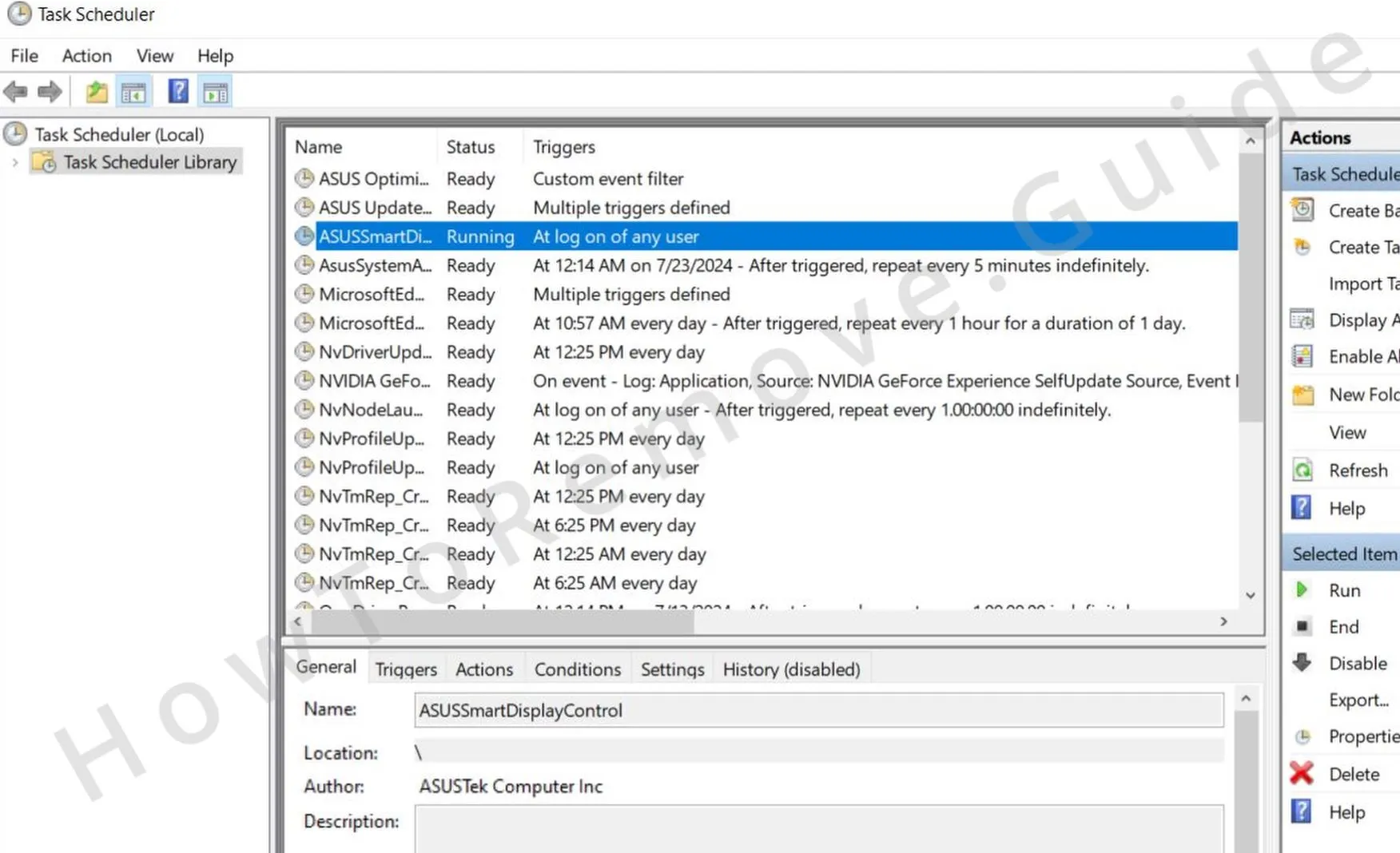 Launch Task Scheduler from the Start menu and expand Task Scheduler Library. This view lists tasks created by Windows and third-party programs. It’s where you’ll find time-based or event-based triggers that revive Fan Control Trojan components.
 - 4.2Open suspicious tasks one by one. In each task dialog, switch to the Actions tab to see what executable, script, or command runs and under which triggers. Also peek at Triggers and Conditions to understand how often it fires.
- 4.3Give extra scrutiny to actions that start files from AppData, Roaming, or temporary locations. Known programs rarely execute from these paths; unsigned scripts living there are red flags worth validating and removing.
- 4.4When you identify a dubious task, copy the full Program/script path from Actions for later file deletion. Then remove the task from Task Scheduler Library to prevent it from firing again. Confirm the deletion when prompted.
- 4.5Using File Explorer, navigate to the path you recorded and delete the referenced executable or script. If it won’t delete because something is locking it, bring in LockHunter and force removal in a controlled way.
- 4.6Repeat this review across all unfamiliar tasks. Take your time and be consistent. Leaving even one task behind can cause the rogue process to return after a reboot or user sign-in.
Remove Fan Control Trojan Autostarts Using Windows Registry Keys
Before modifying the registry, understand that caution matters. Still, registry inspection is where you catch leftover autostarts when traditional removal fails. Approach systematically: search for the program name, verify keys, and delete only what clearly points to Fan Control Trojan or related loaders.
5. Remove Fan Control Trojan Through the Registry
- 5.1Open Run with Win+R, type regedit, and press Enter to start Registry Editor. This tool exposes startup hooks and service entries that may reference Fan Control Trojan, so changes here directly affect persistence.
- 5.2Press Ctrl+F and search for the original program’s name exactly as it appeared. Registry search crawls both keys and values. Patience helps here; when scanning large hives, it can take several moments to surface results.
- 5.3When a result appears, select the parent key in the left pane. After confirming it truly belongs to the unwanted software, right-click and choose Delete. Press F3 to continue searching for remaining instances until Windows reports none found.
- 5.4Run additional searches for any other suspicious app names you removed earlier, as well as process names you noted in Task Manager. Threats often scatter identifiers across multiple keys, including tool-specific updaters or helper binaries.
- 5.5Perform a final search for the explicit string you’re targeting in case fragments were stored under obscure locations. A single overlooked Run entry can silently restore components at the next logon, undoing prior cleanup.
- 5.6Manually review common autorun locations and service entries: HKCU\Software\Microsoft\Windows\CurrentVersion\Run, HKCU\Software\Microsoft\Windows\CurrentVersion\RunOnce, HKCU\Software\Microsoft\Windows\CurrentVersion\Policies\Explorer\Run, HKLM\Software\Microsoft\Windows\CurrentVersion\Run, HKLM\Software\Microsoft\Windows\CurrentVersion\RunOnce, HKLM\Software\Microsoft\Windows\CurrentVersion\Policies\Explorer\Run, HKEY_LOCAL_MACHINE\Software\Microsoft\Windows\CurrentVersion\RunServices, HKEY_LOCAL_MACHINE\Software\Microsoft\Windows\CurrentVersion\RunServicesOnce, HKEY_LOCAL_MACHINE\Software\Microsoft\Windows\CurrentVersion\RunOnce\Setup, and HKEY_LOCAL_MACHINE\SYSTEM\CurrentControlSet\services. Only delete entries that clearly reference the unwanted software or unknown executables you identified.
After completing the registry pass, reboot the computer. Keep an eye on your browser and startup behavior for a while. If no strange redirects, pop-ups, or background processes return, your cleanup was successful and the system is likely clear of the original issue.
