

If your PC has been getting plagued by odd pop-ups or if it’s been running processes you don’t remember installing, that’s your cue to check for Trojans like Trojan:Win32/Egairtigado!rfn. Recent security reports (as well as my own research) tie this program to a Trojan Horse infection similar to Trojan:Win32/Vigorf.A and VulnerableDriver:WinNT/Winring0.G. It’s the kind of malware that sneaks in under the guise of something seemingly harmless that’s usually bundled with free or pirated apps.
Trojan:Win32/Egairtigado!rfn may look like a regular utility at first, but behind the curtain, it can hijack resources for cryptomining, quietly harvest sensitive information, or even create backdoors for additional malware.
The thing that makes it particularly nasty is its persistence: it uses rogue Registry edits, scattered helper files, and scheduled tasks to keep itself alive even after you think you’ve deleted it. In short, those weird symptoms you’re seeing aren’t random. They’re the surface cracks of a Trojan that’s working deep inside your system, and removing it should be treated as urgent.
Trojan:Win32/Egairtigado!rfn may expose your browser to redirects, ads, and persistent unwanted components. Install SpyHunter Pro to scan for risks, remove related threats, and enable real-time protection.
 OFFER
OFFER*Source of claim SH can remove it. Trial w/Credit card; image is for illustration; full terms.
Trojan:Win32/Egairtigado!rfn Removal Guide
Begin with the simplest action: try uninstalling Trojan:Win32/Egairtigado!rfn using Windows’ built-in tools before moving to advanced cleanup. This step is quick, safe, and sometimes succeeds without further work. Even if it does not remove the problem completely, it reduces clutter and makes later steps faster and more reliable for you.
Quick Steps to Remove Trojan:Win32/Egairtigado!rfn
- 1.1Start with where uninstall options live if Trojan:Win32/Egairtigado!rfn is present: open the Start Menu, choose Settings (gear icon), and land in the hub that controls applications and system preferences. From here you can view, modify, or remove installed software.
- 1.2With Settings open, head into Apps. This page lists everything installed and lets you filter by attributes like name, size, or install date, which helps surface recent changes during troubleshooting.
- 1.3For faster spotting of recent additions, change the sorter to Installation date. The newest entries will float to the top, making unusual or unrecognized items easier to notice and verify.
- 1.4Unsure about a program you see? Select it, click Uninstall, and follow the prompts to finish. Allow the uninstaller to remove related components, and do not interrupt the process while files are being deleted.
- 1.5When removal completes, browse to C:\Users\YourUsername\AppData\Local\Programs. Check for leftover folders or helper binaries that might have been skipped by the uninstaller and note their names for cross-checking.
- 1.6If you find the malware folder, remove it together with any leftover files that might If you spot a lingering folder, delete it manually. Then restart Windows to release any locks and confirm that nothing from the prior installation tries to start again during boot.
After the reboot, verify whether the unwanted application no longer launches. If any signs remain, that is common for persistent threats. Continue with the deeper steps below to locate hidden components and stop relaunch mechanisms.
SUMMARY:
| Name | Trojan:Win32/Egairtigado!rfn |
| Type | Trojan |
| Detection Tool |
Some threats reinstall themselves if you don’t delete their core files. We recommend downloading SpyHunter to remove harmful programs for you. This may save you hours and ensure you don’t harm your system by deleting the wrong files. |
How to Fully Get Rid of Trojan:Win32/Egairtigado!rfn
Threats sometimes run while you’re investigating them, which can be used to your advantage. If Trojan:Win32/Egairtigado!rfn is active, its files and triggers are accessible in memory and on disk, where you can follow paths, examine locations, and remove persistence points without guessing.
1. Preparing for the Trojan:Win32/Egairtigado!rfn Removal
- 1.1
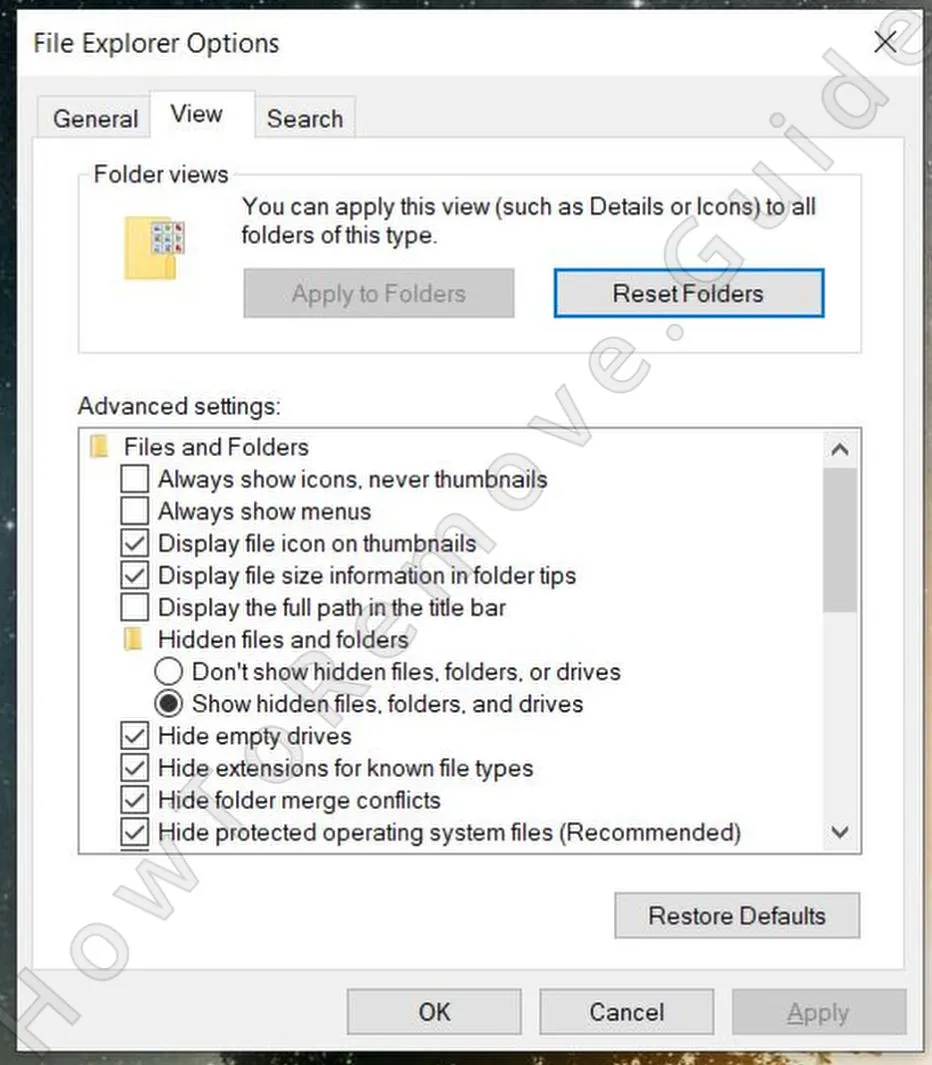 Visibility first helps expose Trojan:Win32/Egairtigado!rfn leftovers. Search for Folder Options from the Start Menu, open it, switch to the View tab, and enable Show hidden files, folders, and drives. Revealing hidden items uncovers common stash points for unwanted components.
 - 1.2Locked files can block progress, so install LockHunter to remove items Windows reports as in use. This small utility is free, ad-free, and requires no registration; setup is quick. It integrates with the context menu to identify locks and delete stubborn executables or DLLs safely.
We understand if you don’t want to use third-party software and we generally try to keep our guides entirely “hands-on”. However, in this case, you may need this app to eliminate some malware files which is an essential part of the removal process.
But don’t worry, LockHunter won’t ask for money, doesn’t have ads, and doesn’t even require a registration. You can download and install it in about two minutes.
Remove Trojan:Win32/Egairtigado!rfn Processes From the Task Manager
Stopping a process is only part of the work. Trojan:Win32/Egairtigado!rfn often leaves startup entries, scheduled jobs, and helper binaries designed to bring it back. The next steps help identify the running executable and remove it before cleaning the traces that try to revive it later.
2. How to Delete Trojan:Win32/Egairtigado!rfn Processes in the Task Manager
- 2.1Context matters when tracking Trojan:Win32/Egairtigado!rfn activity, so press Ctrl + Shift + Esc to open Task Manager. This tool reveals running processes and resource usage, which is vital for pinpointing the suspicious executable.
- 2.2If you see the compact view, expand it by clicking More details. The full display shows background processes, publishers, and startup impact, making anomalies easier to evaluate.
- 2.3
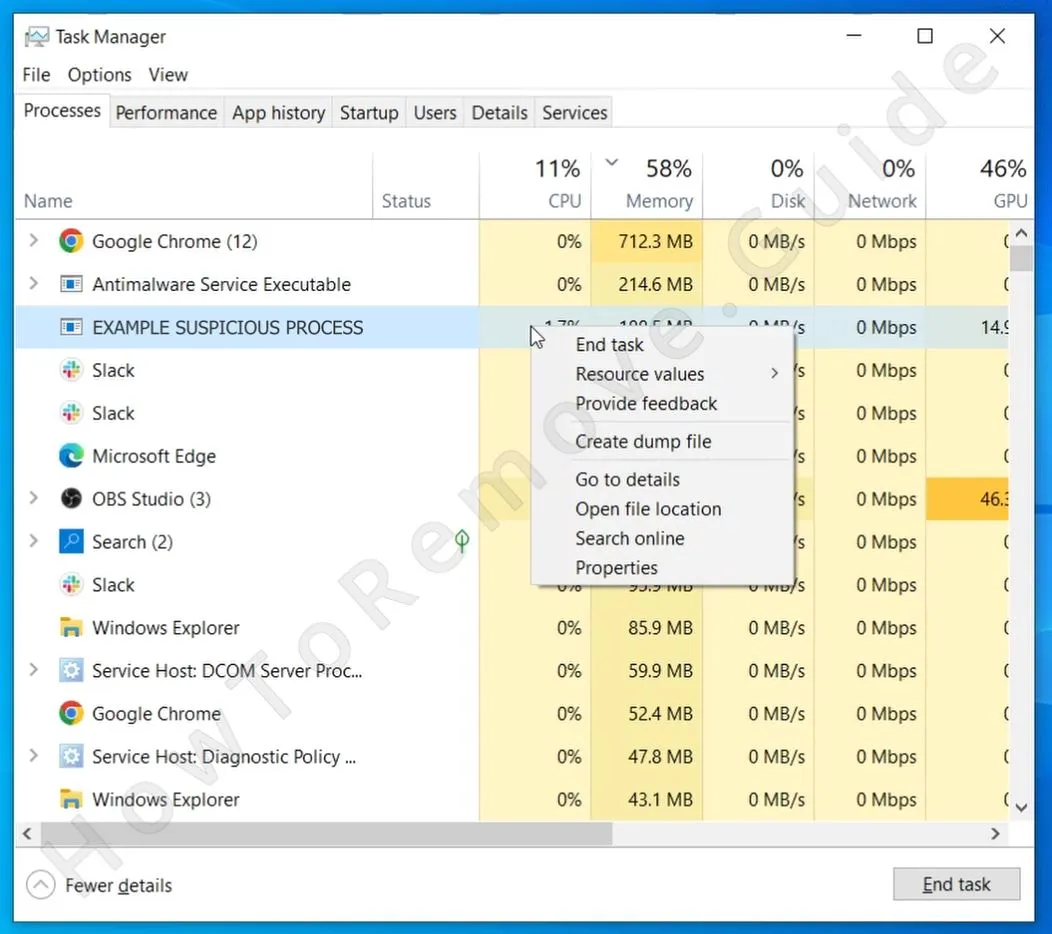 Should you sort by CPU or Memory to find outliers? Yes – sort by either column and look for unfamiliar names or processes using unusually high resources. Malware rarely advertises its identity, so do not expect a plainly labeled item.
 - 2.4When you spot a candidate, right-click it and choose Open file location. Jumping to its directory lets you judge the path and publisher and quickly tells you if the file sits in an odd user-space folder.
- 2.5Try deleting the hosting folder immediately. If Windows blocks removal, run LockHunter, pick What’s locking this file?, release the hold, and delete the file and its container through the tool to prevent quick respawn.
- 2.6Return to Task Manager and End task on the same entry. Ending it after deleting the binary prevents an instant restart and helps keep the system stable during the next steps.
Delete Trojan:Win32/Egairtigado!rfn Virus Files
Many threats rely on launch-at-logon tricks and auxiliary files scattered across user and program directories. Clearing these locations reduces relaunch attempts and removes the scaffolding that could rebuild the unwanted program after a restart.
3. How to Get Rid of Trojan:Win32/Egairtigado!rfn Files
- 3.1Start with common launch folders used when Trojan:Win32/Egairtigado!rfn tries to revive: C:\ProgramData\Microsoft\Windows\Start Menu\Programs\Startup and C:\Users\YourUsername\AppData\Roaming\Microsoft\Windows\Start Menu\Programs\Startup. Remove suspicious shortcuts or executables you did not add yourself.
- 3.2Inside each Startup directory, leave desktop.ini intact and delete everything else that looks out of place. If something refuses to remove, call on LockHunter to unlock and purge the file safely.
- 3.3Review the main program directories next – C:\Program Files and C:\Program Files (x86). Look for newly created, empty, or oddly named folders and delete those clearly unrelated to trusted software you recognize.
- 3.4Check user-level storage as well: C:\Users\YourUsername\AppData\Local\, C:\Users\YourUsername\AppData\Local\Programs, and C:\Users\YourUsername\AppData\Roaming\Microsoft\Windows\Start Menu\Programs. These paths often contain helper launchers, updater stubs, or scripts that trigger on logon.
- 3.5
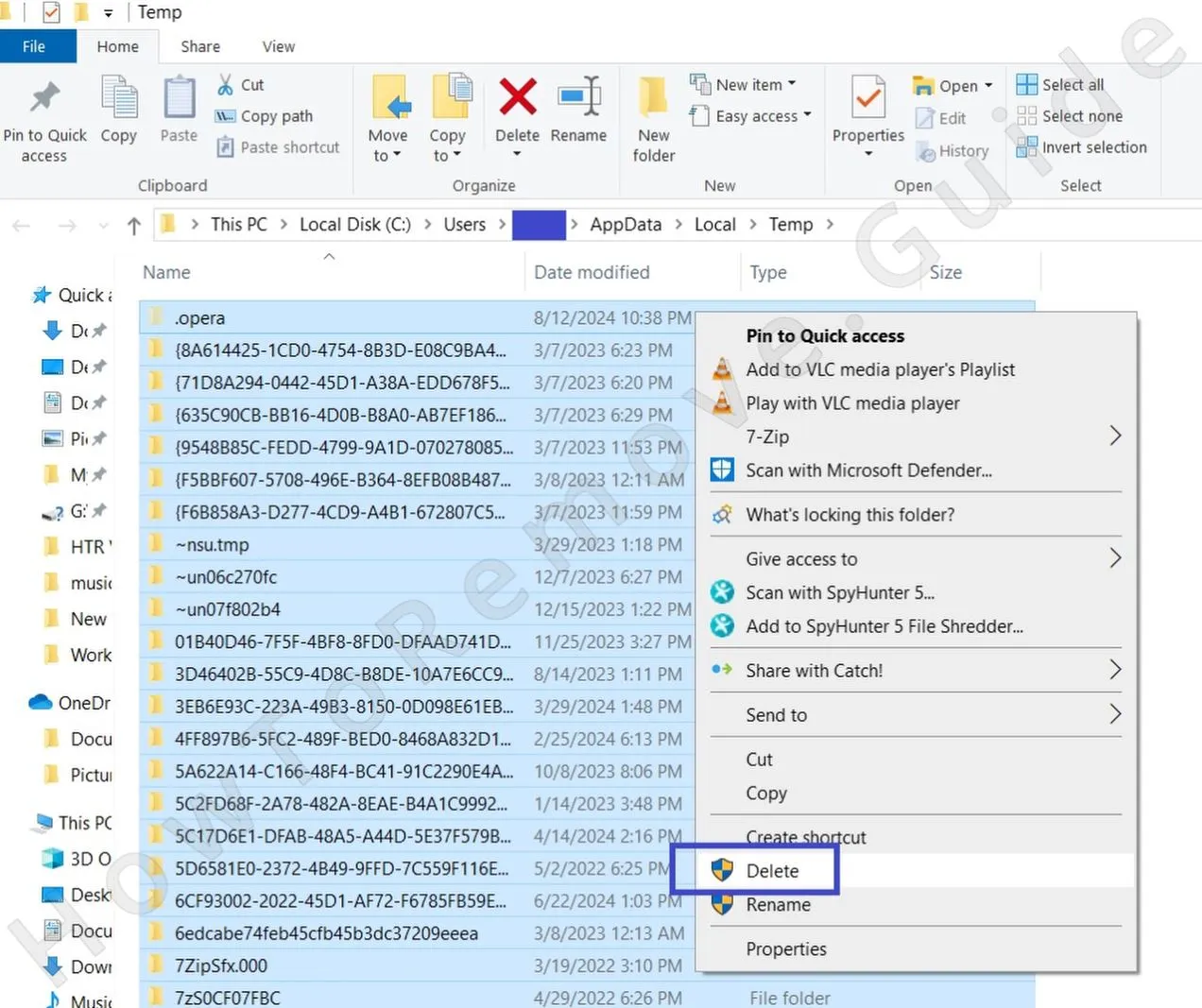 Finally, clear out temporary files. Go to C:\Users\YourUsername\AppData\Local\Temp, press Ctrl + A to select all, delete the contents, and then empty the Recycle Bin so nothing remains available for accidental restoration.
Get Rid of Trojan:Win32/Egairtigado!rfn Scheduled Tasks
The Windows Registry holds many autostart configurations, and unwanted entries can hide there. Because edits affect system behavior, work carefully and remove only what you identify as related to the problem. Precision reduces the chance of interrupting normal applications or services.
4. Eliminate Trojan:Win32/Egairtigado!rfn Scheduled Tasks
- 4.1
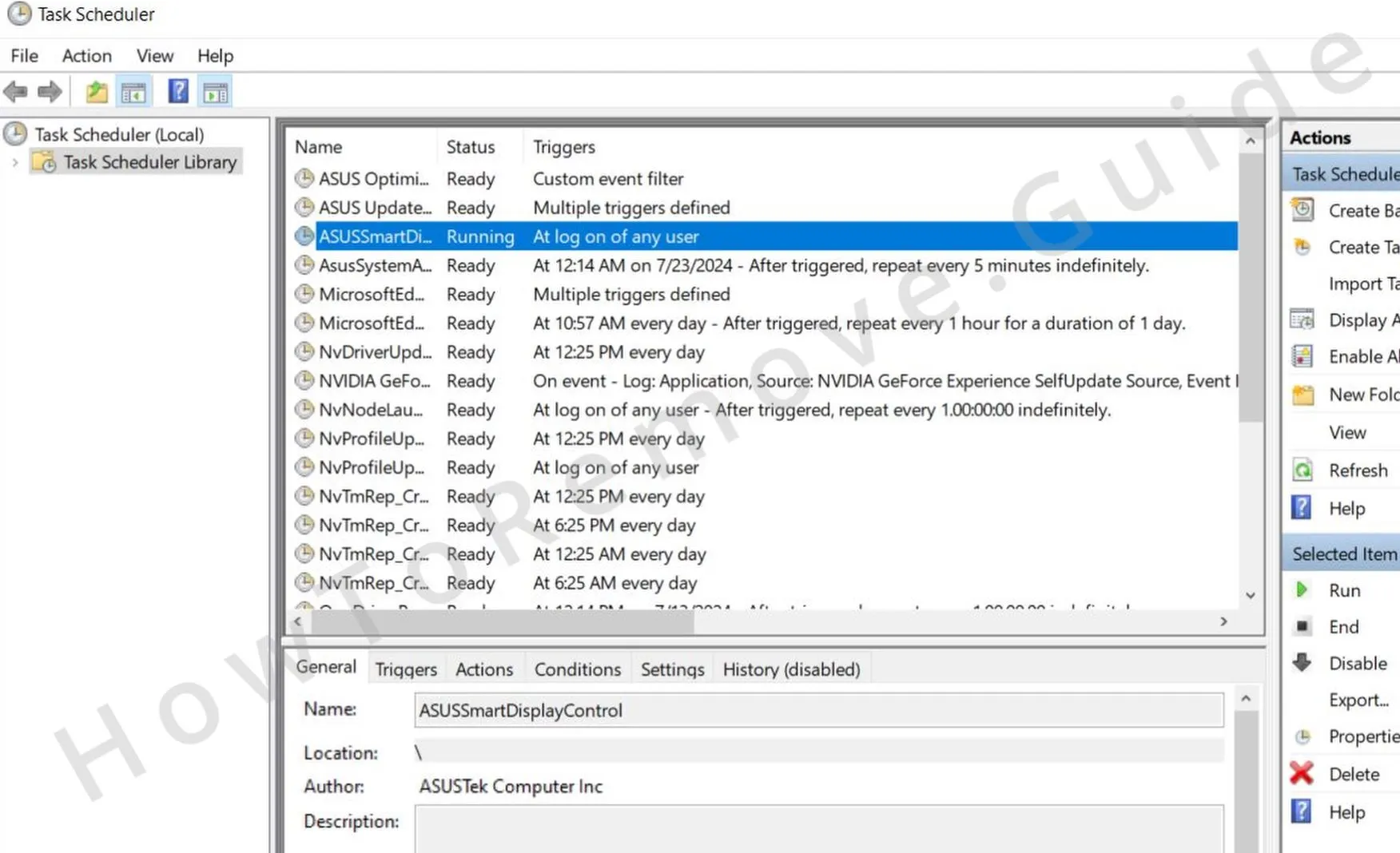 Scheduled automation can relaunch Trojan:Win32/Egairtigado!rfn, so type Task Scheduler in the Start Menu search and open it. Expand the Task Scheduler Library to see tasks that run on a schedule or at logon across different folders.
 - 4.2For each task, double-click it and open the Actions tab, where you can learn what it is Open a task’s Properties by double-clicking it and review the details. The Actions tab shows the command or file that will run and any parameters used.
- 4.3Focus on entries that reference user-space paths like AppData or Roaming, especially ones you don’t recognize. If the file location seems odd for a trusted app, treat it as suspicious and investigate.
- 4.4When you decide a task is illegitimate, copy the full path shown in Actions, then delete the task inside Task Scheduler. Removing the job stops automatic execution at its trigger.
- 4.5Navigate to the path you copied and delete the referenced executable or script. Clearing both the task and its payload prevents it from returning after a reboot or logon.
- 4.6Repeat this inspection for all folders in the Task Scheduler Library, including any subfolders created by installers. Persistence often hides under generic names, so thorough review matters.
Uninstall the Trojan:Win32/Egairtigado!rfn Malware App Through the Windows Registry
A standard uninstallation can’t always tidy up everything, leaving behind policy or run entries. The final section targets those leftovers. Work deliberately, remove only items you are sure about, and avoid deleting entire keys when a single value is the culprit.
5. Remove Trojan:Win32/Egairtigado!rfn Through the Registry
- 5.1Because configuration data can keep Trojan:Win32/Egairtigado!rfn alive, press Win + R, type regedit, and hit Enter to open Registry Editor. This tool exposes application and startup settings that influence launch behavior at boot and logon.
- 5.2Press Ctrl + F and search for the exact name of the app you uninstalled earlier. You may uncover orphaned keys the uninstaller left behind, including service references or shell extensions.
- 5.3When a match appears, select the key in the left panel and delete it. Continue searching with F3 until no more entries remain for that name across the registry hives.
- 5.4Repeat the same find-and-delete routine for other suspicious applications you removed during process and startup cleanup. Eliminating their traces prevents chained relaunch or helper services from restoring unwanted files.
- 5.5Run one dedicated search for Trojan:Win32/Egairtigado!rfn as well. Sometimes only a small value or path reference remains, and removing it prevents re-creation of files on the next boot.
- 5.6Manually inspect these commonly abused paths for autostarts and policy runs:
HKEY_CURRENT_USER\Software\Microsoft\Windows\CurrentVersion\Run
HKEY_CURRENT_USER\Software\Microsoft\Windows\CurrentVersion\RunOnce
HKEY_CURRENT_USER\Software\Microsoft\Windows\CurrentVersion\Policies\Explorer\Run
HKEY_LOCAL_MACHINE\Software\Microsoft\Windows\CurrentVersion\Run
HKEY_LOCAL_MACHINE\Software\Microsoft\Windows\CurrentVersion\RunOnce
HKEY_LOCAL_MACHINE\Software\Microsoft\Windows\CurrentVersion\Policies\Explorer\Run
HKEY_LOCAL_MACHINE\Software\Microsoft\Windows\CurrentVersion\RunServices
HKEY_LOCAL_MACHINE\Software\Microsoft\Windows\CurrentVersion\RunServicesOnce
HKEY_LOCAL_MACHINE\Software\Microsoft\Windows\CurrentVersion\RunOnce\Setup
HKEY_LOCAL_MACHINE\SYSTEM\CurrentControlSet\Services - 5.7Within each path, look in the right pane for entries that reference unknown executables or suspicious directories. Delete the specific value only – not the entire key – to avoid disrupting legitimate services or system components.
When finished, restart Windows. Confirm normal startup, check that unwanted behavior no longer appears, and verify your browser and applications behave correctly. If problems persist, run a reputable offline scanner to catch hidden drivers, repair settings altered by persistence, and validate that no scheduled jobs remain.
