

Trojan:Win32/Vigorf.A is the boot-time alert people are seeing lately – Defender pops up, marks “remediation incomplete,” pushes a restart, claims it quarantined but couldn’t remove, and – confusingly – Protection History may say “No recent actions.” The common link isn’t sketchy downloads; it’s the WinRing0 driver used by popular fan/sensor tools. One case traces to OpenRGB left-overs after an uninstall three weeks prior. Another flags FanControl at C:\Program Files (x86)\FanControl\FanControl.sys; once quarantined, FanControl won’t start. Libre Hardware Monitor is hit too: after quarantine, CPU temp/power readings disappear; on relaunch the alert may flicker, then vanish. An MSERT full scan? No threats found.
Whether each detection is real malware or a false positive, Vigorf.A is labeled as a Trojan – a program that hides behind something legitimate to gain access.
Trojans exist to open doors: they establish persistence, fetch commands, and monetize access. The risks are serious – data theft, device control, and destabilized systems. Typical traits include masquerading as trusted processes or drivers, quietly launching at boot, and spawning background tasks that are hard to spot. When you notice that something is wrong, it is good to react appropriately because, contrary to common sense, other malicious software may already have been installed. That is why Trojan:Win32/Vigorf.A, similar to PDF Editor malware, must be eradicated immediately.
We tested that SpyHunter successfully removes Trojan:Win32/Vigorf.A* and we recommend using it. It will block Trojan:Win32/Vigorf.A from reinstalling itself and it will make sure your device is clean from any malware.
 Try Free For 7 Days*
Buy now15% OFF if you buy straight without trial.
 OFFER
OFFERStepwise Plan to Remove Trojan:Win32/Vigorf.A completely
Starting with a straightforward approach keeps risk low and narrows the problem space. Attempt to uninstall Trojan:Win32/Vigorf.A using Windows before making deeper changes. This quick check can remove the visible components and helps you confirm whether persistence is involved. Even if it does not fully resolve the issue, you will have reduced clutter and established a cleaner baseline for the next actions.
Quick Steps to Remove Trojan:Win32/Vigorf.A
- 1.1Begin where Windows tracks installed software, including Trojan:Win32/Vigorf.A. Open the Start menu, select Settings (gear icon), and prepare to manage applications. Staying inside Settings ensures removals are recorded properly and avoids half-deleted components that complicate cleanup.
- 1.2With Settings open, enter Apps. This view lists installed programs and supports sorting for faster investigation. If the list loads slowly, give it a moment so all entries appear before you decide what to remove.
- 1.3To correlate symptoms with recent changes, sort by Installation date. New entries move to the top, making unusual additions easier to spot. Matching install timing to when redirects began often surfaces the likely culprit quickly.
- 1.4Scan for items you do not recognize. Select the suspicious program, click Uninstall, and confirm any prompts. If User Account Control appears, approve it so removal can unregister services, scheduled tasks, and context menu handlers correctly.
- 1.5When the uninstaller finishes, open File Explorer and go to C:\Users\YourUsername\AppData\Local\Programs. Check for folders matching what you removed or for newly created directories. Some uninstallers leave behind updaters or helper modules that can still auto-start.
- 1.6If leftovers are present, right-click the related folder, choose Delete, and empty the Recycle Bin. Restart Windows to release any file locks and refresh startup entries. If symptoms remain after reboot, proceed with the comprehensive steps below.
Now restart your PC to see if the rogue app is gone from it. In many cases, it will still be there, but this is perfectly normal. It just means you’ll have to resort to the more advanced steps we’ve prepared next.
SUMMARY:
Make Trojan:Win32/Vigorf.A Stop Relaunching After Reboots
If components are still active, running code often points to its location by holding locks, creating logs, or scheduling relaunches. Use that behavior to identify persistence cleanly. Move methodically, confirm each path, and document changes so you can reverse or verify outcomes without guesswork involving Trojan:Win32/Vigorf.A.
1. Preparing for the Trojan:Win32/Vigorf.A Removal
- 1.1
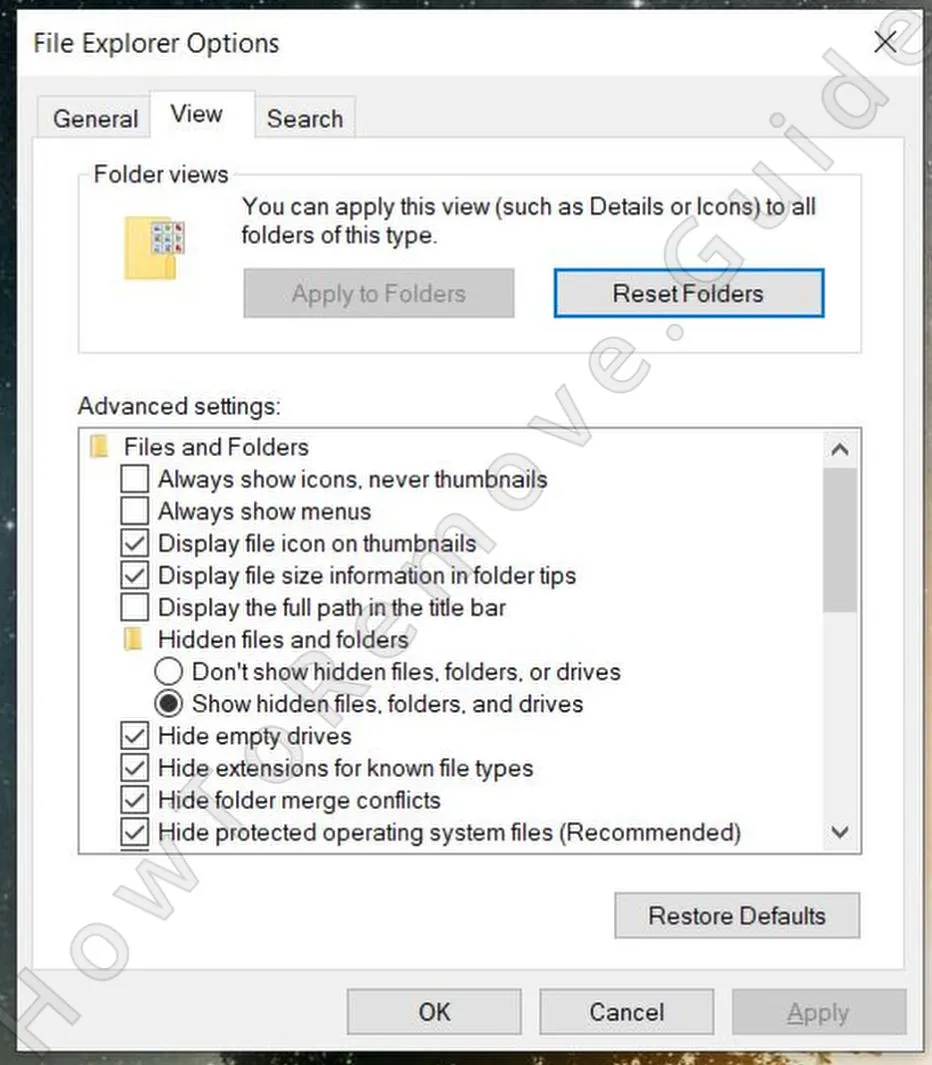 Visibility first. Open the Start menu, search Folder Options, select it, then on the View tab enable Show hidden files, folders, and drives and click Apply. This exposes concealed data that Trojan:Win32/Vigorf.A may store under AppData and other user-profile locations.
 - 1.2Stubborn files are common, so install LockHunter now. This utility identifies processes locking a file and can remove blocked items safely. Keep it ready for later steps when services or scheduled tasks interfere with deletion.
We understand if you don’t want to use third-party software and we generally try to keep our guides entirely “hands-on”. However, in this case, you may need this app to eliminate some malware files which is an essential part of the removal process.
But don’t worry, LockHunter won’t ask for money, doesn’t have ads, and doesn’t even require a registration. You can download and install it in about two minutes.
End Trojan:Win32/Vigorf.A Processes in Task Manager
Active processes can block file removal or immediately restore deleted items. Investigating what is running helps prevent rollbacks and clarifies which binaries are still executing. Work carefully, verify publishers where available, and avoid terminating essential Windows components that only resemble the target, as missteps can cause instability while addressing Trojan:Win32/Vigorf.A.
2. How to Delete Trojan:Win32/Vigorf.A Processes in the Task Manager
- 2.1Start by asking what is executing right now that could belong to Trojan:Win32/Vigorf.A. Press Ctrl+Shift+Esc to open Task Manager and review the list of applications and background processes with their current resource usage.
- 2.2If Task Manager is in compact mode, click More details. The expanded interface adds tabs such as Processes, Performance, Startup apps, and Details, giving you multiple angles to evaluate behavior and impact.
- 2.3
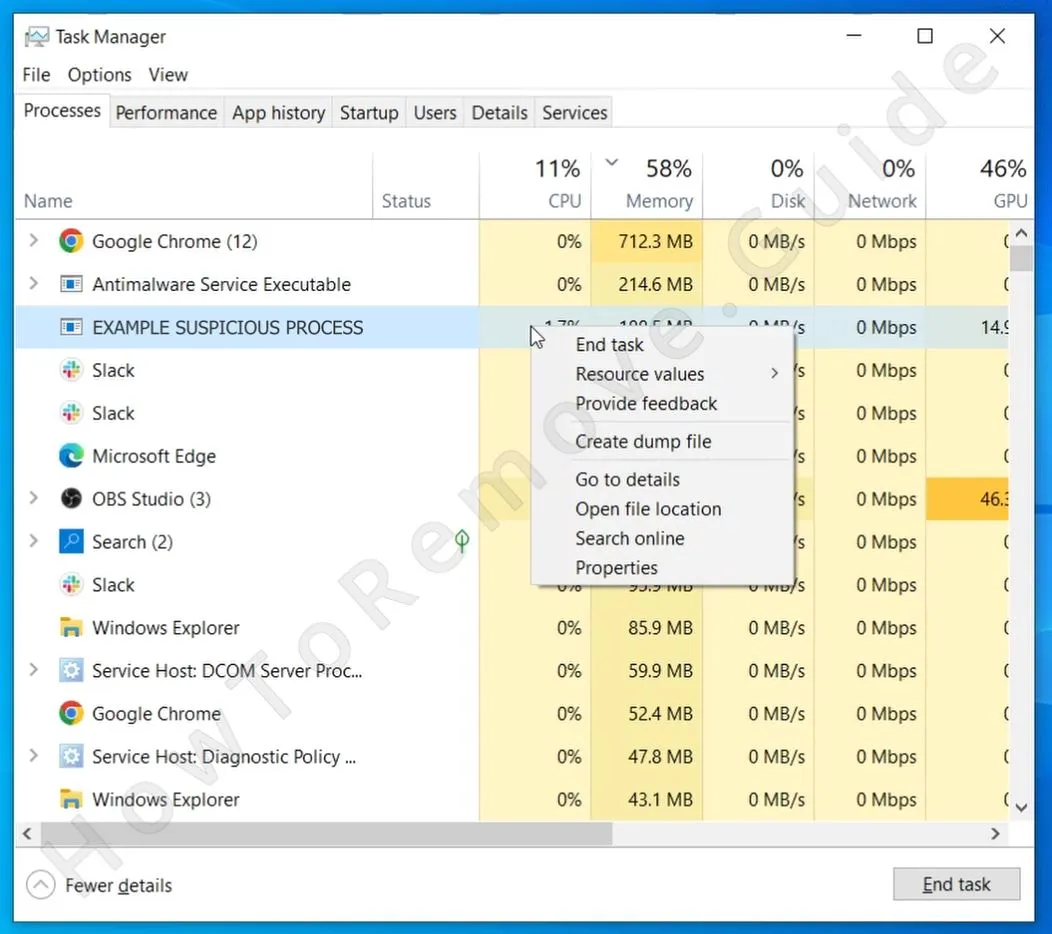 Which entries deserve attention first? Sort by CPU or Memory via the column headers to surface anomalies.
Note: Don’t expect to find a rogue process named “Trojan:Win32/Vigorf.A“. Most forms of malware will hide their processes under innocent-looking names.
- 2.4Right-click any suspicious entry and choose Open file location. Executables residing in user paths like AppData or randomly named folders are higher risk. In Properties, check the Digital Signatures tab when available to help assess legitimacy.
- 2.5Attempt to delete the entire parent directory from that location window. If Windows reports the file is in use, invoke LockHunter and select What’s locking this file? to release handles, then remove the folder so associated DLLs and loaders are cleared together.
- 2.6Return to Task Manager, select the same process, and click End task. Ending it prevents immediate relaunch during cleanup. If it respawns quickly, note its name and timing – a scheduled task or service likely reignites it, which you will remove next.
We tested that SpyHunter successfully removes Trojan:Win32/Vigorf.A* and we recommend using it. It will block Trojan:Win32/Vigorf.A from reinstalling itself and it will make sure your device is clean from any malware.
Try Free For 7 Days*
Buy now15% OFF if you buy straight without trial.
Delete Trojan:Win32/Vigorf.A Files and Leftover Folders
Startup locations and common install paths often host shortcuts, scripts, or renamed executables that relaunch unwanted software. Removing these footholds breaks auto-start chains and stabilizes the system while you address deeper persistence. Proceed carefully and retain only standard system items while targeting components related to Trojan:Win32/Vigorf.A.
3. How to Get Rid of Trojan:Win32/Vigorf.A Files
- 3.1Tackle logon relaunchers first to disable easy startup paths tied to Trojan:Win32/Vigorf.A. Open File Explorer and visit these two folders: C:\ProgramData\Microsoft\Windows\Start Menu\Programs\Startup and C:\Users\YourUsername\AppData\Roaming\Microsoft\Windows\Start Menu\Programs\Startup. Remove suspicious shortcuts, batch files, or scripts that point to unknown executables.
- 3.2Clear both Startup directories completely except desktop.ini. That file configures folder view and is harmless. If a file refuses deletion, unlock and remove it using LockHunter so partial remnants do not remain.
- 3.3Next, inspect the primary program folders C:\Program Files and C:\Program Files (x86). Sort by Date modified and evaluate unfamiliar vendor names. Delete directories that clearly do not belong to trusted software you recognize.
- 3.4Continue by checking C:\Users\YourUsername\AppData\Local\Programs and C:\Users\YourUsername\AppData\Roaming\Microsoft\Windows\Start Menu\Programs. Remove items that look out of place or were created around the time the problems began. This often exposes hidden loaders and updaters.
- 3.5
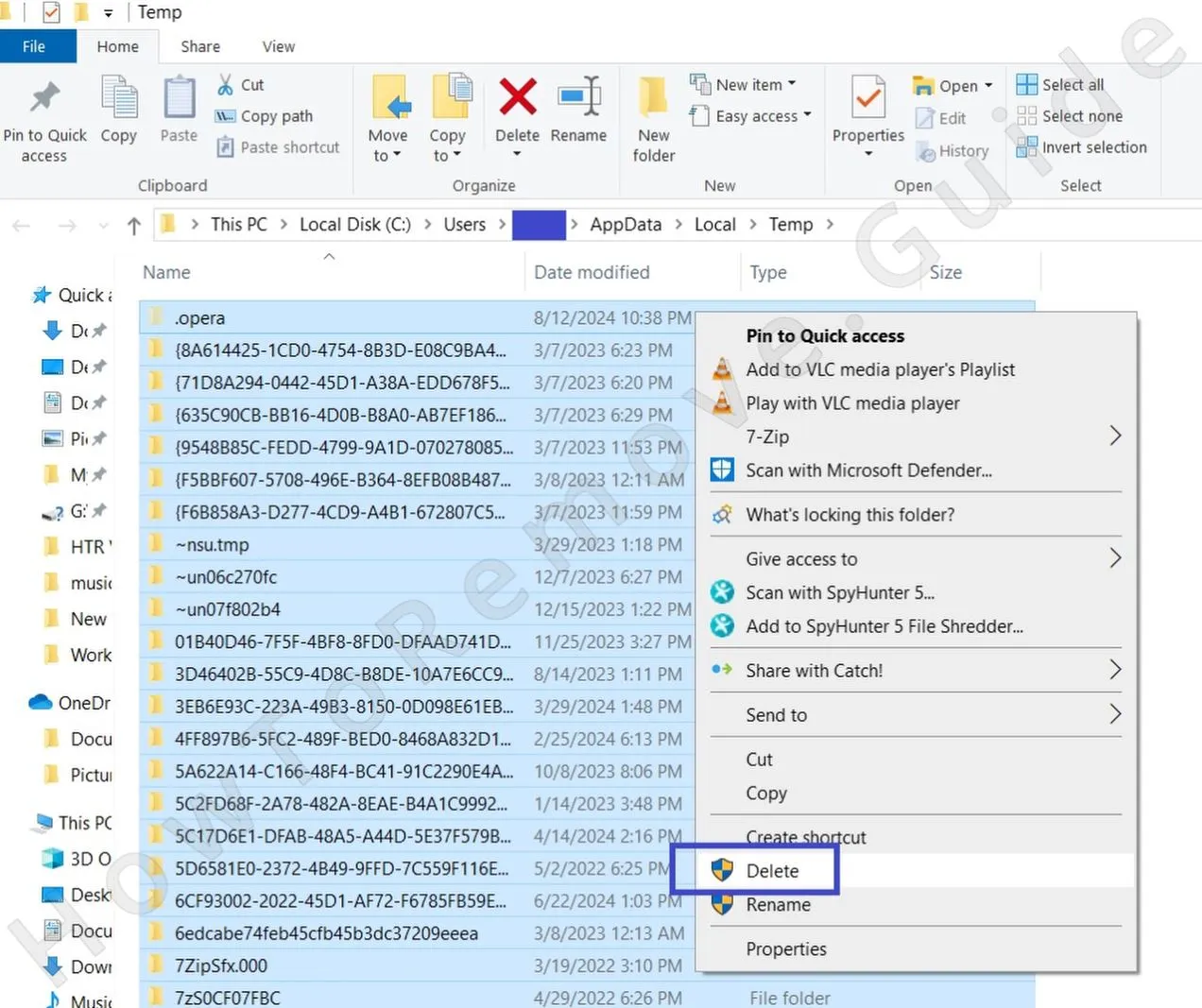 Finish by purging cached debris. Open C:\Users\YourUsername\AppData\Local\Temp, press Ctrl+A to select all, then tap Delete. Clearing temporary files disrupts droppers, cached installers, and scripts that might otherwise re-create components at sign-in.
Clear Scheduled Tasks Created by Trojan:Win32/Vigorf.A
Automated jobs are a frequent persistence method because they run at boot, at logon, or on a timer with minimal visibility. Investigate each entry’s action and path before removal. Delete only tasks you can confidently attribute to the issue to avoid impacting legitimate maintenance while ensuring that Trojan:Win32/Vigorf.A cannot relaunch.
4. Eliminate Trojan:Win32/Vigorf.A Scheduled Tasks
- 4.1
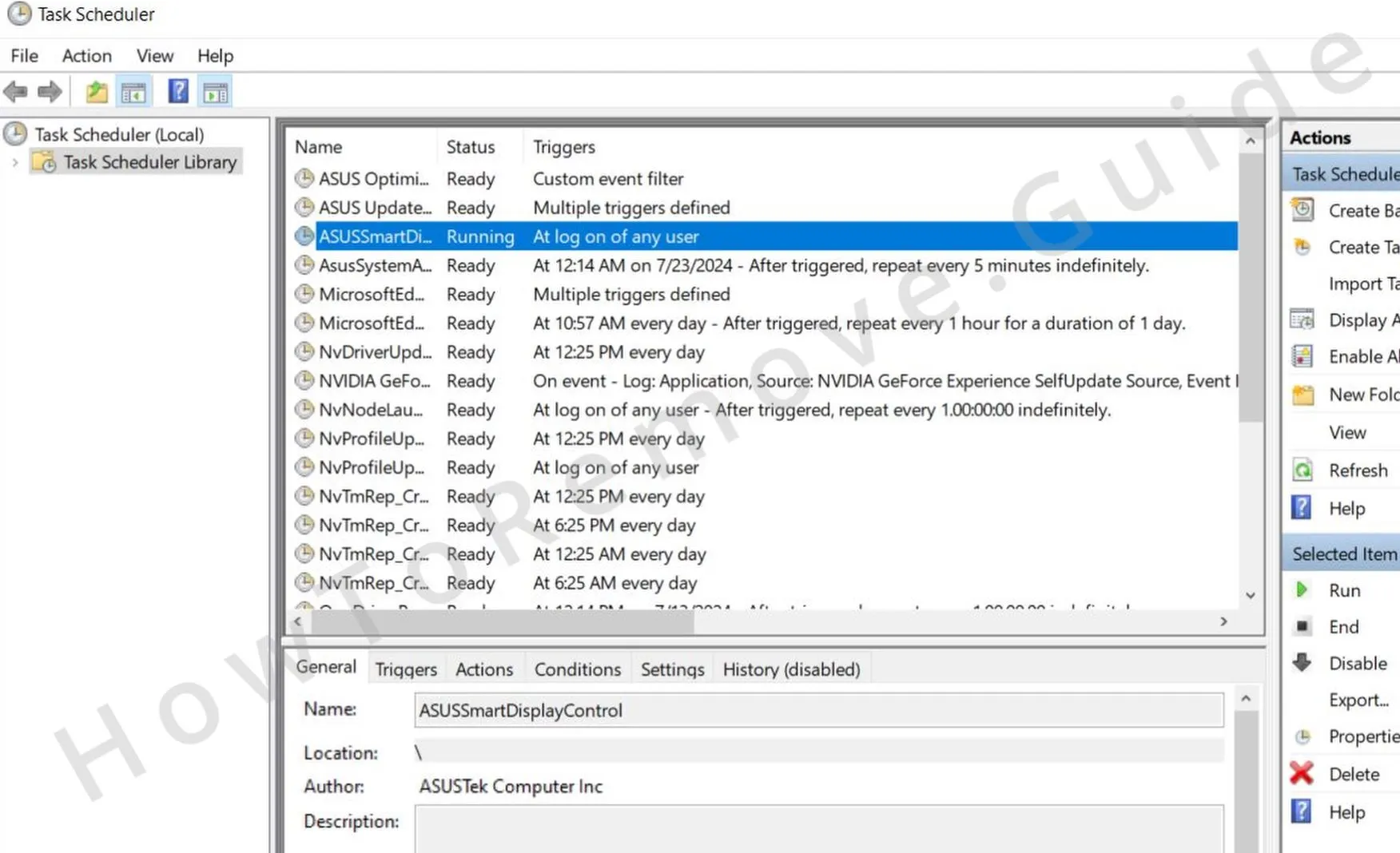 To examine automation that could relight Trojan:Win32/Vigorf.A, open the Start menu, type Task Scheduler, press Enter, and expand Task Scheduler Library. This is the central catalog of scheduled jobs created by Windows and third-party programs.
 - 4.2Open tasks individually. In each task’s properties, look at the Actions tab to see the Program/script and any arguments, and review Triggers to understand when it runs. This context helps distinguish routine maintenance from suspicious behavior.
- 4.3Prioritize entries that start executables from AppData, Roaming, or temporary folders. Legitimate applications rarely store primary binaries in those locations. Unsigned scripts with recent timestamps there are especially suspect.
- 4.4When you identify a questionable task, copy the full path shown under Program/script for later deletion. Then remove the task from Task Scheduler Library and confirm so it cannot execute again.
- 4.5Use File Explorer to navigate to the recorded path and delete the referenced executable or script. If Windows denies access, unlock the file with LockHunter and remove its parent directory to eliminate companion modules.
- 4.6Repeat this review across all unfamiliar entries until none remain pointing to dubious locations. Leaving a single malicious trigger can restore the unwanted behavior after the next reboot or user sign-in.
Delete Trojan:Win32/Vigorf.A Autoruns and Services in Registry
Registry entries often contain autoruns and service registrations that survive basic uninstallers. Precision matters here. Remove only values you can clearly associate with the unwanted components. A careful, systematic pass helps uncover startup hooks that keep Trojan:Win32/Vigorf.A active despite earlier file deletions.
5. Remove Trojan:Win32/Vigorf.A Through the Registry
- 5.1Open the editor carefully so you can search for entries tied to Trojan:Win32/Vigorf.A. Press Win+R, type regedit, and press Enter to launch Registry Editor. Work slowly and verify keys before removal to avoid unintended side effects.
- 5.2Press Ctrl+F and search for the original program name exactly as it appeared. The search checks keys, values, and data. Allow it to complete fully, as large hives can take time to enumerate on busy systems.
- 5.3When a match is found, select its parent key in the left pane, confirm it truly relates to the unwanted program, then right-click and choose Delete. Press F3 to continue scanning for additional occurrences until no further matches appear.
- 5.4Broaden your sweep by repeating searches for any other suspicious names removed earlier, as well as process names noted in Task Manager. Threats often scatter identifiers across different locations to resist single-pass cleanup.
- 5.5Perform a final search for the exact name you are targeting to catch obscure or obfuscated entries. Even a single lingering Run value can silently reinstate components at the next logon.
- 5.6Manually review common autorun and service paths, deleting only entries that clearly reference identified unwanted executables: HKCU\Software\Microsoft\Windows\CurrentVersion\Run, HKCU\Software\Microsoft\Windows\CurrentVersion\RunOnce, HKCU\Software\Microsoft\Windows\CurrentVersion\Policies\Explorer\Run, HKLM\Software\Microsoft\Windows\CurrentVersion\Run, HKLM\Software\Microsoft\Windows\CurrentVersion\RunOnce, HKLM\Software\Microsoft\Windows\CurrentVersion\Policies\Explorer\Run, HKEY_LOCAL_MACHINE\Software\Microsoft\Windows\CurrentVersion\RunServices, HKEY_LOCAL_MACHINE\Software\Microsoft\Windows\CurrentVersion\RunServicesOnce, HKEY_LOCAL_MACHINE\Software\Microsoft\Windows\CurrentVersion\RunOnce\Setup, HKEY_LOCAL_MACHINE\SYSTEM\CurrentControlSet\services. Avoid deleting entire keys without verifying their purpose.
After completing these steps, restart the computer. Monitor for redirects, pop-ups, or unexpected background activity over several sign-ins. If none return, the persistence chain has been removed and the system is likely stable.
