

If you can to this page because you noticed something called Altburics on your system (a file, a process, an app), then you are in the right place because here you can learn how to remove this rogue software.
Yes, Altburics is a rogue program, more specifically, it is a Trojan Horse that uses stealth and disguise to enter the PCs of its victims. Recent security discussions show that Altburics often arrives bundled with software that appears harmless, which is how the malware slips past users who don’t suspect a hidden passenger.
A key attribute of Trojans such as this is their ability to secretly gain elevated privileges that allow them to run processes that normally require admin-level permissions. That way, the malware can do anything from harvesting data to pulling in additional malware or even spying on your online and offline activities.
Some victims report browser redirects, unusual alerts, or odd Registry entries that reappear even after deletion attempts. That kind of persistence usually means that scheduled tasks or helper modules are keeping Altburics anchored in your machine.
It’s also possible that Altburics, similar to Altrusica, Altruistics, Altrust and Altrustix, is used to drain your system resources for cryptocurrency mining, which would explain any unusual slowdowns and system sluggishness.
Though its behavior can vary, Trojans like this always chip away at system integrity and privacy, so removing Altburics should be a priority before it escalates into something nastier on your system today too.
We tested that SpyHunter successfully removes Altburics* and we recommend using it. It will block Altburics from reinstalling itself and it will make sure your device is clean from any malware.
 Try Free For 7 Days*
Buy now15% OFF if you buy straight without trial.
 OFFER
OFFERAltburics Removal Guide
Start with Windows’ built-in uninstall options before deeper work. Try removing Altburics from the system first – this is quick, low risk, and can take out core files. Even if traces remain, an initial pass makes later checks quieter and easier to validate.
Quickly remove Altburics via Apps & Features
- 1.1Start where installed apps are managed if Altburics is present: open the Start Menu, select Settings, then open the panel that controls apps and system preferences.
- 1.2Inside Settings, choose Apps. This view lists installed items and lets you filter by name, size, or install date to surface recent additions.
- 1.3Change the sort to Installation date so the newest entries appear first. This makes unfamiliar programs easier to spot and review.
- 1.4When you identify a suspicious program, select it, click Uninstall, and follow the prompts. Allow the uninstaller to remove related components without interruption.
- 1.5Afterwards, navigate to C:\Users\YourUsername\AppData\Local\Programs. Check for leftover folders or binaries the uninstaller missed and note anything unusual.
- 1.6If you find a leftover folder, delete it manually. Restart Windows to release file locks and confirm nothing tries to launch at startup.
After the restart, verify the entry no longer appears. If traces remain, that’s common with persistent threats. Continue with the checks below to expose hidden components and cut off relaunch points.
SUMMARY:
How to Fully Get Rid of Altburics
Working while the program still runs reveals file paths, parent processes, and triggers in context. With Altburics active, its files and startup hooks are visible in memory and on disk, letting you trace locations and shut down persistence with fewer assumptions.
1. Prepare for the Altburics removal
- 1.1
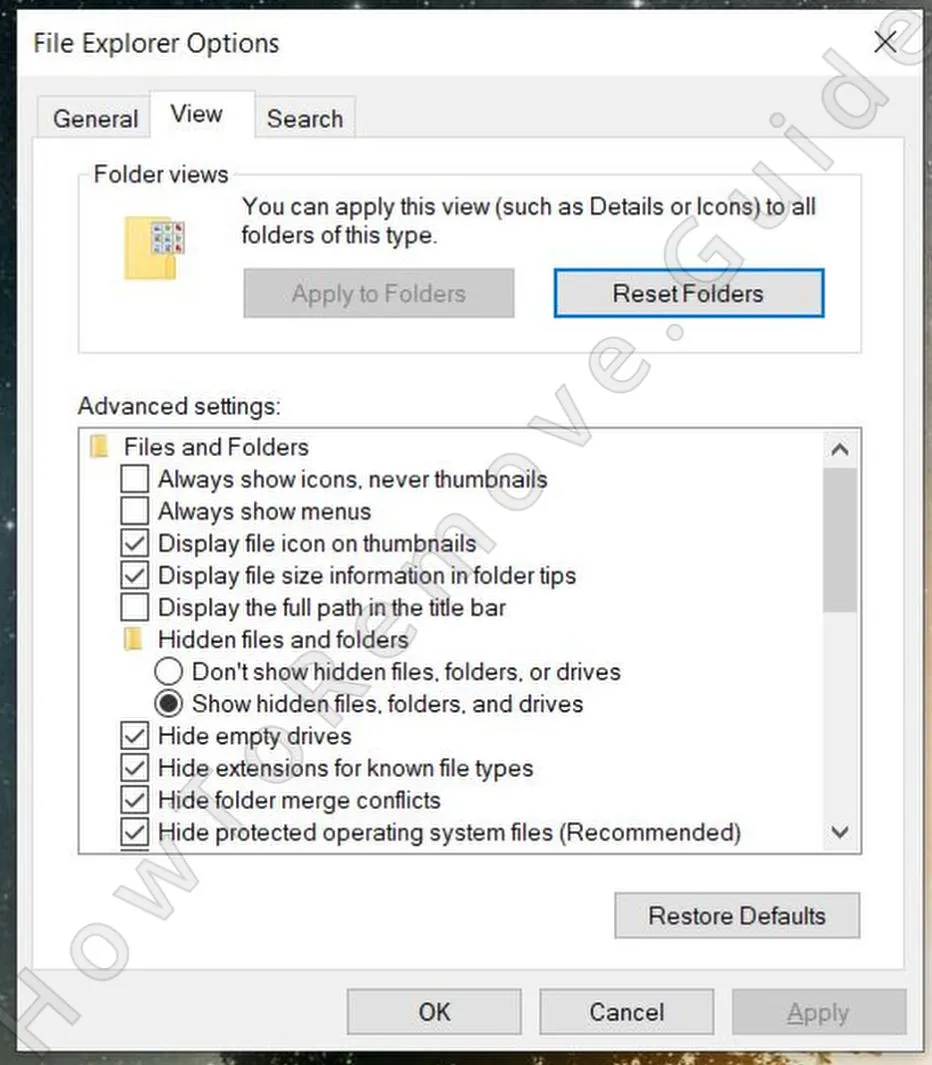 Make hidden items visible to expose Altburics leftovers. Search for Folder Options from the Start Menu, open it, switch to the View tab, and enable Show hidden files, folders, and drives. Revealing hidden content often uncovers stash locations.
 - 1.2Locked files can block cleanup, so install LockHunter to remove items Windows reports as in use. It integrates with the context menu, identifies locks, and can delete stubborn executables or DLLs safely.
If you prefer to avoid third-party tools, the rest remains manual. For files Windows marks as “in use,” the utility helps release locks so removals can finish without errors.
LockHunter is free, ad-free, and doesn’t require registration. Installation usually completes in a couple of minutes.
Remove Altburics Processes From the Task Manager
Stopping a single executable rarely ends persistence. Loaders often add startup entries, scheduled tasks, and helper processes that relaunch them. The steps below show how to locate the running binary tied to Altburics, remove its files, and then end the process cleanly to prevent instant restart.
2. Stop suspicious Altburics processes and delete their files
- 2.1Context matters when tracking Altburics behavior. Press Ctrl + Shift + Esc to open Task Manager and review running processes and resource usage.
- 2.2If you see the compact view, click More details. The full view shows background processes, publishers, and startup impact for better evaluation.
- 2.3
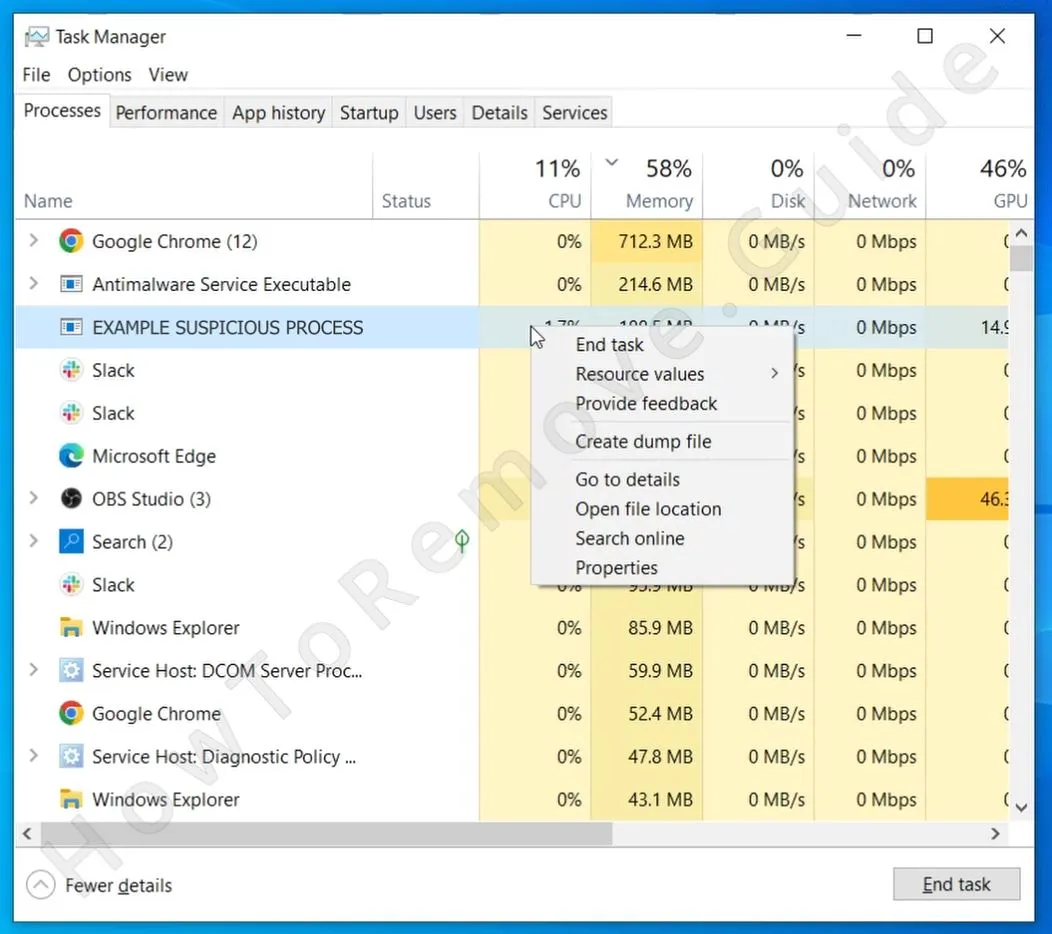 Sort by CPU or Memory and watch for unfamiliar names or abnormal usage. Malicious processes usually avoid clear product names.
 - 2.4Right-click a suspect entry and choose Open file location. Checking the directory and publisher helps decide legitimacy quickly.
- 2.5Try deleting the hosting folder. If Windows blocks removal, run LockHunter, select What’s locking this file?, release the lock, and remove the file and its folder from within the tool.
- 2.6Return to Task Manager and click End task on the same process. Ending it after deleting the binary reduces instant restarts and stabilizes the system for later steps.
Delete Altburics Virus Files
Many intrusions rely on logon launches and scattered helpers in user and program folders. Clearing these areas interrupts relaunch attempts and removes scaffolding that could restore components linked to Altburics.
3. Clean startup and program folders linked to Altburics
- 3.1Begin with relaunch paths used when Altburics tries to restart: C:\ProgramData\Microsoft\Windows\Start Menu\Programs\Startup and C:\Users\YourUsername\AppData\Roaming\Microsoft\Windows\Start Menu\Programs\Startup. Remove unknown shortcuts or executables.
- 3.2Inside each Startup folder, keep desktop.ini and delete other suspicious items. If removal fails, use LockHunter to unlock and delete them safely.
- 3.3Check main program locations next – C:\Program Files and C:\Program Files (x86). Remove newly created, empty, or oddly named folders unrelated to software you trust.
- 3.4Review user-level paths as well: C:\Users\YourUsername\AppData\Local\, C:\Users\YourUsername\AppData\Local\Programs, and C:\Users\YourUsername\AppData\Roaming\Microsoft\Windows\Start Menu\Programs. These often hold launchers, updater stubs, or scripts.
- 3.5
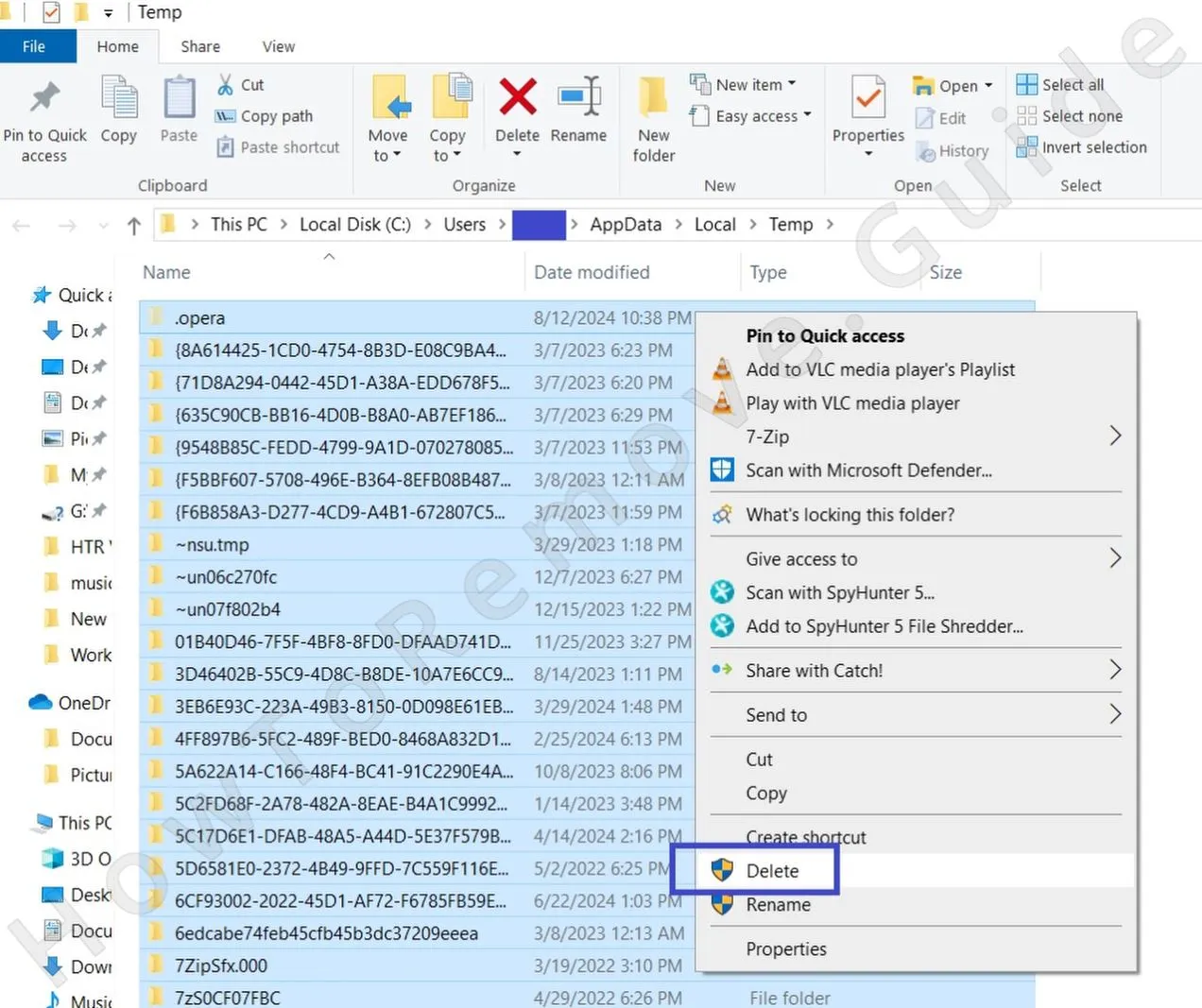 Clear temporary files: open C:\Users\YourUsername\AppData\Local\Temp, press Ctrl + A to select all, delete the contents, and empty the Recycle Bin.
Get Rid of Altburics Scheduled Tasks
Scheduled entries can quietly restart Altburics after file cleanup. Review tasks to see which triggers run, where the payload lives, and whether it sits under user-space paths. Removing both the task and its target stops reappearance after logon or reboot.
4. Turn off scheduled tasks that restart Altburics
- 4.1
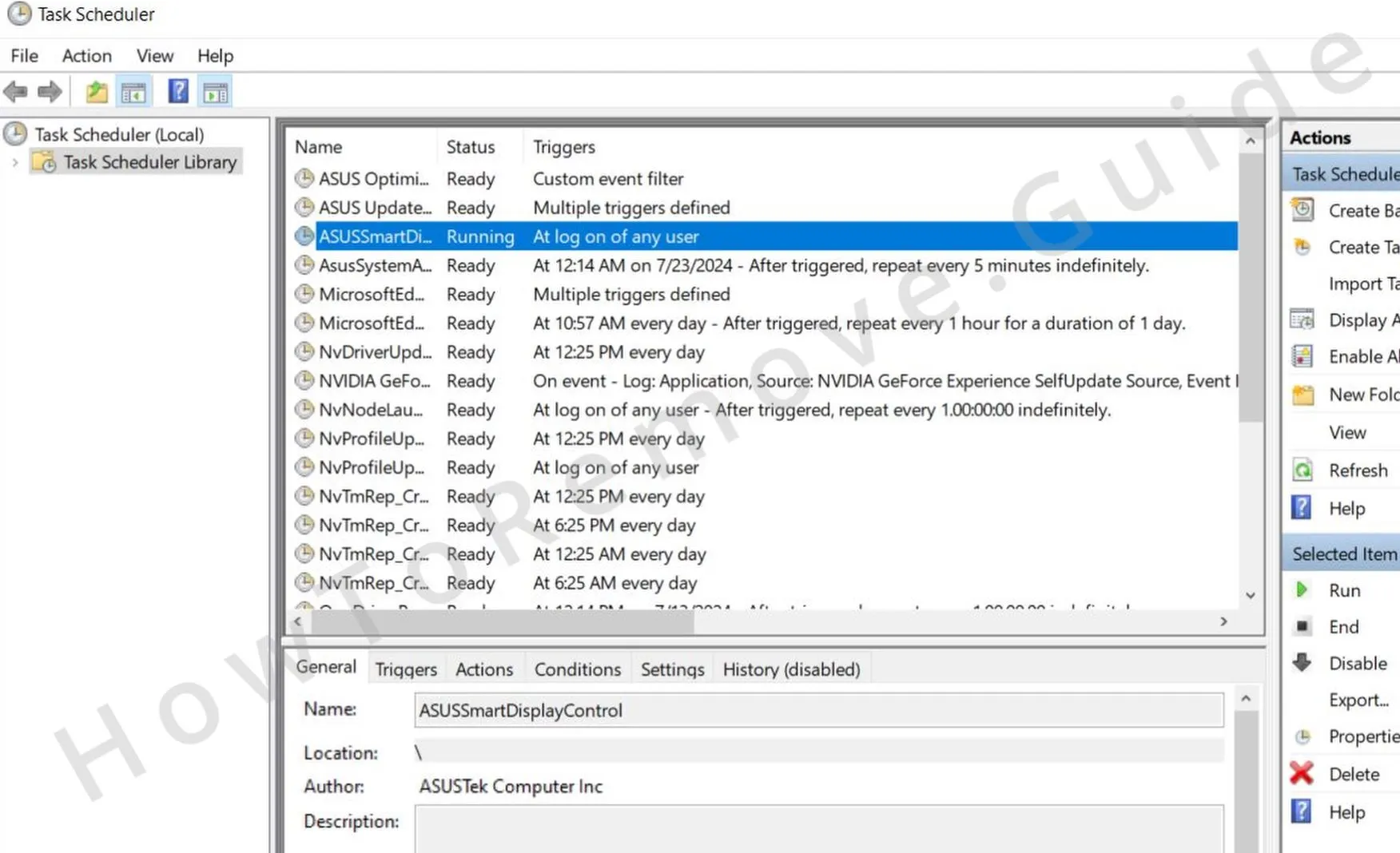 Open Task Scheduler to locate triggers that can bring back Altburics. Search from the Start Menu, launch it, and expand the Task Scheduler Library to view tasks for your account and system folders.
 - 4.2Double-click a task to open Properties. Check Actions to see the command or file that runs and any parameters supplied.
- 4.3Prioritize tasks that reference user directories like AppData or Roaming, especially unfamiliar names. Odd locations for known vendors deserve closer inspection.
- 4.4If a task is illegitimate, copy the full path from Actions, then delete the task in Task Scheduler to stop automatic execution.
- 4.5Browse to the copied path and remove the referenced executable or script. Removing both the task and its payload prevents re-creation after a reboot.
- 4.6Repeat this review for every folder under the Task Scheduler Library, including installer-created subfolders. Persistence often hides behind generic names.
Uninstall the Altburics Malware App Through the Windows Registry
Even after visible cleanup, leftovers tied to Altburics can remain in Registry autostart and policy locations. Remove only entries you confirm are unwanted so legitimate services stay intact. Targeting specific values – not entire keys – limits risk while clearing relaunch hooks.
5. Remove Altburics remnants with Registry Editor
- 5.1Open Registry Editor to expose autostart data that may sustain Altburics: press Win + R, type regedit, and press Enter.
- 5.2Press Ctrl + F and search for the exact app name you removed earlier. This often finds orphaned keys such as services or shell extensions.
- 5.3When a match appears, select the key in the left pane and delete it. Continue with F3 until no further entries remain across all hives.
- 5.4Repeat the search-and-delete cycle for any other questionable apps identified earlier. Removing their traces blocks helper services from restoring components.
- 5.5Run one final search for the exact threat name. Deleting a lingering value or path reference can stop files from being recreated after startup.
- 5.6Manually inspect these commonly used paths for autostarts and policy runs:
HKEY_CURRENT_USER\Software\Microsoft\Windows\CurrentVersion\Run
HKEY_CURRENT_USER\Software\Microsoft\Windows\CurrentVersion\RunOnce
HKEY_CURRENT_USER\Software\Microsoft\Windows\CurrentVersion\Policies\Explorer\Run
HKEY_LOCAL_MACHINE\Software\Microsoft\Windows\CurrentVersion\Run
HKEY_LOCAL_MACHINE\Software\Microsoft\Windows\CurrentVersion\RunOnce
HKEY_LOCAL_MACHINE\Software\Microsoft\Windows\CurrentVersion\Policies\Explorer\Run
HKEY_LOCAL_MACHINE\Software\Microsoft\Windows\CurrentVersion\RunServices
HKEY_LOCAL_MACHINE\Software\Microsoft\Windows\CurrentVersion\RunServicesOnce
HKEY_LOCAL_MACHINE\Software\Microsoft\Windows\CurrentVersion\RunOnce\Setup
HKEY_LOCAL_MACHINE\SYSTEM\CurrentControlSet\Services - 5.7In each path, look in the right pane for values that point to unknown executables or suspicious directories. Delete the specific value only to avoid impacting valid components.
Finish by restarting Windows. Confirm normal startup, check that no pop-ups or relaunches occur, and ensure browsers and apps behave as expected. If anything persists, use an offline scanner to detect hidden drivers, restore altered settings, and confirm no scheduled tasks remain.
