

Trojan:Win32/Conteban.A!ml or Conteban, is a Windows threat name tied to files or activity that can put a device under outside control. Once active, it may open the door to data theft, let attackers run harmful actions in the background, or pull in other malicious programs.
For most people, the danger is not just the file itself, but what happens after it starts running. A compromised system may become unusually slow, freeze without warning, crash more often, show changed settings, or lose storage space as unwanted components spread deeper into Windows.
We tested that SpyHunter successfully removes Trojan:Win32/Conteban.A!ml* and we recommend using it. It will block Trojan:Win32/Conteban.A!ml from reinstalling itself and it will make sure your device is clean from any malware.
 Try Free For 7 Days*
Buy now15% OFF if you buy straight without trial.
 OFFER
OFFERThis kind of infection, similar to Trojan:HTML/FakeCaptcha!rfn and Trojan:PDF/FakeCaptcha.AB!atmn, is often linked to downloads that appear safe at first glance, including software that looks legitimate. That disguise can make the threat easy to miss until clear system problems begin or security software flags suspicious behavior.
Because backdoor trojans can be stubborn, removal is not always straightforward. If the cleanup steps in the guide feel too technical or the infection keeps returning, SpyHunter 5 can be used to remove unwanted programs and viruses.
Trojan:Win32/Conteban.A!ml Removal Guide
Start with Windows’ built-in uninstall tools before moving on to deeper checks. Try removing Trojan:Win32/Conteban.A!ml from Apps & Features first because the step is quick and relatively low risk, and it may remove the main program entry if one exists. Even when leftovers remain, this first pass reduces clutter and makes later verification easier.
Remove Trojan:Win32/Conteban.A!ml app through Apps & Features
- 1.1If Trojan:Win32/Conteban.A!ml is listed among installed apps, begin there. Open the Start Menu, select Settings, and go to the section that manages installed applications.
- 1.2In Settings, open Apps. Review the full list or use the available filters for name, size, or install date to narrow down recent additions.
- 1.3Set the sort order to Installation date so the newest items appear first. This makes it easier to spot software that appeared around the same time the unwanted behavior began.
- 1.4When you find an entry you do not recognize, select it, click Uninstall, and complete the on-screen prompts. Let the uninstaller finish fully so related files and settings have a chance to be removed too.
- 1.5After the uninstall ends, open C:\Users\YourUsername\AppData\Local\Programs. Look for folders or binaries that appear connected to the removed entry and note anything that seems out of place.
- 1.6If a leftover folder clearly matches the program you just removed, delete it manually. Restart Windows afterward so file locks are released and you can verify that the unwanted entry does not return at startup.
After restarting, confirm that the program entry is gone and that the same behavior does not return. If Trojan:Win32/Conteban.A!ml or related symptoms still appear, that is not unusual with persistent threats; continue with the checks below to remove hidden files and disable restart points that can survive a basic uninstall.
OVERVIEW:
| Name | Trojan:Win32/Conteban.A!ml |
| Type | Trojan |
| Removal Tool |
Some threats reinstall themselves if you don’t delete their core files. We recommend downloading SpyHunter to remove harmful programs for you. This may save you hours and ensure you don’t harm your system by deleting the wrong files. |
How to Remove Trojan:Win32/Conteban.A!ml Completely
Checking what is currently active can reveal file paths, parent processes, and the triggers that keep a threat running. If Trojan:Win32/Conteban.A!ml is still present, you can often see where it starts from and which folders it uses, which reduces guesswork and helps remove persistence points instead of only the visible symptoms.
1. Prepare Windows for a deeper cleanup
- 1.1
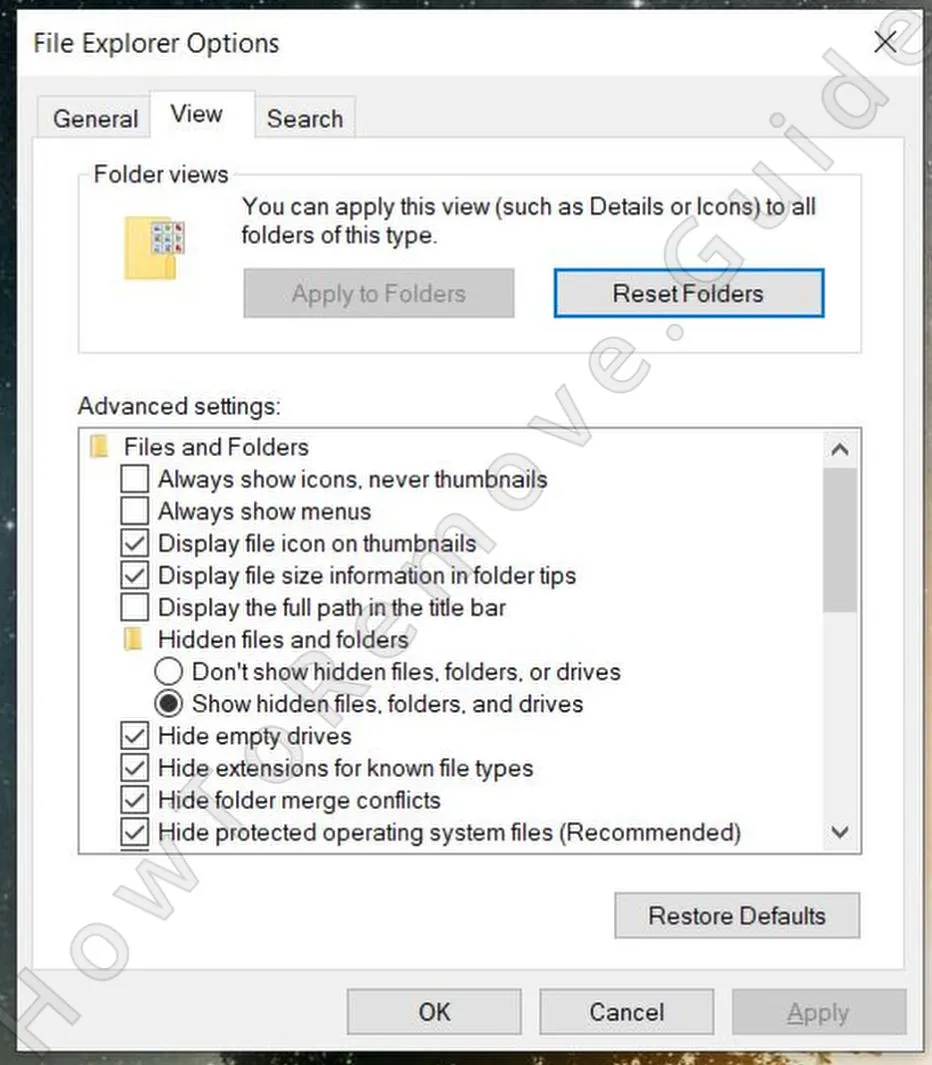 Enable hidden items so you can inspect leftovers linked to Trojan:Win32/Conteban.A!ml. In the Start Menu, search for Folder Options, open it, switch to the View tab, and select Show hidden files, folders, and drives. Hidden folders often hold support files.
 - 1.2If Windows refuses deletion because files are “in use”, install LockHunter. It adds a right-click option that shows what is holding the lock and can remove stubborn executables or DLLs.
You can still complete most of the cleanup manually if you do not want to use third-party software. When Trojan:Win32/Conteban.A!ml leaves a file marked as “in use,” however, this utility can release the lock so deletion finishes cleanly instead of turning into a reboot loop.
LockHunter is free, does not require registration, and usually installs within a couple of minutes. If you decide to use it while dealing with Trojan:Win32/Conteban.A!ml, the purpose is simply to unlock stubborn files so the rest of the cleanup can continue without repeated file-use errors.
Remove Suspicious Trojan:Win32/Conteban.A!ml Processes in Task Manager
Stopping a single executable is rarely enough because persistent threats can add startup entries, helper components, and scheduled triggers that relaunch the main process. The steps below help you identify the running file for Trojan:Win32/Conteban.A!ml, remove the folder it uses, and then end the process so it cannot restart immediately while you continue cleanup.
2. Stop suspicious Trojan:Win32/Conteban.A!ml processes and delete their files
- 2.1To find components related to Trojan:Win32/Conteban.A!ml, begin with what is running now. Press Ctrl + Shift + Esc to open Task Manager, then review the active processes and their resource usage.
- 2.2If Task Manager opens in the simplified view, click More details. The expanded layout shows background processes and extra fields that make unusual entries easier to spot.
- 2.3
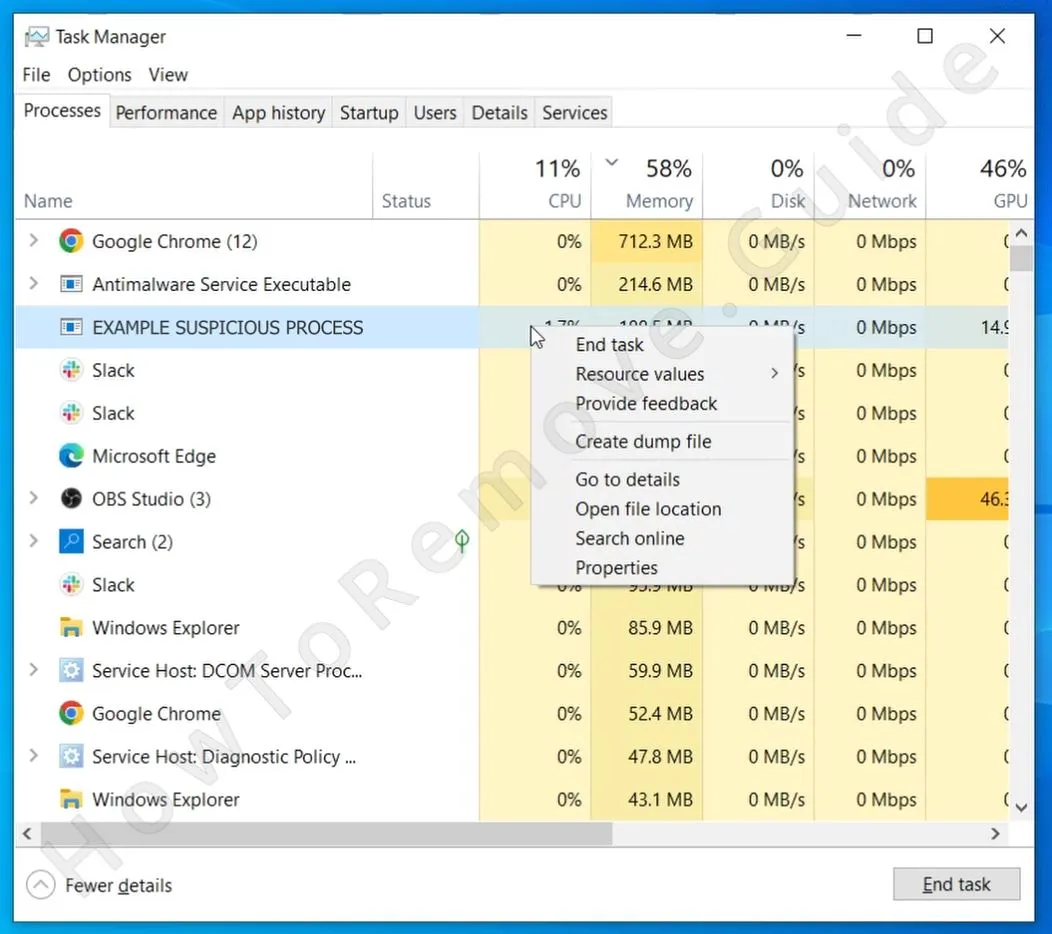 Sort by CPU or Memory and watch for unfamiliar names or steady spikes. Malware often uses bland, generic process names to blend in with normal activity.
 - 2.4Right-click the entry that looks suspicious and choose Open file location. The folder path and nearby files usually make it easier to judge whether the process belongs to legitimate software.
- 2.5Try deleting the folder that contains the suspicious file. If Windows blocks the removal, open LockHunter, choose What’s locking this file?, release the lock, and delete the file and its folder from inside the tool.
- 2.6Return to Task Manager and click End task for that same process. Stopping it after the file is removed reduces the chance of an immediate relaunch while you continue checking the system.
Delete Trojan:Win32/Conteban.A!ml Trojan Files
Many threats stay persistent by dropping small launchers and helper files into common system and user folders, then tying them to logon or other triggers. At this stage, the goal is to remove those launch points and leftovers so Trojan:Win32/Conteban.A!ml cannot quietly rebuild itself. Check the locations below in order and delete only items you cannot identify.
3. Remove Trojan:Win32/Conteban.A!ml startup entries and leftover folders
- 3.1Begin with the startup locations that can relaunch Trojan:Win32/Conteban.A!ml: C:\ProgramData\Microsoft\Windows\Start Menu\Programs\Startup and C:\Users\YourUsername\AppData\Roaming\Microsoft\Windows\Start Menu\Programs\Startup. Delete unknown shortcuts or executables.
- 3.2Inside each Startup folder, leave desktop.ini in place and remove other suspicious items. If Windows blocks the deletion, use LockHunter to unlock and remove them.
- 3.3Check the main program directories next – C:\Program Files and C:\Program Files (x86). Delete recently created, empty, or oddly named folders that do not match software you knowingly installed.
- 3.4Review user-level locations too: C:\Users\YourUsername\AppData\Local\, C:\Users\YourUsername\AppData\Local\Programs, and C:\Users\YourUsername\AppData\Roaming\Microsoft\Windows\Start Menu\Programs. These paths often store launchers, updater stubs, or scripts.
- 3.5
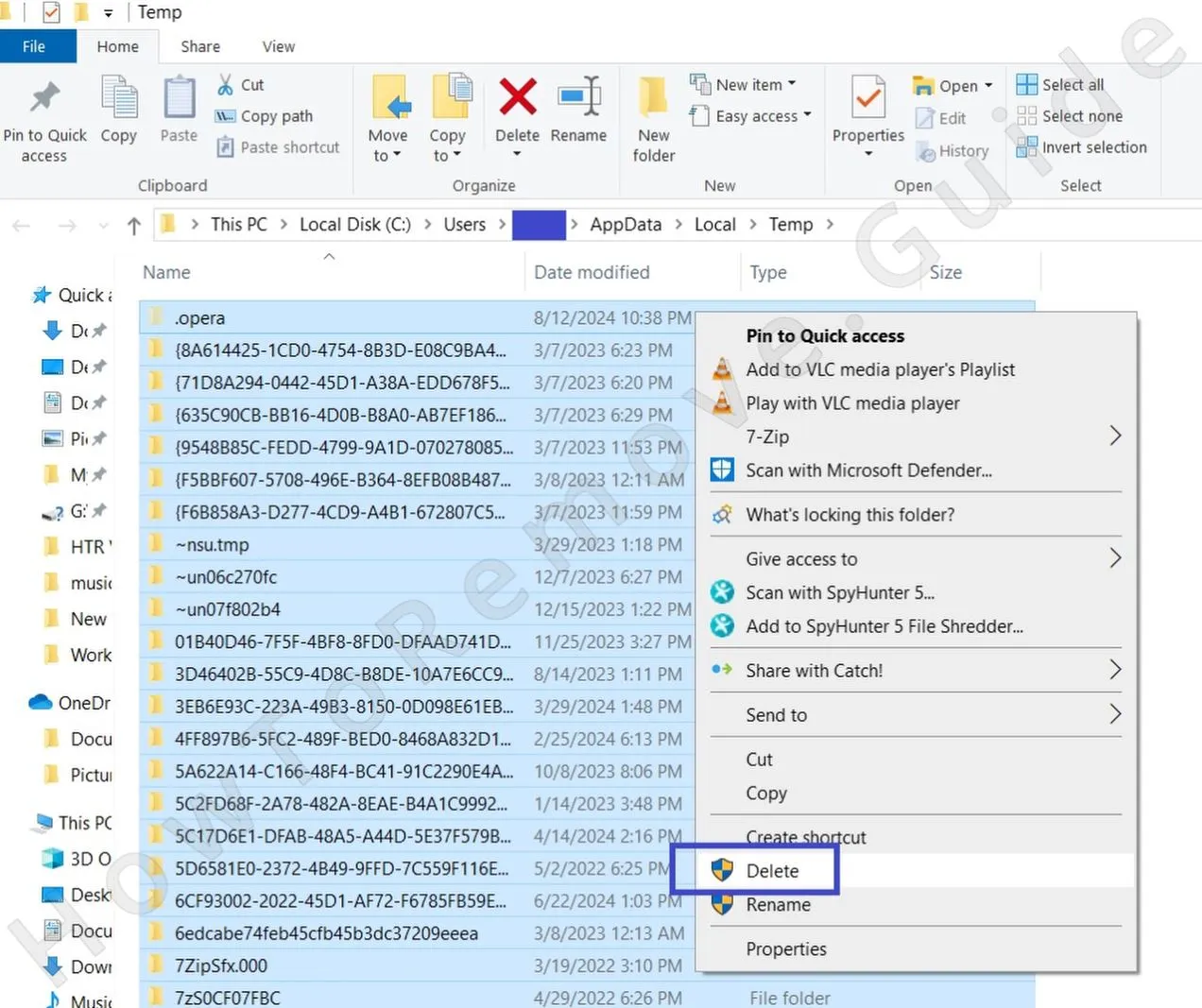 Clear temporary files: open C:\Users\YourUsername\AppData\Local\Temp, press Ctrl + A to select everything, delete the contents, and empty the Recycle Bin.
Remove Trojan:Win32/Conteban.A!ml Scheduled Tasks
Scheduled tasks are a common way to relaunch unwanted software after files have been deleted, because Windows can run them at sign-in, on a timer, or when certain conditions are met. Reviewing task actions shows what will launch and from which path, which helps stop Trojan:Win32/Conteban.A!ml from returning after a restart.
4. Disable tasks that relaunch Trojan:Win32/Conteban.A!ml
- 4.1
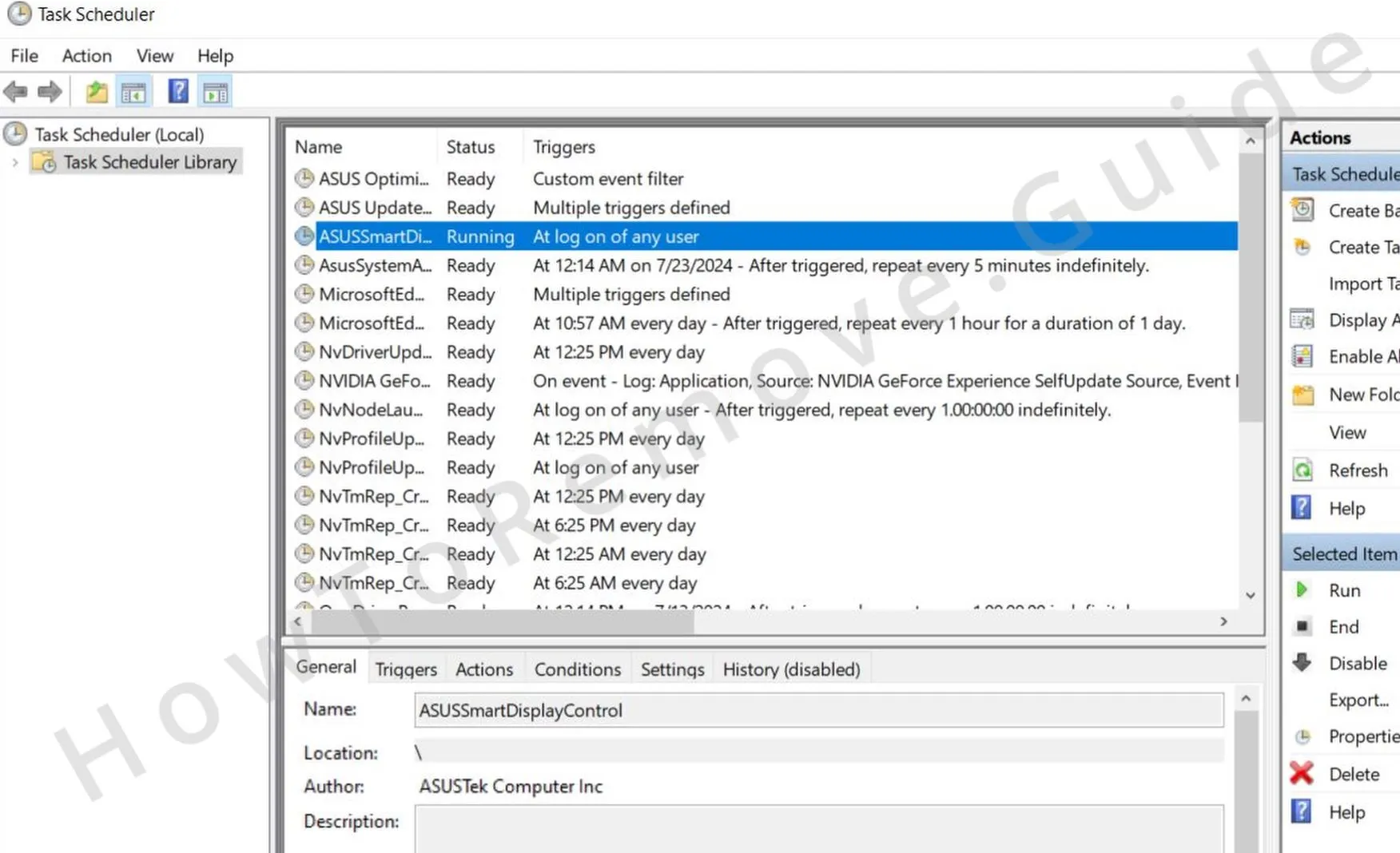 Open Task Scheduler to locate triggers that may restore Trojan:Win32/Conteban.A!ml. Search for it from the Start Menu, launch it, and expand the Task Scheduler Library to review tasks for your account and system folders.
 - 4.2Double-click a task to open Properties. Check Actions to see what runs and whether extra parameters are included.
- 4.3Focus on tasks that point into user locations such as AppData or Roaming, especially if the task name is unfamiliar. Those paths are commonly used by unwanted payloads.
- 4.4If a task clearly does not belong, copy the full path shown under Actions, then delete the task in Task Scheduler so it cannot run again.
- 4.5Go to the copied path and delete the referenced executable or script. Removing both the task and its payload helps prevent an automatic relaunch after reboot.
- 4.6Repeat the review in every folder under the Task Scheduler Library, including installer-created subfolders. Persistence is often hidden behind generic task names.
Remove Trojan:Win32/Conteban.A!ml Through the Windows Registry
Even after files are deleted and tasks are removed, Registry entries can remain as startup hooks or stray references to old paths. The goal here is to remove only entries you can clearly connect to Trojan:Win32/Conteban.A!ml, while leaving legitimate services and vendor keys untouched. Work slowly and target specific values whenever possible.
5. Clean Trojan:Win32/Conteban.A!ml leftover registry entries safely
- 5.1Open Registry Editor to inspect autostart data that may keep Trojan:Win32/Conteban.A!ml active: press Win + R, type regedit, and press Enter.
- 5.2Press Ctrl + F and search for the exact app name you removed earlier. This can reveal orphaned keys such as services or shell extensions.
- 5.3When a result appears, select the key in the left pane and delete it. Continue with F3 until no more entries are found across all hives.
- 5.4Repeat the same search-and-delete process for any other suspicious programs you identified during the earlier cleanup. Clearing those entries reduces the chance that helper components can restore files.
- 5.5Run one more search for the exact threat name. Removing a leftover value that points to a deleted file can stop items from being recreated at startup.
- 5.6Manually inspect these commonly used paths for autostarts and policy runs:
HKEY_CURRENT_USER\Software\Microsoft\Windows\CurrentVersion\Run
HKEY_CURRENT_USER\Software\Microsoft\Windows\CurrentVersion\RunOnce
HKEY_CURRENT_USER\Software\Microsoft\Windows\CurrentVersion\Policies\Explorer\Run
HKEY_LOCAL_MACHINE\Software\Microsoft\Windows\CurrentVersion\Run
HKEY_LOCAL_MACHINE\Software\Microsoft\Windows\CurrentVersion\RunOnce
HKEY_LOCAL_MACHINE\Software\Microsoft\Windows\CurrentVersion\Policies\Explorer\Run
HKEY_LOCAL_MACHINE\Software\Microsoft\Windows\CurrentVersion\RunServices
HKEY_LOCAL_MACHINE\Software\Microsoft\Windows\CurrentVersion\RunServicesOnce
HKEY_LOCAL_MACHINE\Software\Microsoft\Windows\CurrentVersion\RunOnce\Setup
HKEY_LOCAL_MACHINE\SYSTEM\CurrentControlSet\Services - 5.7In each location, review the right pane for values that point to unknown executables or unusual directories. Delete the specific value only so legitimate components are not disrupted.
Finish by restarting Windows. Confirm that startup looks normal, make sure no unexpected relaunches occur, and check that browsers and installed apps behave normally. If symptoms linked to Trojan:Win32/Conteban.A!ml continue, an offline scan can help detect hidden components and verify that no scheduled tasks or startup values remain.
