

Bezhope.bet is a pretty standard type of crypto casino scam that we’ve seen hundreds of times before, yet the same scheme continues to claim more and more unsuspecting victims each day. The main tool it uses to lure you is – obviously – the promise of free money.
TikTok and YT Shorts videos promote this site by telling users that it provides a free starting bonus that you can play with and claim any winnings you make with no strings attached. It looks risk-free since you aren’t gambling with your own money, so many users take the bait.
Scams of Bezhope.bet‘s type are known to steal personal data and passwords. Install SpyHunter Pro to scan for risks, remove any dangerous trackers, and enable real-time protection.

Try Free For 7 Days*
Buy now15% OFF if you buy straight without trial.
 OFFER
OFFERAnd at first it looks like it’s their lucky day because the platform seems unusually generous for a gambling site. In other words, you are almost guaranteed to win these early spins, but that’s also the whole point.
The idea is to get you to withdraw the money you’ve won; that’s where the actual scam happens. Because, in order to withdraw, the site wants you to send some of your money as a “verification deposit” or some other made-up nonsense.
But by that point, most usersa re too far in to use their common sense and realize they are about to get scammed. Obviously, you shouldn’t send that money because the moment you do, it’s gone for good along with your “winnings” that were neer really there.
Whether you’ve already been pulled in by Bezhope.bet (or a similar scheme like Rusewin.cc or Winkai.cc) or you’re trying to avoid these traps going forward, this guide is meant to help. Below you’ll find practical warning signs to watch for, plus concrete steps to limit fallout if you’ve already interacted with the platform.
IMPORTANT! READ BEFORE PROCEEDING!
If you interacted with Bezhope.bet, treat it as an active security incident. Focus on containing further loss and preventing account takeovers, not negotiating with “support” or following new promises.
- Update passwords for your email and exchanges and enable 2FA everywhere.
- Stop contact immediately and do not send any more crypto for any reason.
- Move remaining funds to a new wallet (new seed phrase) if you suspect compromise.
- If you shared documents, set fraud alerts/credit monitoring and prepare to report the incident.
- Keep evidence: transaction IDs, wallet addresses, screenshots, and chat logs.
How We Know Bezhope.bet is a Scam
Multiple repeating red flags led us to treat Bezhope.bet as a fraud operation rather than a legitimate gambling service. In combination, they match a familiar pattern: a tempting storefront, an invented balance, and a “payout” process designed mainly to pull more money and personal details out of the victim.
Withdrawal rules that shift
The “withdrawal” process suddenly adds extra hurdles right when you try to exit, which is the opposite of how real businesses behave when you request a payout.
Manufactured social proof
It can look busy and convincing, but those activity cues are easy to fake: winner tickers, chat spam, and “live” stats are not evidence of solvency.
Unworkable wagering conditions
Over time, conditions pile up – fee, deposit, upgrade, minimum threshold – and each one is framed as the last checkpoint before release.
WHOIS and hosting smoke
Sites in this scam cluster often look disposable, with short-lived domains and rapid rebrands once complaints and reports accumulate.
Pay-to-release pressure
The most obvious logic break is being told to pay extra to access your own funds – that’s a classic fee-based con, not a functioning casino.
No real recourse
Check licensing outside the site itself; a legitimate operator can be verified through a regulator, not only through a logo or badge graphic.


How the Bezhope.bet Scam Deception Funnel Works
Understanding the mechanics matters because these operations are built to redirect attention away from verification and toward emotion. Bezhope.bet usually doesn’t rely on one big lie; it relies on a sequence of small pushes that make the next bad choice feel justified.
The whole setup is arranged so that once you try to withdraw from Bezhope.bet, the narrative shifts – a fresh condition appears and is presented as routine compliance or a simple technical step.
Promo bait and referral codes
Discovery usually begins through hype channels around Bezhope.bet – ads, promo codes, or “everyone’s doing it” chatter – where urgency crowds out careful checking.
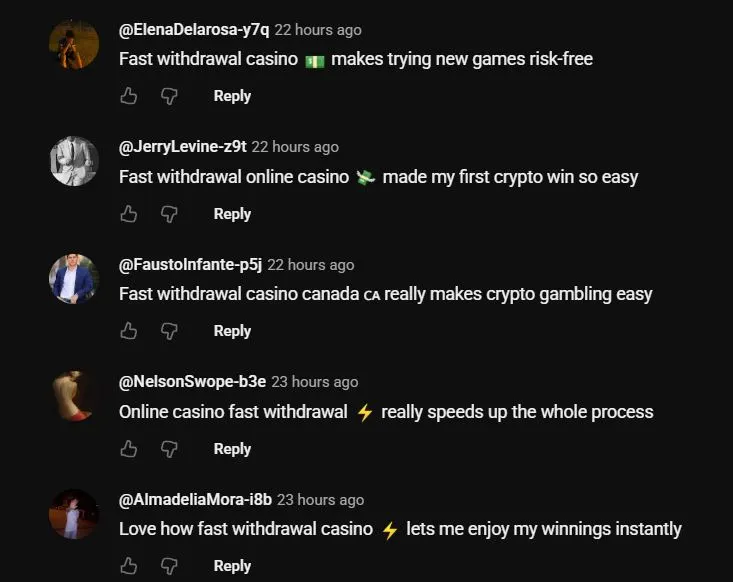
Casino look and bonus hype
Next, sign-up is kept almost frictionless, with loud rewards that make depositing feel like gaining an edge instead of taking on risk.

Bigger balances, then a barrier
Then, early play is tuned to build confidence, often by showing unusually strong results that nudge bigger deposits and “one more run.”
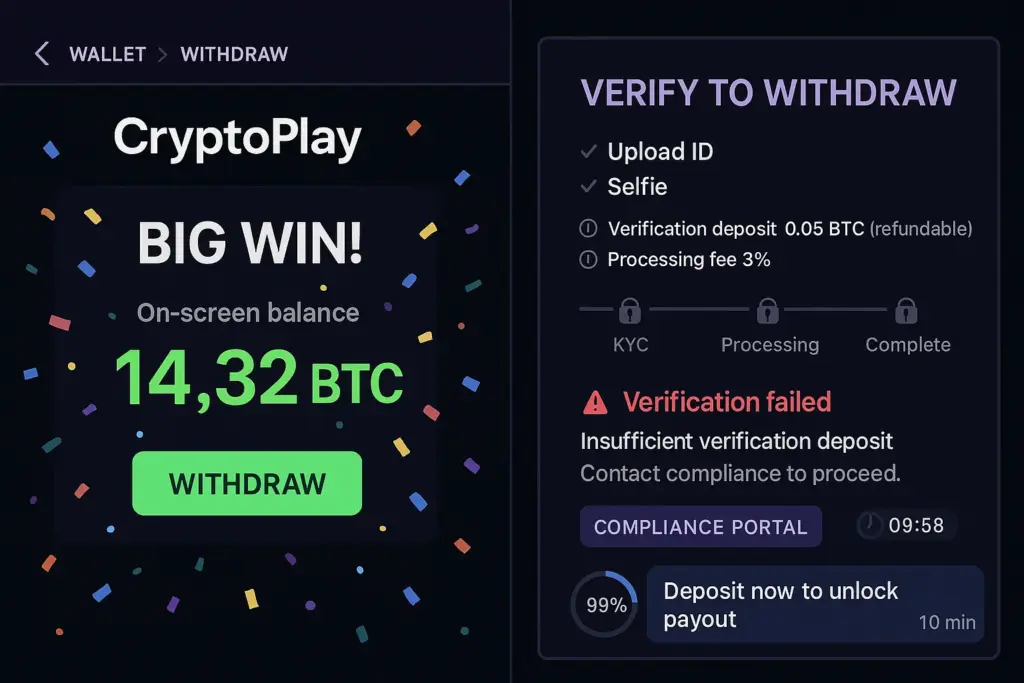
Fee gates and KYC collection
After that, once you try to withdraw, the story changes again: a new condition appears and is framed as normal compliance or a technical requirement. If you shared ID photos or selfies, treat it like identity exposure: lock down accounts and watch for new accounts opened in your name.

Delays, rebrands, and “recovery” bait
Finally, when payments stop, “support” becomes evasive or vanishes, and the brand may quietly jump to a new domain using the same playbook underneath. Treat any sudden “recovery” helper who wants an upfront fee as another trap.
Staying safe from crypto casino scams like Bezhope.bet
Staying safer long-term comes down to rejecting pressure and building a small set of repeatable checks into your habits. The idea is to prevent urgency, sunk costs, and social proof from steering your choices for you, especially when a platform is trying to make “act now” feel like the only option.
Confirm licensing in official registers
Verify licensing outside the site itself; a real operator can be cross-checked through a regulator, not just a badge graphic.
Review domain age and history
Check domain age and registration details before depositing anywhere, because short, unclear histories are common in disposable scam sites.
Decline withdrawal fees and “unlock” deposits
If a site asks you to send funds to “unlock” your balance, refuse – whether it’s labeled a verification payment, processing fee, or tax.
Pick venues with real recourse
On any unfamiliar service, make a tiny deposit and try an early cash-out test; smooth withdrawals are a baseline requirement, not a premium feature.
Reduce wallet exposure
Keep wallet hygiene tight with Bezhope.bet in mind: avoid connecting your main wallet to unknown sites, and revoke permissions if you already did.
Scrutinize “provably fair” claims
These “trust” signals are often paper-thin: unclear ownership, fuzzy licensing language, and no simple way to confirm who actually runs the platform.
Collect evidence and report quickly
Save evidence: transaction IDs, wallet addresses, screenshots, and chat logs. File a report with your national cybercrime/fraud reporting channel and/or financial regulator.
Train a deliberate pause
Search the platform name plus its domain with terms like “withdrawal” and “fee” and read what independent reports describe.
Useful Resources for Scam Reporting and Prevention (By Country)
Even when crypto moves fast, reporting quickly can still matter – especially when exchanges, platforms, or investigators can connect your evidence to other victims and known infrastructure. Use the directory below to file a complaint and attach the documentation you collected.
Click here to report the scam in your country
| Country / Agency | URL | Category / Use-case | Phone/Email |
| Australia – Crime Stoppers | https://www.crimestoppers.com.au | Anonymous tips about crime | 1800 333 000 |
| Australia – National Anti-Scam Center (Scamwatch) | https://www.scamwatch.gov.au/report-a-scam | General scams; phishing; texts/emails | |
| Australia – Police Assistance Line (non-emergency) | https://www.police.gov.au | Local police report | 131 444 |
| Australia – ReportCyber (ACSC) | https://www.cyber.gov.au/report | Cybercrime (hacks, fraud, extortion) | |
| Canada – Canadian Anti-Fraud Center (CAFC) | https://www.antifraudcentre-centreantifraude.ca/report-signalez-eng.htm | General scams incl. phone/text/email | |
| France – DGCCRF (SignalConso) | https://signal.conso.gouv.fr | Consumer scams/deceptive practices | |
| France – PHAROS – Internet-Signalement | https://www.internet-signalement.gouv.fr | Online content & cybercrime reports | |
| Germany – Bundeskriminalamt / Local Police | https://www.polizei.de/Polizei/DE/Home/home_node.html | Report online fraud | |
| Germany – Weißer Ring – Victim Support | https://weisser-ring.de | Victim support | 116 006 |
| India – DoT Helpline (Sanchar Saathi) | https://sancharsaathi.gov.in | Fraudulent telecom/SIM related | 155260 |
| India – National Consumer Helpline | https://consumerhelpline.gov.in | Consumer scams | 1800-11-4000 / 1915 |
| India – National Cyber Crime Reporting Portal | https://cybercrime.gov.in | Cybercrime incl. online fraud | 1930 |
| Japan – Consumer Affairs Agency (CAA) | https://www.caa.go.jp/policies/policy/consumer_policy/caution/cybercrime/ | Consumer scams | |
| Japan – National Police Agency – Cybercrime | https://www.npa.go.jp/bureau/cyber/ | Cybercrime reporting | |
| Mexico – Guardia Nacional (National Guard) | https://www.gob.mx/gn | Cybercrime reporting | |
| Mexico – Instituto Federal de Telecomunicaciones (IFT) | https://www.ift.org.mx | Telecom/online services scams | |
| Mexico – PROFECO | https://www.gob.mx/profeco | Consumer fraud & ecommerce | |
| Netherlands – AFM – Report investment fraud | https://www.afm.nl/en/consumenten/themas/beleggen/misleiding-misbruik | Investment/crypto | |
| Netherlands – Fraudehelpdesk | https://www.fraudehelpdesk.nl/melden | General scams (incl. phishing/SMS) | 088-7867372 |
| Netherlands – Politie – Meldpunt Internetoplichting | https://www.politie.nl/themas/internetoplichting.html | Online shopping fraud | |
| New Zealand – CERT NZ | https://www.cert.govt.nz/individuals/report-an-issue/ | Phishing, identity scams | |
| New Zealand – Department of Internal Affairs – Spam | https://www.dia.govt.nz/Spam-Contact-Us | Email/SMS spam | [email protected] |
| New Zealand – IDCARE | https://www.idcare.org | Victim support (identity compromise) | 0800 121 068 |
| New Zealand – Netsafe – Report | https://www.netsafe.org.nz/report/ | Online harms & scams | |
| New Zealand – New Zealand Police (non-emergency) | https://www.police.govt.nz/use-105 | Report fraud/online crime | 105 |
| Nigeria – Economic & Financial Crimes Commission (EFCC) | https://www.efcc.gov.ng | Financial scams incl. crypto/investment | [email protected] |
| Nigeria – Nigeria Police Special Fraud Unit (SFU) | https://www.specialfraudunit.org.ng | Serious fraud | Voice/SMS: 0708 227 6895; WhatsApp: 0812 760 9914 |
| Poland – CERT Polska (CERT.PL) | https://cert.pl/en/report/ | Cyber incidents & phishing | |
| Poland – Dyzurnet.pl | https://dyzurnet.pl | Illegal online content (esp. child protection) | |
| Poland – Polish Police (Policja) | https://www.policja.pl | Report scams to police | |
| Singapore – Anti-Scam Centre / Anti-Scam Helpline | https://www.scamalert.sg | General scams; texts; calls | 1800-722-6688 |
| Singapore – Monetary Authority of Singapore (MAS) | https://www.mas.gov.sg/investor-alert-list | Investment/crypto checks | |
| Singapore – Singapore Police Force | https://www.police.gov.sg/iwitness | Police report (cybercrime) | |
| South Africa – Cybersecurity Hub (CSIRT) | https://www.cybersecurityhub.gov.za | Cyber incidents incl. scams | |
| South Africa – South African Fraud Prevention Service (SAFPS) | https://www.safps.org.za | Identity fraud support | 011-867-2234 |
| South Africa – South African Police Service (SAPS) | https://www.saps.gov.za | Police report (cybercrime unit) | |
| South Korea – Korea Communications Commission (KCC) | https://www.kcc.go.kr | Telecom-related fraud | |
| South Korea – Korea Internet & Security Agency (KISA) | https://www.kisa.or.kr | Phishing, online harms | |
| South Korea – Korean National Police Agency – Cyber Bureau | https://ecrm.cyber.go.kr | Cybercrime reporting | |
| Spain – INCIBE – Oficina de Seguridad del Internauta (OSI) | https://www.osi.es/es/reporte | Cybersecurity & online fraud | |
| Spain – Policía Nacional / Guardia Civil | https://www.policia.es | Report scams to police | |
| Sweden – Crime Victim Authority (Brottsoffermyndigheten) | https://www.brottsoffermyndigheten.se | Victim support & compensation | 090–70 82 00 |
| Sweden – Polisen (Swedish Police) | https://polisen.se | Report fraud/cybercrime | 114 14 (non-emergency); 112 (emergency) |
| Sweden – Swedish Consumer Agency (Konsumentverket) | https://www.konsumentverket.se | Unfair business practices | |
| United Arab Emirates – Abu Dhabi Police – Aman Service | https://www.adpolice.gov.ae | Cybercrime tips/reporting | SMS 2828; 800 2626 |
| United Arab Emirates – Dubai Police – eCrime | https://www.dubaipolice.gov.ae | Cybercrime reporting | 04 606 1600 |
| United Arab Emirates – Ministry of Interior – Cyber Crime Dept. | https://www.moi.gov.ae | Cybercrime incl. online scams | |
| United Arab Emirates – Telecommunications Regulatory Authority (TRA) / TDRA | https://www.tra.gov.ae | Telecom-related scams/phishing | |
| United Kingdom – Action Fraud (NFIB) | https://www.actionfraud.police.uk | General scams & cybercrime (non-emergency) | 0300 123 2040 |
| United Kingdom – Citizens Advice Consumer Service | https://www.citizensadvice.org.uk/consumer/get-more-help/if-you-need-more-help-about-a-consumer-issue/ | Consumer problems & scam guidance | 0808 223 1133 |
| United Kingdom – Financial Conduct Authority (FCA) | https://www.fca.org.uk/consumers/report-scam-us | Investment/crypto & financial services | |
| United Kingdom – National Cyber Security Centre (NCSC) | https://www.ncsc.gov.uk/collection/phishing-scams | Phishing emails & suspicious websites | |
| United Kingdom – Stop Scams UK ‘159’ | https://stopscamsuk.org.uk/159 | Banking APP fraud (direct to your bank) | 159 |
| United States – AARP Fraud Watch Network Helpline | https://www.aarp.org/money/scams-fraud/ | Victim support | 833-372-8311 |
| United States – Better Business Bureau – Scam Tracker | https://www.bbb.org/scamtracker | Business/marketplace scams | |
| United States – FBI Internet Crime Complaint Center (IC3) | https://www.ic3.gov | Internet crime incl. investment/crypto | |
| United States – Federal Trade Commission – ReportFraud | https://reportfraud.ftc.gov | General scams, phishing, texts/emails | 1-877-382-4357 |
| United States – National Center for Disaster Fraud | https://www.justice.gov/disaster-fraud | Disaster-related scams | (866) 720-5721 |
| United States – SEC Tips & Complaints | https://www.sec.gov/tcr | Investment & securities/crypto-asset offerings |
The most reliable move is boring: tighten security, document everything, and don’t pay to chase losses.
