

If Bitonax showed up through online bait, maybe a loud ad or a fake celebrity clip, I would slow down before sending it anything. The rough-new-exchange story is just cover for a clone-scam front dressed up to look like trading. The sign-up reward is only there to make the balance on the screen feel halfway paid out.
Scams of Bitonax.com‘s type are known to steal personal data and passwords. Install SpyHunter Pro to scan for risks, remove any dangerous trackers, and enable real-time protection.

Try Free For 7 Days*
Buy now15% OFF if you buy straight without trial.
 OFFER
OFFERThe giveaway is the moment the site starts asking for real Bitcoin before it will release the pretend money. It may call the payment verification or a transfer fee.
Sometimes scams like Bitonax, Jagotrack.com, or Hbq.cc simply push for a deposit that feels small next to the number it claims you have waiting. That number was never yours. Once the payment leaves, the operators can demand another round before the domain disappears and the same template comes back under another name.
IMPORTANT! READ BEFORE PROCEEDING!
Take containment seriously if you entered data, connected a wallet, uploaded documents, or sent funds to Bitonax, especially if the scam also involved an installer, browser prompt, wallet signature, or private chat with “support.”
First secure the device used during the incident; the first step we recommend is using SpyHunter 5 if suspicious files, extensions, pop-ups, redirects, or permission prompts appeared during the process.
Fastest Removal Option: Use SpyHunter 5
- 1.1Click here to download and install the anti-malware tool on your PC.
- 1.2
 Start SpyHunter 5, click the Buy button and choose between starting your 7-days free trial or directly purchasing the tool.
If you choose to buy SpyHunter 5 now, you can use our discount code, “HTRG15“, for 15% off.
- 1.3
 Once you activate SpyHunter, click Start Scan Now, select the Full Scan option, and let the tool do its job.
 - 1.4
 Once the scan completes (it could take a while, so have patience), you’ll see all malware and other undesirables listed.
Click Next to review the detections and then click Next again to delete all rogue items.
After SpyHunter 5, it is also critical to protect the accounts and wallets connected to the event by changing credentials, revoking approvals, collecting TXIDs, and reporting the receiving address.
- Move remaining assets to a fresh, clean wallet and revoke any suspicious token approvals linked to the scam touchpoint.
- Change passwords and enable app-based 2FA on email, exchanges, and chat accounts; review active sessions and delete unused API keys.
- Preserve evidence: screenshots, URLs, videos or ads, wallet addresses, TXIDs, and chat logs – keep everything for official reports.
- Notify the sending platform (your exchange or service) with TXIDs and the destination address so they can flag or freeze if possible.
- Report promptly to your national cybercrime unit (e.g., IC3 in the US, Action Fraud in the UK) and to the platform where you saw the promotion.
How We Know Bitonax is a Scam
Bitonax follows a recognizable fake-platform model. The strongest indicators are the unverified balance, the upfront withdrawal payment, the lack of transparent transaction records, and the way the site relies on manufactured credibility.
Instant balance manipulation
A site can show any number it wants inside its own dashboard. Unless the balance is tied to a real deposit, a public transaction, or a reputable custodian, it is only a persuasion tool.
Advance fee disguised as verification
The request for a deposit before withdrawal is not a security feature. It is an advance-fee demand wrapped in crypto language, using the victim’s hope of accessing the displayed balance to extract another transfer.
Endorsements that cannot be trusted
A familiar voice or face in a promotional clip can be generated, edited, or taken out of context. Scammers use that recognition to create instant confidence before the user investigates the site itself.
Payouts with no traceable proof
Real crypto withdrawals produce records that can be checked. If Bitonax provides only vague messages, pending-status screens, or support excuses without a transaction hash, the claimed payout is not demonstrated.
Paper-thin compliance story
Fraudulent pages often display official-sounding labels without a verifiable operator behind them. A badge or license image is meaningless unless it matches a real regulator entry and the exact domain being used.
Template reuse across domains
These scams are built for rotation. After one address attracts warnings, the same design, text, and payment funnel can be deployed under a new name with very little effort.
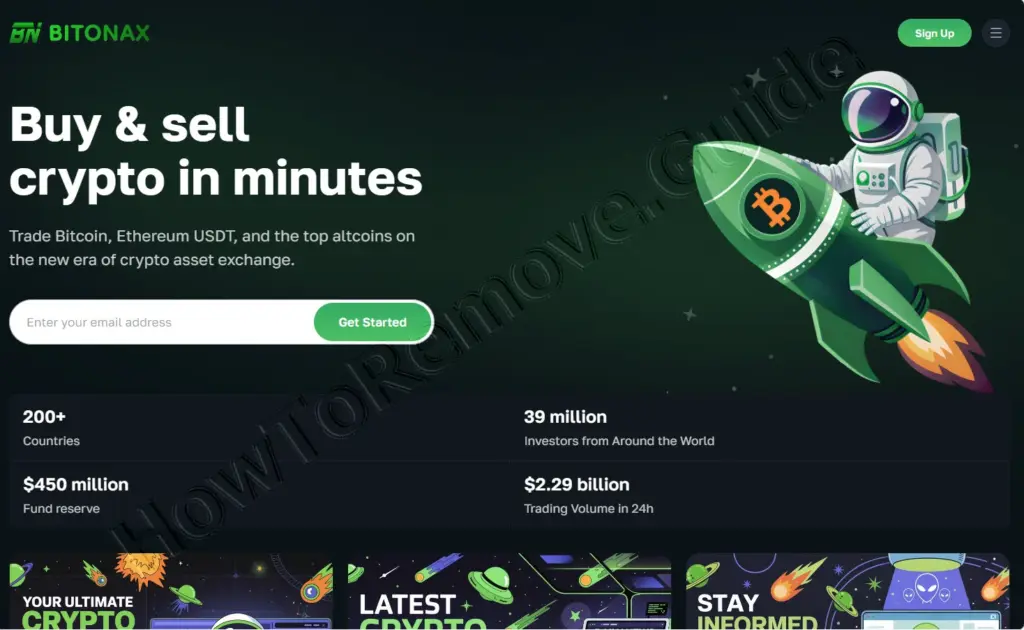
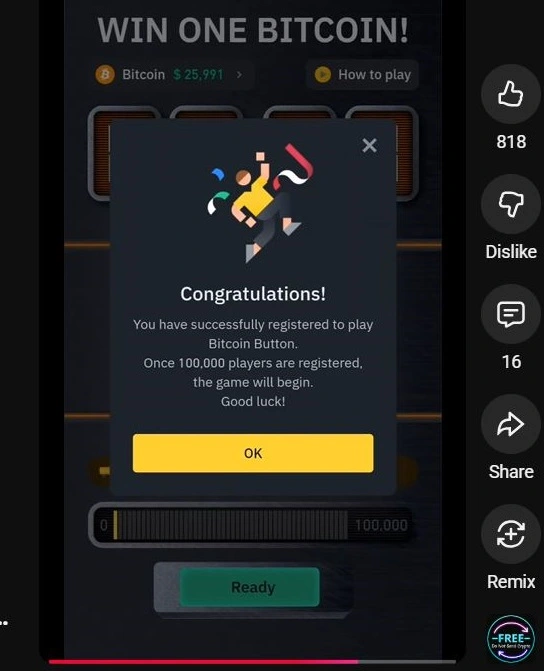
How the Bitonax Scam Deception Funnel Works
The funnel succeeds by turning suspicion into task completion. Each step gives the user something to do, and every completed step makes the next demand feel less strange than it should.
The usual path is familiar: a social-media hook leads to registration, registration creates a fake balance, and the fake balance creates pressure to withdraw. When the user tries, the platform invents a fee, identity check, or release condition that requires real funds.
Promo hooks and influencer codes
The approach may start with a “limited reward” post, a copied testimonial, a video using a famous person, or a direct message. Each version reduces friction by making the user feel late to an opportunity rather than early to a scam.
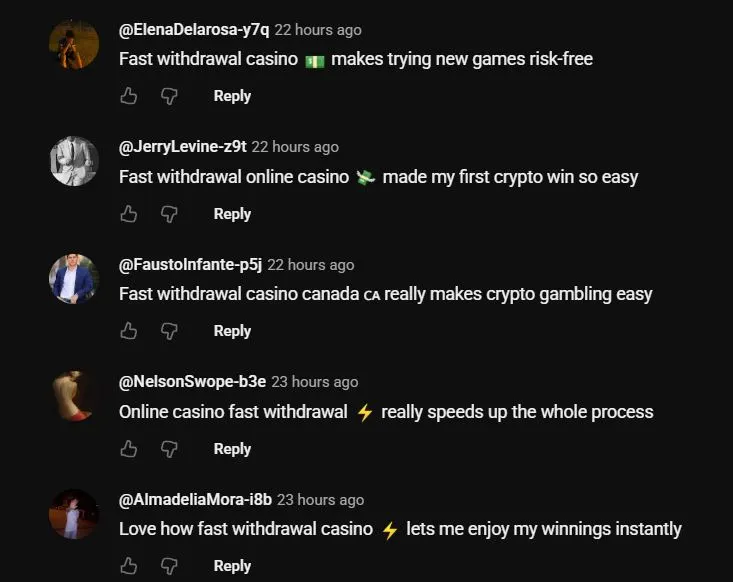
Casino skin and bonus theater
The site may dress itself in exchange tools, casino-style bonuses, or gamified progress screens. The design is meant to signal activity, but visual activity is not the same as licensed custody or legitimate trading.
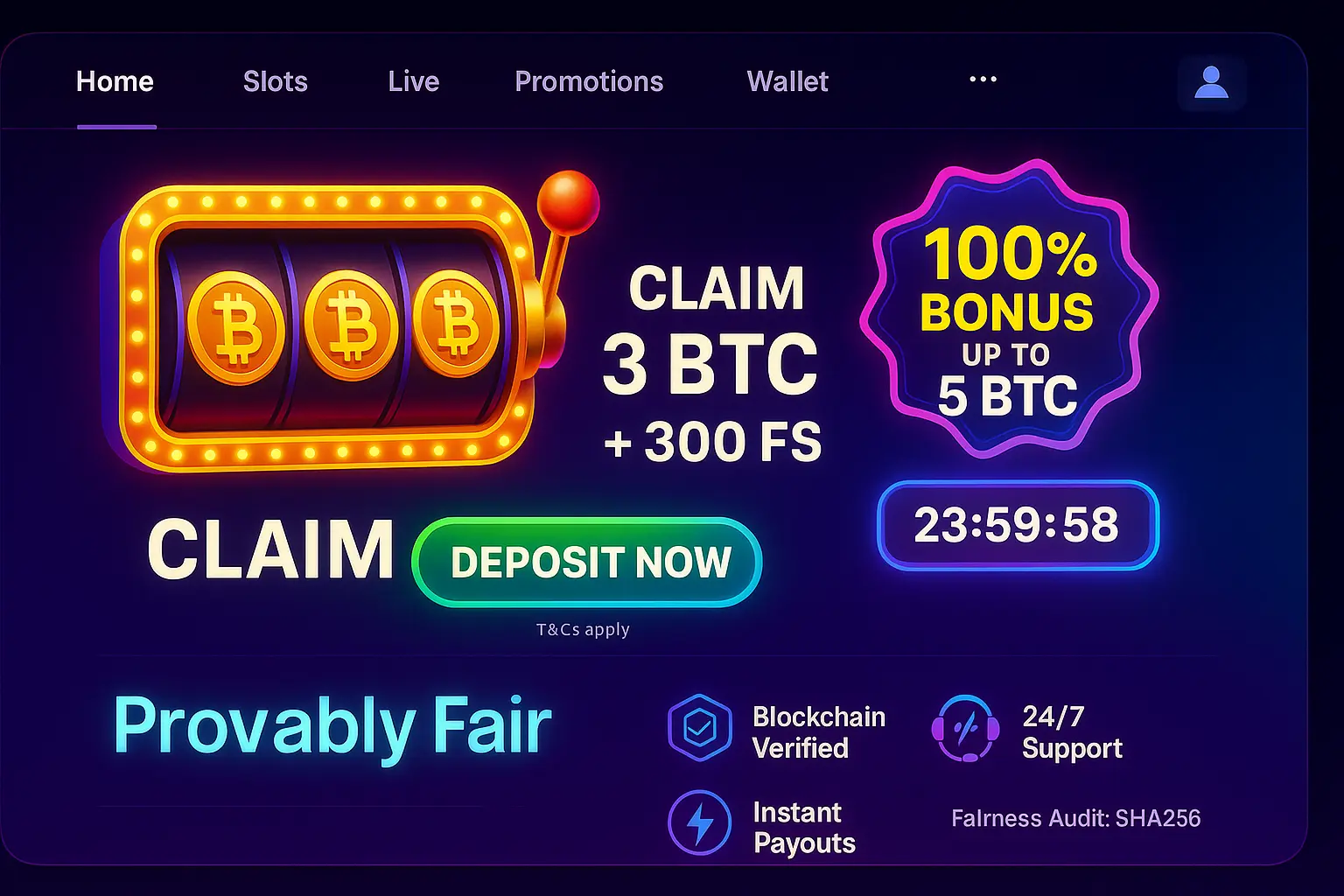
Inflated balances, then the gate
The fake balance creates emotional ownership. Once the user believes the funds are almost reachable, a demand for a smaller activation payment can feel like a nuisance rather than the clearest warning sign.
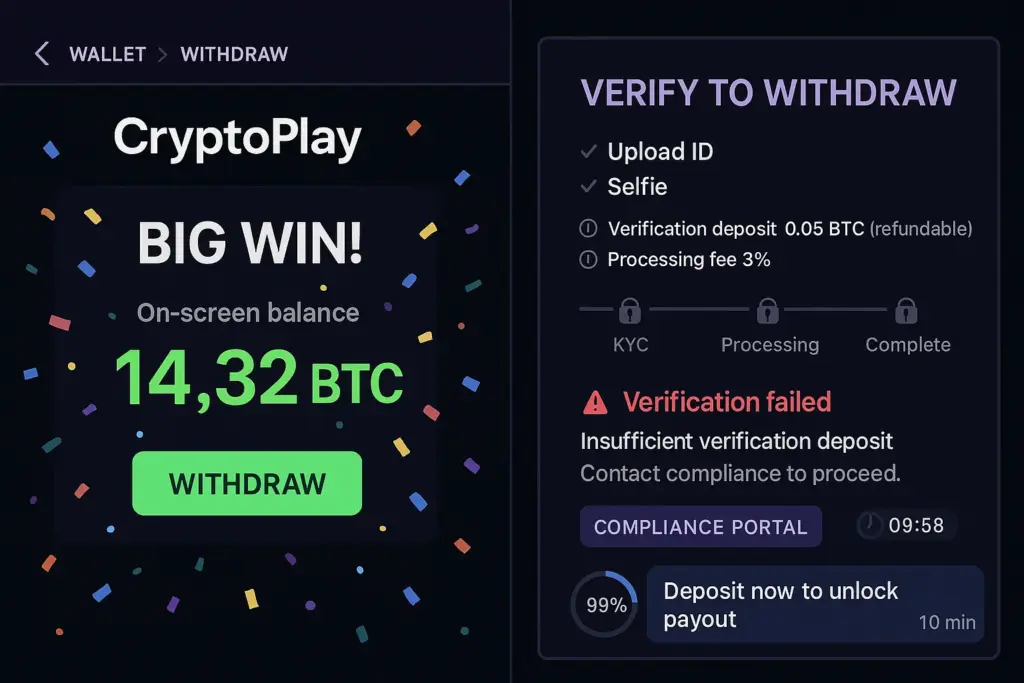
Fee-gates and KYC harvest
Every new requirement serves the same purpose. Whether the site calls it KYC, AML clearance, tax confirmation, VIP status, or liquidity verification, it keeps the victim paying while the withdrawal remains unavailable.

Stalling, rebrands, and “recovery” bait
The exit pattern is usually slow at first and abrupt later. Support reassures, delays, and adds conditions until the victim stops paying; then replies fade, pages go offline, and recovery scammers may target the same person.
Staying safe from crypto scams like Bitonax
The safest response to Bitonax-style promotions is deliberate skepticism. Verify the platform outside its own website, ignore pressure created by timers or “codes,” and never let a displayed balance override common-sense checks.
Never pay to withdraw
A withdrawal should not require a fresh crypto transfer. If a site asks for activation, clearance, tax, or verification money before releasing funds, stop using it and preserve evidence instead of sending more.
Verify endorsements at the source
Check any claimed celebrity connection at the source. Official accounts and verified statements matter; clips circulating in ads, comments, or private messages can be synthetic or stolen from unrelated content.
Navigate with your own bookmarks
Do not let advertisements or unsolicited links choose your destination. Use known bookmarks, typed URLs, and trusted app listings, since copied sites can imitate branding while routing deposits to criminal wallets.
Check regulator registers & warnings
Before trusting a license claim, compare it with official registers and warning lists. The exact company name, domain, location, and registration number should match; if they do not, the safest answer is no deposit.
Segregate risk with burner wallets
Keep main holdings separate from unknown platforms. A low-balance wallet for testing can reduce the impact of a malicious approval, fake dApp connection, or deceptive withdrawal prompt.
Harden accounts with 2FA & hygiene
Strengthen every account that could help an attacker reset or drain funds. Email, exchanges, cloud backups, and messaging apps should have unique passwords, app-based 2FA, and no unfamiliar sessions.
Revoke approvals & migrate
Do not assume disconnecting a wallet ends the risk. Review approvals, revoke anything unnecessary, transfer remaining assets to a clean wallet, and avoid signing prompts from a device that may not be trustworthy.
Protect identity & slow down
Shared ID files can be used for later fraud. Monitor financial and exchange accounts, consider fraud alerts where your country supports them, and be alert for follow-up messages pretending to be compliance teams or recovery specialists.
Where to report Bitonax-style crypto scams (by country)
A precise report is more useful than a vague complaint. Collect screenshots, transaction hashes, destination addresses, domains, phone numbers, emails, ad URLs, and support chats, then send them to your exchange, the advertising platform, and official cybercrime channels.
Click here to report the scam in your country
| Country / Agency | URL | Category / Use-case | Phone/Email |
| Australia – Crime Stoppers | https://www.crimestoppers.com.au | Anonymous tips about crime | 1800 333 000 |
| Australia – National Anti-Scam Center (Scamwatch) | https://www.scamwatch.gov.au/report-a-scam | General scams; phishing; texts/emails | |
| Australia – Police Assistance Line (non-emergency) | https://www.police.gov.au | Local police report | 131 444 |
| Australia – ReportCyber (ACSC) | https://www.cyber.gov.au/report | Cybercrime (hacks, fraud, extortion) | |
| Canada – Canadian Anti-Fraud Center (CAFC) | https://www.antifraudcentre-centreantifraude.ca/report-signalez-eng.htm | General scams incl. phone/text/email | |
| France – DGCCRF (SignalConso) | https://signal.conso.gouv.fr | Consumer scams/deceptive practices | |
| France – PHAROS – Internet-Signalement | https://www.internet-signalement.gouv.fr | Online content & cybercrime reports | |
| Germany – Bundeskriminalamt / Local Police | https://www.polizei.de/Polizei/DE/Home/home_node.html | Report online fraud | |
| Germany – Weißer Ring – Victim Support | https://weisser-ring.de | Victim support | 116 006 |
| India – DoT Helpline (Sanchar Saathi) | https://sancharsaathi.gov.in | Fraudulent telecom/SIM related | 155260 |
| India – National Consumer Helpline | https://consumerhelpline.gov.in | Consumer scams | 1800-11-4000 / 1915 |
| India – National Cyber Crime Reporting Portal | https://cybercrime.gov.in | Cybercrime incl. online fraud | 1930 |
| Japan – Consumer Affairs Agency (CAA) | https://www.caa.go.jp/policies/policy/consumer_policy/caution/cybercrime/ | Consumer scams | |
| Japan – National Police Agency – Cybercrime | https://www.npa.go.jp/bureau/cyber/ | Cybercrime reporting | |
| Mexico – Guardia Nacional (National Guard) | https://www.gob.mx/gn | Cybercrime reporting | |
| Mexico – Instituto Federal de Telecomunicaciones (IFT) | https://www.ift.org.mx | Telecom/online services scams | |
| Mexico – PROFECO | https://www.gob.mx/profeco | Consumer fraud & ecommerce | |
| Netherlands – AFM – Report investment fraud | https://www.afm.nl/en/consumenten/themas/beleggen/misleiding-misbruik | Investment/crypto | |
| Netherlands – Fraudehelpdesk | https://www.fraudehelpdesk.nl/melden | General scams (incl. phishing/SMS) | 088-7867372 |
| Netherlands – Politie – Meldpunt Internetoplichting | https://www.politie.nl/themas/internetoplichting.html | Online shopping fraud | |
| New Zealand – CERT NZ | https://www.cert.govt.nz/individuals/report-an-issue/ | Phishing, identity scams | |
| New Zealand – Department of Internal Affairs – Spam | https://www.dia.govt.nz/Spam-Contact-Us | Email/SMS spam | [email protected] |
| New Zealand – IDCARE | https://www.idcare.org | Victim support (identity compromise) | 0800 121 068 |
| New Zealand – Netsafe – Report | https://www.netsafe.org.nz/report/ | Online harms & scams | |
| New Zealand – New Zealand Police (non-emergency) | https://www.police.govt.nz/use-105 | Report fraud/online crime | 105 |
| Nigeria – Economic & Financial Crimes Commission (EFCC) | https://www.efcc.gov.ng | Financial scams incl. crypto/investment | [email protected] |
| Nigeria – Nigeria Police Special Fraud Unit (SFU) | https://www.specialfraudunit.org.ng | Serious fraud | Voice/SMS: 0708 227 6895; WhatsApp: 0812 760 9914 |
| Poland – CERT Polska (CERT.PL) | https://cert.pl/en/report/ | Cyber incidents & phishing | |
| Poland – Dyzurnet.pl | https://dyzurnet.pl | Illegal online content (esp. child protection) | |
| Poland – Polish Police (Policja) | https://www.policja.pl | Report scams to police | |
| Singapore – Anti-Scam Centre / Anti-Scam Helpline | https://www.scamalert.sg | General scams; texts; calls | 1800-722-6688 |
| Singapore – Monetary Authority of Singapore (MAS) | https://www.mas.gov.sg/investor-alert-list | Investment/crypto checks | |
| Singapore – Singapore Police Force | https://www.police.gov.sg/iwitness | Police report (cybercrime) | |
| South Africa – Cybersecurity Hub (CSIRT) | https://www.cybersecurityhub.gov.za | Cyber incidents incl. scams | |
| South Africa – South African Fraud Prevention Service (SAFPS) | https://www.safps.org.za | Identity fraud support | 011-867-2234 |
| South Africa – South African Police Service (SAPS) | https://www.saps.gov.za | Police report (cybercrime unit) | |
| South Korea – Korea Communications Commission (KCC) | https://www.kcc.go.kr | Telecom-related fraud | |
| South Korea – Korea Internet & Security Agency (KISA) | https://www.kisa.or.kr | Phishing, online harms | |
| South Korea – Korean National Police Agency – Cyber Bureau | https://ecrm.cyber.go.kr | Cybercrime reporting | |
| Spain – INCIBE – Oficina de Seguridad del Internauta (OSI) | https://www.osi.es/es/reporte | Cybersecurity & online fraud | |
| Spain – Policía Nacional / Guardia Civil | https://www.policia.es | Report scams to police | |
| Sweden – Crime Victim Authority (Brottsoffermyndigheten) | https://www.brottsoffermyndigheten.se | Victim support & compensation | 090–70 82 00 |
| Sweden – Polisen (Swedish Police) | https://polisen.se | Report fraud/cybercrime | 114 14 (non-emergency); 112 (emergency) |
| Sweden – Swedish Consumer Agency (Konsumentverket) | https://www.konsumentverket.se | Unfair business practices | |
| United Arab Emirates – Abu Dhabi Police – Aman Service | https://www.adpolice.gov.ae | Cybercrime tips/reporting | SMS 2828; 800 2626 |
| United Arab Emirates – Dubai Police – eCrime | https://www.dubaipolice.gov.ae | Cybercrime reporting | 04 606 1600 |
| United Arab Emirates – Ministry of Interior – Cyber Crime Dept. | https://www.moi.gov.ae | Cybercrime incl. online scams | |
| United Arab Emirates – Telecommunications Regulatory Authority (TRA) / TDRA | https://www.tra.gov.ae | Telecom-related scams/phishing | |
| United Kingdom – Action Fraud (NFIB) | https://www.actionfraud.police.uk | General scams & cybercrime (non-emergency) | 0300 123 2040 |
| United Kingdom – Citizens Advice Consumer Service | https://www.citizensadvice.org.uk/consumer/get-more-help/if-you-need-more-help-about-a-consumer-issue/ | Consumer problems & scam guidance | 0808 223 1133 |
| United Kingdom – Financial Conduct Authority (FCA) | https://www.fca.org.uk/consumers/report-scam-us | Investment/crypto & financial services | |
| United Kingdom – National Cyber Security Centre (NCSC) | https://www.ncsc.gov.uk/collection/phishing-scams | Phishing emails & suspicious websites | |
| United Kingdom – Stop Scams UK ‘159’ | https://stopscamsuk.org.uk/159 | Banking APP fraud (direct to your bank) | 159 |
| United States – AARP Fraud Watch Network Helpline | https://www.aarp.org/money/scams-fraud/ | Victim support | 833-372-8311 |
| United States – Better Business Bureau – Scam Tracker | https://www.bbb.org/scamtracker | Business/marketplace scams | |
| United States – FBI Internet Crime Complaint Center (IC3) | https://www.ic3.gov | Internet crime incl. investment/crypto | |
| United States – Federal Trade Commission – ReportFraud | https://reportfraud.ftc.gov | General scams, phishing, texts/emails | 1-877-382-4357 |
| United States – National Center for Disaster Fraud | https://www.justice.gov/disaster-fraud | Disaster-related scams | (866) 720-5721 |
| United States – SEC Tips & Complaints | https://www.sec.gov/tcr | Investment & securities/crypto-asset offerings |
