

The main reason crypto casino platforms like Elbeaston reach as many users as they do isn’t that they are good gambling sites (they are not!) but because they’ve got very aggressive, in-your-face marketing.
The people behind this and other nearly identical sites, such as Bevexo.cc and Tusewin.cc, flood TikTok, Instagram, YouTube, and X with short “proof” clips: deepfake celebrities, AI-made profiles, edited screenshots of six-figure payouts, and “totally not fake” testimonials from accounts created yesterday.
The website finalizes the illusion with a polished interface and bold claims like “#1 decentralized crypto gaming platform,” and may sometimes hint at being built by Elon Musk or Bill Gates. Obviously, it’s a scam designed to steal your money, but its creators try really hard to make it seem like it’s the real deal.
Elbeaston nudges newcomers to enter a promo code, grab a massive signup bonus, and start “winning” immediately. The idea is to make them believe they’ve accumulated a hefty sum so that they’d eventually try to withdraw their winnings.
At that point, the site asks for a transfer fee/deposit, and if the user pays it, the scam is successful. It’s all about that deposit, which is never returned to the victim. Needless to say, there’s no payout because there were never any winnings to begin with.
If you already clicked around Elbeaston.com, Cusewin.cc, or Beorix.cc, connected a wallet, or sent crypto, treat this as an active security hazard. Take immediate measures to disconnect and secure your accounts by following the suggestions presented below.
Scams of Elbeaston.com‘s type are known to steal personal data and passwords. Install SpyHunter Pro to scan for risks, remove any dangerous trackers, and enable real-time protection.

Try Free For 7 Days*
Buy now15% OFF if you buy straight without trial.
 OFFER
OFFERIMPORTANT! READ BEFORE PROCEEDING!
If you already clicked around Elbeaston, treat this as an active incident. Move quickly and assume anything you shared could be reused against you. Move quickly and assume anything you shared could be reused against you.
- Change passwords for email + exchanges immediately; turn on authenticator-based 2FA.
- If a seed phrase/private key was ever entered anywhere, move remaining funds to a brand-new wallet.
- Stop sending additional “verification,” “tax,” or “release” payments.
- Save evidence: screenshots, chats, emails, wallet addresses, transaction hashes, and dates.
- If you uploaded ID docs, start identity monitoring and consider a credit freeze where available.
How We Know Elbeaston is a Scam
Several tells line up with the most common fake-crypto-casino pattern, and together they form a consistent fraud profile rather than a one-off “support issue.”
Pay-to-withdraw demands
One of the loudest clues is the request for extra payments to access withdrawals, typically disguised as fees, deposits, or upgrades.
Licensing you can verify
Look for licensing you can validate outside the site itself, using official regulator databases rather than badges or screenshots.
Improbably easy early wins
Another giveaway is the “too easy” early success, where new users win big quickly to build confidence and urgency.
Irreversibility as leverage
Crypto transactions are often difficult to reverse, so the safest time to stop is before you deposit again.
Theatrical trust signals
Oddly, the platform’s trust signals tend to be theatrical – hyperactive chats, suspicious testimonials, and activity popups that feel staged.
Domain-age reality checks
Run basic background checks before depositing anywhere: domain age, ownership signals, and whether the operator has a real, verifiable track record.

How the Elbeaston Scam Deception Funnel Works
Understanding the step-by-step trap matters because it turns a confusing experience (“why can’t I withdraw?”) into a predictable script you can recognize early.
At the end, the barrier becomes a staircase: pay once, get a new reason to pay again, and eventually get ignored, locked out, or redirected.
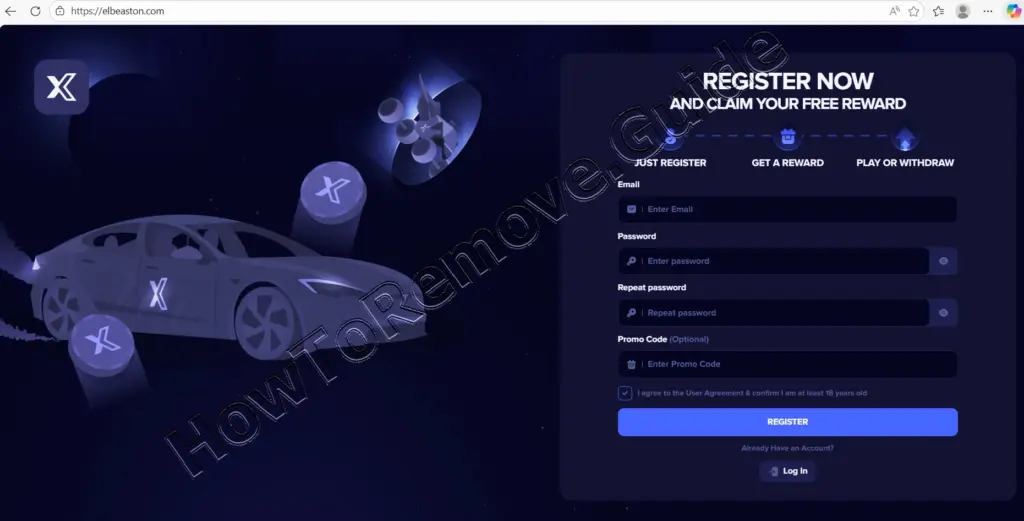
Promo hooks and influencer codes
First, an ad, promo code, or viral clip pushes you toward Elbeaston with an offer that sounds irrationally generous.
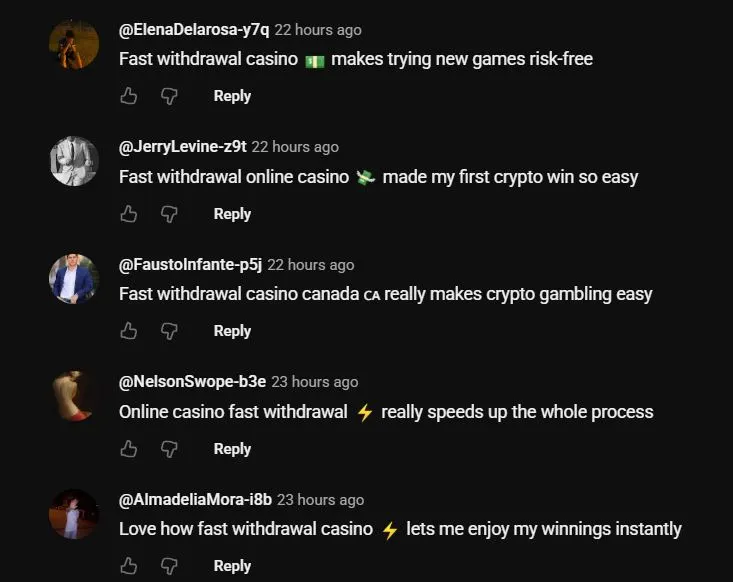
Casino skin and bonus theater
Next, the site creates momentum with smooth gameplay, polished visuals, and a sense that other people are winning right now.
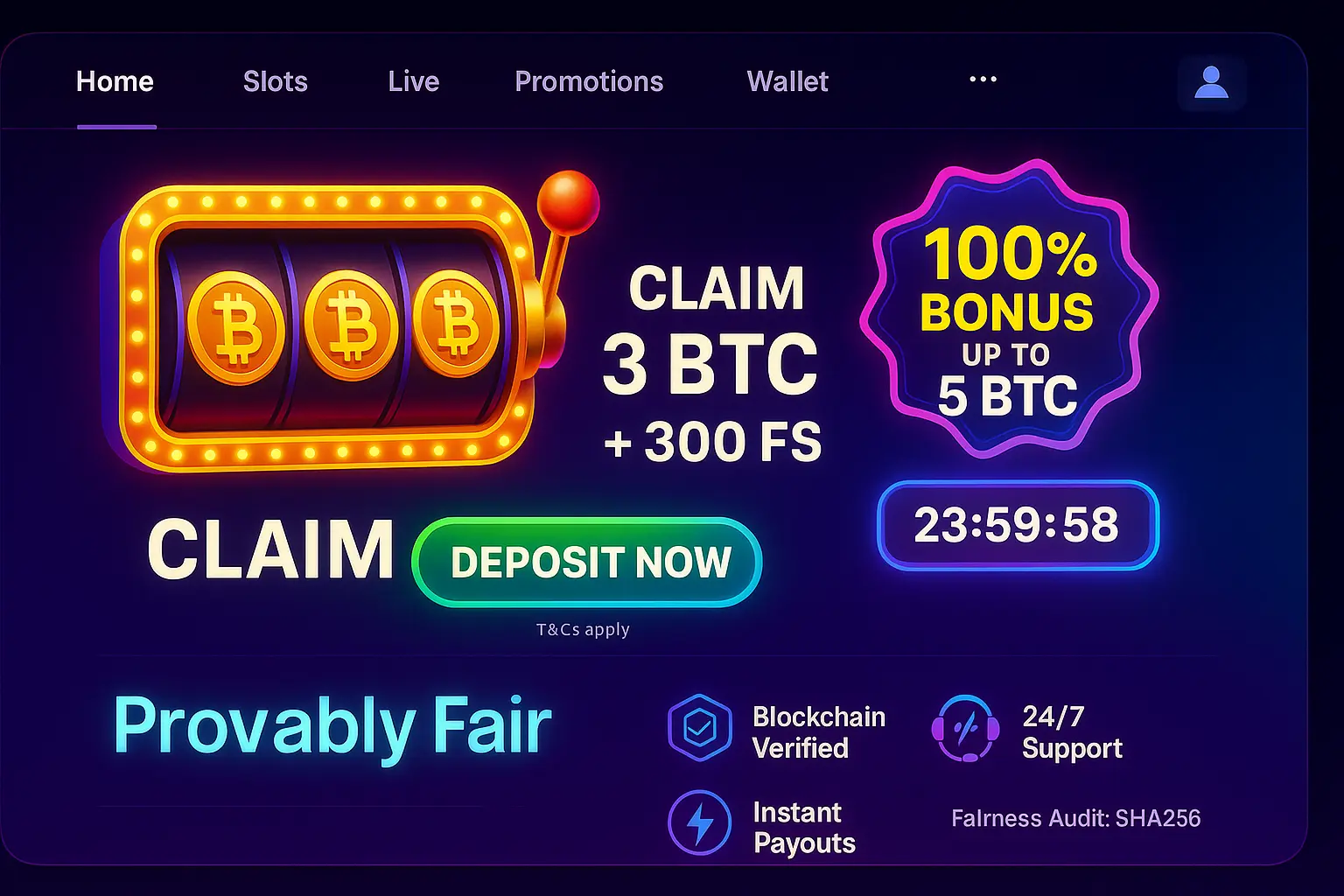
Inflated balances, then the gate
Then, the house “lets” you win – especially at the beginning – so your brain starts treating the balance as real and attainable.
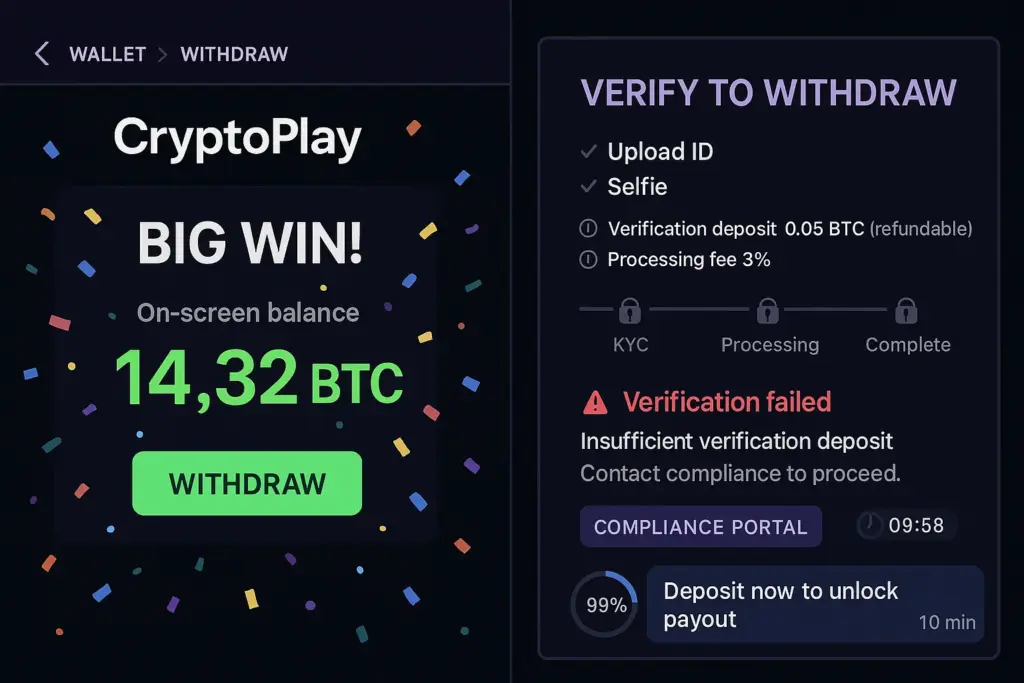
Fee-gates and KYC harvest
After that, you attempt a withdrawal and meet a sudden barrier: identity checks, account “flagging,” or a requirement you must satisfy immediately.

Stalling, rebrands, and “recovery” bait
At the end, the barrier becomes a staircase: pay once, get a new reason to pay again, and eventually get ignored, locked out, or redirected. Recovery scammers are the hyenas of the internet: they arrive after the initial attack, sniffing for desperation.
Staying safe from crypto casino scams like Elbeaston
Keeping your money and identity intact gets easier once you adopt a few hard rules that remove the scammer’s favorite leverage: urgency, isolation, and incremental commitment.
Verify license status in official registers
Look for licensing you can validate outside the site itself, using official regulator databases rather than badges or screenshots.
Check domain age and history
Run basic background checks before depositing anywhere: domain age, ownership signals, and whether the operator has a real, verifiable track record.
Reject withdrawal fees and “unlock” deposits
Refuse any demand that you must send additional crypto to “unlock” a payout; real services don’t gate your withdrawal behind new payments.
Prefer venues with recourse
When a platform feels off, stop early; the cheapest lesson is the one you buy with skepticism, not a second deposit.
Limit wallet exposure
Use strong account hygiene by default – unique passwords, authenticator 2FA, and separation between email, exchanges, and gambling accounts.
Validate “provably fair” claims
Never trust on-screen balances without independent verification.
Document and report rapidly
Save evidence: screenshots, chats, emails, wallet addresses, transaction hashes, and dates.
Build a deliberate slow-down reflex
The antidote is also boring, and that’s good: hard rules that don’t negotiate with emotion.
Useful Resources for Scam Reporting and Prevention (By Country)
Documentation is your leverage, even when outcomes are uncertain. Start with a clean timeline: when you found Elbeaston, when you registered, when you deposited, and when the withdrawal trouble began.
Click here to report the scam in your country
| Country / Agency | URL | Category / Use-case | Phone/Email |
| Australia – Crime Stoppers | https://www.crimestoppers.com.au | Anonymous tips about crime | 1800 333 000 |
| Australia – National Anti-Scam Center (Scamwatch) | https://www.scamwatch.gov.au/report-a-scam | General scams; phishing; texts/emails | |
| Australia – Police Assistance Line (non-emergency) | https://www.police.gov.au | Local police report | 131 444 |
| Australia – ReportCyber (ACSC) | https://www.cyber.gov.au/report | Cybercrime (hacks, fraud, extortion) | |
| Canada – Canadian Anti-Fraud Center (CAFC) | https://www.antifraudcentre-centreantifraude.ca/report-signalez-eng.htm | General scams incl. phone/text/email | |
| France – DGCCRF (SignalConso) | https://signal.conso.gouv.fr | Consumer scams/deceptive practices | |
| France – PHAROS – Internet-Signalement | https://www.internet-signalement.gouv.fr | Online content & cybercrime reports | |
| Germany – Bundeskriminalamt / Local Police | https://www.polizei.de/Polizei/DE/Home/home_node.html | Report online fraud | |
| Germany – Weißer Ring – Victim Support | https://weisser-ring.de | Victim support | 116 006 |
| India – DoT Helpline (Sanchar Saathi) | https://sancharsaathi.gov.in | Fraudulent telecom/SIM related | 155260 |
| India – National Consumer Helpline | https://consumerhelpline.gov.in | Consumer scams | 1800-11-4000 / 1915 |
| India – National Cyber Crime Reporting Portal | https://cybercrime.gov.in | Cybercrime incl. online fraud | 1930 |
| Japan – Consumer Affairs Agency (CAA) | https://www.caa.go.jp/policies/policy/consumer_policy/caution/cybercrime/ | Consumer scams | |
| Japan – National Police Agency – Cybercrime | https://www.npa.go.jp/bureau/cyber/ | Cybercrime reporting | |
| Mexico – Guardia Nacional (National Guard) | https://www.gob.mx/gn | Cybercrime reporting | |
| Mexico – Instituto Federal de Telecomunicaciones (IFT) | https://www.ift.org.mx | Telecom/online services scams | |
| Mexico – PROFECO | https://www.gob.mx/profeco | Consumer fraud & ecommerce | |
| Netherlands – AFM – Report investment fraud | https://www.afm.nl/en/consumenten/themas/beleggen/misleiding-misbruik | Investment/crypto | |
| Netherlands – Fraudehelpdesk | https://www.fraudehelpdesk.nl/melden | General scams (incl. phishing/SMS) | 088-7867372 |
| Netherlands – Politie – Meldpunt Internetoplichting | https://www.politie.nl/themas/internetoplichting.html | Online shopping fraud | |
| New Zealand – CERT NZ | https://www.cert.govt.nz/individuals/report-an-issue/ | Phishing, identity scams | |
| New Zealand – Department of Internal Affairs – Spam | https://www.dia.govt.nz/Spam-Contact-Us | Email/SMS spam | [email protected] |
| New Zealand – IDCARE | https://www.idcare.org | Victim support (identity compromise) | 0800 121 068 |
| New Zealand – Netsafe – Report | https://www.netsafe.org.nz/report/ | Online harms & scams | |
| New Zealand – New Zealand Police (non-emergency) | https://www.police.govt.nz/use-105 | Report fraud/online crime | 105 |
| Nigeria – Economic & Financial Crimes Commission (EFCC) | https://www.efcc.gov.ng | Financial scams incl. crypto/investment | [email protected] |
| Nigeria – Nigeria Police Special Fraud Unit (SFU) | https://www.specialfraudunit.org.ng | Serious fraud | Voice/SMS: 0708 227 6895; WhatsApp: 0812 760 9914 |
| Poland – CERT Polska (CERT.PL) | https://cert.pl/en/report/ | Cyber incidents & phishing | |
| Poland – Dyzurnet.pl | https://dyzurnet.pl | Illegal online content (esp. child protection) | |
| Poland – Polish Police (Policja) | https://www.policja.pl | Report scams to police | |
| Singapore – Anti-Scam Centre / Anti-Scam Helpline | https://www.scamalert.sg | General scams; texts; calls | 1800-722-6688 |
| Singapore – Monetary Authority of Singapore (MAS) | https://www.mas.gov.sg/investor-alert-list | Investment/crypto checks | |
| Singapore – Singapore Police Force | https://www.police.gov.sg/iwitness | Police report (cybercrime) | |
| South Africa – Cybersecurity Hub (CSIRT) | https://www.cybersecurityhub.gov.za | Cyber incidents incl. scams | |
| South Africa – South African Fraud Prevention Service (SAFPS) | https://www.safps.org.za | Identity fraud support | 011-867-2234 |
| South Africa – South African Police Service (SAPS) | https://www.saps.gov.za | Police report (cybercrime unit) | |
| South Korea – Korea Communications Commission (KCC) | https://www.kcc.go.kr | Telecom-related fraud | |
| South Korea – Korea Internet & Security Agency (KISA) | https://www.kisa.or.kr | Phishing, online harms | |
| South Korea – Korean National Police Agency – Cyber Bureau | https://ecrm.cyber.go.kr | Cybercrime reporting | |
| Spain – INCIBE – Oficina de Seguridad del Internauta (OSI) | https://www.osi.es/es/reporte | Cybersecurity & online fraud | |
| Spain – Policía Nacional / Guardia Civil | https://www.policia.es | Report scams to police | |
| Sweden – Crime Victim Authority (Brottsoffermyndigheten) | https://www.brottsoffermyndigheten.se | Victim support & compensation | 090–70 82 00 |
| Sweden – Polisen (Swedish Police) | https://polisen.se | Report fraud/cybercrime | 114 14 (non-emergency); 112 (emergency) |
| Sweden – Swedish Consumer Agency (Konsumentverket) | https://www.konsumentverket.se | Unfair business practices | |
| United Arab Emirates – Abu Dhabi Police – Aman Service | https://www.adpolice.gov.ae | Cybercrime tips/reporting | SMS 2828; 800 2626 |
| United Arab Emirates – Dubai Police – eCrime | https://www.dubaipolice.gov.ae | Cybercrime reporting | 04 606 1600 |
| United Arab Emirates – Ministry of Interior – Cyber Crime Dept. | https://www.moi.gov.ae | Cybercrime incl. online scams | |
| United Arab Emirates – Telecommunications Regulatory Authority (TRA) / TDRA | https://www.tra.gov.ae | Telecom-related scams/phishing | |
| United Kingdom – Action Fraud (NFIB) | https://www.actionfraud.police.uk | General scams & cybercrime (non-emergency) | 0300 123 2040 |
| United Kingdom – Citizens Advice Consumer Service | https://www.citizensadvice.org.uk/consumer/get-more-help/if-you-need-more-help-about-a-consumer-issue/ | Consumer problems & scam guidance | 0808 223 1133 |
| United Kingdom – Financial Conduct Authority (FCA) | https://www.fca.org.uk/consumers/report-scam-us | Investment/crypto & financial services | |
| United Kingdom – National Cyber Security Centre (NCSC) | https://www.ncsc.gov.uk/collection/phishing-scams | Phishing emails & suspicious websites | |
| United Kingdom – Stop Scams UK ‘159’ | https://stopscamsuk.org.uk/159 | Banking APP fraud (direct to your bank) | 159 |
| United States – AARP Fraud Watch Network Helpline | https://www.aarp.org/money/scams-fraud/ | Victim support | 833-372-8311 |
| United States – Better Business Bureau – Scam Tracker | https://www.bbb.org/scamtracker | Business/marketplace scams | |
| United States – FBI Internet Crime Complaint Center (IC3) | https://www.ic3.gov | Internet crime incl. investment/crypto | |
| United States – Federal Trade Commission – ReportFraud | https://reportfraud.ftc.gov | General scams, phishing, texts/emails | 1-877-382-4357 |
| United States – National Center for Disaster Fraud | https://www.justice.gov/disaster-fraud | Disaster-related scams | (866) 720-5721 |
| United States – SEC Tips & Complaints | https://www.sec.gov/tcr | Investment & securities/crypto-asset offerings |
The antidote is also boring, and that’s good: hard rules that don’t negotiate with emotion.
Never send money to receive money.
