

Did you get a digital invitation that looked like it came from Evite, Punchbowl, or Paperless Post and maybe even seemed to come from someone you know? Maybe it looked like a dinner invite, birthday party, alumni event, or Save the Date message, and your first thought was probably okay, this is harmless, I just need to RSVP, but time out here because that is why this scam works. It does not come in yelling about unpaid bills. It comes in looking friendly and normal.
Scammers are copying real invitation services and sending fake invites that may use a familiar name or even a compromised account. You click the button, get asked to sign in with Gmail or enter your email, and before you know it the people behind the page may have your password or account access. Then the same invite gets blasted to friends, coworkers, relatives, bosses, and random contacts you forgot existed.
Scams of Evite Scam Text‘s type are known to steal personal data and passwords. Install SpyHunter Pro to scan for risks, remove any dangerous trackers, and enable real-time protection.

Try Free For 7 Days*
Buy now15% OFF if you buy straight without trial.
 OFFER
OFFERUnderstanding the Evite Scam Text
So the setup is pretty simple. You receive what looks like an invite. It says RSVP here, View invitation, or Save the Date, and if the sender looks familiar your guard drops because why would a party invite be dangerous, right? But that is the trick. Scammers are not always trying to scare you. Sometimes they are trying to make you feel included.
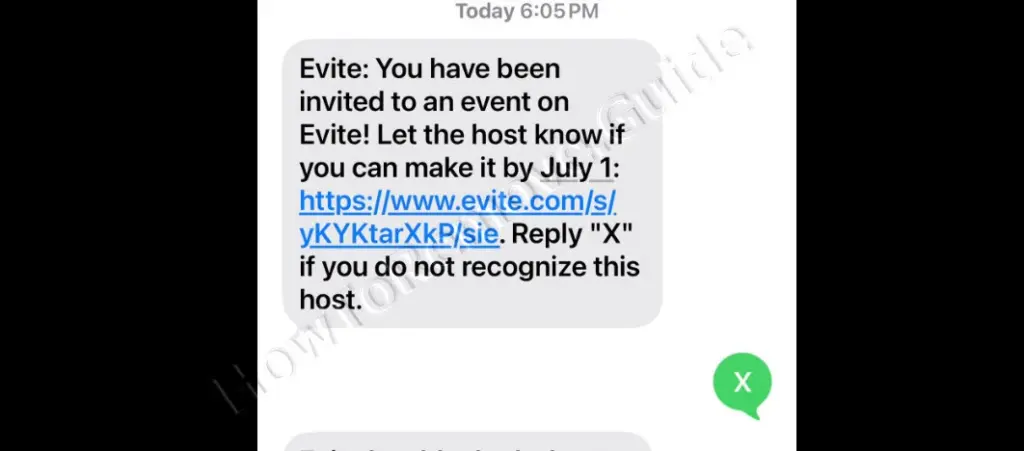
In one reported case, a person clicked what looked like a Evite invitation from a legitimate Gmail contact. The page asked them to log in with Gmail and because so many real apps use Google sign-in, they did not think much of it. The invitation never loaded. Now notice that because this is a major red flag. If a page asks for your login and then gives you nothing, stop immediately. About 12 hours later, texts started coming in asking if the invitation was real. It was not. Their Gmail had been accessed and the fake invite had gone to old contacts.
So here is the scam in plain English: fake invite, suspicious link, fake login, compromised email, and then the scam spreads through the victim’s own contacts. Simple, but very convincing when it is wrapped in something familiar.
What to Do If You’ve Fallen for the Evite Scam
If you already clicked one of these links, entered your Gmail password, or found out people received weird invitations from you, do not sit there hoping it is nothing. Act fast. Change your Google password from the real Google site or device settings, not from any link inside the suspicious email. Then change passwords for important accounts tied to that email, especially financial accounts.
Next, turn on two-factor authentication. Now, quick note here, two-factor authentication is not magic, but it is one more wall between your account and the scammer. Check your inbox for password-reset emails, two-factor codes, strange security alerts, or anything that looks like someone tried to use your email.
Also check Gmail delegation settings. In Gmail on the web, go to Settings, Accounts and Import, then the section that allows access to your account. If some strange account has been added, remove it. Run a scan with trusted security software. Clear cookies and cache. Watch financial accounts. And yes, warn your contacts.
Finally, report the message as phishing. In Gmail, use the three-dot menu and choose Report phishing. Do not click around investigating, and definitely do not enter your password again.
How This Invitation Evite Scam Tricks You
Now here is why this scam gets people. It feels personal. A fake delivery notice from a company you never use might seem odd, but an invitation from a former coworker, college friend, old boss, or someone who once invited you feels believable. Your brain fills in the blanks. Maybe they are in town. Maybe there is a reunion. Maybe it is a birthday, baby shower, or alumni event.
One victim received an invite from someone who had arranged real dinners before, so the context made sense. They clicked, nothing opened, clicked again, and still nothing happened. Now notice that pattern because scammers love it. A page that does nothing can still be part of the trap. It may have already collected information or redirected you.
That confusion is often when people realize what happened. The scam does not need to steal money immediately. Email access is the prize because your email is tied to resets, bank alerts, private messages, and years of contacts.
Recognizing Warning Signs of Fake Evites
There are some red flags you should look for every single time. First, check the actual sender address, not just the display name. A familiar name can be faked or it can belong to someone whose account was already compromised. Real Evite emails should come from Evite domains, Punchbowl invitations should come from Punchbowl domains, and Paperless Post messages should come from their real domains. If an official-looking invite comes from a random Gmail, Yahoo, Hotmail, or strange address, assume something is off.
Second, look at the link before clicking. On a computer, hover over the RSVP button and see where it really goes. If the main domain is not what you expect, stop. If the address has odd spellings, extra words, strange endings, or sends you through some weird page first, that is not normal. Third, be suspicious of vague invitations. A real invite usually has clear details. Fake ones may just say Party, Event, birthday party, or Save the Date.
And here is a huge one: an invitation should not suddenly demand your Gmail password just so you can view basic details. If a login page pops up out of nowhere, close it. Do not test it. Do not enter a password just to see what happens. If friends text you asking if your invite is real, treat that as an account emergency.
How to Check Whether an Evite Email Is Real
The safest way to check is to slow down and look at the boring details, because scammers count on you skipping them. Open the sender details and read the full address. Hover over links instead of clicking. If you already have an Evite, Punchbowl, or Paperless Post account, go to the site directly instead of using the email link.
For Gmail users, open the message menu, choose Show original, and check whether authentication results like SPF, DKIM, and DMARC passed. Now I know that sounds technical, but the idea is simple: real services should pass those checks, while fake messages may fail. You do not need to become an email expert. You just need enough skepticism.
How to Handle a Suspicious Invitation
If an invitation feels even a little weird, do not click it. Text the person, call them, or message them through a different app and ask if they really sent it. If they say no, report the email, delete it, and tell them their account may be compromised.
The safest move is to slow everything down. Scammers want you curious, rushed, flattered, or distracted. A real party can wait. Your email account cannot, and that is really the whole point.
Useful Resources for Scam Reporting and Prevention (By Country)
Find the right reporting channel below
| Country / Agency | URL | Category / Use-case | Phone/Email |
| Australia – Crime Stoppers | https://www.crimestoppers.com.au | Anonymous tips about crime | 1800 333 000 |
| Australia – National Anti-Scam Center (Scamwatch) | https://www.scamwatch.gov.au/report-a-scam | General scams; phishing; texts/emails | |
| Australia – Police Assistance Line (non-emergency) | https://www.police.gov.au | Local police report | 131 444 |
| Australia – ReportCyber (ACSC) | https://www.cyber.gov.au/report | Cybercrime (hacks, fraud, extortion) | |
| Canada – Canadian Anti-Fraud Center (CAFC) | https://www.antifraudcentre-centreantifraude.ca/report-signalez-eng.htm | General scams incl. phone/text/email | |
| France – DGCCRF (SignalConso) | https://signal.conso.gouv.fr | Consumer scams/deceptive practices | |
| France – PHAROS – Internet-Signalement | https://www.internet-signalement.gouv.fr | Online content & cybercrime reports | |
| Germany – Bundeskriminalamt / Local Police | https://www.polizei.de/Polizei/DE/Home/home_node.html | Report online fraud | |
| Germany – Weißer Ring – Victim Support | https://weisser-ring.de | Victim support | 116 006 |
| India – DoT Helpline (Sanchar Saathi) | https://sancharsaathi.gov.in | Fraudulent telecom/SIM related | 155260 |
| India – National Consumer Helpline | https://consumerhelpline.gov.in | Consumer scams | 1800-11-4000 / 1915 |
| India – National Cyber Crime Reporting Portal | https://cybercrime.gov.in | Cybercrime incl. online fraud | 1930 |
| Japan – Consumer Affairs Agency (CAA) | https://www.caa.go.jp/policies/policy/consumer_policy/caution/cybercrime/ | Consumer scams | |
| Japan – National Police Agency – Cybercrime | https://www.npa.go.jp/bureau/cyber/ | Cybercrime reporting | |
| Mexico – Guardia Nacional (National Guard) | https://www.gob.mx/gn | Cybercrime reporting | |
| Mexico – Instituto Federal de Telecomunicaciones (IFT) | https://www.ift.org.mx | Telecom/online services scams | |
| Mexico – PROFECO | https://www.gob.mx/profeco | Consumer fraud & ecommerce | |
| Netherlands – AFM – Report investment fraud | https://www.afm.nl/en/consumenten/themas/beleggen/misleiding-misbruik | Investment/crypto | |
| Netherlands – Fraudehelpdesk | https://www.fraudehelpdesk.nl/melden | General scams (incl. phishing/SMS) | 088-7867372 |
| Netherlands – Politie – Meldpunt Internetoplichting | https://www.politie.nl/themas/internetoplichting.html | Online shopping fraud | |
| New Zealand – CERT NZ | https://www.cert.govt.nz/individuals/report-an-issue/ | Phishing, identity scams | |
| New Zealand – Department of Internal Affairs – Spam | https://www.dia.govt.nz/Spam-Contact-Us | Email/SMS spam | [email protected] |
| New Zealand – IDCARE | https://www.idcare.org | Victim support (identity compromise) | 0800 121 068 |
| New Zealand – Netsafe – Report | https://www.netsafe.org.nz/report/ | Online harms & scams | |
| New Zealand – New Zealand Police (non-emergency) | https://www.police.govt.nz/use-105 | Report fraud/online crime | 105 |
| Nigeria – Economic & Financial Crimes Commission (EFCC) | https://www.efcc.gov.ng | Financial scams incl. crypto/investment | [email protected] |
| Nigeria – Nigeria Police Special Fraud Unit (SFU) | https://www.specialfraudunit.org.ng | Serious fraud | Voice/SMS: 0708 227 6895; WhatsApp: 0812 760 9914 |
| Poland – CERT Polska (CERT.PL) | https://cert.pl/en/report/ | Cyber incidents & phishing | |
| Poland – Dyzurnet.pl | https://dyzurnet.pl | Illegal online content (esp. child protection) | |
| Poland – Polish Police (Policja) | https://www.policja.pl | Report scams to police | |
| Singapore – Anti-Scam Centre / Anti-Scam Helpline | https://www.scamalert.sg | General scams; texts; calls | 1800-722-6688 |
| Singapore – Monetary Authority of Singapore (MAS) | https://www.mas.gov.sg/investor-alert-list | Investment/crypto checks | |
| Singapore – Singapore Police Force | https://www.police.gov.sg/iwitness | Police report (cybercrime) | |
| South Africa – Cybersecurity Hub (CSIRT) | https://www.cybersecurityhub.gov.za | Cyber incidents incl. scams | |
| South Africa – South African Fraud Prevention Service (SAFPS) | https://www.safps.org.za | Identity fraud support | 011-867-2234 |
| South Africa – South African Police Service (SAPS) | https://www.saps.gov.za | Police report (cybercrime unit) | |
| South Korea – Korea Communications Commission (KCC) | https://www.kcc.go.kr | Telecom-related fraud | |
| South Korea – Korea Internet & Security Agency (KISA) | https://www.kisa.or.kr | Phishing, online harms | |
| South Korea – Korean National Police Agency – Cyber Bureau | https://ecrm.cyber.go.kr | Cybercrime reporting | |
| Spain – INCIBE – Oficina de Seguridad del Internauta (OSI) | https://www.osi.es/es/reporte | Cybersecurity & online fraud | |
| Spain – Policía Nacional / Guardia Civil | https://www.policia.es | Report scams to police | |
| Sweden – Crime Victim Authority (Brottsoffermyndigheten) | https://www.brottsoffermyndigheten.se | Victim support & compensation | 090–70 82 00 |
| Sweden – Polisen (Swedish Police) | https://polisen.se | Report fraud/cybercrime | 114 14 (non-emergency); 112 (emergency) |
| Sweden – Swedish Consumer Agency (Konsumentverket) | https://www.konsumentverket.se | Unfair business practices | |
| United Arab Emirates – Abu Dhabi Police – Aman Service | https://www.adpolice.gov.ae | Cybercrime tips/reporting | SMS 2828; 800 2626 |
| United Arab Emirates – Dubai Police – eCrime | https://www.dubaipolice.gov.ae | Cybercrime reporting | 04 606 1600 |
| United Arab Emirates – Ministry of Interior – Cyber Crime Dept. | https://www.moi.gov.ae | Cybercrime incl. online scams | |
| United Arab Emirates – Telecommunications Regulatory Authority (TRA) / TDRA | https://www.tra.gov.ae | Telecom-related scams/phishing | |
| United Kingdom – Action Fraud (NFIB) | https://www.actionfraud.police.uk | General scams & cybercrime (non-emergency) | 0300 123 2040 |
| United Kingdom – Citizens Advice Consumer Service | https://www.citizensadvice.org.uk/consumer/get-more-help/if-you-need-more-help-about-a-consumer-issue/ | Consumer problems & scam guidance | 0808 223 1133 |
| United Kingdom – Financial Conduct Authority (FCA) | https://www.fca.org.uk/consumers/report-scam-us | Investment/crypto & financial services | |
| United Kingdom – National Cyber Security Centre (NCSC) | https://www.ncsc.gov.uk/collection/phishing-scams | Phishing emails & suspicious websites | |
| United Kingdom – Stop Scams UK ‘159’ | https://stopscamsuk.org.uk/159 | Banking APP fraud (direct to your bank) | 159 |
| United States – AARP Fraud Watch Network Helpline | https://www.aarp.org/money/scams-fraud/ | Victim support | 833-372-8311 |
| United States – Better Business Bureau – Scam Tracker | https://www.bbb.org/scamtracker | Business/marketplace scams | |
| United States – FBI Internet Crime Complaint Center (IC3) | https://www.ic3.gov | Internet crime incl. investment/crypto | |
| United States – Federal Trade Commission – ReportFraud | https://reportfraud.ftc.gov | General scams, phishing, texts/emails | 1-877-382-4357 |
| United States – National Center for Disaster Fraud | https://www.justice.gov/disaster-fraud | Disaster-related scams | (866) 720-5721 |
| United States – SEC Tips & Complaints | https://www.sec.gov/tcr | Investment & securities/crypto-asset offerings |
