

If you’ve come across a site called Maxspace.bet, don’t be too quick to trust any of its flashy promises, because this site is actually a scam and nothing good can come out of it (for you anyway).
Maxspace.bet may look like a legitimate crypto casino, but don’t let its “free” signup bonus entice you because that glossy façade is just bait. Users who sign up and start playing with the bonus will invariably rake in some early wins, but that’s just part of the scam.
The goal is to get you hopeful and willing to engage further with the platform. This is because, once you decide to cash out, the platform requests that you send an extra payment for “verification,” an “activation transfer,” or a “withdrawal fee.” This is where the meat of this scam lies.
If you’ve already gotten to this part of the deception funnel, DO NOT go any further and DO NOT deposit any of your money. Pay it, and the money vanishes for good. As for your winnings, they were never real, so you aren’t getting anything in return.
Scams of Maxspace.bet‘s type are known to steal personal data and passwords. Install SpyHunter Pro to scan for risks, remove any dangerous trackers, and enable real-time protection.

Try Free For 7 Days*
Buy now15% OFF if you buy straight without trial.
 OFFER
OFFERThe Maxspace.bet scam is only one example of a huge family of identical fraudulent sites. Vusewin.cc and Bevexo.cc are two other recent examples we’ve covered. So even if Maxspace.bet doesn’t scam you, another such site might, which is why you need to be well informed about their tactics and methods, and also about the ways to counteract them in case you’ve already been tricked. All this information is available within the next lines.
IMPORTANT! READ BEFORE PROCEEDING!
If you have already interacted with Maxspace.bet, stop paying and stop contact – no more chats, no more “unlock” transfers, no screen-sharing – and switch to containment. Lock down the accounts that could cascade into others, move funds if you suspect compromise, and save the details that matter for reports. Here are five emergency steps we strongly recommend you take right now:
- Change passwords immediately on email, exchanges, and financial logins; enable 2FA and sign out other sessions.
- Assume your identity layer is exposed if you shared documents; monitor accounts and consider credit protections where available.
- Move remaining assets to a fresh wallet if you suspect compromise, using a new seed phrase and clean device hygiene.
- Revoke wallet approvals if you connected a wallet, and treat any typed seed phrase as an emergency migration event.
- Preserve evidence – screenshots, deposit addresses, TxIDs, chats, timestamps – and file reports with relevant authorities and platforms.
How We Know Maxspace.bet is a Scam
Several signs common to crypto casino fraud line up with what people describe around Maxspace.bet. None of these clues alone is a perfect fingerprint, but together they form a consistent picture: a site that produces confidence on-screen, then turns withdrawals into a paid obstacle course while pushing users to send more crypto.
Surprise withdrawal charges
Withdrawal attempts commonly trigger sudden “processing” demands, alleged taxes, or “verification” payments that require sending fresh crypto to proceed.
Counterfeit licensing
Legitimacy can be performed with pasted badges; the real check is whether the operator is independently verifiable through official records rather than on-page claims.
Inflated early “wins”
Early success can be engineered, and the visible “balance” can be a number controlled by the site rather than funds you truly own or can access.
Crypto-only rails
Crypto-only payment paths reduce consumer protections and make reversals difficult, which is why fraudulent operations favor them so heavily.
Synthetic social proof
Pop-ups, reviews, and “live” activity can be staged to create the sensation of legitimacy even when nothing is verifiable outside the platform.
Fresh, privacy-masked domains
Operations like this can vanish and return under new names; checking domain age and history with public tools like domain age checks helps you spot churn and cloning.


How the Maxspace.bet Scam Deception Funnel Works
Understanding the mechanics matters because this scam type runs on predictable steps. Once you recognize the sequence, you can spot the next move before it lands: the site uses confidence-building signals to pull deposits in, then uses withdrawal friction to pressure additional payments and harvest sensitive information.
The overall rhythm tends to repeat: promo link, deposit nudges, early wins, withdrawal barriers, moving goalposts, and finally ghosting or a rebrand while a “recovery” pitch hunts for a second payday.
Promo hooks and influencer codes
Often, the first touchpoint is a promo link: an ad, a DM, or a “creator code” vibe that funnels you straight to Maxspace.bet’s signup rewards.
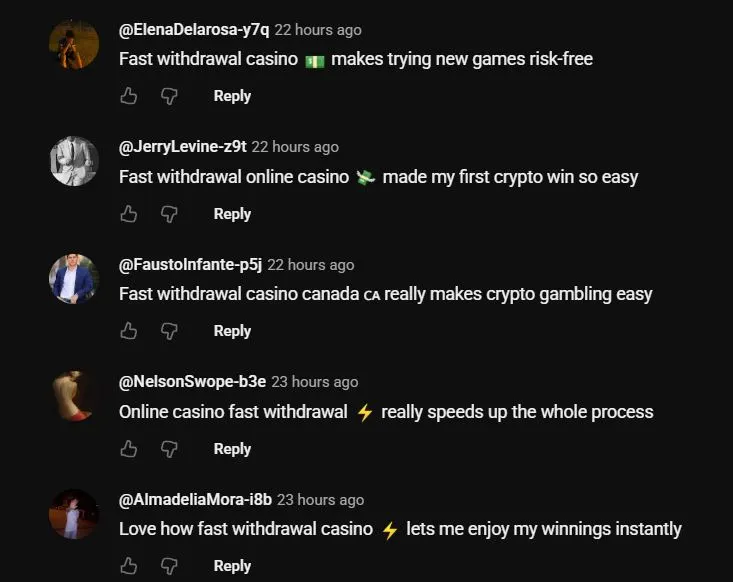
Casino skin and bonus theater
Next, the platform makes spending feel strategic by dangling VIP tiers, reward unlocks, and limited-time boosters that nudge you toward deposits.

Inflated balances, then the gate
Then, the experience shows wins early, because believable success turns doubt into commitment and makes larger deposits feel “rational.”
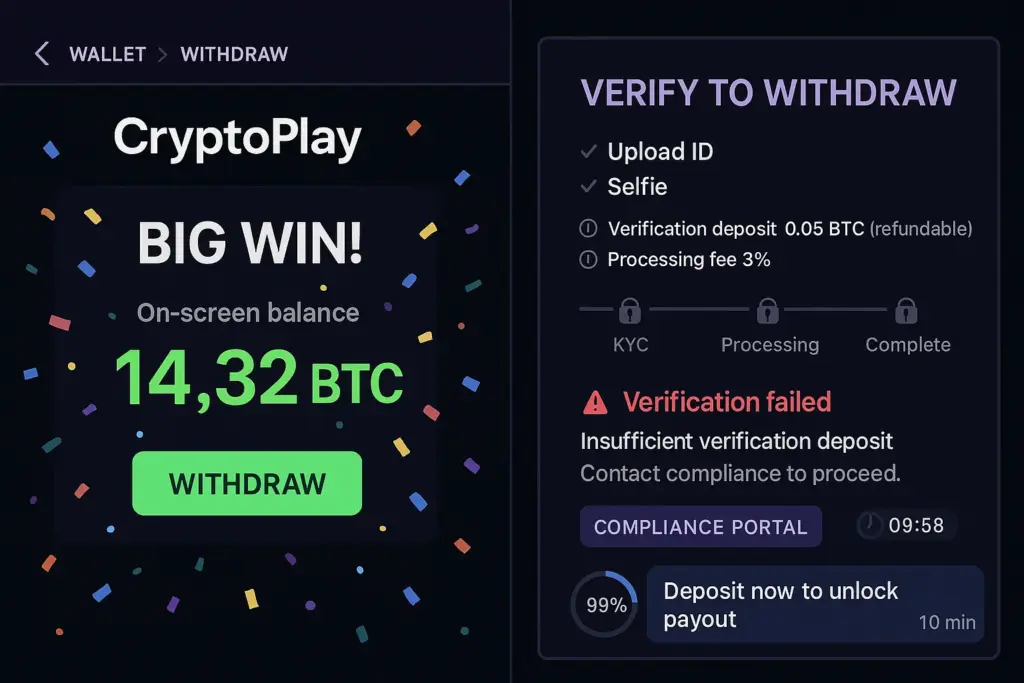
Fee-gates and KYC harvest
When you attempt to withdraw, the machinery shows up: processing charges, tax claims, collateral demands, or KYC hurdles that conveniently require fresh payments.

Stalling, rebrands, and “recovery” bait
After you pay, the goalposts move; eventually the site stalls or vanishes, and later a “recovery specialist” appears offering false hope for an upfront fee.
Staying safe from crypto casino scams like Maxspace.bet
Practical habits beat vibes. A few repeatable checks before you deposit can prevent most damage, and a few containment steps after a mistake can prevent a bad day from becoming a long-term identity and account problem. The ideas below focus on verification, wallet hygiene, and resisting urgency triggers.
Verify license status in official registers
Instead of trusting logos or screenshots, verify licensing outside the platform; real operators can be checked independently, and missing records are a serious warning.
Check domain age and history
Before depositing, check whether the domain is new and whether the operator leaves a real corporate footprint; churn and rebrands are part of the playbook.
Reject withdrawal fees and “unlock” deposits
Adopt one simple rule: if you must pay to receive your money, you’re likely inside a loop designed to extract more crypto.
Prefer venues with recourse
Favor operators that are verifiable and transparent, because scams thrive when payments are irreversible and disputes have nowhere to go.
Limit wallet exposure
Use unique passwords, strong 2FA, and revoke approvals you no longer need; if you typed a seed phrase, assume that wallet is burned and migrate.
Validate “provably fair” claims
If you can’t independently verify what’s being claimed, treat it as marketing; the risk is at the level of reality, not game odds.
Document and report rapidly
Save screenshots of balances and withdrawal screens, copy deposit addresses and TxIDs, and notify exchanges you used so details are on record.
Build a deliberate slow-down reflex
Urgency is a weapon: pause, verify off-platform, and remember that “one more step to unlock it” is exactly the story the scam wants installed.
Useful Resources for Scam Reporting and Prevention (By Country)
Documenting a scam can feel pointless until it isn’t. Good reports help connect wallets, domains, and infrastructure across victims, and exchanges may at least flag addresses or preserve records. Save the essentials: deposit addresses, TxIDs, timestamps, screenshots of withdrawal demands, and any messages that show “pay-to-withdraw” pressure.
Click here to report the scam in your country
| Country / Agency | URL | Category / Use-case | Phone/Email |
| Australia – Crime Stoppers | https://www.crimestoppers.com.au | Anonymous tips about crime | 1800 333 000 |
| Australia – National Anti-Scam Center (Scamwatch) | https://www.scamwatch.gov.au/report-a-scam | General scams; phishing; texts/emails | |
| Australia – Police Assistance Line (non-emergency) | https://www.police.gov.au | Local police report | 131 444 |
| Australia – ReportCyber (ACSC) | https://www.cyber.gov.au/report | Cybercrime (hacks, fraud, extortion) | |
| Canada – Canadian Anti-Fraud Center (CAFC) | https://www.antifraudcentre-centreantifraude.ca/report-signalez-eng.htm | General scams incl. phone/text/email | |
| France – DGCCRF (SignalConso) | https://signal.conso.gouv.fr | Consumer scams/deceptive practices | |
| France – PHAROS – Internet-Signalement | https://www.internet-signalement.gouv.fr | Online content & cybercrime reports | |
| Germany – Bundeskriminalamt / Local Police | https://www.polizei.de/Polizei/DE/Home/home_node.html | Report online fraud | |
| Germany – Weißer Ring – Victim Support | https://weisser-ring.de | Victim support | 116 006 |
| India – DoT Helpline (Sanchar Saathi) | https://sancharsaathi.gov.in | Fraudulent telecom/SIM related | 155260 |
| India – National Consumer Helpline | https://consumerhelpline.gov.in | Consumer scams | 1800-11-4000 / 1915 |
| India – National Cyber Crime Reporting Portal | https://cybercrime.gov.in | Cybercrime incl. online fraud | 1930 |
| Japan – Consumer Affairs Agency (CAA) | https://www.caa.go.jp/policies/policy/consumer_policy/caution/cybercrime/ | Consumer scams | |
| Japan – National Police Agency – Cybercrime | https://www.npa.go.jp/bureau/cyber/ | Cybercrime reporting | |
| Mexico – Guardia Nacional (National Guard) | https://www.gob.mx/gn | Cybercrime reporting | |
| Mexico – Instituto Federal de Telecomunicaciones (IFT) | https://www.ift.org.mx | Telecom/online services scams | |
| Mexico – PROFECO | https://www.gob.mx/profeco | Consumer fraud & ecommerce | |
| Netherlands – AFM – Report investment fraud | https://www.afm.nl/en/consumenten/themas/beleggen/misleiding-misbruik | Investment/crypto | |
| Netherlands – Fraudehelpdesk | https://www.fraudehelpdesk.nl/melden | General scams (incl. phishing/SMS) | 088-7867372 |
| Netherlands – Politie – Meldpunt Internetoplichting | https://www.politie.nl/themas/internetoplichting.html | Online shopping fraud | |
| New Zealand – CERT NZ | https://www.cert.govt.nz/individuals/report-an-issue/ | Phishing, identity scams | |
| New Zealand – Department of Internal Affairs – Spam | https://www.dia.govt.nz/Spam-Contact-Us | Email/SMS spam | [email protected] |
| New Zealand – IDCARE | https://www.idcare.org | Victim support (identity compromise) | 0800 121 068 |
| New Zealand – Netsafe – Report | https://www.netsafe.org.nz/report/ | Online harms & scams | |
| New Zealand – New Zealand Police (non-emergency) | https://www.police.govt.nz/use-105 | Report fraud/online crime | 105 |
| Nigeria – Economic & Financial Crimes Commission (EFCC) | https://www.efcc.gov.ng | Financial scams incl. crypto/investment | [email protected] |
| Nigeria – Nigeria Police Special Fraud Unit (SFU) | https://www.specialfraudunit.org.ng | Serious fraud | Voice/SMS: 0708 227 6895; WhatsApp: 0812 760 9914 |
| Poland – CERT Polska (CERT.PL) | https://cert.pl/en/report/ | Cyber incidents & phishing | |
| Poland – Dyzurnet.pl | https://dyzurnet.pl | Illegal online content (esp. child protection) | |
| Poland – Polish Police (Policja) | https://www.policja.pl | Report scams to police | |
| Singapore – Anti-Scam Centre / Anti-Scam Helpline | https://www.scamalert.sg | General scams; texts; calls | 1800-722-6688 |
| Singapore – Monetary Authority of Singapore (MAS) | https://www.mas.gov.sg/investor-alert-list | Investment/crypto checks | |
| Singapore – Singapore Police Force | https://www.police.gov.sg/iwitness | Police report (cybercrime) | |
| South Africa – Cybersecurity Hub (CSIRT) | https://www.cybersecurityhub.gov.za | Cyber incidents incl. scams | |
| South Africa – South African Fraud Prevention Service (SAFPS) | https://www.safps.org.za | Identity fraud support | 011-867-2234 |
| South Africa – South African Police Service (SAPS) | https://www.saps.gov.za | Police report (cybercrime unit) | |
| South Korea – Korea Communications Commission (KCC) | https://www.kcc.go.kr | Telecom-related fraud | |
| South Korea – Korea Internet & Security Agency (KISA) | https://www.kisa.or.kr | Phishing, online harms | |
| South Korea – Korean National Police Agency – Cyber Bureau | https://ecrm.cyber.go.kr | Cybercrime reporting | |
| Spain – INCIBE – Oficina de Seguridad del Internauta (OSI) | https://www.osi.es/es/reporte | Cybersecurity & online fraud | |
| Spain – Policía Nacional / Guardia Civil | https://www.policia.es | Report scams to police | |
| Sweden – Crime Victim Authority (Brottsoffermyndigheten) | https://www.brottsoffermyndigheten.se | Victim support & compensation | 090–70 82 00 |
| Sweden – Polisen (Swedish Police) | https://polisen.se | Report fraud/cybercrime | 114 14 (non-emergency); 112 (emergency) |
| Sweden – Swedish Consumer Agency (Konsumentverket) | https://www.konsumentverket.se | Unfair business practices | |
| United Arab Emirates – Abu Dhabi Police – Aman Service | https://www.adpolice.gov.ae | Cybercrime tips/reporting | SMS 2828; 800 2626 |
| United Arab Emirates – Dubai Police – eCrime | https://www.dubaipolice.gov.ae | Cybercrime reporting | 04 606 1600 |
| United Arab Emirates – Ministry of Interior – Cyber Crime Dept. | https://www.moi.gov.ae | Cybercrime incl. online scams | |
| United Arab Emirates – Telecommunications Regulatory Authority (TRA) / TDRA | https://www.tra.gov.ae | Telecom-related scams/phishing | |
| United Kingdom – Action Fraud (NFIB) | https://www.actionfraud.police.uk | General scams & cybercrime (non-emergency) | 0300 123 2040 |
| United Kingdom – Citizens Advice Consumer Service | https://www.citizensadvice.org.uk/consumer/get-more-help/if-you-need-more-help-about-a-consumer-issue/ | Consumer problems & scam guidance | 0808 223 1133 |
| United Kingdom – Financial Conduct Authority (FCA) | https://www.fca.org.uk/consumers/report-scam-us | Investment/crypto & financial services | |
| United Kingdom – National Cyber Security Centre (NCSC) | https://www.ncsc.gov.uk/collection/phishing-scams | Phishing emails & suspicious websites | |
| United Kingdom – Stop Scams UK ‘159’ | https://stopscamsuk.org.uk/159 | Banking APP fraud (direct to your bank) | 159 |
| United States – AARP Fraud Watch Network Helpline | https://www.aarp.org/money/scams-fraud/ | Victim support | 833-372-8311 |
| United States – Better Business Bureau – Scam Tracker | https://www.bbb.org/scamtracker | Business/marketplace scams | |
| United States – FBI Internet Crime Complaint Center (IC3) | https://www.ic3.gov | Internet crime incl. investment/crypto | |
| United States – Federal Trade Commission – ReportFraud | https://reportfraud.ftc.gov | General scams, phishing, texts/emails | 1-877-382-4357 |
| United States – National Center for Disaster Fraud | https://www.justice.gov/disaster-fraud | Disaster-related scams | (866) 720-5721 |
| United States – SEC Tips & Complaints | https://www.sec.gov/tcr | Investment & securities/crypto-asset offerings |
Weirdly, the most dangerous part of Maxspace.bet is the story it tries to install in your head: “I’m up big, the money is mine, and one more step will unlock it.” That story is engineered – so your best defense is refusing paid “unlock” steps, verifying legitimacy outside the platform, and moving quickly on account security when something smells off.
Staying safe is mostly about resisting urgency, never paying to withdraw, and treating any document upload or wallet connection to a dubious site as a reason to tighten security immediately.
