

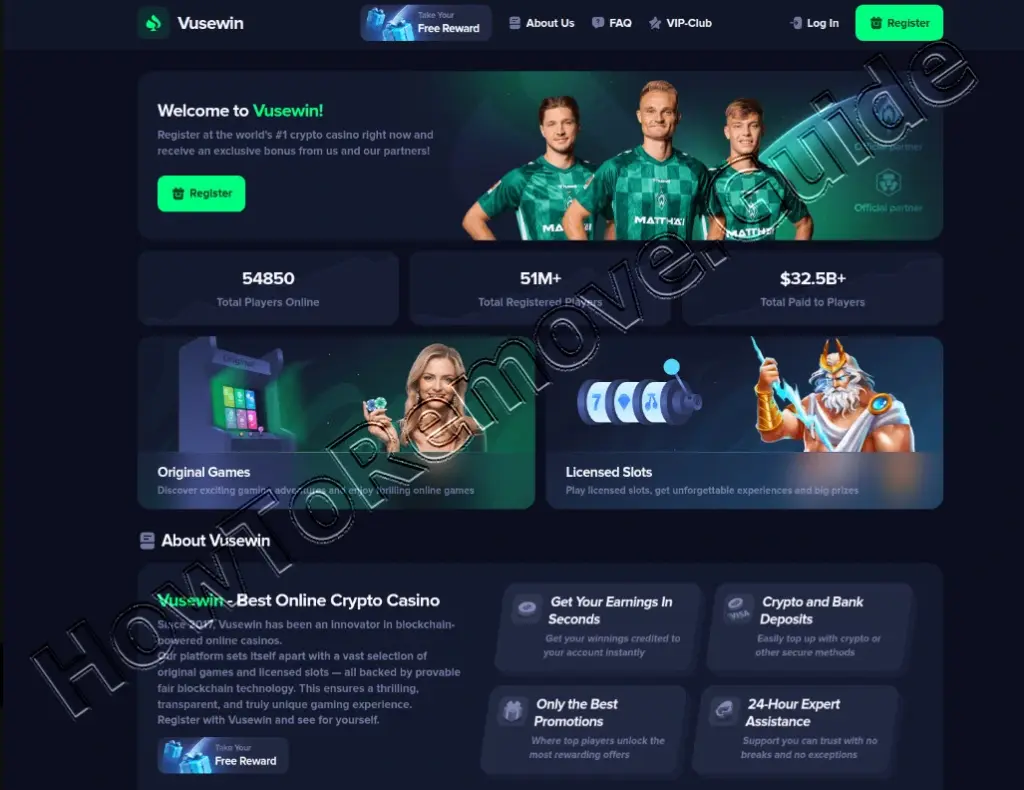
Clone-style gambling sites like Vusewin.cc are everywhere nowadays and, since there’s no real way to stop them, the best you can do is learn their patterns and tricks in order to avoid them.
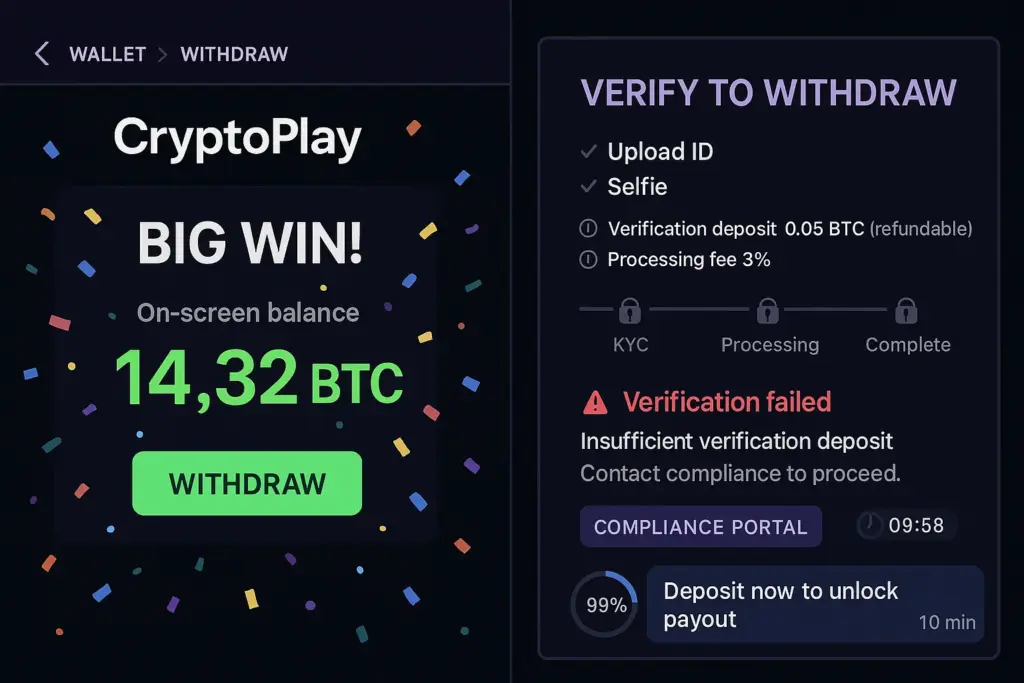
It’s typical for such sites to offer a sign-up bonus and to let you rack up early “wins” to make you think you’ve that this is your lucky day. Then the trap snaps shut the moment you try to claim your winnings. There’s a sudden hurdle, like a “verification” deposit or a transfer fee, that seems to be the only way stopping you from cashing out.
Since most users are too hopeful by this point, they gladly comply and transfer the requested sum. This, in fact, similar to Tusewin.cc and Bevexo.cc, is how people get scammed, because this sum is never returned to them, and as for the “winnings” – those were never real to begin with, just empty numbers with no substance behind them.
But the real problem here is that, if you’ve already been scammed, the fraudsters may have access to your banking account, crypto wallet, or other sensitive accounts and profiles. It’s, therefore, necessary to know how ot react in such situations. Read the rest of the article to find out how to secure your virtual privacy and minimize the damage.
Scams of Vusewin.cc‘s type are known to steal personal data and passwords. Install SpyHunter Pro to scan for risks, remove any dangerous trackers, and enable real-time protection.

Try Free For 7 Days*
Buy now15% OFF if you buy straight without trial.
 OFFER
OFFERIMPORTANT! READ BEFORE PROCEEDING!
If you have already interacted with Vusewin.cc, treat this like an active security incident, not a customer support issue. Stop contact immediately—no more chats, no more “fees,” no screen-sharing—and shift to containment. Lock down accounts, move funds to clean wallets, and preserve evidence for reports. Here are five emergency steps we strongly recommend you take right now:
- Change passwords on email, exchanges, and wallets now; turn on 2FA everywhere you can.
- Report it to your exchange and local cybercrime channel; save all evidence (TXIDs, chats, screenshots).
- Move remaining funds to a fresh wallet seed to limit exposure.
- If you shared documents, follow identity-theft steps (credit monitoring/freezes where applicable).
- Save all evidence (TXIDs, chats, screenshots) and preserve it for reports.
How We Know Vusewin.cc is a Scam
What convinced us isn’t one dramatic giveaway—it’s a familiar cluster of tells that repeatedly shows up in fake crypto casinos built to extract deposits rather than pay winnings. One glaring signal is when cashing out triggers new “requirements” that weren’t clearly unavoidable up front, especially payments framed as processing, compliance, or unlocking steps.
Surprise withdrawal charges
Instead of fees being deducted from what you withdraw, you’re pushed to send additional crypto first, which is a classic advance-fee structure with casino cosmetics.
Counterfeit licensing
Another common marker is theatrical legitimacy—badges and “trust” signals that don’t connect to verifiable records or consistent company details.
Inflated early “wins”
Clone-style gambling sites like this often let you rack up early “wins” so your brain starts treating the on-screen balance as real.
Crypto-only rails
Because crypto transfers aren’t easily reversible, one impulsive send can turn into a string of sends.
Synthetic social proof
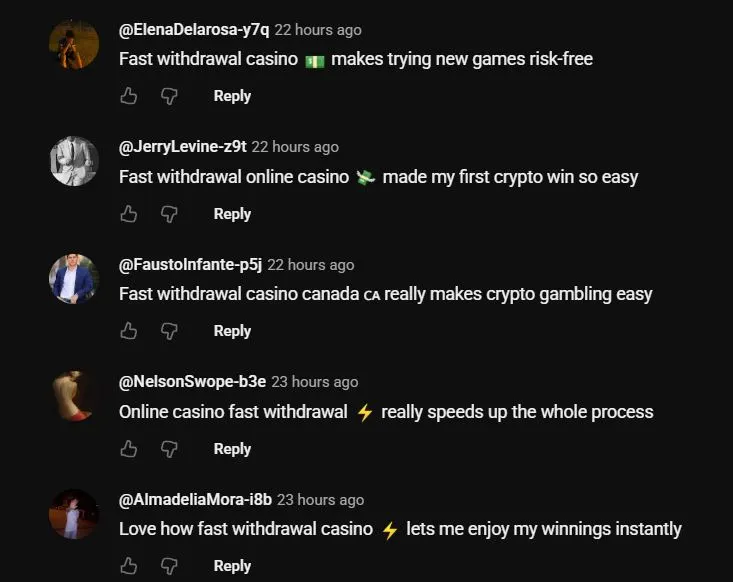
Avoid trusting DMs, influencer-style codes, and comment sections as proof, since social proof can be botted, bought, or faked with startling efficiency.
Fresh, privacy-masked domains
Domain behavior can be a tell too, because these operations often rebrand quickly, rotate names, and rely on a churn of near-identical sites; public lookups like in who.is can reveal the churn.

How the Vusewin.cc Scam Deception Funnel Works
Understanding the mechanics matters because this style of fraud isn’t trying to trick you once—it’s trying to keep you stepping forward, one small commitment at a time, until you stop.
Imagine the first contact arriving as a shiny promo: a referral code, a “limited bonus,” or a too-clean endorsement that nudges you to sign up and claim credit fast.
Promo hooks and influencer codes
Imagine the first contact arriving as a shiny promo: a referral code, a “limited bonus,” or a too-clean endorsement that nudges you to sign up and claim credit fast.
Casino skin and bonus theater
Vusewin.cc presents itself like a slick crypto casino, but its real product is hope—and the bill arrives right when you try to leave.

Inflated balances, then the gate
Because early excitement lowers skepticism, the site often makes the games feel generous at the beginning, letting you “win” enough to create confidence and emotional buy-in.
Fee-gates and KYC harvest
After you pay the first extra amount, you’re rarely “cleared”; instead, you’re introduced to a second hurdle—additional KYC, a new fee, a VIP threshold, or a security deposit.

Stalling, rebrands, and “recovery” bait
When victims hesitate, “support” usually applies pressure—urgency, reassurance, or subtle blame—until another payment is made or the victim disengages. Once you stop paying, the story often ends with silence, account restrictions, or a redirect to a new domain where the same template runs again under a different name.
Staying safe from crypto casino scams like Vusewin.cc
Keeping your future accounts safe is less about perfect paranoia and more about consistent habits that prevent a slick interface from steering your decisions.
Verify license status in official registers
Rather than trusting a badge on a homepage, verify any claimed license through official regulator registers or independent documentation that connects the brand to a real entity.
Check domain age and history
There’s also a reason these sites multiply like mold in a damp basement: the template is reusable, the branding is disposable, and a new domain name can reboot the whole operation overnight.
Reject withdrawal fees and “unlock” deposits
Treat any request to pay extra money to release your funds as a stop sign.
Prefer venues with recourse
If a site operates only in crypto and avoids normal consumer protections, recognize the incentive: irreversible payments make it easier to run a one-way exit.
Limit wallet exposure
Use operational security habits that reduce blast radius: separate wallets, minimal balances in “play” wallets, and strong authentication on exchanges and email.
Validate “provably fair” claims
Finally, the balance itself is usually just a database number; without proof of reserves or on-chain backing, the “winnings” are whatever the site says they are.
Document and report rapidly
Document and report quickly if you’re hit, because fast reporting can sometimes help exchanges flag addresses.
Build a deliberate slow-down reflex
When something feels urgent—“today only,” “last chance,” “withdrawal expiring”—slow down on purpose, because urgency is a control lever, not a service feature.
Useful Resources for Scam Reporting and Prevention (By Country)
Document and report quickly if you’re hit, because fast reporting can sometimes help exchanges flag addresses. Save all evidence (TXIDs, chats, screenshots) so your report isn’t just a story—it’s a usable record.
Click here to report the scam in your country
| Country / Agency | URL | Category / Use-case | Phone/Email |
| Australia – Crime Stoppers | https://www.crimestoppers.com.au | Anonymous tips about crime | 1800 333 000 |
| Australia – National Anti-Scam Center (Scamwatch) | https://www.scamwatch.gov.au/report-a-scam | General scams; phishing; texts/emails | |
| Australia – Police Assistance Line (non-emergency) | https://www.police.gov.au | Local police report | 131 444 |
| Australia – ReportCyber (ACSC) | https://www.cyber.gov.au/report | Cybercrime (hacks, fraud, extortion) | |
| Canada – Canadian Anti-Fraud Center (CAFC) | https://www.antifraudcentre-centreantifraude.ca/report-signalez-eng.htm | General scams incl. phone/text/email | |
| France – DGCCRF (SignalConso) | https://signal.conso.gouv.fr | Consumer scams/deceptive practices | |
| France – PHAROS – Internet-Signalement | https://www.internet-signalement.gouv.fr | Online content & cybercrime reports | |
| Germany – Bundeskriminalamt / Local Police | https://www.polizei.de/Polizei/DE/Home/home_node.html | Report online fraud | |
| Germany – Weißer Ring – Victim Support | https://weisser-ring.de | Victim support | 116 006 |
| India – DoT Helpline (Sanchar Saathi) | https://sancharsaathi.gov.in | Fraudulent telecom/SIM related | 155260 |
| India – National Consumer Helpline | https://consumerhelpline.gov.in | Consumer scams | 1800-11-4000 / 1915 |
| India – National Cyber Crime Reporting Portal | https://cybercrime.gov.in | Cybercrime incl. online fraud | 1930 |
| Japan – Consumer Affairs Agency (CAA) | https://www.caa.go.jp/policies/policy/consumer_policy/caution/cybercrime/ | Consumer scams | |
| Japan – National Police Agency – Cybercrime | https://www.npa.go.jp/bureau/cyber/ | Cybercrime reporting | |
| Mexico – Guardia Nacional (National Guard) | https://www.gob.mx/gn | Cybercrime reporting | |
| Mexico – Instituto Federal de Telecomunicaciones (IFT) | https://www.ift.org.mx | Telecom/online services scams | |
| Mexico – PROFECO | https://www.gob.mx/profeco | Consumer fraud & ecommerce | |
| Netherlands – AFM – Report investment fraud | https://www.afm.nl/en/consumenten/themas/beleggen/misleiding-misbruik | Investment/crypto | |
| Netherlands – Fraudehelpdesk | https://www.fraudehelpdesk.nl/melden | General scams (incl. phishing/SMS) | 088-7867372 |
| Netherlands – Politie – Meldpunt Internetoplichting | https://www.politie.nl/themas/internetoplichting.html | Online shopping fraud | |
| New Zealand – CERT NZ | https://www.cert.govt.nz/individuals/report-an-issue/ | Phishing, identity scams | |
| New Zealand – Department of Internal Affairs – Spam | https://www.dia.govt.nz/Spam-Contact-Us | Email/SMS spam | [email protected] |
| New Zealand – IDCARE | https://www.idcare.org | Victim support (identity compromise) | 0800 121 068 |
| New Zealand – Netsafe – Report | https://www.netsafe.org.nz/report/ | Online harms & scams | |
| New Zealand – New Zealand Police (non-emergency) | https://www.police.govt.nz/use-105 | Report fraud/online crime | 105 |
| Nigeria – Economic & Financial Crimes Commission (EFCC) | https://www.efcc.gov.ng | Financial scams incl. crypto/investment | [email protected] |
| Nigeria – Nigeria Police Special Fraud Unit (SFU) | https://www.specialfraudunit.org.ng | Serious fraud | Voice/SMS: 0708 227 6895; WhatsApp: 0812 760 9914 |
| Poland – CERT Polska (CERT.PL) | https://cert.pl/en/report/ | Cyber incidents & phishing | |
| Poland – Dyzurnet.pl | https://dyzurnet.pl | Illegal online content (esp. child protection) | |
| Poland – Polish Police (Policja) | https://www.policja.pl | Report scams to police | |
| Singapore – Anti-Scam Centre / Anti-Scam Helpline | https://www.scamalert.sg | General scams; texts; calls | 1800-722-6688 |
| Singapore – Monetary Authority of Singapore (MAS) | https://www.mas.gov.sg/investor-alert-list | Investment/crypto checks | |
| Singapore – Singapore Police Force | https://www.police.gov.sg/iwitness | Police report (cybercrime) | |
| South Africa – Cybersecurity Hub (CSIRT) | https://www.cybersecurityhub.gov.za | Cyber incidents incl. scams | |
| South Africa – South African Fraud Prevention Service (SAFPS) | https://www.safps.org.za | Identity fraud support | 011-867-2234 |
| South Africa – South African Police Service (SAPS) | https://www.saps.gov.za | Police report (cybercrime unit) | |
| South Korea – Korea Communications Commission (KCC) | https://www.kcc.go.kr | Telecom-related fraud | |
| South Korea – Korea Internet & Security Agency (KISA) | https://www.kisa.or.kr | Phishing, online harms | |
| South Korea – Korean National Police Agency – Cyber Bureau | https://ecrm.cyber.go.kr | Cybercrime reporting | |
| Spain – INCIBE – Oficina de Seguridad del Internauta (OSI) | https://www.osi.es/es/reporte | Cybersecurity & online fraud | |
| Spain – Policía Nacional / Guardia Civil | https://www.policia.es | Report scams to police | |
| Sweden – Crime Victim Authority (Brottsoffermyndigheten) | https://www.brottsoffermyndigheten.se | Victim support & compensation | 090–70 82 00 |
| Sweden – Polisen (Swedish Police) | https://polisen.se | Report fraud/cybercrime | 114 14 (non-emergency); 112 (emergency) |
| Sweden – Swedish Consumer Agency (Konsumentverket) | https://www.konsumentverket.se | Unfair business practices | |
| United Arab Emirates – Abu Dhabi Police – Aman Service | https://www.adpolice.gov.ae | Cybercrime tips/reporting | SMS 2828; 800 2626 |
| United Arab Emirates – Dubai Police – eCrime | https://www.dubaipolice.gov.ae | Cybercrime reporting | 04 606 1600 |
| United Arab Emirates – Ministry of Interior – Cyber Crime Dept. | https://www.moi.gov.ae | Cybercrime incl. online scams | |
| United Arab Emirates – Telecommunications Regulatory Authority (TRA) / TDRA | https://www.tra.gov.ae | Telecom-related scams/phishing | |
| United Kingdom – Action Fraud (NFIB) | https://www.actionfraud.police.uk | General scams & cybercrime (non-emergency) | 0300 123 2040 |
| United Kingdom – Citizens Advice Consumer Service | https://www.citizensadvice.org.uk/consumer/get-more-help/if-you-need-more-help-about-a-consumer-issue/ | Consumer problems & scam guidance | 0808 223 1133 |
| United Kingdom – Financial Conduct Authority (FCA) | https://www.fca.org.uk/consumers/report-scam-us | Investment/crypto & financial services | |
| United Kingdom – National Cyber Security Centre (NCSC) | https://www.ncsc.gov.uk/collection/phishing-scams | Phishing emails & suspicious websites | |
| United Kingdom – Stop Scams UK ‘159’ | https://stopscamsuk.org.uk/159 | Banking APP fraud (direct to your bank) | 159 |
| United States – AARP Fraud Watch Network Helpline | https://www.aarp.org/money/scams-fraud/ | Victim support | 833-372-8311 |
| United States – Better Business Bureau – Scam Tracker | https://www.bbb.org/scamtracker | Business/marketplace scams | |
| United States – FBI Internet Crime Complaint Center (IC3) | https://www.ic3.gov | Internet crime incl. investment/crypto | |
| United States – Federal Trade Commission – ReportFraud | https://reportfraud.ftc.gov | General scams, phishing, texts/emails | 1-877-382-4357 |
| United States – National Center for Disaster Fraud | https://www.justice.gov/disaster-fraud | Disaster-related scams | (866) 720-5721 |
| United States – SEC Tips & Complaints | https://www.sec.gov/tcr | Investment & securities/crypto-asset offerings |
That’s the full picture: understand the pattern, contain exposure fast, and run verifiable checks before any deposit or document upload.
