

ConvertMate is a Potentially Unwanted Program (PUP) masquerading as a free file converter; it’s been observed bundling additional components and setting up persistence rather than acting like a benign utility. It often arrives when someone grabs a “free” converter from a sketchy download page or an ad-optimized search result, and the installer quietly plants scheduled tasks such as ConvertMate.exe or “UpdateRetriever.exe” to keep itself running.
We tested that SpyHunter successfully removes ConvertMate.exe* and we recommend using it. It will block ConvertMate.exe from reinstalling itself and it will make sure your device is clean from any malware.
 Try Free For 7 Days*
Buy now15% OFF if you buy straight without trial.
 OFFER
OFFEROnce resident, it leans on scheduled tasks and PowerShell to fetch and run code, phones home to command-and-control infrastructure, and pokes at system settings like the browser’s security zone, proxy, and the machine GUID. I mean, behavior like flipping the PowerShell execution policy to RemoteSigned, dropping additional executables, and suppressing traces lines up with spyware, adware, and in some cases ransomware staging, which explains the slowdowns, crashes, pop-ups, and changed browser defaults people report.
Even though there’s an unrelated legitimate tool with the same name in another domain, this impostor’s footprint – PowerShell spawns, persistence, and data gathering – marks it as something you don’t want on a personal machine.
ConvertMate Cleanup
Begin with a low-impact attempt that establishes a clean baseline. Use the built-in uninstall workflow to try removing ConvertMate before you move to deeper cleanup. This approach is safe, quick, and often removes the obvious pieces. Even if traces remain, it narrows the problem and makes the rest of the work more straightforward.
Quick removal using Settings
- 1.1Use supported controls first. Open the Start menu, launch Settings, and get ready to manage installed apps, including ConvertMate. The Settings path tracks changes correctly and avoids messy partial deletions.
- 1.2Move into discovery. In Settings, choose Apps to list installed programs. On busy or slower machines, give the list a moment to populate.
- 1.3Add time context. Sort by Installation date so recent additions bubble to the top. Aligning symptoms with install times quickly highlights likely culprits.
- 1.4Assess unfamiliar entries. Select a suspect item, click Uninstall, and confirm each prompt. If User Account Control appears, approve it so services and scheduled items are deregistered cleanly.
- 1.5Check for leftovers. Open File Explorer and go to C:\Users\YourUsername\AppData\Local\Programs. Look for folders that match what you removed or that appeared when the issue started.
- 1.6If remnants remain, right-click the folder and choose Delete, empty the Recycle Bin, then reboot to release locks and refresh startup.
If the symptoms continue, proceed with the complete cleanup sequence below.
SUMMARY:
Full ConvertMate Cleanup Procedure
Some components keep running after the main uninstall and expose their paths by locking files or restoring entries. That behavior helps you trace ConvertMate across persistence points without guesswork. Work in order, write down any paths you see, and avoid deleting items you can’t verify.
1. Preparing for the ConvertMate Removal
- 1.1
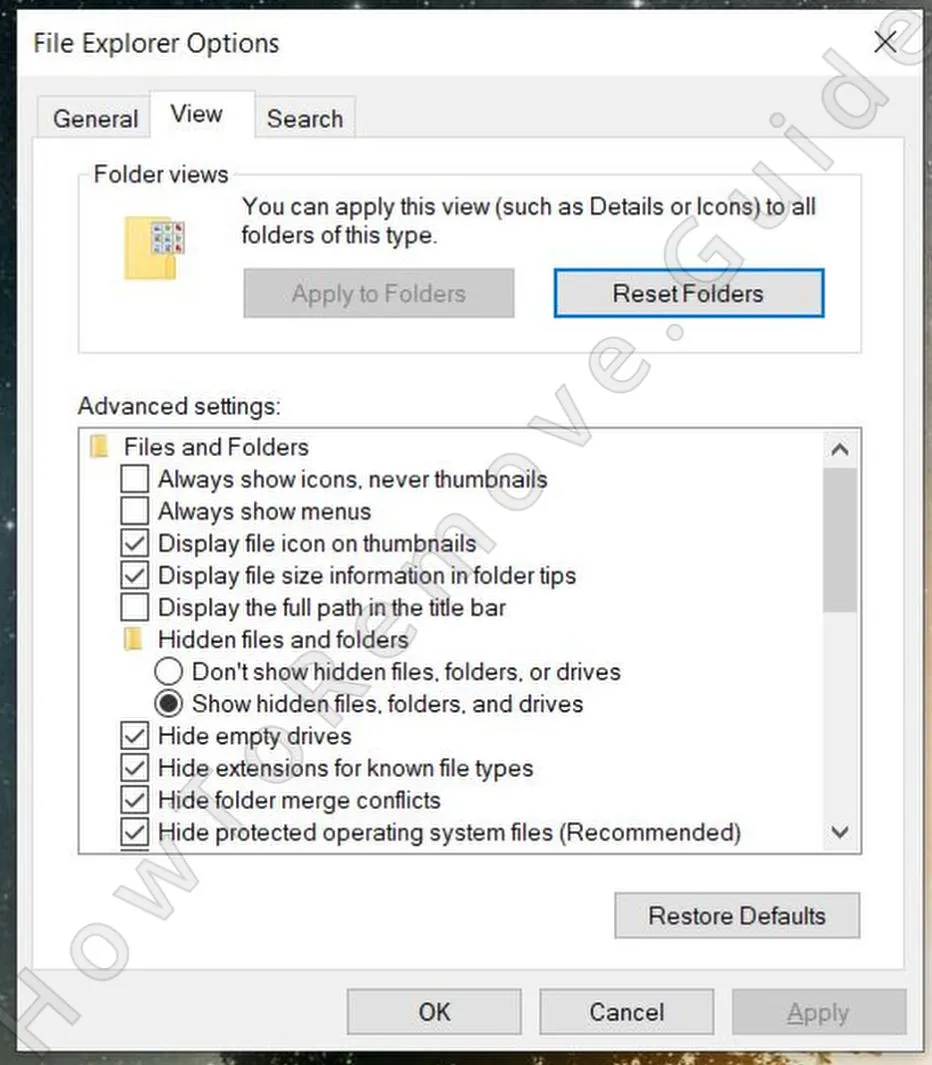 Visibility first, action second. Open the Start menu, search Folder Options, switch to the View tab, enable Show hidden files, folders, and drives, and click Apply so any concealed data related to ConvertMate is shown in AppData and other user areas.
 - 1.2Stubborn files are expected, so equip yourself now. Download and install LockHunter, a utility that identifies processes locking a file and can remove blocked items safely. Keep it available for later steps that involve active or protected executables.
If you prefer to avoid third-party tools, we understand. In this case, this small utility is useful for removing locked files that standard methods cannot delete.
LockHunter is free, has no ads, and requires no registration. You can download and install it in about two minutes.
Stop ConvertMate Processes With Task Manager
Active processes can block deletions or immediately restore removed files after sign-in. Addressing what runs in memory prevents rollbacks linked to ConvertMate. Work carefully, validate publishers when possible, and rely on evidence to avoid closing legitimate Windows components.
2. End suspicious ConvertMate items in Task Manager
- 2.1Begin with the question: what is executing now that could belong to ConvertMate? Press Ctrl+Shift+Esc to open Task Manager and review apps and background services with their resource use.
- 2.2If the window is simplified, click More details. The expanded view adds Processes, Performance, Startup apps, and Details for deeper inspection.
- 2.3
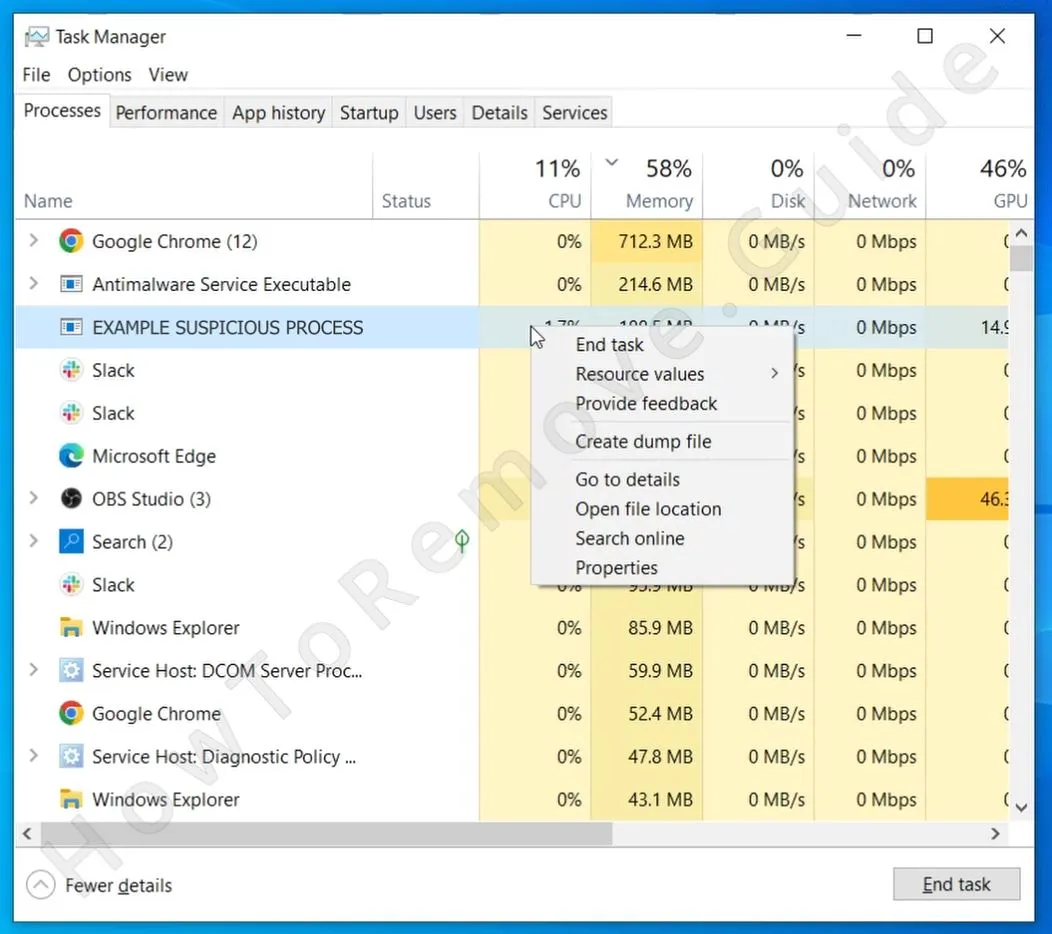 Use a cause→effect check. Unusual CPU or Memory spikes deserve investigation. Click column headers to sort and surface anomalies.
Note: You typically won’t see a process literally named “ConvertMate“; malware often uses ordinary-looking names.
- 2.4Pivot to location. Right-click a suspicious entry and choose Open file location. Executables under user paths like AppData or in randomly named folders are riskier than signed binaries in C:\Program Files.
- 2.5Try removing the entire containing folder from that window. If Windows blocks deletion, run LockHunter and select What’s locking this file? to release the handle, then delete the folder so sidecar DLLs and loaders go with it.
- 2.6Return to Task Manager, select the same entry, and click End task. Stopping it prevents an immediate relaunch while you remove related files. If it respawns, note the name; a scheduled task or service is likely relighting it.
Delete Suspicious ConvertMate Files and Shortcuts
Startup folders and common install paths often contain shortcuts, scripts, or renamed binaries that relaunch the program. Clearing these locations cuts easy persistence and steadies Windows while you handle deeper hooks linked to ConvertMate. Work carefully and remove only items you can verify as unrelated to normal software.
3. Remove ConvertMate leftover files and shortcuts
- 3.1Start at logon triggers. Open File Explorer and check C:\ProgramData\Microsoft\Windows\Start Menu\Programs\Startup and C:\Users\YourUsername\AppData\Roaming\Microsoft\Windows\Start Menu\Programs\Startup. Remove suspicious shortcuts or batch files that point back to components tied to ConvertMate.
- 3.2Reduce noise by clearing both Startup folders except desktop.ini. That file manages folder view and should stay. If Windows says an item is in use, use LockHunter to unlock and delete it cleanly.
- 3.3Review main install paths. Browse C:\Program Files and C:\Program Files (x86), sort by Date modified, and evaluate unfamiliar vendor folders. Remove directories that clearly do not belong to known software.
- 3.4Check user-space storage. Inspect C:\Users\YourUsername\AppData\Local\Programs and C:\Users\YourUsername\AppData\Roaming\Microsoft\Windows\Start Menu\Programs. Items created near the time problems began or living in oddly named folders deserve attention.
- 3.5
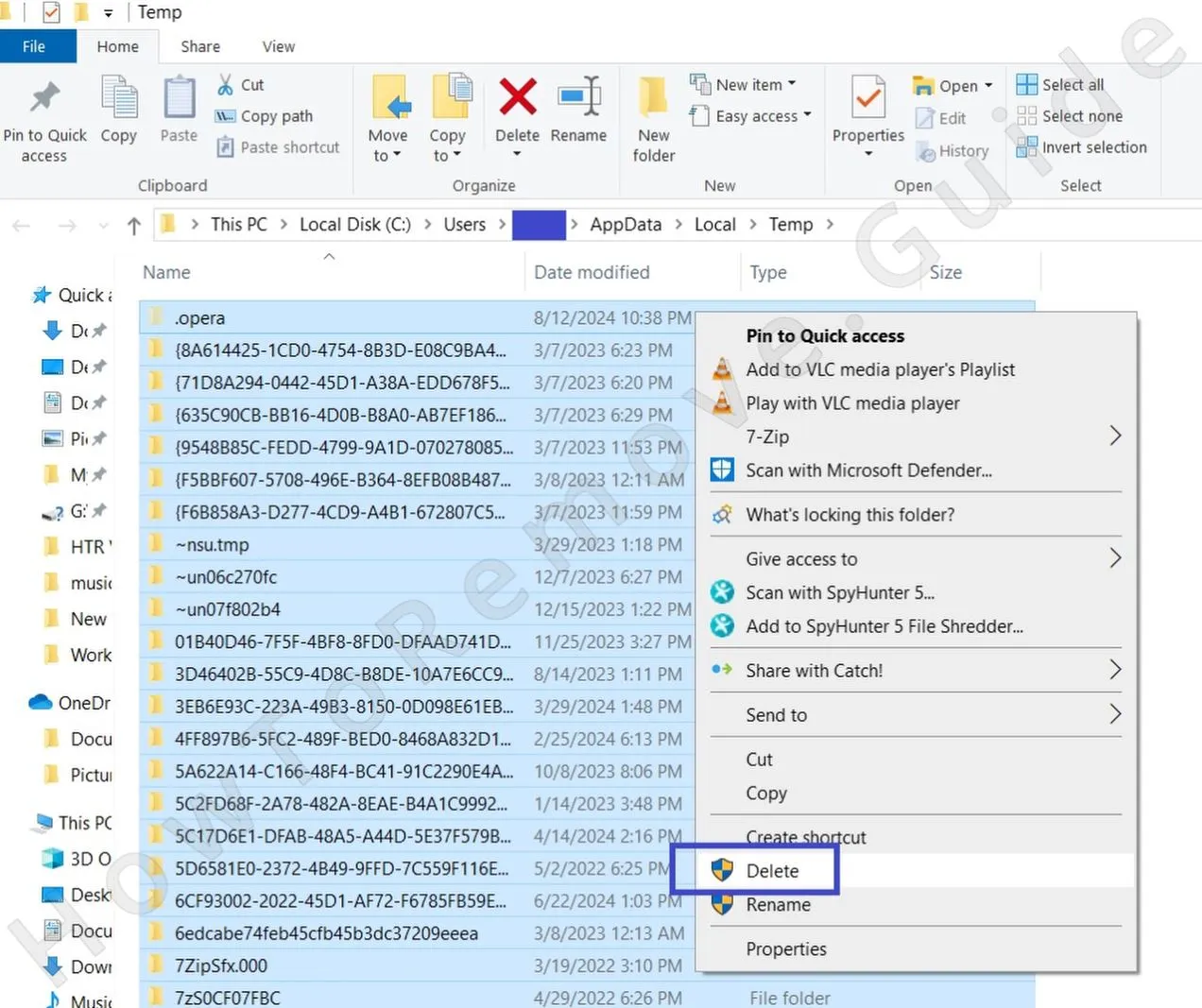 Finish by flushing temporary debris. Open C:\Users\YourUsername\AppData\Local\Temp, press Ctrl+A to select all, then press Delete. Clearing temp files disrupts droppers, cached installers, and scripts that might rerun at sign-in.
Clean Up ConvertMate Scheduled Tasks
Automated jobs are a common persistence method. They can run at boot, at sign-in, or on timers. Inspect actions and paths closely and remove only tasks you can confidently link to ConvertMate to avoid disabling legitimate maintenance jobs.
4. Clean up ConvertMate scheduled tasks
- 4.1
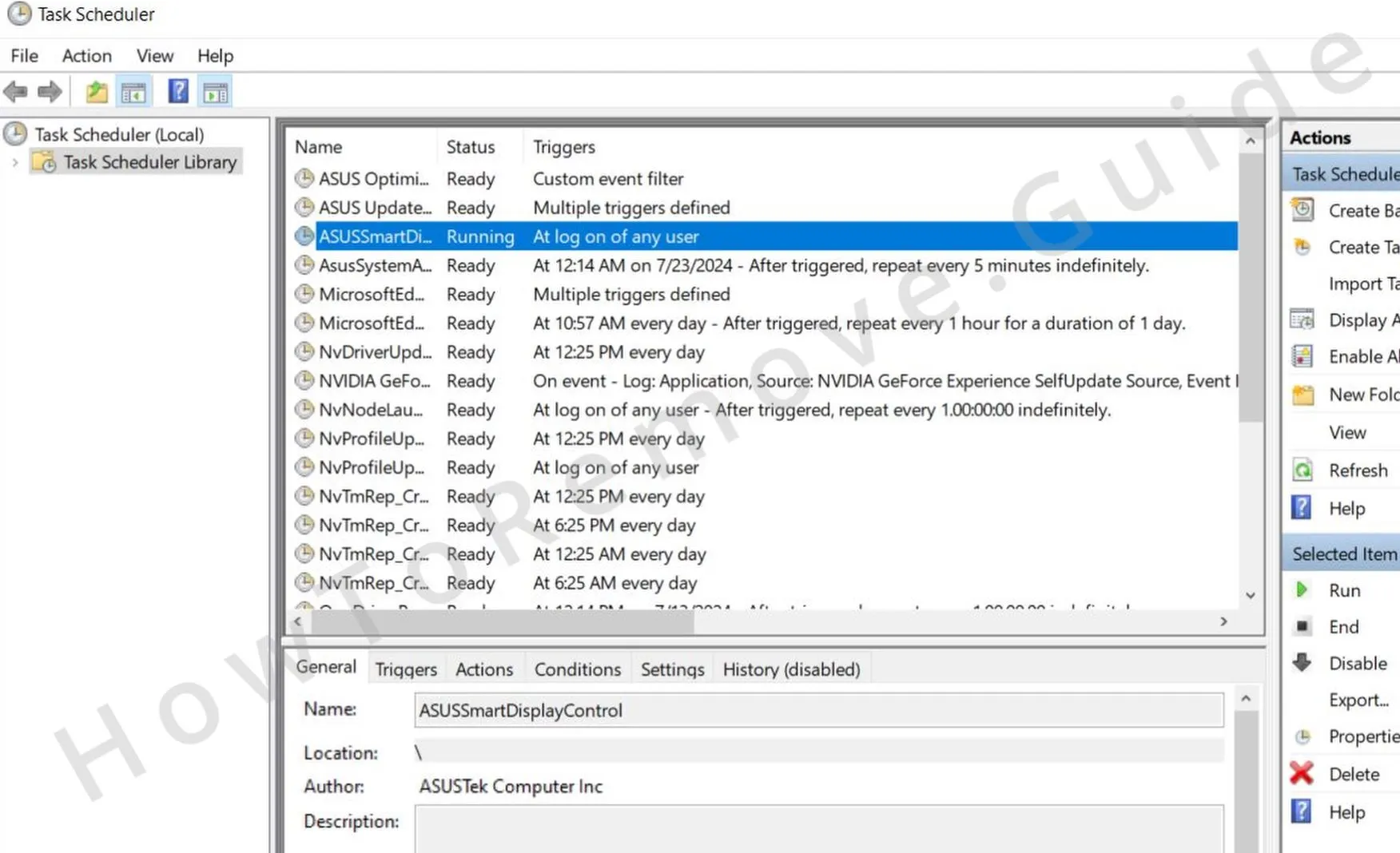 Start with the catalog. Open the Start menu, type Task Scheduler, press Enter, and expand Task Scheduler Library to review jobs that could relaunch ConvertMate on a schedule or event.
 - 4.2Open tasks one by one. In each task’s properties, check the Actions tab for the Program/script and arguments, and review Triggers and Conditions to understand when and how it runs.
- 4.3Prioritize entries that execute from AppData, Roaming, or temp paths. Well-maintained software rarely stores core executables there. Unsigned scripts or very new files in these locations are high-risk.
- 4.4When a suspect appears, copy the full path shown under Program/script so you can remove the payload later. Then delete the task from Task Scheduler Library and confirm.
- 4.5Use File Explorer to open the recorded path and delete the referenced executable or script. If the file is locked, unlock it with LockHunter and remove its parent folder.
- 4.6Repeat the review until no unfamiliar tasks remain that point to questionable folders. A single overlooked trigger can restore components after the next boot or sign-in.
Remove ConvertMate Entries via the Registry
Registry data can outlive basic uninstallers. Work precisely: confirm what a value references before deleting it. The sequence below helps you uncover autoruns, services, and policy keys that may keep ConvertMate active even after files are removed.
5. Clean residual ConvertMate entries in Registry Editor
- 5.1Open the correct console. Press Win+R, type regedit, and press Enter to launch Registry Editor so you can search for entries tied to ConvertMate and loaders that persist after file cleanup.
- 5.2Search thoroughly. Press Ctrl+F and query the original program name exactly as it appeared. The search walks keys, values, and data; allow it to finish on large hives.
- 5.3When a match appears, select its parent key in the left pane. After confirming it truly relates to the unwanted program, right-click and choose Delete. Press F3 to move to the next match until none remain.
- 5.4Broaden the sweep. Repeat searches for other suspicious names you removed and any process names you noted in Task Manager. Threats often scatter identifiers.
- 5.5Run a final pass for the exact target name to catch obscure or obfuscated entries. A single lingering Run value can silently restore components at next logon.
- 5.6Manually inspect common autorun and service paths, removing only entries that clearly reference the binaries you identified: HKCU\Software\Microsoft\Windows\CurrentVersion\Run, HKCU\Software\Microsoft\Windows\CurrentVersion\RunOnce, HKCU\Software\Microsoft\Windows\CurrentVersion\Policies\Explorer\Run, HKLM\Software\Microsoft\Windows\CurrentVersion\Run, HKLM\Software\Microsoft\Windows\CurrentVersion\RunOnce, HKLM\Software\Microsoft\Windows\CurrentVersion\Policies\Explorer\Run, HKEY_LOCAL_MACHINE\Software\Microsoft\Windows\CurrentVersion\RunServices, HKEY_LOCAL_MACHINE\Software\Microsoft\Windows\CurrentVersion\RunServicesOnce, HKEY_LOCAL_MACHINE\Software\Microsoft\Windows\CurrentVersion\RunOnce\Setup, HKEY_LOCAL_MACHINE\SYSTEM\CurrentControlSet\services. Avoid removing entire keys unless you know their purpose.
After finishing the registry pass, restart the computer. Keep an eye out for redirects, background relaunches, or resource spikes over several sign-ins. If symptoms do not return, the persistence chain is likely broken and the system should remain stable.
