

OperaSetup.exe is often linked to the Opera browser installer, yet that alone does not make every file with that name trustworthy. Misleading prompts, shady pages, and forced downloads can drop an executable that looks familiar while coming from the wrong place.
A canceled or incomplete download is usually less serious than a file that was actually launched, because harmful code generally needs a chance to run. Still, surprise downloads from shady pages are a warning sign, especially when pop-ups push the user to act fast.
What matters most is the surrounding evidence: the folder where the file appeared, whether it opened by itself, and what it did after launch. Some copies behave like a normal installer, while others act more like a trojan hiding behind a recognizable label.
We tested that SpyHunter successfully removes OperaSetup.exe* and we recommend using it. It will block OperaSetup.exe from reinstalling itself and it will make sure your device is clean from any malware.
 Try Free For 7 Days*
Buy now15% OFF if you buy straight without trial.
 OFFER
OFFERFor anyone who discovered OperaSetup.exe or OperaGXSetup.exe without meaning to download it, caution is the safest starting point. The cleanup can be tricky for non-experts, and readers who prefer not to handle it manually can use SpyHunter 5 to check for unwanted programs and malware.
OperaSetup.exe Removal Guide
Start with the normal Windows uninstall path before moving to deeper cleanup. Removing OperaSetup.exe from Apps & Features is fast and relatively safe, and it may clear the main entry if it registered properly. Even if some files remain, this first pass reduces noise and makes the next checks easier to confirm.
Remove OperaSetup.exe from Apps & Features
- 1.1Check the installed-apps list first if OperaSetup.exe shows up there. Open the Start Menu, choose Settings, and go to the section that manages installed apps and optional features.
- 1.2In Settings, open Apps. Use the search field or filters for name, size, or install date to narrow the list to entries you do not recognize.
- 1.3Sort by Installation date so the newest items appear first. That view makes it easier to inspect entries that appeared when the issue began.
- 1.4Select a suspicious item, click Uninstall, and complete every prompt. Do not skip any window that mentions bundled items or companion components.
- 1.5Then open C:\Users\YourUsername\AppData\Local\Programs. Check for leftover folders or executables tied to the removed app and note anything with an unusual name.
- 1.6If a leftover folder is clearly connected, delete it. Restart Windows afterward to release file locks and confirm that it does not return on the next boot.
After the restart, confirm that OperaSetup.exe no longer appears in the installed-apps list and that Windows behaves normally. If leftovers or suspicious activity remain, continue with the deeper checks below to remove hidden files and common relaunch points.
SUMMARY:
How to Completely Remove OperaSetup.exe
If a suspicious process is still running, identify where it starts before deleting files blindly. When OperaSetup.exe is active, you can inspect file paths, parent processes, and possible triggers, which makes persistence easier to track. That context reduces guesswork and helps confirm that every related component has been addressed.
1. Prepare for OperaSetup.exe removal
- 1.1
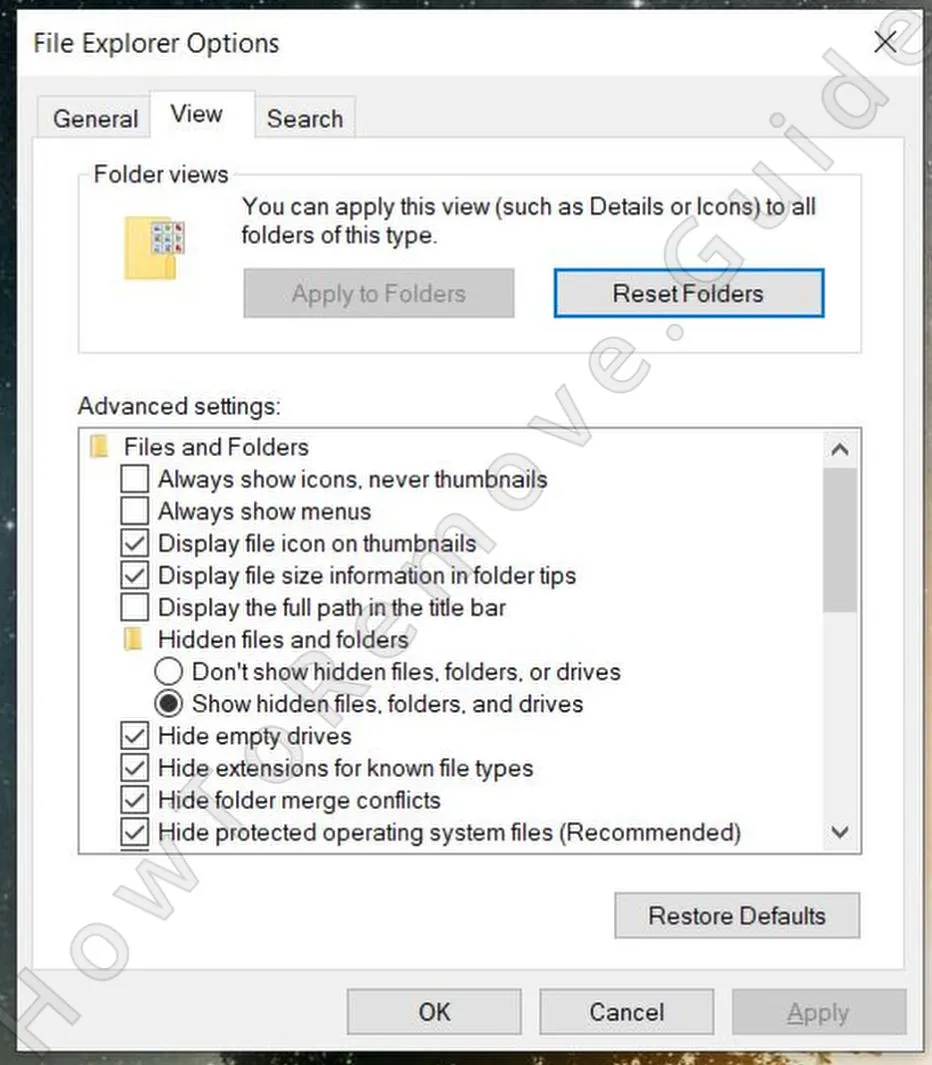 Enable hidden items so you can see files left behind by OperaSetup.exe. Search for Folder Options from the Start Menu, open it, switch to the View tab, and turn on Show hidden files, folders, and drives. Hidden folders are common storage locations.
 - 1.2Locked files can interrupt removal, so install LockHunter to handle items Windows reports as in use. It adds a right-click option, shows which process is holding a file, and can delete stubborn executables or DLLs after unlocking them.
If you prefer to avoid third-party utilities, most of the cleanup for OperaSetup.exe can still be done manually. When Windows reports that a file is “in use,” a lock-release tool mainly saves time by avoiding repeated restarts or failed delete attempts.
LockHunter is free and usually installs within a couple of minutes. Once installed, you can open it from the right-click menu on a file or folder that refuses to delete during OperaSetup.exe cleanup.
Remove OperaSetup.exe Processes in Task Manager
Ending one executable is rarely enough, because helper components can add startup entries, scheduled tasks, or small launchers that restore it. The steps below help you locate the running file for OperaSetup.exe, remove what it launches from, and then stop the process so it cannot restart immediately while you continue cleanup.
2. Stop suspicious OperaSetup.exe processes and remove their files
- 2.1Use process details to see what OperaSetup.exe is doing. Press Ctrl + Shift + Esc to open Task Manager and review running apps, background processes, and unusual resource usage.
- 2.2If the compact window appears, click More details. The expanded view shows publishers, command names, and startup impact, which makes unfamiliar entries easier to judge.
- 2.3
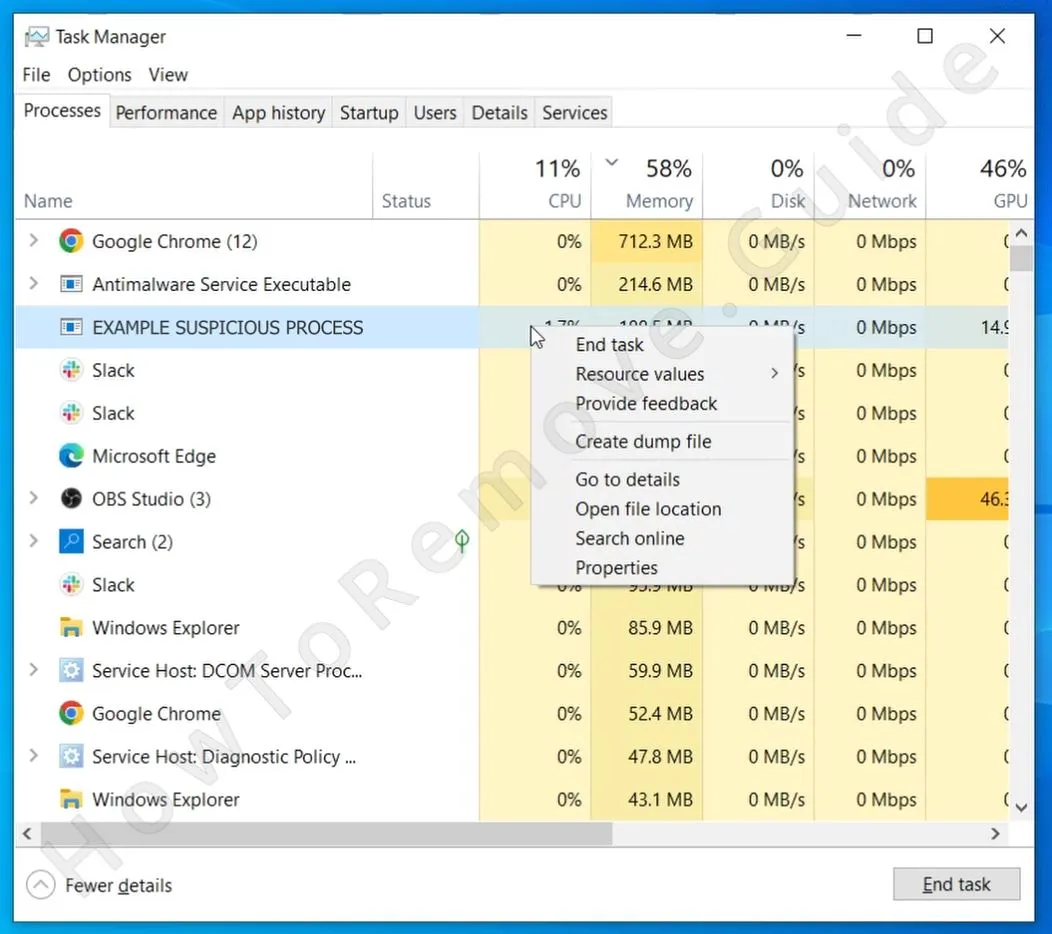 Sort by CPU or Memory and look for unfamiliar names or constant high usage. Malware often hides behind generic labels or random strings.
 - 2.4Right-click any suspicious process and choose Open file location. The folder path and file names often show whether it belongs to software you meant to install.
- 2.5Try to delete the containing folder. If Windows blocks it, open LockHunter, select What’s locking this file?, release the lock, and remove the file and its folder from inside the tool.
- 2.6Go back to Task Manager and use End task on the same process. Stopping it after the file is removed reduces immediate respawns and keeps the next checks more stable.
We tested that SpyHunter successfully removes OperaSetup.exe* and we recommend using it. It will block OperaSetup.exe from reinstalling itself and it will make sure your device is clean from any malware.
Try Free For 7 Days*
Buy now15% OFF if you buy straight without trial.
Delete OperaSetup.exe Trojan Files
Many threats stay active by placing small launchers and helper files in common system and user folders, then linking them to logon or other triggers. The aim here is to remove those launch points and leftovers so OperaSetup.exe cannot rebuild itself in the background. Check the paths below in order and delete only items you cannot identify.
3. Remove OperaSetup.exe startup entries and leftover folders
- 3.1Start with the Startup locations that can relaunch OperaSetup.exe: C:\ProgramData\Microsoft\Windows\Start Menu\Programs\Startup and C:\Users\YourUsername\AppData\Roaming\Microsoft\Windows\Start Menu\Programs\Startup. Delete unknown shortcuts or executables.
- 3.2Inside each Startup folder, leave desktop.ini untouched and remove other suspicious items. If Windows blocks deletion, use LockHunter to unlock and remove them.
- 3.3Check the main program folders next – C:\Program Files and C:\Program Files (x86). Delete recently created, empty, or oddly named folders that do not match software you intentionally installed.
- 3.4Review user-level locations as well: C:\Users\YourUsername\AppData\Local\, C:\Users\YourUsername\AppData\Local\Programs, and C:\Users\YourUsername\AppData\Roaming\Microsoft\Windows\Start Menu\Programs. These paths often hold launchers, updater stubs, or scripts.
- 3.5
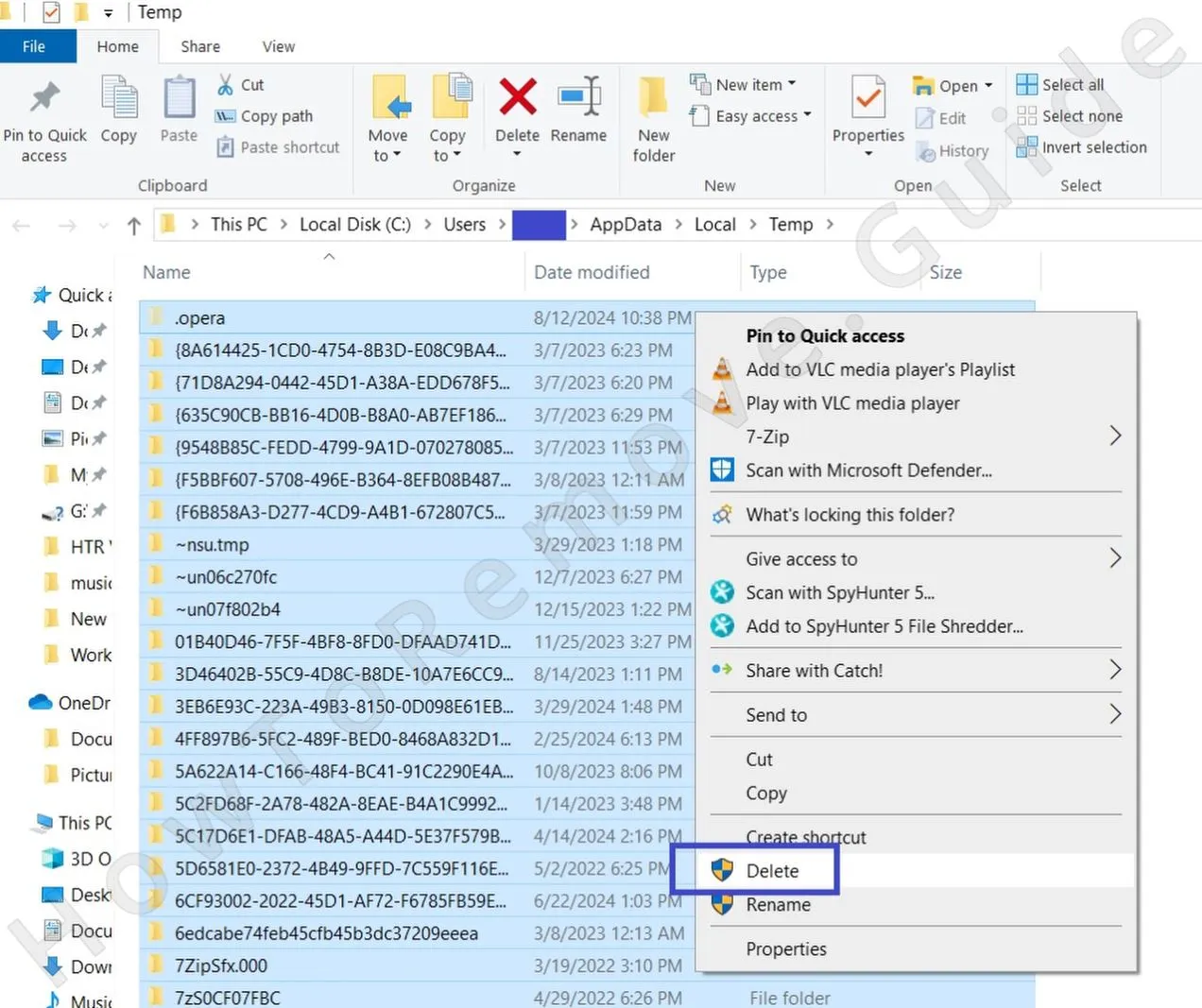 Clear temporary files: open C:\Users\YourUsername\AppData\Local\Temp, press Ctrl + A to select everything, delete the contents, and empty the Recycle Bin.
Remove Suspicious OperaSetup.exe Scheduled Tasks
Scheduled tasks are a common persistence method because they can run on a timer, at logon, or after specific system events without showing a visible window. Reviewing what each task starts gives you a clearer way to identify the trigger that keeps OperaSetup.exe coming back.
4. Disable scheduled tasks that relaunch OperaSetup.exe
- 4.1
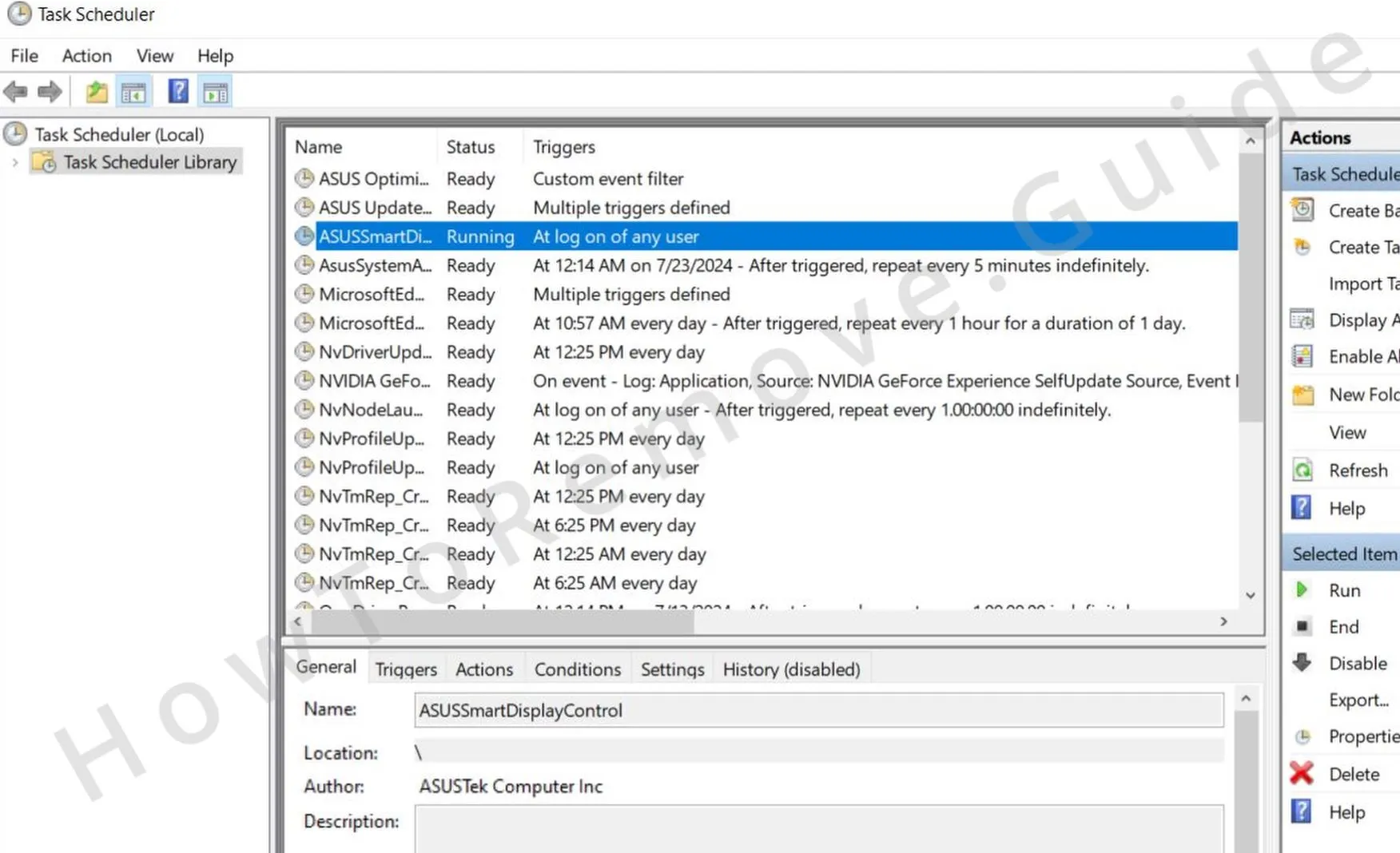 Open Task Scheduler to find triggers that can relaunch OperaSetup.exe. Search for it from the Start Menu, open it, and expand the Task Scheduler Library to review tasks for your account and system folders.
 - 4.2Double-click a task to open Properties. Check Actions to see which command or file it launches and what parameters are included.
- 4.3Pay close attention to tasks that point to user folders such as AppData or Roaming, especially if the names are unfamiliar. Legitimate vendor tasks usually point to normal program locations.
- 4.4If a task looks suspicious, copy the full path shown under Actions, then delete the task in Task Scheduler to stop it from running automatically.
- 4.5Go to the copied path and remove the referenced executable or script. Deleting the task alone can leave the payload behind as a separate problem.
- 4.6Repeat the review for every folder under the Task Scheduler Library, including subfolders created by installers. Persistence often hides behind generic task names.
Remove OperaSetup.exe Persistence Entries in the Windows Registry
Even after visible files are removed, Registry values can still point to missing executables, enforce unwanted policies, or create autostart entries that rebuild components. Work carefully and remove only entries you have confirmed are unwanted. The goal is to delete startup hooks linked to OperaSetup.exe without damaging normal Windows keys.
5. Remove OperaSetup.exe traces with Registry Editor
- 5.1Open Registry Editor to review autostart data that may keep OperaSetup.exe active: press Win + R, type regedit, and press Enter.
- 5.2Press Ctrl + F and search for the exact name you identified and removed earlier. This often reveals leftover keys such as services or shell extensions.
- 5.3When a match appears, select the key in the left pane and delete it. Continue with F3 until no more results appear across all hives.
- 5.4Repeat the search-and-delete cycle for any other suspicious app names you found earlier. Removing those traces helps stop helper components from restoring deleted files.
- 5.5Run one final search for the same name to confirm that no entries remain. A leftover value pointing to an old path can sometimes recreate files at startup.
- 5.6Also inspect these common autostart and policy locations:
HKEY_CURRENT_USER\Software\Microsoft\Windows\CurrentVersion\Run
HKEY_CURRENT_USER\Software\Microsoft\Windows\CurrentVersion\RunOnce
HKEY_CURRENT_USER\Software\Microsoft\Windows\CurrentVersion\Policies\Explorer\Run
HKEY_LOCAL_MACHINE\Software\Microsoft\Windows\CurrentVersion\Run
HKEY_LOCAL_MACHINE\Software\Microsoft\Windows\CurrentVersion\RunOnce
HKEY_LOCAL_MACHINE\Software\Microsoft\Windows\CurrentVersion\Policies\Explorer\Run
HKEY_LOCAL_MACHINE\Software\Microsoft\Windows\CurrentVersion\RunServices
HKEY_LOCAL_MACHINE\Software\Microsoft\Windows\CurrentVersion\RunServicesOnce
HKEY_LOCAL_MACHINE\Software\Microsoft\Windows\CurrentVersion\RunOnce\Setup
HKEY_LOCAL_MACHINE\SYSTEM\CurrentControlSet\Services - 5.7In each path, inspect the right pane for values that point to unknown executables or suspicious directories. Delete only the specific value so legitimate components stay intact.
Restart Windows and confirm that it boots normally, then check that no relaunches, pop-ups, or unexplained resource spikes return. Make sure browsers and core apps behave as expected. If problems continue, run an offline scanner to check for hidden drivers, repair altered settings, and confirm that no tasks or startup entries can bring OperaSetup.exe back.
