

When address-bar searches bounce through Search.live-history.com, your browser settings were likely changed without consent. It functions as a redirect hop: you enter a query, it forwards you elsewhere, and that detour wasn’t your choice.
A browser hijacker – usually an unwanted extension or app – does this by replacing your homepage, new-tab page, and default search provider. Many victims end up on Yahoo, but the final destination can vary with region or other installed software.
We tested that SpyHunter successfully removes Search.live-history.com* and we recommend using it. It will block Search.live-history.com from reinstalling itself and it will make sure your device is clean from any malware.
 Try Free For 7 Days*
Buy now15% OFF if you buy straight without trial.
 OFFER
OFFERThe real risk is tracking. These hijackers, like Search.live-history.com, Nextgeeker.com and Lottingem.com can, collect visited sites, search terms, and cookie IDs, and in worst cases scoop up credentials or payment details. Collected data is often monetized through ad targeting, resale, or additional unwanted installs.
To reverse it, review extensions/add-ons and remove unfamiliar items; then uninstall recently added programs from your system’s Apps/Programs list. Reset browser startup and search settings, run a full malware scan, and install a reputable ad blocker to reduce deceptive download prompts.
Browser Hijacker Removal Guide
Follow the steps in order and keep track of what you disable or remove so you can confirm what changed. This structured sweep targets Search.live-history.com, reduces repeat pop-ups, and helps restore your usual search provider, startup pages, and permissions. It aims to keep everyday browsing working without wiping settings you still rely on.
Fast Checklist to Stop Browser Redirects
- 1.1Open your browser’s Extensions page and scan for add-ons linked to Search.live-history.com or with unfamiliar names.
- 1.2Remove anything you didn’t install intentionally. If an extension’s name or behavior seems off, delete it.
- 1.3Then open Privacy and Security settings and review Site Permissions. This area controls who can show pop-ups or send notifications, and unwanted sites often depend on these permissions.
- 1.4Remove access for any sites you don’t recognize. After you clear these entries, restart your computer and launch your browser again.
For many people, the quick checklist above stops the pop-ups and returns normal settings right away. If redirects still happen, settings reappear after you change them, or the “Managed by your organization” message remains, assume Search.live-history.com left policy entries behind and continue with the more detailed steps below.
SUMMARY:
| Threat name | Search.live-history.com |
| Category | Browser Hijacker |
| Scanner |
Some threats reinstall themselves if you don’t delete their core files. We recommend downloading SpyHunter to remove harmful programs for you. This may save you hours and ensure you don’t harm your system by deleting the wrong files. |
How to Remove a Browser Hijacker
When a browser shows “Managed by your organization,” a policy is enforcing settings behind the scenes, so a normal reset may not remove the lock. In cases connected to Search.live-history.com, the goal is to locate and delete the entries that let changes reapply after you correct them. Work carefully, verify each edit, and note what you changed before restarting Windows.
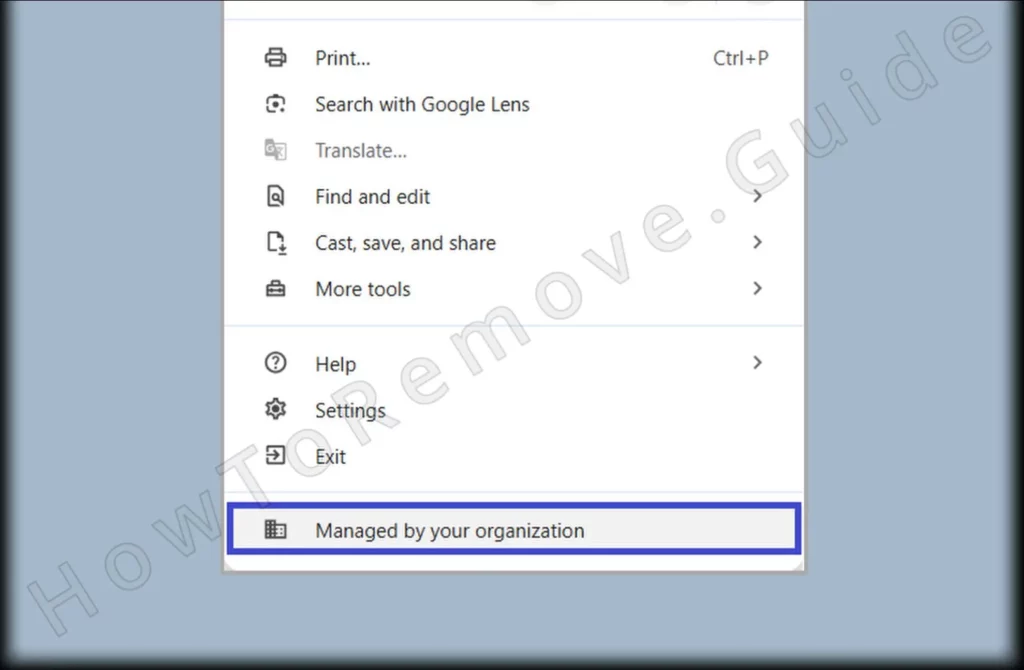
1. Find the Browser Policies
-
1.1
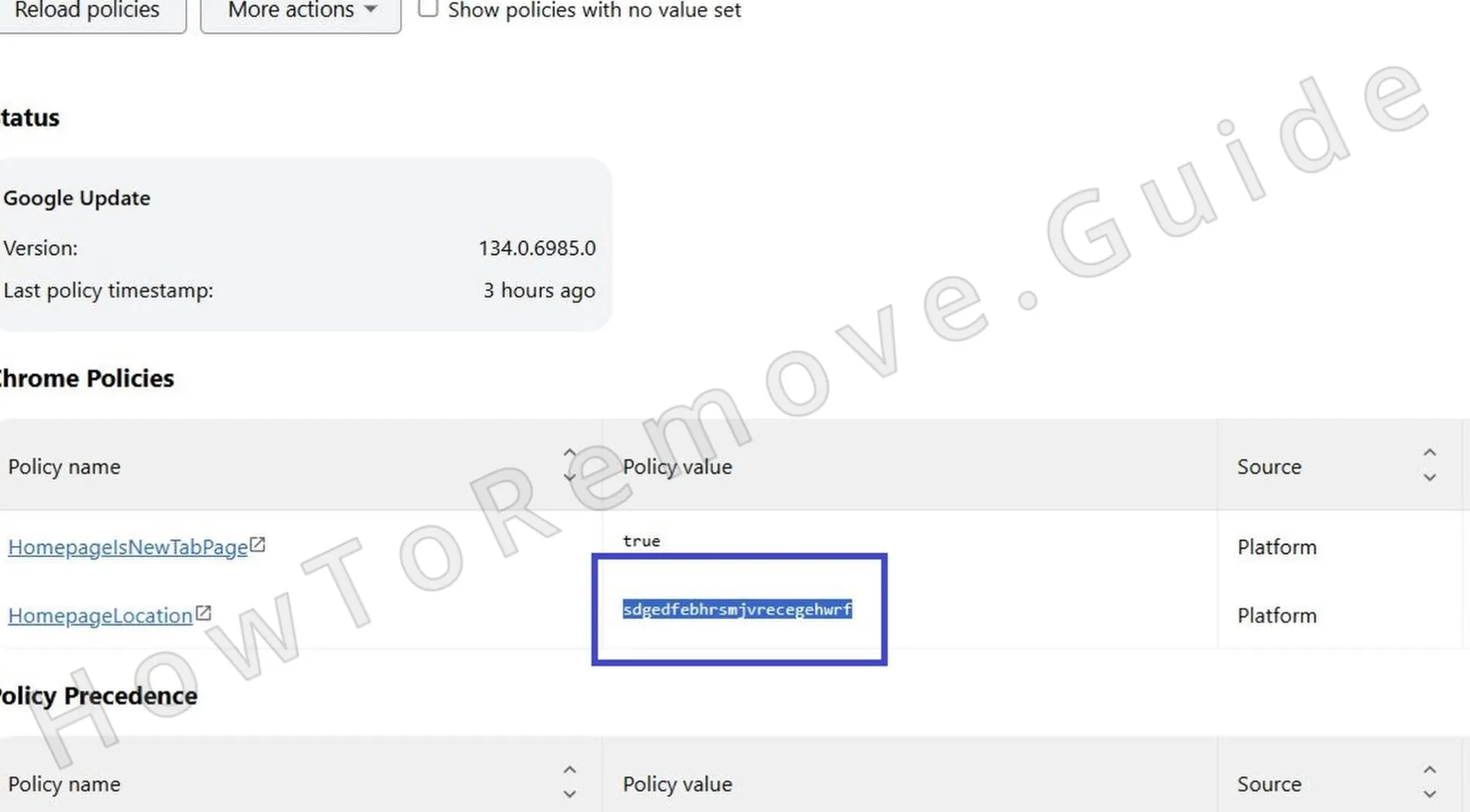 To check whether Search.live-history.com set browser policies, type
chrome://policyinto Chrome’s address bar. If you’re using another Chromium-based browser, just swap out “chrome” for the browser’s name. - 1.2You’ll see a list of active policies here. Anything that looks like random strings or odd letter patterns in the Value column is worth noting. Write these down because you’ll use them in the next steps.
- 1.3Next, go back to the Extensions page to collect more details tied to the policy. Turn on Developer Mode, copy the IDs of any unwanted extensions, and save them next to the suspicious policy values.
- 1.4If you can’t access the Extensions page, use this method to remove extensions manually. Open File Explorer and navigate to this directory:
C:\Users[Your Username]\AppData\Local\Google\Chrome\User Data\Default\Extensions - 1.5
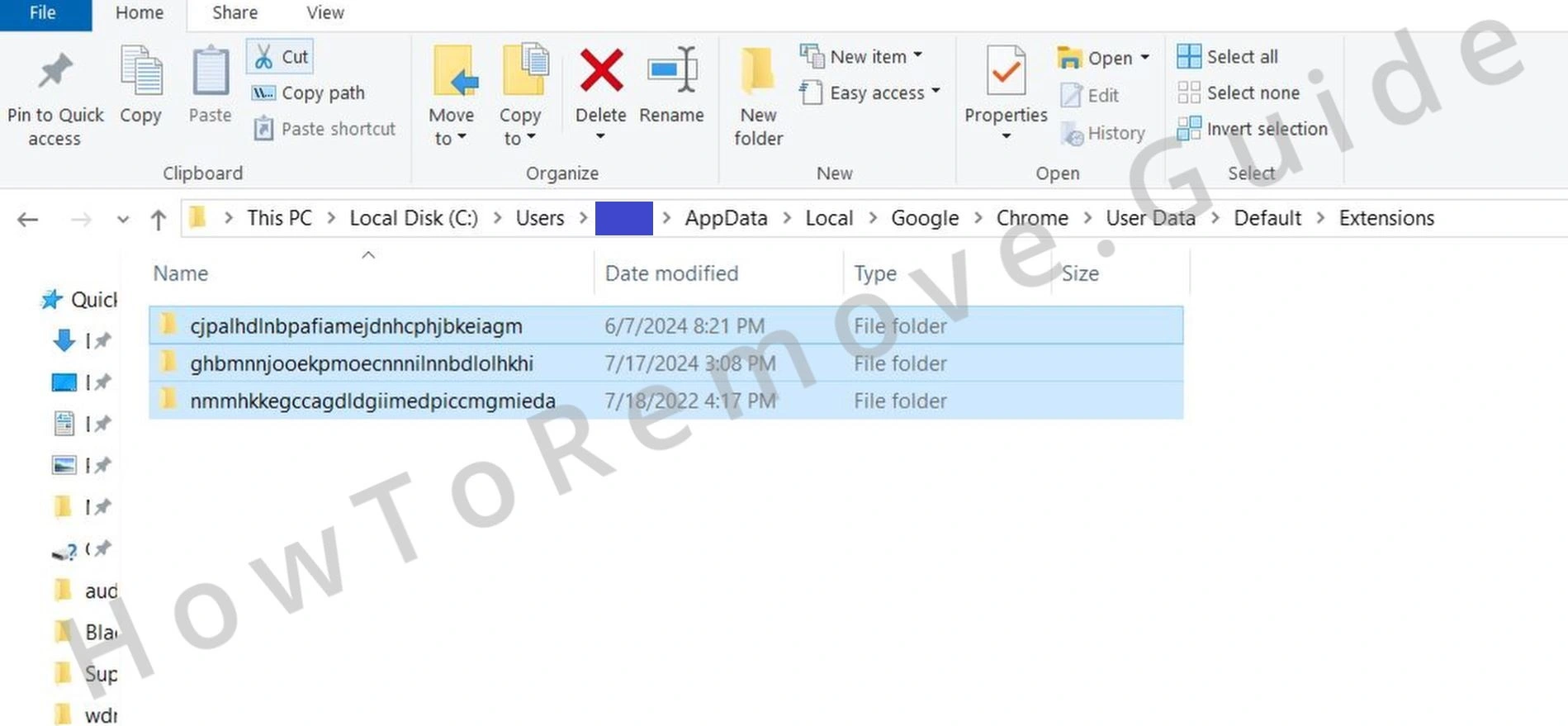 Delete everything inside this folder to remove all installed extensions, including ones that keep coming back. This can clear leftover components that keep settings changing.
 - 1.6
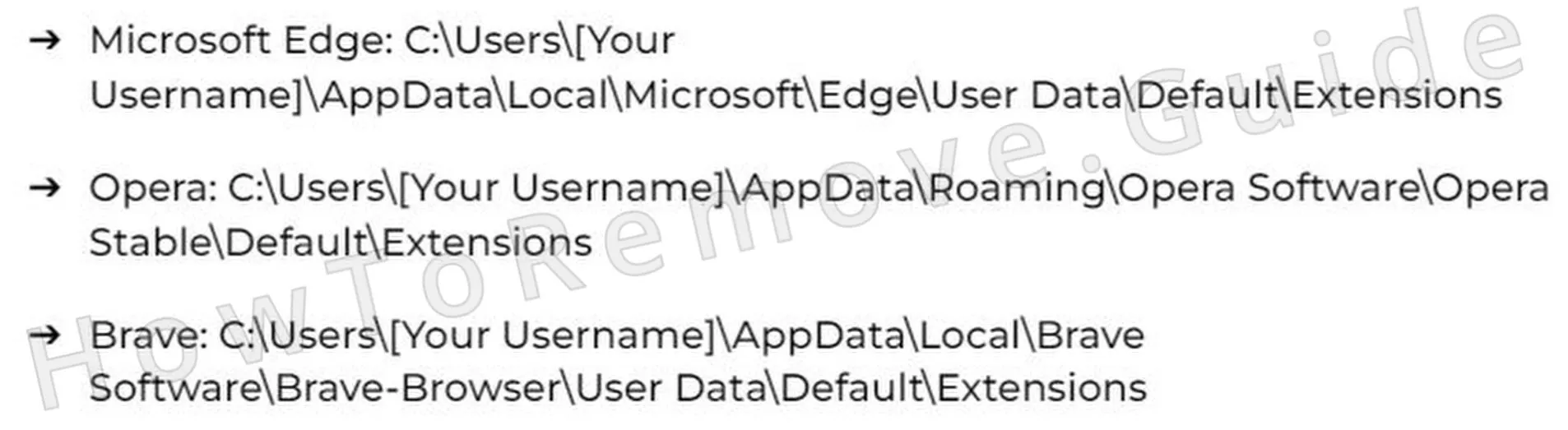 Other browsers keep similar extension folders:
 - 1.7After that, you can return to the Extensions Manager page in your browser.
Remove Browser Policies
Some browser controls are stored in the Windows Registry, and careless edits can cause problems for Windows or installed software. Focus only on entries that clearly match the values or extension IDs you collected, and avoid broad deletions. This removes the policy hooks associated with Search.live-history.com while keeping the system stable.
2. Delete Browser Policies Using the Registry
-
2.1To begin removing entries linked to Search.live-history.com, open the Registry Editor by typing
regeditinto the Start Menu and pressing Enter. - 2.2Once inside, use the Edit > Find option to search for the suspicious values you noted earlier. Delete matching entries carefully, then run the search again until no results remain. Repeat the cycle – leftovers can recreate the policy.
- 2.3
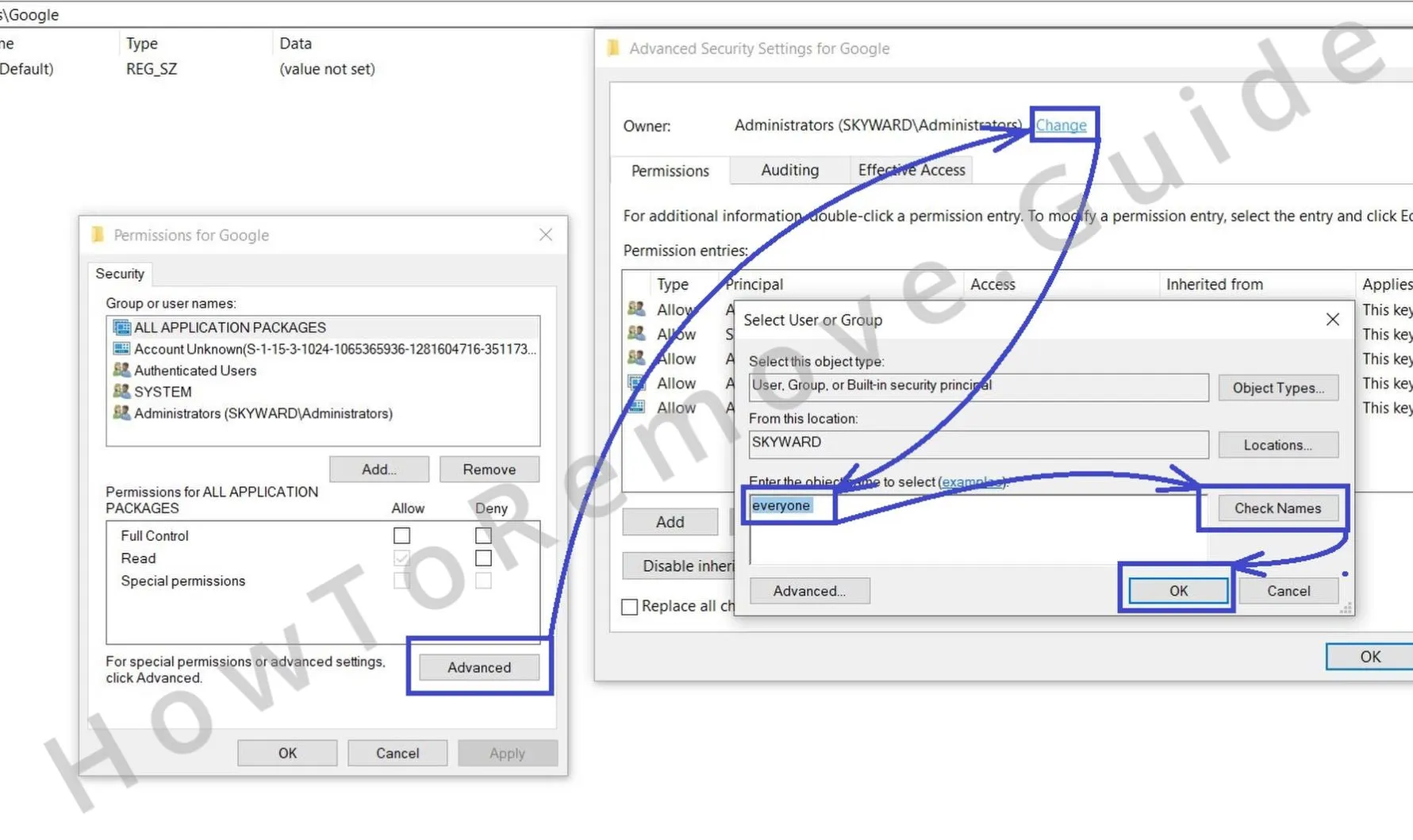 If a key won’t delete, change its permissions. Right-click the problematic key, select Permissions > Advanced > Change, and grant access to “everyone.”
 - 2.4
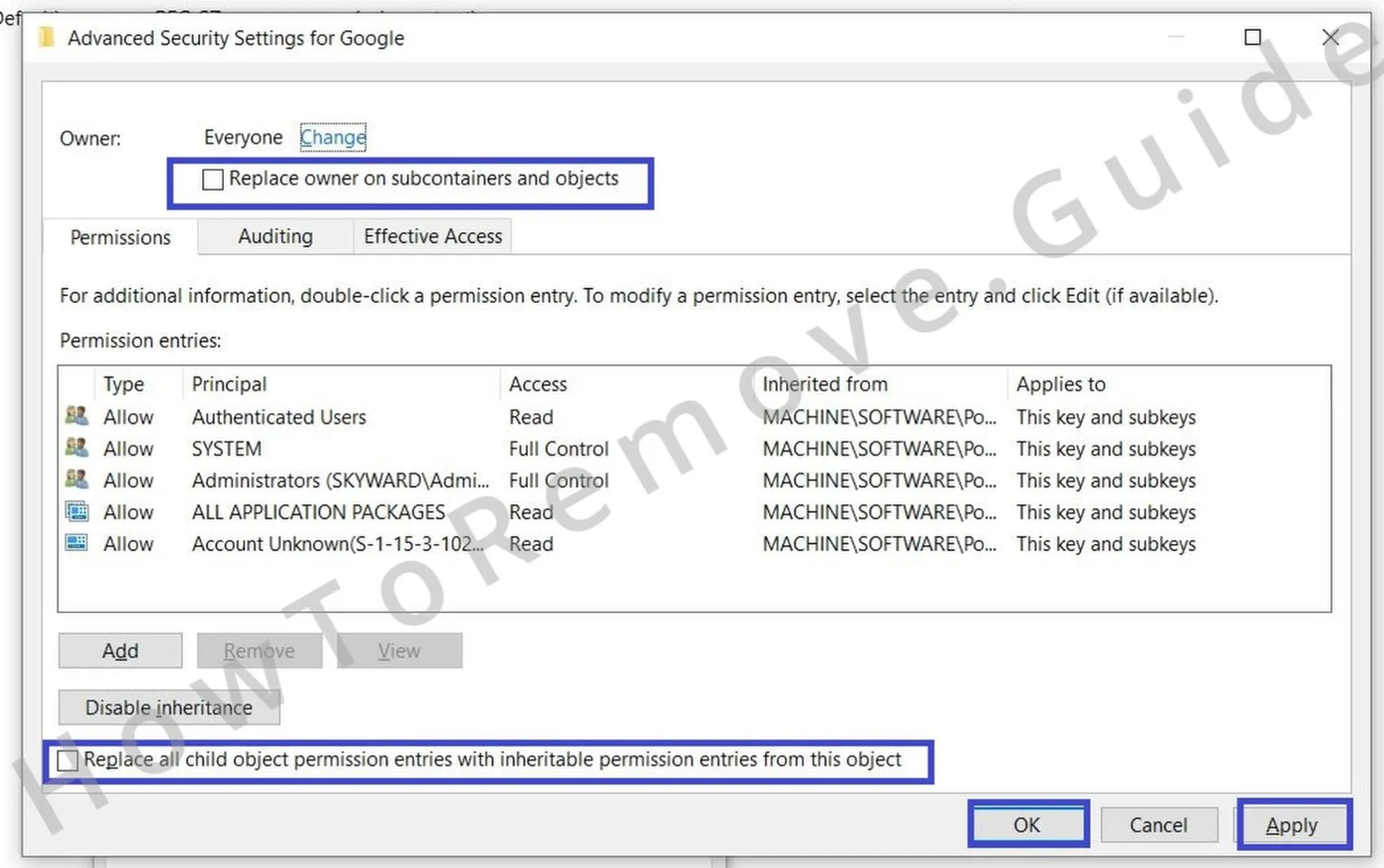 Check both “Replace…” options in the previous window, then click Apply and OK.
This change gives you the access needed to remove a stubborn key and prevent it from locking browser settings again.
Other Tools for Removing Browser Policies
3. Additional Ways to Remove Browser Policies
- 3.1
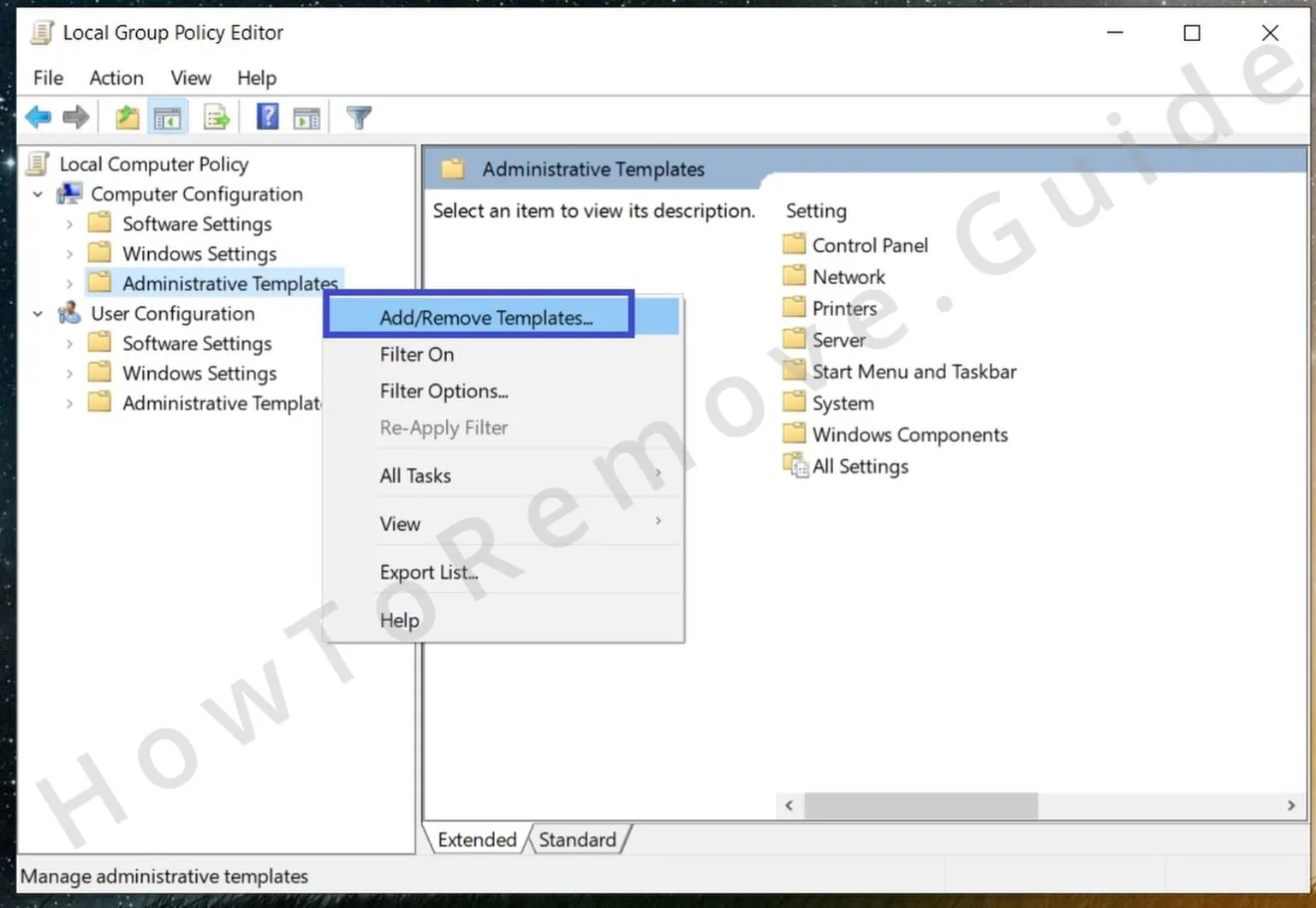 If Search.live-history.com policies keep coming back, try the Group Policy Editor, a built-in utility for managing system policies. Search for “edit group policy” in your Start Menu to open it, then navigate to Administrative Templates.
 - 3.2
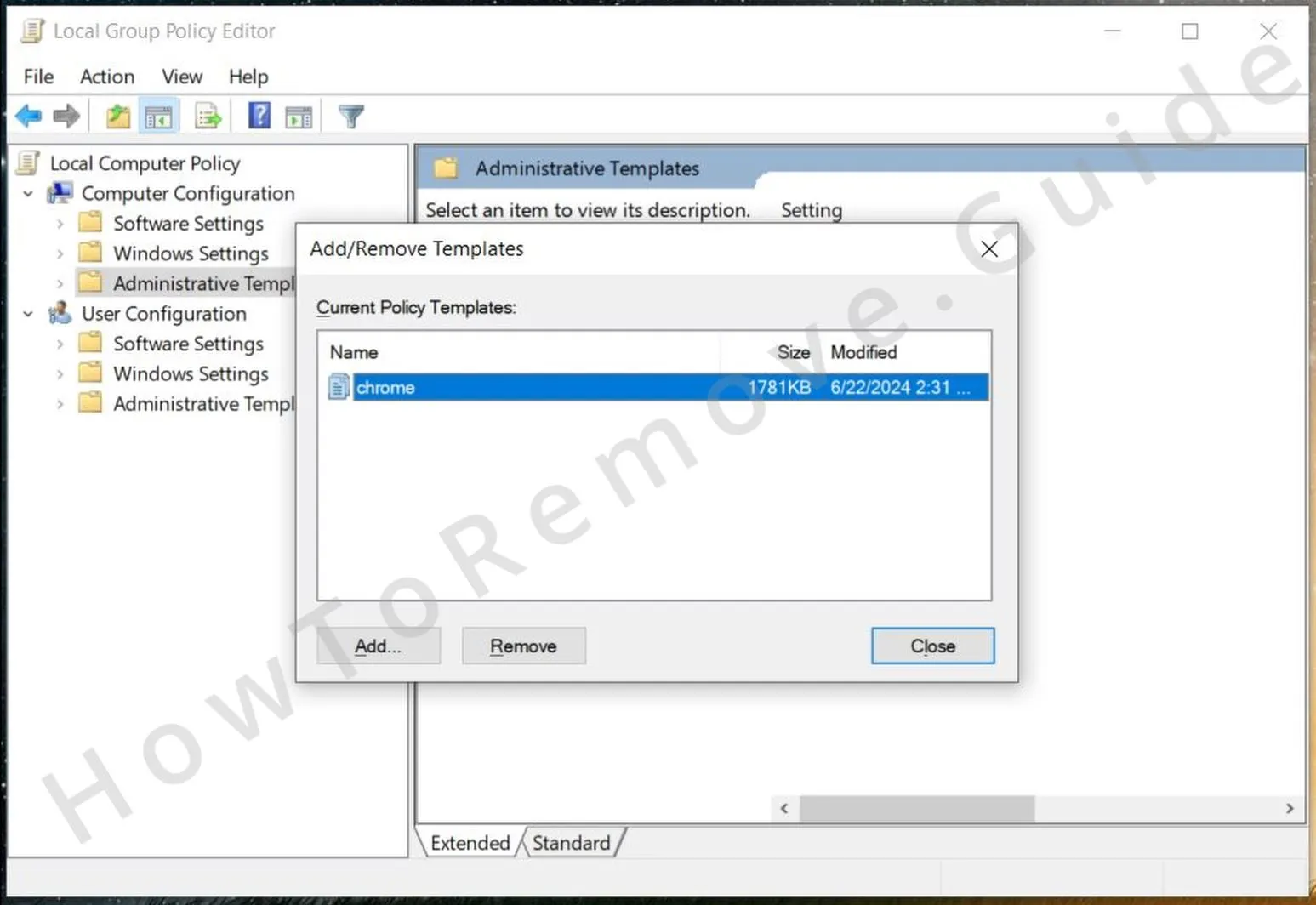 Right-click Administrative Templates, and select Add/Remove Templates. Remove any entries that appear in the next window.
 - 3.3Chrome users can also use the Chrome Policy Remover. Download it using the provided link.
- 3.4After it downloads, run it as an administrator. If Windows shows a warning, select More Info > Run Anyway, then let the tool finish.
Remove the Hijacker From Chrome, Edge, and Other Browsers
Browser profiles, sync, and stored site data can quietly restore altered preferences after you sign in, switch profiles, or re-enable syncing. To prevent repeat redirects, check every active profile for changed defaults and permissions. This section focuses on fixing those settings so Search.live-history.com cannot reapply search, startup pages, and site access across your browsers.
4. Remove the Hijacker From Your Browser
- 4.1Start by removing any extensions associated with Search.live-history.com from your browser. You should be able to do that now.
- 4.2
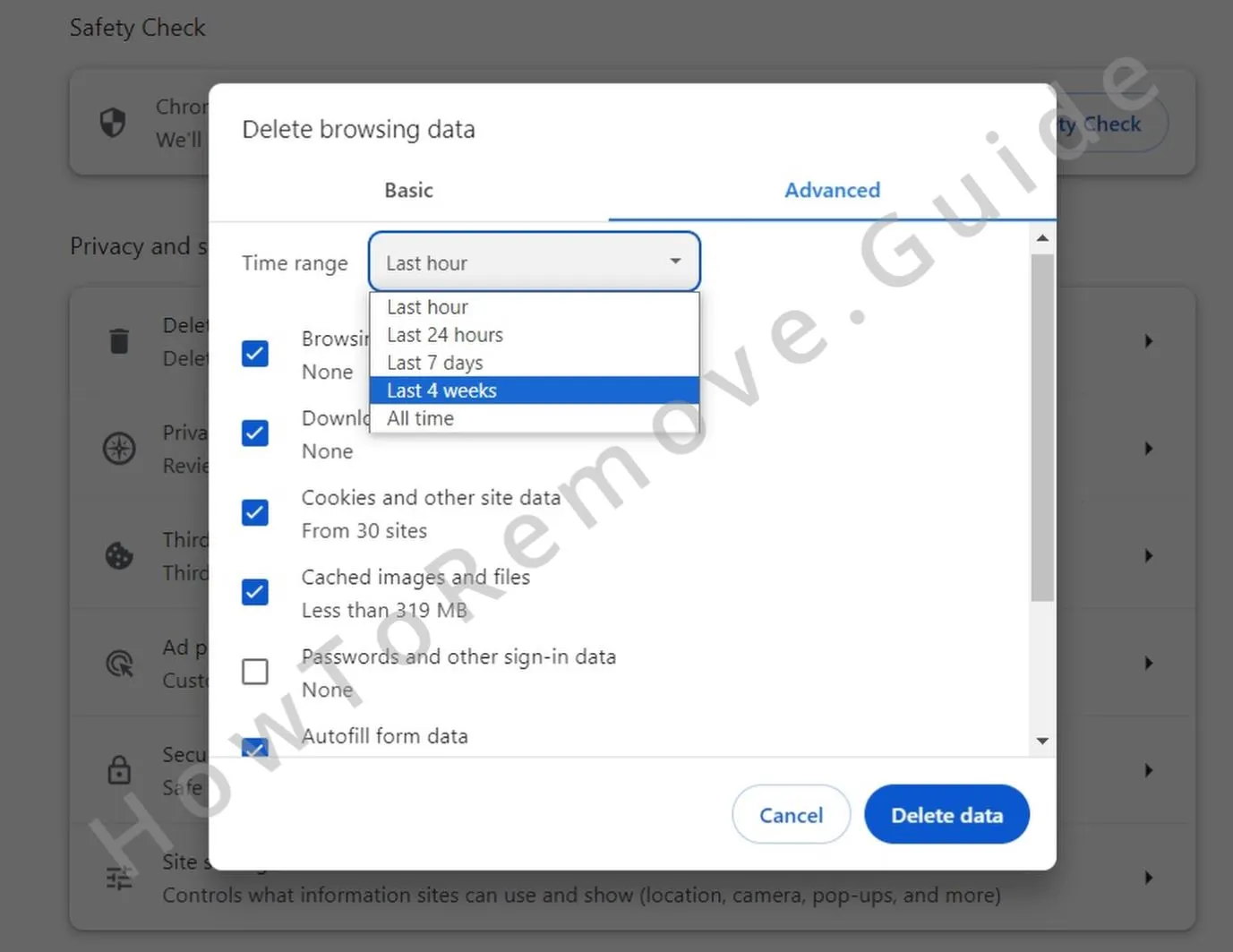 After that, clear your browsing data. Cached files and cookies can keep traces of unwanted activity. When clearing data, select the “All Time” range so nothing is left behind.
 - 4.3
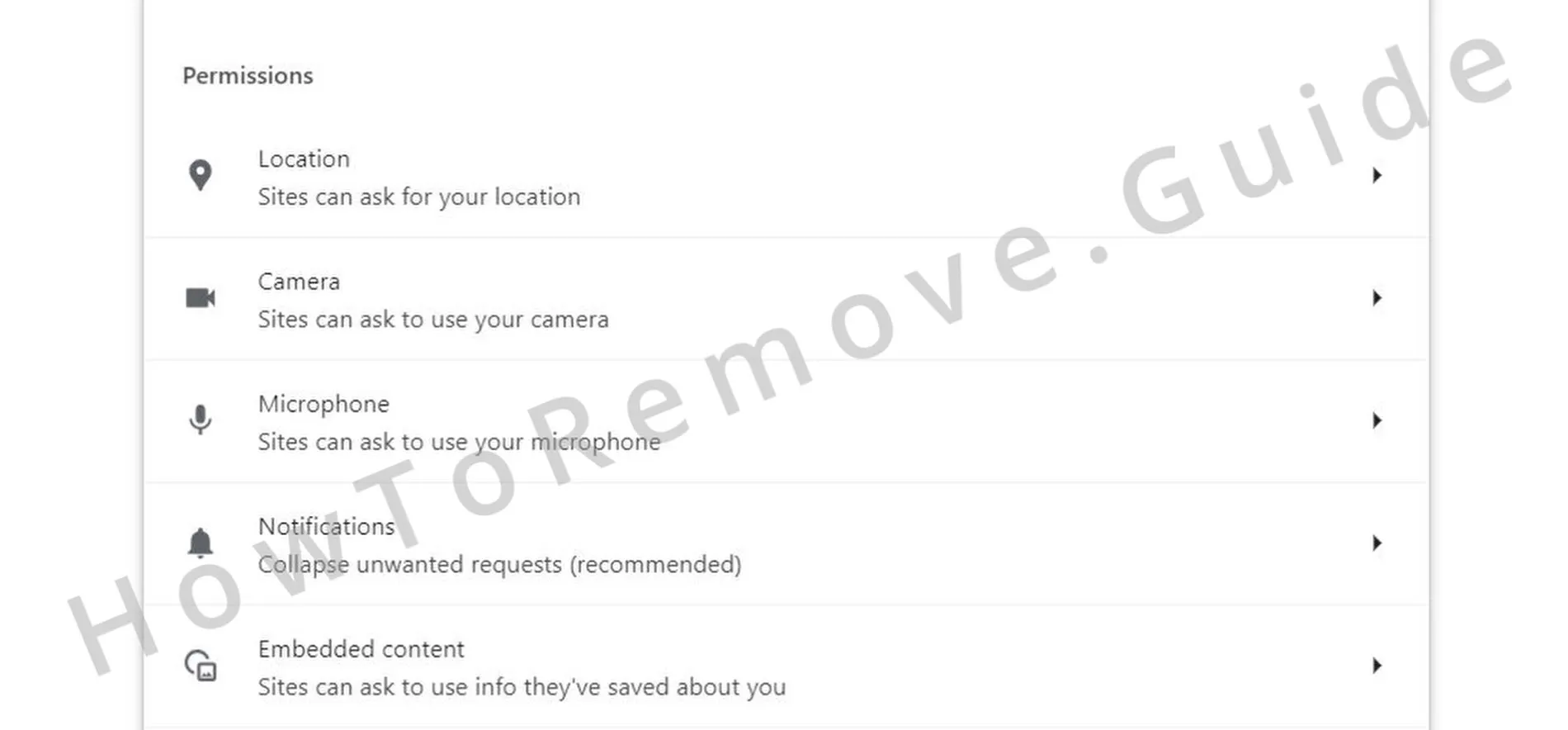 Next, open Privacy and Security and review Site Permissions. Confirm that no unknown sites still have permission for notifications or redirects.
 - 4.4
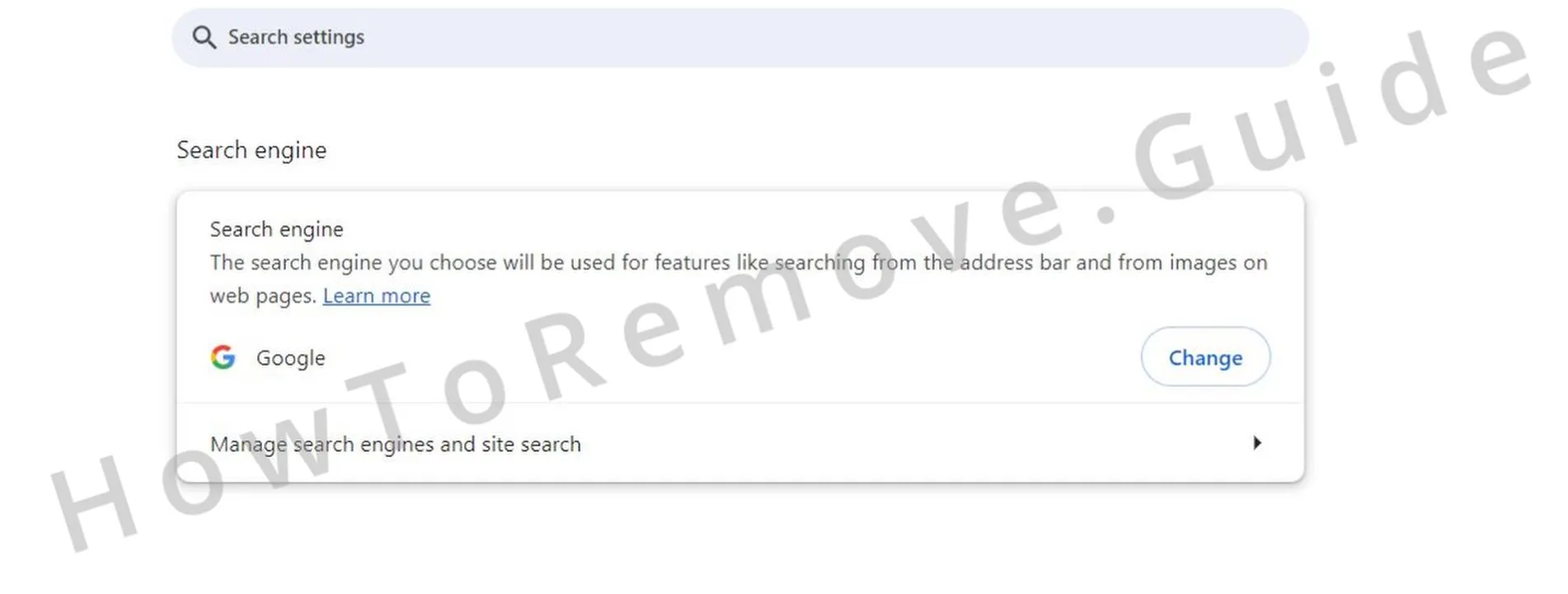 Review your search engine settings as well. If an unfamiliar provider is selected, switch it to a standard option like Google or Bing.
 - 4.5Lastly, review the On Startup and Appearance tabs for unfamiliar URLs and remove them. When you finish, the browser should open normally again.
