

Time out – this is your first major red flag: a zipped “receipt” drops into WhatsApp or email from a familiar name, and opening it on Windows quietly lights the fuse. The campaign is called Sorvepotel, and it doesn’t care about stealing your files or locking your drives; it’s built to spread – fast. Inside the ZIP sits a Windows shortcut (LNK) that silently runs PowerShell, pulls a next-stage payload from an external host (seen: sorvetenopoate.com), then installs a batch script that wedges itself into the Startup folder and phones a command-and-control server for marching orders. If WhatsApp Web is active, Sorvepotel blasts the same malicious ZIP to every contact and group, detonating a storm of spam that often gets accounts suspended. Analysts have also spotted the payload sent via email from convincing-looking addresses. One compromised desktop, similar to Trojan:Win32/Kepavll!rfn and VulnerableDriver:WinNT/Winring0.G, becomes dozens. The playbook is simple, the damage exponential – and the only winning move is to spot the tells before you click.
We tested that SpyHunter successfully removes Sorvepotel* and we recommend using it. It will block Sorvepotel from reinstalling itself and it will make sure your device is clean from any malware.
 Try Free For 7 Days*
Buy now15% OFF if you buy straight without trial.
 OFFER
OFFERSorvepotel Removal Guide
Start with the uncomplicated option: remove Sorvepotel using Windows’ built-in uninstall tools before attempting deeper procedures. This initial pass is quick, low risk, and sometimes resolves the issue outright. Even when it does not fully clean things up, it reduces clutter and makes subsequent detection steps more straightforward and reliable.
Quick Steps to Remove Sorvepotel
- 1.1Prioritizing visibility helps with Sorvepotel, so open the Start Menu, choose Settings (gear icon), and land in the central panel for application management and system preferences where uninstall controls reside.
- 1.2Inside Settings, enter Apps. Here you can review every installed program and adjust the view by name, size, or install date, which is useful when you suspect a recent addition.
- 1.3Because recency often reveals culprits, switch sorting to Installation date. New entries surface at the top, making irregular or unknown programs easier to identify during this pass.
- 1.4Spot something you don’t recognize? Select the item and click Uninstall. Follow the prompts until the routine finishes, allowing the uninstaller to remove associated services and scheduled components where applicable.
- 1.5After the wizard exits, navigate to C:\Users\YourUsername\AppData\Local\Programs. Scan for leftover folders or helper binaries that match earlier entries and note anything that appears related to the removed software.
- 1.6Delete any remaining matching folder manually. Then restart Windows to release file locks and confirm nothing tries to auto-start again from that installation directory.
Restart your PC and confirm whether the unwanted application is gone. If any traces remain, that is common for persistent threats. The next sections focus on unmasking hidden files, stopping processes, and removing persistence so the issue cannot return after a reboot.
SUMMARY:
How to Fully Get Rid of Sorvepotel
Active components can reveal their own storage locations while they are running. If Sorvepotel is currently executing, you can follow file paths, kill processes, and remove scheduled triggers more effectively. Work methodically, confirm each path you touch, and avoid broad deletions outside the items you verify.
1. Preparing for the Sorvepotel Removal
- 1.1
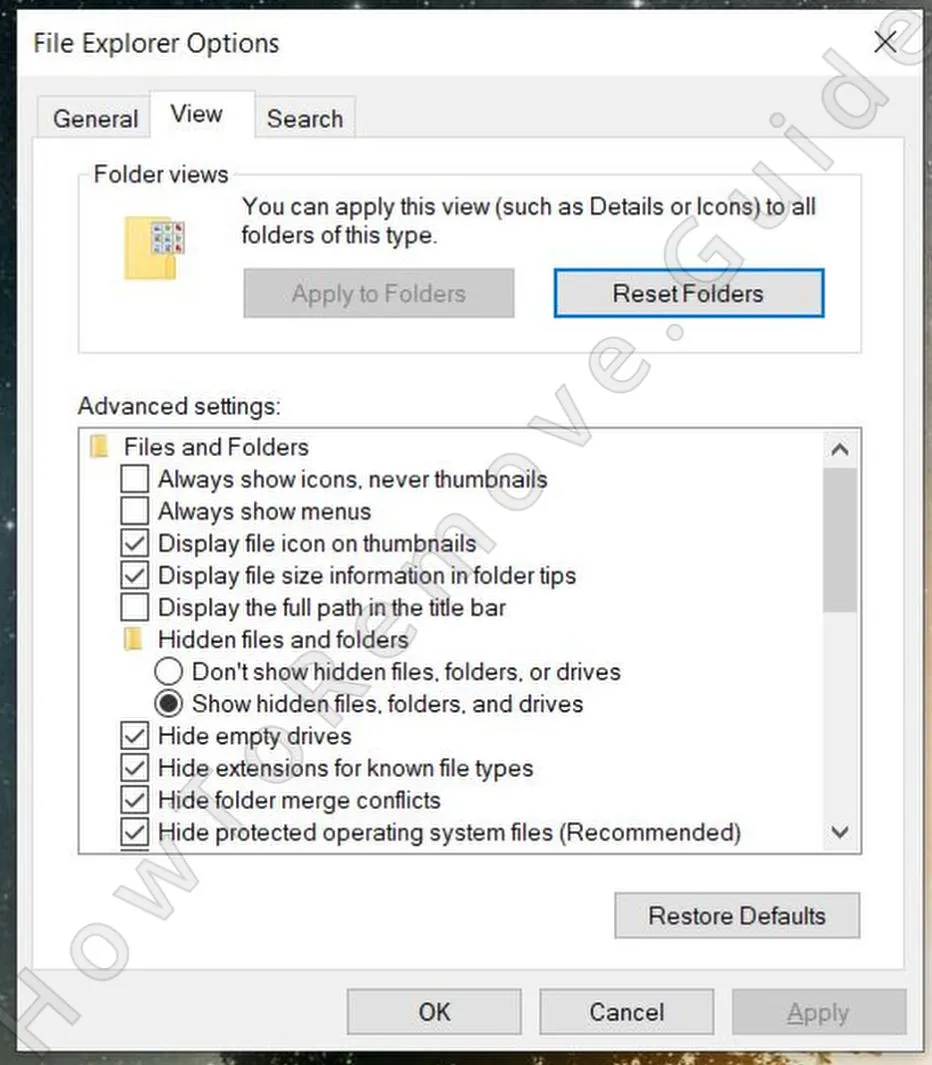 Hidden content often conceals Sorvepotel fragments, so search for Folder Options from the Start Menu, open it, switch to the View tab, and enable Show hidden files, folders, and drives. This reveals directories malware frequently uses within user profiles.
 - 1.2Locked files interrupt progress, which is why installing LockHunter is worthwhile. This free utility integrates into the context menu, shows which process is holding a file, and can unlock and delete stubborn executables or DLLs without requiring registration.
We understand if you don’t want to use third-party software and we generally try to keep our guides entirely “hands-on”. However, in this case, you may need this app to eliminate some malware files which is an essential part of the removal process.
But don’t worry, LockHunter won’t ask for money, doesn’t have ads, and doesn’t even require a registration. You can download and install it in about two minutes.
Remove Sorvepotel Processes From the Task Manager
Killing a visible process is not the end of the job. Sorvepotel often relies on secondary launchers, scheduled tasks, and startup items to reappear. Terminate what is running, remove the on-disk payload, and only then continue to persistence cleanup to keep the system stable through a restart.
2. How to Delete Sorvepotel Processes in the Task Manager
- 2.1To pinpoint the binary responsible for Sorvepotel, press Ctrl + Shift + Esc to open Task Manager. Use this to observe running processes and gauge unusual resource usage patterns.
- 2.2If the compact interface shows, expand it by clicking More details. The full view displays background processes, publishers, and performance columns that assist in recognizing anomalies.
- 2.3
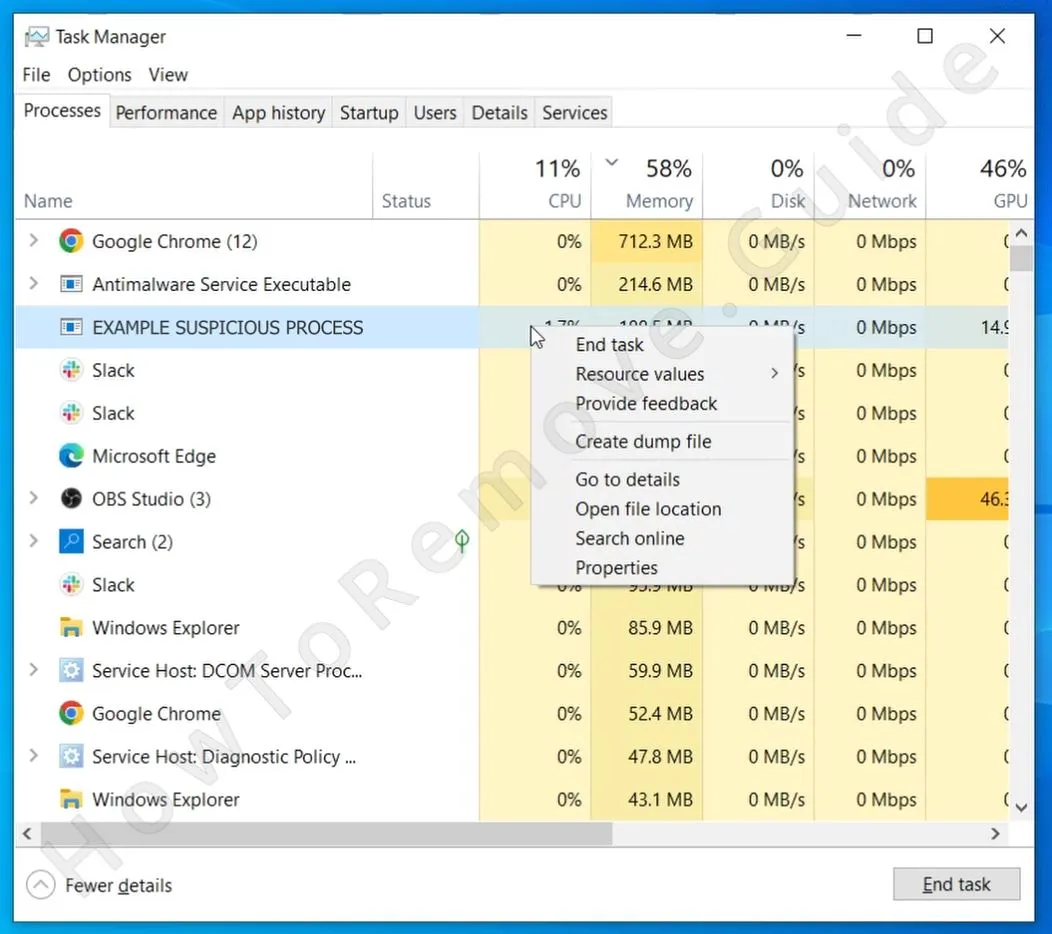 Which column helps expose outliers fastest? Sort by CPU or Memory and review unfamiliar names consuming atypical resources. Malware rarely identifies itself plainly, so do not expect an obvious label that matches the threat.
 - 2.4When a candidate stands out, right-click it and choose Open file location. Jumping to the directory reveals the executable’s path and context, including whether it resides in a questionable user-space folder.
- 2.5Attempt to delete the containing folder immediately. If Windows refuses due to a lock, call LockHunter, pick What’s locking this file?, release the handle, and delete the file and its folder through the tool.
- 2.6After removing the payload on disk, return to Task Manager and End task on the same process. Ending it now prevents an instant respawn and keeps the environment clean for the next cleanup steps.
We tested that SpyHunter successfully removes Sorvepotel* and we recommend using it. It will block Sorvepotel from reinstalling itself and it will make sure your device is clean from any malware.
Try Free For 7 Days*
Buy now15% OFF if you buy straight without trial.
Delete Sorvepotel Virus Files
Relaunch mechanisms often hide in startup folders and user directories. Sorvepotel can also scatter temporary files that help it restart or repair itself. Clearing these locations reduces the number of places from which it can reassert itself after you remove the main executable.
3. How to Get Rid of Sorvepotel Files
- 3.1Inspect the Windows Startup folders – common relaunch points for Sorvepotel: C:\ProgramData\Microsoft\Windows\Start Menu\Programs\Startup and C:\Users\YourUsername\AppData\Roaming\Microsoft\Windows\Start Menu\Programs\Startup. Remove shortcuts or executables you did not intentionally place there.
- 3.2Within those Startup directories, keep desktop.ini intact and delete any other suspicious files. If deletion is blocked because a process holds a handle, use LockHunter to unlock and remove the item safely.
- 3.3Check the main application directories, C:\Program Files and C:\Program Files (x86). Look for newly created, empty, or oddly named folders, especially ones lacking proper vendor names, and remove what you determine is unrelated to trusted software.
- 3.4Continue by examining user-level paths: C:\Users\YourUsername\AppData\Local\, C:\Users\YourUsername\AppData\Local\Programs, and C:\Users\YourUsername\AppData\Roaming\Microsoft\Windows\Start Menu\Programs. These directories frequently house auxiliary launchers, updater stubs, or scripts.
- 3.5
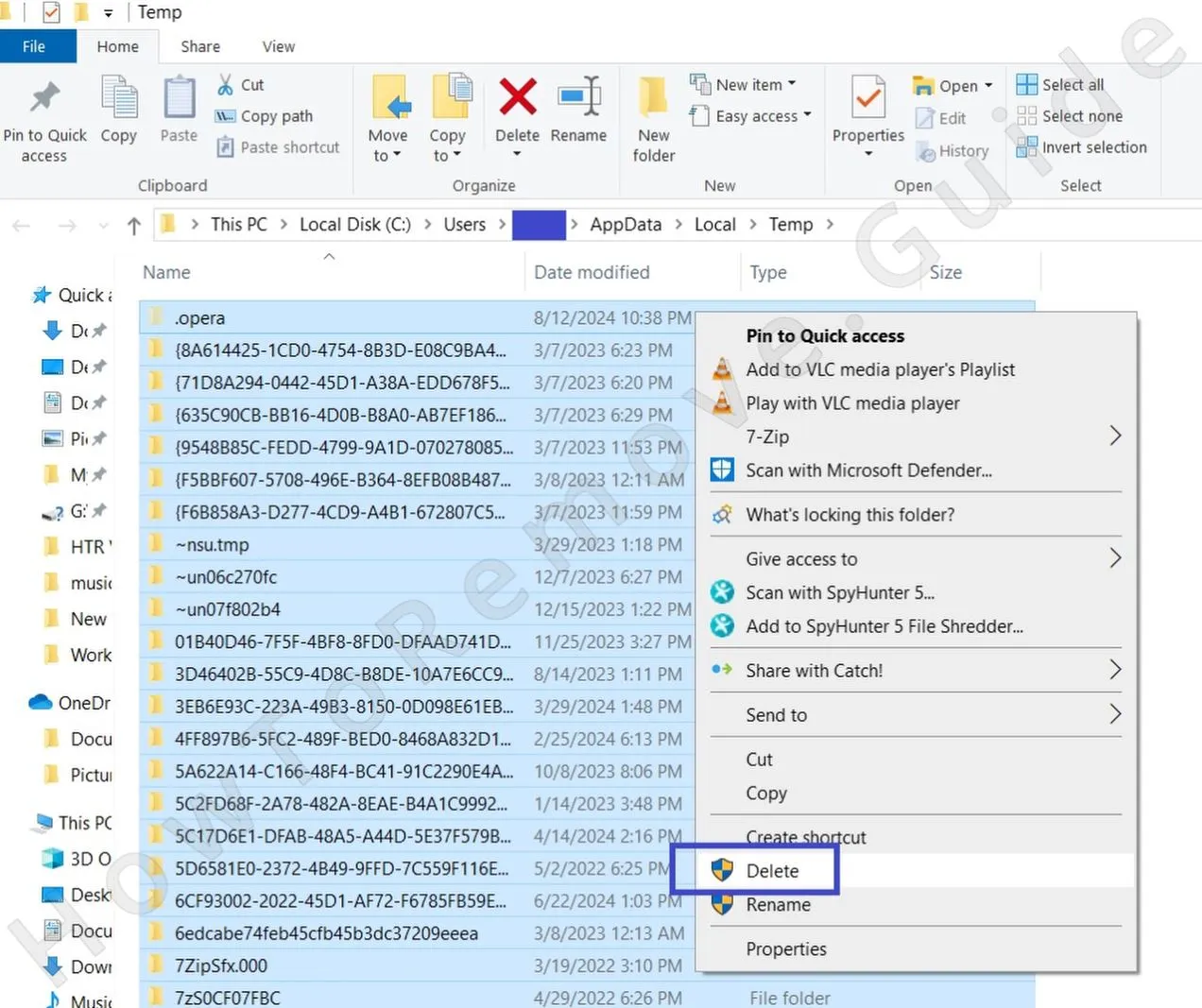 Finally, purge transient content. Go to C:\Users\YourUsername\AppData\Local\Temp, press Ctrl + A to select all, delete the files, and then empty the Recycle Bin so nothing can be restored by a simple revert
Get Rid of Sorvepotel Scheduled Tasks
Persistence commonly uses scheduled jobs to run at logon or at timed intervals. Sorvepotel may rely on a blandly named task to relaunch a script in a profile directory. Deleting both the job and its referenced file closes this loop and prevents silent returns after a reboot.
4. Eliminate Sorvepotel Scheduled Tasks
- 4.1
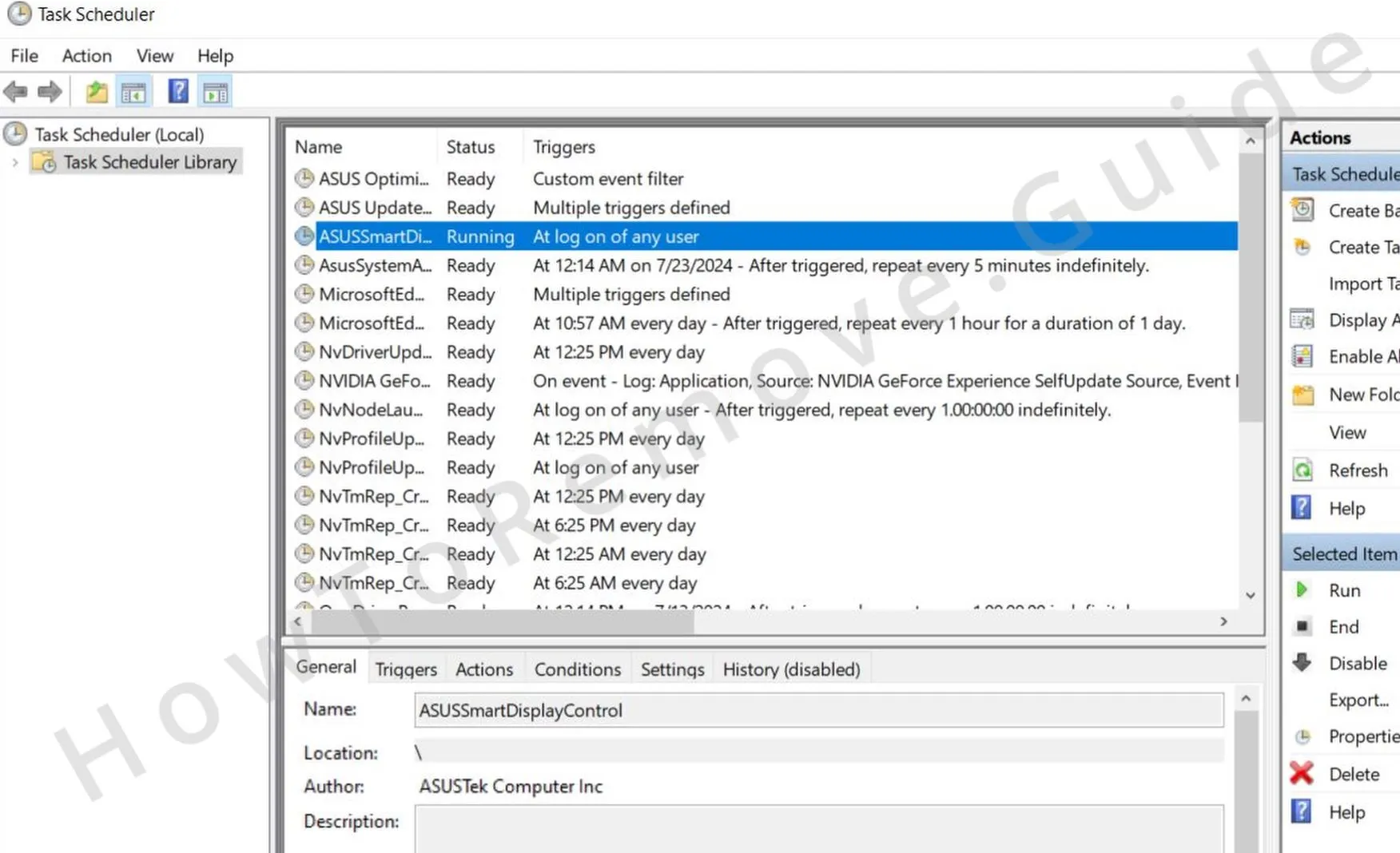 Because scheduled automation can restart Sorvepotel, type Task Scheduler into the Start Menu search and open it. Expand the Task Scheduler Library to list tasks across top-level and vendor-created subfolders.
 - 4.2Double-click a task to open Properties and review its configuration. The Actions tab shows the command or file that will run and any arguments passed at runtime.
- 4.3Treat actions that reference AppData or Roaming with caution, especially when the path points into a user profile. If you do not recognize the invoking application, consider it suspect and continue analyzing.
- 4.4For a task you deem illegitimate, copy the full path from Actions, then delete the task inside Task Scheduler. Removing the entry disables its trigger-based execution.
- 4.5Navigate to the copied path and delete the referenced executable or script. Clearing the payload prevents a later task recreation from having a valid target to launch.
- 4.6Work through every folder under the Task Scheduler Library, including vendor subfolders. Persistence often uses generic names and innocuous descriptions, so a thorough review is important.
Uninstall the Sorvepotel Malware App Through the Windows Registry
Standard uninstallers do not always clean configuration data or autostart values. Sorvepotel can linger through run keys or service entries that call non-existent binaries and eventually rebuild them. Accurate targeting matters here – remove only entries associated with the unwanted behavior.
5. Remove Sorvepotel Through the Registry
- 5.1Because configuration entries can preserve Sоrvepotel persistence, press Win + R, type regedit, and press Enter to open Registry Editor. This tool surfaces startup, policy, and service settings used during boot and logon.
- 5.2Press Ctrl + F and search for the exact name of the app you previously uninstalled. You may uncover orphaned keys left by the uninstaller, including shell or service references.
- 5.3When a match appears, highlight the key in the left pane and delete it. Continue searching with F3 until no further results are found across all loaded hives.
- 5.4Repeat the search for any other suspicious program names you removed earlier while addressing processes and startup items. Removing their leftover entries prevents chained relaunchers from restoring unwanted files.
- 5.5Run one dedicated search for Sorvepotel as well. Even a single value pointing at a user-space path can be enough to re-establish dropped components after a restart.
- 5.6Manually review these frequently abused paths for autostarts and policy entries:
HKEY_CURRENT_USER\Software\Microsoft\Windows\CurrentVersion\Run
HKEY_CURRENT_USER\Software\Microsoft\Windows\CurrentVersion\RunOnce
HKEY_CURRENT_USER\Software\Microsoft\Windows\CurrentVersion\Policies\Explorer\Run
HKEY_LOCAL_MACHINE\Software\Microsoft\Windows\CurrentVersion\Run
HKEY_LOCAL_MACHINE\Software\Microsoft\Windows\CurrentVersion\RunOnce
HKEY_LOCAL_MACHINE\Software\Microsoft\Windows\CurrentVersion\Policies\Explorer\Run
HKEY_LOCAL_MACHINE\Software\Microsoft\Windows\CurrentVersion\RunServices
HKEY_LOCAL_MACHINE\Software\Microsoft\Windows\CurrentVersion\RunServicesOnce
HKEY_LOCAL_MACHINE\Software\Microsoft\Windows\CurrentVersion\RunOnce\Setup
HKEY_LOCAL_MACHINE\SYSTEM\CurrentControlSet\Services - 5.7Within each listed path, examine the right-hand pane for entries pointing to unknown executables or odd directories. Delete the suspicious value only – not the entire key – to avoid disrupting legitimate services or system components.
When you finish these steps, restart Windows. Confirm that startup is normal and that the unwanted behavior no longer appears in your browser or applications. If you still notice issues, run an offline scan with a reputable security suite to check for drivers, repair policy changes, and verify no scheduled tasks or run entries were missed.
