

If you’ve started seeing a strange note inside Chrome that says “Your device is managed by usechrome.com” and you’re on a personal laptop with no company policies, that’s your first red flag. This isn’t normal behavior and it’s almost always linked to a browser hijacker. Usechrome.com itself isn’t an official Google domain – it’s a fake site pretending to be tied to Chrome in order to trick people into downloading or installing from the wrong place. The real Chrome is only available from google.com. What makes Usechrome.com particularly annoying is that it doesn’t just throw ads or redirects at you – it can sneak in browser policies that act like they came from an IT department. Even if you scan your system with AV, the hijacker may stick around. Reinstalling Chrome rarely helps either, since the problem is buried deeper in your system.
We tested that SpyHunter successfully removes Usechrome.com* and we recommend using it. It will block Usechrome.com from reinstalling itself and it will make sure your device is clean from any malware.
 Try Free For 7 Days*
Buy now15% OFF if you buy straight without trial.
 OFFER
OFFERFix Issues Caused by Usechrome.com Hijacker Safely
Hasty fixes often create new problems while leaving the real cause untouched. Approach the cleanup in small, verifiable moves so you can see what changes. Start with the browser surface, then move to system policies only if needed. Patience pays off because Usechrome.com, similar to Pongponger.click and Iadispatcher, often hides inside ordinary settings where rushed clicks miss it.
Quick Steps to Remove Usechrome.com
- 1.1Begin with the fastest wins against Usechrome.com by opening your everyday browser and entering Settings.
In Chrome, click the ⋮ at the top right.
In Firefox, open the ☰ menu in the same corner.
Go to Extensions or Add-ons and review everything. Items you don’t recall installing deserve scrutiny, as impostors frequently borrow trustworthy names. - 1.2Unsure about an entry’s legitimacy? Compare its name, icon, permissions, and description first, then decide. Imposters often differ by a character or two. If anything feels off, press Remove. A quick search of the exact name in quotes usually reveals red flags from users or developers.
- 1.3Because site-level access can drive pop-ups and redirects, open Privacy and security, then Site permissions – expand Advanced if necessary. Inspect permissions for microphone, camera, location, and notifications. Revoke access for sites you don’t recognize authorizing. Silent permissions often sustain unwanted behavior.
- 1.4After trimming unknown sites, fully close the browser and reopen it so updated configs reload. That restart cements your changes and prevents cached scripts from reasserting control. If symptoms continue, deeper layers likely remain; proceed to the policy investigation below.
Often, this quick fix is enough to restore order. But if Usechrome.com is still hanging around, it’s time to dig deeper.
SUMMARY:
| Name | Usechrome.com |
| Type | Browser Hijacker |
| Detection Tool |
Some threats reinstall themselves if you don’t delete their core files. We recommend downloading SpyHunter to remove harmful programs for you. This may save you hours and ensure you don’t harm your system by deleting the wrong files. |
Steps to Get Rid of Usechrome.com Virus
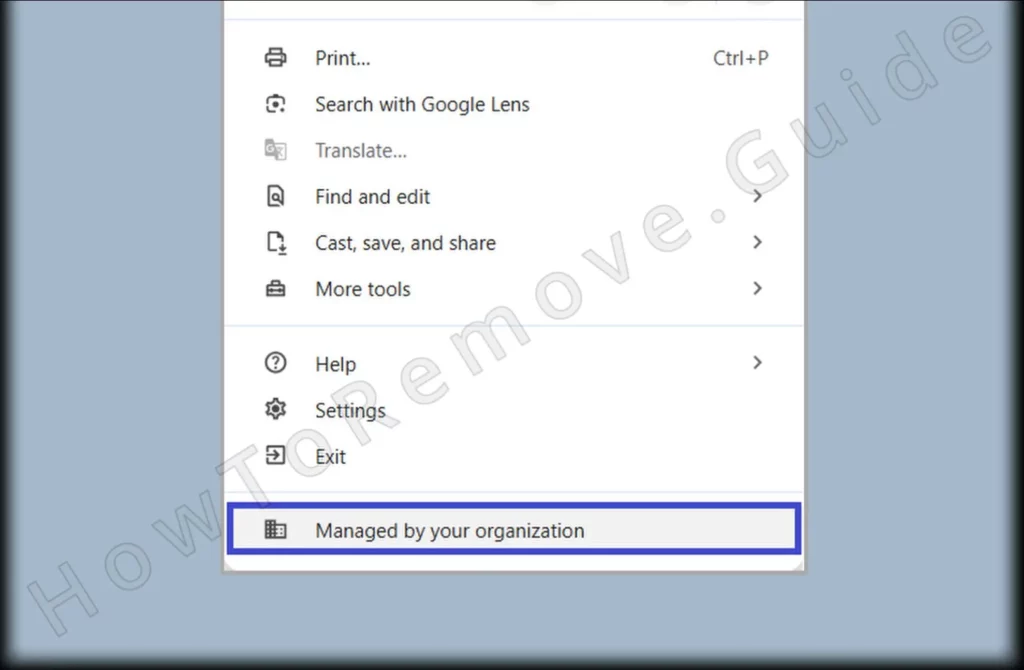
A banner claiming “Managed by your organization” means policy rules are controlling the browser rather than normal preferences. These rules can disable buttons or restore settings at launch. Because Usechrome.com often sets or modifies such policies, removal requires checking what is enforced and where those entries originate.
The “Managed by your organization” notice signals a non-default policy is active. Usechrome.com commonly uses this to lock search, homepage, or extension behavior so typical options seem to “stick” only until the next restart.
1. Identify the Usechrome.com Policies
- 1.1
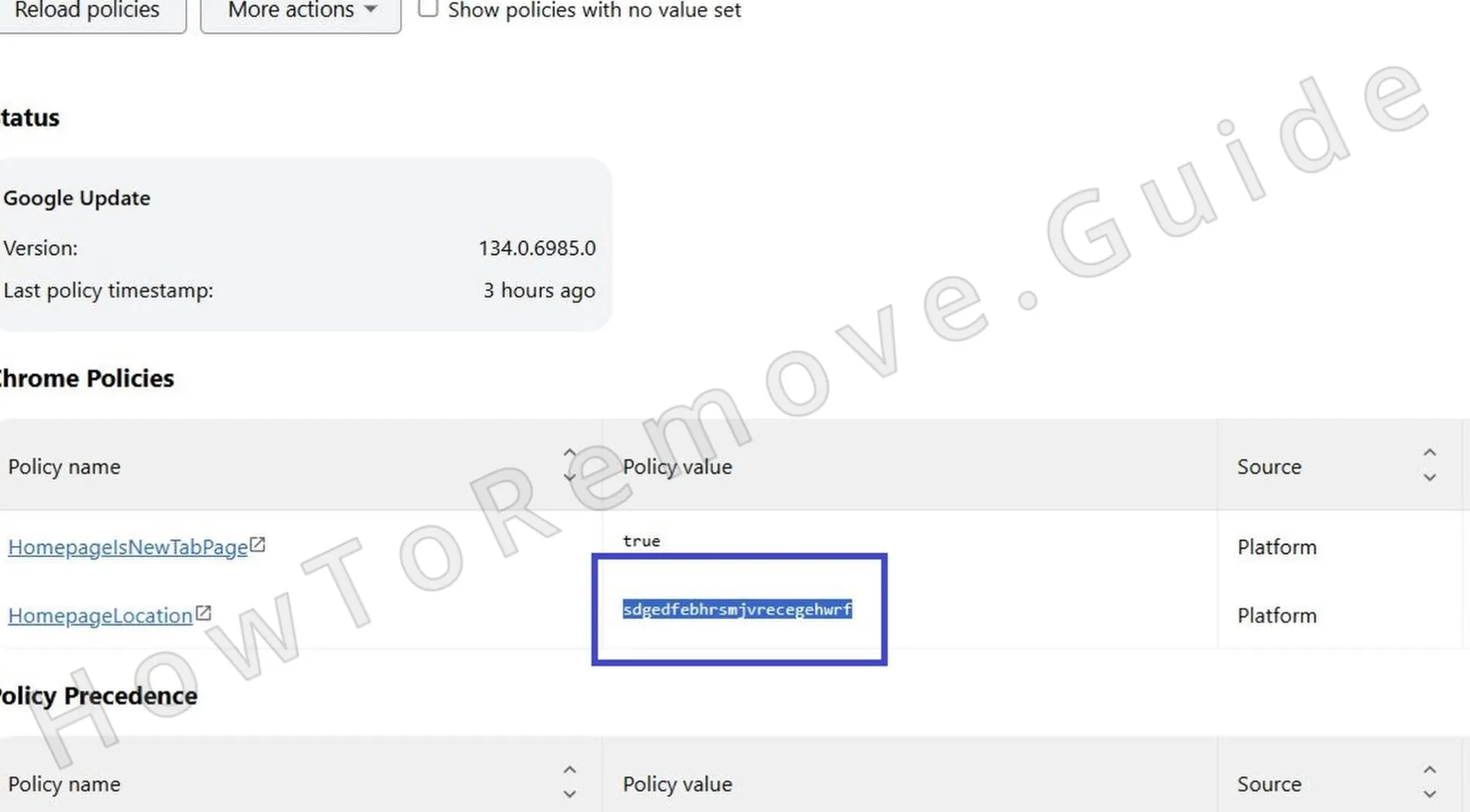 Verification comes first: are policy rules present that might reference Usechrome.com or enforce unusual preferences? In Chrome, open chrome://policy. In Edge, open edge://policy. Wait for the list to populate, then read each item carefully and mark those that don’t fit your usage pattern.
 - 1.2Open suspicious entries and check their values. Strange URLs, unknown extension identifiers, or generic names are typical tells. Capture screenshots or write down exact names and values. Those notes will map to files or registry keys you’ll remove, saving guesswork later.
- 1.3Because rogue extensions often anchor these rules, go to Extensions and enable Developer mode using the top-right toggle. Note the extension IDs and any Install location shown. IDs directly correspond to folder names on disk, which you’ll use to find the actual code.
- 1.4If a policy blocks the Extensions page outright, treat that as evidence and bypass the UI. Use File Explorer to examine files directly so the browser cannot interfere while you work.
- 1.5
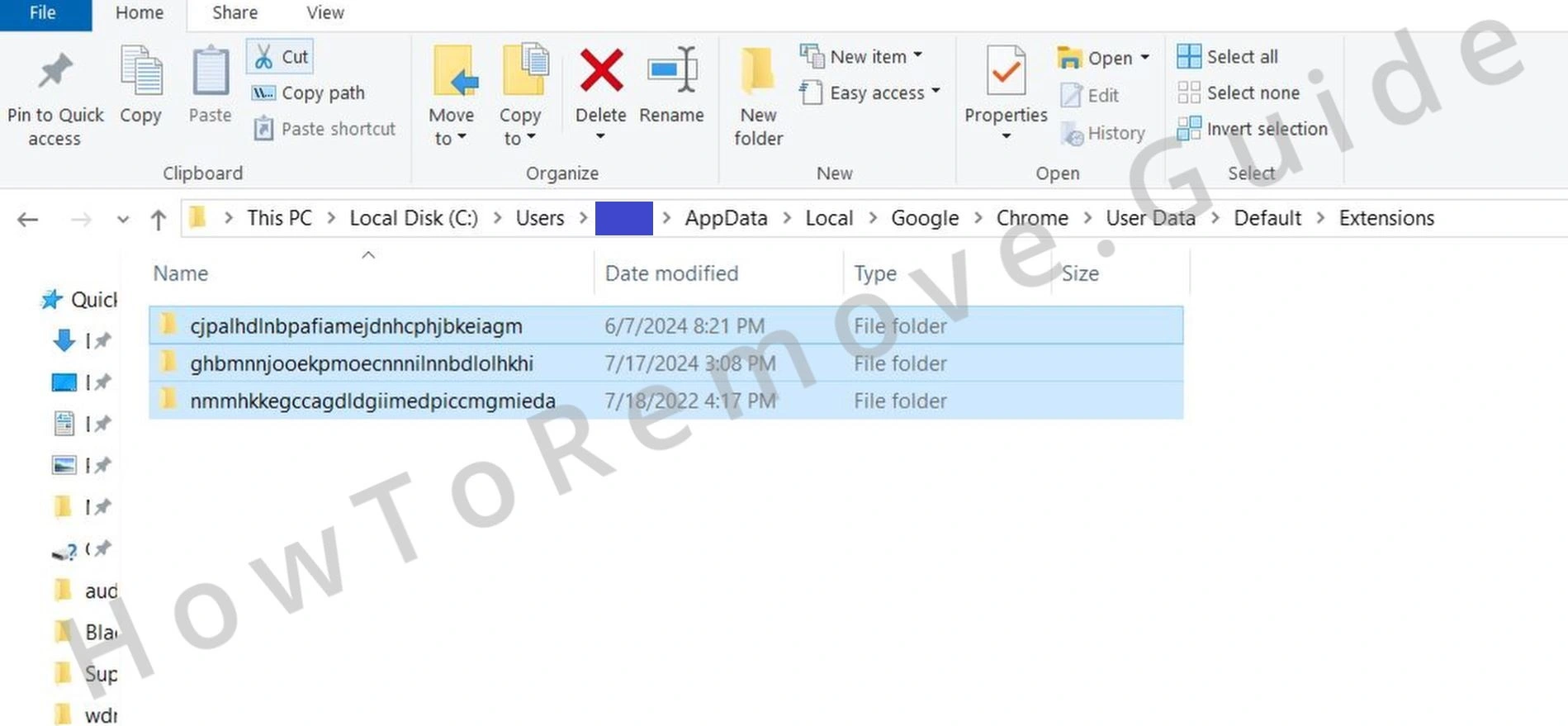 Open File Explorer and navigate to:
C:\Users<Your Username>\AppData\Local\Google\Chrome\User Data\Default\Extensions
Each folder matches an extension’s ID. Cross-check with your list. After confirming a match with the suspect, delete that folder. If uncertain, copy it to a backup location first to provide a rollback path. - 1.6
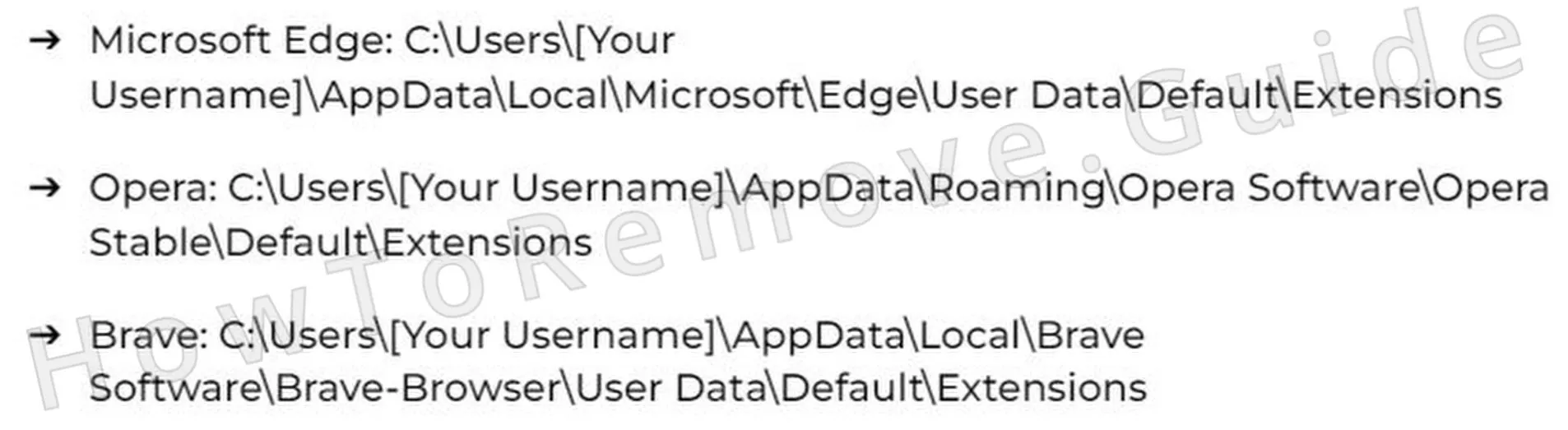 Also inspect other Chromium browsers you use, like Brave or Opera. Open their respective AppData extension directories and remove matching suspicious folders. Cross-browser leftovers can silently reintroduce the same component via sync or shared profiles.
 - 1.7Return to Extensions while still in Developer mode and confirm the malicious entry no longer appears. If it reappears quickly, disable account sync temporarily and look for leftover files or policies still enforcing installation. Persistence means another source remains.
Remove Usechrome.com and Stop Unwanted Browser Policies
Registry-backed policies can outlive removed extensions if the keys remain. Edits in the Windows Registry are powerful but risky, so protect yourself with a backup first. Slow down and verify each change. Precision here prevents damage and ensures the policy cannot respawn later.
2. How to Delete Usechrome.com Policies Through the Registry
- 2.1Safety first to avoid trouble while removing Usechrome.com entries. Launch Registry Editor by pressing Windows + R, typing regedit, and pressing Enter. In File → Export, save a full registry backup to a safe location with today’s date so restoration is straightforward if needed.
- 2.2To find the right keys, press Ctrl + F or use Edit → Find, searching for the suspicious extension ID or policy name you recorded. Delete each exact match, then press F3 to continue searching. Repeat until no further results appear across all registry hives.
- 2.3
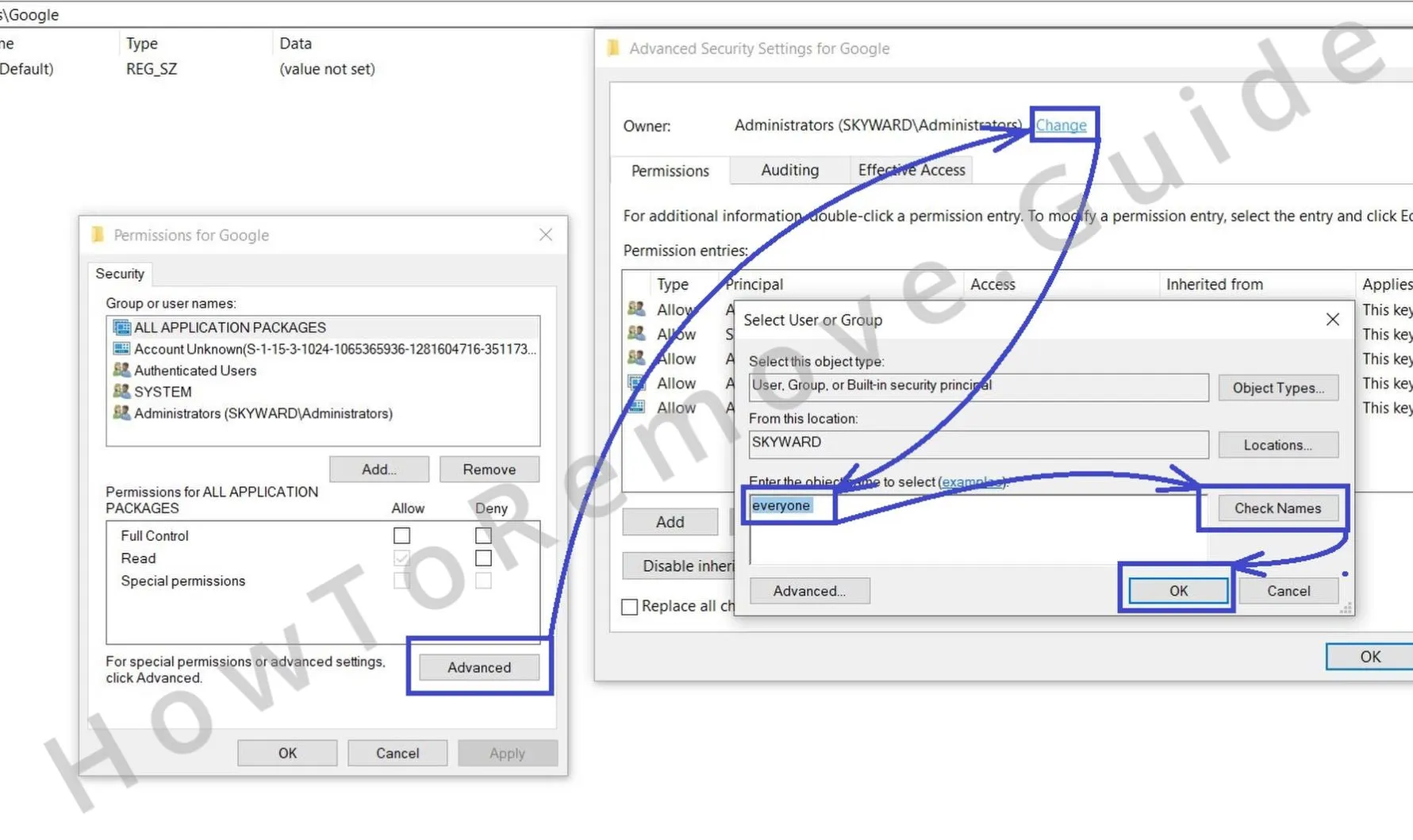 Encounter an “access denied” message? Right-click the key, select Permissions, then Advanced. Click Change next to Owner, type Everyone, choose Check Names, and confirm with OK. Taking ownership unlocks edits so you can adjust inherited permissions and remove the key.
 - 2.4
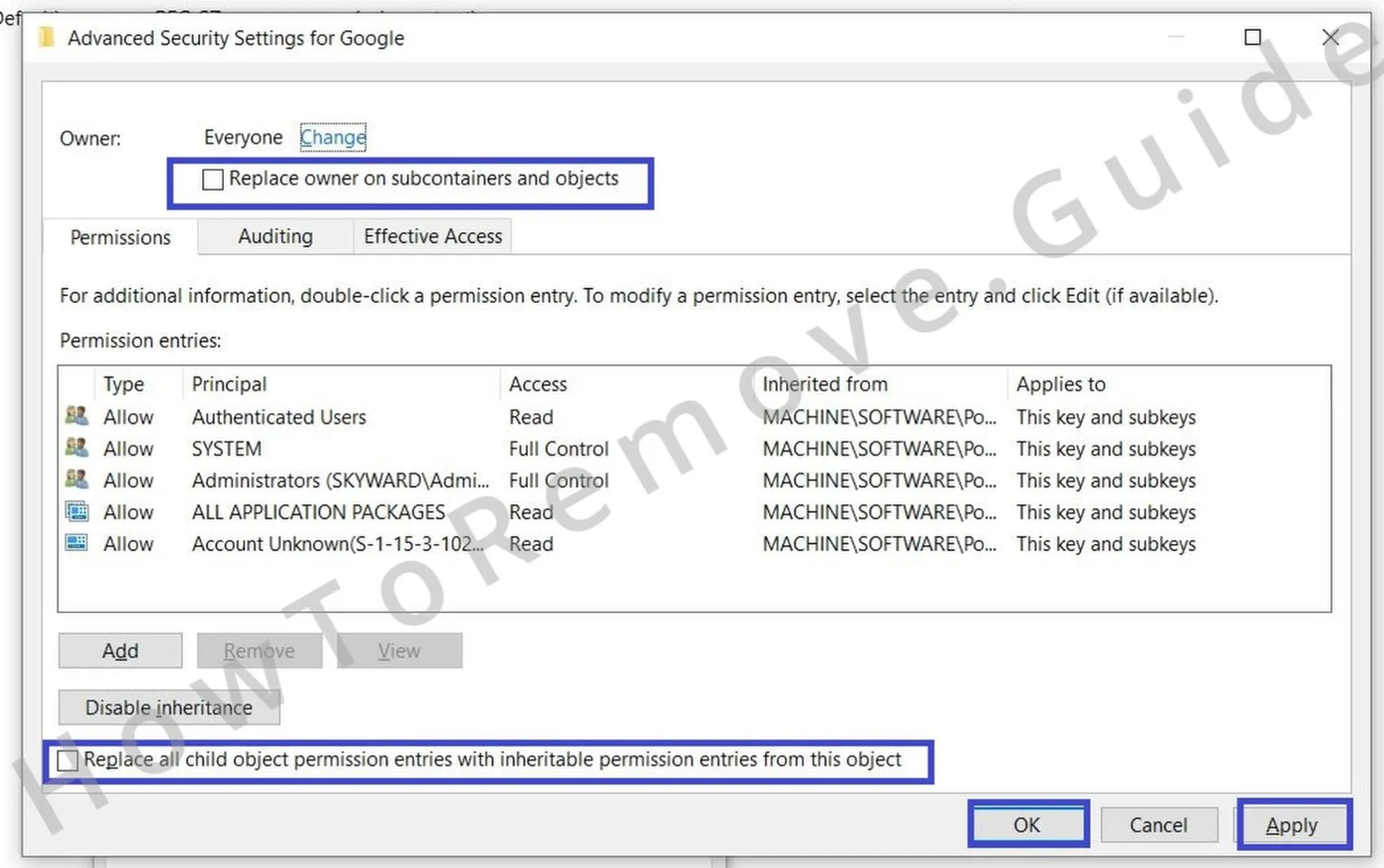 Apply ownership recursively check:
– Replace owner on subcontainers and objects
– Replace all child permission entries with inheritable permissions from this object. Click Apply, then OK. Delete the stubborn key, reboot, and reopen the browser to confirm the “Managed by your organization” notice has cleared.
This ensures the entire policy branch is gone rather than leaving child entries behind to reapply settings.
Erase Usechrome.com Policies That Lock Your Browser Settings
If the browser remains locked down, another policy source may be active. Local templates and helper tools can reassert values after a reboot. Stay methodical. Clearing each source in turn prevents the rules from re-populating invisibly, which is a common tactic used to maintain control.
3. Other Ways to Get Rid of Usechrome.com Policies
- 3.1
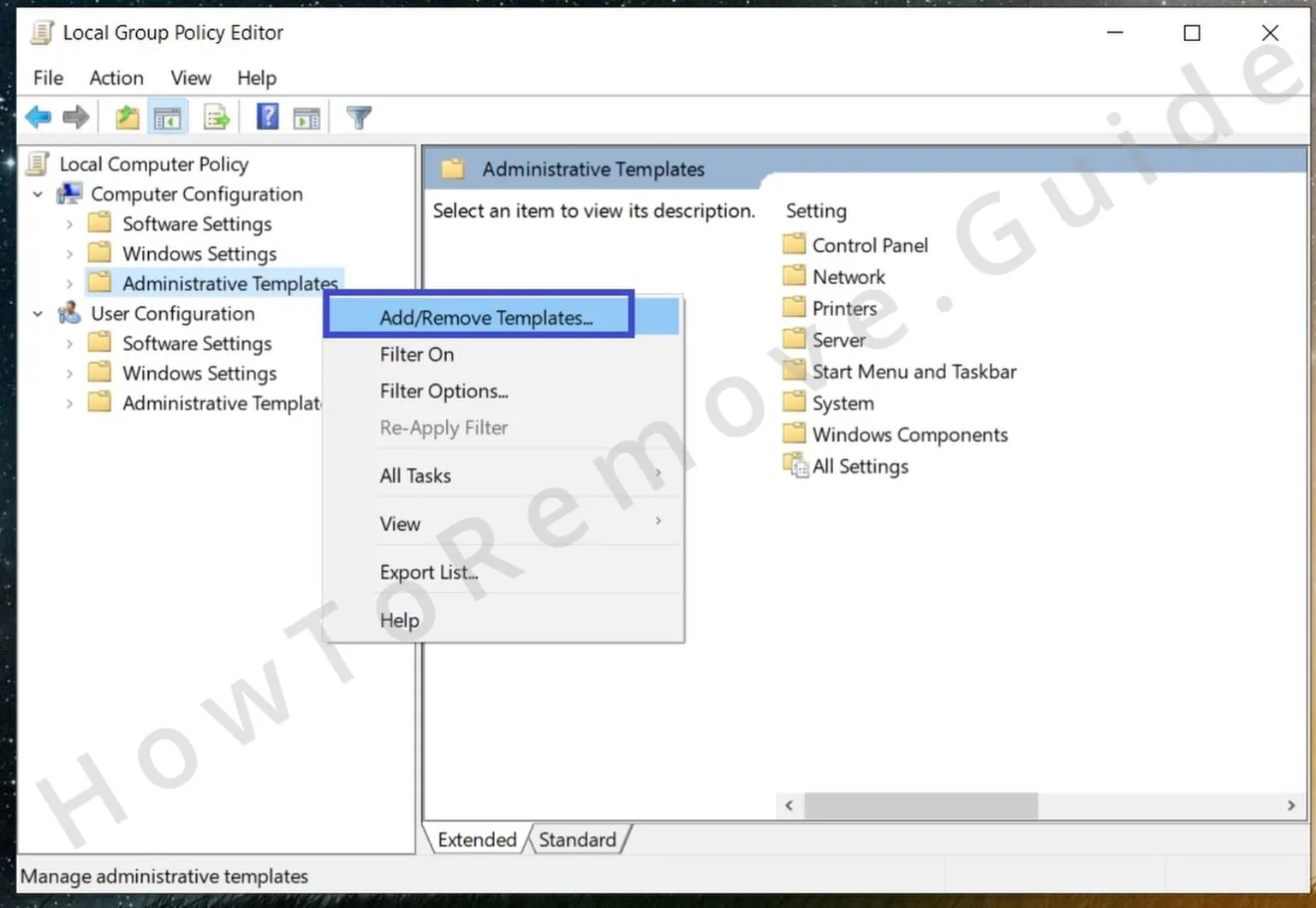 To review local policy files that might affect your browser, open the Group Policy Editor. Press Windows + S, search for Edit group policy, and press Enter. In the left pane, expand Administrative Templates and observe configured settings related to browsers and networking.
 - 3.2
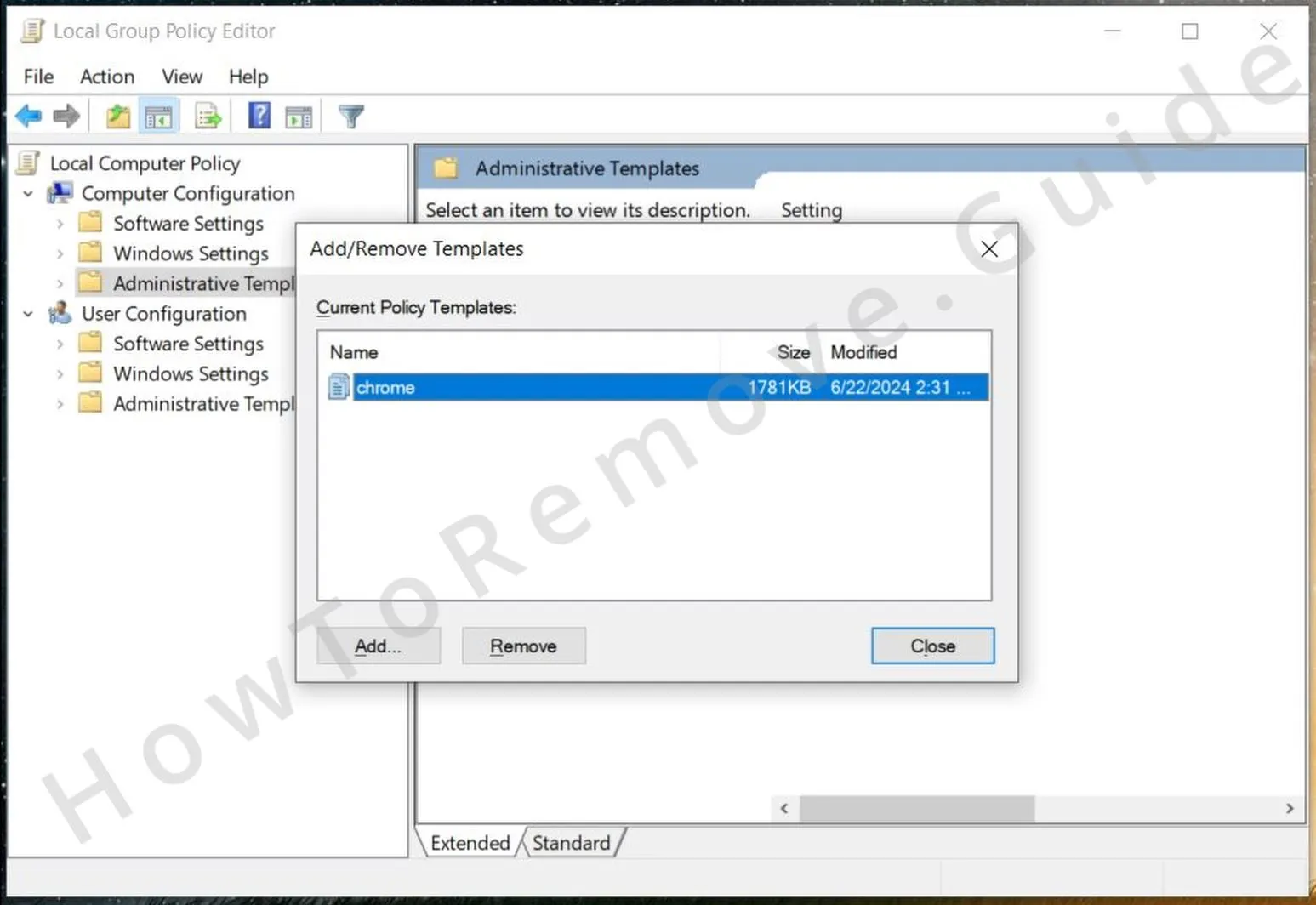 See templates you don’t recognize? Right-click Administrative Templates and choose Add/Remove Templates. Remove anything you did not install. Malicious templates can push registry-based policies repeatedly, undoing changes you make elsewhere at the next refresh cycle.
 - 3.3For Chrome, a reputable Chrome Policy Remover utility can enumerate machine and user scopes for hidden entries. Download a trusted tool, then right-click it and select Run as administrator so it has the rights needed to inspect and clean system-wide policy locations.
- 3.4If SmartScreen intervenes, choose More info → Run anyway only when the source is verified. After the tool completes, restart Windows and recheck both the Registry and Group Policy Editor. Confirm no unwanted policies return and that the browser no longer displays the managed banner.
Remove Usechrome.com from Chrome, Edge, and Similar Browsers
A final pass through browser settings prevents sync or cached data from restoring old behavior. Review extensions, clear stored site data, and reset search and startup preferences. These small confirmations matter because hijackers often persist through harmless-looking defaults and notification allowances.
4. How to Remove Usechrome.com From Your Browser
- 4.1If removed add-ons reappear, sync is probably restoring them alongside Usechrome.com remnants. Open Extensions or Add-ons again, remove suspicious items once more, and consider turning off account sync until everything stays clean after several restarts.
- 4.2
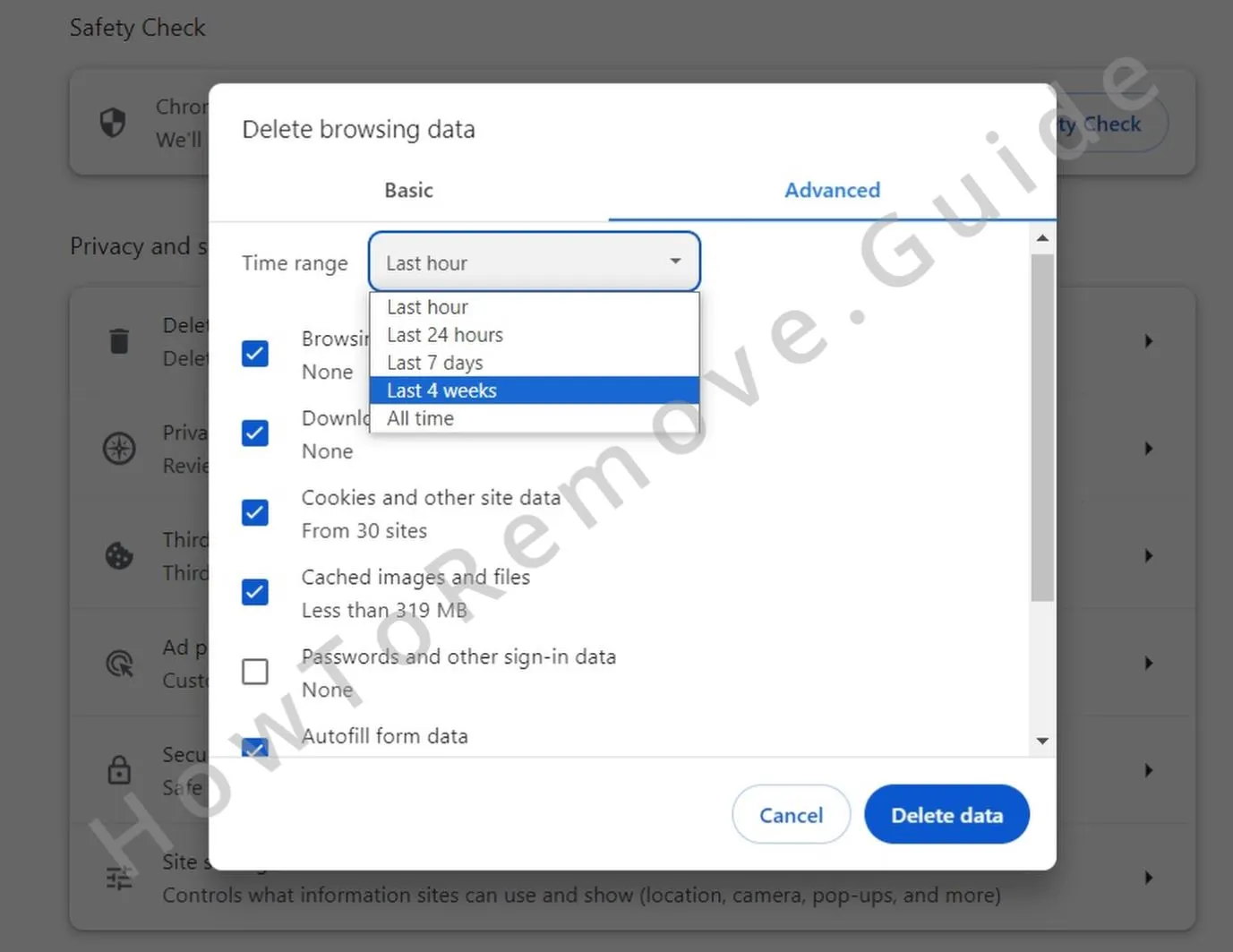 To stop cached scripts from reviving redirects, open Clear browsing data. Set the range to All time, leave Saved passwords unchecked, and clear cookies, cached images and files, and site data. This forces sites to reload without stale rules.
 - 4.3
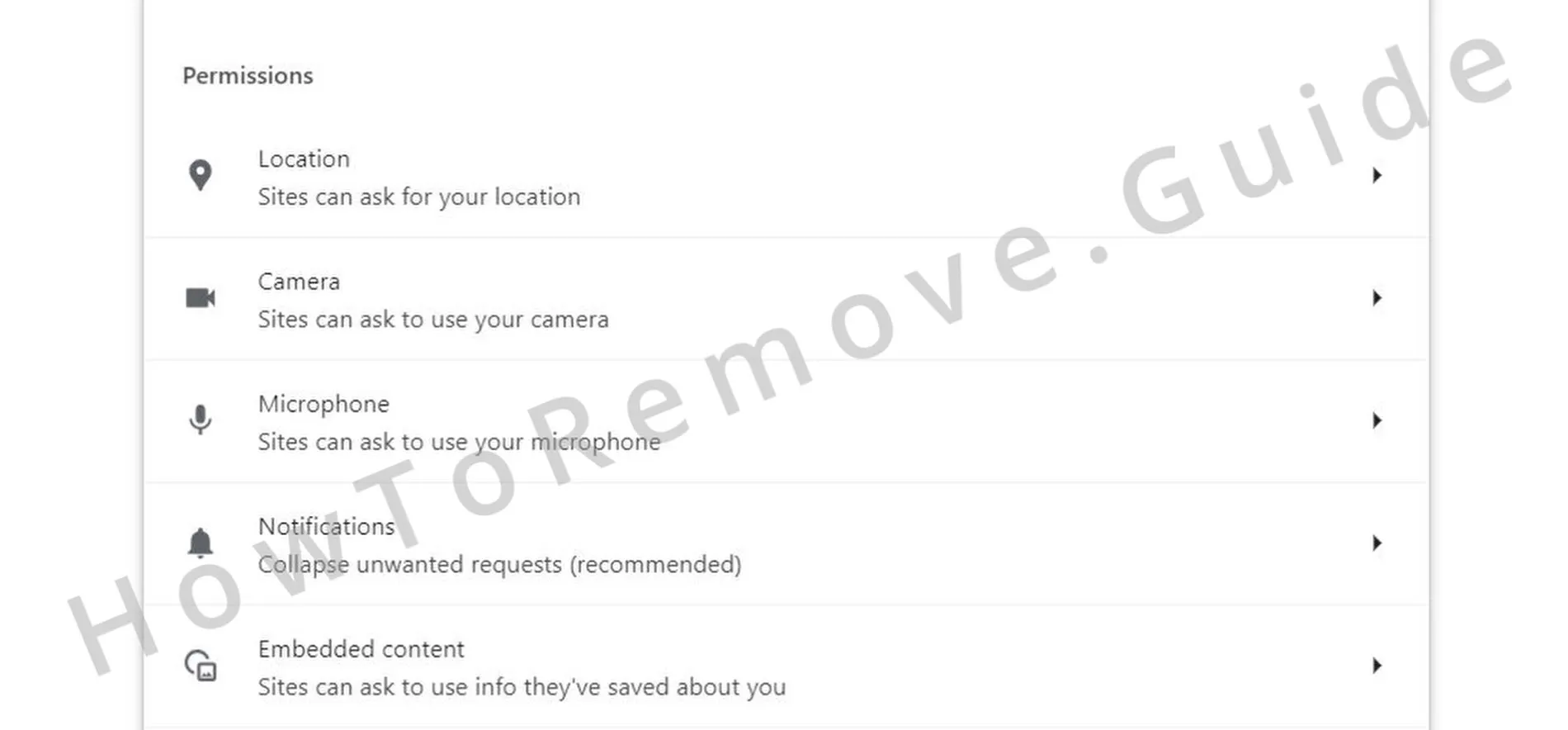 Next, review live permissions. In Privacy and security → Site settings, remove camera, microphone, and notifications permissions for unfamiliar domains. Also inspect Pop-ups and redirects and Background sync if available, which can enable unwanted prompts to return.
 - 4.4
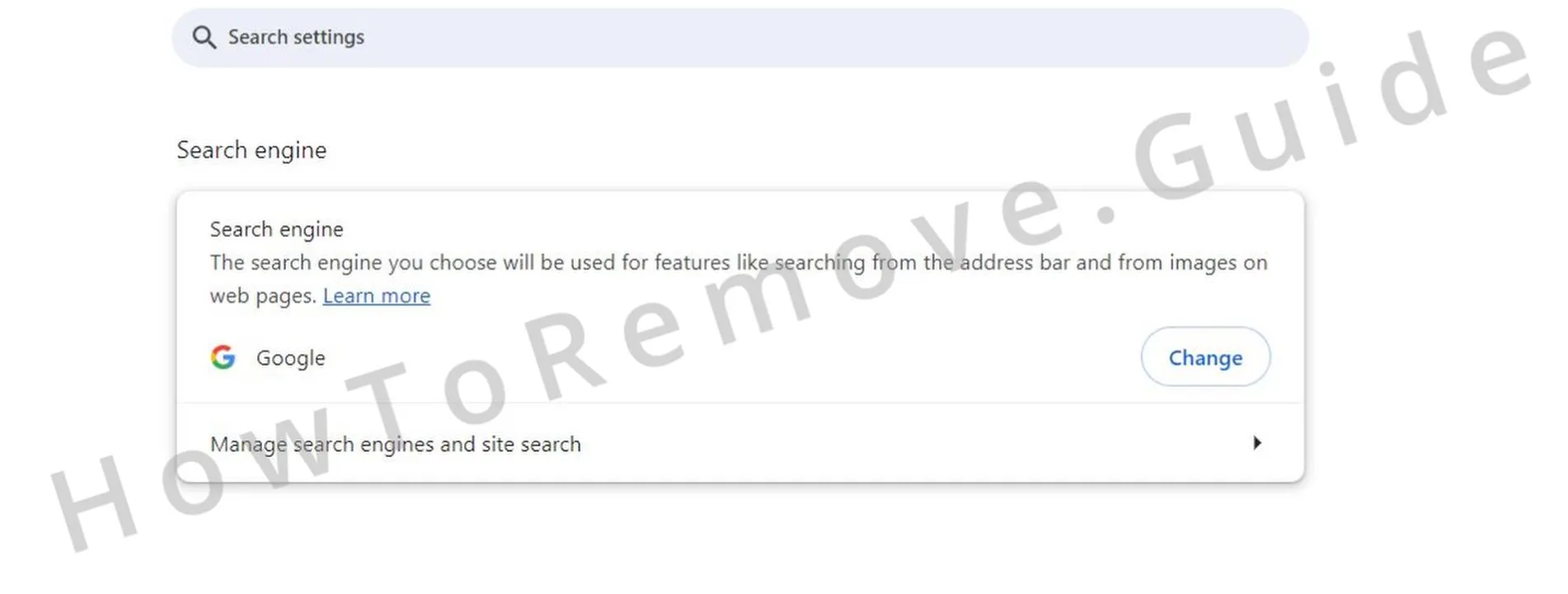 Resetting search closes a common loophole. In Search engine → Manage search engines, delete engines you don’t recognize and set your preferred provider – Google, Bing, or DuckDuckGo – as Default. Ensure no custom engine hijacks new tabs or the address bar.
 - 4.5Finish by stabilizing startup behavior. Open On startup or Appearance, remove any Startup pages or Home page you didn’t add, and choose a trustworthy site or the New Tab page. That prevents forced redirects at launch and helps keep sessions stable.
