

Parking and toll scams have become super common nowadays, and they also seem to be especially effective due to their innocuous and believable premise. Today’s example of such a scam comes from the Sandiego-Park.com site. Like Sctoll.com, Toll Roads Text Scam, and other similar types of fraudulent schemes, the targets of this scam are sent a text message claiming they owe a small parking fee that they must pay soon or they will be charged an additional late fee.
Scams of Sandiego-Park.com‘s type are known to steal personal data and passwords. Install SpyHunter Pro to scan for risks, remove any dangerous trackers, and enable real-time protection.

Try Free For 7 Days*
Buy now15% OFF if you buy straight without trial.
 OFFER
OFFERPaying a couple of dollars to avoid getting charged more doesn’t seem like too big a deal, so most people will take the bait and if they don’t pay attention to the Sandiego-Park.com red flags, they’ll fall into the scam’s trap. That is why I am writing this article – to explain in more detail how this scam works and help you avoid it and other similar ones in the future.
What Is theSandiego-Park.com Scam?
The Sandiego-Park.com scam has a very simple premise but that’s what makes it effective. Most users wouldn’t think much of the text message that tells them they must pay a small parking fee. Even if you are sure that you don’t owe anything, you’ll likely just assume there’s been some sort of mistake that’s not worth your time to sort out, especially since all you need to do is pay a couple of dollars.
However, this line of thinking is exactly what sends you down the rabbit hole of deception that awaits for you should you engage with the Sandiego-Park.com scam site. Here’s exactly how it all works:
Step 1: The First Message
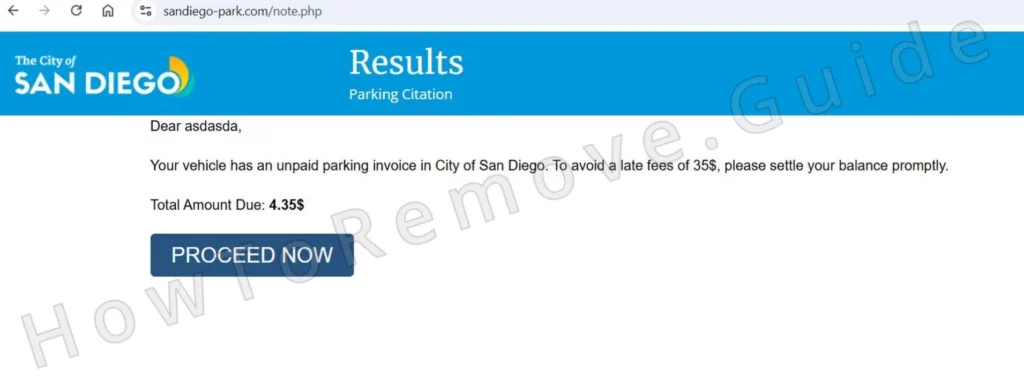
You get a random text. It says something like, “This is a notice from the City of San Diego. Your vehicle has an unpaid parking invoice of $4.35. To avoid a late fee of $35, please settle your balance promptly.” And, of course, there’s a link: Sandiego-Park.com.
Now, $4.35? That’s nothing. And the thought of an extra $35 charge? Ugh. So, you think, “Let me just pay this and move on.” But that’s exactly what they want.
Step 2: The Fake Website
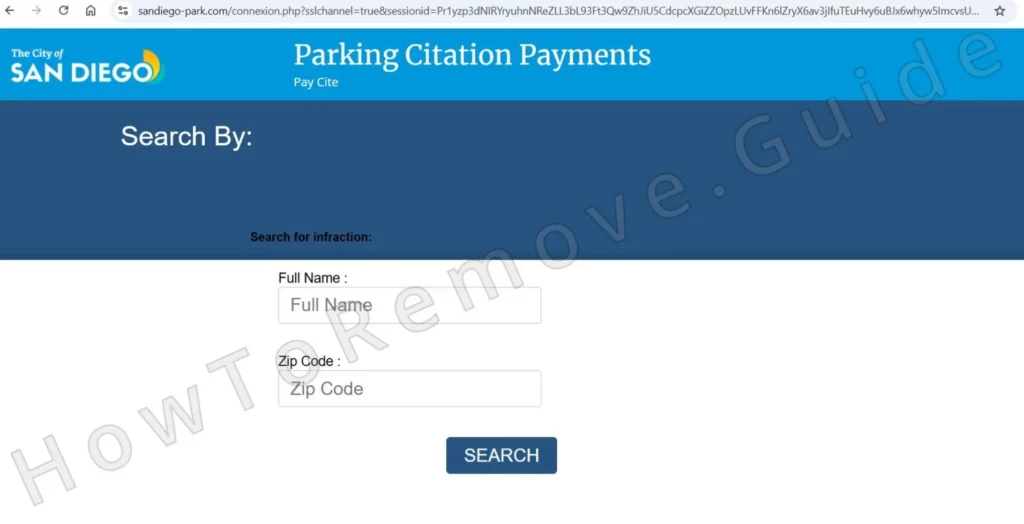
Clicking the link takes you to a website that looks official. There’s even a CAPTCHA that says, “I’m not a robot.” Feels legit, right? Wrong. That’s just part of the trick to make you think the site is secure.
Step 3: The Personal Info Grab
After the CAPTCHA, the site asks for a bunch of personal details:
- Full name
- Birth date
- Primary phone number
- State, city, street address, ZIP code
- Email address
Oh, and guess what? They want your payment information too. Because how else are you supposed to pay that little $4.35 fine, right? But here’s the catch—they’re not using it to pay any fine. They’re using it to steal your identity and your money.
Step 4: Casting a Wide Net
And here’s the kicker: you don’t even need to live in San Diego to get this message. These scammers are blasting this text to tons of people, hoping that someone will fall for it. It’s like they’re tossing a massive fishing net into the ocean, seeing who they can catch.
What to Do If You’ve Fallen for the Sandiego-Park.com Scam
Falling for the Sandiego-Park.com scam can have some pretty unpleasant consequences both in the short and long term. In the short term, you’ve probably already lost some money, and, to be honest, getting that money back is unlikely. In any case, your focus should be on damage control – ensuring that the long-term consequences of getting scammed are mitigated as much as possible. Here’s what you need to do:
1. Call Your Bank or Credit Card Company
If you gave them payment info, contact your bank immediately. Freeze your account and get a new card.
2. Change Your Passwords
If you use the same password across accounts, it’s time to change that—everywhere. Use strong, unique passwords for each account.
3. Monitor Your Accounts
Keep an eye on your bank statements. Any weird charges? Report them ASAP.
4. Scan Your Devices
Run a virus and malware scan. Scammers sometimes sneak malware onto your devices through fake websites.
5. Enable Two-Factor Authentication (2FA)
Add an extra layer of security to your important accounts. Even if scammers have your password, 2FA can stop them.
6. Report It
Let local authorities and the City of San Diego’s Parking Administration know about the scam. The more people report it, the better the chances of stopping it.
Deception Techniques Used by the Sandiego-Park.com Scam
Although the Sandiego-Park.com scam isn’t the most complex or high-effort, it uses some sneaky tricks to lure more victims. It’s important to be aware of its deception methods because they are used by online scammers in general, so learning to recognize them can help you stay safe in the future:
1. Fake Authority Vibes
The text sounds all official—like it’s coming straight from a city office. Throw in a small payment and a bigger penalty, and it’s designed to make you act fast without thinking.
2. The Trusty CAPTCHA
You know that “I’m not a robot” box? Yeah, it’s there to fool you into thinking the site is secure. But it’s just a prop.
3. Asking for Too Much Info
Let’s be real—a legit parking fine payment wouldn’t need your birth date or your email address. That’s a major red flag right there.
4. Creating Urgency
The whole “pay now or else” tone is no accident. Scammers know that if they make it sound urgent, you’re more likely to rush into paying without double-checking.
Sandiego-Park.com Scam Red Flags
The Sandiego-Park.com scammers cast a wide net instead of trying to polish their scheme and make it as believable as possible. Naturally, this means there will be some signs that can tip you off about the true nature of this site. Here are some of the more obvious red flags you should be looking out for:
Suspicious Links
Double-check those URLs. Sandiego-Park.com looks official, but it’s not. Legit websites will have proper domain names, often ending in .gov for government sites.
Generic Messages
No legit parking ticket notice is going to be this vague. They’d include details like your license plate number, the exact date, and location of the violation.
Too Much Personal Info Requested
If a website wants more than your basic info to pay a fine, that’s shady. They’re fishing for details to steal your identity.
Pressure to Pay Immediately
Any message pushing you to act NOW is suspicious. Take a breath and think it through.
Weird Website Behavior
Legit sites don’t make you solve CAPTCHAs just to pay a small fee. Plus, the site might redirect you weirdly or ask for way more info than necessary.
Why Do These Scams Keep Happening?
Simple answer? Because they work. Scammers throw out thousands of messages, and even if just a few people fall for it, they make money. It’s cheap for them to send these texts, and they’re banking on catching someone off guard.
Plus, a lot of these scams come from overseas, making it harder for authorities to shut them down. Regions like Ukraine and the Philippines have been linked to similar scams before. It’s a global problem, and that’s why staying alert is so important.
How to Protect Yourself
Let’s make sure you don’t fall for scams like this one.
- Verify Before You Act: Got a suspicious message? Don’t click the link. Look up the official website or call the company directly.
- Be Skeptical of Urgency: Real companies don’t threaten you into paying instantly.
- Double-Check URLs: One tiny letter off can mean it’s a scam.
- Stay Informed: Scammers are always evolving. Stay updated on new tricks.
Final Thoughts
The Sandiego-Park.com scam is clever, but now you know better. It’s designed to make you panic over a small fine so you hand over your personal info without thinking. But if you pause and look for the red flags, you can protect yourself.
Remember—trust your gut. If something feels off, it probably is. Stay smart, stay alert, and don’t let scammers steal your hard-earned money.

Leave a Reply