

Slubit.com should not be read as a rough new crypto exchange with withdrawal problems. I treat it as a payment trap dressed up to look like a trading site. The account area may look busy, but that surface is doing most of the work. There is no real exchange engine underneath it. The balance on the screen is just a number the scam can use to make the place feel earned and believable.
The useful signal comes when withdrawal stops being a withdrawal and turns into a demand for another payment. The site may call the demand verification or dress it up as some required charge. The label matters less than the timing: real crypto is supposed to come out, and suddenly real crypto has to go in first.
Scams of Slubit.com‘s type are known to steal personal data and passwords. Install SpyHunter Pro to scan for risks, remove any dangerous trackers, and enable real-time protection.

Try Free For 7 Days*
Buy now15% OFF if you buy straight without trial.
 OFFER
OFFEROnce someone pays, the release keeps moving out of reach. Slubit and other similar scams like Tronking and Bitonax can vanish quickly and come back under another name, because the machinery is not a business. It is the same withdrawal wall rebuilt for the next batch of deposits.
IMPORTANT! READ BEFORE PROCEEDING!
Any interaction with Slubit deserves immediate containment, including shared documents, connected wallets, reused passwords, and device changes, especially if the site convinced you to install anything or sign a wallet approval.
Begin with the machine and browser you used; the first step we recommend is using SpyHunter 5 if there is any sign of a suspicious download, redirect, notification permission, or extension linked to the incident.
Fastest Removal Option: Use SpyHunter 5
- 1.1Click here to download and install the anti-malware tool on your PC.
- 1.2
 Start SpyHunter 5, click the Buy button and choose between starting your 7-days free trial or directly purchasing the tool.
If you choose to buy SpyHunter 5 now, you can use our discount code, “HTRG15“, for 15% off.
- 1.3
 Once you activate SpyHunter, click Start Scan Now, select the Full Scan option, and let the tool do its job.
 - 1.4
 Once the scan completes (it could take a while, so have patience), you’ll see all malware and other undesirables listed.
Click Next to review the detections and then click Next again to delete all rogue items.
After SpyHunter 5, it is also wise to harden the accounts around the loss: rotate passwords, revoke wallet permissions, collect evidence, and contact the service or exchange that sent the transfer.
- Move remaining assets to a fresh, clean wallet and revoke any suspicious token approvals linked to the scam touchpoint.
- Change passwords and enable app-based 2FA on email, exchanges, and chat accounts; review active sessions and delete unused API keys.
- Preserve evidence: screenshots, URLs, videos or ads, wallet addresses, TXIDs, and chat logs – keep everything for official reports.
- Notify the sending platform (your exchange or service) with TXIDs and the destination address so they can flag or freeze if possible.
- Report promptly to your national cybercrime unit (e.g., IC3 in the US, Action Fraud in the UK) and to the platform where you saw the promotion.
How We Know Slubit is a Scam
Several details make Slubit stand out as unsafe. The platform gives value too easily, blocks access when money is requested, turns verification into a payment demand, and relies on claims that cannot be checked outside its own pages.
Code-created profit illusion
A promo code that instantly creates a valuable balance is a manipulation device. Real exchanges do not manufacture spendable crypto inside a new account without a funding source that can be verified independently.
Deposit-before-release demand
A request to send Bitcoin or another asset before receiving a payout is not a routine withdrawal step. It is the same logic used in advance-fee fraud: the victim pays to access money that was never actually available.
Deepfake trust signal
Videos featuring well-known figures can be fabricated with synthetic voice, edited clips, or impersonator accounts. The emotional effect is powerful because the victim recognizes the face before checking whether the endorsement exists.
Invisible payout record
When a crypto transfer is real, support should be able to provide a transaction hash or another traceable record. Evasive answers, vague “processing” messages, and changing explanations point away from a functioning withdrawal system.
Badges without verification
A page can display compliance seals and registration language in seconds. The useful question is whether those claims match an official regulator, a real entity, and a domain history that supports the story.
Same scam, new doorway
Fraud crews often move from one domain to another while preserving the same template. When the appearance, bonus process, and withdrawal obstacle repeat under a fresh name, the brand is just a disposable cover.
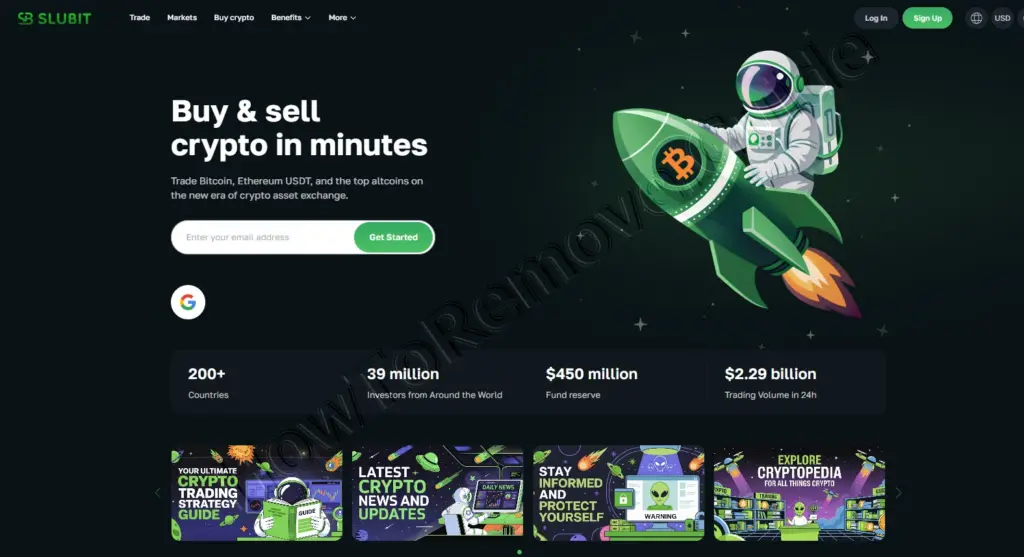
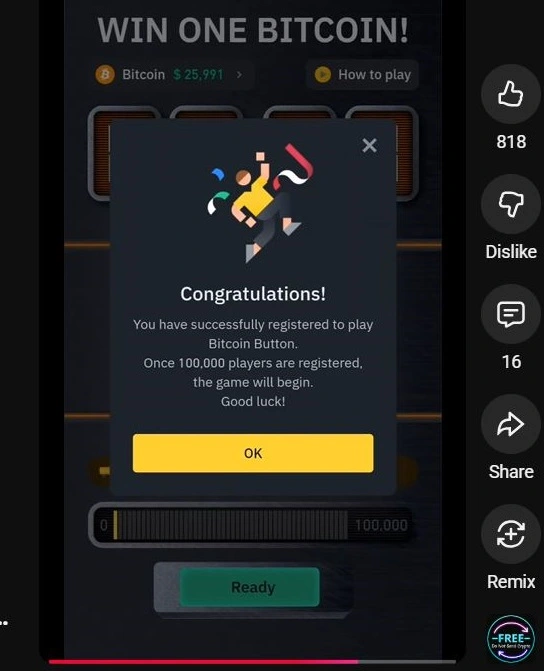
How the Slubit Scam Deception Funnel Works
The deception is effective because it converts doubt into momentum. A visitor is not asked to evaluate the whole platform; they are nudged through one small step after another until sending crypto feels like the natural final action.
The funnel often begins with a promotional hook, continues through quick account creation, and then shows an artificial balance that seems close enough to reach. Withdrawal requests trigger the real trap: a required deposit, verification charge, or fee that must be paid outside the supposed balance.
Promo hooks and influencer codes
A victim may arrive from an ad, a comment thread, a messenger link, or a video pretending to reveal a private opportunity. The pitch is usually wrapped in urgency so that curiosity becomes action before the user checks the company name or address history.
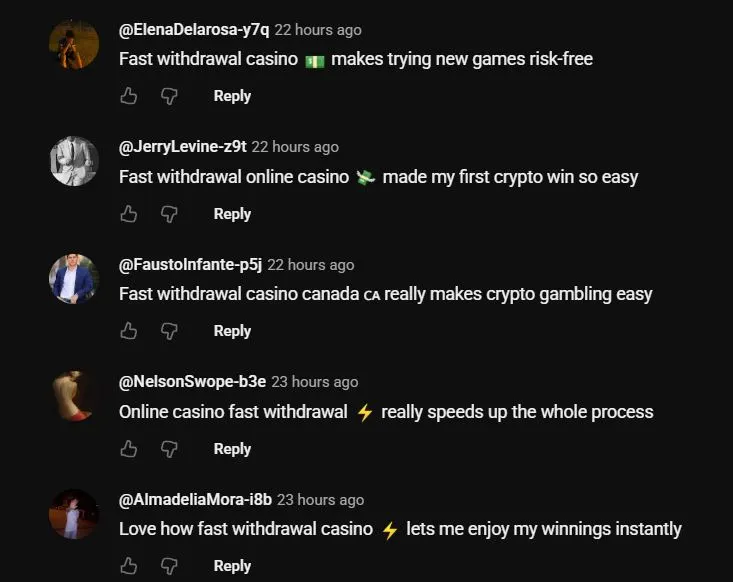
Casino skin and bonus theater
Some versions use casino-style excitement, reward banners, and bonus wording to make the page feel active. Others use exchange dashboards and price movement. Both approaches serve the same purpose: make the visitor believe money is already waiting.
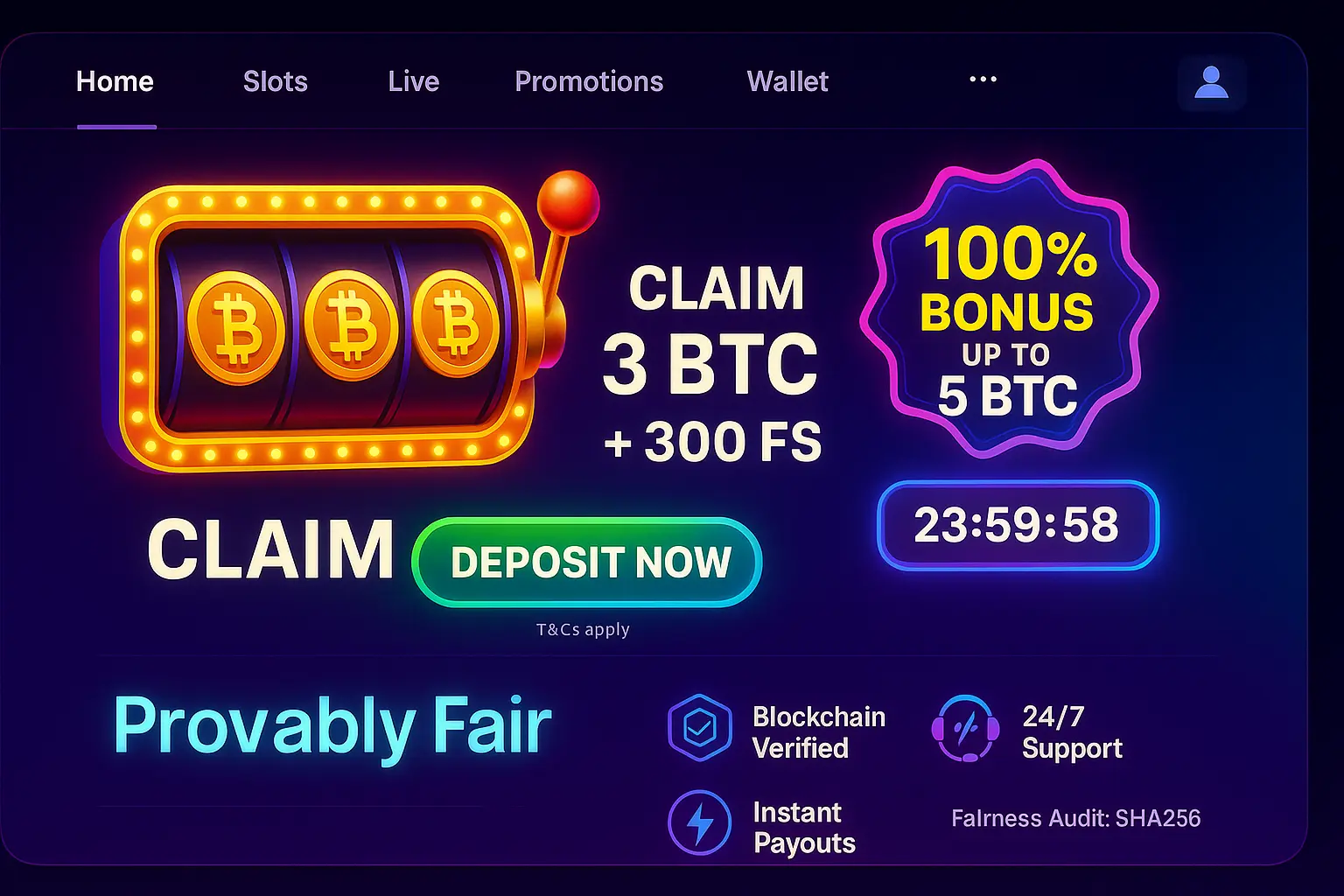
Inflated balances, then the gate
Once the account is created, the platform may show a credit, simulated trades, or “won” funds. That display is psychologically useful because people work harder to recover something they believe they already possess.
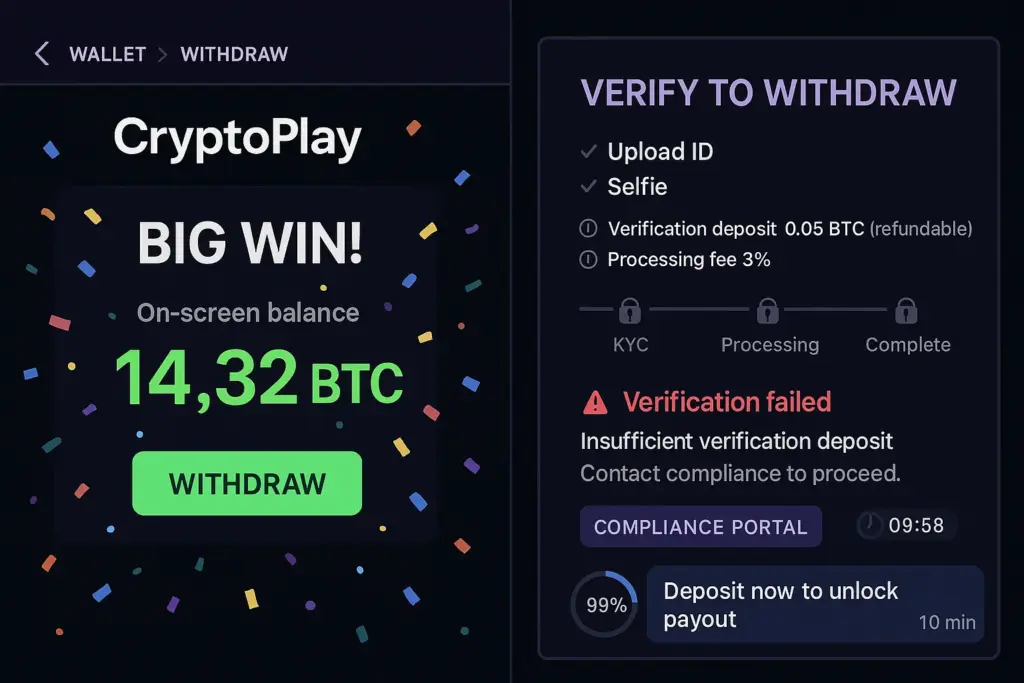
Fee-gates and KYC harvest
The withdrawal block is dressed up as KYC, anti-money-laundering review, tax settlement, or wallet activation. None of those labels changes the red flag: the user is asked to send irreversible funds to get access to a screen balance.

Stalling, rebrands, and “recovery” bait
If the victim pushes back, the support script may become more reassuring and more complicated at the same time. Delays, apologies, and new requirements keep attention focused on compliance until the operators stop answering or change domains.
Staying safe from crypto scams like Slubit
Prevention begins with refusing to let urgency set the pace. Any surprise balance, celebrity promotion, or private code should be paused, checked independently, and treated as hostile until the platform proves legitimacy outside its own website.
Never pay to withdraw
Never treat a withdrawal fee that must be paid as a separate crypto transfer as normal. Real services can deduct known costs or show transparent account charges; they do not demand outside deposits before releasing supposed profits.
Verify endorsements at the source
Verify every endorsement through the person’s official website, verified social accounts, or trusted media coverage. A reposted video, a logo, or a comment saying “it worked” is not evidence, because all of those can be manufactured cheaply.
Navigate with your own bookmarks
Use saved bookmarks for exchanges and wallet services, and avoid links from ads or direct messages. Copycat pages are built to exploit tiny differences in domains, so manual navigation is safer than following a promoted shortcut.
Check regulator registers & warnings
Regulatory language should be checked in public databases. If Slubit lists a license that points nowhere, borrows another company’s identity, or omits a verifiable operator, the safest decision is not to register or deposit.
Segregate risk with burner wallets
Limit exposure by keeping your main wallet separate from unknown sites. A temporary wallet with minimal funds prevents one bad connection, malicious approval, or misleading prompt from endangering long-term holdings.
Harden accounts with 2FA & hygiene
Secure surrounding accounts with unique credentials, app-based 2FA, and session reviews. Check email rules, exchange API keys, and connected devices, since scammers may look for secondary access after the initial payment.
Revoke approvals & migrate
Review any wallet that touched Slubit as though its permissions are suspect. Revoke approvals using reputable tools, move remaining assets to a fresh wallet, and avoid approving new prompts while still on the affected device.
Protect identity & slow down
Personal documents should be treated as sensitive evidence, not as a small side issue. If a fake KYC page received your ID, watch for account-opening attempts, consider local fraud protections, and be careful with anyone contacting you about the case.
Where to report Slubit-style crypto scams (by country)
Create a clear evidence file before pages disappear. Include screenshots, URLs, wallet addresses, transaction IDs, usernames, emails, advertisements, and chat transcripts, then report the incident to your exchange, the hosting platform, and cybercrime or financial-fraud authorities.
Click here to report the scam in your country
| Country / Agency | URL | Category / Use-case | Phone/Email |
| Australia – Crime Stoppers | https://www.crimestoppers.com.au | Anonymous tips about crime | 1800 333 000 |
| Australia – National Anti-Scam Center (Scamwatch) | https://www.scamwatch.gov.au/report-a-scam | General scams; phishing; texts/emails | |
| Australia – Police Assistance Line (non-emergency) | https://www.police.gov.au | Local police report | 131 444 |
| Australia – ReportCyber (ACSC) | https://www.cyber.gov.au/report | Cybercrime (hacks, fraud, extortion) | |
| Canada – Canadian Anti-Fraud Center (CAFC) | https://www.antifraudcentre-centreantifraude.ca/report-signalez-eng.htm | General scams incl. phone/text/email | |
| France – DGCCRF (SignalConso) | https://signal.conso.gouv.fr | Consumer scams/deceptive practices | |
| France – PHAROS – Internet-Signalement | https://www.internet-signalement.gouv.fr | Online content & cybercrime reports | |
| Germany – Bundeskriminalamt / Local Police | https://www.polizei.de/Polizei/DE/Home/home_node.html | Report online fraud | |
| Germany – Weißer Ring – Victim Support | https://weisser-ring.de | Victim support | 116 006 |
| India – DoT Helpline (Sanchar Saathi) | https://sancharsaathi.gov.in | Fraudulent telecom/SIM related | 155260 |
| India – National Consumer Helpline | https://consumerhelpline.gov.in | Consumer scams | 1800-11-4000 / 1915 |
| India – National Cyber Crime Reporting Portal | https://cybercrime.gov.in | Cybercrime incl. online fraud | 1930 |
| Japan – Consumer Affairs Agency (CAA) | https://www.caa.go.jp/policies/policy/consumer_policy/caution/cybercrime/ | Consumer scams | |
| Japan – National Police Agency – Cybercrime | https://www.npa.go.jp/bureau/cyber/ | Cybercrime reporting | |
| Mexico – Guardia Nacional (National Guard) | https://www.gob.mx/gn | Cybercrime reporting | |
| Mexico – Instituto Federal de Telecomunicaciones (IFT) | https://www.ift.org.mx | Telecom/online services scams | |
| Mexico – PROFECO | https://www.gob.mx/profeco | Consumer fraud & ecommerce | |
| Netherlands – AFM – Report investment fraud | https://www.afm.nl/en/consumenten/themas/beleggen/misleiding-misbruik | Investment/crypto | |
| Netherlands – Fraudehelpdesk | https://www.fraudehelpdesk.nl/melden | General scams (incl. phishing/SMS) | 088-7867372 |
| Netherlands – Politie – Meldpunt Internetoplichting | https://www.politie.nl/themas/internetoplichting.html | Online shopping fraud | |
| New Zealand – CERT NZ | https://www.cert.govt.nz/individuals/report-an-issue/ | Phishing, identity scams | |
| New Zealand – Department of Internal Affairs – Spam | https://www.dia.govt.nz/Spam-Contact-Us | Email/SMS spam | [email protected] |
| New Zealand – IDCARE | https://www.idcare.org | Victim support (identity compromise) | 0800 121 068 |
| New Zealand – Netsafe – Report | https://www.netsafe.org.nz/report/ | Online harms & scams | |
| New Zealand – New Zealand Police (non-emergency) | https://www.police.govt.nz/use-105 | Report fraud/online crime | 105 |
| Nigeria – Economic & Financial Crimes Commission (EFCC) | https://www.efcc.gov.ng | Financial scams incl. crypto/investment | [email protected] |
| Nigeria – Nigeria Police Special Fraud Unit (SFU) | https://www.specialfraudunit.org.ng | Serious fraud | Voice/SMS: 0708 227 6895; WhatsApp: 0812 760 9914 |
| Poland – CERT Polska (CERT.PL) | https://cert.pl/en/report/ | Cyber incidents & phishing | |
| Poland – Dyzurnet.pl | https://dyzurnet.pl | Illegal online content (esp. child protection) | |
| Poland – Polish Police (Policja) | https://www.policja.pl | Report scams to police | |
| Singapore – Anti-Scam Centre / Anti-Scam Helpline | https://www.scamalert.sg | General scams; texts; calls | 1800-722-6688 |
| Singapore – Monetary Authority of Singapore (MAS) | https://www.mas.gov.sg/investor-alert-list | Investment/crypto checks | |
| Singapore – Singapore Police Force | https://www.police.gov.sg/iwitness | Police report (cybercrime) | |
| South Africa – Cybersecurity Hub (CSIRT) | https://www.cybersecurityhub.gov.za | Cyber incidents incl. scams | |
| South Africa – South African Fraud Prevention Service (SAFPS) | https://www.safps.org.za | Identity fraud support | 011-867-2234 |
| South Africa – South African Police Service (SAPS) | https://www.saps.gov.za | Police report (cybercrime unit) | |
| South Korea – Korea Communications Commission (KCC) | https://www.kcc.go.kr | Telecom-related fraud | |
| South Korea – Korea Internet & Security Agency (KISA) | https://www.kisa.or.kr | Phishing, online harms | |
| South Korea – Korean National Police Agency – Cyber Bureau | https://ecrm.cyber.go.kr | Cybercrime reporting | |
| Spain – INCIBE – Oficina de Seguridad del Internauta (OSI) | https://www.osi.es/es/reporte | Cybersecurity & online fraud | |
| Spain – Policía Nacional / Guardia Civil | https://www.policia.es | Report scams to police | |
| Sweden – Crime Victim Authority (Brottsoffermyndigheten) | https://www.brottsoffermyndigheten.se | Victim support & compensation | 090–70 82 00 |
| Sweden – Polisen (Swedish Police) | https://polisen.se | Report fraud/cybercrime | 114 14 (non-emergency); 112 (emergency) |
| Sweden – Swedish Consumer Agency (Konsumentverket) | https://www.konsumentverket.se | Unfair business practices | |
| United Arab Emirates – Abu Dhabi Police – Aman Service | https://www.adpolice.gov.ae | Cybercrime tips/reporting | SMS 2828; 800 2626 |
| United Arab Emirates – Dubai Police – eCrime | https://www.dubaipolice.gov.ae | Cybercrime reporting | 04 606 1600 |
| United Arab Emirates – Ministry of Interior – Cyber Crime Dept. | https://www.moi.gov.ae | Cybercrime incl. online scams | |
| United Arab Emirates – Telecommunications Regulatory Authority (TRA) / TDRA | https://www.tra.gov.ae | Telecom-related scams/phishing | |
| United Kingdom – Action Fraud (NFIB) | https://www.actionfraud.police.uk | General scams & cybercrime (non-emergency) | 0300 123 2040 |
| United Kingdom – Citizens Advice Consumer Service | https://www.citizensadvice.org.uk/consumer/get-more-help/if-you-need-more-help-about-a-consumer-issue/ | Consumer problems & scam guidance | 0808 223 1133 |
| United Kingdom – Financial Conduct Authority (FCA) | https://www.fca.org.uk/consumers/report-scam-us | Investment/crypto & financial services | |
| United Kingdom – National Cyber Security Centre (NCSC) | https://www.ncsc.gov.uk/collection/phishing-scams | Phishing emails & suspicious websites | |
| United Kingdom – Stop Scams UK ‘159’ | https://stopscamsuk.org.uk/159 | Banking APP fraud (direct to your bank) | 159 |
| United States – AARP Fraud Watch Network Helpline | https://www.aarp.org/money/scams-fraud/ | Victim support | 833-372-8311 |
| United States – Better Business Bureau – Scam Tracker | https://www.bbb.org/scamtracker | Business/marketplace scams | |
| United States – FBI Internet Crime Complaint Center (IC3) | https://www.ic3.gov | Internet crime incl. investment/crypto | |
| United States – Federal Trade Commission – ReportFraud | https://reportfraud.ftc.gov | General scams, phishing, texts/emails | 1-877-382-4357 |
| United States – National Center for Disaster Fraud | https://www.justice.gov/disaster-fraud | Disaster-related scams | (866) 720-5721 |
| United States – SEC Tips & Complaints | https://www.sec.gov/tcr | Investment & securities/crypto-asset offerings |
