

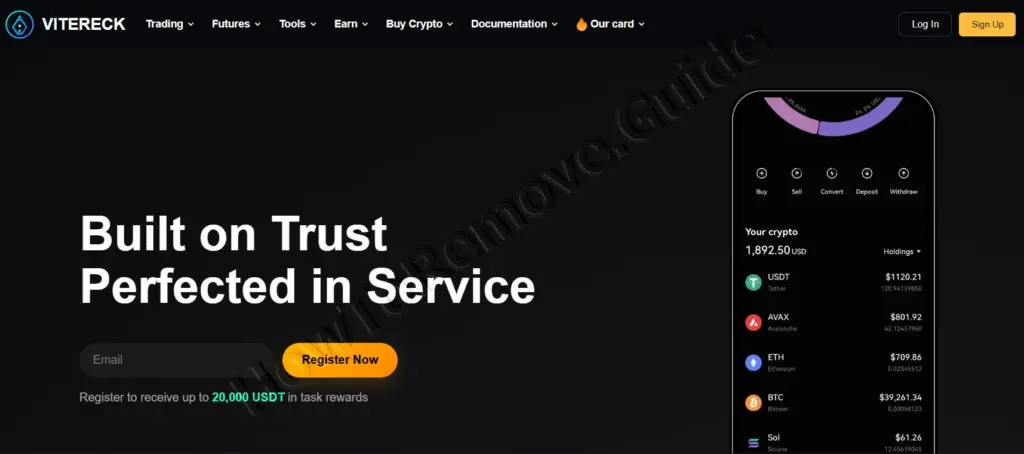
If you recently came across Vitereck.com – a flashy crypto trading site – I warn you to stop before depositing anything.
This site may look like a real trading platform, but it is actually a clone scam built for the sole purpose of stealing your cryptocurrency. Like Velriqo, Selviorex, and many other recycled fraud sites, it copies the look of a legitimate trading platform, shows fabricated balances, and dangles registration bonuses, promo codes, or celebrity-style endorsements to gain your trust.
Scams of Vitereck.com‘s type are known to steal personal data and passwords. Install SpyHunter Pro to scan for risks, remove any dangerous trackers, and enable real-time protection.

Try Free For 7 Days*
Buy now15% OFF if you buy straight without trial.
 OFFER
OFFERBut should you sign up and deposit any real crypto to trade with it, the trap closes, and you are left with no way of regaining what you’ve deposited. The supposed “tech support” of the site is nowhere to be found, and any crypto you’ve supposedly earned on the platform cannot be withdrawn unless you deposit more of your own.
In other words, any Bitcoin or other crypto sent to Vitereck goes straight to the scammers and is effectively unrecoverable. When the site gets exposed, the operators usually abandon the domain, launch the same template elsewhere, and start hunting new victims again under another name within days of exposure.
IMPORTANT! READ BEFORE PROCEEDING!
Handing over personal details, sending crypto, or even logging into Vitereck can expose more than a single payment. If you also installed an app, browser extension, or “verification” file connected to this scheme, assume your device and accounts may now be at risk.
Where that has happened, the first move we strongly recommend is using SpyHunter 5 to check the device for hidden threats and reduce the chance of follow-up account abuse.
Fastest Removal Option: Use SpyHunter 5
- 1.1Click here to download and install the anti-malware tool on your PC.
- 1.2
 Start SpyHunter 5, click the Buy button and choose between starting your 7-days free trial or directly purchasing the tool.
If you choose to buy SpyHunter 5 now, you can use our discount code, “HTRG15“, for 15% off.
- 1.3
 Once you activate SpyHunter, click Start Scan Now, select the Full Scan option, and let the tool do its job.
 - 1.4
 Once the scan completes (it could take a while, so have patience), you’ll see all malware and other undesirables listed.
Click Next to review the detections and then click Next again to delete all rogue items.
After SpyHunter 5, it’s also strongly recommended that you follow the extra account-protection steps below, because scams like Vitereck often lead to password reuse attacks, wallet probing, and identity misuse long after the first payment is gone.
- Move remaining assets to a fresh, clean wallet and revoke any suspicious token approvals linked to the scam touchpoint.
- Change passwords and enable app-based 2FA on email, exchanges, and chat accounts; review active sessions and delete unused API keys.
- Preserve evidence: screenshots, URLs, videos or ads, wallet addresses, TXIDs, and chat logs – keep everything for official reports.
- Notify the sending platform (your exchange or service) with TXIDs and the destination address so they can flag or freeze if possible.
- Report promptly to your national cybercrime unit (e.g., IC3 in the US, Action Fraud in the UK) and to the platform where you saw the promotion.
How We Know Vitereck is a Scam
Several warning signs line up too neatly to dismiss. Taken together, they show the same anatomy seen in serial crypto fraud campaigns, and Vitereck displays those warning signs in a way that makes the risk difficult to ignore.
Promo-code mirage
A code that instantly unlocks a large crypto balance is not a reward system; it is staged scarcity mixed with false hope. Nothing meaningful is credited on a public ledger, yet the fake windfall is meant to make a smaller “required” payment feel reasonable.
Unlock-deposit demand
Requests to send funds before you can receive funds invert how a real platform works. Whether the excuse is activation, verification, or reserve funding, the demand is simply an advance-fee trick repackaged in crypto language.
Deepfake endorsements
Well-produced clips are no longer evidence of authenticity. AI voice cloning, face swaps, and edited interviews let scammers borrow the reputation of celebrities or executives they have never met, just long enough to push victims toward the sign-up page.
No on-chain TXIDs
When a site claims your payout exists but cannot show a verifiable transaction hash, you are dealing with a display problem, not a withdrawal delay. Legitimate transfers leave traces you can inspect independently instead of promises from chat support.
Bogus licensing & compliance
Fraud sites frequently scatter seals, registration numbers, and compliance logos around the page because most visitors will not verify them. The moment those claims fail to match an official register, the trust story collapses.
Clone-site churn
This scam model rarely lives on a single domain for long. Once reports accumulate, operators swap the name, keep the same template, and start the funnel again, which is why near-identical versions keep resurfacing under fresh branding.
How the Vitereck Scam Deception Funnel Works
Seeing the sequence clearly makes it easier to break it. The scheme is built as a guided journey that manufactures confidence first, then uses that confidence to pressure you into surrendering crypto, identity data, and sometimes even device access.
Most victims are funneled through the same stages: a persuasive lure, an easy account setup, a dashboard that appears to reward them, a withdrawal roadblock, and then a string of new demands that continue until the operators stop responding.
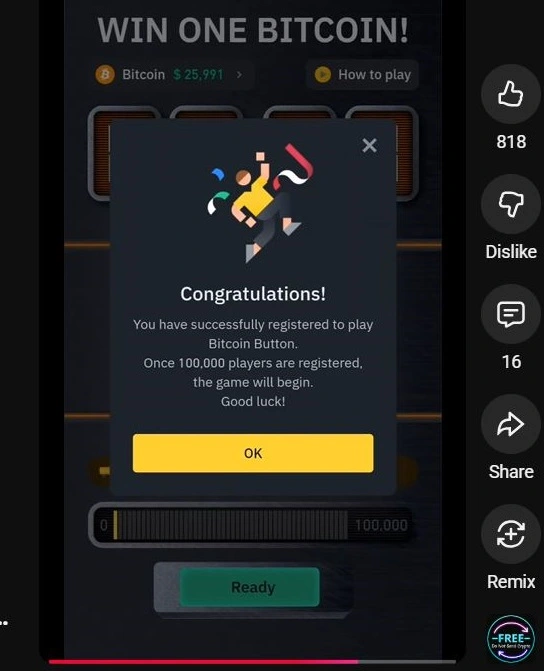
Promo hooks and influencer codes
The opening contact is usually crafted to feel personal or time-sensitive. Paid ads, comment spam, fake testimonials, and direct messages hint at a short-lived bonus so you act before calmly checking whether the offer is real.

Casino skin and bonus theater
From there, the website borrows visual cues from established crypto brands or gambling platforms. Clean design, animated counters, and reassuring buzzwords create the impression that someone invested in a functioning service rather than a disposable trap.

Inflated balances, then the gate
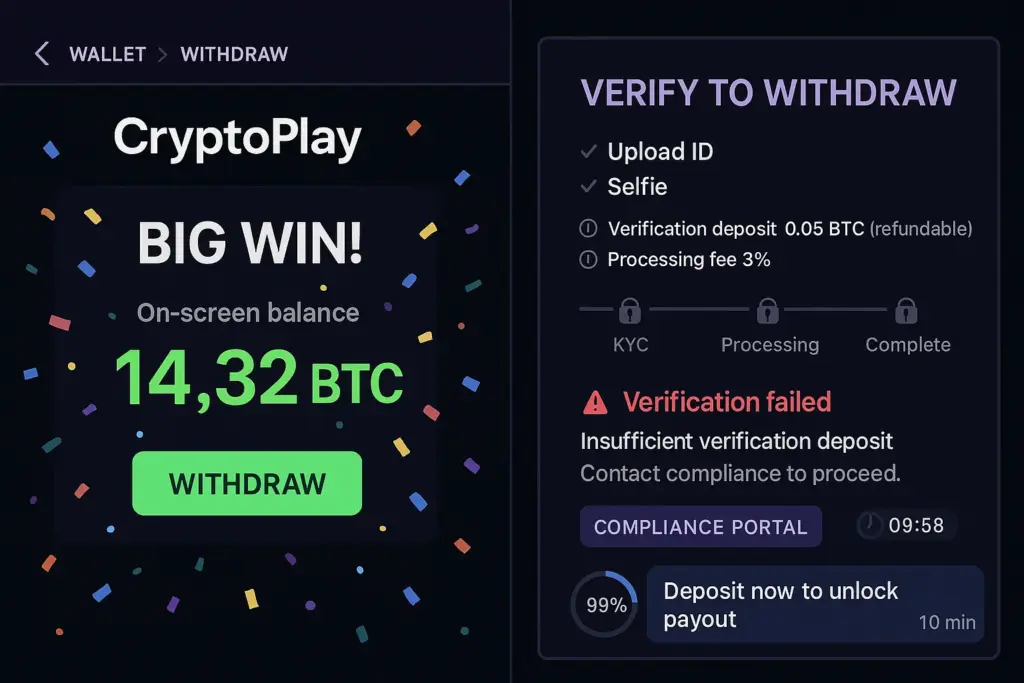
After registration, the interface may show bonus funds, winning bets, or profitable trades to make the opportunity feel tangible. That visual success is crucial because it reframes the first requested deposit as a tiny step standing between you and a much larger payout.
Fee-gates and KYC harvest
Once you try to cash out, the conditions begin multiplying. Suddenly there is a processing fee, an AML check, a tax hold, or a request for identity documents, each one designed either to drain more money or harvest more sensitive information.

Stalling, rebrands, and “recovery” bait
Eventually the mask slips. Support becomes vague, deadlines move, withdrawals stay pending, and the domain may disappear entirely; after that, victims are often targeted again by people claiming they can recover the lost funds for yet another payment.
Staying safe from crypto scams like Vitereck
Protecting yourself usually comes down to slowing the moment down. A few disciplined habits can block most Vitereck-style frauds before they reach your wallet, and the same habits also reduce the fallout if you have already interacted with the site.
Never pay to withdraw
Any service that asks for money to release money deserves immediate suspicion. Genuine platforms explain fees up front and deduct them transparently, whereas scammers invent last-minute deposits because they need fresh funds from victims, not because a system requires them.
Verify endorsements at the source
Celebrity praise, influencer clips, and viral interviews should be treated as unverified advertising until you confirm them on official channels. That extra check matters because modern scam videos are designed to look persuasive during a fast scroll, not during scrutiny.
Navigate with your own bookmarks
Reaching exchanges or wallet tools through your own saved links cuts out many common entry points. Search ads, promoted posts, random links in group chats, and unsolicited DMs are all easy ways for look-alike domains to intercept hurried users.
Check regulator registers & warnings
If a platform claims to be registered, test the claim instead of trusting the badge. Official regulator databases and public warning lists are often the fastest way to confirm that a supposed license, company number, or compliance statement is fictitious.
Segregate risk with burner wallets
Segregating funds limits how much a bad decision can cost. Keep meaningful holdings away from unfamiliar websites, and if you must inspect a new service, do it with a low-balance wallet that contains nothing you cannot afford to isolate and replace.
Harden accounts with 2FA & hygiene
Strong unique passwords, app-based two-factor authentication, and routine session reviews make follow-on abuse harder. This matters because scam operators do not always stop at the first deposit; they may reuse leaked email addresses, target linked accounts, or exploit stale API keys.
Revoke approvals & migrate
Wallet connections deserve cleanup even when no tokens were stolen immediately. If Vitereck persuaded you to connect a Web3 wallet, revoke any approvals you granted and move remaining assets to a fresh address so lingering permissions cannot be abused later.
Protect identity & slow down
Identity uploads create a second layer of risk beyond lost crypto. Anyone who sent documents to a fake KYC portal should monitor for impersonation attempts, while everyone else should build one rule into habit: pause before acting on offers that feel urgent, exclusive, or strangely generous.
Where to report Vitereck-style crypto scams (by country)
Even when recovery is unlikely, reporting still matters. Save screenshots, wallet addresses, TXIDs, emails, and chat logs, then file a complaint with the relevant cybercrime or consumer-protection body in your country. If the transfer came from an exchange, send its support team the transaction details and destination address so the wallet can be flagged. Ignore unsolicited “recovery specialists” who ask for advance payment, because that is a common second-stage scam aimed at recent victims.
Click here to report the scam in your country
| Country / Agency | URL | Category / Use-case | Phone/Email |
| Australia – Crime Stoppers | https://www.crimestoppers.com.au | Anonymous tips about crime | 1800 333 000 |
| Australia – National Anti-Scam Center (Scamwatch) | https://www.scamwatch.gov.au/report-a-scam | General scams; phishing; texts/emails | |
| Australia – Police Assistance Line (non-emergency) | https://www.police.gov.au | Local police report | 131 444 |
| Australia – ReportCyber (ACSC) | https://www.cyber.gov.au/report | Cybercrime (hacks, fraud, extortion) | |
| Canada – Canadian Anti-Fraud Center (CAFC) | https://www.antifraudcentre-centreantifraude.ca/report-signalez-eng.htm | General scams incl. phone/text/email | |
| France – DGCCRF (SignalConso) | https://signal.conso.gouv.fr | Consumer scams/deceptive practices | |
| France – PHAROS – Internet-Signalement | https://www.internet-signalement.gouv.fr | Online content & cybercrime reports | |
| Germany – Bundeskriminalamt / Local Police | https://www.polizei.de/Polizei/DE/Home/home_node.html | Report online fraud | |
| Germany – Weißer Ring – Victim Support | https://weisser-ring.de | Victim support | 116 006 |
| India – DoT Helpline (Sanchar Saathi) | https://sancharsaathi.gov.in | Fraudulent telecom/SIM related | 155260 |
| India – National Consumer Helpline | https://consumerhelpline.gov.in | Consumer scams | 1800-11-4000 / 1915 |
| India – National Cyber Crime Reporting Portal | https://cybercrime.gov.in | Cybercrime incl. online fraud | 1930 |
| Japan – Consumer Affairs Agency (CAA) | https://www.caa.go.jp/policies/policy/consumer_policy/caution/cybercrime/ | Consumer scams | |
| Japan – National Police Agency – Cybercrime | https://www.npa.go.jp/bureau/cyber/ | Cybercrime reporting | |
| Mexico – Guardia Nacional (National Guard) | https://www.gob.mx/gn | Cybercrime reporting | |
| Mexico – Instituto Federal de Telecomunicaciones (IFT) | https://www.ift.org.mx | Telecom/online services scams | |
| Mexico – PROFECO | https://www.gob.mx/profeco | Consumer fraud & ecommerce | |
| Netherlands – AFM – Report investment fraud | https://www.afm.nl/en/consumenten/themas/beleggen/misleiding-misbruik | Investment/crypto | |
| Netherlands – Fraudehelpdesk | https://www.fraudehelpdesk.nl/melden | General scams (incl. phishing/SMS) | 088-7867372 |
| Netherlands – Politie – Meldpunt Internetoplichting | https://www.politie.nl/themas/internetoplichting.html | Online shopping fraud | |
| New Zealand – CERT NZ | https://www.cert.govt.nz/individuals/report-an-issue/ | Phishing, identity scams | |
| New Zealand – Department of Internal Affairs – Spam | https://www.dia.govt.nz/Spam-Contact-Us | Email/SMS spam | [email protected] |
| New Zealand – IDCARE | https://www.idcare.org | Victim support (identity compromise) | 0800 121 068 |
| New Zealand – Netsafe – Report | https://www.netsafe.org.nz/report/ | Online harms & scams | |
| New Zealand – New Zealand Police (non-emergency) | https://www.police.govt.nz/use-105 | Report fraud/online crime | 105 |
| Nigeria – Economic & Financial Crimes Commission (EFCC) | https://www.efcc.gov.ng | Financial scams incl. crypto/investment | [email protected] |
| Nigeria – Nigeria Police Special Fraud Unit (SFU) | https://www.specialfraudunit.org.ng | Serious fraud | Voice/SMS: 0708 227 6895; WhatsApp: 0812 760 9914 |
| Poland – CERT Polska (CERT.PL) | https://cert.pl/en/report/ | Cyber incidents & phishing | |
| Poland – Dyzurnet.pl | https://dyzurnet.pl | Illegal online content (esp. child protection) | |
| Poland – Polish Police (Policja) | https://www.policja.pl | Report scams to police | |
| Singapore – Anti-Scam Centre / Anti-Scam Helpline | https://www.scamalert.sg | General scams; texts; calls | 1800-722-6688 |
| Singapore – Monetary Authority of Singapore (MAS) | https://www.mas.gov.sg/investor-alert-list | Investment/crypto checks | |
| Singapore – Singapore Police Force | https://www.police.gov.sg/iwitness | Police report (cybercrime) | |
| South Africa – Cybersecurity Hub (CSIRT) | https://www.cybersecurityhub.gov.za | Cyber incidents incl. scams | |
| South Africa – South African Fraud Prevention Service (SAFPS) | https://www.safps.org.za | Identity fraud support | 011-867-2234 |
| South Africa – South African Police Service (SAPS) | https://www.saps.gov.za | Police report (cybercrime unit) | |
| South Korea – Korea Communications Commission (KCC) | https://www.kcc.go.kr | Telecom-related fraud | |
| South Korea – Korea Internet & Security Agency (KISA) | https://www.kisa.or.kr | Phishing, online harms | |
| South Korea – Korean National Police Agency – Cyber Bureau | https://ecrm.cyber.go.kr | Cybercrime reporting | |
| Spain – INCIBE – Oficina de Seguridad del Internauta (OSI) | https://www.osi.es/es/reporte | Cybersecurity & online fraud | |
| Spain – Policía Nacional / Guardia Civil | https://www.policia.es | Report scams to police | |
| Sweden – Crime Victim Authority (Brottsoffermyndigheten) | https://www.brottsoffermyndigheten.se | Victim support & compensation | 090–70 82 00 |
| Sweden – Polisen (Swedish Police) | https://polisen.se | Report fraud/cybercrime | 114 14 (non-emergency); 112 (emergency) |
| Sweden – Swedish Consumer Agency (Konsumentverket) | https://www.konsumentverket.se | Unfair business practices | |
| United Arab Emirates – Abu Dhabi Police – Aman Service | https://www.adpolice.gov.ae | Cybercrime tips/reporting | SMS 2828; 800 2626 |
| United Arab Emirates – Dubai Police – eCrime | https://www.dubaipolice.gov.ae | Cybercrime reporting | 04 606 1600 |
| United Arab Emirates – Ministry of Interior – Cyber Crime Dept. | https://www.moi.gov.ae | Cybercrime incl. online scams | |
| United Arab Emirates – Telecommunications Regulatory Authority (TRA) / TDRA | https://www.tra.gov.ae | Telecom-related scams/phishing | |
| United Kingdom – Action Fraud (NFIB) | https://www.actionfraud.police.uk | General scams & cybercrime (non-emergency) | 0300 123 2040 |
| United Kingdom – Citizens Advice Consumer Service | https://www.citizensadvice.org.uk/consumer/get-more-help/if-you-need-more-help-about-a-consumer-issue/ | Consumer problems & scam guidance | 0808 223 1133 |
| United Kingdom – Financial Conduct Authority (FCA) | https://www.fca.org.uk/consumers/report-scam-us | Investment/crypto & financial services | |
| United Kingdom – National Cyber Security Centre (NCSC) | https://www.ncsc.gov.uk/collection/phishing-scams | Phishing emails & suspicious websites | |
| United Kingdom – Stop Scams UK ‘159’ | https://stopscamsuk.org.uk/159 | Banking APP fraud (direct to your bank) | 159 |
| United States – AARP Fraud Watch Network Helpline | https://www.aarp.org/money/scams-fraud/ | Victim support | 833-372-8311 |
| United States – Better Business Bureau – Scam Tracker | https://www.bbb.org/scamtracker | Business/marketplace scams | |
| United States – FBI Internet Crime Complaint Center (IC3) | https://www.ic3.gov | Internet crime incl. investment/crypto | |
| United States – Federal Trade Commission – ReportFraud | https://reportfraud.ftc.gov | General scams, phishing, texts/emails | 1-877-382-4357 |
| United States – National Center for Disaster Fraud | https://www.justice.gov/disaster-fraud | Disaster-related scams | (866) 720-5721 |
| United States – SEC Tips & Complaints | https://www.sec.gov/tcr | Investment & securities/crypto-asset offerings |
