

If your computer has suddenly become loud, sluggish, and almost unusable – especially when doing simple things like watching YouTube or playing games – you may have been hit by the Almoristics malware. Many users first spot it in Task Manager as something like “Almoristics Service” eating almost all available CPU and making the whole system stutter and overheat.
Almoristics doesn’t look like a normal program you chose to install, and it often arrives bundled with misleading installers (for example, when trying to download things like Minecraft Forge). In the rest of this guide, you’ll learn exactly what Almoristics is and how to fully get rid of it so your PC can breathe again.
We tested that SpyHunter successfully removes Almoristics* and we recommend using it. It will block Almoristics from reinstalling itself and it will make sure your device is clean from any malware.
 Try Free For 7 Days*
Buy now15% OFF if you buy straight without trial.
 OFFER
OFFERIs Almoristics a Virus?
Rather than a traditional self-replicating virus, Almoristics is best described as a Trojan-based cryptomining program. It sneaks in disguised as something useful or harmless, then quietly abuses your machine’s resources for someone else’s benefit.
Technically, it behaves like a Windows application that installs a service under names such as Almoristics Service / AlmoristicsService and shows up in places like Programs & Features (appwiz.cpl) with labels such as “Almoristics Application”. On disk, it typically lives in a folder called AlmoristicsApplication, containing components like AlmoristicsApp.exe, AlmoristicsHelper.dll, a data file (Almoristicsdt.dt), and a built-in uninstaller.
Under the hood, Almoristics belongs to a family of miners closely related to Altruistics, Altrousik, and other similar clones that reuse the same icon and version patterns while changing names. It relies on Windows services, registry entries, and sometimes scheduled tasks to keep itself running in the background, even after superficial removal attempts.
Almoristics Application Removal Guide
If you are luckly, the removal of this malware may turn out to be easier than expected. Now, don’t get your hopes too high, but it’s still a good idea to start with some simpler, easier steps.
At best, they’ll rid you of Almoristics, and you won’t need to go further into the guide. At worst, they’ll soften up the malware so the more advanced steps next will be more effective/easier to complete.
Quick Steps to Remove Almoristics Application
- 1.1Step one is all about exploring your Downloads folder. Head over to This PC and look for Downloads. Keep your eyes peeled for anything that strikes you as off – perhaps a file with a strange title or an installer you have zero memory of downloading. If it stands out in a bad way, do yourself a favor and delete it right away.
- 1.2Once that’s handled, move on to your system’s Settings, then click on Apps. Sort everything by installation date; occasionally, that’s all it takes to spot an intruder. If you see Almoristics popping up on this list, remove it by selecting Uninstall, and follow each prompt closely.
- 1.3Beyond that, check for any other programs installed on suspicious dates or carrying bizarre names. Eliminating questionable entries ensures you’re not leaving unknown software behind.
-
1.4Afterward, look for the installation directory. You’ll often find it at
C:\UserNames\UserName\AppData\Local\Programs\, but it might also be elsewhere. - 1.5If you find the malware folder, remove it together with any leftover files that might still be in it.
If Almoristics stays gone, congratulations – you’ve dodged a bullet. But if it resurfaces, keep reading for additional strategies.
SUMMARY:
| Name | Almoristics Application |
| Type | Trojan |
| Detection Tool |
We tested that SpyHunter successfully removes Almoristics* and we recommend downloading it. Manual removal may take hours, it can harm your system if you re not careful, and Almoristics may reinstall itself at the end if you don't delete its core files. |
How to Fully Get Rid of Almoristics Application
In case the quick steps above didn’t do the trick, it’s time to pull up your sleeves and get to work (unless you opt for the automatic removal method with SpyHunter 5).
First thing you need to do is prep your system for the removal. There are two thigns you must do here.
1. Preparing for the Almoristics Removal
- 1.1
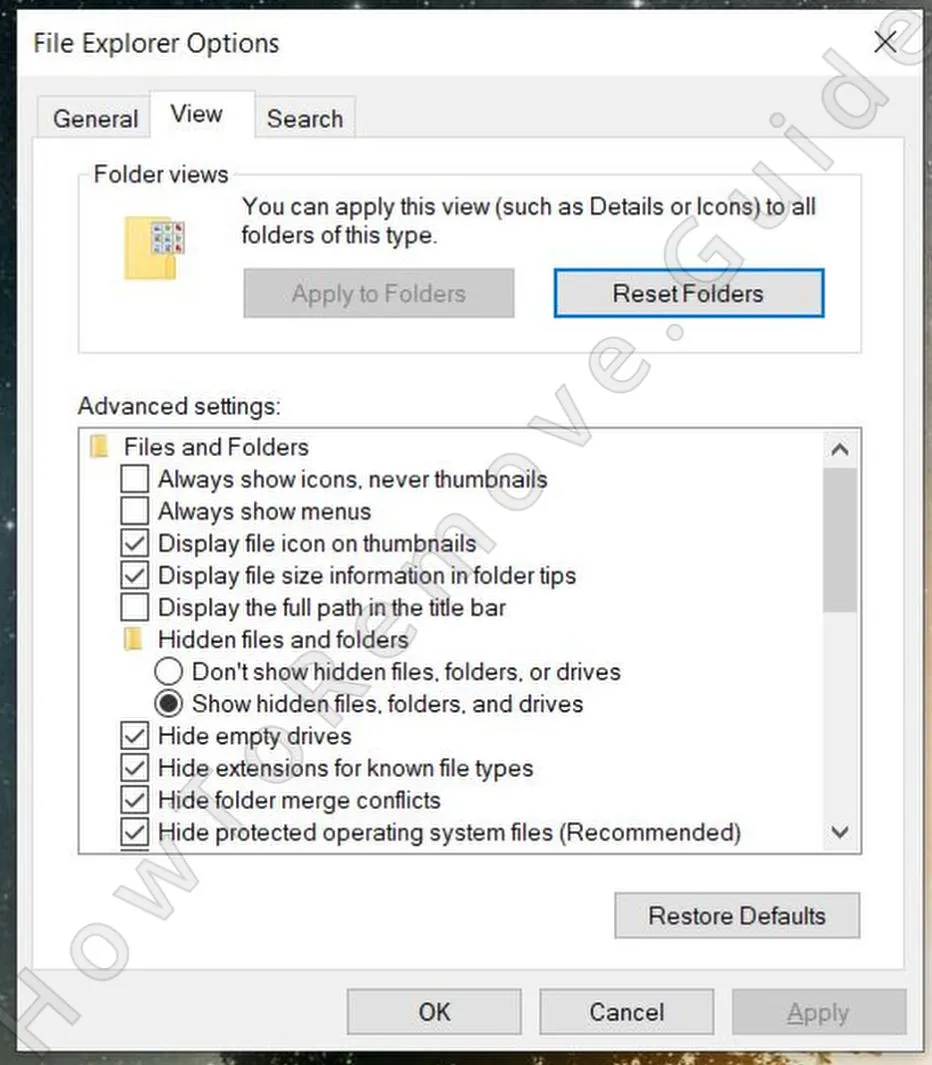 Your first move is revealing hidden items. Typically, malware buries its most vital components in folders you won’t see unless you enable “Show hidden files and folders” within Folder Options. With hidden data visible, you’ll be able to spot suspicious directories that might otherwise stay under the radar.
 - 1.2Along with that, do yourself a favor and install LockHunter. If you’ve ever tried to delete a file only to be told it’s “in use,” you understand how frustrating that is. Trojan miners exploit such locks, effectively blocking your attempts at removal. LockHunter, however, helps you override those locks, which is essential in fighting something as persistent as Almoristics.
We understand if you don’t want to use third-party software and we generally try to keep our guides entirely “hands-on”. However, in this case, you may need this app to eliminate some malware files which is an essential part of the removal process.
But don’t worry, LockHunter won’t ask for money, doesn’t have ads, and doesn’t even require a registration. You can download and install it in about two minutes.
Video walkthrough for this step:
Remove Almoristics Processes From the Task Manager
Almoristics and other malware that bleongs ot this family of rogue programs are often easy to spot in the Task Manager. You should go there and look for any odd processes named Almoristics, Altruistic, Alrisit, or other similar names, and then eradicate them in the way shown below:
2. How to Delete Almoristics Processes in the Task Manager
- 2.1Press Ctrl + Shift + Esc and switch over to the Processes tab in Task Manager.
- 2.2If it shows a simplified view, click More Details to expand it and see all running processes.
- 2.3
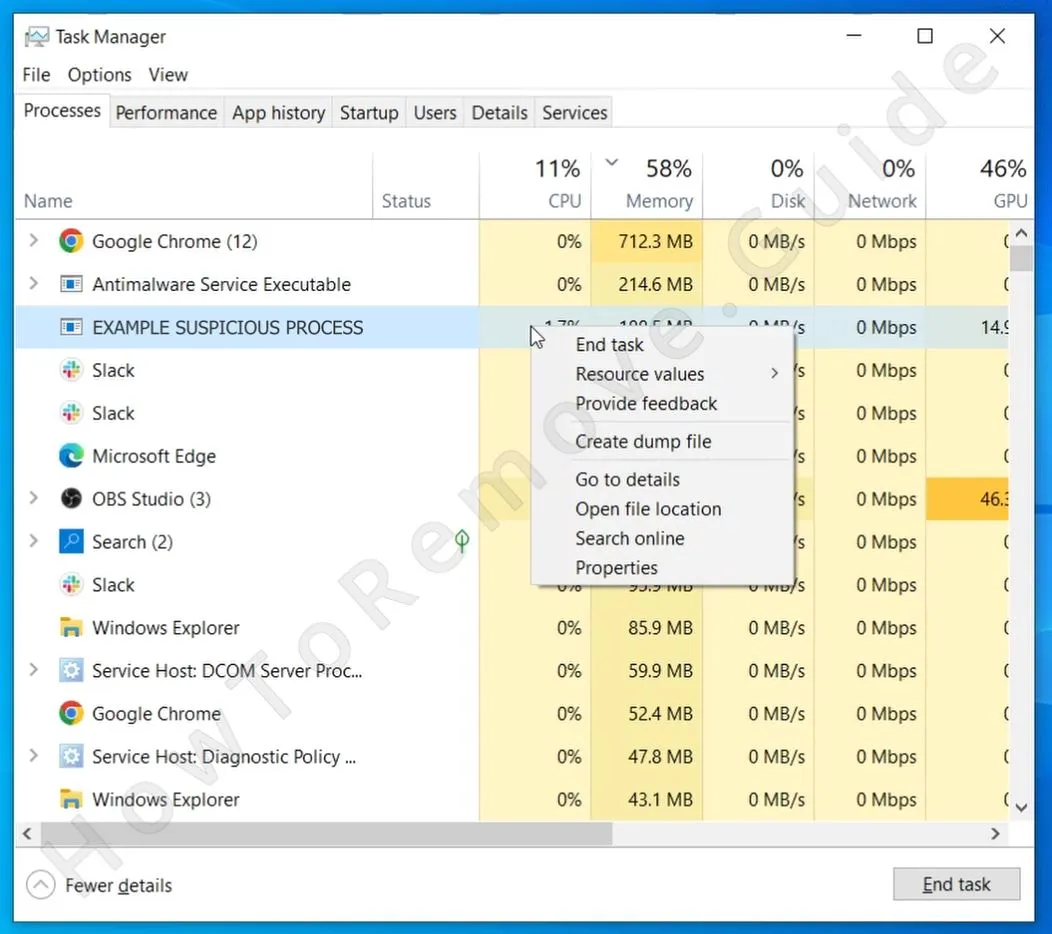 If you spot something hogging your CPU or memory, take a closer look: it might be the Trojan under a sneaky name.
Note: Look for “AlmoristicsApplication.exe” in here.
- 2.4Right-click the process, jump to “Open File Location,” but then circle back to Task Manager and end the process so it can’t self-protect.
- 2.5Immediately after, delete the files in that folder. If the system fights back, right-click and have LockHunter forcibly remove anything stubborn. Select “What’s locking this folder?” from the context menu, and click Delete in the next window.
- 2.6After removing the files, go back to Task Manager, write down the name of the rogue process (you’ll need it later), then click it, and click the End Task button to quit it.
Video walkthrough for this step:
How to Delete Persistent Files with Lock Hunter
We tested that SpyHunter successfully removes Almoristics* and we recommend using it. It will block Almoristics from reinstalling itself and it will make sure your device is clean from any malware.
Try Free For 7 Days*
Buy now15% OFF if you buy straight without trial.
Delete Almoristics Virus Files
Even if you’ve killed all Almoristics processes and deleted their location folders, there are almost certainly more rogue files scattered across your system that you need to get rid of. Here’s how to do that:
3. How to Get Rid of Almoristics Files
- 3.1Check your Startup folders next. These are usually found in:
C:\ProgramData\Microsoft\Windows\Start Menu\Programs\Startup
and
C:\Users\YourUsername\AppData\Roaming\Microsoft\Windows\Start Menu\Programs\Startup -
3.2Any shortcuts or items referencing unknown programs? Dump them. If you’re unsure, it’s often safer to remove suspicious stuff than to risk letting the Trojan linger. Just delete everything in those folders except for the
desktop.inifile, which is a standard system file. - 3.3You should also inspect C:\Program Files\ or C:\Program Files (x86), since legitimate and malicious programs alike tend to use those directories.
-
3.4Three other locations you must check are:
C:\Users\%user%\AppData\Local\C:\Users\%user%\AppData\Local\Programs\C:\Users\%user%\AppData\Roaming\Microsoft\Windows\Start Menu\Programs\
If you see something with a weird creation date matching your infection timeline, you’re probably looking at part of Almoristics. - 3.5
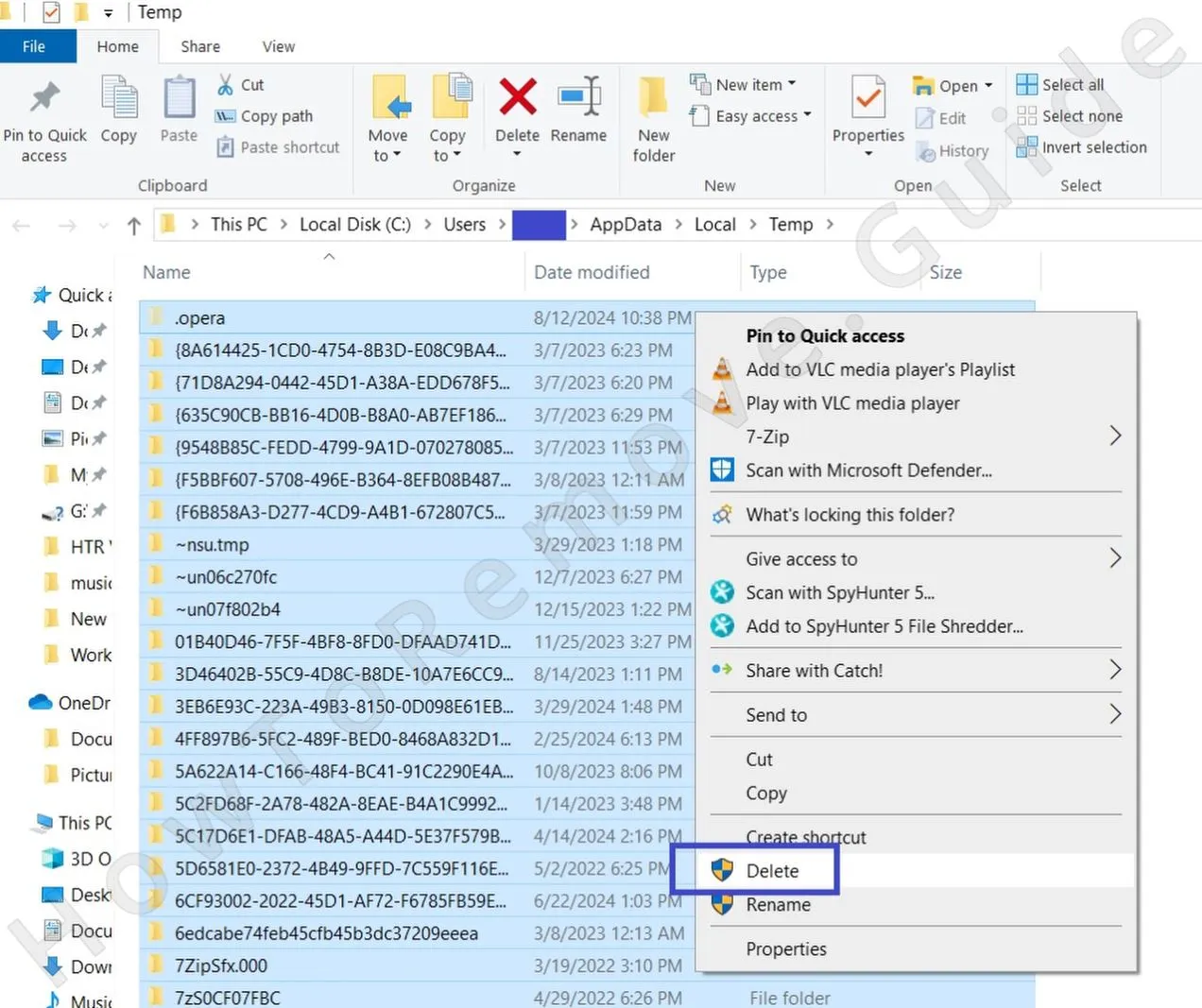 While you’re at it, open your %TEMP% folder and do a thorough cleanup. Temporary files might not seem significant, but Trojans sometimes hide essential components among the clutter. If anything was created around the same time you got infected, get rid of it. To save yourself some time spent looking for malware files, just Ctrl + A to select everything, and then press Delete from your keyboard to delete all of the folder’s contents.
Get Rid of Almoristics Scheduled Tasks
One aspect of manual malware removal that many users forget is to check for scheduled malware tasks in the Task Scheduler. Such tasks could activate after the malware is removed and bring it back or install some other rogue app. That is why you must be as thorough with this step as you were with all the other ones and ensure there aren’t any harmful tasks scheduled in your system.
4. Eliminate Almoristics Scheduled Tasks
- 4.1
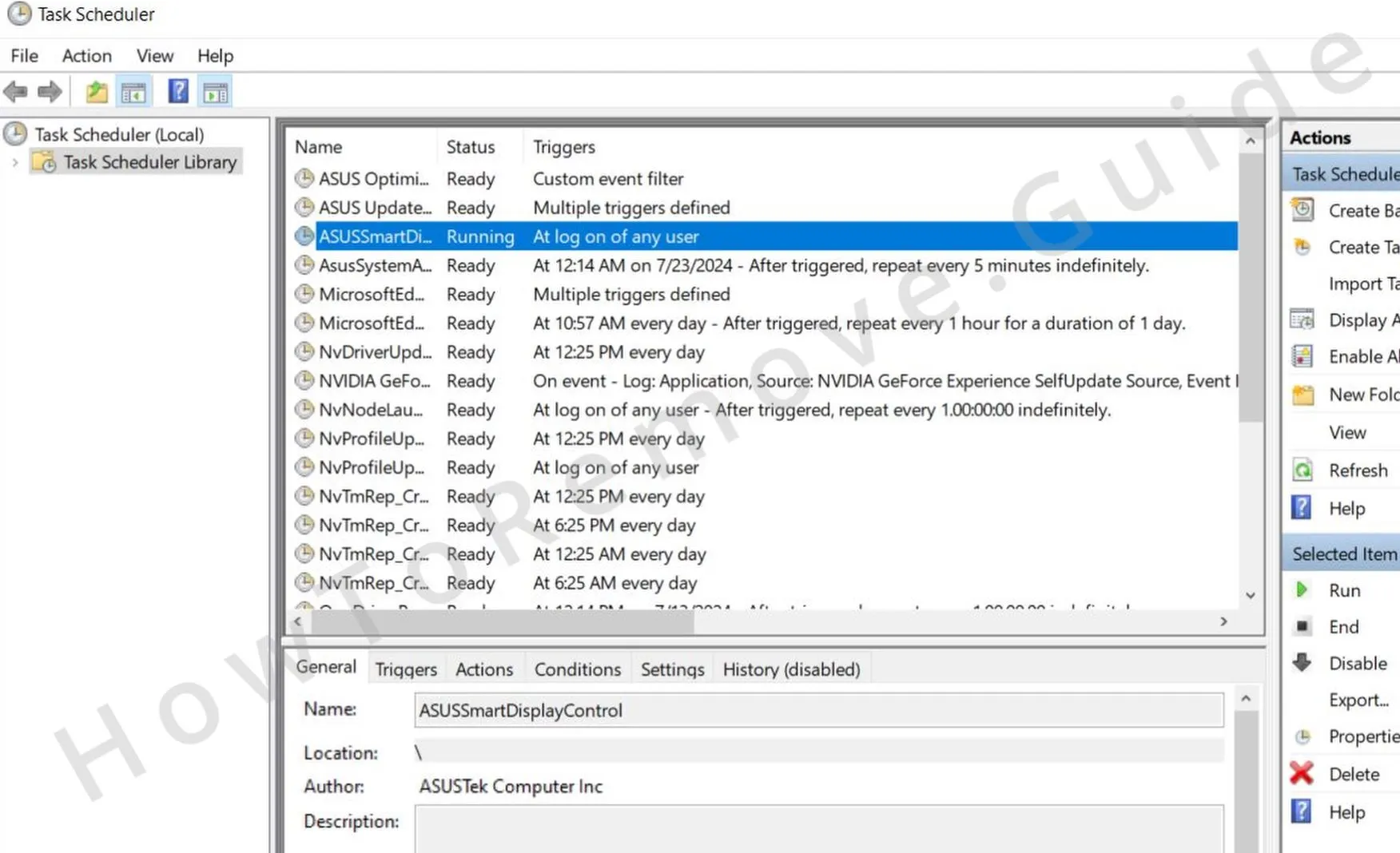 To avoid that, open Task Scheduler (search for it in your Start Menu) and examine everything in the Task Scheduler Library. If you stumble upon a job that triggers a suspicious file, remove the scheduled task and then track down the file itself. Don’t forget to delete that file from your system, or the Trojan might try to sneak back in.
 -
4.2For each task, double-click it and open the Actions tab, where you can learn what it is that the task is set to perform. Look for tasks that run unfamiliar executables, scripts, or anything located in the
AppDataorRoamingdirectories. - 4.3If you come across a task that executes anything suspicious, write down its file path, then right-click the task, and select Delete.
- 4.4After that, go to the file path you saved and delete the file that the task was set to run.
Again, make sure to look through all the tasks. There are generally not a lot of tasks in the Task Scheduler, so it shouldn’t take you too much time to examine them all.
Video walkthrough for this step:
Uninstall the Almoristics Malware App Through the Windows Registry
Finally, you should also check the Registry of your system, as it almost certainly also holds some malware data, which could result in reinfections or serve as a system weakness that other threats can exploit.
A fair warning: deleting stuff from the Registry should only be done if you are certain that you know what you are doing. In case you aren’t fully sure that a particular item needs to be deleted, I recommend using a specialized tool like SpyHunter 5 to complete this step for you.
In case you are confident you can perform the Registry cleanup on your own, here’s what you must do:
5. Quick Steps to Remove Almoristics
- 5.1Type “regedit” in the Start Menu and hit Enter to go to the Registry Editor.
- 5.2Then click Edit > Find to open the search box and look for entries referencing Almoristics or any variant names you caught in Task Manager
- 5.3Click Find Next and if a result comes up, click the registry key (folder) in the left panel that contains it and delete that key. Each time you find a relevant key, delete it, then keep searching – Trojan authors often scatter references to ensure one missed piece can resurrect the entire infection.
- 5.4Next, search for the name of any other programs you attempted to delete. Also search for the names of processes you ended in the Task Manager earlier in the guide.
-
5.5Next, verify these locations:
HKCU\Software\Microsoft\Windows\CurrentVersion\RunHKCU\Software\Microsoft\Windows\CurrentVersion\RunOnceHKLM\Software\Microsoft\Windows\CurrentVersion\RunHKLM\Software\Microsoft\Windows\CurrentVersion\RunOnceHKLM\Software\Microsoft\Windows\CurrentVersion\Policies\Explorer\RunHKCU\Software\Microsoft\Windows\CurrentVersion\Policies\Explorer\RunHKEY_LOCAL_MACHINE\Software\Microsoft\Windows\CurrentVersion\RunServicesHKEY_LOCAL_MACHINE\Software\Microsoft\Windows\CurrentVersion\RunServicesOnceHKEY_LOCAL_MACHINE\Software\Microsoft\Windows\CurrentVersion\RunOnce\SetupHKEY_LOCAL_MACHINE\SYSTEM\CurrentControlSet\services - 5.6In each one, check the right panel carefully for suspicious entries. Delete them if they match Almoristics or the installation date. But try to leave the main folders intact, as some system keys are essential for normal operation.
Video walkthrough for this step:
How to Avoid Almoristics in the Future
Avoiding Almoristics in the future isn’t just about steering clear of the obvious traps – though visiting shady sites or grabbing random .exe files pretending to be Minecraft Forge installers will always be a bad idea. Almoristics spreads through misleading download buttons, bundled installers, and files that pretend to be something you actually want, so prevention is largely about slowing yourself down and forcing your system to ask questions before anything runs.
A deceptively simple tactic is to disable automatic downloads in your browser.
- Head to your browser’s Settings > Downloads and enable the option that requires you to choose a save location for every file. Since Almoristics commonly arrives via mis-clicked “big blue download” buttons, this one step forces you to notice when what you’re receiving is an unexpected
setup.exerather than a legitimate.jarfile.
Your browser’s enhanced security settings also do a lot of heavy lifting.
- Most modern browsers include optional protections that block unsafe downloads, warn about suspicious sites, and enforce secure connections. Enabling features like “Enhanced protection” or “Always use secure connections” reduces the odds of landing on the kind of deceptive ad-driven pages that distribute miners from the Altruistics/Aluc/Almoristics family.
Finally, use an ad-blocker. These tools aren’t just for quieting YouTube – they filter out malicious pop-ups, fake download prompts, and misleading ads that mimic real installer buttons.
- Since Almoristics often relies on precisely this kind of trickery to spread, removing those traps from the page dramatically cuts your exposure. Combining all these measures builds a simple but powerful defense against miners that try to slip in under friendly-sounding names.
Almoristics tries to sneak in quietly and drain your machine for its own purposes, but once you know how it behaves, it’s far less intimidating. Keep your system clean and your browsing habits sharp, and you’ll be well-equipped to avoid this miner and any of its future look-alikes.
